Book recommendation: “The Knack of Using the Subconscious Mind” by John Williams

TheKnack
By Herman H Brooksieker on June 25, 2001
John Williams in this 1952 book saw the key to humankind’s greatness and wisdom. I was fortunate to read and use his teachings then. I came back to the book again today June 23 2001 and revisited his wisdom and clarity.
The only change since 1952 is in me, in that now I can see Mr. Williams was talking about the Knack of Using our Soul and its wisdom.
Read his book substituting your favorite word or words for Unconscious be it Soul, High Self, God within, Atman etc. The material is still excellent.
I highly recommend reading and using the insights offered.

Excerpt from “Fundamental Ends of Life” by Rufus Jones

RufusJones

The world has been passing–is still passing–through a period of agony and confusion. Everybody knows, dimly or clearly, that some deep-lying and baffling ailment has fallen upon large sections of the human family and that nobody seems able to discover either a sound diagnosis of the disease or a potent remedy for it. All who have worked at the problems of the age have been like a person trying to put together a jigsaw puzzle when, without his knowing it, a lot of the pieces of the picture are lost and the puzzle will not go together.

The main difficulty has been that men have been looking for economic and political solutions while all the time the trouble is deeper than that, and the remedy, too, must go deeper. Like those old Babylonians who built their civilization out of their own inner nature, so we, too, have built our confused world out of our ambitions, our selfishness, our fears, our hates, our suspicions, our greeds, and our rivalries. If we are ever to rebuild the world we must first of all begin to build it by reconstructing our own inner spirits. The most important first step is the formation within us of a sounder faith in God and man, a surer apprehension of the available spiritual resources at hand, and a profounder confidence in the silent healing forces of life and love. We have been looking in the wrong place for the path out of our wilderness wanderings. We have witnessed in many ways a great intensification of desire for possessions, for wealth, for economic assets, and we see going on around us almost everywhere . . .

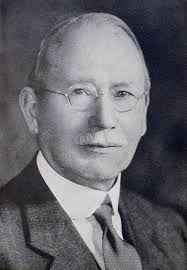
Rufus Matthew Jones (January 25, 1863 – June 16, 1948) was an American writer, magazine editor, philosopher, and college professor. He was instrumental in the establishment of the Haverford Emergency Unit (a precursor to the American Friends Service Committee). One of the most influential Quakers of the 20th century, he was a Quaker historian and theologian as well as a philosopher. He is the only person to have delivered two Swarthmore Lectures.  (Wikipedia.org)

Biography: Matthew Arnold (britannica.com)

MatthewArnold

Matthew was the eldest son of the renowned Thomas Arnold, who was appointed headmaster of Rugby School in 1828. Matthew entered Rugby (1837) and then attended Oxford as a scholar of Balliol College; there he won the Newdigate Prize with his poem Cromwell (1843) and was graduated with second-class honours in 1844. For Oxford Arnold retained an impassioned affection. His Oxford was the Oxford of John Henry Newman—of Newman just about to be received into the Roman Catholic Church; and although Arnold’s own religious thought, like his father’s, was strongly liberal, Oxford and Newman always remained for him joint symbols of spiritual beauty and culture.

In 1847 Arnold became private secretary to Lord Lansdowne, who occupied a high cabinet post during Lord John Russell’s Liberal ministries. And in 1851, in order to secure the income needed for his marriage (June 1851) with Frances Lucy Wightman, he accepted from Lansdowne an appointment as inspector of schools. This was to be his routine occupation until within two years of his death. He engaged in incessant travelling throughout the British provinces and also several times was sent by the government to inquire into the state of education in France, Germany, Holland, and Switzerland. Two of his reports on schools abroad were reprinted as books, and his annual reports on schools at home attracted wide attention, written, as they were, in Arnold’s own urbane and civilized prose.

Poetic achievement

Arnold, Matthew [Credit: Library of Congress, Washington, D.C.]

The work that gives Arnold his high place in the history of literature and the history of ideas was all accomplished in the time he could spare from his official duties. His first volume of verse was The Strayed Reveller, and Other Poems. By A. (1849); this was followed (in 1852) by another under the same initial:  Empedocles on Etna, and Other Poems. In 1853 appeared the first volume of poems published under his own name; it consisted partly of poems selected from the earlier volumes and also contained the well-known preface explaining (among other things) why Empedocles was excluded from the selection: it was a dramatic poem “in which the suffering finds no vent in action,” in which there is “everything to be endured, nothing to be done.” This preface foreshadows his later criticism in its insistence upon the classic virtues of unity, impersonality, universality, and architectonic power and upon the value of the classical masterpieces as models for “an age of spiritual discomfort”—an age “wanting in moral grandeur.” Other editions followed, and Merope, Arnold’s classical tragedy, appeared in 1858, and New Poems in 1867. After that date, though there were further editions, Arnold wrote little additional verse.

Not much of Arnold’s verse will stand the test of his own criteria; far from being classically poised, impersonal, serene, and grand, it is often intimate, personal, full of romantic regret, sentimental pessimism, and nostalgia. As a public and social character and as a prose writer, Arnold was sunny, debonair, and sanguine; but beneath ran the current of his buried life, and of this much of his poetry is the echo:

From the soul’s subterranean depth upborne

As from an infinitely distant land,

Come airs, and floating echoes, and convey

A melancholy into all our day.

“I am past thirty,” he wrote a friend in 1853, “and three parts iced over.” The impulse to write poetry came typically when

A bolt is shot back somewhere in the breast,

And a lost pulse of feeling stirs again.

Though he was “never quite benumb’d by the world’s sway,” these hours of insight became more and more rare, and the stirrings of buried feeling were associated with moods of regret for lost youth, regret for the freshness of the early world, moods of self-pity, moods of longing for

The hills where his life rose

And the sea where it goes.

Yet, though much of Arnold’s most characteristic verse is in this vein of soliloquy or intimate confession, he can sometimes rise, as in “Sohrab and Rustum,” to epic severity and impersonality; to lofty meditation, as in “Dover Beach”; and to sustained magnificence and richness, as in “The Scholar Gipsy” and “Thyrsis”—where he wields an intricate stanza form without a stumble.

In 1857, assisted by the vote of his godfather (and predecessor) John Keble, Arnold was elected to the Oxford chair of poetry, which he held for 10 years. It was characteristic of him that he revolutionized this professorship. The keynote was struck in his inaugural lecture: “On the Modern Element in Literature,” “modern” being taken to mean not merely “contemporary” (for Greece was “modern”), but the spirit that, contemplating the vast and complex spectacle of life, craves for moral and intellectual “deliverance.” Several of the lectures were afterward published as critical essays, but the most substantial fruits of his professorship were the three lectures On Translating Homer (1861)—in which he recommended Homer’s plainness and nobility as medicine for the modern world, with its “sick hurry and divided aims” and condemned Francis Newman’s recent translation as ignoble and eccentric—and the lectures On the Study of Celtic Literature (1867), in which, without much knowledge of his subject or of anthropology, he used the Celtic strain as a symbol of that which rejects the despotism of the commonplace and the utilitarian.

Continue reading Biography: Matthew Arnold (britannica.com)

You’ll Never Guess What’s on the Menu at Café Fellatio

cafefellacio
Photo Credit: Shutterstock.com

by Carrie

Those interested might want to head to Geneva…

If you like the idea of a blowjob with your coffee, you might think about booking a trip to Geneva, where one company has announced plans to open a café where they will be serving both.

Bradley Charvet of Facegirl told Geneva’s Le Matin newspaper that the idea for a sex café has been brewing for a several months. Charvet credited similar establishments in Thailand for the inspiration.

It works like this: after being invited in and ordering a coffee, customers are handed an iPad, from which they can select a prostitute of their choosing. Then they are encouraged to “take a seat at the bar.”

“In five or ten minutes, it’s all over,” Charvet told the publication. It may be a short window, but it certainly doesn’t come cheap. Price of entry will cost around 60 Swiss francs (around $62).

And it would all be 100% legal. Though if the café plans on hiring more than one prostitute, the owners will have to register it as a massage parlor. According to France’s Le Monde newspaper, 33 Swiss Geneva-based parlors were shut down in in 2015 for failure to properly register. Prostitution, while legal, is strictly regulated throughout the country.

According to reports, Geneva’s Department for Security and the Economy is now looking at the café plans.

Of course, not everyone is thrilled by the news. Grégoire Théry of France’s anti-prostitution group Mouvement du Nid told French newspaper L’Express the idea for a sex cafe would do more for the men behind the scenes than the women on the floor. According to Théry, the business would serve as a form of “legalized pimping.”

Carrie Weisman is an AlterNet staff writer who focuses on sex, relationships and culture. Got tips, ideas or a first-person story? Email her.

Sunday night Translation!

Aloha all, our group had a tiny challenge connecting on Skype, after a few try’s rebooting etc. Nothing was satisfying so I decided we should do a three way conference call, and Alex is land line only, worked well enough for communication and a agreed sense testimony<3.

Sense testimony; Multi-generational illness can make people feel out of control?  The reason for this is the self destructive tendency, and killing others by shooting them, the illness is open?

Conclusions; 1)  The Cause and Nature of All is the Abundant, Fitting, Sound Harmonious Beautiful, Powerful Knowing Presence, the “What Works” of Universal Integrity God Truth I We Thou are. (I Am Abundant Fitting Sound Harmonious Beautiful Powerful Knowing Presence Creating Governing All I Am.

2) I AM that I AM is the One “I” of All, Life Mind and Being is Eternal principle Infinite Cause and Creation.

3) Truth is innately imperative, organically attracted to its own validated resources, which being limitless, timeless, omniscience, recognizing its own qualities for universal I, thou, intentional purposes.

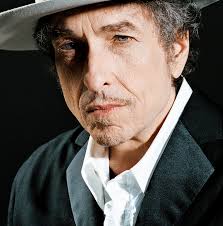
‘It’s Alright, Ma (I’m Only Bleeding)’ by Bob Dylan

BobDylan

Darkness at the break of noon
Shadows even the silver spoon
The handmade blade, the child’s balloon
Eclipses both the sun and moon
To understand you know too soon, there is no sense in trying

Pointed threats, they bluff with scorn
Suicide remarks are torn
From the fool’s gold mouthpiece the hollow horn
Plays wasted words proves to warn
That he not busy being born is busy dying

Temptation’s page flies out the door
You follow, find yourself at war
Watch waterfalls of pity roar
You feel to moan but unlike before
You discover that you’d just be one more person crying

So don’t fear if you hear
A foreign sound to your ear
It’s alright, Ma, I’m only sighing

As some warn victory, some downfall
Private reasons great or small
Can be seen in the eyes of those that call
To make all that should be killed to crawl
While others say don’t hate nothing at all, except hatred

Disillusioned words like bullets bark
As human gods aim for their mark
Made everything from toy guns that spark
To flesh-colored Christs that glow in the dark
It’s easy to see without looking too far that not much is really sacred

Our preachers preach of evil fates
Teachers teach that knowledge waits
Can lead to hundred-dollar plates
Goodness hides behind its gates
But even the President of the United States
Sometimes must have to stand naked

An’ all the rules of the road have been lodged
It’s only people’s games that you got to dodge
And it’s alright, Ma, I can make it

Advertising signs that con you
Into thinking you’re the one
That can do what’s never been done
That can win what’s never been won
Meantime life outside goes on all around you

You lose yourself, you reappear
You suddenly find you got nothing to fear
Alone you stand with nobody near
When a trembling distant voice, unclear
Startles your sleeping ears to hear
That somebody thinks they really found you

A question in your nerves is lit
Yet you know there is no answer fit
To satisfy insure you not to quit
To keep it in your mind and not forget
That it is not he or she or them or it that you belong to

Although the masters make the rules
For the wise men and the fools
I got nothing, Ma, to live up to

For them that must obey authority
That they do not respect in any degree
Who despise their jobs, their destinies
Speak jealously of them that are free
Do what they do just to be
Nothing more than something they invest in

While some on principles baptized
To strict party platform ties
Social clubs in drag disguise
Outsiders they can freely criticize
Tell nothing except who to idolize and say, “God bless him”

While one who sings with his tongue on fire
Gargles in the rat race choir
Bent out of shape from society’s pliers
Cares not to come up any higher
But rather get you down in the hole that he’s in

But I mean no harm nor put fault
On anyone that lives in a vault
But it’s alright, Ma, if I can’t please him

Old lady judges watch people in pairs
Limited in sex, they dare
To push fake morals, insult and stare
While money doesn’t talk, it swears
Obscenity, who really cares propaganda, all is phony

While them that defend what they cannot see
With a killer’s pride, security
It blows the minds most bitterly
For them that think death’s honesty
Won’t fall upon them naturally
Life sometimes must get lonely

My eyes collide head-on with stuffed graveyards
False goals, I scuff at pettiness which plays so rough
Walk upside-down inside handcuffs
Kick my legs to crash it off
Say, “Okay, I have had enough, what else can you show me?”

And if my thought dreams could be seen
They’d probably put my head in a guillotine
But it’s alright, Ma, it’s life, and life only

Songwriters
Bob Dylan

Published by
SPECIAL RIDER MUSIC

One Observation of the United Kingdom’s EU Referendum

Calvin profile

by Calvin Harris H.W., M

Last night, Thursday 23 of June, 2016, I had an opportunity to watch a Country decide its fate by a popular vote of its people.  I got to watch 4 hours of announced results of ballot counts, as they happened. This was coupled with interviews of political statesmen, of the various political parties, as well as short interviews and statements from the general public. All live on a cable feed from London as we watched in Laguna Beach, CA.

This was truly a ‘Every’ person’s vote will count decision. I did observe that some who voted had voted with their feelings and left their brains at home. For these people the vote seemed to be more in part about the dissatisfaction with how their elected officials, over the years, had handled or voted on various issues to their outrage or displeasure.  The EU vote then became clouded with issues, some not at all related to the EU vote at hand, but then the vote became a tool to send a message, a way to give the finger to their elected political officials. The question is then begged to be asked, was the vote tilted? Due to feeling of rage or fear rather than careful deliberation of the issues at hand.

England, Ireland, Scotland and Wales are the countries of Great Britain that were involved in this vote to leave or remain in the European Union because these were the countries that border the other European Countries. The European Union, acts as a single market of all the Countries that belong to it since 1992. The concept behind the EU was to boost trade, create jobs and lower prices. It allows for the free movement of goods, services, money and people within the European Union, as if it was a single Country. Meaning, as a member of the EU, you could possible set up a business or take a job anywhere within it.

The UK’s EU referendum vote: gave the people a choice to remain in the EU or to leave it. I watched the results of the votes come in county by county, it was like watching a tennis match, the vote went one way and then the other with more to gain or lose than a trophy. I could not stay till the final results of the broadcast, but I got up this morning and checked the BBC News report article by Brian Wheeler & Alex Hunt on my computer. The reported revealed that Britain had voted to leave the EU, by a vote of 52% to leave vs the 48% to remain. That 48% means a large margin of people did not agree with the vote, but not enough to turn the tide.

I would suggest that when we Vote, in this Country, that we do so with both our minds and our hearts meaning giving the issues careful deliberation as to their benefits and long term ramifications.  I saw, while watching these events unfold, one or two folks faces, who had wanted to make a statement by their vote, and then when they realize that their vote might win, then came the look of realization that their vote might not bring the outcome they really wanted, as the broadcast news reported economic uncertainty looms as the value of their dollar (the Pound Sterling) rose and fell during the announced results of each of the counties throughout the night.

“The Field: The Quest for the Secret Force of the Universe” by Lynne McTaggart

TheField

In this groundbreaking classic, investigative journalist Lynne McTaggart reveals a radical new paradigm—that the human mind and body are not separate from their environment but a packet of pulsating power constantly interacting with this vast energy sea, and that consciousness may be central in shaping our world. The Field is a highly readable scientific detective story presenting a stunning picture of an interconnected universe and a new scientific theory that makes sense of supernatural phenomena. Documented by distinguished sources, The Field is a book of hope and inspiration for today’s world.  (Googlebooks)

Consciousness, sexuality, androgyny, futurism, space, the arts, science, astrology, democracy, humor, books, movies and more