
The Shift Network
Uploaded on Feb 24, 2018
Why only individual thinking can reunite America
Thinking in teams is destroying American life, says Timothy Snyder, Professor of History at Yale University. A lot of people in the U.S. want to ride the bench for the winning team. They know that things aren’t going well for them personally, but they want to feel like they’re on the right side. But this approach is tearing the country apart. (bigthink.com)
Timothy Snyder: Well, the whole idea of best interests in the question, “Why do people vote against their best interests?” is not an objective thing in nature. It’s one of the very problems in the politics of inevitability, is that we think like economists and we say, “Well, everybody is rational in the narrow economical sense, everybody knows what’s good for them.” And that’s just not true, or rather the ability of people to discern what their interests are depends upon a process of education, which includes not just reasoning mathematically, which is very important, but also it has to include some kind of humanistic side where people learn to criticize or think critically about what they hear, learn to make distinctions among various kinds of media.
Because that notion of “one’s best interest” is not at all natural, it’s the product of a certain kind of education. And that kind of education can be undone, first of all it can not be done, but it can also be undone, one can deliberately appeal to the parts of the mind which aren’t concerned with the future, with math, with critical thinking, but to the parts of the mind which think in terms of “us and them,” “friend and enemy,” and you can draw people into these cycles. And the less—and this is how it fits together with inequality—the less people see a good future for themselves if they think in terms of interests, the more they’re drawn into a different way of thinking where it’s not about their individual interests, but it’s more about feeling like they’re on the “right team,” they’re on the “right side.”
For a lot of people in the U.S. now I think it’s a little bit like they want to ride the bench for the winning team. They know that things aren’t going well for them personally, but they want to feel like they’re on the right side. And that helps to explain the appeal of someone like a Donald Trump who, of course, himself is a failure but has the skills to present himself as a success and can get people thinking, “Yeah, I want to be on that team. I’m not going to do any better economically, but I’m going to feel better about myself, because I’m on the winning team, I’m on what it feels like the winning team.” So the whole thing about best interests has to be seen as a project.
You have to educate people, you have to take anxiety away by providing certain basic things like schooling and pensions and vacations so people can pause and think a little bit about themselves and their future. If you don’t provide those basic elements of (I would say) political civilization then people are too anxious, it’s hard for them to get their minds around what their interest actually are.
And beyond that if you don’t educate them positively towards thinking with both math and with the humanities they’re not going to get there anyway. So it’s a project. A basic thing that we Americans forget—and a basic thing that politics of inevitability shrouds—is that creating the individual is a project. It takes a lot of work to create an individual. I mean we want to have thinking individuals. We want to have people who know what their best interests are. We want to have people who go thoughtfully into that ballot box, but that’s a project; we’re not born that way.
I mean as a father I can assure you that we are not born that way. I think it’s the noblest and best thing we do, to try to create individuals, but we can’t just leave it to chance, and I think that’s where we go wrong. One of the basic ways we go wrong with the politics of inevitability, we think, “Okay, automatically we’re going to be those kinds of rational people,” but we’re not automatically those kinds of rational people. I mean the irony is if you want to create individuals who can think about their own best interests you have to, as a society, say, “We agree to make it a project to educate and form such individuals.”
Your Horoscopes — Week Of October 2, 2018 (theonion.com)

Libra | Sept. 23 to Oct. 22
A mistake in your will results in the words “Please Take One” being chiseled into your tombstone.

Scorpio | Oct. 23 to Nov. 21
Your name will be mentioned over 40 times in the president’s proposal for a new, nationwide “asshole tax.”

Sagittarius | Nov. 22 to Dec. 21
Years of bad blood between you and the colonel finally boil over, resulting in the bloodiest moonshine war your part of the suburbs has ever seen.

Capricorn | Dec. 22 to Jan. 19
Your refusal to super-size your meal will ultimately result in your starvation.

Aquarius | Jan. 20 to Feb. 18
A genie will grant you a million dollars if you go an entire week without thinking of the word “hoopty.”

Pisces | Feb. 19 to March 20
Your fairy godmother will finally hear your pleas for help. However, her only response will be to appear in the corner and squint ominously.

Aries | March 21 to April 19
You will never achieve your full potential as a person unless you can win your life’s most personal battles. Declare war on polyester/cotton blends.

Taurus | April 20 to May 20
When 14 bodies are discovered in your basement, your usual alibi of “The dog did it” is of absolutely no help—even though it’s actually true this time.

Gemini | May 21 to June 20
You are in for the fight of your life this week when Diana Rigg overhears your catty remarks about the cut of her evening gown.

Cancer | June 21 to July 22
Unspeakable tragedies will strike Cancer this week, but the look on your face will be just priceless.

Leo | July 23 to Aug. 22
Shortly after your impending death, many surprising truths of the afterlife will be revealed to you. It’s not too late to begin praying to the postman.

Virgo | Aug. 23 to Sept. 22
Your community decides to honor your contributions to society by making you part of the new blacktop in the school parking lot.
Rebecca Solnit on cities

“In great cities, spaces as well as places are designed and built: walking, witnessing, being in public, are as much part of the design and purpose as is being inside to eat, sleep, make shoes or love or music. The word citizen has to do with cities, and the ideal city is organized around citizenship — around participation in public life.”
Andrea Bocelli sings with his son Matteo
The Queer Movement Changing Hearts on Christian Campuses

Illustration: Claire Merchlinsky
Meet the activists creating safe spaces for LGBTQ students at the nation’s most conservative colleges

Zabrina Zablan attended Azusa Pacific University (APU), a prestigious evangelical college in Southern California, for one main reason: to “pray away the gay.” If she studied the Bible enough, she thought, maybe God would deliver her from a sexual orientation that her conservative religious family viewed as sinful.
Instead, she fell in love.
Zablan met Ipo Duvauchelle, a fellow APU student, and the two women began dating. Zablan and Duvauchelle shared similar worldviews, a warm sense of humor, and a deep faith. It seemed God was not interested in breaking up the happy lesbian couple. Unfortunately, the same could not be said for university administration.
At first, Zablan and Duvauchelle dated without issue. Despite the university’s official stance that same-sex relationships were sinful, the couple found that there was an informal “don’t ask, don’t tell” policy at the school. Zablan and Duvauchelle were able to find pockets of LGBTQ-affirming students and faculty who celebrated their relationship.
Meanwhile, Zablan became increasingly involved in student leadership. As a Native Hawaiian, she was passionate about creating space on campus for diverse students. She became a leader of APU’s Pacific Islander Organization, and by the time Zablan entered her senior year, she was a prominent figure on campus, admired by students and faculty alike.
But in February 2016, mere months before she was set to graduate, Zablan was called into a meeting with the school’s administration. She was told that someone on campus had filed an official complaint about her same-sex relationship with Duvauchelle. “I was given one of two options: I could either break up with Ipo, or I could stay in the relationship, lose all of my scholarships, and step down from my leadership positions,” Zablan recalls.
Evangelical institutions like APU must contend with a younger generation of increasingly affirming LGBTQ Christian students and faculty, while still relying on millions of dollars in conservative donor funding.
Zablan — like most students at evangelical colleges across the country — had signed a Christian Mission Statement in her freshman year. The statement outlined a biblical system of values students were required to adhere to. In the meeting, the administration produced Zablan’s signed contract, emphasizing a policy in the Student Standards of Conduct, which at the time, stated that “students may not engage in a romanticized same-sex relationship.”
“I didn’t know what to do,” Zablan recalls. “I was frozen.”
Zablan felt she had no choice but to break up with Duvauchelle — her entire college education was at stake. Duvauchelle, who had graduated two years prior, was banned from setting foot on campus. The threat of expulsion hung over Zablan daily and filled her with shame, trauma, and anger. “The last four months of school were miserable,” Zablan recalls. “[Members of the] administration would say ‘hello,’ and I would ignore them. I was thinking, ‘Don’t talk to me. You ruined my entire college experience within a 30-minute conversation.’”
Zablan’s story illustrates the painful human cost of LGBTQ discrimination on conservative Christian college campuses. As these schools look to the future, LGBTQ inclusion is perhaps the most pressing and controversial issue they face. Evangelical institutions like APU must contend with a younger generation of increasingly affirming LGBTQ Christian students and faculty, while still relying on millions of dollars in conservative donor funding. In addition to internal fission over this issue, these schools also face increasing external pressure on a legislative level, as the national debate over our country’s anti-discrimination laws rages on.
At the center of the issue is Title IX of the Higher Education Amendments of 1972, which states that, “No person in the United States shall, on the basis of sex, be excluded from participation in, be denied the benefits of, or be subjected to discrimination under any education program or activity receiving federal financial assistance.”
Whether the phrase “on the basis of sex” should be interpreted to include sexual orientation is a source of contention. During the Obama era, civil rights protections under Title IX were extended to transgender students. These protections have been rescinded by the Trump administration, but there remains widespread concern about the issue among evangelical school administrations. Colleges can apply for a “religious exemption” to Title IX, but as conservative Christian scholar Carl Trueman predicts in his essay “Preparing for Winter,” “the religious exemption in Title IX will, I suspect, either fall or become so attenuated as to be in practice meaningless.”
Even Christian universities that don’t receive federal funding could eventually lose their tax-exempt status over LGBTQ discrimination. Many leaders cite the 1983 Supreme Court ruling in Bob Jones University v. United States — where a university was denied tax-exempt status because of its discriminatory policy against interracial dating — as a precedent-setting case that could dramatically impact Christian universities. As Trueman continues: “In an era where a close analogy is assumed between civil rights regarding race and civil rights regarding sexual identity, the Bob Jones precedent could easily lead to the revocation of tax-exempt status for schools committed to traditional views of marriage and sexual morality.” Though it could take decades, civil rights progress for the LGBTQ community “is likely to annihilate many of those institutions which refuse to accommodate themselves to the dominant sexual culture.”
But as many conservative religious administrators prepare to fight to the death to discriminate against LGBTQ students — some going so far as to sign the anti-LGBTQ Nashville Statement — another crucial question arises: Who are they fighting for? Fifty-three percent of young evangelicals support same-sex marriage, and students on conservative Christian campuses are becoming increasingly welcoming of their LGBTQ peers. Even if certain schools maintain their policies, how many applicants will be interested in attending a college that denies certain students basic civil rights?
Brave Commons — the nation’s first advocacy group for queer students at Christian colleges — estimates there are approximately 40 to 45 LGBTQ student groups at evangelical universities across the U.S., though many are driven underground, fearing repercussions. Still, their numbers are growing, and these youthful activists are creating vital safe spaces for queer students. “These students may not be harmed physically by these institutions, but you better believe that they are being killed on the inside,” says Erin Green, co-executive director of Brave Commons. “[The oppressive theology] of these institutions is directly responsible for suicidal ideation, depression, anxiety, and isolation.”
Progress will be slow and painful, and many activists argue that the safest option for LGBTQ students is to move off evangelical campuses altogether. Obviously, this is not possible in every case, and LGBTQ students will continue to attend conservative Christian institutions for years to come. Here, then, is the ultimate challenge: How to create new, safe spaces outside the establishment, while also working to change the establishment itself? It’s an urgent question that LGBTQ activists are working tirelessly to answer. The lives of queer, Christian students are quite literally at stake.
Though Zablan graduated from APU in 2016, her story doesn’t end there. In the spring of 2018, student activists from Haven — APU’s LGBTQ student group — successfully lobbied for policy changes that reduced the administration’s ability to discriminate against queer students. Though APU is far from being fully LGBTQ-affirming, even incremental progress is groundbreaking in a conservative evangelical landscape. If sustained, these changes could provide a roadmap toward greater LGBTQ inclusion on other Christian campuses across the U.S.
In response to queer student advocacy, APU’s administration held meetings with Haven, Brave Common’s Erin Green, and two secular LGBTQ advocacy groups. “[Zablan’s] story was told to those LGBTQ organizations who visited the school. You should’ve seen the look of shame on [APU administrators’] faces,” Green says. “It seemed like APU recognized its history of doing negative, damaging things towards the LGBTQ community.”
This fall, the university launched an official LGBTQ office and pilot program, something unheard of on most evangelical college campuses. APU has also eliminated the policy forbidding “romanticized same-sex relationships.” Nonetheless, APU still holds its traditional evangelical stance that “sexual union is intended by God to take place only within the marriage covenant between a man and a woman.”
Rachel White, associate director of public relations at APU, provided the following statement about the policy change: “The university holds to a biblical definition of marriage as noted in our Statement on Human Sexuality: Identity Statements. The conduct adjustments mean that we hold all students to the same standards of fidelity to abstinence and accountability outside the context of marriage. In truth, we must all steward our sexuality. Our behavioral expectations provide guidelines for holy living.”
“It’s one thing [for administrators] to sit in a room with queer students and to say to us, ‘This policy is harmful, triggering, discriminatory, and we’re going to get rid of it.’” Green says. “But then when the chips are down, they have to be very careful about the way they present that to the public because they may potentially lose donors and students.”
“I would like to see reconciliation between our community and Christian colleges.”
Zablan and Duvauchelle say they still don’t trust APU’s administration to advocate for queer students. “Until APU has people in the LGBTQ community involved with decision making, programming, policy review, and development, I don’t believe the university can truly sustain a safe space for LGBTQ people on campus,” Duvauchelle insists.
Courtney Fredericks, a current APU student and co-president of Haven, is more hopeful. Though the LGBTQ pilot program is still considered highly controversial by some members of the administration (and its survival is not guaranteed), she is thrilled there is now a school-sanctioned space for LGBTQ students. “I’m really optimistic that the board of trustees will see that this program meets a need for queer students on this campus who require resources and safe spaces,” Fredericks says. “It is my hope that this LGBTQ+ program will eventually look exactly like the programs at secular schools: fully integrated and accepted.”
Green also wants to give the administration the benefit of the doubt, hoping that the hard work of student activists will have a lasting impact both at APU and in the larger evangelical university landscape. “We’re going to keep holding APU accountable to their word because there’s a lot more work to be done,” Green says. “I would like to see reconciliation between our community and Christian colleges.”
What will it take to achieve this reconciliation? It’s a difficult question to answer, as no evangelical college in the U.S. has become fully LGBTQ affirming. But if any school comes even close, it’s Calvin College in Grand Rapids, Michigan — perhaps the country’s most evolved conservative Christian college on this issue.
According to its student conduct policy, Calvin “prohibits unlawful discrimination on the basis of race, color, national origin, age, religion, disability, gender, marital status, sexual orientation,” while still maintaining an official biblical stance that sex outside of heterosexual marriage is a sin. The tension between these two policies could be interpreted as either a sign of progress for civil rights or pragmatism in the face of anti-discrimination laws. As with APU’s similarly conflicted policies, the truth lies somewhere in between.
Gwyneth Findlay, who graduated from Calvin in 2018, was an active member of SAGA (Sexuality and Gender Awareness), the college’s official LGBTQ group. Though Findlay was grateful for a school-sanctioned queer community at a conservative Christian university, she still found significant repression even within SAGA. “Experientially, SAGA is an [LGBTQ] affirming student group, but officially, it is not,” Findlay says. “Any time that SAGA discusses theology, it has to be prefaced with the official stance of the church, which is therefore the stance of the school. It also was an official rule that SAGA couldn’t talk about LGBTQ relationships.”
Frustrated by these limitations, Findlay discovered an underground LGBTQ Bible study at Calvin nicknamed “secret gay club.” There, students discussed queer relationships and worked to rectify their spirituality with their sexuality, something not permitted by SAGA. Even though Findlay found pockets of acceptance, she became increasingly angered by the official anti-LGBTQ rhetoric promoted by Calvin at lectures, events, and in the classroom.
“By my senior year, I wanted an activist focus. I needed to challenge theologies instead of always trying to hear both sides of the discussion and listening to people who believe that I’m lesser,” Findlay recalls. “My ‘senioritis’ kicked in in a different way, where instead of being sick of academic work, I was just sick of defending my humanity.”
In 2017, Calvin College hosted a conference titled “Caring Well,” in which mandatory celibacy was presented as the only faithful option for LGBTQ Christians. Findlay organized a protest of the event with the help of a queer, Christian activist named Michael Vazquez. Though he was just another peaceful demonstrator at the time, Vazquez would eventually change the face of LGBTQ student advocacy on Christian college campuses across the country.
Before he founded Brave Commons and became America’s foremost organizer of queer, Christian students, Michael Vazquez was simply a college undergrad in search of a good group of friends.
In 2011, during his first year at Weber State University in Ogden, Utah, Vazquez was invited to worship with a group from InterVarsity Christian Fellowship — an evangelical campus ministry with a significant presence at many secular universities. Vazquez believed he had finally found his tribe. “I was surprised by the depth of welcome in this evangelical community,” Vazquez recalls. “They were like my family.”
After about a month, Vazquez came out as gay to his InterVarsity community. He was only 20 at the time and had spent much of his youth struggling to come to terms with his sexuality. InterVarsity leadership explained to him that the organization believed gay sex was a sin. Eager to keep his place in this new “family,” Vazquez aligned with InterVarsity theology. He tried dating women at first and, when that failed, became celibate.
Ironically, it was his own faith that saved Vazquez from succumbing to the toxic theological pressure.
Meanwhile, Vazquez engaged in a process that InterVarsity calls prayer ministry, where he was subjected to conversion therapy techniques designed to “cure” him of his homosexuality. “I would have weekly required meetings where I would sit with my supervisor in his bedroom and he would guide me through this creepy prayer experience,” Vazquez says. “You’d have a conversation with Jesus about your sexual orientation and invite the Holy Spirit to excavate the root ‘cause’ of your ‘same-sex attraction.’ The main problem, of the million problems with this, is that often [LGBTQ] folks will conjure memories that never took place to find a way out of this experience. The damage done is just wild.”
Vazquez continued this “deeply traumatizing” process for four of the six years he was involved with InterVarsity. His supervisor even instructed Vazquez to “start watching straight porn” to “help rewire” his brain. Ironically, it was his own faith that saved Vazquez from succumbing to the toxic theological pressure of InterVarsity. “My supervisor would say, ‘You’re not trying hard enough.’” Vazquez recalls. “But in my heart I was thinking, ‘Well maybe nothing’s happening because nothing’s supposed to happen.’”
Vazquez became a “work horse” in an effort to compensate for his inability to change his sexuality and was soon hired by InterVarsity. But behind the scenes, he began studying LGBTQ-affirming biblical scholarship and nurtured a growing belief that “same-sex attraction” was not a sin. As Vazquez began to embrace his sexuality, he discovered a secret network of InterVarsity employees who also opposed the organization’s theology toward LGBTQ individuals. In March 2015, as a response to the growing internal division over this issue, InterVarsity circulated a document on human sexuality, reinforcing its position that “God’s intention for sexual expression is to be between a husband and wife in marriage.”
Vazquez was undeterred. In May 2016, he organized with other queer staff members and attempted to change InterVarsity’s policies from within. “[We did] 30 days of prayer around stories of queer students and staff. We compiled these stories into a document and shared it with 1,600+ InterVarsity staff and said, ‘These stories of trauma and pain come as a direct result of the theology that we have been implementing [at InterVarsity] for years.’”
Vazquez and the queer Christian collective met with InterVarsity cabinet members multiple times over the summer of 2016, unsuccessfully attempting to change their hearts. In October 2016, InterVarsity announced a new policy to begin “involuntarily terminating” employees who supported same-sex marriage. A petition demanding a reversal of the #InterVarsityPurge circulated widely, but InterVarsity refused to change the policy.
Vazquez no longer had the patience to attempt change from within the institution. He moved to Michigan to attend grad school at the Western Theological Seminary and started reaching out to local queer college students to organize underground LGBTQ-affirming communities in some of the nation’s top Christian universities, including Wheaton, Hope, and Calvin Colleges. In the winter of 2017, he organized two peaceful protests that challenged the anti-LGBTQ rhetoric of these conservative schools (one of which was the aforementioned demonstration at Calvin). Vazquez quickly established a reputation among these institutions as a controversial figure and was expelled by Western Theological Seminary because of his activism.
In January 2018, Vazquez founded Brave Commons, the first (and so far only) advocacy group for LGBTQ students at conservative Christian colleges. He held an inaugural LGBTQ student leadership retreat in February 2018, followed by Brave Common’s first official public conference in Wheaton, Illinois, this spring. Word of Vazquez’s work spread, and more queer Christian student organizations reached out for support. Vazquez soon hired Erin Green and Lauren Illeana Sotolongo — two student activists already doing this work in other parts of the country — as his co-executive directors. As his organization continues to expand, it’s become clear that Vazquez has tapped into a great need.
“The question that Christian colleges and universities across the country are seeking to navigate is, how do they live out their call to do both?”
“There are many factors that contribute to the swell of activism in this moment,” Vazquez says. “But I feel like bravery is a significant component. You’ve seen students at these institutions willing to put themselves at great risk of harm in order to advocate. When people in those spaces take action, it gives other students hope.”
Brave Commons simultaneously works to remove students from damaging systems, while also attempting to change those systems. There is a genuine desire on behalf of many of these activists to work alongside conservative evangelical universities. But are these institutions truly open to change? Greta Hays, director of communications and public affairs, Council for Christian Colleges & Universities (CCCU) — a global higher education association representing over 180 Christian institutions, including those mentioned in this piece — claims they are.
“There is often a dichotomy created that an institution must change its theological perspective or it cannot care for its LGBTQ students well,” Hays said in an emailed statement. “The question that Christian colleges and universities across the country are seeking to navigate is, how do they live out their call to do both? How do they both care for and show compassion towards all students, affirming that they are loved by their Creator God and their community, while upholding their institutions’ theological convictions? These two items are often pitted against each other, yet we continue to see many of our campuses working towards this more holistic expression of their biblical convictions.”
The conclusion to Zablan and Duvauchelle’s story is a joyful one. The couple reunited in September 2016 and eventually got engaged. Zablan recently started her own wedding planning business — cheekily called The Gay Agenda — to help other LGBTQ couples find their own happy endings. And though their experience at APU left them questioning whether they could ever enter a church again, the couple eventually found refuge at New Abbey, a progressive, LGBTQ-affirming congregation.
“We came from a school that professes Christ, but tore us apart,” Duvauchelle says. “Then we came to New Abbey, where they validated and supported our love. It was the most full-circle healing we had ever experienced.”
Of course, not every story ends as happily as theirs, and many students remain in toxic and traumatizing environments. This is why Vazquez views his mission with Brave Commons as vital. “What we’re creating here feels like an underground railroad for queer students,” Vazquez says. “How do we get these students to safety? Then once they’re safe, some of these students decide they will stand up and put themselves at great risk to bring other students to safety. They will not be content until they help other people get their freedom as well.”

WRITTEN BY
Jonathan Parks-Ramage
LA based writer, with work in VICE, W Magazine, OUT Magazine, Atlas Obscura, Broadly, MEL Magazine, Refinery29 and more. www.jonathan-p-r.com
Today’s Problem With Masculinity Isn’t What You Think

A former soldier explains the emotional vacancy of “the fatherless generation”

By Benjamin Sledge (medium.com)
Photo by Oliver Ragfelt | Unsplash
“Men are so quick to blame the gods: they say
that we devise their misery. But they
themselves — in their depravity — design
grief greater than the griefs that fate assigns.”
―Homer, The Odyssey
I don’t have the group picture from the day my dad visited my fraternity house at Oklahoma State University. It was awkward compared to the “Mom’s Day” photo we would snap a few months later. Not that it’s awkward to take pictures with my dad — we’re all smiles — but the “Dad’s Day” photo, which hung above my fraternity brother’s desk, along with a compilation of date party photos, looked anything but natural.
Each year, the university invites parents to spend a day with their kids. Most of us eat at one of the iconic Eskimo Joe’s restaurants, tailgate, and then head to a football game. Afterward, it’s off to the bars, or whatever late night event your parent can muster the energy for. Outside fraternity and sorority houses, you’ll find co-eds posing for group photos with dear old mom or dad.
The photos with the moms always turn out great. There we are, hugging mom or kissing her face. Everyone’s laughing and appears to be having a great time. If your mom made it out to the bar for a drink, like mine did, you’d introduce her to the girl you were interested in while acting part of the perfect gentlemen. Then you’d meet the mother of said-girl and your moms would screech about what a cute couple the two of you would make.
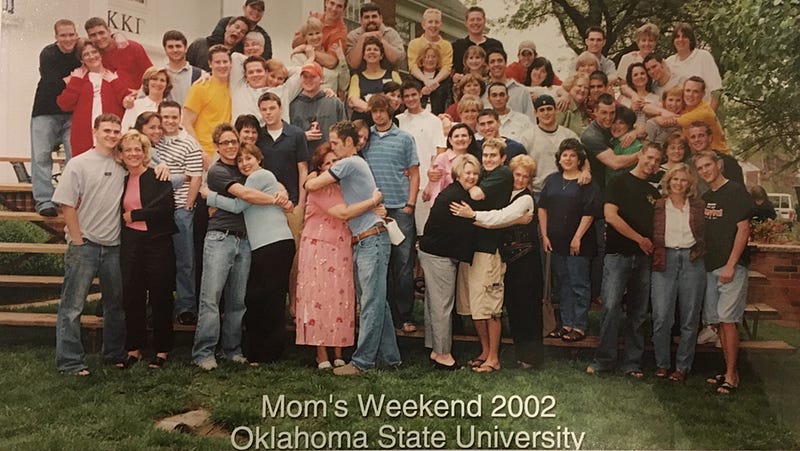
Dads were different. Like Saturn versus Earth different.
The group photos always seemed cold. There were some hugs happening, but they were those weird side hugs that Christians seem so fond of giving one another — the “keep some room for the Holy Spirit” variety. Everyone looks like a stoic philosopher; the smiles seem somewhat forced. When the dads came to the bar, they either became Frank the Tank or scanned the room like the Terminator. Most guys never introduced their dad to the girl they were interested in, either. Unlike my mom, my dad and I grabbed dinner and caught up before he had to leave. He had work the next day.
I’ve long wondered why the two photos turned out so opposite. Why did we suddenly look like “mama’s boys” when we so often tried to be “the man?” Why such a lack of intimacy with our fathers (and even our friends) when we seemed to be OK with it from our mothers?
Where’d You Learn to Be a “Man”?
The memory of the Dad’s Day picture has been nagging me, so I start questioning other men and my friends. At first my question was too complex: Who did you learn emotional intimacy from? Or do you feel you have any intimacy with male friends? Some guys laughed. Other stared and responded with something like, “WTF does that mean?” So I changed my question:
“Did your dad ever teach you how to be a man?”
The responses I’ve received range from learning how to change a tire or the oil in a car, or learning how to tie a tie. This made me think, if this is what qualifies as masculinity, we’re in deep shit. So I dug further.
“Did your dad ever talk to you about the mistakes he made in life? Was he vulnerable? Did he teach you how to date or romance a woman? How to pick healthy friends? Did he talk about sex, porn, or masturbation?”
It’s fascinating that in Judeo-Christian literature there’s an entire book of the Bible dedicated to teaching a son about money, friends, sex, adultery, making wise decisions, marriage, and business — the book of Proverbs, in case you’re wondering — but in America, the resounding answer I heard from men was, “No, my dad didn’t talk about those things.” If a father did talk about those issues, then it was usually one of those, “This is how sex works… good talk,” moments. But because we live in what I call a fatherless generation, Dad wasn’t often in the picture to begin with.
So where did we learn to become men?
The Influence of the Alpha Male
Most everyone who’s read Lord of the Flies remembers how a group of boys descend into barbarity, and can easily recall the moment where Piggy gets his brains smashed in. For most boys, growing up these days isn’t all that dissimilar. With no one teaching young men virtue, character, or responsibility, the alpha male emerges thinking he has some semblance of how the world works, and so the other boys follow his lead. Sometimes the alpha male lands that leadership position because he’s mimicking problematic behavior that’s been demonstrated by a shitty father figure at home, which his friends may consider cool, since they don’t have positive male representation around them. Dad shows him porn, so he shows it to his friends, who then learn early on to objectify women. Dad talks about sports all the time and can tell you where every player on the Patriots played junior varsity football, so his alpha son gets his friends into sports and berates them for not having an encyclopedic knowledge. Dad talks about women with misogynistic overtones, so he and his friends mimic him and begin to talk that way too. Dad reminds his son that real men don’t cry. Real men act tough all the time. Real men get angry when insulted. Real men don’t show their emotions.
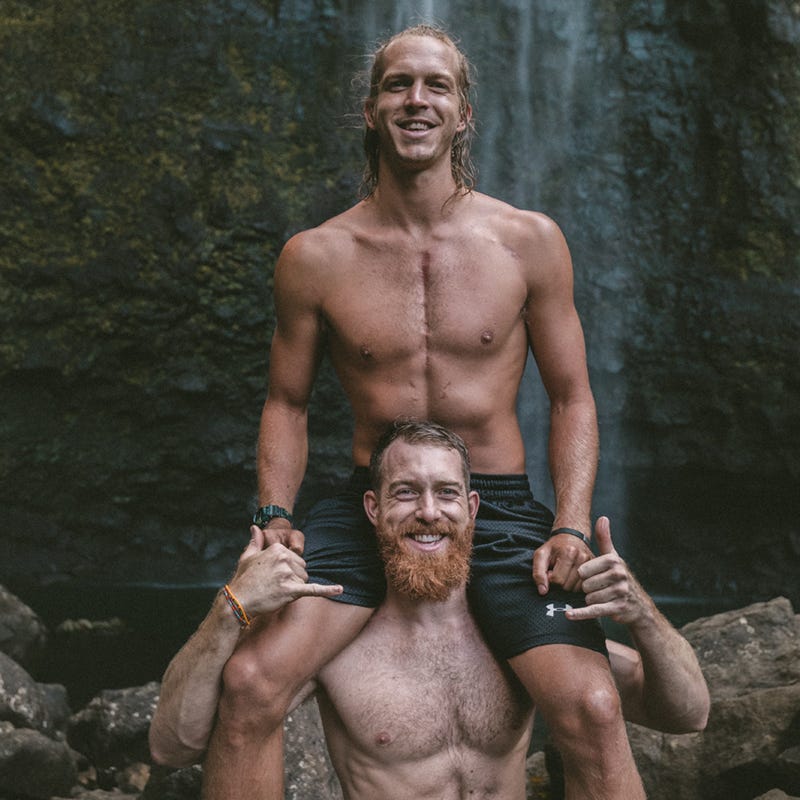
It doesn’t all come down to just one alpha’s influence, though. Many of these behaviors and ideas permeate young boys’ minds through things they’ve seen or heard in the media and online. The wolves teach the wolf pups how to become wolves. But we don’t run in packs anymore. We prefer to lone wolf it. Or if we do run in a pack, we never display weakness for fear we’ll be turned on and devoured.
It’s a lonely world when you don’t have friends you can have deep conversations with. It’s much more common to find yourself in male friendships where you can’t express your angst or pain without fear of being labeled a pussy. There’s no camaraderie. Aside from guys you grab drinks with after work or go to a sporting event with, the extent of your relationship is superficial. When you don’t know how to manage your emotions, you won’t know how to handle rejection, dating, fear, loneliness, or sadness — let alone anything else. Virtues like character, loyalty, love, humility, courage, and vulnerability are replaced with vices like anger, jealousy, vanity, and pride.
While men desperately crave emotional intimacy with other men, some of us have built up callouses so tough that even the notion of deep connection is considered effeminate. Instead, men lash out with deadly violence and dive head first into asynchronistic digital intimacy as opposed to real relationships.
Getting Bombed in Austin and the Porn Patch
Every man can tell how many goats or sheep he possesses, but not how many friends.
— Marcus Tullius Cicero
When the package bombings that rocked Austin, Texas, made the news this past March, friends called to check and see if I was anywhere near the explosions. Once they learned I was fine, they asked if the bombings carried the markings of someone with military expertise, due to my combat experience.
All around Austin, fear ran rampant as rumors were passed as fact. Neighbors informed me that our area of town should expect to be hit next. I laughed at their misinformed panic, fueled by the fact that we love to believe what we want to hear — provided it lines up with what we already assume.
When I explained that the Austin bombings carried the mark of an amateur who probably learned from YouTube, the dark web, or a jihadi website, people then asked about motive. While everyone still seems to be searching for it — since bomber Mark Anthony Conditt’s confession video didn’t offer any definitive explanation — I think it’s right in front of our faces. The statement made about Conditt’s confession video by Austin police Chief Brian Manleyexplained that this was “the outcry of a very challenged young man talking about challenges in his personal life that led him to this point.”
People were caught up in semantics after Manley’s statement, wanting to know whether the bomber was a terrorist or whether his motive was racially-based, since two of the victims were prominent members of Austin’s black community. I think the more simple truth is — like other men in our generation — Conditt was lonely, isolated, and bought into the view that men express anger and hurt through violence. As I stated in another piece, we’re dealing with a generation that no longer has the skills necessary to cope with hardship and adversity. People are chronically lonely even though they’re more connected than ever. Notice there are zero media reports in which they interview Conditt’s friends or past girlfriends, even. The only people in the interviews are old acquaintances from school or church. And don’t hold up the penalty card as if his dad provided sufficient care because he was raised in a religious home. Many times, religious homes can be the most emotionally vacant place for a young man.

One thing I feel would confirm my suspicions about the Austin bomber is whether he regularly consumed porn. Hear me out: Since we have no reports on friends or past girlfriends, one thing most lonely men do is watch porn. Just get on 4Chan or a similar site and the chatter often revolves around porn while simultaneously making fun of themselves for living in their parents’ basements. It’s an easy patch for the lack of emotional intimacy they crave with a real human.
Can’t get a date? There’s porn for that.
Don’t know how to talk to a woman? There’s porn for that.
Get rejected when you ask a girl out? There’s porn for that.
In my line of work, I counsel a lot of young men through porn addiction. They always come in thinking porn is the issue, but it’s always symptomatic of something much deeper. Out of each man I’ve counseled, I’ve discovered that they all lacked emotional intimacy with their dad growing up. While that may sound ludicrous, consider this excerpt from Dr. Joshua Straub’s book Safe House.
A team of researchers at the John Hopkins School of Medicine set out on a 30-year study to find if a single related cause existed for five major issues: mental illness, hypertension, malignant tumors, coronary heart disease, and suicide. After studying 1,377 students over thirty years, the most prevalent single cause wasn’t what everyone thought. They found that the most significant predictor of these tragedies was a lack of closeness to the parents, especially the father.
The Warrior Poet
Late one evening I stumbled out of a dusty building like a drunk pirate not quite used to walking on land. My head was spinning from the news I had just received. I wanted to vomit and scream all at the same time. The Iraqi base I was stationed at in the middle of Ramadi remained still while the whirl of generators filled the night, my shuffling adding to the noise. Taking another step, I collapsed into the dirt and wept until my tears formed mud on my hands and face.
It would be my friend Greg who would find the shell of a man lying on the ground with a muddy, tear-streaked face.
“She’s leaving. She’s leaving… god, she’s really leaving,” is all I managed to get out while sobs racked my body.
Thirty minutes ago I’d gotten the devastating news about the end of my relationship back home. Iraq was a hard enough place to deal with anyway, but now the person I loved most was gone. Greg leaned me against his barrel-shaped chest and hugged me while I cried. What he said that night made all the difference.
“You’re not alone… and we’ll get through this together.”
Many view the military as the epitome or last great bastion of masculinity. Even English writer Samuel Johnson once remarked, “Every man thinks meanly of himself for not having been a soldier, or not having been at sea.” Each time men learn I served in the military and in combat, I often hear similar sentiments. “I wanted to enlist, but have a medical condition/parents wanted me to go to college/[insert reason here].” While many men (but not all) see the military as a mark of masculinity, what they fail to recognize or acknowledge is the deep and emotional bonding that occurs amongst soldiers. Instead they paint us solely as warriors and never poets with deep feelings.
Of the men I served with I can tell you about their life stories, fears, victories, relationships, and struggles. We’ve cried, hugged, laughed, and shared some of our deepest secrets with one another.
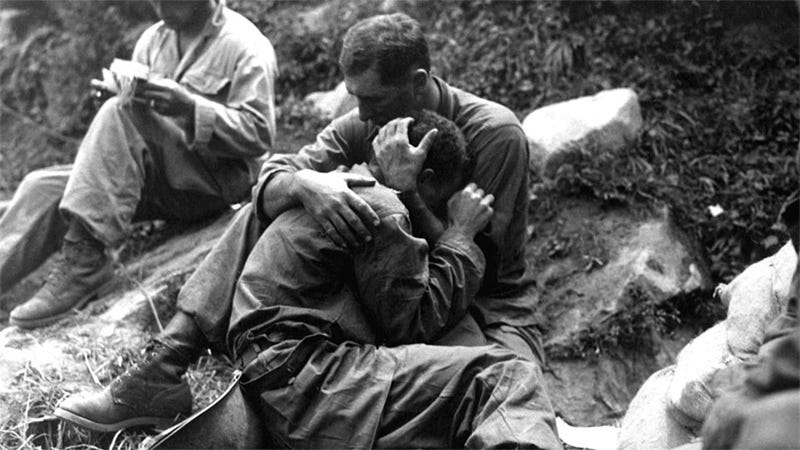
While post-traumatic stress disorder (PTSD) gets lobbed around like a grenade in a china store as an explanation for why soldiers are killing themselves at an endemic rate, I believe the answer is much simpler. We’re lonely and lack the emotional intimacy we once had with our brothers in arms.
Those who ascribe to the toxic view that men should stifle their emotions are likely unaware of a soldier’s capacity to feel deeply — due in large part to the relationships we foster — and their possession of a so-called “effeminate” side.
Oh Fathers, Where Art Thou?
”The price good men pay for indifference to public affairs is to be ruled by evil men.”
— Plato, “The Republic”
As a child, I jumped off houses trying to mimic Superman. I microwaved spiders in an attempt to transform into Spiderman. Every stick was a sword. Apples became grenades. Crackers were carefully bitten into the shape of guns as my brother and I carried out invisible cracker wars with our snacks.
But I also drew and loved art. I sang in a choir. I played with Barbies. I wrote poetry and stories.
There is currently a two pronged assault on young boys.
- We view roughhousing, playing with toy swords, and fake war as a sign that our boys will become psychopaths because of recent events.
- Men falsely believe sensitivity and visible displays of emotions are signs of weakness.
This leaves a lot of young men growing up confused. We don’t engage in the healthy types of play we need to bond, and we don’t get the emotional connection we need from fathers or other men. This leaves men apathetic and indifferent when they feel they can be neither, and thus we retreat into our digital worlds of lethargy.
Today, many good men sit on the sidelines while evil continues to infect the masculine soul like a cancer. We’re not teaching young men virtue or character, but vice. We’re telling them, tamp down your feelings, but also don’t be too masculine because that’s bad. The internal warrior gets crushed, and the poet is labeled a sissy.
I’m not sure what the answer is to all this, but I know it begins with strong male figures “fathering” other men. It will take men of integrity who want to change our culture from within, not those who scream from their social media soapbox. Any change that happens will be built on the backs of one-on-one mentoring between men of character and their pupils lost and adrift in today’s culture.
It will take men of honor.
It will take courage in a world that promotes vice.
Only then can we create warrior poets.
WRITTEN BY
Benjamin Sledge
Storyteller | Veteran | Metalhead | Designer | Bleeding on a page just makes it more authentic: https://blog.heartsupport.com
Casual Christian Accepts Christ As His Lord But Not His Savior

CALHOUN, GA—Admitting that he certainly likes the son of God but “doesn’t exactly love the guy, per se,” self-described casual Christian Brian Neely disclosed Monday that he accepts Jesus Christ as his lord but not his savior. “Listen, I know Jesus is the King of Kings, but I’m pretty sure I can deliver my own soul from eternal peril and reconcile myself with God the Father just fine on my own,” said Neely, 35, who was raised Catholic and was taught to look into his own heart, but who “would never in a million years ask for help entering into the Kingdom of Heaven.” “Don’t get me wrong, Christ’s undying love and eternal wisdom guide me in my never-ending quest to lead an honest life, a life that reflects His values and teachings, but rescue us from the wages of all sin? I don’t care who your dad is, that’s a lot to ask from anyone.” Neely added that, while he finds God to be good, he is personally still on the fence as to whether He is, in fact, great.
Charles Aznavour – Yesterday When I Was Young ( Hier Encore )
Book: “The Power of Eight”
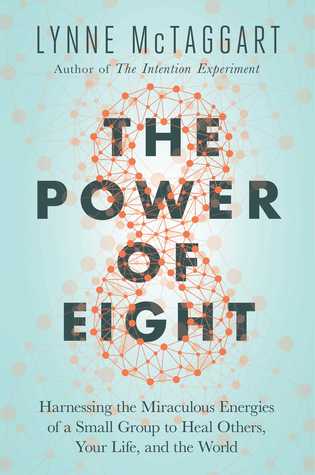
The Power of Eight: Harnessing the Miraculous Energies of a Small Group to Heal Others, Your Life, and the World
“This is a monumentally significant book, a once-in-a-generation work that will turn the tide in how we unleash the power of healing for each other and for the world. Drink in its meticulous and transparent scientific method, its countless uplifting stories of vivid healing breakthroughs and its breathtakingly luminous vision. Then go manifest The Power of Eight.” —James O’Dea, peace activist, former President of the Institute of Noetic Sciences and author of Soul Awakening Practice
Discover how to tap into your extraordinary human capacity for connection and healing, using astonishing new findings about the miraculous power of group intention and its boomerang effect, in this new book by the author of the international bestsellers The Intention Experiment and The Field.
What we send out into the universe comes back to us, magnified. Although the power of intention—the energy of positive thoughts—is widely accepted as an influential force in transforming lives, the exponential power of group intention has never been explored, until now. In The Power of Eight, Lynne McTaggart, an expert on the science of spirituality, reveals her remarkable findings from ten years of experiments about how group intention can heal our lives—and change the world for the better. Drawing on hundreds of case studies, the latest brain research, and dozens of McTaggart’s own university studies, The Power of Eight provides solid evidence showing that there is such a thing as a collective consciousness. Now you can learn to use it and unleash the power you hold inside of you to heal your own life with help from this riveting, highly accessible new book.