Portrait of a happy loving couple traveling together in Paris and pointing away by the Arc de Triomphe
January 8, 2020 (theonion.com)
PARIS—Stopping every few blocks to tilt back their heads in wonder, idiotic hick tourists on their first visit to Paris made utter fools of themselves this week by unabashedly gawking at the timeless splendor of some of the most beautiful examples of architecture in human history. “Check out these dopes goggling at this breathtaking testament to the melding of engineering and human creativity,” said Eiffel Tower tour guide Henri Bergeron, disdainfully pointing out a large group of vacationers clearly dumbstruck by the zenith of mankind’s structural accomplishments. “Oh, what, they’ve never seen a heart-stopping tribute to humanity’s potential before? Year after year, these vulgarians come to Paris to clog our streets, mangle our language, take up too much space in cafés, and openly marvel at the stunning achievements of the human mind and spirit. Typical Americans.” Bergeron added that he doesn’t come to their small towns and gawk at their stupid triplexes.
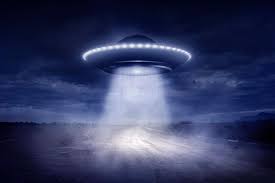
On Sunday, The Observer published an interview with Helen Sharman, the first British astronaut. In it, she details everything from her childhood to her experience in space — as well as her firm belief that Earth isn’t the only source of life in the universe.
“Aliens exist,” the astronaut insisted, “there’s no two ways about it.”
Numbers Game
Sharman doesn’t claim to have seen any extraterrestrial life during her jaunts to space. Like many others, she believes that the universe is just too massive for Earth to reasonably be the only place where life exists.
“There are so many billions of stars out there in the universe that there must be all sorts of different forms of life,” she told The Observer.
Among Us
In the interview, Sharman also notes that the forms of life that exist beyond our planet might be nothing like the life found here on Earth. The astronaut even suggests that the differences could make aliens invisible to us — meaning that they might already be on Earth and we just don’t know it.
“Will they be like you and me, made up of carbon and nitrogen? Maybe not,” Sharman said. “It’s possible they’re here right now and we simply can’t see them.”
David Hume, a master of paradox and wit, is often said to be the greatest English-speaking philosopher who has ever lived. He was a figure of the eighteenth-century Scottish Enlightenment, and yet, like the Romantics, he deflated the status of reason, and elevated that of emotion, the natural, and human animality. Once regarded as the great arch-sceptic, he is now considered to be a naturalist, incorporating humans into empirical enquiry, as part of, rather than transcending, nature. He treated the human mind as a scientific specimen to be explained, and his diagnosis – that we are driven by unconscious mental mechanisms, habit and emotion – influenced Darwin, Freud and cognitive science, Bentham’s Utilitarianism, Logical Positivism and the philosophy of science.
Hume was born in 1711 near the English–Scottish border. According to Lord Charlemont who met him in middle age, no one looked less like their real character – Hume’s obesity conveying more “the idea of a turtle-eating alderman than a refined philosopher”. But he had been skinny and “raw-boned” (his own description) when, after leaving Edinburgh University without a degree, he “found a certain boldness of temper [which led him] to seek out some new medium, by which truth might be established”. In pursuing this for the next three years, he was “infinitely happy”, until, at the age of eighteen, an unknown, almost-symptomless malaise (probably depression) deflected him from study. After one of his several intermittent spells of unsatisfactory employment (he was, respectively, a merchant’s clerk, librarian, tutor to a mad marquis, secretary to a general and to an ambassador), he went to France in 1734. While staying at Descartes’s old college La Flèche, and amicably quarrelling with the Jesuits, he wrote the Treatise of Human Nature. The first part of it was anonymously published in 1738, when he was twenty-seven, the second in 1740, and, as a whole, it “fell deadborn from the press, without even reaching such distinction as to excite a murmur among the zealots”. There is much dispute over whether Hume’s Enquiry Concerning Human Understanding (1748) and Enquiry Concerning the Principles of Morals (1751) were intended to re-formulate or replace the Treatise. He twice applied for philosophy professorships, and was each time rejected, mostly on the grounds of his (denied) atheism; and he was chiefly renowned for his essays (several of which critiqued religion), his histories of England and his wit. Much loved and feted in Edinburgh, London and Paris, he died (probably of bowel cancer) in 1776. Adam Smith, one of his many illustrious friends, declared him “approaching as nearly to the idea of a perfectly wise and virtuous man as perhaps the nature of human frailty will permit”.
About a hundred years later, a partial translation of the Treatise woke Kant from his (self-described) “dogmatic slumbers” – he realized that, according to Hume’s intricate dissection of human thinking, metaphysics was impossible. Descartes had claimed that the mind is what we know best, and that it is free – exempt from the causation that governs the material world. Hume wrote that “the essence of mind is equally unknown to us with that of external bodies”. Extending Descartes’s “mechanical philosophy” into the mind, he set out to discover the mental equivalent of Newton’s laws of physics. Descartes, Locke and other seventeenth- and eighteenth-century philosophers (impressed by the discovery that sound, rather than being “out there”, is in fact the result of vibrations interacting with our ear drums and auditory nerves) held that what we actually perceive are not things around us but the “ideas” that either accurately copy, or somehow systematically represent, those things; our knowledge, therefore, consisting of the combination of “ideas”.
Hume disliked the way “idea” lumped together raw, instantaneous sensory experience with concepts and memories. He used the term “impressions” for the immediate elements of sensibility – our perceptions of colour, taste, shape, for instance, and of emotion and desire – in contradistinction to the “ideas” which (he said) are fainter but more lasting copies of these impressions, and which, in turn, “return upon the soul” to produce new impressions. Having received an impression of pain from touching a thistle, for instance, you form and store a less vivid idea of the pain, and that idea is reawakened into an impression of aversion whenever you come within touching range of a thistle.
“Impression” suggests the metaphor of an imprint on malleable wax by something outside it, but Hume was more consistent than other empiricists who claimed that our ideas are all we perceive, while simultaneously claiming that those ideas resemble, or fail to resemble, the things we can’t perceive. He was non-committal as to what, if anything, causes impressions. Instead he concentrated on working out what the mental mechanisms must be by which (the way he envisaged it) little units of experience and thought are pinged into different channels and combinations.
Hume postulated three “principles” (a notion of resemblance, of “contiguity” and of the cause and effect of present impressions) which move the mind from one impression or idea to some other idea – although not ineluctably, merely by “a gentle force”. We can, of course, combine, augment and modify our ideas as we please in imagination, but we cannot choose whether or not to believe these imagined notions: our beliefs cannot be “commanded at pleasure”. Depending, instead, on the forcefulness with which ideas strike us, our beliefs are more visceral than rational. And, in order to qualify as genuinely constituting knowledge, a combination of ideas has to be ultimately traceable back to the impressions from which it was first copied (which could, as with Julius Caesar’s recorded account of crossing the Rubicon, be someone else’s impressions). Apart from verbal definitions and logical “relations of ideas” (which, if true, are non-contradictable), “facts” that are not based on original impressions are not facts at all; books containing them, Hume wrote, should be thrown on the fire.
The corollary of Hume’s system is that, because we lack the impressions that are required to be the initial foundations to our ideas, our most fundamental beliefs are baseless. We have impressions (and subsequent ideas) of colours, shapes, etc, but lack any impression of their continuous and self-standing existence when not perceived – so why are we so confident that there is a world beyond our experience? Similarly, when we introspect, we encounter numerous fluctuating impressions (“of heat or cold, light or shade, love or hatred, pain or pleasure”), but an impression of self eludes us; therefore our idea of it is invalid. “Ourself, independent of the perception of every other object, is in reality nothing”, just “a bundle of perceptions”, or something like “a republic or commonwealth”, the citizens of which are only nominally united. Again, we see one type of thing or event constantly preceding another type of thing or event, and say the first causes the second, but however many times we experience that sequence of things or events, nothing new is added to our initial experience of it. The first time we witness a conjunction of events/objects is no different from the next and the next; each is just a repetition of the same kind of impressions we’ve already had; and, if one instance of cause and effect doesn’t show us necessity, then many such instances won’t either. We have no impression of what makes the second follow from the first; yet, without an impression of the necessity that connects them, we have no basis for believing in causation. In any case, just because up until now bread has always nourished us, or we have incessantly seen medium-sized things fall when let go of in mid-air, what reason do we have to assume that these hitherto “constant conjunctions” will go on happening? To argue that the future will be like the past because it always has been is “taking that for granted, which is the very point in question” – why should it be? There is “no known connexion between [a loaf’s] sensible qualities and [its] secret powers”, for instance. Why assume that, because certain sensible qualities are now, and have always been, attended with the power to nourish, they always will be? “Your appeal to past experience decides nothing in the present case”, said Hume.
It is no help in escaping Hume’s iconoclasm to say that we now know far more than eighteenth-century scientists about, for instance, bread’s then-“secret powers” – that it contains carbohydrates, and that the hydrogen and oxygen in the carbohydrates decompose to release energy. Hume is surely right that any such knowledge “only staves off our ignorance a little longer”. However far down we go in studying nutrition or anything else, the connection between disparate things and events remains unnecessary and unknown, which means that ultimate explanation eludes us. Induction – inferring from repeatedly observing similar particular instances of an object or event to general laws about it – is the very lynchpin of scientific enquiry, but thanks to Hume, it has become a problem, and none of the claims to solve it is successful.
If the external world is so dubious, where is everything? “Where am I, or what?” cried Hume in the Treatise. He was more rigorously sceptical than the original Sceptics – unlike theirs, his degree of scepticism, and of scepticism about his scepticism, fluctuated according to mood, food and weather, he said, and couldn’t be continuously sustained. Not just because, whenever feeling himself “inviron’d with the deepest darkness”, in “philosophical melancholy and delirium”, he would go out, dine, play backgammon, and be “merry with [his] friends”; but because he always found himself forced to “yield to the current of nature, in submitting to my senses and understanding”.
Although, as a philosopher, he doubted causation, induction, the external world, the self, “as an agent, I am quite satisfied” about them, he said. Like a boat that glides forwards due to momentum, our mental mechanism, without our awareness or volition, seamlessly bridges the gaps in our (in fact discrete) perceptions, so that there seems to be a continuous world of things existing independently of our perceiving them.
Each observation of “constant conjunctions” – that is, pairings of things/events that stand in an apparent causal relation – is, strictly speaking, the same. Yet something does change – after we have witnessed a few examples, we come to believe that the second half of the pairing necessarily follows from the first: when we see one billiard ball shooting straight towards another, we come to feel that the second must move on impact. We infer that the ball will roll away, not from reasoning but because our “natural instincts” – our imagination, twinned with custom or habit – “determine” us “unavoidably” to draw that inference. “The necessary connexion depends on the inference, instead of the inference’s depending on the necessary connexion.” As for continuity of the self, Hume, with the liberality of a great philosopher, admits that he is baffled by it, but “’Tis evident, that the idea or rather impression of ourselves is always intimately present with us”, and is clearly the “object” to which both pride and humility are directed. At any rate, it is not (à la Descartes) up to us to “assert” or not assert the truth of the ideas we have. The units of experience are involuntarily moved by forces that we have no access to.
Heralding modernity, Hume argues that reason is not our essence – that, as Arthur Schopenhauer would say, “we are not winged cherubs without a body” but rooted in the natural world. Where Descartes says that any beliefs without rational justification should be rejected, Hume argues that just because we have no rational grounds for many of our beliefs, it does not mean that we have no reason to hold them. Our beliefs are species-specific, not non-perspectival and absolute. Descartes’s project for a purely objective conception of the world is impossible. Indeed how fortunate that we rely on non-rational instincts that work “infallibly”, unlike the “fallacious” (in practice) deductions of reason.
But isn’t Hume being rather devious? Even as he speaks of things (the external world, self, necessary connection) seeming a certain way to us, he concurrently says that they don’t in fact (perceptually) seem that way. If our “impressions” are the ultimate units of experience, then surely the first sort of “seem” is illegitimate. He speaks at times of reason as an inferential instinct, a sort of “mechanical power” that we have in common with “the beasts”, but elsewhere he speaks of it as if it were a nature-transcending periscope, at odds with our survival instinct, and luckily thwarted by it. And while claiming that we have no impression of a “necessary connexion”, and therefore nothing on which to base a valid idea of it, he relies on causation to explain how it is that we come to have the (unjustified) sense of necessary connection (and of much else as well).
Is there, then – even though it is impossible for us to gain reliable empirical evidence for it – an external world? Does it contain our minds, and thus the “principles of connexion” which cause us – even though we never experience them as such – to believe in the existence of causal necessity, a material world and our selves? How, anyway, is Hume entitled to pontificate about the impressions and ideas, and their “principles of connexion”, in his own mind or anyone else’s except by reasoning about how they must operate? He talks as if mental units are propelled towards one another like tiny balls in a game of bagatelle, as if he can observe them from the outside, as it were. Whereas surely, when they are his, he only observes their content – what they are of (colours, smells, constant conjunctions). He has to infer how they function, and that other people’s impressions and ideas work similarly to his own. In neither case can he observe the little units that (in his metaphor) act as containers of experiential content, or the operations that propel them.
Hume dances daintily between paradoxes, extracting truth from between the teeth of contradictions. He does the same in his moral philosophy. Any moral system he’d encountered, he said, makes it seem that moral prescriptions are to be deduced from factual observations – that we derive “ought” from “is”. But this is to ignore that to rise from “is” into “ought” requires a take-off from a descriptive type of discourse and behaviour to speaking and acting in a quite different dimension. The “therefore” in “She is starving therefore I should feed her” is not a logical one. And where, Hume wondered, when we witness an act of “wilful murder” or of generosity, do we find an impression of the respective wickedness or virtue in either act? As with necessary connection, the impression we are looking for is not an “external” impression (an observable part of an act of generosity or of wilful murder) but an “internal impression” – a visceral feeling of approval or disapproval which results from observing such actions. Why? Because for all of us the desire for happiness, and aversion to suffering, are our ultimate motivations; and, unlike Bentham (whose Utilitarianism Hume inspired), Hume provides a mental mechanism (“sympathy”) that shifts us from self-interest to concern for others. He is not begging the question by using an already-moral term to explain morality naturalistically. “Sympathy” in his terminology is a pre-moral faculty for sensing viscerally, as well as deductively, the feelings of others as these are demonstrated in their behaviour, so that as with a violin’s vibrations transmitted from one string to another, observing (the evidence of) other people’s emotions plucks at our own. We naturally tend to be discomfited by seeing someone else’s suffering (unless he is our enemy) and prefer vicariously to enjoy his ease and pleasure. This automatic sensitivity to others’ feelings is our impetus to morality; and is not just an individually subjective feeling but more-or-less universal among the human species. It may not be rational, but, said Hume, “reason is inert”; by itself it can’t persuade us to move from is to ought. “Reason is, and ought only to be, the slave of the passions.”
Hume does enlist reason to smooth out the partiality and localization to which sympathy is prone, and, like Adam Smith, he invokes an impartial observer. Not entirely consonantly with the rest of his emotion-based morality, he also claims that we perceive moral values analogously to how we indirectly perceive sounds, tastes, colours, etc; not because they are as such in the fabric of the world but because our own human nature makes us apprehend certain features of reality in a certain way. No one denies the existence of moral distinctions, Hume said, except out of affectation, and the attempt to appear clever. Who could genuinely think all characters and actions to be equally likeable and commendable? Everyone “must often be touched with the images of Right and Wrong”.
What Hume says in his epistemology is equally applicable to his moral philosophy. “When we see that we have arrived at the utmost extent of human reason, we sit down contented; tho’ we be perfectly satisfied in the main of our ignorance, and perceive that we can give no reason for our most general and refined principles, beside our experience of their reality.” Belief has to be “founded on something natural and easy”; it tends not to be whole-hearted when “the posture of the mind is uneasy” or “forc’d and unnatural”. Strained philosophical reasoning may give us a view that is accurate but also – as in the clear-sighted bleakness of depression – diseased and abnormal. Our inadvertent, comfortable commonsensical beliefs are probably wrong, but, despite reason, we are compelled to hold them. We unwarrantedly believe that things are (mostly) real, connected and all right, and this normal maladjusted vision is healthy, and conducive to our own, and the species’, survival.
Clearly Hume himself often distorts his mind into uncomfortable positions, which is how he produces his beautifully convoluted and paradoxical philosophy. Hume reveals wheels within wheels, and where the wheels are is uncertain. But, as he said, “an object can exist, and yet be no where: and I assert, that this is not only possible, but that the greatest part of beings do and must exist after this manner”.
Jane O’Grady taught philosophy of psychology at City University, co-founded the London School of Philosophy and writes obituaries for the Guardian. Her book on Enlightenment philosophy will be published in January
Matthew Stelzner Please visit my website at www.stelz.biz and sign up for my mailing list to receive my newsletter, notices when new blog posts go live, and special promotions. I have a special promotion going right now, so sign up and you can get a special discount on my fees for private sessions.
In this series of videos I focus on a very rare alignment of three outer planets that has already come into alignment, but will become more precise over the next few weeks and then remain very powerful all year and extending into early 2021. I’m referring to a triple conjunction of Jupiter, Saturn and Pluto, and they have already moved within fifteen degrees of each other in the same part of the sky. They will be within ten degrees by February. They have not all been within this range of each other since 1981, and then they were only at that close range for about a month. Our incoming alignment will get as close as 4 degrees of precision, and will stay within an 8 degree range for a full 10 months, from March through the end of December. Prior to 1981 the last time all three were this close was in 1445, but again only for about a month. The last time we had an alignment as sustained and potent as our incoming one was over seven hundred years ago, in the year 1285. After 2020 there is not another close triple conjunction of these three outer planets until the year 3151. This alignment is an overlapping configuration of three cycles of time, (the Jupiter-Pluto cycle, the Jupiter-Saturn cycle, and the Saturn-Pluto cycle) each with their own independent range of meanings, but when combined creating a range of unique potentials. Throughout 2019 we experienced the first year that Saturn and Pluto came into exact conjunction since the alignment of 1981-1983. This configuration can be quite challenging and often brings both collectives and individuals into direct confrontation with Shadow material. It can bring a collective journey to the underworld and profound encounters with repressed contents of the human psyche. As Jupiter joins the alignment for the whole of this year it brings its gifts of expansion, upliftment and positivity. It can bring a smile into dark territories, and can help us see the hidden gifts in life’s suffering. This is an alignment that can help us see that life contains both comedy and tragedy, and that our pain can be redeemed by joy. What Saturn and Pluto can bring down low, Jupiter can raise back up. It is not uncommon for alignments like this to bring powerful swings from the depths to the heights, profound reversals where we move from defeat to triumph. There was a similar alignment (Jupiter in conjunction with Pluto and both 90 degrees square to Saturn) when Tolkien’s final book in the Lord of the Rings trilogy, The Return of the King, was published at the end of 1955. I don’t know about you, but it seems to me that the world has been heading towards Mount Doom this last year, but I have a lot of hope that we will find many unexpected allies to return us safely back home. We can see a consolidation of great power and wealth on the one side hoarding resources, and on the other a source of moral power reforged and strengthened like Aragorn’s sword Anduril. This energy feels like the mountains, beacons and castles of Lord of the Rings. It is time to light the beacons of Gondor, and receive the light of Earendil. Who is your fellowship for 2020 and who are your guides? This is definitely a mountaineering alignment, and I think it is a great time to be heading out on your own Mt. Everest expedition.These first couple months of the year its like you are heading towards base camp and building your strength. As we get into March and April everything really kicks in when Mars forms a tight quadruple conjunction with Jupiter-Saturn and Pluto. These four planets together are perhaps the best configuration for tacking big projects, excavating deep foundations that endure, and then slowly building your success with steely determination. This year there is incredible access to huge amounts of energy that can be directed with disciplined focus. This is the year we all can discover just how much energy we can martial towards our biggest goals. It is also a year we can adjust our goals with the wisdom that comes from knowing what is possible with our unique resources, and within the known boundaries of our limitations. It is important to not over-stretch or aim too high. We must draw on our life experience and set realistic goals from this grounded awareness. For me, it is all about staying on the middle path beyond extremes. There’s a safe zone we have learned to live within, where we remember our inner-child at really take good care of ourselves. Having said that, however, the middle path has many potentials and this is a year where the larger possibilities of your life might come to fruition. I wish you safe travels and send you many blessings.
Matthew Stelzner Please visit my website at www.matthewstelzner.com to see my availability for intuitive readings and to sign up for my mailing list to receive my newsletter, blog, and special offers. Please check out my previous videos: Very Rare Planetary Conjunctions: December 2019 to December 2020: https://youtu.be/CgWpnCpWkf4 The Portal of the Expanding Heart is Wide Open: https://youtu.be/h_5RuTOcpcU Very Rare Portal of Profound Love is Open: https://youtu.be/eW92GcNAHjM
There are several powerful and rare astronomical events occurring. First we have a New Moon that is in exact conjunction with the planet Jupiter. This can only happen at most once a year, but for it to be as exact an alignment as this one, it is more rare, and for it to align with the Solstice, rarer still, at most once in twelve years. In researching the rarity I found that there has not been an exact New Moon Jupiter triple conjunction this close to the Solstice since 1995, and before that, 1924. For there to also be a Solar Eclipse as is happening today, we’d have to go back even further to the previous century. This alignment is even more unique as it aligns at the start of a new decade. The power of all these factors coming together I feel makes it a perfect time for setting intentions for positive new beginnings and for ritual celebrations of abundance and hopeful visions of the future. With this alignment we have many cycles that are both ending and beginning. It is an opportunity for both integrating what is coming to completion as well as visioning the possibilities of new cycles and aligning with new timelines. The New Moon and the eclipse are exact at 9:15 pm California time today, which is when I would see the portal as being fully open, but I feel the portal entry period, as I discuss in this video, extends all the way until the next New Moon on January 24th. When a new moon is in conjunction with another planet, astrologers see it as an imprint for the entire month ahead, and so for this one to be in exact conjunction with Jupiter means that the first month of the new decade will carry its mark. Every month at the new Moon we mark the beginning of a new cycle of self care, the balancing of the light of day with the mysteries of the night, the integration of radiant selfhood and the nurturing of both self and others. It is an opportunity for fresh starts and the clearing of the old to make space for the new. For this New Moon to happen within days of the Solstice and the beginning of a new season makes this feeling of fresh starts even more potent, and for it to happen at the ending of a decade makes it a powerful opportunity to turn within and integrate all you have achieved and overcome over the past ten years, and also envision and set intentions for the decade ahead. That this special alignment is being supported by Jupiter brings an opportunity to make your own unique contact and find your own meaningful relationship with this planet. For astrologers, Jupiter is a mighty ambassador of hope, joy and abundance; of gratitude, generosity and good will. It is very much in alignment with the true spirit of these holy days of Solstice time. This time where we remember to laugh and come together with family and friends to express our gratitude and love towards each other. To cuddle up and be merry, to move out of resentment and into peace, kindness and hopeful visions of the future. Every year for two weeks the Sun is conjunct Jupiter, this means that when you look in the direction of the Sun, and I feel this is especially potent at sunrise and sunset, you can imagine that directly in your line of sight, way out past the Sun, Jupiter is moving through time-space and combining with the consciousness of the Sun to pull you towards the timelines of abundance and hope, the timelines of optimism and the capacity to find humor even in the midst of life’s challenges. The Sun Jupiter cycle of time is the one where we get to honor our achievements and see ourselves in a positive light. It is the cycle that takes us higher in the direction of good fortune, and it is an opportunity to navigate towards our lucky star. Let yourself be pulled onto positive timelines and remember that there are silver and gold linings that are sometimes not available to our rational minds, but often can be seen from higher perspectives. When Jupiter is conjunct the Sun it is also at it’s farthest distance from the earth, and it is a good to time to travel there in our imaginations and receive the most expansive perspective on our lives. It has been twelve years since Jupiter was last in this position, so think back over the last decade and then go back just a bit more. Where were you for the Solstice of 2007, and can you see how far you’ve come? Do you feel pride in all that you have achieved? If you do not, then you’ve got to climb higher. Find a higher frequency perspective and you will see yourself in a better light.
TEDx Talks Tom Chi認為「萬物都有相關聯」或「事出必有因」的說法,其實不只是純粹哲學的形上思考,而是有各種科學根據證明這個理論的。而找出這個現象象徵的意義是什麼,或許就能解開人類之所以存在的秘密….? Tom Chi has worked in a wide range of roles from astrophysical researcher to Fortune 500 consultant to corporate executive developing new hardware/software products and services. He has played a significant role in established projects with global reach (Microsoft Outlook, Yahoo Search), and scaled new projects from conception to significance (Yahoo Answers from 0 to 90 million users). His current focus is delving into human development issues with social entrepreneurs around the globe, rebooting the fundamental frameworks of entrepreneurship itself, and teaching a limited number . . .
This introduction to the writing and preaching of the greatest medieval European mystic contains selections from his sermons, treatises, and sayings, as well as Table Talk, the records of his informal advice to his spiritual children.
Golden State Warriors coach Steve Kerr speaks at a news conference before the team’s NBA basketball game against the San Antonio Spurs in San Francisco, Friday, Nov. 1, 2019. (AP Photo/Jeff Chiu)Photo: Jeff Chiu / Associated Press
These are confusing times.
We’re plunging into the heart of the NFL playoffs, with all kinds of great matchups and compelling stories. Meanwhile, the threat of war looms.
What should we do? Should we wallow in football and ignore the real world? Or put aside the fun and games as long as our globe is as unstable as a lopsided basketball?
Steve Kerr has offered a suggestion. Since the Warriors’ head coach continues to guide his team, we can assume he still sees a value in sports. But Kerr also urges sports fans to not lock out the real world. There is room for both.
Before a game last week, Kerr was asked why he has been so busy tweeting about political matters.
“I’m worried we’re going to end up in another war,” Kerr explained. “I try to use my Twitter platform to remind people to do their homework before we all blindly wave the flag and get ourselves into another mess like we did in Iraq.”
Remember Iraq? The Gulf War? The U.S. and allies began bombing Iraq on Jan. 16, 1991. The Super Bowl was 11 days later in Tampa.
I was there. Fear was in the air. Security was super tight. Military helicopters hovered over the stadium. The halftime show, featuring New Kids on the Block, was not televised by ABC. Instead the network aired a war update with Peter Jennings.
I camped out in the media tent in front of the TVs, one eye on the game and one eye on the war. TV gave us live feeds from Saudi Arabia of American troops watching the Super Bowl. We watched them watching us.
On the grass, Scott Norwood missed a kick, the Giants won. On the sand, the bombing continued, nobody won.
Three decades later, here we are again, heading to Florida for another Super Bowl while heading to the desert for another possible conflict.
Enjoy the games, but consider taking Kerr’s suggestion. No matter which way you lean politically, pay attention, do your homework, be informed, think, listen, express your opinion, vote. American stuff. Go, team.Scott Ostler is a San Francisco Chronicle columnist. Email: sostler@sfchronicle.com Twitter: @scottostler
Scott Ostler has been a sports columnist at the San Francisco Chronicle since 1991. He has covered five Olympics for The Chronicle, as well as one soccer World Cup and numerous World Series, Super Bowls and NBA Finals.
Though he started in sports and is there now, Scott took a couple of side trips into the real world for The Chronicle. For three years he wrote a daily around-town column, and for one year, while still in sports, he wrote a weekly humorous commentary column.
He has authored several books and written for many national publications. Scott has been voted California Sportswriter of the Year 13 times, including six times while at The Chronicle. He moved to the Bay Area from Southern California, where he worked for the Los Angeles Times, the National Sports Daily and the Long Beach Press-Telegram.
Consciousness, sexuality, androgyny, futurism, space, the arts, science, astrology, democracy, humor, books, movies and more