Coronavirus and Climate Change: How to Save Lives During Crises

ILLUSTRATION BY PETER ZELEI IMAGES / GETTY IMAGES

A Canadian emergency doctor connects the dots between human and environmental health.

BY BREANNA DRAXLER  – APR 13, 2020 – yesmagazine.org

As COVID-19 continues its deadly sweep across the world map, Canada stands out. The country has markedly fewer cases than, for example, the U.S. As of April 8, Canada had 18,000 cases to the United States’ 403,000. Despite the difference in response and scale, the virus is a major disruption to Canadians and their economy. And disruptions, as historic examples reinforce, create opportunities for positive change.

Courtney Howard is an emergency doctor in Yellowknife, Canada. She serves a patient population that, so far, has only seen one case of COVID-19 but is living in one of the most rapidly warming climates in the world. Howard’s emergency department serves the entire high arctic in Canada’s Northwest Territories, including many Indigenous and frontline communities experiencing climate change firsthand. This has huge consequences for health, including food security, cultural sharing, and mental health. She sees the response to coronavirus and the resulting investments as the perfect opportunity to address both new and long-standing threats to health.

The Canadian government, for example, has announced plans to fund the cleanup of abandoned oil and gas wells, which are a toxic risk to communities and would employ oil and gas workers who have been laid off. Such actions, Howard underscores, must support people’s health now, improve resilience to crises that may happen in the future, and decrease the risk of those crises occurring. 

Here she shares her experiences from the COVID-19 crisis and insights on how the outcomes can and should inform conversations on climate. Howard says prioritizing mental health is key to tackling both of these tough issues, which is why she conducted this interview while cross-country skiing.

This interview has been edited for clarity and length.

Breanna Draxler: How does being an emergency doctor influence your response to crises?

Courtney Howard: I have gut-level reflexes around the need to act quickly in the case of fast-moving illness. I’ve had really discreet experiences of both having acted quickly enough and saved the patient, and having acted in a way that later I went back and said, “That patient died. Could I have done something differently? Could I have been faster? Could I have called in help earlier?” Those are by far the most difficult experiences of any doctor’s career. They’re the ones you remember in the pit of your stomach and keep you awake at night. And so eventually, you end up with an almost Pavlovian response to a time window.

Half of the doctors on my board right now, of the Canadian Association of Physicians for the Environment, are emergency doctors, and I think it’s because we really can’t sit still if we see that lives are at risk and it’s a time-dependent situation. And so, the need to act quickly within time windows and situations where the factors are outside of your control has been shown to be super key in COVID and it’s equally true in climate. 

Draxler: How so? Can you speak to how climate is going to exacerbate future crises and make them more frequent?

Howard: I was thinking today, imagine if the Australian wildfires had happened a couple of months later. Or this pandemic had started a couple of months earlier to coincide with the Australian wildfire season. We could have had two incredible crises at the same time. That could easily happen, so we need to look at these increasing weather-related disasters, wildfire-related disasters, and the increasing possibility of further infectious disease related pandemics.

Draxler: Can you talk more about the commonalities that the coronavirus has revealed?

Howard: It’s an event that at first seems unrelated to climate, but it has a lot of consequences for the conversation around climate and health. 

I have gotten involved quite early in a movement called “planetary health,” which is the health of human civilization and the state of the natural systems upon which it depends. It turns out that only about 20% of overall health status comes from the work we do inside health structures. What determines the rest are ecological determinants of health—things like soil, climate, water, biodiversity. You can think of those as a nest underpinning everything else, because that has to be stable for us to have the concentrated resources we need to be able to do things like build roads and hospitals and schools and homes. Those financial and economic systems give rise to what we term the social determinants of health, which are things like housing and income and education. Those have direct impacts on our health, and they also are the things we need to have functioning health care structures. 

The whole coronavirus outbreak is a giant wake-up call in terms of planetary health, because what it’s saying is, “Hey, there’s a lack of care at the intersection of humans and the natural world, and that’s what allowed a zoonotic virus to make a jump into humans.” 

Draxler: What about mental health; what is the impact there?

Howard: Before this started, I was doing a lot of work around eco-anxiety and ecological grief, so heading into this, a lot of people are really, really worried and grieving the changes that we’re anticipating and already seeing in the natural world.

From what I’m seeing online, and also what I’m seeing in the emergency department, people are really anxious right now, too. This is a time when the COVID crisis is demanding a lot of us in terms of buffering different worries and stresses and changes. We’re going to emerge from this really tired, and some of us will be traumatized, and some of us will be grieving. We’re going to look up and realize that “Oh, phew. Now we’re through that crisis, but the other crises didn’t go away.”

That’s the reality: Sometimes there are two emergencies happening at the same time, or more than two, and you have to deal with them both at the same time. Now, I think we are appropriately focusing most of our energy on this problem that needs us the most, but those other emergencies are in the background. And we need to realize that when we lift our eyes up from the COVID emergency, we’re going to be tired and we’re going to hope that those other emergencies are as optimized as possible. 

Draxler: What do you mean by optimized?

Howard: Given that we’re in this situation where the economy requires stimulus, this is a chance where we can help solve two crises at the same time. We absolutely need to do that. Every bit of public funds ought to be allocated with health in mind. That means attention to all of the determinants of health—the ecological determinants of health, the social determinants of health, and actual health systems. 

What I think is super important right now is making sure that the stimulus funds are going toward the things that both increase our resilience to future disasters and that make them less likely.

Draxler: How do we make sure that happens?

Howard: The book I’m reading right now is Joseph E. Stiglitz’s People, Power, and Profits. What he points out, with regards to the U.S. system, is that a concentration of wealth inevitably results in a concentration of political power. Power comes up every once in a while, as a word, but the concept of inequality and the different ways that that impacts our health in a really dangerous way is something that I think we need to talk more about, because, especially looking at the U.S. context right now, it’s really hampered the pandemic response. 

The thing is, a pandemic is something that shows that we’re all in it together. So if people can’t access health care and they can’t get tested, not only are poor people affected, but rich people too. There are all sorts of studies that show that inequality is bad for everybody’s health, not just the people at the bottom, but the whole society. One of the ways that is becoming clear is in terms of access to political power and decision-making power. We need to start talking more explicitly about that, because that will bring us closer to solving the problem. 

Draxler: You mentioned building resilience to deal with future crises. What might that look like?

Howard: Things like phasing out coal-fired power plants, that’s a win-win. We transition from coal to healthier energy supplies, and it reduces air pollution, which the World Health Organization has calculated is killing 7 million people a year. Compared to how many people have died of COVID so far, it’s a lot.

What we really need to focus on is this: We’ve been working with this “your house is on fire” narrative as a climate community for a couple years. I think that was appropriate for a time when people weren’t in crisis. But coming out of this [COVID crisis], people are not going to have the energy to talk about that. If we describe a path of safety in a compassionate and inclusive way, we can really make a huge contribution. 

Draxler: That is such a different visual than your house being on fire.

Howard: Yeah, totally. When people were complacent, I think that probably was appropriate. But right now, in the emergency department, I’m seeing stress-related headaches, stress-related stomachaches, stress-related neurological disorders. I’m seeing physical trauma, suicidality. And we’re only, what, a month in? We only have one case so far in the Northwest Territories, so that’s just the result of people being at home and worried. 

Part of what I would invite people to do is to be really, really diligent about self-care practices right now, because if we bring a centered self to the table at this moment of incredible change, we’re going to be able to make decisions strategically, as opposed to out of emotion, and that’s going to help get the outcome that we’re hoping for. 

Essentially, we’re in a generational tipping point. Things have been disrupted, so now we have this opportunity: How can we apply the lessons that we’ve learned to saving lives this century and into the next?

This article was updated on April 14, 2020, to reflect the World Health Organization’s estimate that air pollution kills 7 million people a year.


BREANNA DRAXLER is the climate editor at YES! She covers all things environmental.

Leadership should be defined by consensus not coercion in a time of crisis

Thinkers through the ages largely agree that successful politics is mostly about cooperation. 

BY CHRISTOPHER FINLAY 

11 April 2020 (newstatesman.com)

On 23 March, the Prime Minister Boris Johnson imposed “lockdown” measures across the UK in response to the spread of coronavirus. In addition to social distancing, all citizens were obliged to remain at home for almost all purposes, save for work, purchasing basic supplies, getting medical assistance and exercise. 

To underline the seriousness with which the government was taking the matter, Johnson warned: “If you don’t follow the rules, the police will have the powers to enforce them, including through fines and dispersing gatherings.” The following day, Michael Gove added that the police had a range of means to enforce these new rules including fixed-penalty notices, and that “stronger measures” could be introduced.

Words like “enforcement”, “powers” and “strong measures” conjure up an image of politics in which coercion plays a much more prominent role than the citizens of liberal democracies such as the UK are used to. This phenomenon is reinforced when speakers use such language while invoking the experience of wartime Britain. As Johnson put it: “In this fight we can be in no doubt that each and every one of us is directly enlisted.”

But some commentators argue the present crisis shows coercion has always been a central part of political reality and the operation of the state. Only a liberal trapped under the spell of European Enlightenment myths could maintain the delusion that force had been banished from the political life of democracies.

David Runciman, for example, claims that the corona crisis throws into relief “the primary fact that underpins political existence”, which is “that some people get to tell others what to do”. This echoes the dictum attributed to Lenin that politics is always a question of “Who? Whom?” Who will rule and whom will be ruled? But it is to the 17th-century English philosopher Thomas Hobbes that Runciman turns for the truth behind this idea. 

According to Hobbes’ argument in Leviathan (1651), the human condition is dominated by the almost inescapable fear of violent death. In a “natural condition”, one where we hadn’t yet come up with the idea of sovereign government, every person would live in constant fear of everyone else. Our bodily needs, our quickness to take offence, and even our diffidence would lead to a near-constant condition of war – a “war of all against all” – in which life would be “solitary, poor, nasty, brutish and short”.

Hobbes thought there was only one way out of this war, and he believed that identifying it teaches us something crucial about the nature of the state. If everyone agreed with everyone else to lay down their natural right to fend for themselves and left one person with full authority to enforce peace, then we might escape the horrors of the natural condition and enjoy the benefits of peace. And in Hobbes’ view, it is precisely through this transfer of authority that we get a sovereign state.

This seems to confirm Runciman’s claim that coercion is an inescapable political fact that involves rulers using their power to maintain order among the ruled. “The ultimate judgements,” Runciman writes, “are about how to use coercive power.” Even in democracies, there is a fundamental political trade-off between “personal liberty and collective choice”. Briefly, the Hobbesian sovereign wields a sword in order to keep the peace.

But there’s another side to Hobbes’ thought: his acute awareness of the fragility concealed behind the appearance of a strong state. The state’s ability to coerce some subjects depends on being empowered to do so by a much larger number of other citizens who recognise the government and believe in its right to rule. In fact, Hobbes wrote Leviathan to warn people that a population that forgets how much its safety depends on an effective state and fails to back the government of the day runs the risk of falling into civil war, as Britain did during the 1640s. 

Hobbes’ attempt to convince English citizens to obey overshadows the premise of Leviathan as a book: that the power of the state depends heavily on buy-in from the citizen. Yet in the mid-20th century, Hannah Arendt thought it was vital to remind people of this fact. And in some ways, she is the better guide to the current crisis because she recognised that successful politics consists of cooperation and consensus-building, and that true power is created through verbal persuasion, not coercion.

Unlike Hobbes, who focuses on natural forces that he believes drive individuals apart, Arendt thinks political power stems from a human tendency to congregate. What makes the human individual “a political being” is their unique ability to engage in unforced, spontaneous and unpredictable action. This “enables him to get together with his peers, to act in concert, and to reach out for goals and enterprises that would never enter his mind, let alone the desires of his heart, had he not been given this gift – to embark on something new”

In Arendt’s philosophical vocabulary, “power” refers to the institutions people create when they come together and actively invest in common projects. Political power therefore isn’t about top-down coercion, but about active popular support: “When we say of somebody that he is ‘in power’,” she writes, “we actually refer to his being empowered by a certain number of people to act in their name.” In fact, Arendt believed that the more a government rules by force, the more it erodes its underlying power by alienating those who supported it. It is in this sense that Arendt thinks power and violence are opposites.  

Arendt believed the purest manifestation of bottom-up political power appeared in modern revolutions: in the town-hall meetings of 18th-century Americans and in the workers’ councils at the beginning of the Russian Revolution. These are exceptional cases, but a slightly more mundane example took place in the UK in early March. When sports bodies, universities and other organisations began cancelling in-person events ahead of any government ban, they demonstrated the public’s willingness to come together and be led by scientific expertise and pragmatic common sense.  

Given that political power ultimately resides in the collective actions of a given population, the UK government’s response to the corona crisis should first and foremost involve cultivating and maintaining the sort of active buy-in that Arendt identifies. On Arendt’s view, the power that comes from active support provides “stability in the ocean of future uncertainty where the unpredictable may break in from all sides.” In short, instead of focusing on coercion and issuing wholesale threats of “stronger measures”, the government must convince as many people as possible to empower it through their voluntary support. 

Accordingly, the government should build on the spontaneous action seen in early March by consolidating and widening consensus about the best measures to implement. To do this it must communicate effectively, and establish and maintain its credentials as an authoritative source of reliable guidance and instruction. And when faced with an epidemic, effective leadership relies on the authority that comes from showing that the government’s policies are based on the best available scientific expertise. 

The foregrounding of coercion by advocates of Hobbesian political thought distracts from some essential realities in the background of political power. But these realities are actually captured by the famous frontispiece to Leviathan:we see the sovereign state as a giant man whose arm wields the sword of government. But this man is artificial: his body built from the combined bodies of members of the public. The sword does not threaten the citizens themselves. Instead, it hangs over a city whose streets are almost entirely empty. They are empty because, like now, the vast majority of citizens have willingly abandoned those open spaces in order to empower their collective institutions to do the work of protecting them.

Christopher Finlay is professor of political theory at Durham University. He is the author of Terrorism and the Right to Resist and Is Just War Possible?.

This article is part of the Agora series, a collaboration between the New Statesman and Aaron James Wendland, professor of philosophy at the Higher School of Economics. He tweets @ajwendland.

A Final Destination: The Human Universe, Deepak Chopra

scienceandnonduality https://www.scienceandnonduality.com/ In this session Deepak Chopra discusses the seven universes that human beings have devised to explain existence, leading to the conclusion that the cosmos has evolved to reflect human evolution. This is not a philosophical observation but a “must be so” when it comes to such baffling dilemmas as the origin of life and the appearance of consciousness. The seven universes reflect human perceptions about reality itself. They are; Divine, Classical, Relativistic, Quantum, Uncertain, Conscious and finally, Human. The Human Universe, which is based on the undeniable fact that any universe is only knowable through the human mind’s ability to think about reality. If all knowledge is rooted in human consciousness, perhaps we are viewing not the real universe but a selective one based on the limitations of the brain. This last proposition leads to the conclusion that the apparent evolution of the cosmos since the Big Bang has been parallel to, and totally dependent upon, human consciousness. We are the conscious agents who create reality in our own image. Although totally contradictory to physicalism, the Human Universe may be completely necessary if we have any hope of solving the remaining Big Questions concerning the inexplicable emergence of life and conscious beings in a cosmos that has no necessity to produce either. Deepak Chopra M.D., F.A.C.P., Founder of the Chopra Center for Wellbeing . Deepak Chopra, M.D is the author of more than 70 books, including numerous New York Times bestsellers. His medical training is in internal medicine and endocrinology, and he is a Fellow of the American College of Physicians, a member of the American Association of Clinical Endocrinologists, and an adjunct professor of Executive Programs at the Kellogg School of Management at Northwestern University Columbia Business School, adjunct professor at Columbia Business School, Columbia University, and a Senior Scientist at the Gallup organization. For more than a decade, he has participated as a lecturer at the Update in Internal Medicine, an annual event sponsored by Harvard Medical School’s Department of Continuing Education and the Department of Medicine, Beth Israel Deaconess Medical Center. http://www.choprafoundation.org

How Close is Science to Understanding Consciousness?

scienceandnonduality https://www.scienceandnonduality.com/ With Julia Mossbridge, Donald Hoffman, Edward Frenkel, Anthony Aguirre, Federico Faggin; facilitated by Deepak Chopra. Five different scientists with varying views of consciousness or mind. This panel will be a conversation between these different views to understand their contributions, and to see how they understand each other, and how they relate to other theories of consciousness. The point is to have a genuine deep dialogue between scientific theories of consciousness, to find commonalities, and the meaning of the differences. We will explore whether scientific theories have a consensus about anything relating to consciousness, like an operating definition of consciousness. This panel will be facilitated with an eye from the nondual view of consciousness, to ask questions and address issues in the study of consciousness that can help in looking deeper into the assumptions and conclusions of each theory.

A breeched birth for the Democratic Party?

Bathtub Bulletin
Episode #3: Mike Zonta comments on an alternative view of COVID-19 and a breeched birth for the Democratic Party.

Go to: http://bathtubbulletin.com/
Go to: http://occupysf.net/
Go to: https://zontaphotos.com/

Link to “An Alternative Viewpoint About COVID-19 at: http://bathtubbulletin.com/an-alterna…

PHONEBANKING FOR BERNIE, WOMAN GIVES BIRTH TO BABY GIRL, MARCH 22, 2020: On the phone with New York voter and first-time father who was at the hospital for second day of labor with his wife. The wife began to go into labor. He kept me on the phone. It sounded like a breeched birth. He said, “There are two heads.” I didn’t know what to do. I Translated birth. Heard baby cry. It was a little girl. Then I cried.

Link at: http://bathtubbulletin.com/phonebanki…

Music: “Overture to Candide” by Leonard Bernstein

Mike Zonta is an ordained Mentor in The Prosperos and is editor of www.bathtubbulletin.com and www.zontaphotos.com and co-editor of www.occupysf.net.

An alternative viewpoint about COVID-19

Dr. Knut Wittkowski, a 35 year epidemiologist, not a politician nor media talking head, gives his views based on facts.

If his explanations become too weighty to understand (he analyses charts detailing growth and descent of cases) then skip to 41:40 and hear out the creator of Brasscheck. Perhaps his explanations are expressed more simply and thus more understandably.

–Bob of Occupy

Andrea Bocelli: Music For Hope – Live From Duomo di Milano

Andrea Bocelli On Easter Sunday (April 12, 2020), by invitation of the City and of the Duomo cathedral of Milan, Italian global music icon Andrea Bocelli gave a solo performance representing a message of love, healing and hope to Italy and the world. Download the hymn sheet and sing along here: https://AndreaBocelli.lnk.to/Hymnsheet Track list: Panis Angelicus (from “Messe Solennelle” Op. 12, FWV 61) César Franck   Ave Maria, CG 89a (arr. from Johann Sebastian Bach, “Prelude” no. 1, BWV 846) Charles-François Gounod   Sancta Maria (arr. from “Cavalleria Rusticana”, Intermezzo) Pietro Mascagni   Domine Deus (from “Petite Messe Solennelle”) Gioachino Antonio Rossini Amazing Grace John Newton “On the day in which we celebrate the trust in a life that triumphs, I’m honored and happy to answer ‘Sì’ to the invitation of the City and the Duomo of Milan. I believe in the strength of praying together; I believe in the Christian Easter, a universal symbol of rebirth that everyone – whether they are believers or not – truly needs right now. Thanks to music, streamed live, bringing together millions of clasped hands everywhere in the world, we will hug this wounded Earth’s pulsing heart, this wonderful international forge that is reason for Italian pride. The generous, courageous, proactive Milan and the whole of Italy will be again, and very soon, a winning model, engine of a renaissance that we all hope for. It will be a joy to witness it, in the Duomo, during the Easter celebration which evokes the mystery of birth and rebirth” Andrea Bocelli Andrea Bocelli, with the Foundation that carries his name, is currently involved in an emergency COVID-19 campaign. The Andrea Bocelli Foundation (ABF) has started a fundraiser to help hospitals purchase all the instrumentation and equipment necessary to protect their medical staff. It is possible to donate through the GoFundMe campaign: https://www.gofundme.com/f/wk67wc-abf… Stay home and live stream this performance exclusively on YouTube. The event is promoted by the City of Milan and the Veneranda Fabbrica del Duomo, produced by Sugar Music and Universal Music Group, thanks to the generous contribution of YouTube. Production Groovy Gecko & Prince Production Producers: Francesco Uboldi, Filippo Sugar, Celine Joshua, Kade Speiser Strategy & Ops: Celine Joshua, Kade Speiser, Derek Torng Label names Decca Records (Rebecca Allen, Laura Monks, Sophie Hilton), Sugar Music (Filippo Sugar, Lorena Pizzi, Alessia Porcari). Management: Maverick (Francesco Pasquero, Scott Rodger) and Almud (Veronica Berti) Director: Chris Myhre Photography: Luca Rossetti Location Duomo di Milano Sound Audio Producer: Pierpaolo Guerrini Sound audio engineer: Andrea Taglia Creative director: Stefano Scozzese With thanks to: Giuseppe Sala: Mayor of Milan, Fedele Confaloniere: President of the Veneranda Fabbrica Del Duomo, Monisgnore Borgonovo: Archpriest of the Veneranda Fabbrica Del Duomo, Maverick, Almud.

Follow Andrea Bocelli: Facebook – https://www.facebook.com/andreabocelli/ Instagram – https://www.instagram.com/andreabocel… Twitter – https://twitter.com/AndreaBocelli/ YouTube – https://www.youtube.com/andreabocellihttps://www.andreabocelli.com/

COSMIC INTENTION THERAPY

Online class with Heather Williams, H.W., M. – One session per day for 10 days

To become a “Self-Directed Individual” rather than an impulsive reactor

Introductory Class: Awaken to your unique role in the evolution of Consciousness. Explore problems as “Evolutionary Drivers”; learn how to break with patterns of the past and awaken to the COSMIC INTENTION.

WHAT IS THE COSMIC INTENTION?

  1. The intention of the Universe or cosmos is that we evolve! In class we will stretch our minds, explore history and the universal PRINCIPLES to better understand our role in the evolution of consciousness.
  2. Evolution is a time of profound change requiring all of us to break with patterns of the past and WAKE UP to our true (higher) potential.
  3. We face HUGE PROBLEMS today (coronavirus, climate change, plastic in the ocean, animal extinction, war, etc.) that arise from our lack of understanding our True Identity as Mind and the common good (air, water, nutritious soil, principles that guide our life, and more). The Prosperos mission statement is “To make Spiritual Truth an effective Force for ordered freedom and COMMON GOOD.” In this class we will learn about the history of evolution and how to create effective ways to use our problems as vehicles of self transformation.
  4. As you consciously align your personal self with your Universal Cosmic Self – you become a more “Self-Directed Individual”, able to respond from conscious choice rather than from habit.

YOU WILL RECEIVE

  1. A full class (lecture with drawing/writing exercises, discussion, music, meditation and video)
  2. The class workbook
  3. Membership in The Prosperos with full access to audio lessons by Thane and others

FEES

New to class, $95
Reviewer, $45
(NOTE: If you have financial issues due to the coronavirus crisis, I have options. Call me: 760-213-6060 and we can discuss.)

ABOUT HEATHER

image of heather williams teaching art

Heather is an artist, author of Drawing as a Sacred Activity, and a Prosperos Mentor

REGISTER NOW !

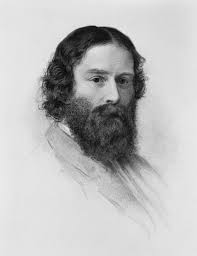
The Present Crisis

James Russell Lowell

James Russell Lowell – 1819-1891

When a deed is done for Freedom, through the broad earth’s aching breast 
Runs a thrill of joy prophetic, trembling on from east to west,         
And the slave, where’er he cowers, feels the soul within him climb 
To the awful verge of manhood, as the energy sublime        
Of a century bursts full-blossomed on the thorny stem of Time.               

Through the walls of hut and palace shoots the instantaneous throe,
When the travail of the Ages wrings earth’s systems to and fro;      
At the birth of each new Era, with a recognizing start,         
Nation wildly looks at nation, standing with mute lips apart,           
And glad Truth’s yet mightier man-child leaps beneath the Future’s heart.    

So the Evil’s triumph sendeth, with a terror and a chill,        
Under continent to continent, the sense of coming ill,          
And the slave, where’er he cowers, feels his sympathies with God  
In hot tear-drops ebbing earthward, to be drunk up by the sod,        
Till a corpse crawls round unburied, delving in the nobler clod.        

For mankind are one in spirit, and an instinct bears along,   
Round the earth’s electric circle, the swift flash of right or wrong;  
Whether conscious or unconscious, yet Humanity’s vast frame        
Through its ocean-sundered fibres feels the gush of joy or shame;—           
In the gain or loss of one race all the rest have equal claim.   

Once to every man and nation comes the moment to decide,           
In the strife of Truth with Falsehood, for the good or evil side;       
Some great cause, God’s new Messiah, offering each the bloom or blight,  
Parts the goats upon the left hand, and the sheep upon the right,      
And the choice goes by forever ‘twixt that darkness and that light.    

Hast thou chosen, O my people, on whose party thou shalt stand,   
Ere the Doom from its worn sandals shakes the dust against our land?       
Though the cause of Evil prosper, yet ’tis Truth alone is strong,      
And, albeit she wander outcast now, I see around her throng           
Troops of beautiful, tall angels, to enshield her from all wrong.        

Backward look across the ages and the beacon-moments see,          
That, like peaks of some sunk continent, jut through Oblivion’s sea;           
Not an ear in court or market for the low, foreboding cry    
Of those Crises, God’s stern winnowers, from whose feet earth’s chaff must fly;    
Never shows the choice momentous till the judgment hath passed by.          

Careless seems the great Avenger; history’s pages but record          
One death-grapple in the darkness ‘twixt old systems and the Word;           
Truth forever on the scaffold, Wrong forever on the throne,—        
Yet that scaffold sways the future, and, behind the dim unknown,  
Standeth God within the shadow, keeping watch above his own.      

We see dimly in the Present what is small and what is great,           
Slow of faith how weak an arm may turn the iron helm of fate,       
But the soul is still oracular; amid the market’s din, 
List the ominous stern whisper from the Delphic cave within,—     
“They enslave their children’s children who make compromise with sin.”     

Slavery, the earth-born Cyclops, fellest of the giant brood,  
Sons of brutish Force and Darkness, who have drenched the earth with blood,       
Famished in his self-made desert, blinded by our purer day,
Gropes in yet unblasted regions for his miserable prey;—    
Shall we guide his gory fingers where our helpless children play?     

Then to side with Truth is noble when we share her wretched crust,
Ere her cause bring fame and profit, and ’tis prosperous to be just;  
Then it is the brave man chooses, while the coward stands aside,    
Doubting in his abject spirit, till his Lord is crucified,          
And the multitude make virtue of the faith they had denied.  

Count me o’er earth’s chosen heroes,—they were souls that stood alone,     
While the men they agonized for hurled the contumelious stone,    
Stood serene, and down the future saw the golden beam incline      
To the side of perfect justice, mastered by their faith divine,
By one man’s plain truth to manhood and to God’s supreme design.  

By the light of burning heretics Christ’s bleeding feet I track,          
Toiling up new Calvaries ever with the cross that turns not back,    
And these mounts of anguish number how each generation learned
One new word of that grand Credo which in prophet-hearts hath burned    
Since the first man stood God-conquered with his face to heaven upturned.

For Humanity sweeps onward: where to-day the martyr stands,      
On the morrow crouches Judas with the silver in his hands;
Far in front the cross stands ready and the crackling fagots burn,    
While the hooting mob of yesterday in silent awe return      
To glean up the scattered ashes into History’s golden urn.      

‘Tis as easy to be heroes as to sit the idle slaves        
Of a legendary virtue carved upon our fathers’ graves,         
Worshippers of light ancestral make the present light a crime;—     
Was the Mayflower launched by cowards, steered by men behind their time?        
Turn those tracks toward Past or Future, that made Plymouth Rock sublime?           

They were men of present valor, stalwart old iconoclasts,    
Unconvinced by axe or gibbet that all virtue was the Past’s;
But we make their truth our falsehood, thinking that hath made us free,     
Hoarding it in mouldy parchments, while our tender spirits flee      
The rude grasp of that great Impulse which drove them across the sea.         

They have rights who dare maintain them; we are traitors to our sires,        
Smothering in their holy ashes Freedom’s new-lit altar-fires;           
Shall we make their creed our jailer? Shall we, in our haste to slay,
From the tombs of the old prophets steal the funeral lamps away    
To light up the martyr-fagots round the prophets of to-day?  

New occasions teach new duties; Time makes ancient good uncouth;         
They must upward still, and onward, who would keep abreast of Truth;     
Lo, before us gleam her camp-fires! we ourselves must Pilgrims be,           
Launch our Mayflower, and steer boldly through the desperate winter sea, 
Nor attempt the Future’s portal with the Past’s blood-rusted key.

This poem is in the public domain.

“You can’t dance and stay uptight…”

KingHarvestMusic https://KingHarvest.us – Dancing in the Moonlight featured in: 2019 World Series, Annabelle Comes Home, The Hitman’s Bodyguard, Showtime’s “I’m Dying Up Here”, HBO “Girls”, Guardians of the Galaxy http://bit.ly/2fSrpVh Hallmark Channel, ABC’s The Middle, Scorpion on CBS, Better Call Saul, The Blacklist, Jackass Presents: Bad Grandpa, Paul, Bates Motel, Follow us on Twitter https://twitter.com/kingharvestditm Facebook https://www.facebook.com/KingHarvest Spotify http://spoti.fi/1zunn3l Visit our YouTube channel at http://www.youtube.com/user/KingHarve… Thanks. King Harvest

Dancing in the Moonlight Toploader

We get it almost every night
When that moon is big and bright
It’s a supernatural delight
Everybody dancin’ in the moonlightEverybody here is out of sight
They don’t bark and they don’t bite
They keep things loose they keep it tight
Everybody’s dancin’ in the moonlightDancin’ in the moonlight
Everybody’s feeling warm and bright
It is such a fine and natural sight
Everybody’s dancin’ in the moonlightWe like our fun and we never fight
You can’t dance and stay uptight
It’s a supernatural delight
Everybody was dancin in the moonlightWe get it almost everynight
When that moon is big and bright
It’s a supernatural delight
Everybody’s dancin’ in the moonlight

Source: MusixmatchSongwriters: Sherman Kelly
Dancing in the Moonlight lyrics © Emi, Emi U Catalog Inc, St Nathanson Music Ltd

Consciousness, sexuality, androgyny, futurism, space, the arts, science, astrology, democracy, humor, books, movies and more