AZTEC KINGS HAD RULES FOR PLAGUES, INCLUDING ‘DO NOT BE A FOOL’

But When Cortés’s Soldiers Arrived Carrying a Novel Virus, the Empire First Succumbed to Smallpox and Then Fell to Spain
Aztec Kings Had Rules for Plagues, Including ‘Do Not Be a Fool’ | Zocalo Public Square • Arizona State University • Smithsonian

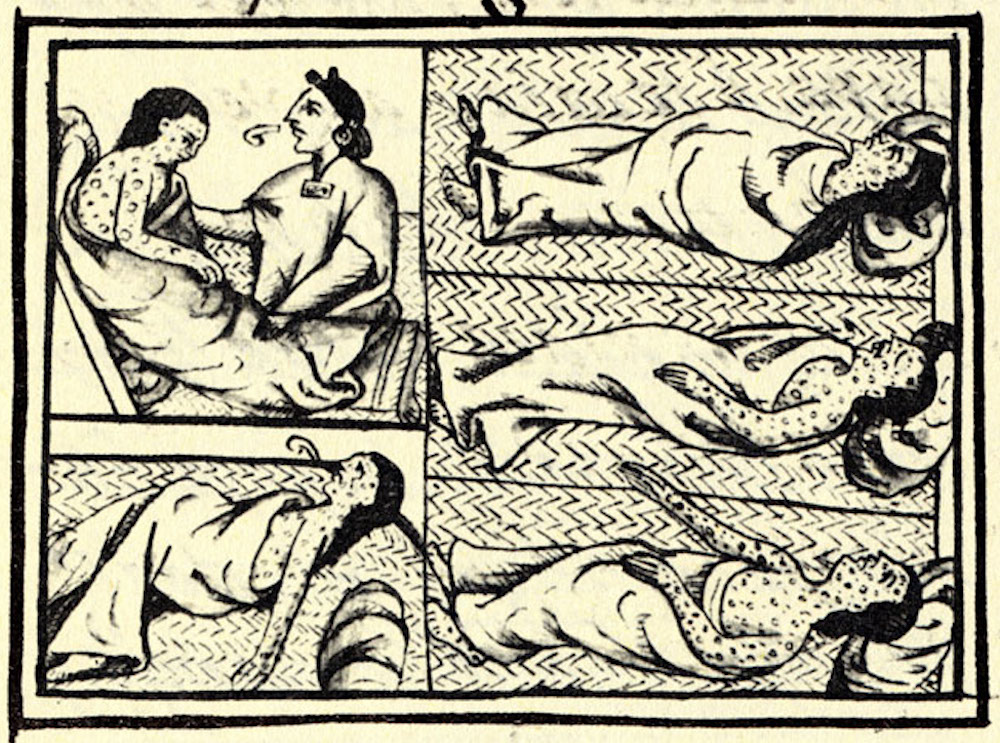
Panel from the Florentine Cortex depicting smallpox outbreaks in the Americas during the 16th century. Courtesy of Wikimedia Commons.

by DAVID BOWLES | MAY 10, 2020 (zocalopublicsquare.org)

Every civilization eventually faces a crisis that forces it to adapt or be destroyed. Few adapt.

On July 10, 1520, Aztec forces vanquished the Spanish conquistador Hernán Cortés and his men, driving them from Tenochtitlan, capital of the Aztec empire. The Spanish soldiers were wounded and killed as they fled, trying in vain to drag stolen gold and jewels with them.

The Spanish more than deserved the routing they got, and the conflict should have ended then. But a fateful surprise made those losses insignificant. By September, an unexpected ally of the would-be conquerors had reached the city: the variola virus, which causes smallpox.

How the Aztecs responded to this threat would prove critical.

The Aztecs were no strangers to plagues. Among the speeches recorded in their rhetoric and moral philosophy, we find a warning to new kings concerning their divinely ordained role in the event of contagion:

Sickness will arrive during your time. How will it be when the city becomes, is made, a place of desolation? Just how will it be when everything lies in darkness, despair? You will also go rushing to your death right then and there. In an instant, you will be over.

Facing a plague, it was vital that the king respond with grace. They warned:

Do not be a fool. Do not rush your words, do not interrupt or confuse people. Instead find, grasp, arrive at the truth. Make no one weep. Cause no sadness. Injure no one. Do not show rage or frighten folks. Do not create a scandal or speak with vanity. Do not ridicule. For vain words and mockery are no longer your office. Never, of your own will, make yourself less, diminished. Bring no scorn upon the nation, its leadership, the government.

Retract your teeth and claws. Gladden your people. Unite them, humor them, please them. Make your nation happy. Help each find their proper place. That way you’ll be esteemed, renowned. And when our Lord extinguishes you, the old ones will weep and sigh.

If a king did not follow this advice, if his rule caused more suffering than it abated, then the people prayed to Tezcatlipoca for any number of consequences, including his death:

May he be made an example of. Let him receive some reprimand, whatever you choose. Perhaps punishment. Disease. Perhaps you’ll let your honor and glory fall to another of your friends, those who weep in sorrow now. For they do exist. They live. You have no want of friends. They are sighing before you, humble. Choose one of them.

Perhaps he [the bad ruler] will experience what the common folk do: suffering, anguish, lack of food and clothing. And perhaps you will give him the greatest punishments: paralysis, blindness, rotting infection.

Or will he instead soon depart this world? Will you bring about his death? Will he get to know our future home, the place with no exits, no smoke holes? Maybe he will meet the Lord of Death, Mictlanteuctli, mother and father of us all.

Clearly, the Aztecs took the responsibilities of leadership very seriously. Beyond uplifting morale, a king’s principal duty in times of contagion was deploying his subjects to “their proper place” so that the kingdom could continue to function. This included mobilizing the titicih, doctor-healers with vast herbal knowledge, most of them women pledged to the primal mother goddess Teteoh Innan.Facing a plague, it was vital that the king respond with grace: “Do not be a fool. Do not rush your words, do not interrupt or confuse people. … Make no one weep.” 

What about the rest of the people? As with our own modern call for “thoughts and prayers,” the Aztecs believed their principal collective tool for fending off epidemics was a humble appeal to Tezcatlipoca. The very first speech of their text of rhetoric and moral philosophy was a supplication to destroy plague. After admitting how much they might deserve this scourge and recognizing the divine right of Tezcatlipoca to punish them however he sees fit, the desperate Aztecs tried to get their powerful god to consider the worst-case outcome of his vengeance:

O Master, how in truth can your heart desire this? How can you wish it? Have you abandoned your subjects? Is this all? Is this how it is now? Will the common folk just go away, be destroyed? Will the governed perish? Will emptiness and darkness prevail? Will your cities become choked with trees and vines, filled with fallen stones? Will the pyramids in your sacred places crumble to the ground?

Will your anger never be reversed? Will you look no more upon the common folk? For—ah!—this plague is destroying them! Darkness has fallen! Let this be enough. Stop amusing yourself, O Master, O Lord. Let the earth be at rest! I fall before you. I throw myself before you, casting myself into the place from which no one rises, the place of terror and fear, crying out: O Master, perform your office … do your job!

How many times was this prayer repeated as smallpox ate its cruel way into Mexico, as the domain of the Mexica—ruling people of the Aztec empire—was then already called? We know prayer and the skills and knowledge of the healers were no match for the novel virus.

Smallpox arrived in Mesoamerica with a second wave of Spaniards who joined forces with Cortés. According to one account, they had with them an enslaved African man known as Francisco Eguía, who was suffering from smallpox. He, like many others on the continent of his birth, had no immunity to the disease carried there by the slave traders.

Eguía died in the care of Totonac people near Veracruz, the port city established by the Spanish some 250 miles east of the Aztec capital. His caretakers became infected. Smallpox spreads easily: not only blood and saliva, but also skin-to-skin contact (handshakes, hugs) and airborne respiratory droplets. It raced through a population with no herd immunity at all: along the coast, over the mountains, across the waters of Lake Texcoco, into the very heart of the populous empire.

The epidemic lasted 70 days in the city of Tenochtitlan. It killed 40 percent of the inhabitants, including the emperor, Cuitlahuac. Had he found it increasingly difficult to keep his people’s spirits up as tradition commanded? Had his leadership faltered? Did his subjects pray for his death?

Whatever the case, the memory of that devastation would echo for centuries. Some Nahuas—mostly the sons and grandsons of Aztec nobility—described the devastation decades after the conquest.

Their account harrows the soul:

It started during Tepeilhuitl [the 13th month of the solar calendar], when a vast human devastation spread over everyone. Some were covered in pustules, which spread everywhere, on people’s faces, heads, chests, etc. There was great loss of life; many people died of it.

They could not walk anymore. They just lay in bed in their homes. They could not move anymore, could not shift themselves, could not sit up or stretch out on their sides. They could not lay flat on their backs or even face down. If they even stirred, they screamed out in pain.

Many died of hunger, too. They starved because no one was left to care for the others; no one could attend to anyone else. On some people, the pustules were few and far between. They caused little discomfort, and those folks did not die. Still others had their faces marred.

By Panquetzaliztli [the 15th month of the solar year], it began to fade. At that time the brave warriors of the Mexica managed to recover.

But a hard lesson had been learned. None of the old remedies had worked. Entire families were gone. Funeral pyres effaced the sun. Although Tezcatlipoca may have heeded their supplications at the end, the price he had made his people pay was staggering.

The epidemic was only the beginning of the unexpected forces working in tandem to bring down the Aztec empire. On May 22, 1521—just as Tenochtitlan was beginning to recover, trying to rebuild trade routes, restock its supplies, replant its fields and aquatic chinampa gardens—Cortés returned.

This time he commanded more Spanish troops, men from the same second wave that had brought the smallpox. With them marched tens of thousands of Tlaxcaltecah warriors, the sworn enemies of the Aztecs. Smallpox had reached Tlaxcallan first, but its people—not as densely packed in urban areas like the Mexica—had fared better and were now ready to finish off their rivals.

The massive military force laid siege to the Aztec capital. Even with more than half the population dead or disabled, with little food or water or supplies, the Mexica held the city for three months.

Then, on August 13, 1521, it fell. Emptiness and darkness indeed prevailed.

Lines from a song composed by an unknown Mexica not long afterward sums up the emotions of the survivors:

It is our God who brings down
His wrath, His awesome might
upon our heads.

So friends, weep at the realization—
we abandon the Mexica Way.
Now the water is bitter,
the food is bitter: that
is what the Giver of Life
has wrought.

Without the smallpox, it’s much less likely Cortés and his allies could have taken Tenochtitlan. The epidemic exposed the city’s weakness: the need to import essential goods along causeways that could be destroyed to cut the isle off from the world, the vulnerable aqueduct that carried the city’s only fresh water from distant Chapultepec Hill, the tightly packed boroughs in which commoners lived and worked. The Aztecs were brilliant engineers and soldiers, with capable titicih, but the old ways were not enough. No one thought to isolate the infected, to confine the healthy to their homes to keep them safe. And, absent the practice of inoculation discovered by Chinese physicians a few centuries earlier, there was no safer way of building herd immunity in Tenochtitlan.

Without innovative ways to slow it, smallpox helped invaders bring down an empire. That’s the power of novel viruses, proven time and again. We would do well to learn the lesson.

DAVID BOWLESis an author, translator and associate professor of Literatures and Cultural Studies at the University of Texas Rio Grande Valley. His most recent book is They Call Me Güero: A Border Kid’s Poems. He translated the Nahuatl texts in this article.

The Tempest (opera)

From Ned Henry: The Met has been showing a different opera every night on demand for 24 hours for free.   Well tomorrow [May 12, 2020] is The Tempest.    http://metopera.org

From Wikipedia, the free encyclopedia

The Tempest is an opera by English composer Thomas Adès with a libretto in English by Meredith Oakes based on the play The Tempest by William Shakespeare.

Background and premiere performances

Following the success of Powder Her FaceThe Royal Opera, Covent Garden, commissioned a new opera from Adès in the late 1990s. Working with a librettist, a poetic version of the Jonestown Massacre of 1978 was prepared, but the composer found it impossible to set it to music. Finally, the libretto he needed emerged from a collaboration with Meredith Oakes.

The new opera became a co-production with the Copenhagen Opera House and the Opéra national du Rhin in Strasbourg. The Tempest received its world premiere to critical acclaim at the Royal Opera House in London on 10 February 2004. Other productions followed in Strasbourg and Copenhagen later in 2005 and the opera was given its US premiere staging by the Santa Fe Opera on 29 July 2006.

Performance history

Covent Garden revived the opera in March 2007 with the same production team, Thomas Adès conducting, and many of the original London cast, including Simon KeenlysideCyndia SiedenIan BostridgeToby SpencePhilip Langridge, and Stephen Richardson repeating their original roles. Cyndia Sieden is the only member of the cast to sing her role, that of Ariel in all four previous productions. Amongst others new to the cast are soprano Kate Royal as Miranda and countertenor David Cordier as Trinculo.

As a co-production with the 2012 Québec City Opera Festival created by director Robert Lepage[1] and the Vienna State Opera (June 2015),[2] New York’s Metropolitan Opera mounted a new production of The Tempest in the autumn of 2012 featuring Simon Keenlyside.

Meredith Oakes’ libretto

As for the words, you don’t get Shakespeare’s; but you get something that effectively suggests them at key moments, written by Meredith Oakes in rhyming couplets of impactful clarity. Neat and direct.— Michael White’s review of the 2004 Royal Opera House premiere in The Independent[3]

The opera is a brilliant response to the play, rather than merely a setting of it. While entirely true to the spirit of Shakespeare’s play, it is not contained by it. It is its own thing, and allows its own existence and resonance.— Jonathan Kent, director of the 2006 Santa Fe Opera production [4]

Looking for ideas for a new subject, Adès saw Jonathan Kent’s staging of Shakespeare’s The Tempest at the Almeida Theatre in London in 2000.[5] For a new libretto, Adès turned to the experienced dramatist Meredith Oakes, whose work had included a short opera libretto for Miss Treat (2002); since the early 1990s, several original plays, translations and adaptations of classics and modern dramas; and, for television, the story line for Prime Suspect 4 (1995).

Rather than transfer Shakespeare’s words directly into the libretto, Oakes has taken the approach of reducing much of the text to its essence, and she produces a compact libretto with the bulk of the text presented in the form of rhyming couplets. Many examples are given in the following plot synopsis, and they illustrate Oakes’ technique but that does not always mean the complete removal of Shakespeare’s text, as in the following example.

The result is that the original:Full fathom five thy father lies
Of his bones are coral made;
Those are pearls that were his eyes
in the libretto becomes:Five fathoms deep
Your father lies
Those are pearls
That were his eyes

Differences between the libretto and the play

The libretto is structured into three acts, approximately equal in length. As in Shakespeare’s act 1, scenes 1 and 2, the five main characters are introduced. However, as the relationship between Miranda and Ferdinand progresses, the opera turns away from Shakespeare’s presentation of Prospero as the benign manipulator of events, the controller of the pace of the young couple’s growing love by using his trickery and magical powers.

In an aside to Ariel he comments:

They are both in either’s pow’rs. But this swift business
I must uneasy make, lest too light winning
Make the prize light

and later, as his methods begin to take effect: “It works”. The libretto suggests a more fatalistic acceptance by Prospero of the loss of his daughter to the young Prince. Therefore, whereas Shakespeare’s act 1 concludes with Prospero urging on Ariel to further tasks which involve bringing the court to his part of the island, Oakes’ libretto suggests a more vengeful Prospero:

I must punish him
And the rest as well
Bring me to them, Ariel.

Shakespeare’s act 3, scene 2, in which Prospero accepts Ferdinand and Miranda’s relationship, and later in act 4, scene 1, his:

for I
Have given you here a third of mine own life

contrasts sharply with the end of Oakes’ act 2 in which Miranda and Ferdinand find each other again and declare their love, as they are watched over by Prospero, who frees Ferdinand but laments his loss of power in:

Miranda
I’ve lost her
I cannot rule their minds
My child has conquered me
A stronger power than mine
Has set the young man free.

Oakes’ act 2 features action taking place on the stage in the presence of entire court rather than in separate scenes as in Shakespeare’s act 2.

Thomas Adès’ music

Much has appeared in print about the striking music composed for this opera. Ranging from the almost dissonant (parts of act 1) to the sublimely lyrical (the Miranda–Ferdinand love duet, rare in modern operas, and a quintet passacaglia in act 3), with surges and outpourings of emotion contrasting with harmonic clashes of tone and color, The Tempest is regarded as the composer’s towering achievement to date. This is reflected in the following writers’ statements:

The evening deservedly belongs to Adès, who himself conducts a score as orchestrally lush and evocative as vocally varied and articulate. The cumulative effect is by turns ethereal, witty, incandescent, often ravishing.— Andrew Clements, Review of the 2004 Royal Opera House premiere[6]

… For one composer at least, contemporary lyric opera is still a viable medium. It looks like an opera and it behaves like an opera, offering a musical drama in which the traditional operatic virtues of musically delineated characterisation and musically satisfactory dramatic pacing are wonderfully sustained.
The musical action of the opera is continuous but is divided into a sequence of sharply distinct scenes. The techniques of pitch derivation found in earlier Adès scores are used again, so that instead of providing his characters with a set of musical identity cards there is a fluid, evolutionary system of characterisation in which vocal manner and accompaniment style are more important than leitmotifs. Qualities of place and status are as important as individual personalities, so the island is represented by evenly flowing accompaniments in woodwind and strings, while the world of the Milan court is represented by more declamatory writing in which the brass are often evident.— Christopher Fox, The Musical Times, London, [northern] Autumn 2004.[7]

(Submitted by Ned Henry.)

Venus goes retrograde In Gemini

On May 13th, 2020 Venus goes retrograde in Gemini. Venus retrograde will last for 40 days, until June 25th, 2020.

You have 40 days to review, revisit, and re-evaluate your feelings, personal values, and relationships.

There’s no coincidence that Venus is retrograde for 40 days. Number 40 is a sacred number in pretty much every religion and is usually associated with fulfillment of promises – BUT ONLY after a period of testing, trial and probation.

What is interesting is that the word “quarantine” – a very familiar term in the context we’re living in – comes from the old Italian “quarantena” meaning “40 days”.

In the 14th century, during the Black Plague in Venice, all the incoming ships had to be isolated for 40 days before their crew could go ashore, in an attempt to protect the city from the Black Plague.

The purpose of the “trial” or the retrograde period is to purify you from what no longer serves you so that you can reset your heart and “start again”.

Venus in Gemini – The Duality Of Our Feelings

Venus is associated with our feelings, with what we like – and what we dislike – with what we value, and what we don’t value.

That’s why Venus rules love and relationships – because love and relationships are a direct result of how we feel about other people.

And that’s why Venus also rules money, possessions, and personal values – because money, possessions, and personal values are a direct result of how we feel about ourselves.

Gemini is a dual sign, and it represents the duality of our being. Gemini is the 3rd sign of the zodiac.

Aries, the 1st sign, is the spark of consciousness that decides to take an individual shape. Aries corresponds to the phase of conception.

Taurus, the 2nd sign, takes what is initially only an idea, and makes it real. Five to six days after fertilization, the embryo finds a safe zone and implants itself in the uterus.

Gemini, the 3rd sign, is similar to the cellular division process. In order for life to grow, it has to divide and multiply until it reaches a stage where differentiation can take place (Cancer).

Gemini is the sign of duality. The Gemini glyph is represented by the Roman number two, signifying the sign’s dual nature.

The two parallel vertical lines are joined by two crescents. One cannot exist without the other. Yin cannot exist without Yang. Yang cannot exist without Yin. Light cannot exist without shadow. Life cannot exist without death.

Venus in Gemini makes me think of the paired “sock and buskin” or comedy/tragedy masks which have become a symbol of theater.

Dating from the time of Aeschylus, Greek theater used full-face or head masks as standard acting props. Actors donned these masks to become the characters they were playing.

A mask can mean many things. It can protect us from pollution and germs, and turn our face into an emotionless wall.

OR it is worn to emphasize specific emotions, like in the time of the Antic Greek.

Whatever the purpose, there seems to be a disconnect between what someone is really feeling and what they are showing to the world. Indeed, Gemini is an air sign, and emotions are their territory.

However, I believe masks – or the Gemini principle – serve a much more important purpose.

In the same way that Libra, or the Lady of Justice, is portrayed blindfolded – because justice and pure reason are blind, or uncorrupted by displays of emotions or corruption attempts – in the same way, the Gemini mask helps us disconnect from our primal emotions, so we can take a more objective look at them. Gemini is ruled by Mercury, after all.

The ultimate goal of Venus Retrograde in Gemini is to help us face the duality of our feelings, so that we can have a more objective, and integrated approach to these feelings.

Is it possible to be happy and sad at the same time? To be excited and repulsed? Brave and fearful? Our emotions are not black and white.

When we identify with the “black” or with the “white”, we miss the creative space of duality. And duality is a necessary condition of life.

The Dance Of Venus And Venus Cycles

We cannot talk about Venus Retrograde without talking about the strikingly beautiful dance of Venus.

Venus retrogrades repeat every 8 years. The Earth-Venus 8 year dance creates this beautiful 5-petal flower with the Sun at the center.

Every 8 years (and 5 Venus cycles) Venus comes back to the same area of the sky, activating the same area of your chart. In any given century, there are only 5 points in the sky where Venus goes retrograde.

The last time Venus was retrograde in Gemini was in May-June 2012 and before that, in May-June 2004. What was going on in your life back then? You can expect similar themes to resurface.

Why Is Venus Retrograde In Gemini So Important?

Venus in Gemini is particularly important because it coincides with an energetic shift in Gemini.

Just a few days before Venus retrograde, the North Node of the Moon also switched signs and entered Gemini.

The Venus cycle lasts for 18 months (or 584 days). The Lunar Nodes also spend 18 months in a sign.

In addition to this shift to Gemini energy, we witness an overall shift from Earth to Air. Saturn leaves Capricorn to move into Aquarius. On December 21st, 2020 we will have the much anticipated Jupiter-Saturn conjunction at 0° Aquarius when a new 200-year Air cycle will begin.

AND in a few years, Pluto will move into Aquarius. The Age of Aquarius is around the corner!

As a 200-year Earth cycle is coming to an end, and a new 200-year Air cycle begins, Earth values – materialism, consumerism, money, science – will be replaced with Air values – intellect, information, collaboration, multi-dimensional understanding of the world. Practices such as astrology can become more accepted and widespread.

Is Venus Retrograde In Gemini A Difficult Transit?

Venus retrograde in Gemini – like all retrogrades – will most likely feel difficult. Venus retrograde can bring unfinished business back into your life: past lovers (including past life lovers), old friends, suppressed emotions or repeating inter-relational patterns.

And dealing with unfinished businesses is not easy. Otherwise, we would have dealt with it in the first place.

Unfinished stuff is heavy, energetically consuming and requires hard work. But if we don’t deal with it, it lingers somewhere in the background, and it ends up consuming even more energy and effort in the long run.

And this is where Venus Retrograde in Gemini chimes in. She will challenge you to bring this unprocessed stuff to the surface.

Let’s say you’re used to being the “giver” in relationships. Venus Retrograde will make you see the reality for what it is. Maybe people take advantage of you. No more hiding and fooling yourself that these people love you for who you are.

Or maybe you are the one taking advantage of others. Venus Retrograde will explode any unfair advantage you may have in relationships with others.

Venus Retrograde is all about clarity. When retrograde, Venus is at its closest to the Earth in her 584-day cycle. She is the most powerful when retrograde.

Venus Retrograde is not a “bad” transit. Its role is to bring clarity and help you process – and let go of – those feelings that no longer serve you.

Of course, Venus Retrograde may come with difficult choices. But that’s because you DO need to make some choices – so that a “new you” can emerge. A better you.

Venus Retrograde In Gemini Square Neptune

The most important transit Venus makes while retrograde is a square to Neptune. This transit is particularly important because it is unusually long – it lasts until the end of July!

What is normally a 5-day transit will last for 3 months. We always want to pay attention to these rare transits, because they will play a much more important role than they normally do.

When we have a Venus-Neptune transit, we feel elated, we long for something that doesn’t even exist, that cannot be expressed in words.

In the next couple of months, you don’t want just ordinary love, you want the perfect love, the perfect relationship, and the perfect life.

Venus and Neptune have a special relationship – Neptune is the higher octave of Venus. Venus rules our feelings, and Neptune rules our dreams.

When we dream, our emotions, memories, impressions, perceptions and imagination meet in a higher plane, find connections that were not obvious or possible in the physical plane, and get restructured.

As a result, we wake up a different person, even if we don’t remember what we’ve dreamt about. We need this Neptune space to cleanse from what is non-essential and find guidance from the higher plane.

Neptune square Venus will ask us to restructure our emotional reality – and find a higher order, a superior meaning, a more elevated reason for our existence.

Venus Retrograde in Gemini 2020 Dates

  • April 10th, 2020 – Venus enters shadow at 5° Gemini
  • May 13th, 2020 – Venus goes retrograde at 21° Gemini
  • May 28th, 2020 – Venus becomes invisible
  • June 3rd, 2020 – Venus is conjunct Sun at 13° Gemini. A new 584-day Venus cycle begins. Venus transforms from an evening star to a morning star
  • June 10th, 2020 – Venus becomes visible again, this time as a morning star
  • June 25th, 2020 – Venus goes direct at 5° Gemini
  • July 28th, 2020 – Venus leaves shadow at 21° Gemini

We will all be influenced by the powerful energy of Venus Retrograde in Gemini.

However, 5°, 13°, and 21° Gemini are extra sensitive degrees – so if you have planets or angles around these degrees, you will experience the energy of Venus Retrograde more intensely.

Also, if you have planets or angles anywhere between 5° Gemini and 21° Gemini, or if you have planets around 13° in mutable signs – Virgo, Sagittarius, and Pisces – this Venus Retrograde will play a very important role in your life.

–Astro Butterfly

Book: “Healing the Shame that Binds You”

Healing the Shame that Binds You

Healing the Shame that Binds You

by John Bradshaw

“I used to drink,” writes John Bradshaw, “to solve the problems caused by drinking. The more I drank to relieve my shame-based loneliness and hurt, the more I felt ashamed.”

Shame is the motivator behind our toxic behaviors: the compulsion, co-dependency, addiction and drive to superachieve that breaks down the family and destroys personal lives. This book has helped millions identify their personal shame, understand the underlying reasons for it, address these root causes and release themselves from the shame that binds them to their past failures.

Key Features
This is not just a recovery book. Among other things, it is a classic book on identifying and working through unresolved family issues. Includes affirmations, visualizations, inner voice and feeling exercises. Strong supporting studies make this a popular book with counselors and other professionals. Completely updated and revised.

(Goodreads.com)

Ram Dass on freedom

Baba Ram Dass

“If you think you are free, you can’t escape…”

–Ram Dass, also known as Baba Ram Dass (April 6, 1931 – December 22, 2019), was an American spiritual teacher, psychologist, and author. His best known book, Be Here Now, has been described as “seminal,” and helped popularize Eastern spirituality and yoga with the baby boomer generation in the West. Wikipedia

Wander: Natascha McElhone Reads Hermann Hesse’s 100-Year-Old Love Letter to Trees in a Virtual Mental Health Walk Through Kew Gardens

“In their highest boughs the world rustles, their roots rest in infinity; but they do not lose themselves there, they struggle with all the force of their lives for one thing only: to fulfill themselves according to their own laws… to represent themselves. Nothing is holier, nothing is more exemplary than a beautiful, strong tree.”

BY MARIA POPOVA (brainpickings.org)

Wander: Natascha McElhone Reads Hermann Hesse’s 100-Year-Old Love Letter to Trees in a Virtual Mental Health Walk Through Kew Gardens

In the final years of his life, the great neurologist Oliver Sacks reflected on the physiological and psychological healing power of nature, observing that in forty years of medical practice, he had found only two types of non-pharmaceutical therapy helpful to his patients: music and gardens. It was in a garden, too, that Virginia Woolf, bedeviled by lifelong mental illness, found the consciousness-electrifying epiphany that enabled her to make some of humanity’s most transcendent art despite her private suffering.

When my dear friend Natascha McElhone (who narrated Figuring) was asked to choose a piece of literature with which to narrate a tour of the Royal Botanic Gardens, Kew, for an episode of Wander — a lovely series by filmmaker Beau Kerouac, benefiting Britain’s Mental Health Foundation and helping quarantined people virtually visit some of the world’s most beloved parks and cultural institutions, accompanied by some of the world’s most beloved literary and artistic voices — Natascha chose a wondrous 100-year-old love letter to trees by Hermann Hesse (July 2, 1877–August 9, 1962), which she had saved from Brain Pickings nearly a decade ago. Originally published in Hesse’s 1920 collection of fragments, Wandering: Notes and Sketches (public library), it comes newly alive in this transportive, transcendent journey through the screen and past it, into a lush wonderland of nature’s aliveness, with two uncommonly beautiful voices as the sherpas.

For me, trees have always been the most penetrating preachers. I revere them when they live in tribes and families, in forests and groves. And even more I revere them when they stand alone. They are like lonely persons. Not like hermits who have stolen away out of some weakness, but like great, solitary men, like Beethoven and Nietzsche. In their highest boughs the world rustles, their roots rest in infinity; but they do not lose themselves there, they struggle with all the force of their lives for one thing only: to fulfill themselves according to their own laws, to build up their own form, to represent themselves. Nothing is holier, nothing is more exemplary than a beautiful, strong tree. When a tree is cut down and reveals its naked death-wound to the sun, one can read its whole history in the luminous, inscribed disk of its trunk: in the rings of its years, its scars, all the struggle, all the suffering, all the sickness, all the happiness and prosperity stand truly written, the narrow years and the luxurious years, the attacks withstood, the storms endured. And every young farmboy knows that the hardest and noblest wood has the narrowest rings, that high on the mountains and in continuing danger the most indestructible, the strongest, the ideal trees grow.

Trees are sanctuaries. Whoever knows how to speak to them, whoever knows how to listen to them, can learn the truth. They do not preach learning and precepts, they preach, undeterred by particulars, the ancient law of life.

A tree says: A kernel is hidden in me, a spark, a thought, I am life from eternal life. The attempt and the risk that the eternal mother took with me is unique, unique the form and veins of my skin, unique the smallest play of leaves in my branches and the smallest scar on my bark. I was made to form and reveal the eternal in my smallest special detail.

A tree says: My strength is trust. I know nothing about my fathers, I know nothing about the thousand children that every year spring out of me. I live out the secret of my seed to the very end, and I care for nothing else. I trust that God is in me. I trust that my labor is holy. Out of this trust I live.

When we are stricken and cannot bear our lives any longer, then a tree has something to say to us: Be still! Be still! Look at me! Life is not easy, life is not difficult. Those are childish thoughts… Home is neither here nor there. Home is within you, or home is nowhere at all.

A longing to wander tears my heart when I hear trees rustling in the wind at evening. If one listens to them silently for a long time, this longing reveals its kernel, its meaning. It is not so much a matter of escaping from one’s suffering, though it may seem to be so. It is a longing for home, for a memory of the mother, for new metaphors for life. It leads home. Every path leads homeward, every step is birth, every step is death, every grave is mother.

So the tree rustles in the evening, when we stand uneasy before our own childish thoughts: Trees have long thoughts, long-breathing and restful, just as they have longer lives than ours. They are wiser than we are, as long as we do not listen to them. But when we have learned how to listen to trees, then the brevity and the quickness and the childlike hastiness of our thoughts achieve an incomparable joy. Whoever has learned how to listen to trees no longer wants to be a tree. He wants to be nothing except what he is. That is home. That is happiness.

“Perspective” by Maria Popova

For a lyrical kindred-spirited counterpart, visit one of Earth’s greatest forests with Pablo Neruda and astronaut Leland Melvin, then savor Amanda Palmer’s reading of Mary Oliver’s spare and splendid poem “When I Am Among the Trees” and this cinematic love letter to the wilderness, inspired by the great naturalist John Muir, who saw the universe as “an infinite storm of beauty.”

The White Earth Band of Ojibwe Legally Recognized the Rights of Wild Rice


BY WINONA LADUKE FEB 1, 2019 (yesmagazine.org)

laduke_wildrice.jpg

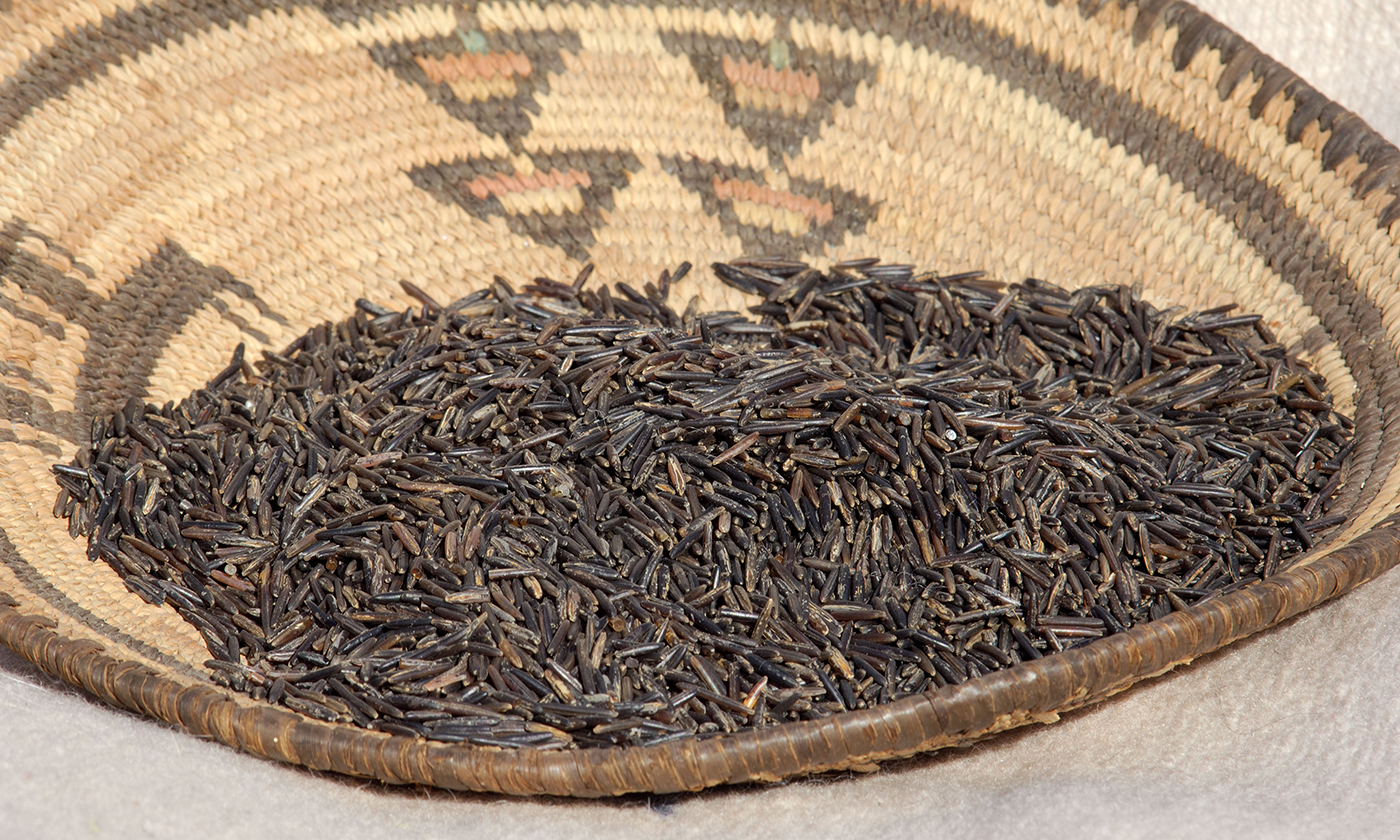
The Rights of Manoomin reaffirms the Anishinaabe relationship and responsibility to wild rice, its sacred landscape, and traditional laws.

Photo from North Wind Picture Archives/Alamy Finally, plant species have rights, too.

Manoomin (“wild rice”) now has legal rights. At the close of 2018, the White Earth band of Ojibwe passed a law formally recognizing the Rights of Manoomin. According to a resolution, these rights were recognized because “it has become necessary to provide a legal basis to protect wild rice and fresh water resources as part of our primary treaty foods for future generations.”

This reflects traditional laws of Anishinaabe people, now codified by the tribal government. White Earth’s action follows a similar resolution by the 1855 Treaty Authority.

The law begins: “Manoomin, or wild rice, within all the Chippewa ceded territories, possesses inherent rights to exist, flourish, regenerate, and evolve, as well as inherent rights to restoration, recovery, and preservation.”

The Rights of Manoomin include: “The right to clean water and freshwater habitat, the right to a natural environment free from industrial pollution, the right to a healthy, stable climate free from human-caused climate change impacts, the right to be free from patenting, the right to be free from contamination by genetically engineered organisms.”

The Rights of Manoomin are modeled after the Rights of Nature, recognized in courts and adopted internationally during the last decade. In 2008, Ecuador and Bolivia both added Rights of Nature clauses to their constitutions. In 2016, the Ho-Chunk Nation in Wisconsin became the first U.S. tribe to adopt the Rights of Nature, and in 2017 the Ponca Nation in Oklahoma became the second. Also in 2017, the New Zealand government granted the Whanganui River the full legal rights of a person as part of its settlement with the Whanganui iwi, a Maori people. That’s the third largest river in Aotearoa (“New Zealand”). India granted full legal rights to the Ganges and Yamuna rivers. The Himalayan Glaciers are also recognized as having rights to exist.

This work internationally is intended to bring jurisprudence into accordance with ecological laws and address the protection of natural ecosystems, which has fallen short in most legal systems. As the Global Alliance for the Rights of Nature explains on its website:

“Under the current system of law in almost every country, nature is considered to be property, a treatment which confers upon the property owner the right to destroy ecosystems and nature on that property. When we talk about the ‘rights of nature,’ it means recognizing that ecosystems and natural communities are not merely property that can be owned, but are entities that have an independent right to exist and flourish. Laws recognizing the rights of nature thus change the status of natural communities and ecosystems to being recognized as rights-bearing entities with rights that can be enforced by people, governments, and communities.”

White Earth’s Rights of Manoomin is groundbreaking. “This is a very important step forward in the Rights of Nature movement,” Mari Margil, Associate Director of the Community Environmental Legal Defense Fund explains. “This would be the first law to recognize legal rights of plant species.” White Earth and the 1855 Treaty Authority worked with CELDF’s International Center for the Rights of Nature to develop the law.

The Rights of Manoomin reaffirms the Anishinaabe relationship and responsibility to wild rice, its sacred landscape, and traditional laws. Wild rice is also the only grain explicitly listed in a treaty as a guarantee.

“Treaties are the supreme law of the land and we Chippewa have (U.S.) constitutionally protected, usufructuary property rights to hunt, fish, trap, and gather wild rice,” explained Frank Bibeau, Executive Director of the 1855 Treaty Authority. “We understand that it is the individual tribal members’ usufructuary rights to gather food and earn a modest living that are essential to our lives and important for the success of future generations’ ability to maintain our culture and traditions, essentially to be Anishinaabe,” he added. “We understand that water is life for all living creatures and protecting abundant, clean, fresh water is essential for our ecosystems and wildlife habitats to sustain all of us and the manoomin.”

The Rights of Manoomin also provides for enforcement. The law declares it illegal for any business or government to violate the rights of manoomin, and declares invalid any permit or authorization or activity that would allow those rights to be violated. Offenses will be punishable under tribal law and offenders will be held financially liable for any damages to the manoomin or its habitat. The law grants powers of enforcement to the White Earth Nation and the 1855 Treaty Authority, and prohibits law enforcement personnel from arresting or detaining those directly enforcing these rights.

During the 165 years since the 1855 treaty, significant damage to Anishinaabe wild rice, waters, maple trees, and prairies has taken place due to state and federal mismanagement. Over 70 percent of the original wild rice territory is now damaged, and today proposals to change sulfate standards to accommodate mining projects and new pipeline projects threaten more wild rice. Ultimately these actions threaten the very existence of wild rice.

In U.S. case law, corporations are considered natural persons and protected legally. In the meantime, much of the “commons,” or natural world—including water, sacred places, and sacred landscapes—have not been protected. This law begins to address that inequality, and challenges the inadequacy of U.S. and Canadian legal systems. “Remember, at one time, neither an Indian nor a Black person was considered a human under the law,” Bibeau reminds us. “Legal systems can and will change,” and in the meantime, the Ojibwe move forward.


WINONA LADUKE is an internationally renowned writer, speaker, activist, focusing on Indigenous rights, environmental justice, and sustainable tribal economies. She is executive director of Honor The Earth, founder of the White Earth Land Recovery Project, and a former two-time vice presidential candidate. LaDuke is a YES! contributing editor.

The Power of Speaking Out

Wendy Mandy
Dear Everyone:
We have reached a very extraordinary time. 

My heart tells me that this is the bravest woman currently speaking out against the people who are bringing our world to a standstill with their agenda.  She is being attacked on all fronts by all mainstream media.  I do hope you see through the denial of this woman as a scientist.  I cannot believe that Forbes has tried to stop you having your own opinion, turning you against your friends and family.

I enclose both clips and you decide:

Excerpt from upcoming Plandemic documentary 
Use Password: Plandemic

Forbes article “Why it’s important to push back on Plandemic”

I am astonished that Forbes tells you to turn against each other.  This woman is simply telling you about Science as it truly should be before patents and profit came together to the detriment of true health research.

I feel strongly that we are sleepwalking into a dystopian future where we have no freedom over our bodies and how we relate to each other, like an episode of Black Mirror.  Our governments, our NHS and the BBC and all media are, to me, obviously being controlled by a web of huge corporations and governing bodies run by a few quite frankly evil people.

In 1939, we would never have imagined World War 2 and the atrocities that happened.  We must wake up and see what is happening.  If we do, we can, through this major reset, stop allowing the mainstream media to call any pushback a conspiracy theory and to humiliate anyone who refuses the party line as a dangerous individual.  Eminent doctors, scientists and virologists all over the world are questioning the entire story of bringing society to a standstill.  People are allowed to go to Sainsbury’s in a line 6 foot apart, but not places of worship!  What is going on?  If we wake up, we can imagine a new future of new currency, new healthcare, information freedom and community with a right relationship to each other and nature.

It is up to us!  I came across this inspirational film and action plan called One Small Town, Can Change The World by Michael Tellinger, which can help us visualise and create a new way of living together.

LOVE Wendy

p.s. For U.S. people, this video was also just released, by Dr. Rashid A. Buttar, notifying us of a new House Resolution 6666 introduced into congress by Congressman Bobby Rush (Democrat from IL) introducing the TRACE Act [COVID-19 Testing, Reaching, And Contacting Everyone (TRACE) Act].
Copyright © 2020 *Wendy Mandy, All rights reserved.
You can contact me at
www.wendymandy.uk

Little Richard, Flamboyant Wild Man of Rock ’n’ Roll, Dies at 87

Delving deeply into the wellsprings of gospel music and the blues, and screaming as if for his very life, he created something new, thrilling and dangerous.

Little Richard in performance at B.B. King Blues Club & Grill in New York in 2007. “He was crucial,” one historian said, “in upping the voltage from high-powered R&B into the similar, yet different, guise of rock ’n’ roll.”
Little Richard in performance at B.B. King Blues Club & Grill in New York in 2007. “He was crucial,” one historian said, “in upping the voltage from high-powered R&B into the similar, yet different, guise of rock ’n’ roll.”Credit…Hiroyuki Ito for The New York Times

By Tim Weiner

  • Updated May 11, 2020 (NYTimes.com)

Richard Penniman, better known as Little Richard, who combined the sacred shouts of the black church and the profane sounds of the blues to create some of the world’s first and most influential rock ’n’ roll records, died on Saturday in Tullahoma, Tenn. He was 87.

His lawyer, Bill Sobel, said the cause was bone cancer.

Little Richard did not invent rock ’n’ roll. Other musicians had already been mining a similar vein by the time he recorded his first hit, “Tutti Frutti” — a raucous song about sex, its lyrics cleaned up but its meaning hard to miss — in a New Orleans recording studio in September 1955. Chuck Berry and Fats Domino had reached the pop Top 10, Bo Diddley had topped the rhythm-and-blues charts, and Elvis Presley had been making records for a year.

But Little Richard, delving deeply into the wellsprings of gospel music and the blues, pounding the piano furiously and screaming as if for his very life, raised the energy level several notches and created something not quite like any music that had been heard before — something new, thrilling and more than a little dangerous. As the rock historian Richie Unterberger put it, “He was crucial in upping the voltage from high-powered R&B into the similar, yet different, guise of rock ’n’ roll.”

Art Rupe of Specialty Records, the label for which he recorded his biggest hits, called Little Richard “dynamic, completely uninhibited, unpredictable, wild.”

“Tutti Frutti” rocketed up the charts and was quickly followed by “Long Tall Sally” and other records now acknowledged as classics. His live performances were electrifying.

“He’d just burst onto the stage from anywhere, and you wouldn’t be able to hear anything but the roar of the audience,” the record producer and arranger H.B. Barnum, who played saxophone with Little Richard early in his career, recalled in “The Life and Times of Little Richard” (1984), an authorized biography by Charles White. “He’d be on the stage, he’d be off the stage, he’d be jumping and yelling, screaming, whipping the audience on.”Listen to 15 Essential SongsLittle Richard: An Ecstasy You Couldn’t RefuseMay 10, 2020

Rock ’n’ roll was an unabashedly macho music in its early days, but Little Richard, who had performed in drag as a teenager, presented a very different picture onstage: gaudily dressed, his hair piled six inches high, his face aglow with cinematic makeup. He was fond of saying in later years that if Elvis was the king of rock ’n’ roll, he was the queen. Offstage, he characterized himself variously as gay, bisexual and “omnisexual.”

His influence as a performer was immeasurable. It could be seen and heard in the flamboyant showmanship of James Brown, who idolized him (and used some of his musicians when Little Richard began a long hiatus from performing in 1957), and of Prince, whose ambisexual image owed a major debt to his.

Presley recorded his songs. The Beatles adopted his trademark sound, an octave-leaping exultation: “Woooo!” (Paul McCartney said that the first song he ever sang in public was “Long Tall Sally,” which he later recorded with the Beatles.) Bob Dylan wrote in his high school yearbook that his ambition was “to join Little Richard.”

Little Richard’s impact was social as well.

Little Richard in the mid-1950s, around the time his first hit record, “Tutti Frutti,” was released.
Little Richard in the mid-1950s, around the time his first hit record, “Tutti Frutti,” was released.Credit…Michael Ochs Archives/Getty Images

“I’ve always thought that rock ’n’ roll brought the races together,” Mr. White quoted him as saying. “Especially being from the South, where you see the barriers, having all these people who we thought hated us showing all this love.”

Mr. Barnum told Mr. White that “they still had the audiences segregated” at concerts in the South in those days, but that when Little Richard performed, “most times, before the end of the night, they would all be mixed together.”

If uniting black and white audiences was a point of pride for Little Richard, it was a cause of concern for others, especially in the South. The White Citizens Council of North Alabama issued a denunciation of rock ’n’ roll largely because it brought “people of both races together.” And with many radio stations under pressure to keep black music off the air, Pat Boone’s cleaned-up, toned-down version of “Tutti Frutti” was a bigger hit than Little Richard’s original. (He also had a hit with “Long Tall Sally.”)

Still, it seemed that nothing could stop Little Richard’s drive to the top — until he stopped it himself.

He was at the height of his fame when he left the United States in late September 1957 to begin a tour in Australia. As he told the story, he was exhausted, under intense pressure from the Internal Revenue Service and furious at the low royalty rate he was receiving from Specialty. Without anyone to advise him, he had signed a contract that gave him half a cent for every record he sold. “Tutti Frutti” had sold half a million copies but had netted him only $25,000.

One night in early October, before 40,000 fans at an outdoor arena in Sydney, he had an epiphany.

“That night Russia sent off that very first Sputnik,” he told Mr. White, referring to the first satellite sent into space. “It looked as though the big ball of fire came directly over the stadium about two or three hundred feet above our heads. It shook my mind. It really shook my mind. I got up from the piano and said, ‘This is it. I am through. I am leaving show business to go back to God.’”

He had one last Top 10 hit: “Good Golly Miss Molly,” recorded in 1956 but not released until early 1958. By then, he had left rock ’n’ roll behind.

He became a traveling evangelist. He entered Oakwood College (now Oakwood University) in Huntsville, Ala., a Seventh-day Adventist school, to study for the ministry. He cut his hair, got married and began recording gospel music.

For the rest of his life, he would be torn between the gravity of the pulpit and the pull of the stage.

“Although I sing rock ’n’ roll, God still loves me,” he said in 2009. “I’m a rock ’n’ roll singer, but I’m still a Christian.”

He was lured back to the stage in 1962, and over the next two years he played to wild acclaim in England, Germany and France. Among his opening acts were the Beatles and the Rolling Stones, then at the start of their careers.

He went on to tour relentlessly in the United States, with a band that at one time included Jimi Hendrix on guitar. By the end of the 1960s, sold-out performances in Las Vegas and triumphant appearances at rock festivals in Atlantic City and Toronto were sending a clear message: Little Richard was back to stay.

But he wasn’t.

By his own account, alcohol and cocaine began to sap his soul (“I lost my reasoning,” he would later say), and in 1977, he once again turned from rock ’n’ roll to God. He became a Bible salesman, began recording religious songs again and, for the second time, disappeared from the spotlight.

He did not stay away forever. The publication of his biography in 1984 signaled his return to the public eye, and he began performing again.

By now, he was as much a personality as a musician. In 1986 he played a prominent role as a record producer in Paul Mazursky’s hit movie “Down and Out in Beverly Hills.” On television, he appeared on talk, variety, comedy and awards shows. He officiated at celebrity weddings and preached at celebrity funerals.

He could still raise the roof in concert. In December 1992, he stole the show at a rock ’n’ roll revival concert at Wembley Arena in London. “I’m 60 years old today,” he told the audience, “and I still look remarkable.”

He continued to look remarkable — with the help of wigs and thick pancake makeup — as he toured intermittently into the 21st century. But age eventually took its toll.

By 2007, he was walking onstage with the aid of two canes. In 2012, he abruptly ended a performance at the Howard Theater in Washington, telling the crowd, “I can’t hardly breathe.” A year later, he told Rolling Stone magazine that he was retiring.

“I am done, in a sense,” he said. “I don’t feel like doing anything right now.”

Survivors include a son, Danny Jones Penniman. Complete information on survivors was not immediately available.

Little Richard onstage at Wembley Stadium in London in 1972, on a bill that also included his fellow rock ’n’ roll pioneers Jerry Lee Lewis and Chuck Berry.
Little Richard onstage at Wembley Stadium in London in 1972, on a bill that also included his fellow rock ’n’ roll pioneers Jerry Lee Lewis and Chuck Berry.Credit…David Redferns/Redferns

Richard Wayne Penniman was born in Macon, Ga., on Dec. 5, 1932, the third of 12 children of Charles and Leva Mae (Stewart) Penniman. His father was a brick mason who sold moonshine on the side. An uncle, a cousin and a grandfather were preachers, and as a boy Richard attended Seventh-day Adventist, Baptist and Holiness churches and aspired to be a singing evangelist. An early influence was the gospel singer and guitarist Sister Rosetta Tharpe, one of the first performers to combine a religious message with the urgency of R&B.

By the time he was in his teens, Richard’s ambition had taken a detour. He left home and began performing with traveling medicine and minstrel shows, part of a fading 19th-century tradition. By 1948, billed as Little Richard — the name was a reference to his youth and not his physical stature — he was a cross-dressing performer with a minstrel troupe called Sugarfoot Sam From Alabam, which had been touring for decades.

In 1951, while singing alongside strippers, comics and drag queens on the Decatur Street strip in Atlanta, he recorded his first songs. The records were generic R&B, with no distinct style, and attracted almost no attention.

Around this time, he met two performers whose look and sound would have a profound impact on his own: S.Q. Reeder, who performed and recorded as Esquerita, and Billy Wright. They were both accomplished pianists, flashy dressers, flamboyant entertainers and as openly gay as it was possible to be in the South in the 1950s.

Little Richard acknowledged his debt to Esquerita, who he said gave him some piano-playing tips, and Mr. Wright, whom he once called “the most fantastic entertainer I had ever seen.” But however much he borrowed from either man, the music and persona that emerged were his own.

His break came in 1955, when Mr. Rupe signed him to Specialty and arranged for him to record with local musicians in New Orleans. During a break at that session, he began singing a raucous but obscene song that Mr. Rupe thought had the potential to capture the nascent teenage record-buying audience. Mr. Rupe enlisted a New Orleans songwriter, Dorothy LaBostrie, to clean up the lyrics; the song became “Tutti Frutti”; and a rock ’n’ roll star was born.

By the time he stopped performing, Little Richard was in both the Rock & Roll Hall of Fame (he was inducted in the Hall’s first year) and the Songwriters Hall of Fame and the recipient of lifetime achievement awards from the National Academy of Recording Arts and Sciences and the Rhythm and Blues Foundation. “Tutti Frutti” was added to the Library of Congress’s National Recording Registry in 2010.

If Little Richard ever doubted that he deserved all the honors he received, he never admitted it. “A lot of people call me the architect of rock ’n’ roll,” he once said. “I don’t call myself that, but I believe it’s true.”

Peter Keepnews and Ben Sisario contributed reporting.

WHO CARES WHAT YOU THINK?

A young man went to a Zen master. After practicing for a time the student went off on his own with instructions to faithfully send a letter to the master every month, giving an account of his spiritual progress.

In the first month, the student wrote, “I now feel an expansion of consciousness and experience of oneness with the universe.”

The master glanced at the note and threw it away.

Next month this is what the letter said: “I finally discovered the holiness that is present in all things.”

The master seemed vaguely disappointed.

A month later, the disciple enthusiastically explained, “The mystery of the one and the many has been revealed to my wondering gaze.”

The master yawned.

Two months later another letter arrived: “No one is born, no one lives, no one dies, for the self is an illusion.”

The master threw up his hands in despair,  because each letter was asking for a response, “Is this it? Is this it? Is this it?”

After that, a month passed, then two, three, five, and then a whole year. The master thought it was time to remind the disciple of his duty to keep him informed of his spiritual progress. So he sent the student a letter. The disciple wrote back, “Who cares what you think?”

When the master read those words, a great look of satisfaction spread over his face. “Finally, he got it!”

Source: Based on Jack Kornfield, After the Ecstasy, The Laundry:
How the Heart Grows Wise on the Spiritual Path
(Bantam, 2001) page 119

https://philipchircop.wordpress.com/

Consciousness, sexuality, androgyny, futurism, space, the arts, science, astrology, democracy, humor, books, movies and more