An extraordinary book that will dramatically change the way you experience life.
Finite games are the familiar contests of everyday life, the games we play in business and politics, in the bedroom and on the battlefied — games with winners and losers, a beginning and an end. Infinite games are more mysterious — and ultimately more rewarding. They are unscripted and unpredictable; they are the source of true freedom.
In this elegant and compelling work, James Carse explores what these games mean, and what they can mean to you. He offers stunning new insights into the nature of property and power, of culture and community, of sexuality and self-discovery, opening the door to a world of infinite delight and possibility. “An extraordinary little book . . . a wise and intimate companion, an elegant reminder of the real.” — Brain/Mind Bulletin
Rebel Wisdom Charles Eisenstein is one of the most celebrated writers and speakers about the intersection of systems change and personal growth, in his books including Sacred Economics and The More Beautiful World our Hearts Know is Possible. In the wake of the pandemic crisis he wrote a popular essay called The Coronation: https://charleseisenstein.org/essays/… In this interview with Rebel Wisdom’s David Fuller he discusses the deeper story of what the pandemic crisis is revealing, and also addresses some of the criticisms of his work, most notably from Daniel Pinchbeck. You can listen to podcast versions of our films on Spotify or Apple Podcasts by searching ‘Rebel Wisdom’ or download episodes from our Podbean page: https://rebelwisdom.podbean.com You can also become a Rebel Wisdom member, for many benefits including our regular Q&As with the interviewees from our films, check out: https://www.rebelwisdom.co.uk/plans
A gripping tale of human unrelieved horror, of survival and resilience, and of the ways in which humankind confronts death, The Plague is at once a masterfully crafted novel, eloquently understated and epic in scope, and a parable of ageless moral resonance, profoundly relevant to our times. In Oran, a coastal town in North Africa, the plague begins as a series of portents, unheeded by the people. It gradually becomes an omnipresent reality, obliterating all traces of the past and driving its victims to almost unearthly extremes of suffering, madness, and compassion.
“Who knows only his own generation remains always a child.”
–George Norlin
George Norlin (April 1, 1871 – March 31, 1942) was president of the University of Colorado. During his tenure as president, Norlin oversaw the redesign of the campus in Boulder, Colorado. Wikipedia
Willard was born in Cleveland, Ohio on September 8, 1933.[1] Willard’s mother, Ruth (née Weinman) was a housewife.[2] He said that he was 12 years old in 1951 when his father died.[7] He was raised in Shaker Heights, Ohio.[1]
Willard’s stage career began when he moved to New York in the late 1950s. His initial work included a production of Desperate Hours at a local YMCA where he worked with future comedy partner Vic Grecco. They later performed as Willard & Grecco in the Greenwich Village area, found some success touring, and appeared on The Dean Martin Show, The Smothers Brothers Comedy Hour and The Tonight Show. They were offered roles in the television series Get Smart and The Carol Burnett Show, but the offers fell through due to poor management. The two parted ways in 1968.[11]
Willard’s film debut was in the 1967 exploitation film Teenage Mother. He later reported that the audience at one screening booed when his character interrupted an attempted sexual assault of the female lead.[12]
Willard achieved wider fame in 1977 and ’78 as Martin Mull‘s sidekick and announcer Jerry Hubbard on the Mary Hartman, Mary Hartman spinoffs Fernwood 2 Night, Forever Fernwood and America 2-Night, which parodied the nighttime talk shows of the day.[14] He was an original cast member of the NBC series Real People in 1979, then again from 1981 to 1983. He played Tom Osbourne in the 1987 Academy Award–winning short film Ray’s Male Heterosexual Dance Hall. From 1987 to 1989 he starred as a bartender/straightman in Sid and Marty Krofft’s D.C. Follies, and was host to the Krofft puppets portraying political figures of the time.[15]
Willard hosted the talk show What’s Hot, What’s Not, which aired from 1985 to 1986 and earned him a daytime Emmy nomination for Outstanding Talk Show Host.[16]
In 1990, Willard hosted the cable TV show Access America on the Ha! Comedy Network. As part of that show, on September 21, 1990 he appeared in episode 7 of the cult public-access television show Decoupage with Summer Caprice.[17] In 1995, Willard reunited with his Fernwood co-star playing Scott, the romantic partner of Mull’s character Leon Carp, on Roseanne.[18] The couple married in the episode “December Bride,” and Scott became a recurring character during the series’ final two seasons. That same year, Willard guest-starred in three episodes of Sister, Sister, starring Tia and Tamera Mowry; Willard played Carl Mitushka,[19] a teacher at Roosevelt High who often spoke popular teenage slang terms in order to sound cool to his students. Willard voiced travel agent Wally Kogen in the 1999 episode “Sunday, Cruddy Sunday” for The Simpsons.
Willard had a recurring role as Hank MacDougall on the later seasons of CBS‘s Everybody Loves Raymond, which brought him Emmy Award nominations in 2003, 2004 and 2005.[22] He also hosted a VH1 documentary series, Totally Obsessed, about people obsessed with their hobbies. He appeared as Captain Ribmanman in Episode 21 of Channel Frederator, a podcast from Kansas. He provided the voices of nudist family dad Dave Campbell in “Family Guy” (first in the episode “From Method to Madness“), and of Officer Brown in King of the Hill, and appeared on That ’70s Show. On The Tonight Show with Jay Leno, Willard appeared in 100 sketches as a government official, businessman, or other authority figure who was always drinking.[23] In 2006, he voiced Dad in the Academy Award nominated animated film Monster House. He also hosted Saturday Night Live in 1978 (with musical guests Devo), and appeared twice on MADtv.
Willard was cast as a sportscaster in the television series Back to You, which premiered on the Fox Network on September 19, 2007. He played Shelby Forthright, the CEO of the Buy ‘n’ Large Corporation, in the first ever live-action speaking segments by Pixar in the animated film WALL-E.[24]
Willard completed a sold-out run of Fred Willard: Alone At Last!, advertised as a “one-man show” but actually featuring a cast of twelve, and received Los Angeles Artistic Director Awards for Best Comedy and Best Production.[25] Willard had several stage roles to his credit, including Off-Broadway performances in Little Murders, directed by Alan Arkin, and Arf, directed by Richard Benjamin. His regional roles include Call Me Madam in Chicago and the musicals Promises, Promises, with Jason Alexander, and Anything Goes with Rachel York, both in Los Angeles.[26][27] He starred in Wendy Wasserstein‘s Isn’t It Romantic and off Broadway in Elvis and Juliet.[21]
On October 5, 2008, he hosted the Nickelodeon Fido Awards.[28]
In 2012, he played Al Kaiser in Rob Reiner‘s film The Magic of Belle Isle. In 2013, he starred in The Birder alongside Tom Cavanagh, a film centered around a mild-mannered birder that seeks revenge on a younger rival, after losing the highly coveted Head of Ornithology position at the National Park.[32]
On August 10, 2018, Willard made a special guest appearance on Jimmy Kimmel Live!, reprising his role from a 1970s television pilot for an unmade series called Space Force, in light of PresidentDonald Trump’s announcement that he will create a space force for the United States military.[35] Following the sketch, Willard made guest appearances on the show on a frequent basis, often portraying comedic, misguided characters parodying current news topics which Jimmy would interview “live via satellite”. The characters included the ghosts of Fred Trump and George Washington, a Trump-supporting Santa Claus, and Supreme Court Justice Ruth Bader Ginsburg.[36][37]
On October 23, 2019, it was announced that Willard was cast as Fred Naird in the 2020 Netflix comedy series, Space Force.[38][39]
Scenes from the plague in London 1665, much like those described by Samuel Pepys. Photo: Universal History Archive/Contributor/Culture Club/Getty Images
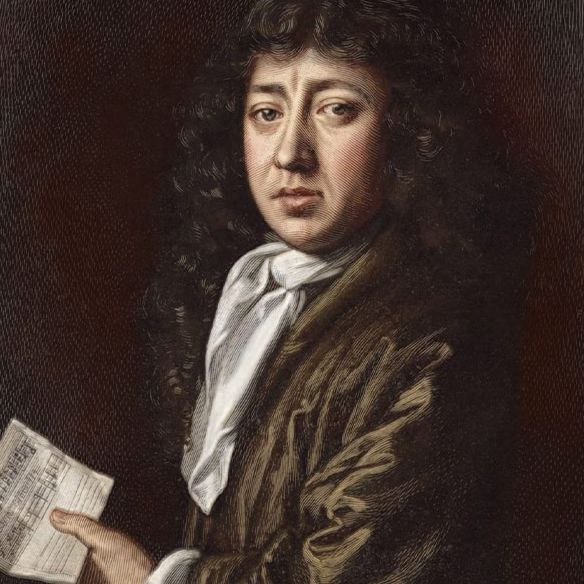
If you need a role model for life in a plague, it is hard to beat Samuel Pepys. Pepys (pronounced Peeps) was a man about town in the London of the late 17th century, a member of Parliament and of the Royal Society, and an official in the Royal Navy as the British were fighting the Dutch. But his true claim to fame is that he wrote a personal diary for ten years of his life in the 1660s. Kept private in his lifetime, and much of it in code, he used it to tell the story of his days and nights, with disarming frankness and occasional hilarity, charting his thoughts and feelings, ups and downs, love affairs and marital woes. His diary is now one of the richest accounts of what life was actually like for an aspiring social climber in the period in England when the monarchy was restored. And he lived through the Great Plague of London in 1665 — and, as we might say, blogged about it.
Pepys’s jottings have been a tonic to read in lockdown — fascinating and, with the perspective of time, oddly calming. Unlike Daniel Defoe’s later semi-fictional work A Journal of the Plague Year, Pepys wrote with no knowledge of what the future might bring, and in that way, he was just like us now, as a plague summer beckons in 2020, but with far less information. He had the means to move to the countryside, where most of the elite decamped during the crisis to escape infection, but he opted to stay in London. He had work to do at the Admiralty, organizing and handling logistics for the second Anglo-Dutch war, and he had a quirky curiosity about most things — so he lingered, moving about the city, night and day, noting what he saw and heard.
Some of it is horrifying. He witnessed family members deserting each other and fighting over who would get their own grave. He marveled “how everybody’s looks, and discourses in the street, is of death, and nothing else; and few people going up and down, that the town is a place distressed and forsaken.” Some of it is eerily familiar, even down to the question of whether it was too risky for his wife to hire a cleaning maid, or the great haircutting question: “Up, and after being trimmed, the first time I have been touched by a barber these twelve months.” But what you glean most from his plague diary is that he continued to live his life as fully as he could, and maintained an astonishing amount of poise throughout.
The plague enters the diary in the spring of 1665, but never dominates it. The disease had, after all, ravaged London periodically throughout the 17th century, coming and going, and when an outbreak began, the dread was familiar. But Pepys is busy celebrating new wealth in April: “I end the month in great content as to my estate and getting.” That was the case even as he heard the first rumors: “Great fears of the sickness here in the City, it being said that two or three houses are already shut up. God preserve us all!” In June, he notes how the plague had finally moved into the city, and struck “my good friend and neighbors, Dr Burnett, in Fenchurch Street.” Burnett had already “caused himself to be shut up of his own accord, which was very handsome.”Get unlimited access to Intelligencer and everything else New YorkLEARN MORE »
But Pepys is mainly interested in a new suit he’d bought, which didn’t arrive on time. He’s irritated by his wife’s dislike of it — their bad marriage is one of the subplots of the diary — and arranges for her to be shipped out of town to a friend’s place (which “I think will be very convenient”). He has dinner with relatives and dryly observes that he was “as merry as I could be in such company.” After dinner, he goes out “to show, forsooth, my new suit.”
Only slowly does the plague nip at his heels, but when it does, it gets very real. He finds two of his favorite pubs suddenly boarded up, “and more than that, that the person was then dying of the plague when I was last there, a little while ago, at night. To hear that poor Payne, my waiter, hath buried a child, and is dying himself. To hear that a labourer I sent but the other day to Dagenhams, to know how they did there, is dead of the plague; and that one of my own watermen, that carried me daily, fell sick as soon as he had landed me on Friday morning last … is now dead of the plague.”
All those familiar faces suddenly gone, and new ones faltering in front of him. Taking a ride in a carriage one day, Pepys notes that suddenly the coachman who was driving “easily and easily, at last stood still, and come down hardly able to stand, and told me that he was struck very sick, and almost blind he could not see; so I ‘light and went into another coach, with a sad heart for the poor man and for myself also, lest he should have been struck by the plague.”
Before too long, “I find all the town almost going out of town, the coaches and wagons being all full of people going into the country.” He sends his mother away, but stays to deal with war business, court gossip, meetings with officials, and royal news. And the number of dead rises. By July 5, still in the city, he begins to fear the worst: “The season growing so sickly, that it is much to be feared how a man can escape having a share with others in it, for which the Good Lord bless me! Or make me fitted to receive it.” He seems to be preparing himself for either eventuality. And his only precaution is avoiding certain streets and neighborhoods.
There’s a certain Monty Python Black Knight vibe to Pepys’s equanimity. Does he think he’s immune? Even when the plague reaches his own parish, with 40 suddenly dead, Pepys stays up and about, with “a pleasant going and a good discourse … But Lord! to see in what fear all the people here do live. How they are afraid of us that come to them, insomuch that I am troubled at it, and wish myself away.” Even in his bedroom, as he works “undressed all day long,” the plague cannot be avoided: “It was a sad noise to hear our bell to toll and ring so often today, either for deaths or burials; I think five or six times.” Nonetheless, he attends a wedding — getting there late — and has a blast in the middle of it all: “Thus I ended this month with the greatest joy that ever I did any in my life, because I have spent the greatest part of it with abundance of joy, and honor, and pleasant journeys, and brave entertainments.”
I’m a little dumbstruck at the stoicism of it all. In the middle of a nightmare, he’s having the best month of his life! He’s not in denial. He’s somehow capable of finding an equilibrium so that even in the face of mass death, he can let himself go and enjoy a massive party. Here in the 21st century, we’re finding that not so easy. And Pepys faced horrors far worse than ours. His friends endure terror: “And poor Will, that used to sell us ale at the Hall-door, his wife and three children died, all, I think, in a day.” The press of corpses gets so great, there’s a citywide decision to carry them to burial at night, “the town growing so unhealthy, that a man cannot depend upon living two days.”
And then just a little moment that gives us a sense of how lucky, in comparison, we are: “It was dark before I could get home, and so land at church-yard stairs, where, to my great trouble, I met a dead corpse of the plague, in the narrow ally … But I thank God I was not much disturbed by it. However, I shall beware of being late abroad again.” Maybe it’s just the English stiff upper lip as far back as 1665, but the tenacity and composure of the man are impressive, even as he passes by mounds of corpses lying out in the open, piled up against the walls of houses in the streets, dumped into mass graves, and all the doctors dead in Westminster, leaving the dying to fend for themselves.
Historians now rank the 1665 plague as the worst of that century (though much less severe than the Black Death of 1348). By September, as it peaked, there were 7,000 deaths a week. In COVID-19, the fatality rate is around one percent. In London in 1665, in a matter of seven months, around a quarter of the population perished. The number is vague because so many records were destroyed by the Great Fire of London, which broke out a year later. But it’s still staggering. A rough equivalent today would be 4 million deaths in the New York City metro area this year alone — with no real medical care, and people dropping dead on the streets. Now imagine that after the deaths of those 4 million, much of Manhattan were to be burned to the ground by a massive and uncontrollable fire. That’s what Londoners had to handle in just two years: a pandemic of far greater scope than ours, and a conflagration that amounted to 9/11 several times over. And it was not the end of the world.
In fact, in just a couple of years, the population of the city had rebounded. The massive fire had killed much of the rodent population that had been spreading the fleas behind the plague. London was rebuilt, stone replaced wood, and Christopher Wren was brought in to design and replace the old Saint Paul’s Cathedral and over a dozen other landmarks of the city to this day.
What must have felt like an apocalypse of plague and fire became, with astonishing speed, a new city, forged anew by communal trauma, and soon to be the most powerful capital in the world. And somehow, Pepys lived through all of it, face-to-face with death, and never stopped living, maintaining a stoic cheerfulness and humor throughout. And today, in the richest country on Earth, with medical technology beyond Pepys’s wildest imagination, and a plague killing a tiny fraction of the population, some are wielding weapons in public to protest being asked to stay at home for a few more weeks and keep a social distance. Please. Get a grip.
What We Are Not Seeing
There’s a strange similarity between the casualties of a plague and those of a war in modern America: we never see the bodies. I have yet to see a Covid19 patient in the terminal phase of the illness; I’ve never seen one being forcibly intubated; I haven’t seen video of the coughing fits of the victims; we never absorb why some are strapped to their beds, so they don’t rip out their ventilators in their desperation to breathe. There are no photos of the dying; and very few that even show the toll of survival. These human beings, old and young, are being shrouded by understandable medical privacy, but also hidden from us.
This week, a friend texted me four photos of a gay man in his 30s. In the first there was a beaming, tanned, bearded face, with a solid chest, and a good tan in a tank top, muscles bulging, eyes twinkling. Next up was the same muscled dude, ripped abs, boulder-like shoulders, and a sleeve tattoo covering the bicep, taken at a gay club. In the third and fourth, taken only a few weeks later, it was as if he were a completely different man.
He looked, in fact, more like the classic AIDS patient from my past: His face was now skeletal, his neck shrunk, traps disappeared, eyelids half-shut as he selfied himself holding a Coke classic bottle in a hospital bed. In the fourth, there is hardly an attempt at a smile, and on his withered neck, a gauze pad is taped to his throat, following a tracheotomy.
I have to say it hit me hard. I’d seen that transformation so many times before, the swift and brutal theft of health and life among young gay men, and the faces haunt me still. I can close my eyes now and see them all, and the terror they evoked, and the courage they often displayed. “Walked for the first time in over a month today,” the COVID-19 survivor told his Facebook friends. “It was a very dizzying, humbling experience.” He thanked his boyfriend for his love and support, but he had not been able to see him for several weeks. He’d been struggling for his life in that hospital bed, for over a month, alone.
That last was a sucker punch. With AIDS, for far too many gay men, an admission to hospital meant that their legal next-of-kin alone had visitation rights, and, without the right to marry, their partners and husbands were often barred from qualifying. In many awful cases, homophobic family members threw boyfriends out of their shared apartments, barred them from the hospital and kept them from the funeral. Some families even blamed the husbands for the infection, deepening the injury. And all this meant that the act of dying of AIDS was not only agonizing but solitary, unmediated by the love of those who were closest to you, a final, hideous marginalization.
But how different is it now? When and if your parent or grandparent falls ill, and is taken to the hospital, you cannot visit. You cannot comfort or hold; you cannot be there when they panic or lash out at a nurse; you cannot hold their hand as they struggle to breathe; you cannot stroke their head as they die. You cannot ask the questions they cannot, or just hold their hand in the night. There are good reasons for this, in containing the virus, and I fully understand them. But the unintended cruelty of it all is the mark of a plague death. With the elderly, who make up a disproportionate share of the death toll, the isolation can just be an intensification of where they already were: left in nursing homes, segregated from the young, waiting to expire. But the final loneliness must be terrible.
Everything we hear about the impact of this virus is technical. All the dead are abstractions. We chart graphs. We predict curves. Our president cannot bring himself to offer anything but minimal empathy, his cold, disturbed soul only able to understand this grotesque event in so far as it might affect the stock market or his reelection chances. The numbers mount and we do not really understand what they mean. In The Plague, Camus proposed thinking about the numbers of the dead in terms of how many movie theaters would be filled up. It was a way, he thought, not to become numb to the enormity of a plague. But we are becoming numb to this thing, denied the ability to look it in the face as it really is, just as we are shielded from the broken bodies and smashed skulls and torn limbs of the wounded in our endless, pointless wars.
I hope we can find a way for journalism to show us these images, however searing and difficult that process might be; and that patients can give permission for their bodies to be shown and their battle for life accurately depicted. If the victims can face their deaths alone, we can surely face the reality of what exactly they are enduring. And regain our focus and energy in fighting this thing till it’s gone.
The Simple Good of Masks
I’ve been wearing a mask outside now since early February. I do so not because I’m some kind of saint, or communist, or hypochondriac, but simply to protect myself and others from the small chance of being infected by a new and dangerous virus. It’s not that cumbersome to wear; it’s easier to put on than a tie; it stops you touching your face; and while it doesn’t guarantee safety, it adds some odds in your favor, and suggests a little solidarity with one’s neighbors. I’ve been banging this drum for quite a while now, and it still befuddles me why some experts, even Tony Fauci, have not made a bigger deal of it.
But the active campaign against wearing them? That completely stumps me. Some of the rhetoric on the religious right is simply unhinged: “The media have been accompanied in their work of diabolical disorientation by a political establishment that permits the cowed masses to venture forth from their cells only under the condition of donning the current yellow Star of David: the face mask.” Sure. Popping on a N95 to take the dog for a walk is the equivalent of being herded to Auschwitz.
And here’s the editor of the more mainstream First Things, a leading conservative religious journal, Rusty Reno: “Look, let’s face it. There are those who are terrified and those who are not. Where do you stand?” Here’s where I stand: neither in terror nor in denial, just in favor of prudence. But Reno is having none of it: “Now we know who wants to cower in place. By all means rage against those who want to live.” But I don’t equate putting a mask on with cowering, and I feel no rage for those who want to live, just for those who make it more likely that others will die.
In fact, I equate masks with the opposite of cowering. They’re one way of actually being able to get out there, live, work, with much less risk, and help end the epidemic, as The Atlantic pointed out: “Models show that if 80 percent of people wear masks that are 60 percent effective, easily achievable with cloth, we can get to an effective R0 of less than one. That’s enough to halt the spread of the disease.” If you want to get back to work and reopen the economy, you should actually be the most fervent supporter of a simple measure that can help get that done. Reopen without masks, and you massively increase the odds of having to close everything down again.
Is mask-wearing some kind of signal of effeminacy? That appears to be Trump’s moronic assumption, which is why his vanity prevents him from wearing one. But taking advice on manliness from an obese president who cannot directly confront someone, lobs insults from a distance, shrinks from any criticism, dodged the draft, cheats at golf, and walks around with a ridiculous bouffant hair-do and an absurd orange fake-tan, is not something a real man would ever do.
If a mask is effeminate, then so is a hard-hat on a construction worker, a visor on a welder, and a helmet on a combat soldier. Which is to say it isn’t in the slightest way effeminate as anyone who has actually built a house, forged some steel or fought a battle would know. Trump’s loathing of masks is like a gay man in the late 1980s loathing condoms. Sure, most of us prefer our sex not sealed in a numbing rubber wrap; sure, we’d rather fuck unsheathed. But the masculinity lies in restraining oneself from such acts, not giving in to them. Being a man is defined by not being a child. It is something of which this whining winny of a president has no inkling of understanding.
Sure, there’s evidence that some men are uncomfortable in masks. So we need to persuade them that they should wear them with manly pride. What we need is not the woke left’s rank misandry, and its view of maleness as a form of socialized toxicity; nor the right’s championing of a crude and dumb machismo that is a caricature of actual manliness. We need a model for men that prizes restraint and courage, prudence and pragmatism, and enfolds this in a model of maleness that is rooted in the defense of our societies from carnage. Looking around, I see plenty of this at work: men with calm and dignity and common sense protecting their families, friends and country. The only place where it obviously isn’t happening is in the White House.
Rebel Wisdom In his bestseller, Stealing Fire, Jamie Wheal talked about peak experiences and group flow states as the cutting edge for human evolution. But since then, he’s become more and more concerned by how these techniques are being used and abused. Now he’s releasing a checklist – to answer the question – how to spot a cult. To download the Ethical Cult Checklist, go to: http://flowgenomeproject.com/checklist To see films from the recent workshop with Jamie, ‘Ethical Cult Building, Collective Sensemaking in an Age of Existential Risk’, become a Rebel Wisdom member: https://www.rebelwisdom.co.uk/plans We also reference the ‘Making Sense of Sensemaking’ film in this: https://www.youtube.com/watch?v=8Es_W… You can listen to a podcast versions of our films on Spotify or Apple Podcasts by searching ‘Rebel Wisdom’ or download episodes from our Podbean page: https://rebelwisdom.podbean.com/ We also have a Rebel Wisdom Discord discussion channel: https://discord.gg/RK4MeYW
Rebel Wisdom On 6th April, London Real broadcast an interview with ‘conspiracy researcher’ David Icke. In it he claimed that Covid-19 was “a hoax” and that 5G was designed for a “mass cull”. YouTube took it down. In the wake of this the owner of London Real, Brian Rose launched a crowdfunding campaign for what he called the “Digital Freedom Platform”. This has raced to nearly $1m in just over a week. However, lots of the claims about the platform don’t appear to add up. This is an investigation into the platform, the wider issue of free speech and the censorship of the big tech platforms. Documents and articles referenced in the film include: London Real ‘Digital Freedom Platform’: https://donate.londonreal.tv/freedom-… Scamguard: https://www.scamguard.com/londonrealtv/ NY Mag: “We Still Don’t Know How the Coronavirus Is Killing Us” https://nymag.com/intelligencer/2020/… Evidence SARS-CoV-2 Emerged From a Biological Laboratory in Wuhan, China https://project-evidence.github.io/ Longstem Ltd, Companies House: https://beta.companieshouse.gov.uk/co… Check out Rebel Wisdom’s recent film ‘War on Sensemaking 4, Pandemic and Conspiracy’: https://www.youtube.com/watch?v=G70qt… You can listen to podcast versions of our films on Spotify or Apple Podcasts by searching ‘Rebel Wisdom’ or download episodes from our Podbean page: https://rebelwisdom.podbean.com You can also become a Rebel Wisdom member, for many benefits including our regular Q&As with the interviewees from our films, check out: https://www.rebelwisdom.co.uk/plans