Quantum Medicine for the Coronavirus

By Paul Levy | April 16, 2020 (tikkun.org)
Coronavirus Image

www.nursingschoolsnearme.com

COVID-19

[Editor’s Note: I have always been a bit skeptical about using quantum physics as a guide to dealing with problems on a human scale. I’m not convinced that quantum reality shapes or could shape human decisions or human illness. What I am sure of is that the bulk of this article does not depend on the quantum physics tie-in and makes some very important points, and for that reason I hope you will read it. –Rabbi Michael Lerner  rabbilerner.tikkun@gmail.com]

QUANTUM MEDICINE FOR THE CORONAVIRUS

One of the real dangers of the current pandemic is for us to feel helpless, overwhelmed with despair, impending doom and pessimism, a state which cuts us off from our agency and creative power. Strangely enough, the hardest of the hard sciences—quantum physics—comes to our aid to serve as medicine to protect us from this psychological danger. A little insight into the essence of what quantum physics reveals to us can be the best anti-depressant imaginable. By revealing that we live in a thoroughly quantum universe, quantum physics is literally placing the keys to our future in our own hands – the question is, do we know how to wisely use the gift that is being freely offered to us?

Called “the crowning intellectual achievement of the last century,” quantum physics points out that even if something is, to quote pre-eminent quantum theorist John Archibald Wheeler, “incredibly, ridiculously unlikely,” it can still manifest “in reality” in this very moment. Wheeler explains, “unlikely is not quite the same as impossible.” An infinitesimally small or “nonzero” probability is radically different from something that is impossible; we should be very careful what we assign to the trash bin of the impossible. The implications of this, both in “the real world” and within our minds, are truly uplifting and inspiring.

The quantum world is the realm of the extremely small, the sub-microscopic dimension. Even though the macroscopic world of our everyday human experience appears to operate classically, it is built out of nothing but quantum entities. Before a quantum entity is observed, for example, it exists in a state of open-ended potentiality such that each and every possible state in which it could ever manifest exists in a potential parallel universe. At the moment of observing a quantum entity it actualizes into one particular state (what we call “the real world”) and all of its other potential states vaporize as if they never existed.

This process (which is happening at each and every moment, including right now!) takes place instantaneously, in no time at all – literally outside of time in such a way so as to be practically imperceptible. Entrancing ourselves via our own intrinsic creative genius to call forth reality, we think the world is simply happening to us, as we miss how the quantum nature of our creativity has a hand in evoking each moment of our experience. We have then literally bewitched ourselves—casting a spell on ourselves—through using our own creative power in an unconscious, disempowering way that is potentially killing us.

Getting back to the so-called “real world” for an instant, I am personally aware of being haunted by a sense of foreboding. From one very convincing perspective our future looks bleak as our country and world trends towards the specter of totalitarianism and environmental destruction. I have to confess that there is a part of me—thankfully, it is only a part—that can feel a sense of despair about what’s going on in our world. I imagine we all have an analogous part within us – it is hard for me to imagine how any thinking, feeling sentient person doesn’t have this part unless they are in denial.

It seems to me a question of what we do with this despairing part, how we relate to it within ourselves. I notice that it is getting harder for me to marginalize this aspect of myself and just go about my life pretending—as if playing a game of make believe—that everything is fine, which it clearly isn’t. If I compartmentalize this part, trying to render it unconscious, I notice I feel slightly ill at ease, out of sorts with myself, somewhat blocked creatively, less than my full self. It feels helpful to at least consciously acknowledge and name this part, to bring it to light and own it, so that it doesn’t unconsciously run me.

When I allow this despairing part into my awareness and, instead of identifying with, becoming absorbed by or falling under its spell, I develop a conscious relationship with it, I notice that the creative spirit within me oftentimes becomes ignited. It is as if the part of me that is in despair, if I don’t allow it to stop me in my tracks and become paralyzing poison, can potentially set aflame a burning inner necessity that impels me to give shape and form to what is going on inside of me – for what else do I have to lose? The despair can be the rocket fuel to catapult me out of my struggles with resistance, inertia and self-created demands of perfection, propelling the creativity within me that is thirsting for expression to cross the threshold of the unexpressed and give voice to itself.

The way our world is manifesting—even before the advent of the coronavirus—seems nightmarish beyond belief; add in the global pandemic and the nightmare takes on an even denser seeming reality than before. When I see the truly dire nature of our situation, any talk about global awakening and the evolution of our species seems like utter pablum, the ravings coming from the fevered imagination of someone who is deeply in denial regarding the depth of evil manifesting in our world. And yet, I also see that something is being revealed to us through the darkness that can—in true quantum style, potentially—change everything.

The source of the problems confronting humanity is fundamentally not economic, political or technological, but rather, is to be found within the human psyche. To quote Dr. Stanislov Grof, “In the last analysis, the current global crisis is a psychospiritual crisis; it reflects the level of consciousness evolution of the human species. It is, therefore, hard to imagine that it could be resolved without a radical inner transformation of humanity on a large scale and its rise to a higher level of emotional maturity and spiritual awareness…. Radical psychospiritual transformation of humanity is not only possible, but is already underway.” This is an important point to consider: There is undeniable evidence that an expansion of consciousness in the human species is not only a remote possibility but is already taking place. Grof concludes, “The question is only whether it can be sufficiently fast and extensive to reverse the current self-destructive trend of modern humanity.” In other words, will we wake up in time?

I am what holocaust survivor Victor Frankl would call a “tragic optimist,” (or in my words, a “pessi-optimist”). Being a pessi-optimist, I see with open eyes and am deeply affected by the tragic and unbearable suffering, the unspeakable evil and mind-rending horror that is unfolding in our world. This causes me immense pain and distress. At the same time, however, I am still able to find the good in our world, create a sense of meaning and see glimmers of light in the darkness. This ability allows me to grow and evolve (what has been called “post-traumatic growth”) in ways I might not have been able to previously. This is related to the archetype of the wounded healer – it is by going through (as contrasted to turning a blind eye towards) the pain and darkness of our wounds that we are enabled to receive their gifts.

As quantum physics has revealed, our act of observing the universe influences the universe that we are observing, which is to say that our act of observation is creative. By our very nature we are interpreters of our experience and generators of meaning, a process which deeply affects our experience of both ourselves and of the universe. How do we place meaning on the fact that we ourselves are the generators of meaning?

EXPANDING THE REALM OF THE POSSIBLE

In questioning and shedding light on the boundary between the possible and the impossible, quantum physics is expanding the realm of the possible to previously unimaginable degrees. In a time such as ours, replete with lies, propaganda and disinformation, it becomes nearly impossible to tell what is true from what is false. It thus greatly behooves us to at least be able to say what is within the realm of the possible.

To be clear – there is still a small chance—even if it’s an “incredibly, ridiculously unlikely” chance—that enough of humanity might wake up in time so as to be able to change our species’ trajectory before we destroy ourselves. This doesn’t require all of humanity, but when a critical mass is reached—think of the hundredth monkey phenomenon (when enough monkeys learn a new behavior, it is suddenly, energetically accessed by the collective monkey population), or the symbolic 144,000 in The Biblical Book of Revelations—this acts as so much yeast in the dough to help the bread (of humanity) to rise, so to speak.

That our species is waking up is not just a remote possibility, but a desperate necessity, an imperative that is demanded by circumstances. We have become conditioned, however, to make use of only a very small portion of our soul’s abundant resources. To quote psychologist William James, our situation is “much like a man who, out of his whole bodily organism, should get into a habit of using and moving only his little finger…. We all have reservoirs of life to draw upon, of which we do not dream.” Sometimes the unconscious (the dreamer of both our night and waking dreams) puts us in a seemingly hopeless, dangerous and unsustainable situation so as to catalyze us to become lucid and find gifts within ourselves that we didn’t know we had.

Quantum physics has empirically shown the malleable and dreamlike nature of our universe. The mutability of the universe—which quantum physics has discovered to be one of the primary aspects of nature, not to mention of our minds—implies that nothing is absolute, nothing is so fundamental (particularly our state of consciousness) that it cannot change under certain circumstances. Being that we’ve collectively dreamed up our current situation, when enough of us wake up to the dreamlike nature of our world and the role our consciousness plays each moment in giving it shape and form we can, in theory and hopefully in practice, discover that we can dream it differently. In other words, when we realize that we actually have a hand in creating something that isn’t serving us, it is within the realm of possibility—and within our power—to “un-create it,” thereby changing the collectively shared waking dream we are having.

Each one of us has creative power beyond measure at our disposal, but to the extent we are unconscious of our co-creative power, we allow ourselves to be victimized by it, as our power both turns against us within ourselves, as well as gets picked up and manipulated by outside forces to be used against us. When a sufficient number of us who are waking up to our creative potency connect with each other, it is within the realm of the possible for us to discover that we can collectively put our lucidity together in a way that can literally change the way our world operates and does business. This isn’t some New Age woo-woo theory, but is the very real power that we, as a species, unknowingly wield. When we begin to consciously realize this and get in sync with each other, all bets are off as to what is possible. The only limits are in our imagination, or rather, our lack thereof.

I keep on having a feeling, as if in a cosmic version of the movie “Groundhog Day,” that we have been here before. To let my imagination run wild for a moment (or two) – the image is that we are having a recurring dream. We have been at this same turning point in the historical evolution of our species countless times, and again and again we have tragically destroyed ourselves as a species. It takes billions upon billions of years (which in dreamtime is no time at all) to regenerate ourselves, and here we are, back at the same choice point – are we going to once again enact collective suicide, or this time are we finally going to get the message, recognize our interdependence, come together as interconnected cells in a greater organism, and avert the impending self-created catastrophe so as to collectively evolve as a species? As quantum physics points out, due to the uncertain, indeterminate and probabilistic nature of our experience, the choice and responsibility are truly ours regarding how things turn out. As quantum physics points out, the best way to predict the future is, after all is said and done, to consciously create it.

A French proverb comes to mind, “This is no time for pessimism. Let’s save that for better times.” People who are caught in a pessimistic worldview have fallen victim to an infinitely regressing self-reinforcing samsaric feedback loop: they wouldn’t be so pessimistic if their world wasn’t manifesting so darkly, and their world wouldn’t be manifesting so darkly if they weren’t so pessimistic. People who are trapped in pessimism have literally hypnotized themselves via the creative genius of their own mind in a way that is “taking them down” a path of self-destruction.

It is within the realm of the possible, however, for enough people to snap out of their self-created spell of pessimism, fear and separation and put our emerging lucidity together so as to collectively dream up a more grace-filled world into materialization that more reflects and is in alignment with who we are discovering ourselves to be relative to—and as relatives of—each other. Quantum at its core, our universe is not composed of separable parts or separate people, but rather, contrary to appearances, like any quantum system, our universe is seamlessly and indivisibly whole and one with itself. It is not a crazy “conspiracy theory” to imagine that we can “conspire to co-inspire” each other so as to help us collectively re-cognize that we are all one singular and indivisible human family.

The main gift that quantum physics—the wisdom tradition of modern times—is offering to the world is that it is revealing to us, as well as activating, our unconscious creativity. The revelations emerging from quantum physics imply that it is crazy not to invest our creative energy into envisioning that we can “come together” so as to turn the tide of self-destructive madness that is fast overtaking us, and just as crazy to imagine that we can’t accomplish this. If we aren’t investing our creative imagination in ways for us to heal, evolve, and wake up, then what are we thinking? As always, the real solution gets turned back onto—and into—ourselves.

ABOUT PAUL LEVY

A pioneer in the field of spiritual emergence, Paul Levy is a wounded healer in private practice, assisting others who are also awakening to the dreamlike nature of reality. Among his books are The Quantum Revelation: A Radical Synthesis of Science and Spirituality (SelectBooks, May 2018) and Dispelling Wetiko: Breaking the Curse of Evil (North Atlantic Books, 2013). Please visit Paul’s website www.awakeninthedream.com.

The hidden life of Rosa Parks

Riché D. Richardson|TED-Ed

Throughout her life, Rosa Parks repeatedly challenged racial violence and the prejudiced systems protecting its perpetrators. Her refusal to move to the back of a segregated bus ignited a boycott that lasted 381 days and helped transform civil rights activism into a national movement. But this work came at an enormous risk— and a personal price. Riché D. Richardson details the life of Rosa Parks. [Directed by Eido, narrated by Christina Greer, music by John Poon].

MEET THE EDUCATOR

Riché Richardson · Educator

ABOUT TED-EDTED-Ed Original lessons feature the words and ideas of educators brought to life by professional animators.

Prepare For The Ultimate Gaslighting

April 14, 2020 (amp.wbur.org)

  • Julio Vincent Gambuto
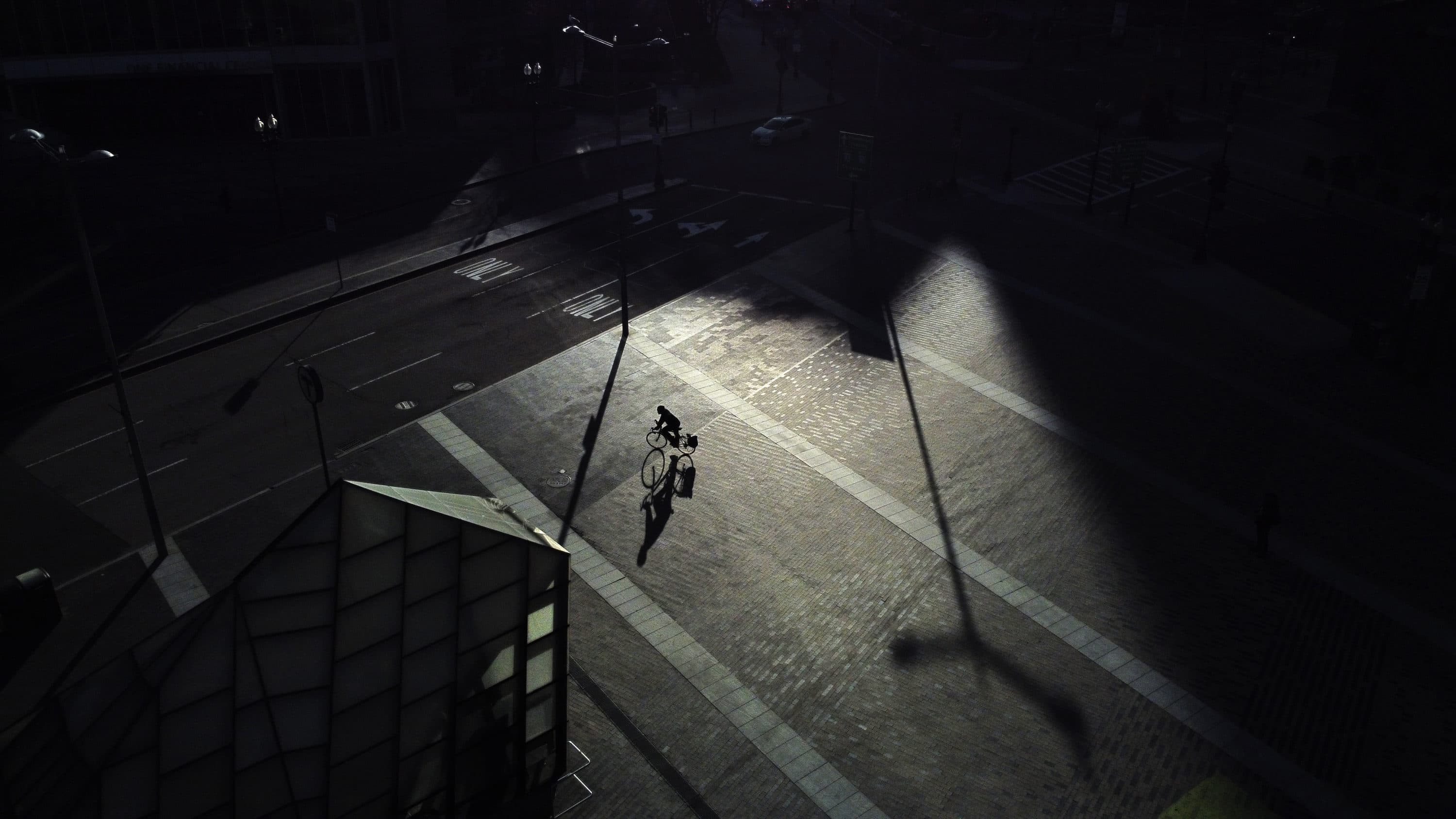
A lone bicyclist peddles though an empty Dewey Square Plaza outside South Station at rush hour which would normally be bustling with people catching trains home, Thursday, March 26, 2020, in Boston. It's a scene playing out all over the world. The spaces we filled, now filled with space. (David Goldman/AP)
A lone bicyclist peddles though an empty Dewey Square Plaza outside South Station at rush hour which would normally be bustling with people catching trains home, Thursday, March 26, 2020, in Boston. It’s a scene playing out all over the world. The spaces we filled, now filled with space. (David Goldman/AP)

First, a primer: Gaslighting, if you don’t know the word, is defined as manipulation into doubting your own sanity. As in, Carl made Mary think she was crazy, even though she clearly caught him cheating. He gaslit her.

Pretty soon, as the country begins to figure out how to “reopen” and move forward, very powerful forces will try to convince us all to get back to normal.

Billions of dollars will be spent on advertising, messaging and media content to make you feel comfortable again. It will come in traditional forms — a billboard here, commercials there — and in new-media forms, like memes.

In truth, you crave that feeling of normalcy. We want desperately to feel good again, to get back to the routines of life, to not lie in bed at night wondering how we’re going to afford our rent and bills, to not wake to an endless scroll of human tragedy on our phones, to have a cup of perfectly brewed coffee and simply leave the house for work. The need for comfort will be real, and it will be strong. And every brand in America will come to your rescue, dear consumer, to help take away that darkness and get life back to the way it was before the crisis. I urge you to be well aware of what is coming.

Pretty soon, as the country begins to figure out how to “reopen” and move forward, very powerful forces will try to convince us all to get back to normal … I urge you to be well aware of what is coming.

For the last century, the advertising industry has been centered around this cardinal principle: Find the consumer’s problem and fix it with your product. When the problem is practical and tactical, the solution is “as seen on TV” and available at Home Depot. Command strips and Magic Erasers will save me from having to repaint. Elfa shelving will get rid of the mess in my closet. The Ring will let me see who’s on the porch if I can’t take my eyes off Netflix.

But when the problem is emotional, the fix becomes a new staple in your life, and you become a lifelong loyalist. Coca-Cola makes you happy. A Mercedes makes you successful. Taking your family on a Royal Caribbean cruise makes you special.

Smart marketers know how to highlight what brands can do for you to make your life easier. But brilliant marketers know how to rewire your heart. And, make no mistake, the heart is what has been most traumatized this last month. We are, as a society, now vulnerable in a whole new way.

What the trauma has shown us, though, cannot be unseen.

A carless Los Angeles has clear blue skies. In a quiet New York, you can hear the birds chirp in the middle of Madison Avenue. Coyotes have been spotted on the Golden Gate Bridge. These are the postcard images of what the world might be like if we could find a way to have a less deadly daily effect on the planet.

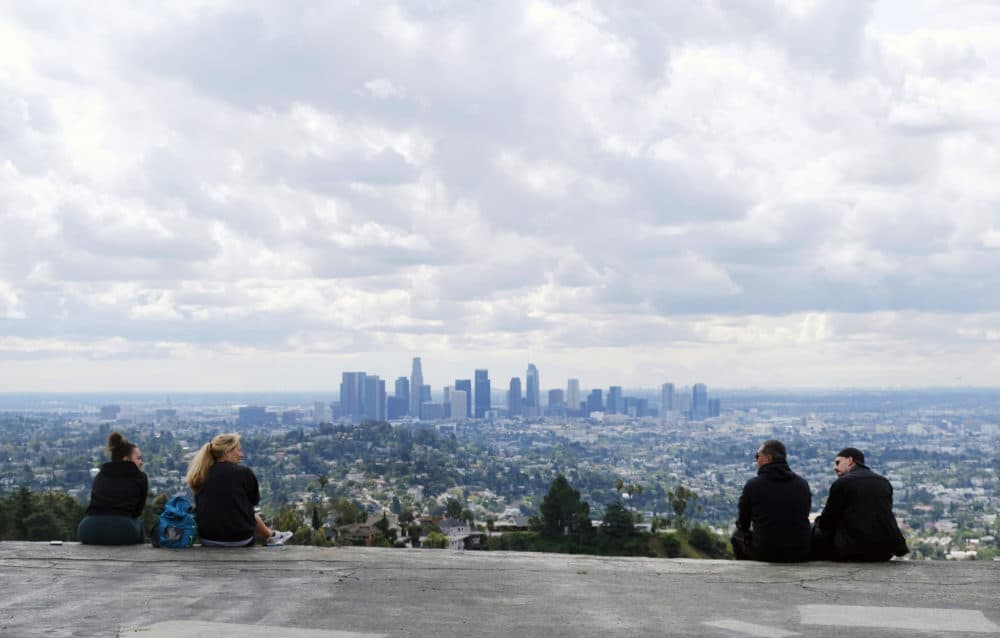
In this Friday, March 20, 2020 file photo, two pairs of hikers maintain social distance as they mingle at Vista View Point in Griffith Park in Los Angeles as storm clouds pass through. Southern Californians are seeing excellent air quality, resulting from business closures during the coronavirus pandemic and recent rain. (Chris Pizzello/AP)

What’s not fit for a postcard are the other scenes we have witnessed: a health care system that cannot provide basic protective equipment for its frontline; small businesses — and very large ones — that do not have enough cash to pay their rent or workers, sending over 16 million people to seek unemployment benefits; a government that has so severely damaged the credibility of our media that 328 million people don’t know who to listen to for basic facts that can save their lives.

The cat is out of the bag. We, as a nation, have deeply disturbing problems. You’re right. That’s not news. These are problems we ignore every day, not because we’re terrible people or because we don’t care, but because we don’t have time.

We are, as a society, now vulnerable in a whole new way. What the trauma has shown us, though, cannot be unseen.

The plain truth is that no matter our ethnicity, race, religion, gender or political party, as Americans we share this: We are busy. We’re out and about hustling to make our own lives work. We have goals to meet and meetings to attend and mortgages to pay — all while the phone is ringing and the laptop is pinging. And when we get home, Crate and Barrel and Louis Vuitton and Andy Cohen make us feel just good enough to get up the next day and do it all over again. It is very easy to close your eyes to a problem when you barely have enough time to close them to sleep.

The greatest misconception among us, which causes deep and painful social and political tension every day in this country, is that we somehow don’t care about each other. White people don’t care about the problems of black America. Men don’t care about women’s rights. Cops don’t care about the communities they serve. Humans don’t care about the environment. These things couldn’t be further from the truth. We do care. We just don’t have the time to do anything about it. Maybe that’s just me. But maybe it’s you, too.

Well, the treadmill you’ve been on for decades just stopped. Bam! And that feeling you have right now is the same as if you’d been thrown off your Peloton bike and onto the ground: What just happened?!

I hope you might consider this: What happened is incredible. It’s the greatest gift ever unwrapped. Not the deaths, not the virus, of course, but The Great Pause. It is, in a word, profound. Please don’t recoil from the bright light beaming through the window. I know it hurts your eyes. It hurts mine, too. But the curtain is wide open.

Kris Jaeger with Broad Street Ministry waits to distribute food outside of City Hall in Philadelphia, Monday, April 13, 2020. (Matt Rourke/AP)

The crisis has given us a once-in-a-lifetime chance to see ourselves and our country in the plainest way. At no other time, ever in our lives, have we gotten the opportunity to see what would happen if the world simply stopped. Here it is. We’re in it. Stores are closed. Restaurants are empty. Streets and six-lane highways are barren. Even the surface of the planet is rumbling less (true story). And because it is rarer than rare, it has brought to light all of the beautiful and painful truths of how we live.

If we want to create a better country and a better world for our kids, and if we want to make sure we are even sustainable as a nation and as a democracy, we have to pay attention to how we feel right now. I cannot speak for you, but I imagine you feel like I do: devastated, depressed and heartbroken.

What a perfect time for Best Buy and H&M and Wal-Mart to help me feel normal again. If I could just have the new iPhone in my hand, if I could rest my feet on a pillow of new Nikes, if I could drink a venti vanilla latte, then this very dark feeling would go away.

From one citizen to another, I implore you: take a deep breath, ignore the deafening noise, and think deeply about what you want to put back into your life.

You think I’m kidding, that I’m being cute, that I’m denying the obvious benefits of having a roaring economy. You’re right. Our way of life is not without purpose. The economy is not, at its core, evil. Brands and their products create millions of jobs. Like people — and most anything in life — there are brands that are responsible and ethical, and there are others that are not. They are all part of a system that keeps us living long and strong. We have lifted more humans out of poverty through the power of economics than any other civilization in history. Yes, without a doubt, Americanism can be a force for good.

But, at the same time, its flaws have been laid bare for all to see. It doesn’t work for everyone. It’s responsible for great destruction. Its intentions have been perverted, and the protection it offers has disappeared. In fact, it’s been brought to its knees by one pangolin (we have reason to believe). We have got to do better and find a way toward a responsible free market.

Until then, get ready, my friends. What is about to be unleashed on American society will be the greatest campaign ever created to get you to feel normal again. It will come from brands, it will come from government, it will even come from each other, and it will come from the left and from the right. We will do anything, spend anything, believe anything, just so we can take away how horribly uncomfortable all of this feels. There will be an all-out blitz to make you believe you never saw what you saw.

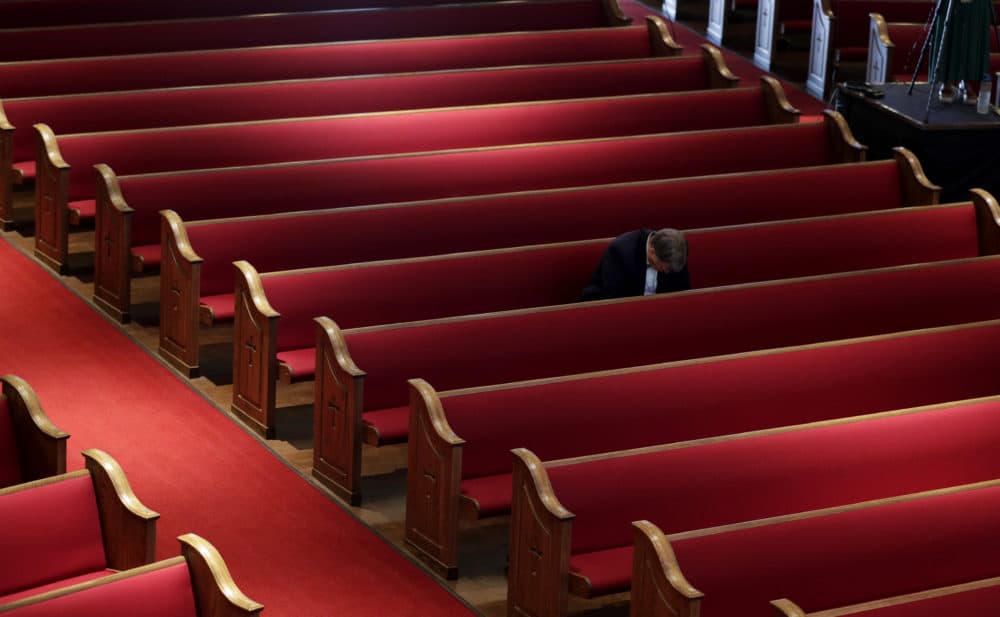
A man prays while attending an Easter service at Trinity Baptist Church in San Antonio, Sunday, April 12, 2020. Many churches are adapting their services as Christians around the world are celebrating Easter at a distance due to the COVID-19 pandemic. (Eric Gay/AP)

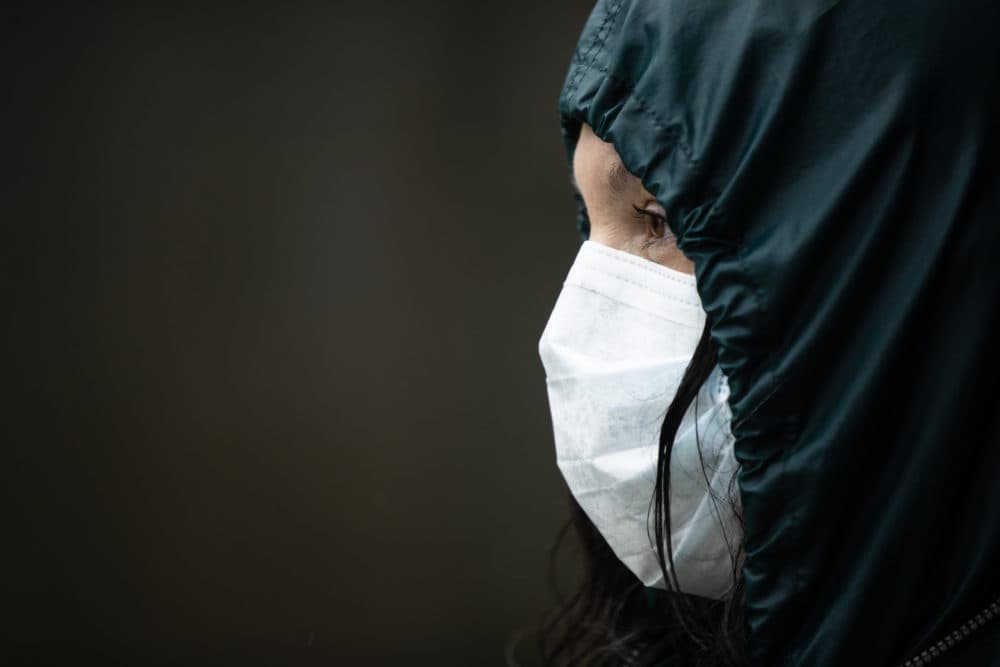
The air wasn’t really cleaner; those images were photoshopped. The hospitals weren’t really a war zone; those stories were hyperbole. The numbers were not that high; the press is lying. You didn’t see people in masks standing in the rain risking their lives to vote. Not in America. You didn’t see the leader of the free world push an unproven miracle drug like a late-night infomercial salesman. That was a crisis update. You didn’t see homeless people dead on the street. You didn’t see inequality. You didn’t see indifference. You didn’t see utter failure of leadership and systems.

But you did. You are not crazy, my friends.

And so we are about to be gaslit in a truly unprecedented way. It starts with a check for $1,200. And it will be a one-two punch from big business and the White House. Both are about to band together to knock us unconscious again. It will be funded like no other operation in our lifetimes. It will be fast. It will be furious. And it will be overwhelming. The Great American Return to Normal is coming.

From one citizen to another, I implore you: take a deep breath, ignore the deafening noise, and think deeply about what you want to put back into your life. This is our chance to define a new version of normal, a rare and truly sacred (yes, sacred) opportunity to get rid of the noise and to only bring back what works for us, what makes our lives richer, what makes our kids happier, what makes us truly proud.

You are not crazy, my friends.

We care deeply about one another. That is clear. That can be seen in every supportive Facebook post, in every meal dropped off for a neighbor, in every Zoom birthday party. We are a good people. And as a good people, we want to define — on our own terms — what this country looks like in five, 10, 50 years. This is our chance to do that. And it’s the best chance we’ll ever get.

We can do that on a personal scale in our homes, in how we choose to spend our family time on nights and weekends, what we watch, what we listen to, what we eat, and what we choose to spend our dollars on and where. We can do it locally in our communities, in what organizations we support, what truths we tell and what events we attend. And we can do it nationally in our government, in which leaders we vote in and to whom we give power. If we want cleaner air, we can make it happen. If we want to protect our doctors and nurses from the next virus — and protect all Americans — we can make it happen. If we want our neighbors and friends to earn a dignified income, we can make that happen. If we want 29.7 million kids to be able to eat lunch if suddenly their school is closed, we can make that happen. And, yes, if we just want to live a simpler life, we can make that happen, too.

But only if we resist the massive gaslighting that is about to come. It’s on its way. Look out.

Julio Vincent Gambuto is a writer/director in NYC and LA. His latest film, “Team Marco,” is currently at film festivals worldwide. You can find out more about him and his work here. A version of this essay was originally posted on Medium.

Follow Cognoscenti on Facebook and Twitter.

(Submitted by Sarah Flynn.)

Meditation Mistake #1: The Myth of the Quiet Mind

By Craig Hamilton (integralenlightenment.com)

What is the greatest obstacle to deep meditation? If you ask a thousand spiritual seekers that question, the vast majority of them will give you some version of the same answer. “It’s the mind. It’s my busy, relentless mind. I just have so many thoughts. And this seemingly endless stream of thoughts prevents me from really going deep in meditation.”

I don’t know exactly where this rumor got started. But somewhere along the way, nearly all of us learned that meditation is about having a “quiet mind,” or eliminating the stream of thoughts, or at least finding a way to focus our mind or make it more “spiritual.”

And as a result, nearly everyone meditating today is engaged in a misguided–and often exasperating–project of trying to find a way to do something about their active mind.

Some of us are trying to get our mind to be quiet. Others are trying to get it to produce more peaceful and spiritual thoughts. And others are trying to find somewhere to place our attention other than our mind–such as our body, or God or our higher self.

The idea that meditation is about having a “still” mind is possibly the most pervasive assumption about meditation. Countless people have become frustrated and given up on meditation because they were unable to quiet the mind.

But what if I told you the mind wasn’t an obstacle to meditation? What if the presence of thoughts had no impact on your ability to meditate at all?

I teach meditation in a spiritual context, which means that the ultimate goal of the practice is  the discovery of our true nature. It is a practice designed to open us to enlightened consciousness.

So, the question is: what does a quiet mind have to do with enlightened consciousness?

To answer this question, imagine what it would be like to go through your entire life without any thoughts. Now, take it a step further and imagine a world in which nobody was thinking anything at all. Ever.

It’s not a very inspiring picture, is it? If you take it far enough, you end up with the entire human race on intravenous feeding tubes lying there in a vegetative state. Not very enlightened, to say the least.

Now imagine an enlightened world–a world in which all human beings are awake to their higher nature, living in awakened consciousness. Clearly it’s not a world without thoughts. So is it a world in which everyone only thinks enlightened thoughts? Not exactly. And this brings us back to meditation.

Meditation is not about quieting the mind. Nor is it about training the mind to only think good or spiritual thoughts. Meditation, properly understood, is about transforming your relationship to the mind. It’s about cultivating the ability to disengage from the mind, to no longer identify with the mind, so that you can discern and discriminate which thoughts are worth listening to and acting on, and which ones aren’t.

What if you could learn how to not identify with your mind, to not compulsively engage with your thoughts? What if you could learn how, even when there are thoughts present, to not be lost in thoughts, to not mechanically follow the thought stream wherever it goes?

Our minds give us trouble because they are deeply conditioned to react in habitual and predictable ways based on past experiences. We’re all embedded in countless habits of mind that dictate much of our behavior.

Meditation has the potential to liberate you from the mind, which means that no matter how much thought is present, you’re not lost in it, you’re not compulsively believing it, you’re not at the effect of it, you’re not afraid of it.

Freedom from the mind means freedom in the face of the mind. It doesn’t mean freedom from having a mind. It means you are no longer enslaved to your conditioned mind.

So, next time you sit down to meditate, instead of trying to find a way to quiet your mind, simply make the decision to not engage with your mind. That means that when thoughts arise, even if they are very interesting thoughts, we choose not to give them our attention.

One of the things that will happen as you meditate in this way is that you’ll start to discover that you are not your thoughts, and that you are not even the generator of most of the thoughts you experience. Thoughts just arise spontaneously and somewhat mechanically without any volition on your part. They just keep surfacing; they keep arising on their own.

From this vantage point, you begin to see that there is a choice you have, which is to get interested in the content of the thought, to get involved in the thought–or to leave it alone.

As you continue with this practice, you eventually come upon a startling discovery–that the content of your mind doesn’t need to change in order for you to be able to meditate. In fact, the content of your mind doesn’t need to change for you to be awakened.

That’s because the mind is not the problem. Even having a very active mind is not a problem. In many ways, the power of this practice reveals itself more fully when you have an active mind because it’s in those moments that you can begin to discover directly that your true nature is already free, even when your mind is in chaos.

One of the primary insights of enlightenment is that nothing is an obstacle to your liberation. It doesn’t matter if you are in the midst of difficult circumstances, or are experiencing painful emotions, or have a very busy, active mind. You’re already free no matter what happens. Consciousness is not at the effect of what arises within it. Who and what you truly are is not governed by the content of your mind from one moment to the next.

If you had to have a quiet mind and a peaceful emotional state to be enlightened, I think it’s safe to say that nobody would have ever been enlightened in the history of the world. 

Why? Because we’re human animals with extremely complex brains and deep survival instincts, living active, engaged lives, swept up in a powerful cultural momentum. Our minds are active and reactive in ways that are beyond our control.

Spiritual liberation begins to dawn when you discover that your thoughts and feelings have no control over you, that you don’t have to believe or even listen to your mind. In that realization, an extraordinary experience of inner freedom begins to emerge out of seemingly nowhere and it changes everything.

This inner freedom brings with it numerous remarkable qualities, but it’s worth noting that one of the most noticeable transformations that occurs as we awaken is a profound shift in our way of knowing.

The birth of awakened consciousness gives us access to a different kind of knowing than we can access through mere thinking alone. As we continue our practice of being free from the mind, we find that we begin to gain access to a new, holistic “wisdom capacity” that seems to come from beyond what we normally think of as “our mind.” This wellspring of spontaneously arising wisdom flows naturally and freely, meeting the needs of each moment with surprising accuracy and clarity.

At first, it almost seems like a supernatural ability. But over time, we realize that it is not so much supernatural as it is natural, organic and integrative. It includes our learned knowledge as well as things we never learned. It includes intuition, somatic or bodily knowing as well as “field knowing” or collective wisdom which organically integrates the perspectives of others.

It’s an integrative, holistic wisdom faculty which doesn’t reject thought. It transcends and includes it in a mysterious wider form of knowing that again and again demonstrates its reliability as a profound source of wisdom that we can relax into and trust to guide us.

A still mind is something we may experience in moments of meditation, but it’s not the ultimate goal, and if we become attached to it, it can even prevent us from discovering meditation’s true potential to catalyze spiritual awakening.

What is ultimately much more enlightening is learning how to let go of your mind regardless of how active it might be. By doing that, you discover the possibility of being free of your mind no matter what it’s doing, which is ultimately much more liberating than merely “shutting it up.”

What can we learn from pandemic literature?

Pandemic fiction

The plague writers who predicted today

Survival, isolation, community and love are explored in these plausible, prescient books. Jane Ciabattari on the novels that tell us ‘we’ve been through this before and we’ve survived’.

  • By Jane Ciabattari (bbc.com/culture)

14 April 2020

In uncertain – indeed, weird – times like these, as we increase our social isolation to ‘flatten the curve’, literature provides escape, relief, comfort and companionship. Less comfortingly, though, the appeal of pandemic fiction has also increased. Many pandemic titles read like guide books to today’s situation. And many such novels give a realistic chronological progression, from first signs through to the worst times, and the return of ‘normality’. They show us we’ve been through this before. We’ve survived.

More like this:

– How bookshops are helping with isolation

– The best books of the year so far

– The prophetic writer who gives us hope

Daniel Defoe’s 1722 A Journal of the Plague Year, which chronicles the 1665 bubonic plague in London, gives an eerie play-by-play of events that recalls our own responses to the initial shock and voracious spread of the new virus.

(Credit: Alamy)

Daniel Defoe’s A Journal of the Plague Year chronicles the 1665 bubonic plague in London

Defoe begins in September 1664, when rumours circulate of the return of ‘pestilence’ to Holland. Next comes the first suspicious death in London, in December, and then, come spring, Defoe describes how death notices posted in local parishes have taken an ominous rise. By July, the City of London enforces new rules  –  rules now becoming routine in our 2020 shutdown, such as “that all public feasting, and particularly by the companies of this city, and dinners at taverns, ale-houses, and other places of common entertainment, be forborne till further order and allowance…”

Nothing, Defoe writes, “was more fatal to the inhabitants of this city than the supine negligence of the people themselves, who, during the long notice or warning they had of the visitation, made no provision for it by laying in store of provisions, or of other necessaries, by which they might have lived retired and within their own houses, as I have observed others did, and who were in a great measure preserved by that caution…”

What could be more dramatic than taking a snapshot of a plague in progress?

By August, Defoe writes, the plague is “very violent and terrible”; by early September it reaches its worst, with “whole families, and indeed whole streets of families… swept away together.” By December, “the contagion was exhausted, and also the winter weather came on apace, and the air was clear and cold, with sharp frosts… most of those that had fallen sick recovered, and the health of the city began to return.” When at last the streets are repopulated, “people went along the streets giving God thanks for their deliverance.”

What could be more dramatic than taking a snapshot of a plague in progress, when tensions and emotions are heightened, and survival instincts kick in? The pandemic narrative is a natural for realistic novelists like Defoe, and later Albert Camus.  

(Credit: Alamy)

The Plague by Albert Camus is full of parallels with today’s crisis

Camus’ The Plague, in which the city of Oran in Algeria is shut down for months as the plague decimates its people (as happened in Oran in the 19th Century), also abounds with parallels to today’s crisis. Local leaders are reluctant at first to acknowledge the early signs of the plague dying rats littering the streets. “Are our city fathers aware that the decaying bodies of these rodents constitute a grave danger to the population?” asks a columnist in the local newspaper. The book’s narrator Dr Bernard Rieux reflects the quiet heroism of medical workers. “I have no idea what’s awaiting me, or what will happen when this all ends. For the moment I know this: there are sick people and they need curing,” he says. In the end, there’s the lesson learned by the plague’s survivors: “They knew now that if there is one thing one can always yearn for, and sometimes attain, it is human love.”

The Spanish flu of 1918 reshaped the world, leading to the loss of 50 million people, on the heels of 10 million dead from World War One. Ironically, the dramatic global impact of the flu was overshadowed by the even more dramatic events of the war, which inspired countless novels. As people now practice ‘social distancing’ and communities around the globe withdraw into lockdown, Katherine Anne Porter’s description of the devastation created by the Spanish flu in her 1939 novel Pale Horse, Pale Rider feels familiar: “It’s as bad as anything can be… all the theatres and nearly all the shops and restaurants are closed, and the streets have been full of funerals all day and ambulances all night”, heroine Miranda’s friend Adam tells her shortly after she is diagnosed with influenza.

Porter portrays Miranda’s fevers and medicines, and weeks of illness and recovery, before she awakens to a new world reshaped by losses from the flu and from the war. Porter almost died from the plague of influenza herself. “I was in some strange way altered,” she told The Paris Review in a 1963 interview. “It took me a long time to go out and live in the world again. I was really ‘alienated’ in the pure sense.”

All too plausible

Twenty-first Century epidemics – Sars in 2002, Mers in 2012, Ebola in 2014 – have inspired novels about post-plague desolation and breakdown, deserted cities and devastated landscapes.

Margaret Atwood’s The Year of the Flood (2009) shows us a post-pandemic world with humans nearly extinct, most of the population wiped out 25 years before by the ‘Waterless Flood’ a virulent plague that “travelled through the air as if on wings, it burned through cities like fire”.

(Credit: Alamy)

Author Margaret Atwood envisages a world devastated by a virus in her 2009 novel The Year of the Flood

Atwood captures the extreme isolation felt by the few survivors. Toby, a gardener, scans the horizon from her subsistence rooftop garden in a deserted spa. “There must be someone else left… she can’t be the only one on the planet. There must be others. But friends or foes? If she sees one, how to tell?” Ren, once a trapeze dancer – one of “the cleanest dirty girls in town” – is alive because she was in quarantine for a possible client-transmitted disease. She writes her name over and over. “You can forget who you are if you’re alone too much.”

Through flashbacks, Atwood elaborates on how the balance between the natural and human worlds was destroyed by bio-engineering sponsored by the ruling corporations, and how activists like Toby fought back. Always alert to the downside of science, Atwood bases her work on all-too-plausible premises, making The Year of the Flood terrifyingly prescient.

What makes pandemic fiction so engaging is that humans are joined together in the fight against an enemy that is not a human enemy. There are no ‘good guys’ or ‘bad guys’; the situation is more nuanced. Each character has an equal chance to survive or not. The range of individual responses to dire circumstances makes intriguing grist for the novelist – and the reader.

(Credit: Alamy)

Chaucer’s irreverent Canterbury Tales is set against a backdrop of the Black Death

Ling Ma’s Severance (2018), which the author has described as an “apocalyptic office novel” with an immigrant backstory, is narrated by Candace Chen, a millennial who works at a Bible-publishing firm, and has her own blog. She is one of nine survivors who flee New York City during the fictitious 2011 Shen fever pandemic. Ma portrays the city after “the infrastructure had… collapsed, the Internet had caved into a sinkhole, the electrical grid had shut down.”

How will they chronicle the surge in community spirit, the countless heroes among us?

Candace joins a road trip toward a mall in a Chicago suburb, where the group plans to settle. They travel through a landscape inhabited by the “fevered,” who are “creatures of habit, mimicking old routines and gestures” until they die. Are the survivors randomly immune? Or “selected” by divine guidance? Candace discovers the trade-off for safety in numbers is strict allegiance to religious rules set by their leader Bob, an authoritarian former IT technician. It’s only a matter of time before she rebels.

Our own current situation is, of course, nowhere near as extreme as the one envisaged in Severance. Ling Ma explores a worst-case scenario that, thankfully, we are not facing. In her novel, she looks at what happens in her imagined world after the pandemic fades away. After the worst, who is in charge of rebuilding a community, a culture? Among a random group of survivors, the novel asks, who decides who has power? Who sets the guidelines for religious practice?  How do individuals retain agency?  

The narrative strands of Emily St John Mandel’s 2014 novel Station Eleven take place before, during, and after a fiercely contagious flu originating in the Republic of Georgia “exploded like a neutron bomb over the surface of the earth”, wiping out 99 per cent of the global population. The pandemic begins the night an actor playing King Lear has a heart attack on stage. His wife is the author of science-fiction comic books set on a planet called Station Eleven that show up 20 years later, when a troupe of actors and musicians through “an archipelago of small towns”, performing Lear and Midsummer Night’s Dream in abandoned malls. Station Eleven carries echoes of Chaucer’s Canterbury Tales, the prototypical irreverent 14th-Century storytelling cycle, set against the backdrop of the Black Death.

(Credit: Alamy)

Emily St John Mandel’s 2014 novel Station Eleven looks at how the world is rebuilt after a virus has struck

Who and what determines art? Mandel asks. Does celebrity culture matter? How will we rebuild after the invisible virus lays siege? How will art and culture change? No doubt there are novels about our current circumstances in the works. How will the storytellers in the years to come portray this pandemic? How will they chronicle the surge in community spirit, the countless heroes among us? These are questions to be pondered as we increase our reading time, and prepare for the new world to emerge.   

http://www.bbc.com/culture/story/20200413-what-can-we-learn-from-pandemic-fiction?fbclid=IwAR2SO6fVJx_aKjNQuGsI-hqZW9uKbSu-bz_3aa-gdoLCUGvqJRdoul5WiCk

Consciousness, sexuality, androgyny, futurism, space, the arts, science, astrology, democracy, humor, books, movies and more