
Apr 9, 2024 (Medium.com)
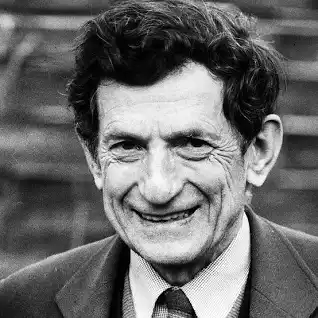
David Bohm (1917-1992) was not only an American physicist but also a philosopher whose work traversed the boundaries between theoretical physics and profound philosophical inquiries. With significant contributions to quantum mechanics and an enduring interest in the philosophy of mind and dialogue, Bohm’s legacy is one of interdisciplinary exploration and a deep commitment to understanding the fabric of reality.
A Legacy in Physics
In the realm of physics, Bohm is perhaps best known for his development of the Aharonov-Bohm effect, alongside his colleague Yakir Aharonov. This groundbreaking work demonstrated the essential role of electromagnetic potentials in quantum theory, challenging conventional notions about the nature of quantum effects. Bohm’s foray into theoretical physics didn’t stop there; he also delved into alternative interpretations of quantum mechanics, proposing a theory that emphasized the ‘hidden variables’ underlying quantum phenomena. This work sought to provide a more deterministic framework for understanding quantum processes, contrasting with the probabilistic interpretations dominant in the field.
Philosophy of Mind and Dialogue
Beyond the confines of physics, Bohm’s intellectual pursuits extended into the philosophy of mind and neuropsychology. He was deeply concerned with the nature of thought and consciousness, proposing that a collective exploration of thought processes through dialogue could unveil the underlying structures that govern our perceptions and realities. Bohm believed that our societal divisions and conflicts are rooted in the way thought operates on a collective level. He argued that by engaging in open, unstructured dialogue, individuals could transcend their limited perspectives, leading to profound insights and a more cohesive understanding of the human condition.
Collaboration with Jiddu Krishnamurti
David Bohm’s collaboration with spiritual teacher Jiddu Krishnamurti further exemplified his interdisciplinary approach. Together, they explored the intersections between science and spirituality, seeking to understand the essence of consciousness and its relationship with the material world. These discussions highlighted Bohm’s belief in the interconnectedness of all things and the importance of approaching scientific inquiry with an open mind and a holistic perspective.
The Power of Dialogue
“Dialogue is really aimed at going into the whole thought process and changing the way the thought process occurs collectively. We haven’t really paid much attention to thought as a process. We have engaged in thoughts, but we have only paid attention to the content, not to the process. Why does thought require attention? Basically, because it’s thought that’s causing the problem. It’s the thought that’s the divisive factor and if we don’t pay attention to it, it will continue to divide us.”
This perspective underscores Bohm’s conviction that the crisis of human division can only be addressed by examining the mechanisms of thought itself. By understanding and transforming the way thought processes unfold collectively, society can overcome the barriers that separate individuals and cultures, paving the way for a more unified and compassionate world.
David Bohm’s contributions to both science and philosophy continue to resonate today, challenging us to look beyond the surface of our beliefs and to engage deeply with the underlying currents that shape our world. His work invites us to consider the profound connections between the physical universe, our inner lives, and the societal structures we navigate, reminding us of the power of inquiry, dialogue, and the relentless pursuit of understanding.
Written by Jacob Grow
Writer who writes about national and international politics, poetry, philosophy, and technology.