

American Gurus: From Transcendentalism to New Age Religion
Arthur Versluis
By the early twenty-first century, a phenomenon that once was inconceivable had become nearly commonplace in American the public spiritual teacher who neither belongs to, nor is authorized by a major religious tradition. From the Oprah Winfrey-endorsed Eckhart Tolle to figures like Gangaji and Adhyashanti, there are now countless spiritual teachers who claim and teach variants of instant or immediate enlightenment.
American Gurus tells the story of how this phenomenon emerged. Through an examination of the broader literary and religious context of the subject, Arthur Versluis shows that a characteristic feature of the Western esoteric tradition is the claim that every person can achieve “spontaneous, direct, unmediated spiritual insight.” This claim was articulated with special clarity by the New England Transcendentalists Bronson Alcott and Ralph Waldo Emerson. Versluis explores Transcendentalism, Walt Whitman, the Beat movement, Timothy Leary, and the New Age movement to shed light on the emergence of the contemporary American guru.
This insightful study is the first to show how Asian religions and Western mysticism converged to produce the phenomenon of “spontaneously enlightened” American gurus.
About the author

Arthur Versluis
Arthur Versluis, Professor of Religious Studies at Michigan State University, holds a doctorate from the University of Michigan, Ann Arbor, and has published numerous books and articles.
Among his many books are Platonic Mysticism (SUNY Press 2017), American Gurus (Oxford UP, 2014), Magic and Mysticism: An Introduction to Western Esotericism (Rowman Littlefield, 2007), The New Inquisitions: Heretic-hunting and the Intellectual Origins of Modern Totalitarianism (Oxford UP, 2006), Restoring Paradise: Esoteric Transmission through Literature and Art (SUNY: 2004); The Esoteric Origins of the American Renaissance (Oxford UP: 2001); Wisdom’s Book: The Sophia Anthology, (Paragon House, 2000); Island Farm (MSU Press, 2000); Wisdom’s Children: A Christian Esoteric Tradition (SUNY: 1999); and American Transcendentalism and Asian Religions (Oxford UP, 1993).
His family has owned a commercial farm in West Michigan for several generations, and so he also published a book called Island Farm about the family farm, and about family farming in the modern era.
Versluis was awarded a Fulbright scholarship to Germany, and is the editor of JSR: Journal for the Study of Radicalism. He is the founding president of Hieros, a 501c3 nonprofit focused on spirituality and cultural renewal.
(Goodreads.com)
- Google AI
The figures mentioned as “American gurus” or key predecessors include:
Founding Figures & Transcendentalists
Versluis describes these 19th-century thinkers as the “founding fathers” or primary ancestors of the American guru phenomenon: Wikipedia +1
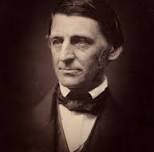
Ralph Waldo Emerson: Cited as the key ancestor who emphasized the possibility of immediate, direct spiritual knowledge.
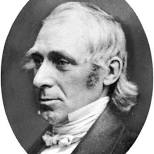
Amos Bronson Alcott: A primary figure in the New England Transcendentalist movement noted for his focus on inner transformation.
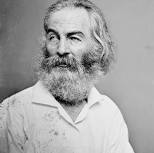
Walt Whitman: Regarded as a figure of tremendous importance for his “spontaneous mysticism” and portrayal of the expanded ego.
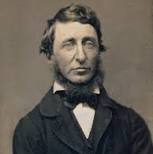
Henry David Thoreau: Highlighted for his emphasis on individual intuition and the sanctity of nature as a spiritual pathway. Books At a Glance +6
Counter-Culture & The 1960s
Versluis traces the development of the guru figure through the Beat generation and the psychedelic era: Books At a Glance +3
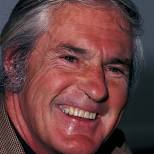
Timothy Leary: Discussed for his role in the “psychedelic movement” and the idea of “instant enlightenment” through chemical means.

Jack Kerouac: Associated with a brand of spontaneous mysticism derived from Buddhism.
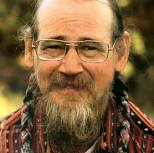
Stephen Gaskin: Leader of the “The Farm” and a key figure in the hippy era.
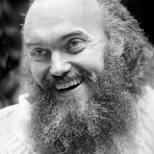
Ram Dass: Noted for his transition from psychology to becoming a popular spiritual teacher.
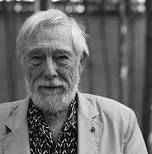
Gary Snyder & Allen Ginsberg: Part of the Beat circle that influenced American perceptions of Asian religions. Guru Viking +5
Contemporary Spiritual Teachers
The book also examines modern, often independent, teachers who claim to offer variants of immediate enlightenment: Oxford University Press +1

Eckhart Tolle: Described as a prominent figure endorsed by mainstream media (like Oprah Winfrey) who teaches unmediated insight.
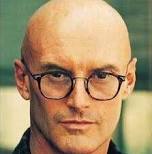
Ken Wilber: A teacher and philosopher whose works on “evolutionary spirituality” are linked back to Emersonian roots.
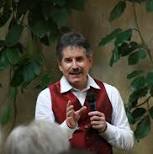
Andrew Cohen: Analyzed as a modern independent spiritual teacher.
Adi Da (Franklin Jones): Used as an example of the “avatar of immediatism” and the potential for abuse within such systems.

Gangaji & Adyashanti: Modern teachers of the “satsang” tradition mentioned for their claims of instant enlightenment.
Bernadette Roberts: A modern mystic Versluis discusses in the context of personal spiritual experience. Guru Viking +6
While Thane Walker and The Prosperos share many philosophical parallels with the figures Arthur Versluis profiles, he likely omitted them for a few strategic and historical reasons related to the specific scope of his book:
1. Focus on “Immediatism”
Versluis’s primary thesis in American Gurus is “immediatism”—the claim of spontaneous, direct, and instant enlightenment without much preparatory practice. Sacred Matters Magazine +1
- Thane Walker’s Approach: As a former pupil of G.I. Gurdjieff, Walker’s teaching often involved rigorous “disorienting activities,” psychological work (Jungian/Freudian), and a structured curriculum aimed at “waking up” from everyday reality.
- The Mismatch: Versluis tends to focus on teachers who promise a “shortcut” or immediate breakthrough (like Timothy Leary or Eckhart Tolle). Walker’s Work-oriented, Gurdjieffian lineage is often viewed by scholars as a “gradualist” or “effort-based” path, which contrasts with the “instant” nature of the gurus Versluis selected. Sacred Matters Magazine +3
2. Literary and Transcendentalist Lineage
Versluis specifically traces a “literary-spiritual” line from 19th-century New England Transcendentalism (Emerson, Thoreau, Alcott) to the 1960s counter-culture. Amazon.com +1
- Walker’s Roots: While The Prosperos certainly value individual intuition, Thane Walker’s primary influences were Gurdjieff and the Fourth Way, which is a European/Central Asian esoteric tradition. Versluis prioritized figures who fit the specific “Americanized” evolution of these ideas through the lens of the American Renaissance. Amazon.com +2
3. Mainstream vs. Specialized Visibility
Versluis selected figures who had a massive, often controversial, impact on the American popular consciousness or mainstream media. Oxford University Press
- The Prosperos’ Reach: Although The Prosperos reported around 3,000 members by the late 1980s, they operated more as a specialized “school of high ontology” rather than a mass-marketed “guru phenomenon” like Ram Dass or Andrew Cohen. Versluis often chooses “representative” figures who symbolize broader cultural shifts.
4. Classification as a “School” rather than a “Guru”
Versluis is particularly interested in the charismatic authority of the individual “guru” figure. Sacred Matters Magazine
- Because The Prosperos is organized as a structured educational organization with “High Watch” mentors and a specific curriculum, it might have been classified by Versluis as a “metaphysical institution” or an “esoteric school” rather than the specific “American Guru” archetype he was investigating. Amazon.com
Would you like to know if other scholars of American esotericism, such as Catherine Albanese or Mitch Horowitz, have written about Thane Walker?
- American Gurus: Seven Questions for Arthur VersluisAmerican Gurus focuses on religious experience, in particular, on accounts of enlightenment experiences and on guru-student relati…Sacred Matters Magazine
- American Gurus: From Transcendentalism to New Age ReligionAmerican Gurus tells the story of how this phenomenon emerged. Through an examination of the broader literary and religious contex…Amazon.com
- Walker, Thane (ca. 1890-?) – Encyclopedia.com1890-?) Founder (with Phez Kahlil) of the Prosperos, a group stemming from the philosophy of mystic G. I. Gurdjieff. Walker was bo…
Encyclopedia.com
While Arthur Versluis focuses on the “immediate” lineage of American gurus, other prominent scholars of American spirituality and esotericism have documented
Thane Walker and The Prosperos, though they often categorize them within the “New Thought” or “Fourth Way” traditions rather than the “Guru” movement.
Scholarly Mentions of Thane Walker
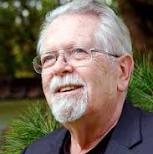
J. Gordon Melton: Perhaps the most significant scholarly recognition comes from J. Gordon Melton, a leading historian of American religion. In his Encyclopedia of American Religions, he provides a detailed entry on
Thane Walker and The Prosperos. Melton classifies the group as part of the Ancient Wisdom Family, specifically within the Magick and Gurdjieffian traditions.
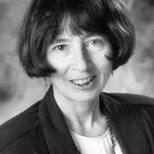
Catherine Albanese: While she does not focus extensively on Walker in her primary work A Republic of Mind and Spirit, her research on “metaphysical religion” often encompasses the broader Anglo-American metaphysical tradition that The Prosperos belongs to—namely, the synthesis of psychology, New Thought, and mysticism.

Mitch Horowitz: In his book Occult America, Horowitz explores the “School of High Ontology” concept. While he frequently cites the influence of Gurdjieff (Walker’s teacher) on American life, the specific mention of The Prosperos usually appears in discussions regarding the mid-century California esoteric scene, where the group was most influential. Encyclopedia.com +1
How They Describe Him Differently
Unlike Versluis, who looks for “spontaneous enlightenment,” these scholars typically highlight Walker for:
- Gurdjieffian Lineage: His role in bringing the “Fourth Way” and the concept of “The Work” to a broader American audience.
- The “Ontological” Approach: Defining The Prosperos as an educational school rather than a cult of personality.
- Scientific Mysticism: His attempt to bridge traditional mysticism with 20th-century psychology and linguistics (specifically General Semantics).