
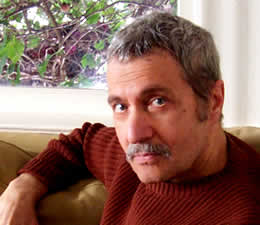
Parenti in Berkeley, California, US in 2004
Michael John Parenti was an American political scientist, academic historian and cultural critic who wrote on scholarly and popular subjects. He taught at universities and also ran for political office. Parenti was well known for his Marxist writings and lectures, and was an intellectual of the American Left. Wikipedia
Born: 1933, New York, NY
Died: January 24, 2026
ChatGPT:
Michael Parenti comes back to this idea a lot, usually to puncture the myth that capitalism is “peaceful” or that violence only happens when ideology gets too radical.
The core Parenti point:
Capitalists routinely kill other capitalists—not by accident, and not as a moral failure of individuals, but because competition, empire, and profit make violence structural.
Here’s how he frames it ????
1. Capitalism isn’t just markets — it’s power
Parenti argues that capitalism doesn’t operate through polite competition alone. When profits, resources, or markets are threatened, capital turns to:
- coups
- wars
- sanctions
- assassinations
- proxy conflicts
And the victims are often other capitalist elites who are on the “wrong” side of a power struggle.
It’s not labor vs. capital only — it’s capital vs. capital, backed by states and armies.
2. Wars are often capitalist-on-capitalist conflicts
Parenti points out that many wars sold as “ideological,” “humanitarian,” or “defensive” are really:
- one bloc of capital trying to dominate another
- rival business classes fighting over territory, labor, oil, trade routes, or finance
Examples he frequently gestures toward:
- World Wars I & II (imperial capitalist powers clashing)
- Cold War proxy wars (U.S.-aligned vs. Soviet-aligned ruling classes)
- U.S.-backed coups against national bourgeoisies that threatened foreign capital
In these cases, capitalists die, lose power, or get eliminated—not because they opposed capitalism, but because they backed the wrong version of it.
3. The state is the hired gun
A classic Parenti line of thought is that capitalists rarely kill each other personally — they outsource it.
The state provides:
- armies
- police
- intelligence agencies
- economic warfare
So when one capitalist faction destroys another, it looks like “foreign policy” or “national security,” not murder — but the effect is the same.
4. Capitalism is violent even toward its own
Parenti loves flipping the usual narrative:
If capitalism were peaceful, it wouldn’t need:
- endless war budgets
- repression
- prisons
- secret services
- propaganda
The fact that it devours rival capitalists shows that violence isn’t a bug — it’s a feature.
5. Why he emphasizes this
He’s pushing back against the idea that:
- socialism = violence
- capitalism = freedom + peace
Parenti’s response is basically:
Capitalism kills workers and capitalists.
It just kills workers quietly and capitalists strategically.