
(Compiled by Rick Thomas, H.W., M.)
CANCER MEANINGS
This will be a combination of my word tracking in conjunction with etymological dictionary information from http://www.etymonline.com/
There seems to be three basic meanings for this word. I’m putting this into three major sections: the good (zodiac sign), the bad (crab) and the ugly (malignant tumor).
First, etymological track of the word cancer:
Old English cancer “spreading sore, cancer” (also canceradl), from Latin cancer “a crab,” later, “malignant tumor,” from Greek karkinos, which, like the Modern English word, has three meanings: crab, tumor, and the zodiac constellation (late Old English), from PIE root *qarq- “to be hard” (like the shell of a crab); cf. Sanskrit karkatah “crab,” karkarah “hard;” and perhaps cognate with PIE root *qar-tu- “hard, strong,” source of English hard.
Greek physicians Hippocrates and Galen, among others, noted similarity of crabs to some tumors with swollen veins. Meaning “person born under the zodiac sign of Cancer” is from 1894.
The Good
Cancer Zodiac Sign: Characteristics, Dates, & More | Astrology.com
Also see the sections on Cancer in Thane’s Astrology Course.
The Bad
popular name for a stalk-eyed, short-tailed, ten-legged crustacean, Old English crabba, from a general Germanic root (compare Dutch krab, Old High German krebiz, German Krabbe, Old Norse krabbi “crab”), related to Low German krabben, Dutch krabelen “to scratch, claw,” from PIE root *gerbh- “to scratch, carve” (see carve). French crabe (13c.) is from Germanic, probably Old Norse.
c. 1400, “to vex, irritate,” probably a back-formation from crabbed. The notions of “bad-tempered, combative” and “sour” in the two nouns crab naturally yielded a verb meaning of “to vex, irritate,” later “to complain irritably, find fault” (c. 1500). As “to fish for crabs” from 1650s (implied in crabbing). The noun meaning “sour person” is from 1570s.
late 14c., “peevish, angry, ill-tempered, spiteful,” also “vicious, wicked, perverse,” from crab (n.1), from the crab’s combative disposition; mid-15c. as “moving backwards” and in reference to crookedness. Of taste “bitter, harsh,” late 14c., from crab (n.2). Related: Crabbedly; crabbedness.
crabby (adj.)1520s, in now-obsolete sense “crooked, gnarled, rough,” from extended sense of crab (n.1) + -y (2). Meaning “disagreeable, sour, peevish” is attested from 1776, American English. Both senses were found earlier in crabbed.
The Ugly
Section I: In the sense of a malignant tumor or growth.
Here are the results of my word tracking:
Malignant. Note that the prefix mal- means bad, wrong, ill.
- Desire to harm, spite
- Malign: deceive, wicked, evil, harmful. Etymology: “ill born”
- Malice: bad, ill will
- Hostile, unfriendly
Tumor. Swelling: increase in volume from pressure within; expand; dilate. Examples: physical swelling or as in an emotion such as anger swelling inside one. Can also be a mass of new tissue growing inside one.
Malignant Etymology:
1560s, in reference to diseases, from Middle French malignant and directly from Late Latin malignantem (nominative malignans) “acting from malice,” prp. of malignare “injure maliciously” (see malign (v.)). Earlier in the church malignant “followers of the antichrist,” from Latin ecclesiam malignantum in early Church writing.
early 14c., from Old French maligne “having an evil nature,” from Latin malignus “wicked, bad-natured,” from male “badly” (see mal-) + -gnus “born,” from gignere “to bear, beget,” from PIE root *gn- “to bear” (see genus).
Old English yfel (Kentish evel) “bad, vicious, ill, wicked,” from Proto-Germanic *ubilaz (cf. Old Saxon ubil, Old Frisian and Middle Dutch evel, Dutch euvel, Old High German ubil, German übel, Gothic ubils), from PIE *upelo-, from root *wap- (cf. Hittite huwapp- “evil”).
“In OE., as in all the other early Teut. langs., exc. Scandinavian, this word is the most comprehensive adjectival expression of disapproval, dislike or disparagement” [OED]. Evil was the word the Anglo-Saxons used where we would use bad, cruel, unskillful, defective (adj.), or harm, crime, misfortune, disease (n.). The meaning “extreme moral wickedness” was in Old English, but did not become the main sense until 18c.
c.1200, “inferior in quality;” early 13c., “wicked, evil, vicious,” a mystery word with no apparent relatives in other languages.* Possibly from Old English derogatory term bæddel and its diminutive bædling “effeminate man, hermaphrodite, pederast,” probably related to bædan “to defile.” A rare word before 1400, and evil was more common in this sense until c.1700. Meaning “uncomfortable, sorry” is 1839, American English colloquial.
early 14c. (implied in viciously), “of the nature of vice, wicked,” from Anglo-French vicious, Old French vicieus, from Latin vitiosus “faulty, defective, corrupt,” from vitium “fault” (see vice (n.1)). Meaning “inclined to be savage or dangerous” is first recorded 1711 (originally of animals, especially horses); that of “full of spite, bitter, severe” is from 1825.
c.1200, “morally evil” (other 13c. senses were “malevolent, hurtful, unfortunate, difficult”), from Old Norse illr “ill, bad,” of unknown origin. Not related to evil. Main modern sense of “sick, unhealthy, unwell” is first recorded mid-15c., probably related to Old Norse idiom “it is bad to me.”
late 13c., earlier wick (12c.), apparently an adjectival use of Old English wicca “wizard” (see wicca). For evolution, cf. wretched from wretch.
An Old English masc. noun meaning “male witch, wizard, soothsayer, sorcerer, magician;” see witch.
Old English wicce “female magician, sorceress,” in later use especially “a woman supposed to have dealings with the devil or evil spirits and to be able by their cooperation to perform supernatural acts,” fem. of Old English wicca “sorcerer, wizard, man who practices witchcraft or magic,” from verb wiccian “to practice witchcraft” (cf. Low German wikken, wicken “to use witchcraft,” wikker, wicker “soothsayer”).
Old English hearm “hurt, evil, grief, pain, insult,” from Proto-Germanic *harmaz (cf. Old Saxon harm, Old Norse harmr, Old Frisian herm “insult; pain,” Old High German harm, German Harm “grief, sorrow, harm”), from PIE *kormo- “pain.”
c.1200, “to injure, wound” (the body, feelings, reputation, etc.), also “to stumble (into), bump into; charge against, rush, crash into; knock (things) together,” from Old French hurter “to ram, strike, collide,” perhaps from Frankish *hurt “ram” (cf. Middle High German hurten “run at, collide,” Old Norse hrutr “ram”). The English usage is as old as the French, and perhaps there was a native Old English *hyrtan, but it has not been recorded. Meaning “to be a source of pain” (of a body part) is from 1850. To hurt (one’s) feelings attested by 1779.
mid-15c., “do an injustice to, dishonor,” probably a back-formation from injury, or else from Middle French injuriier, from Latin injurare. Injury also served as a verb (late 15c.). Related: Injured; injuring.
Old English wund “hurt, injury,” from Proto-Germanic *wundaz (cf. Old Saxon wunda, Old Norse und, Old Frisian wunde, Old High German wunta, German wunde “wound”), perhaps from PIE root *wen- “to beat, wound.”
c.1300, shortened form of despit “malice” (see despite). Corresponding to Middle Dutch spijt, Middle Low German spyt, Middle Swedish spit. Commonly spelled spight c.1575-1700. The verb is attested from c.1400.
c.1300, originally a noun, from Old French despit (12c., Modern French dépit), from Latin despectus “a looking down on, scorn, contempt,” from pp. of despicere (see despise).
c.1200, a shortening of Old French escarn “mockery, derision, contempt,” a common Romanic word (cf. Spanish escarnio, Italian scherno) of Germanic origin, from Proto-Germanic *skarnjan “mock, deride” (cf. Old High German skern “mockery, jest, sport,” Middle High German scherzen “to jump with joy”).
c.1300, from Old French decevoir (12c., Modern French décevoir) “to deceive,” from Latin decipere “to ensnare, take in, beguile, cheat,” from de- “from” or pejorative + capere “to take” (see capable). Related: Deceived; deceiver; deceiving.
late 15c., from Middle French hostile “of or belonging to an enemy” or directly from Latin hostilis “of an enemy,” from hostis “enemy” (see guest). The noun meaning “hostile person” is recorded from 1838, American English, a word from the Indian wars.
early 15c., “not characteristic of friends,” from un- (1) “not” + friendly. Cf. Middle Dutch onvriendelijc, Middle High German unvriuntlich, German unfreundlich. Meaning “hostile, inimical” is recorded from late 15c. Related: Unfriendliness.
Tumor Etymology:
1540s, from Latin tumor “swelling, condition of being swollen,” from tumere “to swell” (see thigh).
Old English swellan “grow or make bigger” (past tense sweall, pp. swollen), from Proto-Germanic *swelnanan (cf. Old Saxon swellan, Old Norse svella, Old Frisian swella, Middle Dutch swellen, Dutch zwellen, Old High German swellan, German schwellen), of unknown origin.
Thane’s Astrology class notebook on Cancer:
Element: Water
Direction: Past
Dynamic: Individual Survival Dynamic
Approximate Calendar Period: 22 June – 22 July
Ruler: Moon
Nurturing, some psychic-depth faculty, domestic. Fondness for adventure and excitement while clinging tenaciously to the goal. Happy to take trips, just as happy to return to home base. Cancerian males may need resistance to effeminacy. Powerful clarity and utterly convincing. Frustration – concern over determining whether the hunches are correct. When Cancer turns understanding outward to the world, no doors are closed.
A complete politician, not as sensitive as they appear but easily influenced by emotional situations.
Progressive Symbolism:
Age of adolescence, very changeable, suggestible and emotional, does not quite stand on its own feet and like an adolescent, reflects the opinions of others.
http://www.medicinenet.com/cancer_101_pictures_slideshow/article.htm
What Is Cancer?
In the most basic terms, cancer refers to cells that grow out-of-control and invade other tissues. Cells may become cancerous due to the accumulation of defects, or mutations, in their DNA. Certain inherited genetic defects (for example, BRCA1 and BRCA2 mutations) and infections can increase the risk of cancer. Environmental factors (for example, air pollution) and poor lifestyle choices—such as smoking and heavy alcohol use—can also damage DNA and lead to cancer.
Most of the time, cells are able to detect and repair DNA damage. If a cell is severely damaged and cannot repair itself, it usually undergoes so-called programmed cell death or apoptosis. Cancer occurs when damaged cells grow, divide, and spread abnormally instead of self-destructing as they should.
Malignant Tumors Vs. Benign Tumors
A tumor is an abnormal mass of cells. Tumors can either be benign (non-cancerous) or malignant (cancerous).
Benign Tumors
Benign tumors grow locally and do not spread. As a result, benign tumors are not considered cancer. They can still be dangerous, especially if they press against vital organs like the brain.
Malignant Tumors
Malignant tumors have the ability to spread and invade other tissues. This process, known as metastasis, is a key feature of cancer. There are many different types of malignancy based on where a cancer tumor originates.
Cancer Metastasis
Metastasis is the process whereby cancer cells break free from a malignant tumor and travel to and invade other tissues in the body. Cancer cells metastasize to other sites via the lymphatic system and the bloodstream. Cancer cells from the original—or primary—tumor can travel to other sites such as the lungs, bones, liver, brain, and other areas. These metastatic tumors are “secondary cancers” because they arise from the primary tumor.
Metastasized Cancer
Metastatic cancer retains the name of the primary cancer. For example, bladder cancer that metastasizes to the liver is not liver cancer. It is called metastatic bladder cancer. Metastasis is significant because it helps determine the staging and treatment of cancer. Some types of metastatic cancer are curable, but many are not.
What Causes Cancer?
Certain genes control the life cycle—the growth, function, division, and death—of a cell. When these genes are damaged, the balance between normal cell growth and death is lost. Cancer cells are caused by DNA damage and out-of-control cell growth. The following is a partial list of factors known to damage DNA and increase the risk of cancer:
Causes of Cancer: Mutations
Genetic mutations may cause cancer. For example, mutations of genes BRCA1 and BRCA2 (linked to an increased risk of breast and ovarian cancers) can inhibit the body’s ability to safe-guard and repair DNA. Copies of these mutated genes can be passed on genetically to future generations, leading to a genetically-inherited increased risk of cancer.
Causes of Cancer: Environment
Cancer may be caused by environmental exposure. Sunlight can cause cancer through ultraviolet radiation. So can air pollutants like soot, wood dust, asbestos, and arsenic, to name just a few.
Causes of Cancer: Microbes
Some microbes are known to increase cancer risks. These include bacteria like H. pylori, which causes stomach ulcers and has been linked to gastric cancer. Viral infections (including Epstein-Barr, HPV, and hepatitis B and C) have also been linked to cancer.
Causes of Cancer: Lifestyle
Lifestyle choices can lead to cancer as well. Eating a poor diet, inactivity, obesity, heavy alcohol use, tobacco use including smoking, and exposure to chemicals and toxins are all associated with greater cancer risk.
Causes of Cancer: Treatment
Medical treatment with chemotherapy, radiation, targeted treatments (drugs designed to target a specific type of cancer cell) or immunosuppressive drugs used to decrease the spread of cancer throughout the body can also cause damage to healthy cells. Some “second cancers”, completely separate from the initial cancer, have been known to occur following aggressive cancer treatments; however, researchers are producing drugs that cause less damage to healthy cells (for example, targeted therapy).
Cancer Symptoms and Signs
There are more than 100 different types of cancer. Every cancer and every individual is unique. Cancer symptoms and signs depend on the size and location of the cancer as well as the presence or absence of metastasis.
Common Cancer Symptoms
Symptoms and signs of cancer may include:
- Fever
- Pain
- Fatigue
- Skin changes (redness, sores that won’t heal, jaundice, darkening)
- Unintended weight loss or weight gain
Other more obvious signs of cancer may include:
- Lumps or tumors (mass)
- Difficulty swallowing
- Changes or difficulties with bowel or bladder function
- Persistent cough or hoarseness
- Short of breath
- Chest pain
- Unexplained bleeding or discharge
Types of Cancer
Cancer can occur anywhere in the body. Broadly, cancers are classified as either solid (for example breast, lung, or prostate cancers) or liquid (blood cancers). Cancer is further classified according to the tissue in which it arises.
Carcinoma
Carcinomas are cancers that occur in epithelial tissues in the body. They comprise 80% to 90% of all cancers. Most breast, lung, colon, skin, and prostate cancers are carcinomas. This class includes the two most common skin cancers, basal cell carcinoma and squamous cell carcinoma. Also in this class is the glandular cancer adenocarcinoma.
Sarcoma Cancer
Sarcomas occur in connective tissue like the bones, cartilage, fat, blood vessels, and muscles. This class of cancers includes the bone cancers osteosarcoma and Ewing sarcoma, Kaposi sarcoma (which causes skin lesions), and the muscle cancers rhabdomyosarcoma and leiomyosarcoma.
Myeloma Cancer
Myelomas are cancers that occur in plasma cells in the bone marrow. This class of cancer includes multiple myeloma, also known as Kahler disease.
Leukemia
Leukemias are a group of different blood cancers of the bone marrow. They cause large numbers of abnormal blood cells to enter the bloodstream.
Lymphoma Cancer
Lymphomas are cancers of the immune system cells. These include the rare but serious Hodgkin lymphoma (Hodgkin’s lymphoma, also Hodgkin’s disease) and a large group of white blood cell cancers known collectively as non-Hodgkin lymphoma (non-Hodgkin’s lymphoma).
Mixed Cancer
Mixed cancers arise from more than one type of tissue.
Common Cancers
Cancer is the second leading cause of death in the United States. The most common cancers diagnosed in the U.S. are those of the breast, prostate, lung, colon and rectum, and bladder. Cancers of the lung, colon and rectum, breast, and pancreas are responsible for the most deaths. The prognosis of different cancers is highly variable. Many cancers are curable with early detection and treatment. Cancers that are aggressive or diagnosed at a later stage may be more difficult to treat, and can even be life threatening.
Breast Cancer
Breast cancer is the most common cancer in the United States, and one of the deadliest. About one in eight women will develop invasive breast cancer at some point in her life. Though death rates have decreased since 1989, more than 40,000 U.S. women are thought to have died from breast cancer in 2015 alone.
Lung Cancer
Lung cancer is the second-most-common cancer in the United States, and it is the deadliest for both men and women. In 2012, more than 210,000 Americans were diagnosed with lung cancer, and in the same year more than 150,000 Americans died from lung cancer. Worldwide, lung cancers are the most common cancers.
Prostate Cancer
Prostate cancer is the most common cancer found in men. In 2013, more than 177,000 Americans were diagnosed with prostate cancer, and more than 27,000 American men died from prostate cancer.
Colorectal Cancer
Of the cancers that can impact both men and women, colorectal cancer is the second-greatest killer in the United States.
Liver Cancer
Liver cancer develops in about 20,000 men and 8,000 women each year. Hepatitis B and C and heavy drinking increase one’s risk of developing liver cancer.
Ovarian Cancer
About 20,000 American women are diagnosed with ovarian cancer each year. For American women, ovarian cancer is the eighth most common cancer and the fifth leading cause of cancer death.
Pancreatic Cancer
Pancreatic cancer has the highest mortality rate of all major cancers. Of the roughly 53,000 Americans diagnosed with pancreatic cancer each year, only 8 percent will survive more than five years.
How Stages of Cancer Are Determined
Doctors use the stages of cancer to classify cancer according to its size, location, and extent of spread. Staging helps doctors determine the prognosis and treatment for cancer. The TNM staging system classifies cancers according to:
- Tumor (T): Primary tumor size and/or extent
- Nodes (N): Spread of cancer to lymph nodes in the regional area of the primary tumor
- Metastasis (M): Spread of cancer to distant sites away from the primary tumor
Some cancers, including those of the brain, spinal cord, bone marrow (lymphoma), blood (leukemia), and female reproductive system, do not receive a TNM classification. Instead, these cancers are classified according to a different staging systems.
The Stages of Cancer
The TNM classification of a cancer usually correlates to one of the following five stages.
- Stage 0 Cancer: This refers to cancer that is “in situ,” meaning that cancerous cells are confined to their site of origin. This type of cancer has not spread and is not invading other tissues.
- Stage I – Stage III Cancer: These higher stages of cancer correspond to larger tumors and/or greater extent of disease. Cancers in these stages may have spread beyond the site of origin to invade regional lymph nodes, tissues, or organs.
- Stage IV Cancer: This type of cancer has spread to distant lymph nodes, tissues, or organs in the body far away from the site of origin.
Diagnosing Cancer
Various tests may be performed in order to confirm a cancer diagnosis. Positron Emission Tomography and Computed Tomography (PET-CT) Scans and other similar tests can highlight “hot spots” of cancer cells with high metabolic rates.
The most common test and procedures used to diagnose cancer include:
Mammogram
Pap Test
Tumor Marker Test
Bone Scan
MRI
Tissue Biopsy
PET-CT Scan
The Role of Lymph Nodes in Cancer Diagnosis
Cancer that originates in the lymph nodes or other area of the lymphatic system is called lymphoma. Cancer that originates elsewhere in the body can spread to lymph nodes. The presence of metastasized cancer in the lymph nodes is may mean the cancer is growing quickly and/or is more likely to spread to other sites. The presence of cancer in lymph nodes often affects prognosis and treatment decisions. Many diagnostic tests look at the lymph nodes as an indicator.
Cancer Treatment Options
Cancer treatment is highly variable depending on the type and stage of a cancer as well as the overall health of the patient. The most common treatments for cancer are surgery, radiation, and chemotherapy. Other treatments include targeted/biological therapies, hematopoietic stem cell transplants, angiogenesis inhibitors, cryosurgery, and photodynamic therapy.
Every cancer treatment has potential risks, benefits, and side effects. The patient and his or her care team, which may include an internist or other specialist, surgeon, oncologist, radiation oncologist, and others, will help determine the best and most appropriate course of treatment.
Is There a Cure for Cancer?
Despite enormous effort and funding, no one cure has been found yet to eliminate cancer. In 2016, the United States announced a $1 billion investment into creating such a cure, named the “National Cancer Moonshot” by President Barack Obama.
Until a cure can be found, prevention through a healthy lifestyle is the best way to stop cancer. Some ways to help protect yourself from cancer include eating plenty of fruits and vegetables, maintaining a healthy weight, abstaining from tobacco, drinking only in moderation, exercising, avoiding sun damage, getting immunizations, and getting regular health screenings.
Cancer Surgery
Surgery is often performed to remove malignant tumors. Surgery allows for the determination of the exact size of the tumor as well as the extent of spread and invasion into other nearby structures or lymph nodes – all-important factors in prognosis and treatment. Surgery is often combined with other cancer treatments, such as chemotherapy and/or radiation.
Sometimes, cancer cannot be entirely surgically removed because doing so would damage critical organs or tissues. In this case, debulking surgery is performed to remove as much of the tumor as is safely possible. Similarly, palliative surgery is performed in the cases of advanced cancer to reduce the effects (for example, pain or discomfort) of a cancerous tumor. Debulking and palliative surgeries are not curative, but they seek to minimize the effects of the cancer.
Reconstructive surgery can be performed to restore the look or function of part of the body after cancer surgery. Breast reconstruction after a mastectomy is an example of this kind of surgery.
Radiation Therapy
Radiation is a very common cancer treatment. About 50% of all cancer patients will receive radiation treatment, which may be delivered before, during, or after surgery and/or chemotherapy. Radiation can be delivered externally — where X-rays, gamma rays, or other high-energy particles are delivered to the affected area from outside the body — or it can be delivered internally. Internal radiation therapy involves the placement of radioactive material inside the body near cancer cells. This is called brachytherapy.
Systemic radiation involves the administration of radioactive medication by mouth or intravenously. The radioactive material travels directly to the cancerous tissue. Radioactive iodine (I-131 for thyroid cancer) and strontium-89 (for bone cancer) are two examples of systemic radiation treatments.
Typically, external radiation is delivered 5 days a week over the course of 5 to 8 weeks. Other treatment regimens are sometimes used.
Chemotherapy
Chemotherapy, or “chemo,” refers to more than 100 different medications used to treat cancer and other conditions. If eliminating all cancer cells is not possible, the goals of treatment may be to slow the growth of the cancer, keep the cancer from spreading, and/or relieve cancer-associated symptoms (such as pain).
Depending on the type of chemotherapy prescribed, the medications may be given by mouth, injection, intravenously (IV), or topically. IV chemotherapy may be delivered via a catheter or port, which is usually implanted in a blood vessel of the chest for the duration of the therapy. Sometimes chemotherapy is delivered regionally, directly to the area that needs treatment. For example, intravesical therapy is used to infuse chemotherapy directly into the bladder for the treatment of bladder cancer.
The chemotherapy regimen a patient receives depends upon the type and stage of the cancer, any prior cancer treatment, and the overall health of the patient. Chemotherapy is usually administered in cycles over the course of days, weeks, or months, with rest periods in between.
Other Cancer Treatments
In addition to surgery, radiation, and chemotherapy, other therapies are used to treat cancer. These include:
Targeted or Biological Therapies
Targeted or biological therapies seek to treat cancer and boost the body’s immune system while minimizing damage to normal, healthy cells. Monoclonal antibodies, immunomodulating drugs, vaccines, and cytokines are examples of targeted or biological therapies.
Hematopoietic Stem Cell Transplants
Hematopoietic stem cell transplants involve the infusion of stem cells into a cancer patient after the bone marrow has been destroyed by high-dose chemo and/or radiation.
Angiogenesis Inhibitors
Angiogenesis inhibitors are medications that inhibit the growth of new blood vessels that cancerous tumors need in order to grow.
Cryosurgery
Cryosurgery involves the application of extreme cold to kill precancerous and cancerous cells.
Photodynamic Therapy
Photodynamic therapy (PDT) involves the application of laser energy of a specific wavelength to tissue that has been treated with a photosensitizing agent, a medication that makes cancerous tissue susceptible to destruction with laser treatment. Photodynamic therapy selectively destroys cancer cells while minimizing the damage to normal, healthy tissues nearby.
Ongoing Research
Ongoing cancer research continues to identify newer, less toxic, and more effective cancer treatments. Visit the National Cancer Institute (NCI) to see a list of ongoing clinical trials.
http://www.cancer.gov/about-cancer/understanding/what-is-cancer
A Collection of Related Diseases
Cancer is the name given to a collection of related diseases. In all types of cancer, some of the body’s cells begin to divide without stopping and spread into surrounding tissues.
Cancer can start almost anywhere in the human body, which is made up of trillions of cells. Normally, human cells grow and divide to form new cells as the body needs them. When cells grow old or become damaged, they die, and new cells take their place.
When cancer develops, however, this orderly process breaks down. As cells become more and more abnormal, old or damaged cells survive when they should die, and new cells form when they are not needed. These extra cells can divide without stopping and may form growths called tumors.
Many cancers form solid tumors, which are masses of tissue. Cancers of the blood, such as leukemias, generally do not form solid tumors.
Cancerous tumors are malignant, which means they can spread into, or invade, nearby tissues. In addition, as these tumors grow, some cancer cells can break off and travel to distant places in the body through the blood or the lymph system and form new tumors far from the original tumor.
Unlike malignant tumors, benign tumors do not spread into, or invade, nearby tissues. Benign tumors can sometimes be quite large, however. When removed, they usually don’t grow back, whereas malignant tumors sometimes do. Unlike most benign tumors elsewhere in the body, benign brain tumors can be life threatening.
Differences between Cancer Cells and Normal Cells
Cancer cells differ from normal cells in many ways that allow them to grow out of control and become invasive. One important difference is that cancer cells are less specialized than normal cells. That is, whereas normal cells mature into very distinct cell types with specific functions, cancer cells do not. This is one reason that, unlike normal cells, cancer cells continue to divide without stopping.
In addition, cancer cells are able to ignore signals that normally tell cells to stop dividing or that begin a process known as programmed cell death, or apoptosis, which the body uses to get rid of unneeded cells.
Cancer cells may be able to influence the normal cells, molecules, and blood vessels that surround and feed a tumor—an area known as the microenvironment. For instance, cancer cells can induce nearby normal cells to form blood vessels that supply tumors with oxygen and nutrients, which they need to grow. These blood vessels also remove waste products from tumors.
Cancer cells are also often able to evade the immune system, a network of organs, tissues, and specialized cells that protects the body from infections and other conditions. Although the immune system normally removes damaged or abnormal cells from the body, some cancer cells are able to “hide” from the immune system.
Tumors can also use the immune system to stay alive and grow. For example, with the help of certain immune system cells that normally prevent a runaway immune response, cancer cells can actually keep the immune system from killing cancer cells.
How Cancer Arises
Cancer is a genetic disease—that is, it is caused by changes to genes that control the way our cells function, especially how they grow and divide.
Genetic changes that cause cancer can be inherited from our parents. They can also arise during a person’s lifetime as a result of errors that occur as cells divide or because of damage to DNA caused by certain environmental exposures. Cancer-causing environmental exposures include substances, such as the chemicals in tobacco smoke, and radiation, such as ultraviolet rays from the sun. (Our Cancer Causes and Risk Factors page has more information.)
Each person’s cancer has a unique combination of genetic changes. As the cancer continues to grow, additional changes will occur. Even within the same tumor, different cells may have different genetic changes.
In general, cancer cells have more genetic changes, such as mutations in DNA, than normal cells. Some of these changes may have nothing to do with the cancer; they may be the result of the cancer, rather than its cause.
“Drivers” of Cancer
The genetic changes that contribute to cancer tend to affect three main types of genes—proto-oncogenes, tumor suppressor genes, and DNA repair genes. These changes are sometimes called “drivers” of cancer.
Proto-oncogenes are involved in normal cell growth and division. However, when these genes are altered in certain ways or are more active than normal, they may become cancer-causing genes (or oncogenes), allowing cells to grow and survive when they should not.
Tumor suppressor genes are also involved in controlling cell growth and division. Cells with certain alterations in tumor suppressor genes may divide in an uncontrolled manner.
DNA repair genes are involved in fixing damaged DNA. Cells with mutations in these genes tend to develop additional mutations in other genes. Together, these mutations may cause the cells to become cancerous.
As scientists have learned more about the molecular changes that lead to cancer, they have found that certain mutations commonly occur in many types of cancer. Because of this, cancers are sometimes characterized by the types of genetic alterations that are believed to be driving them, not just by where they develop in the body and how the cancer cells look under the microscope.
When Cancer Spreads
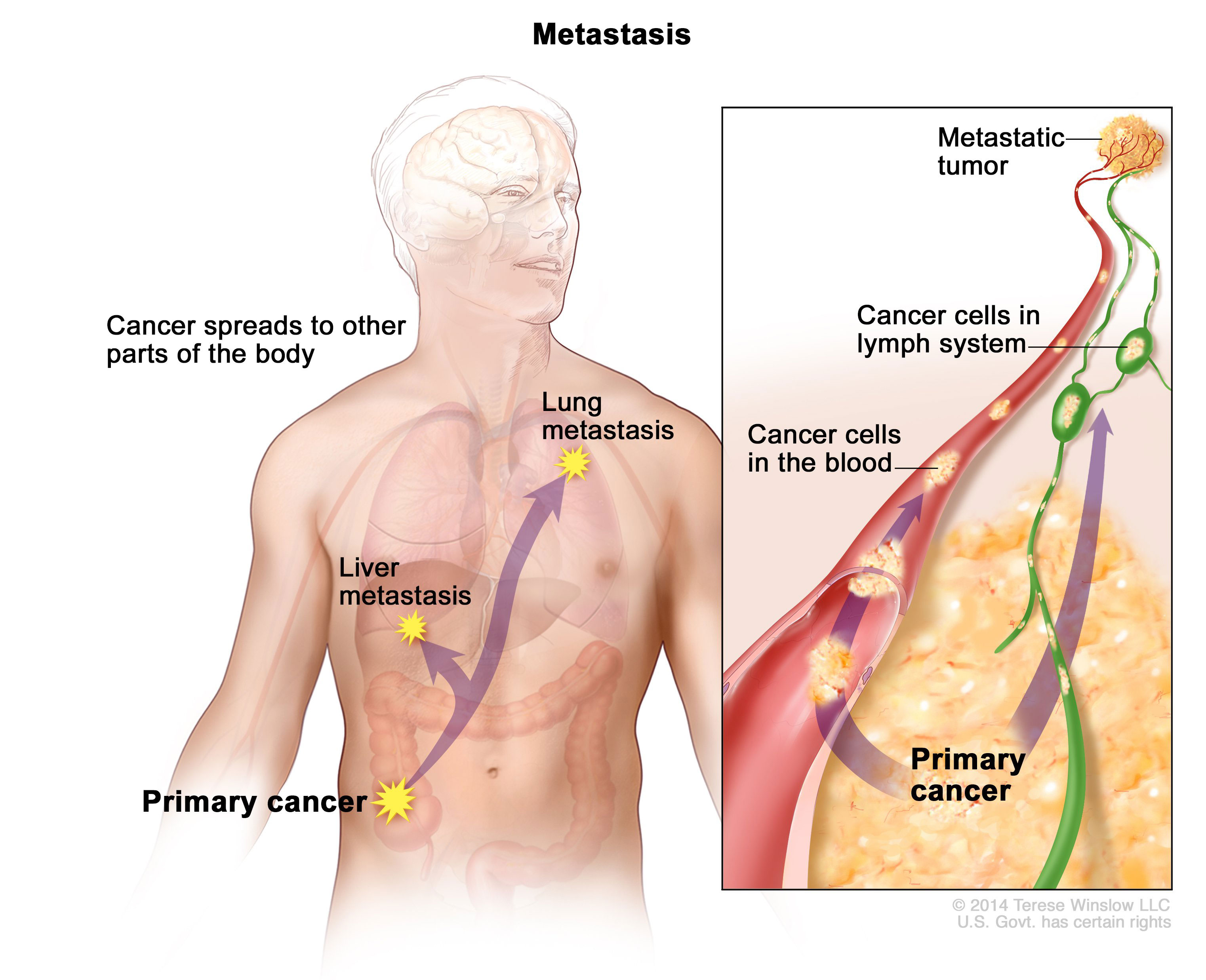
In metastasis, cancer cells break away from where they first formed (primary cancer), travel through the blood or lymph system, and form new tumors (metastatic tumors) in other parts of the body. The metastatic tumor is the same type of cancer as the primary tumor.
A cancer that has spread from the place where it first started to another place in the body is called metastatic cancer. The process by which cancer cells spread to other parts of the body is called metastasis.
Metastatic cancer has the same name and the same type of cancer cells as the original, or primary, cancer. For example, breast cancer that spreads to and forms a metastatic tumor in the lung is metastatic breast cancer, not lung cancer.
Under a microscope, metastatic cancer cells generally look the same as cells of the original cancer. Moreover, metastatic cancer cells and cells of the original cancer usually have some molecular features in common, such as the presence of specific chromosome changes.
Treatment may help prolong the lives of some people with metastatic cancer. In general, though, the primary goal of treatments for metastatic cancer is to control the growth of the cancer or to relieve symptoms caused by it. Metastatic tumors can cause severe damage to how the body functions, and most people who die of cancer die of metastatic disease.
Tissue Changes that Are Not Cancer
Not every change in the body’s tissues is cancer. Some tissue changes may develop into cancer if they are not treated, however. Here are some examples of tissue changes that are not cancer but, in some cases, are monitored:
Hyperplasia occurs when cells within a tissue divide faster than normal and extra cells build up, or proliferate. However, the cells and the way the tissue is organized look normal under a microscope. Hyperplasia can be caused by several factors or conditions, including chronic irritation.
Dysplasia is a more serious condition than hyperplasia. In dysplasia, there is also a buildup of extra cells. But the cells look abnormal and there are changes in how the tissue is organized. In general, the more abnormal the cells and tissue look, the greater the chance that cancer will form.
Some types of dysplasia may need to be monitored or treated. An example of dysplasia is an abnormal mole (called a dysplastic nevus) that forms on the skin. A dysplastic nevus can turn into melanoma, although most do not.
An even more serious condition is carcinoma in situ. Although it is sometimes called cancer, carcinoma in situ is not cancer because the abnormal cells do not spread beyond the original tissue. That is, they do not invade nearby tissue the way that cancer cells do. But, because some carcinomas in situ may become cancer, they are usually treated.
Normal cells may become cancer cells. Before cancer cells form in tissues of the body, the cells go through abnormal changes called hyperplasia and dysplasia. In hyperplasia, there is an increase in the number of cells in an organ or tissue that appear normal under a microscope. In dysplasia, the cells look abnormal under a microscope but are not cancer. Hyperplasia and dysplasia may or may not become cancer.
Credit: Terese Winslow
Types of Cancer
There are more than 100 types of cancer. Types of cancer are usually named for the organs or tissues where the cancers form. For example, lung cancer starts in cells of the lung, and brain cancer starts in cells of the brain. Cancers also may be described by the type of cell that formed them, such as an epithelial cell or a squamous cell.
You can search NCI’s website for information on specific types of cancer based on the cancer’s location in the body or by using our A to Z List of Cancers. We also have collections of information on childhood cancers and cancers in adolescents and young adults.
Here are some categories of cancers that begin in specific types of cells:
Carcinoma
Carcinomas are the most common type of cancer. They are formed by epithelial cells, which are the cells that cover the inside and outside surfaces of the body. There are many types of epithelial cells, which often have a column-like shape when viewed under a microscope.
Carcinomas that begin in different epithelial cell types have specific names:
Adenocarcinoma is a cancer that forms in epithelial cells that produce fluids or mucus. Tissues with this type of epithelial cell are sometimes called glandular tissues. Most cancers of the breast, colon, and prostate are adenocarcinomas.
Basal cell carcinoma is a cancer that begins in the lower or basal (base) layer of the epidermis, which is a person’s outer layer of skin.
Squamous cell carcinoma is a cancer that forms in squamous cells, which are epithelial cells that lie just beneath the outer surface of the skin. Squamous cells also line many other organs, including the stomach, intestines, lungs, bladder, and kidneys. Squamous cells look flat, like fish scales, when viewed under a microscope. Squamous cell carcinomas are sometimes called epidermoid carcinomas.
Transitional cell carcinoma is a cancer that forms in a type of epithelial tissue called transitional epithelium, or urothelium. This tissue, which is made up of many layers of epithelial cells that can get bigger and smaller, is found in the linings of the bladder, ureters, and part of the kidneys (renal pelvis), and a few other organs. Some cancers of the bladder, ureters, and kidneys are transitional cell carcinomas.
Sarcoma

Soft tissue sarcoma forms in soft tissues of the body, including muscle, tendons, fat, blood vessels, lymph vessels, nerves, and tissue around joints.
Sarcomas are cancers that form in bone and soft tissues, including muscle, fat, blood vessels, lymph vessels, and fibrous tissue (such as tendons and ligaments).
Osteosarcoma is the most common cancer of bone. The most common types of soft tissue sarcoma are leiomyosarcoma, Kaposi sarcoma, malignant fibrous histiocytoma,liposarcoma, and dermatofibrosarcoma protuberans.
Leukemia
Cancers that begin in the blood-forming tissue of the bone marrow are called leukemias. These cancers do not form solid tumors. Instead, large numbers of abnormal white blood cells (leukemia cells and leukemic blast cells) build up in the blood and bone marrow, crowding out normal blood cells. The low level of normal blood cells can make it harder for the body to get oxygen to its tissues, control bleeding, or fight infections.
There are four common types of leukemia, which are grouped based on how quickly the disease gets worse (acute or chronic) and on the type of blood cell the cancer starts in (lymphoblastic or myeloid).
Our page on leukemia has more information.
Lymphoma
Lymphoma is cancer that begins in lymphocytes (T cells or B cells). These are disease-fighting white blood cells that are part of the immune system. In lymphoma, abnormal lymphocytes build up in lymph nodes and lymph vessels, as well as in other organs of the body.
There are two main types of lymphoma:
Hodgkin lymphoma – People with this disease have abnormal lymphocytes that are called Reed-Sternberg cells. These cells usually form from B cells.
Non-Hodgkin lymphoma – This is a large group of cancers that start in lymphocytes. The cancers can grow quickly or slowly and can form from B cells or T cells.
Our page on lymphoma has more information.
Multiple Myeloma
Multiple myeloma is cancer that begins in plasma cells, another type of immune cell. The abnormal plasma cells, called myeloma cells, build up in the bone marrow and form tumors in bones all through the body. Multiple myeloma is also called plasma cell myeloma and Kahler disease.
Our page on multiple myeloma and other plasma cell neoplasms has more information.
Melanoma
Melanoma is cancer that begins in cells that become melanocytes, which are specialized cells that make melanin (the pigment that gives skin its color). Most melanomas form on the skin, but melanomas can also form in other pigmented tissues, such as the eye.
Our pages on skin cancer and intraocular melanoma have more information.
Brain and Spinal Cord Tumors
There are different types of brain and spinal cord tumors. These tumors are named based on the type of cell in which they formed and where the tumor first formed in the central nervous system. For example, an astrocytic tumor begins in star-shaped brain cells called astrocytes, which help keep nerve cells healthy. Brain tumors can be benign (not cancer) or malignant (cancer).
Our page on brain and spinal cord tumors in adults has more information, as does our overview of brain and spinal cord tumors in children.
Other Types of Tumors
Germ Cell Tumors
Germ cell tumors are a type of tumor that begins in the cells that give rise to sperm or eggs. These tumors can occur almost anywhere in the body and can be either benign or malignant.
Our page of cancers by body location/system includes a list of germ cell tumors with links to more information.
Neuroendocrine Tumors
Neuroendocrine tumors form from cells that release hormones into the blood in response to a signal from the nervous system. These tumors, which may make higher-than-normal amounts of hormones, can cause many different symptoms. Neuroendocrine tumors may be benign or malignant.
Our definition of neuroendocrine tumors has more information.
Carcinoid Tumors
Carcinoid tumors are a type of neuroendocrine tumor. They are slow-growing tumors that are usually found in the gastrointestinal system (most often in the rectum and small intestine). Carcinoid tumors may spread to the liver or other sites in the body, and they may secrete substances such as serotonin or prostaglandins, causingcarcinoid syndrome.
Our page on gastrointestinal carcinoid tumors has more information.
http://www.cancer.org/cancer/cancerbasics/what-is-cancer
What is cancer?
A guide for patients and families
What is cancer?
Cancer can start any place in the body. It starts when cells grow out of control and crowd out normal cells. This makes it hard for the body to work the way it should.
Cancer can be treated very well for many people. In fact, more people than ever before lead full lives after cancer treatment.
Here we will explain what cancer is and how it’s treated. You’ll find a list of words about cancer and what they mean at the end of this booklet.
Cancer basics
Cancer is not just one disease.
There are many types of cancer. It’s not just one disease. Cancer can start in the lungs, the breast, the colon, or even in the blood. Cancers are alike in some ways, but they are different in the ways they grow and spread.
How are cancers alike?
The cells in our bodies all have certain jobs to do. Normal cells divide in an orderly way. They die when they are worn out or damaged, and new cells take their place. Cancer is when the cells start to grow out of control. The cancer cells keep on growing and making new cells. They crowd out normal cells. This causes problems in the part of the body where the cancer started.
Cancer cells can also spread to other parts of the body. For instance, cancer cells in the lung can travel to the bones and grow there. When cancer cells spread, it’s called metastasis (meh-TAS-tuh-sis). When lung cancer spreads to the bones, it’s still called lung cancer. To doctors, the cancer cells in the bones look just like the ones from the lung. It’s not called bone cancer unless it started in the bones.
How are cancers different?
Some cancers grow and spread fast. Others grow more slowly. They also respond to treatment in different ways. Some types of cancer are best treated with surgery; others respond better to drugs called chemotherapy (key-mo-THER-uh-pee). Often 2 or more treatments are used to get the best results.
When someone has cancer, the doctor will want to find out what kind of cancer it is. People with cancer need treatment that works for their type of cancer.
What are tumors?
Most cancers form a lump called a tumor or a growth. But not all lumps are cancer. Doctors take out a piece of the lump and look at it to find out if it’s cancer. Lumps that are not cancer are called benign (be-NINE). Lumps that are cancer are called malignant (muh-LIG-nunt).
There are some cancers, like leukemia (cancer of the blood), that don’t form tumors. They grow in the blood cells or other cells of the body.
“There is a fear that goes through you when you’re told you have cancer. It’s so hard in the beginning to think about anything but your diagnosis. It’s the first thing you think about every morning. I want people with cancer to know it does get better. Talking about your cancer helps you deal with all of the new emotions you are feeling. Remember, it’s normal to get upset.”
– Delores, cancer survivor
What stage is the cancer?
The doctor also needs to know if and how far the cancer has spread from where it started. This is called the cancer stage. You may have heard other people say that their cancer was stage 1 or stage 2. Knowing the stage of the cancer helps the doctor decide what type of treatment is best.
For each type of cancer there are tests that can be done to figure out the stage of the cancer. As a rule, a lower stage (such as a stage 1 or 2) means that the cancer has not spread very much. A higher number (such as a stage 3 or 4) means it has spread more. Stage 4 is the highest stage.
Ask your doctor to explain the stage of your cancer and what it means for you.
How is cancer treated?
The most common treatments for cancer are surgery, chemotherapy, and radiation (ray-dee-A- shun).
Surgery can be used to take out the cancer. The doctor might also take out some or all of the body part the cancer affects. For breast cancer, part (or all) of the breast might be removed. For prostate cancer, the prostate gland might be taken out. Surgery is not used for all types of cancer. For example, blood cancers like leukemia are best treated with drugs.
Chemo (short for chemotherapy) is the use of drugs to kill cancer cells or slow their growth. Some chemo can be given by IV (into a vein through a needle), and others are a pill you swallow. Because chemo drugs travel to nearly all parts of the body, they are useful for cancer that has spread.
Radiation is also used to kill or slow the growth of cancer cells. It can be used alone or with surgery or chemo. Radiation treatment is like getting an x-ray. Sometimes it’s given by putting a “seed” inside the cancer to give off the radiation.
“What was helpful for me was taking the time to step back and see the big picture. Getting the answers to my questions helped me to make a good decision. I did what I wanted and needed to do. I did things that made me feel comfortable, not what others thought I needed to do to be comfortable.”
– Kevin, cancer survivor
What treatment is best for me?
Your cancer treatment will depend on what’s best for you. Some cancers respond better to surgery; others respond better to chemo or radiation. Knowing the type of cancer you have is the first step toward knowing which treatments will work best for you.
The stage of your cancer will also help the doctor decide on the best treatment for you. A stage 3 or 4 cancer is likely to respond better to treatments that treat the whole body, like chemo.
Your health and the treatment you prefer will also play a part in deciding about cancer treatment. Not all types of treatment will work for your cancer, so ask what options you have. And treatments do have side effects, so ask about what to expect with each treatment.
Don’t be afraid to ask questions. It’s your right to know what treatments are most likely to help and what their side effects may be.
Why did this happen to me?
People with cancer often ask, “What did I do wrong?” or “Why me?” Doctors don’t know for sure what causes cancer. When doctors can’t give a cause, people may come up with their own ideas about why it happened.
Some people think they’re being punished for something they did or didn’t do in the past. Most people wonder if they did something to cause the cancer.
If you’re having these feelings, you’re not alone. Thoughts and beliefs like this are common for people with cancer. You need to know that cancer is not a punishment for your past actions. Try to not blame yourself or focus on looking for ways you might have prevented cancer. Cancer is not your fault, and there’s almost never a way to find out what caused it. Instead, focus on taking good care of yourself now.
Your American Cancer Society can tell you more about cancer and cancer treatment. Call 1-800-227-2345 anytime, day or night.
How to talk to your loved ones about cancer
It can be hard to talk about cancer, even with the people you love. Learning you have cancer can stir many feelings, such as sadness, anger, and fear. Sometimes it’s hard to know how you’re feeling, much less talk to others about it.
Your loved ones may also have a hard time talking about cancer. It’s not easy for them to know what to say to help you or make you feel better.
Here are some tips to help you and your loved ones deal with cancer:
- Tell your family and friends about your cancer as soon as you feel up to it. Sooner or later, they’ll all know you have cancer. They might feel hurt or left out if they haven’t heard about it from you.
- When you talk to them, explain what kind of cancer you have and how it will be treated. Let them know that no one can catch it from you.
- Allow friends and family to help you, and tell them what kind of help you need. If you need a ride to the doctor’s office or hospital, let them know. If you need help around the house, let them know that, too. There may be times when you’re not sure what you need. That’s OK. Just let them know you aren’t sure, but you’ll let them know when you are.
- Tell the people who are closest to you how you feel. This may not be easy, but it can be a very important way to get the support you need when you need it most. If you have trouble talking about your feelings, you might find a support group or a mental health counselor to help you.
- If you have friends or family who tell you to “cheer up” when you’re not feeling good, it’s OK to ask them to just listen, and not tell you what to do. Sometimes you need to talk about what’s going on without getting advice in return.
- If some people are not OK with talking about your feelings, don’t be upset. Try talking to others who might listen.
- You may not be able to do things you were doing before you got cancer. If that’s true, let your family and friends know.
- It’s best for your family and friends to keep doing the things they did before you had cancer. They should not feel guilty about doing this.
- If you’re feeling sad or depressed, talk to your doctor, nurse, or religious leader. You can also call the American Cancer Society at 1-800-227-2345.
“The first time you say, ‘I have cancer’ out loud is the hardest. The more you say it, the easier it becomes to say the words. The more I talked about my breast cancer, the easier it was for me to accept what I was going through. I found it odd that I sometimes had to cheer up those I was telling about my cancer.”
– Helen, cancer survivor
Cancer words you may hear
These are words that you may hear your cancer care team use.
Benign (be-NINE): a tumor that’s not cancer
Biopsy (BY-op-see): taking out a piece of tissue to see if cancer cells are in it
Cancer (CAN-sur): a word used to describe more than 100 diseases in which cells grow out of control; or a tumor with cancer in it
Chemotherapy (key-mo-THER-uh-pee): the use of drugs to treat disease. The word most often refers to drugs used to treat cancer. Sometimes it’s just called “chemo.”
Malignant (muh-LIG-nunt): having cancer in it
Metastasis/Metastasized (meh-TAS-tuh-sis/meh-TAS-tuh-sized): the spread of cancer cells to distant parts of the body through the lymph system or bloodstream
Oncologist (on-KAHL-uh-jist): a doctor who treats people who have cancer
Radiation therapy (ray-dee-A-shun THER-uh-pee): the use of high-energy rays, like x-rays, to treat cancer
Remission (re-MISH-un): when signs or symptoms of cancer are all or partly gone
Stage: a word that tells whether a cancer has spread, and if so, how far