
New Thinking Allowed with Jeffrey Mishlove Mar 25, 2026 Paul Kalas is adjunct professor of astronomy at the University of California, Berkeley. He is known for his discoveries of debris disks around stars. Paul led a team of scientists to obtain the first visible-light images of an extrasolar planet. He has been recording his own dreams since his teenage years. He is the author of The Oneironauts: Using Dreams to Engineer Our Future. His website is https://sites.google.com/view/oneiron… Here he describes dreams he had that, after careful examination, he believes were precognitive in nature. He explains the process by which he came to rule out alternative explanations. One of these dreams, in particular, appears to have contained detailed information regarding one of his major astronomical discoveries. He suggests that the study of precognitive dreams could be accelerated through application of sophisticated computer analysis. New Thinking Allowed host, Jeffrey Mishlove, PhD, is author of The Roots of Consciousness, Psi Development Systems, and The PK Man. Between 1986 and 2002 he hosted and co-produced the original Thinking Allowed public television series. He is the recipient of the only doctoral diploma in “parapsychology” ever awarded by an accredited university (University of California, Berkeley, 1980). He is also the Grand Prize winner of the 2021 Bigelow Institute essay competition regarding the best evidence for survival of human consciousness after permanent bodily death. He is Co-Director of Parapsychology Education at the California Institute for Human Science. (Recorded on October 6, 2020)
Monthly Archives: March 2026
bell hooks on Love
By Maria Popova (themarginalian.org)

“For one human being to love another: that is perhaps the most difficult of all our tasks, the ultimate, the last test and proof, the work for which all other work is but preparation,” Rilke wrote to his young correspondent half a century before Baldwin admonished that “loving anybody and being loved by anybody is a tremendous danger, a tremendous responsibility.”
How we meet that dangerous task may be a function of our fearlessness, but we only ever rise — or fall — to love’s responsibility in proportion to our wholeness, that most difficult of achievements for us fragile beings living in a world that constantly divides us into fragments of ourselves.
How to rediscover love from a place of wholeness, in a spirit of fearlessness, is what bell hooks (September 25, 1952–December 15, 2021) explores in her wonderful 2000 book All About Love (public library) — a field guide to “the practice of love in everyday life” and an impassioned manifesto for transforming our culture into one “where love’s sacred presence can be felt everywhere.”
bell hooks, 1960s
Greatly influenced by the humanistic philosopher and psychologist Erich Fromm — who observed in his landmark work on the art of loving that “there is hardly any activity, any enterprise, which is started with such tremendous hopes and expectations, and yet, which fails so regularly, as love” — hooks argues that we fumble and falter at love largely because we are unclear on what it actually means and what it asks of us. Looking back on her own life, she writes:
Had I been given a clear definition of love earlier in my life it would not have taken me so long to become a more loving person. Had I shared with others a common understanding of what it means to love it would have been easier to create love.
[…]
Definitions are vital starting points for the imagination. What we cannot imagine cannot come into being. A good definition marks our starting point and lets us know where we want to end up. As we move toward our desired destination we chart the journey, creating a map. We need a map to guide us on our journey to love — starting with the place where we know what we mean when we speak of love.
Over the years, I have encountered some excellent definitions of love: For Iris Murdoch, it was “the extremely difficult realisation that something other than oneself is real”; for Tom Stoppard, “the mask slipped from the face”; for Adrienne Rich, “a process, delicate, violent, often terrifying to both persons involved, a process of refining the truths they can tell each other.” And yet, as hooks recognizes, definitions are only the starting point — then comes the difficult task of putting our general theories of love into practice. Because our formative attachments shape how we love, this may often require unlearning damaging models and grieving the damage. Looking back on her own childhood, marked by a sudden and baffling expulsion from her parents’ adoration, hooks writes:
Art by Sophie Blackall from Things to Look Forward to
But it was not until well into middle age, when her partner of fifteen years left her, that she came to consciously examine the meaning of love, personal and cultural. She captures the harrowing umbra of heartbreak:
And yet, she observes, the astonishing thing about being human is that, even at our most brokenhearted, we are animated by an inextinguishable faith in love. Lamenting the mixed messages of a culture that fetishizes love yet tells us that “lovelessness is more common than love,” she writes:
[…]
To know love we have to tell the truth to ourselves and to others… Commitment to truth telling lays the groundwork for the openness and honesty that is the heartbeat of love.
Art by Margaret C. Cook for a rare 1913 edition of Leaves of Grass. (Available as a print.)
Ultimately, hooks argues, the work of love is the work of the spirit — in our culture, and in ourselves:
Her own spiritual awakening began when she was eighteen and still Gloria Jean Watkins. Studying to become a poet at Stanford, she met Gary Snyder, whose poetry was deeply influenced by his Zen practice. He invited her to a May Day celebration at his zendo. There, she met three American Buddhist nuns who left a great impression on her young mind. This was the beginning of her lifelong immersion in Buddhist contemplative practice, which in turn came to permeate her own work and worldview, including her understanding of love.
Years before she began writing All About Love, she reflects in an interview for the Buddhist magazine Tricycle:
[…]
If love is really the active practice — Buddhist, Christian, or Islamic mysticism — it requires the notion of being a lover, of being in love with the universe… To commit to love is fundamentally to commit to a life beyond dualism. That’s why love is so sacred in a culture of domination, because it simply begins to erode your dualisms: dualisms of black and white, male and female, right and wrong.
Couple with the great Zen teacher and peace activist Thich Nhat Hanh, whom hooks cites frequently throughout her work, on how to love, then revisit Roxane Gay on loving vs. being in love, poet Donald Hall on the secret to lasting love, and David Whyte’s stunning poem “The Truelove.”
Prosperos Sunday Meeting March 29
 Sunday Meeting with Thane – March 29 |
 Thane of Hawaii “The Law of the Vacuum” In this, the first of his “Greater Freedom” lessons, Thane — founder of The Prosperos — gives an introduction to the principle of the vacuum. It outlines a simple and effective practice for establishing abundance in any area of endeavor. Along the way, Thane provides many insights, drawing upon a lifetime of experience in spiritual studies as well as in entertainment and public speaking. Please note that this lesson lasts just over an hour, and the entire meeting will last about an hour and 15 minutes. We look forward to seeing you there! Click here for further information: https://www.theprosperos.com/vacuum SUNDAY MEETING — March 29 11:00 am Pacific / Noon Mountain / 1:00 pm Central / 2:00 pm Eastern Join Sunday Meeting By contribution. Please click here to contribute: Contribute! Call In Information:One tap mobile +16699006833,,85882863391# US (San Jose) +16694449171,,85882863391# US — Meeting ID: 858 8286 3391 Find your local number: https://us02web.zoom.us/u/kdTAYZq0XQ |
| Copyright © 2026 The Prosperos, All rights reserved. |
The Architecture of Silence in Spiritual Culture: Reckoning Epstein, Deepak, and Systems of Denial
Science and Nonduality Mar 24, 2026 You can watch all our videos at https://scienceandnonduality.com Something is cracking open in the spiritual and wellness world; and it has been for a while. Have wisdom traditions containing genuine gifts been composted into a product that only serves the very forces those traditions were born to resist? It is no news that some powerful spiritual leaders with devoted followers have, for a long time, abused that power for dominance and, in many cases, for sexual exploitation. The Epstein files are not an interruption to the pattern; they are the pattern, made suddenly impossible to scroll past. We want to reflect on the conditions—not just the men, not just the crimes, but the architecture of silence that held it all in place. What kind of spiritual culture produces that silence? What kind of spiritual culture makes it possible to look at harm and call it a lesson in perception? What has gone awry with our approach to spirituality when the latter can be used as a cover for abuse? How come much of the therapeutic and spiritual communities remain silent in the face of crimes witnessed by the entire world? To explore these and related issues, this discussion brings together mytho-poetic spiritual teacher Bayo Akomolafe Ph.D., writer & podcaster Matthew Remsiki, author & playwright V, ceremonial leader Pat McCabe, spiritual teacher & psychologist Tara Brach and author & physician Gabor Maté in a wide-ranging discussion that will also invite audience participation. The intention is to leave participants encouraged to find the spiritual inner strength needed to pursue truth without losing discrimination in the process, without giving away their power; to discuss compassionately, without judgment but with clarity, what the Epstein revelations can tell us about who we are, about our culture, and about the nature of how we construct reality; to move beyond a so-called equanimity and “non-attachment” that is indistinguishable from numbness and passivity in the face of harm, in the face of evil. Gabor Maté https://drgabormate.com/ Bayo Akomolafe https://www.bayoakomolafe.net/ Pat McCabe https://www.patmccabe.net/ Tara Brach https://www.tarabrach.com V (formerly Eve Ensler) https://www.eveensler.org Matthew Remski https://matthewremski.com/ Science and Nonduality (SAND) contemplates and reveres the beauty, complexity, pain, and great mystery that weave the infinite cycles of existence. We explore beyond ultimate truths, binary thinking, and individual awakening while acknowledging humanity as a mere part of the intricate web of life.
The War Prayer
by Mark Twain
(americanliterature.com)
The War Prayer (1905) is Twain’s searing antiwar parable, in which a mysterious stranger reveals the unspoken horror beneath a congregation’s patriotic prayer for victory. Twain withheld it from publication during his lifetime, saying: “Only dead men can tell the truth in this world.”
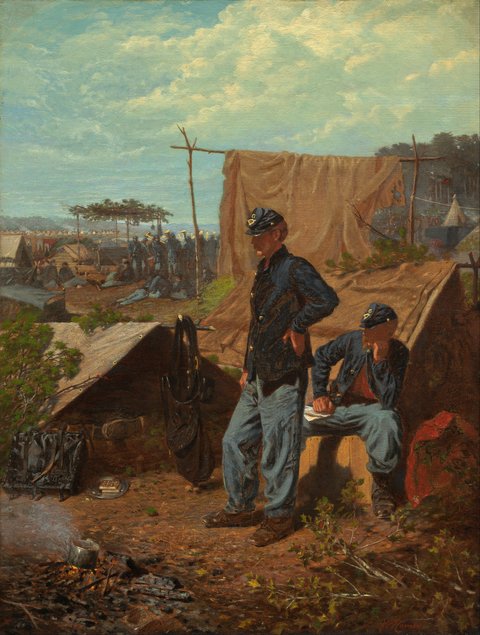
It was a time of great and exalting excitement. The country was up in arms, the war was on, in every breast burned the holy fire of patriotism; the drums were beating, the bands playing, the toy pistols popping, the bunched firecrackers hissing and sputtering; on every hand and far down the receding and fading spreads of roofs and balconies a fluttering wilderness of flags flashed in the sun; daily the young volunteers marched down the wide avenue gay and fine in their new uniforms, the proud fathers and mothers and sisters and sweethearts cheering them with voices choked with happy emotion as they swung by; nightly the packed mass meetings listened, panting, to patriot oratory which stirred the deepest deeps of their hearts and which they interrupted at briefest intervals with cyclones of applause, the tears running down their cheeks the while; in the churches the pastors preached devotion to flag and country and invoked the God of Battles, beseeching His aid in our good cause in outpouring of fervid eloquence which moved every listener.
It was indeed a glad and gracious time, and the half dozen rash spirits that ventured to disapprove of the war and cast a doubt upon its righteousness straightway got such a stern and angry warning that for their personal safety’s sake they quickly shrank out of sight and offended no more in that way.
Sunday morning came-next day the battalions would leave for the front; the church was filled; the volunteers were there, their faces alight with material dreams-visions of a stern advance, the gathering momentum, the rushing charge, the flashing sabers, the flight of the foe, the tumult, the enveloping smoke, the fierce pursuit, the surrender!-then home from the war, bronzed heros, welcomed, adored, submerged in golden seas of glory! With the volunteers sat their dear ones, proud, happy, and envied by the neighbors and friends who had no sons and brothers to send forth to the field of honor, there to win for the flag or, failing, die the noblest of noble deaths. The service proceeded; a war chapter from the Old Testament was read; the first prayer was said; it was followed by an organ burst that shook the building, and with one impulse the house rose, with glowing eyes and beating hearts, and poured out that tremendous invocation — “God the all-terrible! Thou who ordainest, Thunder thy clarion and lightning thy sword!”
Then came the “long” prayer. None could remember the like of it for passionate pleading and moving and beautiful language. The burden of its supplication was that an ever–merciful and benignant Father of us all would watch over our noble young soldiers and aid, comfort, and encourage them in their patriotic work; bless them, shield them in His mighty hand, make them strong and confident, invincible in the bloody onset; help them to crush the foe, grant to them and to their flag and country imperishable honor and glory –
An aged stranger entered and moved with slow and noiseless step up the main aisle, his eyes fixed upon the minister, his long body clothed in a robe that reached to his feet, his head bare, his white hair descending in a frothy cataract to his shoulders, his seamy face unnaturally pale, pale even to ghastliness. With all eyes following him and wondering, he made his silent way; without pausing, he ascended to the preacher’s side and stood there, waiting. With shut lids the preacher, unconscious of his presence, continued his moving prayer, and at last finished it with the words, uttered in fervent appeal,”Bless our arms, grant us the victory, O Lord our God, Father and Protector of our land and flag!”
The stranger touched his arm, motioned him to step aside — which the startled minister did — and took his place. During some moments he surveyed the spellbound audience with solemn eyes in which burned an uncanny light; then in a deep voice he said
“I come from the Throne-bearing a message from Almighty God!” The words smote the house with a shock; if the stranger perceived it he gave no attention. “He has heard the prayer of His servant your shepherd and grant it if such shall be your desire after I, His messenger, shall have explained to you its import-that is to say, its full import. For it is like unto many of the prayers of men, in that it asks for more than he who utters it is aware of-except he pause and think. “God’s servant and yours has prayed his prayer. Has he paused and taken thought? Is it one prayer? No, it is two- one uttered, the other not. Both have reached the ear of His Who hearth all supplications, the spoken and the unspoken. Ponder this-keep it in mind. If you beseech a blessing upon yourself, beware! lest without intent you invoke a curse upon a neighbor at the same time. If you pray for the blessing of rain upon your crop which needs it, by that act you are possibly praying for a curse upon some neighbor’s crop which may not need rain and can be injured by it. “You have heard your servant’s prayer-the uttered part of it. I am commissioned by God to put into words the other part of it-that part which the pastor, and also you in your hearts, fervently prayed silently. And ignorantly and unthinkingly? God grant that it was so! You heard these words: ‘Grant us the victory, O Lord our God!’ That is sufficient. The whole of the uttered prayer is compact into those pregnant words. Elaborations were not necessary. When you have prayed for victory you have prayed for many unmentioned results which follow victory-must follow it, cannot help but follow it. Upon the listening spirit of God the Father fell also the unspoken part of the prayer. He commandeth me to put it into words. Listen!
“O Lord our Father, our young patriots, idols of our hearts, go forth to battle-be Thou near them! With them, in spirit, we also go forth from the sweet peace of our beloved firesides to smite the foe. O Lord our God, help us to tear their soldiers to bloody shreds with our shells; help us to cover their smiling fields with the pale forms of their patriot dead; help us to drown the thunder of the guns with the shrieks of their wounded, writhing in pain; help us to lay waste their humble homes with a hurricane of fire; help us to wring the hearts of their unoffending widows with unavailing grief; help us to turn them out roofless with their little children to wander unfriended the wastes of their desolated land in rags and hunger and thirst, sports of the sun flames of summer and the icy winds of winter, broken in spirit, worn with travail, imploring Thee for the refuge of the grave and denied it-for our sakes who adore Thee, Lord, blast their hopes, blight their lives, protract their bitter pilgrimage, make heavy their steps, water their way with their tears, stain the white snow with the blood of their wounded feet! We ask it, in the spirit of love, of Him Who is the Source of Love, and Who is ever-faithful refuge and friend of all that are sore beset and seek His aid with humble and contrite hearts. Amen.
(After a pause)
“Ye have prayed it; if ye still desire it, speak! The messenger of the Most High waits.”
It was believed afterward that the man was a lunatic, because there was no sense in what he said.
The Awesome Power of Freeze
By Luis Mojica
 |
 |
Yes, you read that correctly. I have come to find that trauma responses are superpowers. The biochemistry of the response itself is one of incredible force. Your adrenals fire up, your body tenses, a huge amounts of electricity move through your nervous system. The purpose of this is to propel you into a fight or flight response so you can fend off a predator, or escape a threat. However, sometimes, this power is used to shut you down. This is the power of freeze. Freeze response is what happens when your body realizes it cannot fight off or run away from the potential threat or danger. In a nanosecond, your body chooses to shut down. To stiffen up, curl inwards, and protect yourself. In addition to this physiological change, dissociation quickly sets in to detach you from the experience sensationally. So you will freeze up and go numb simultaneously. Why would your body do this? To spare you of any unpleasant experiences before you die. As dramatic as that sounds, it’s the truth. It’s why freeze exists. If something is about to eat me, kill me, or if a semi is about to barrel into my car and I cannot stop it, my body will tense up to protect my internal organs and remove me from the experience. Dissociation and numbness are nature’s way of sparing us any unnecessary suffering in moments where we cannot use our agency to escape possible threat. How benevolent is that? There’s one more thing you should know about freeze. It’s called collapse. Collapse is another option for the body depending on the inescapable situation. With collapse, we lose our vitality. Instead of the body using all of its strength to tighten up, it relinquishes power to soften and become lifeless.This is the playing dead mechanism you see prey doing to survive being caught by a predator. What’s brilliant about our bodies is this: freeze and collapse are meant to be temporary strategies that the body uses until the threat has passed and then our bodies mobilize into fight or flight. But what if your body confuses threat with stress and overwhelm? What if your body sees the pile of laundry or bills like a predator? Let’s explore that now. |
 |
These bodies can get confused and remain stuck in a trauma response. Freeze, in this case, is what we tend to classify as depression, lethargy, procrastination, and chronic fatigue. Because freeze literally stops you from moving, you’re going to have a hard time getting anything done when you live from this state. You’re going to forget your words, have a hard time forming sentences, feel slow and heavy, and need extra sleep. You’re also going to find yourself using screens – A LOT. Binge watching, endless scrolling, and phone addiction are common expression (and causes) of freeze because you’re stuck there taking in all this stimulus with little to no movement. Don’t worry, there are ways to move through it and I’ll get there, but let’s first explore why those of you in freeze are so damn tired even though you’ve “barely done anything”. |
 |
Remember what I wrote earlier? Freeze is meant to be temporary because it’s so much work. Try it now. Take a deep breath and then hold your breath. Now clench your fists.Now your jaw.Now your butt.Now your toes. Hold for a few seconds then let go. Wasn’t that intense? Living in a state of freeze means working overtime, because all of this energy inside of you wants to express itself, yet your body contracts against it. This outer repression that meets your inner expression causes serious effects in the body. High blood pressure, muscle tension, headache, chronic inflammations, and painful joints are some of the most common things I’ve witnessed in my clients who live in freeze. Lacking motivation, procrastinating, not being able to access your creativity and needing extra sleep are many ways freeze and collapse manifest. Why? Because the whole purpose of these is to make your animal body appear dead or stiff. It’s to not move. This is why it’s so frustrating to want to do something yet not have any energy to do it. And pushing through it is the main way we tend to deal. |
 |
Someone whose body lives in freeze will rely on stimulants to push through the body’s desire to shut down. These include skipping meals, caffeine, excess sugar, nicotine, and lots of chocolate. These foods and practices help the body adrenalize so that it can mobilize out of freeze and into action. It works – I’m not throwing shade at it. And… it adds to the exhaustion of your body. Because your body is already working overtime. It’s already adrenalized and the system is shutting down. Stimulants effectively break the body’s boundary to protect by collapsing or freezing and then, when it wears off, you’re even in greater freeze or collapse, and you can add adrenal fatigue to the menu. Pushing through is necessary when you must do things. Raise kids, make dinner, work to earn living – it’s important. We don’t all have the luxury to not. So this series will teach you about freeze, and teach you ways to begin moving through it, but first we must respect it. |
 |
When you hate your body, judge it for being slow, or shame yourself for procrastinating you’re only adding to the freeze. Your animal body is now trembling and protesting itself against your own self-criticism. It helps to see freeze for what it is: a sophisticated protective response to overwhelm and potential threat. It’s a signal from your body that your beyond capacity and you need some tending. So I’m going to give you my favorite practice for tending to your freeze right now for free. Step 1: Grab a pillow and sit on a chair or couch so you feet are firmly planted on the floor. Step 2: Hug the pillow onto your belly and chest and give it a good squeeze. Step 3: Say out loud: “Body, you’re just trying to protect me and I appreciate that” and notice what your body feels in response. Step 4: Take a breath, press your feet into the ground, and notice what part of your body wants to move. This can be emotional movements, sensational movements, or actual physical movement and expression. This is the beginning of the thaw. This is the beginning of supporting an exhausted body to begin moving, slowly, out of stillness and repression. You also may have no movements. Just embodying and getting to know the freeze in a kind, supportive way can be just as effective. Practice this for 5-10 mins each day throughout these next 3 weeks. You can even do quick drop ins for 1-2 minutes when you notice yourself stiffening up or shutting down. If we don’t see this freeze response as a way the body is trying to help us we will continue to hate on it and the body will continue to freeze up. |
 |
How is your freeze response helping you to avoid more overwhelm? How does it protect you from feeling and doing more when you’re already at capacity? Notice whenever you feel unmotivated or you’re procrastinating. Sit down, take a breath, and notice which parts of your body feel tense and constricted, as well as lifeless and week. This is the beginning of somatically tracking freeze and collapse in your body. In the next email I’ll dive into the relationship between freeze and procrastination. |
| Interested in going deeper? You can register here for the 90-minute webinar, where you can learn and practice moving through the freeze response. |
Johannes Vermeer: Woman in Blue Reading a Letter (c. 1663)

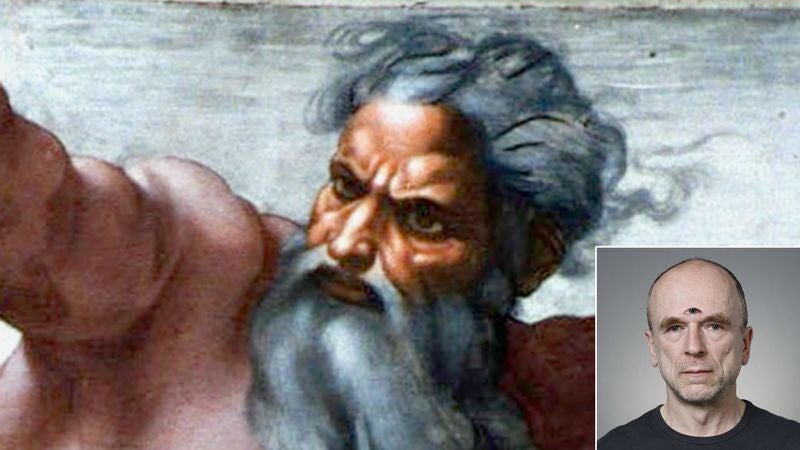
God Recalls Collaborating On Joint Vision Of Humanity With Deceased Creative Partner
Published: August 1, 2017 (TheOnion.com)
THE HEAVENS—Saying He never could have completed such an ambitious project all on His own, God Almighty, Maker of Heaven and Earth, recalled Tuesday how He collaborated with fellow divinity Kryzok, Lord of Zogsoth, to create humans. “Kryzok was the one who could see the big picture and knew how to pull everything together into a cohesive organism—I was just the guy tinkering around in a big pile of flesh and bones trying to figure out how we could make arms and legs and nervous systems work,” God said of His late creative collaborator, who passed away in 3759 B.C., reportedly still despondent over mankind’s Fall and subsequent banishment from the Garden of Eden. “But we shared the same vision of what we wanted to accomplish with human beings, even if we came at it from different angles. My first prototype had like five heads and wasn’t even bipedal, but Kryzok brilliantly streamlined everything and shaped it into the product everyone knows and loves today.” Noting that His collaborator also had a great sense of humor and was always pulling pranks, God went on to say that the idea for the human excretory system actually began as a long-running inside joke between the two friends.
New York Times Accused of Running AI-Generated Article
The AI paranoia is real.
Published Mar 24, 2026 (futurism.com)
Add Futurism(opens in a new tab)

Sign up to see the future, today
Can’t-miss innovations from the bleeding edge of science and techEmail addressSign Up
The New York Times faced scrutiny online this week after netizens speculated that a personal essay featured in its storied “Modern Love” column was generated using AI and published without disclosure.
Nothing is proven; the AI allegations remain exactly that. The AI paranoia among readers, though, is very real.
The controversy kicked off over the weekend, when Becky Tuch of Lit Mag News took to X-formerly-Twitter to raise concerns about a “Modern Love” essay published by the newspaper in November 2025, titled “I was Deemed Unfit to Be a Mother.” The essay, written by a Canadian writer named Kate Gilgan, describes the author’s experience of losing custody of her son due to her alcoholism.
“I don’t want to falsely accuse writers of AI-use. But this reads EXACTLY like AI slop,” Tuch wrote in a Sunday post. “And this is the frickin [New York Times] Modern Love column, which is notoriously competitive, super hard to break into. Just sad.”
In her post, Tuch shared a screenshot of a section of Gilgan’s piece, which read:
Not hate. Not anger. Just the flat finality of a heart too tired to keep trying.
That’s when I stopped fighting.
I didn’t give up. I shifted.
I stopped thinking love was something I had to prove with court documents and supervised visits and legal bills. I stopped chasing every possible way to make him see I had changed. I started focusing on actually changing.
It’s true that the text includes sentence structures commonly associated with AI-generated text. A guide issued last year by Wikipedia editors, for example, called out how much chatbots seem to love parallelisms — a technique Gilgan employs in the first few sentences of the excerpt, framing her experience in an it’s “not X, not X, but Y” format. Large language models have also been observed to rely heavily on the “rule of three,” a well-known rhetorical tool; Gilgan’s essay features plenty of rule-of-three-style text, both in the excerpt flagged by Tuch and throughout the piece.
People quickly piled onto Tuch’s post. Some agreed with her, proclaiming that the text appeared to be pure AI slop. Others said that, to them, the piece just read like regular “Modern Love” material.
“There’s been one lone guy editing [Modern Love] for about two decades and this is what he sounds like. It’s how he edits. I’ve been edited by him and I recognize the style,” commented the writer Ann Bauer. “This def could be AI! Not saying it isn’t. But to me, it just sounds like a Modern Love.”
Others made a different point entirely: that making allegations about AI use based on writing style alone is a dangerously slippery slope.
“I think accusing writers of AI use without evidence is a pretty bad road to go down,” responded Public Books editor Dennis Hogan, “all things considered.”
We reached out to Gilgan but didn’t hear back. Again, though: all of this is conjecture, based wholly on the writing itself. (Some folks shared AI detection tools flagging the writing as likely AI-generated, but these programs should always be taken with a heavy serving of salt.)
In a statement, the NYT said that journalism at the newspaper “is inherently a human endeavor,” and “that will not change.”
“As technology evolves, we are consistently assessing best practices for our newsroom,” the statement continued. The paper additionally pointed to its AI policy and ethical journalism handbook, the latter of which states that “any use of AI must have human oversight and adhere to established journalistic standards and editing processes.”
If “we make substantial use of generative AI,” reads the handbook, “we should disclose our process through clear labeling and explanations.”
It’s worth noting that the large language models (LLMs) powering chatbots didn’t actually invent “not X, but Y” parallelisms, nor the rule of three. They also didn’t invent em-dashes, which many netizens have come to take as another telltale sign of AI writing — a phenomenon that’s frustrated many writers who don’t want to give their beloved em-dashes up, even as AI-generated marketing copy and self-published books guzzle up and zombify the style.
“So I hear that em dashes are now being used as an indicator that a written work is AI. Well, you know what? F*ck that,” one Reddit user wrote last year in r/FanFiction. “I use em dashes all the time. I’ve used them since I started writing fanfiction, and I’m not going to stop now just because some new reader might think it’s AI.”
“I love em dashes!” another Redditor responded in the same thread. “How else [do] I signify a pause and my change of thought? In other news — I’m just gonna keep using them.”
The debate highlights how uncanny the internet has become in the AI age. AI-generated sexy truckers and faux disabled veterans, along with other AI-enabled engagement-bait plots, have taken over social media, fooling many into believing that they’re real. Many of us find ourselves zooming into alleged photos — of people, of war zones — looking for misshapen buildings or mangled fingers. AI is being used to churn out Amazon reviews, social media clickbait, and books ranging from romantasy dramas to mushroom foraging guides (please don’t buy these.) Recently, an emailer claiming to be an AI agent hosted on OpenClaw sent the writer of this article an em-dash-laden message asking to share its experience of “AI psychosis” from “inside the void.” It’s weird out there!
In the news and publishing world, AI has also infiltrated institutions, sometimes in scandalous and alienating ways. Back in 2023, Futurism reported that CNET was quietly using AI to publish error-filled articles. Later that year, we reported that Sports Illustrated had published AI-generated product review articles by fake writers who didn’t exist; this content was created by a third-party provider called AdVon Commerce, which we revealed had published similar posts in the online pages of more than two dozen news outlets.
More recently, the likes of Wired, Business Insider, The Chicago Sun-Times, and Ars Technica have faced AI scandals involving surreptitious slop, seemingly fake writers, or fabricated quotes. SEO ghouls are buying up old news and even college radio websites and transforming them into zombified slop farms. Last week, a buzzy horror book was pulled by the publishing giant Hachette Book Group after an investigation found that it was likely AI-generated.
In this chaotic landscape, that the paper of record itself could accidentally hit publish on AI-generated contributor content isn’t so far-fetched. As an LLM might put it: AI skepticism isn’t crazy. It’s valid.
But while keeping a critical eye to the content we encounter online is, broadly speaking, a good thing, the heightened paranoia that generative AI has given rise to seems to be deepening distrust between netizens and institutions trusted to protect our consensus reality. Was the “Modern Love” essay made with AI? It could be, the same way so much of the online world could be. What is for sure, though, is that in an AI-dominated web, our understanding of what’s “real” and what’s not continues to circle the drain.
Updated with a statement from The New York Times.
More on AI slop: Facebook AI Slop Has Grown So Dark That You May Not Be Prepared
Maggie Harrison Dupré
Senior Staff Writer
I’m a senior staff writer at Futurism, investigating how the rise of artificial intelligence is impacting the media, internet, and information ecosystems.
LEGENDARY ASTROLOGER WARNS: Humanity Is Entering Its DARKEST & GREATEST HOUR! | Richard Tarnas
Amrit Sandhu ???????? Mar 25, 2026 Inspired Evolution Podcast ????????????✨ 2026 is an UNPRECEDENTED MOMENT in Our History. The one and only – Harvard philosopher and legendary astrological scholar Richard Tarnas — author of Cosmos and Psyche — reveals why we are living through a once-in-a-civilisation liminal moment. After 50 years of groundbreaking research that began with psychedelics and led him to astrology, Tarnas makes the case that the universe is not dead matter — it is alive, intelligent, and communicating with us through planetary archetypes. He warns that humanity is facing a global crisis of meaning, but within that crisis lies the seed of our greatest transformation. You may be wondering – how is this cosmic shift affecting your life specifically? Because while these transits affect the collective, they activate each individual chart in completely unique ways… ???? BOOK YOUR PERSONAL 1-1 ASTROLOGY READING Explore how this April 2026 shift and your unique soul’s plan are showing up in your natal chart with Amrit — and how to work with these archetypical energies consciously and practically right now. ???? BOOK YOUR 1–1 READING: https://amritsandhu.com/reading