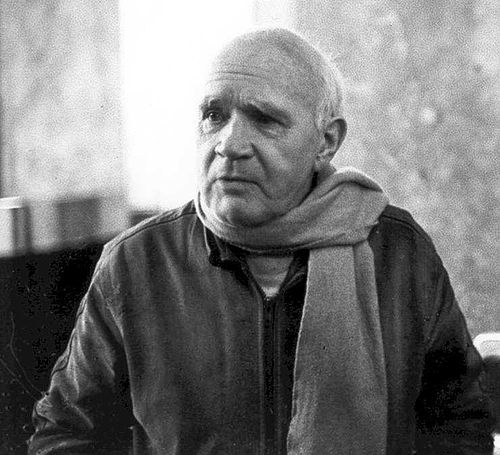
Jean Genet was a French novelist, playwright, poet, essayist, and political activist. In his early life he was a vagabond and petty criminal, but he later became a writer and playwright. Wikipedia
“The physician should not treat the disease but the patient who is suffering from it”
~ Maimonides
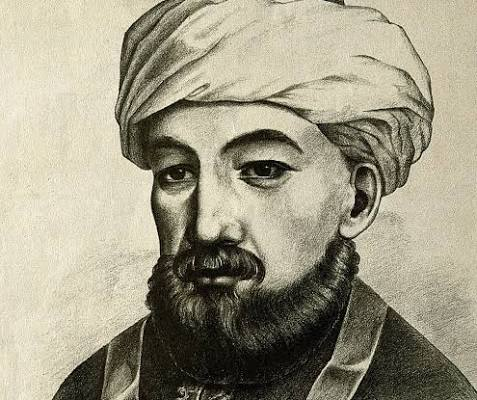
Moses ben Maimon (1135/1138–1204), known as Maimonides or Rambam, was a towering 12th-century Sephardic Jewish philosopher, Torah scholar, and physician. He revolutionized Jewish law with the Mishneh Torah, bridged faith and reason in The Guide for the Perplexed, and served as a personal physician to Sultan Saladin in Egypt. Wikipedia +2
Many people discover, only after they slow down, that much of what they were rushing toward wasn’t actually what they wanted. The space created by slowness allows for that sort of recalibration.
For most of my adult life I’ve been an entrepreneur, a writer, an international relief worker, a psychotherapist, and most recently a daily radio host. When you live in that world, speed becomes your default setting. There are always more ideas to chase, more projects to launch, more emails to answer, more shows to prepare. Motion starts to feel like proof that you’re doing something worthwhile.
I remember realizing one evening, after yet another long workday that seemed to stretch endlessly from morning into night, that I’d spent the entire day producing things — shows, articles, conversations, decisions — but almost no time actually experiencing my life.
That realization stayed with me. Because in the culture we live in, slowing down has become a kind of quiet taboo.
In a culture that equates motion with value, any reduction in pace is treated with suspicion. People who slow down are assumed to be falling behind, losing relevance, or giving up. Even rest is framed defensively, as something you do in order to be productive again.
So when life forces a slowdown — through age, illness, burnout, grief, or simple saturation — many people experience it as failure.
But that interpretation says more about the culture than about the person.
Speed is not a neutral preference; it’s a value system. It rewards quick responses, rapid growth, constant availability. It privileges those whose lives allow them to move fast and penalizes those whose bodies, circumstances, or priorities don’t.
Wisdom has always been suspicious of this arrangement.
Slowness allows things to reveal themselves that speed otherwise conceals. Patterns emerge, consequences become visible, and emotional signals that were drowned out by noise grow audible. You begin to notice what actually sustains you and what merely keeps you busy.
None of this happens on a rushed schedule.
The fear around slowing down is rarely about time itself. It’s about identity. When so much of self-worth is tied to output, being less productive feels like becoming less real. People worry that if they stop moving, they’ll disappear.
I’ve felt that fear myself. When your identity is wrapped up in creating things — businesses, books, broadcasts, projects — the idea of slowing down can feel almost like stepping away from the current that has carried your life forward.
But that fear, understandable as it is, is also misleading.
Slowing down doesn’t erase you. It changes how you’re present. It shifts attention from performance to experience, from accumulation to absorption. It invites you to inhabit moments rather than rush through them.
Children understand this instinctively. They move slowly not because they lack urgency, but because they’re attentive. They stop to examine small things. They repeat actions not to optimize them but to explore them. Time expands for them — remember those days of your childhood? — because presence deepens.
Adults often mistake this for inefficiency. In reality, it’s a different relationship to time altogether.
Many people don’t choose to slow down; they’re forced into it by circumstances they didn’t plan. The job ends, the body protests, caregiving begins, or energy simply changes. What makes this painful often isn’t just the loss of speed, but the loss of status that speed once provided.
We live in a culture that rarely teaches how to transition gracefully into different tempos of life.
Wisdom does.
It recognizes that life moves in seasons, not straight lines. That periods of expansion are followed by periods of consolidation. That rest isn’t an interruption of life, but part of its rhythm.
Slowing down also exposes a difficult truth: when the noise quiets, we come face to face with ourselves. Distractions fall away, unanswered questions surface, and emotions we postponed demand attention.
This is why slowing down can feel frightening at first. It removes buffers and reveals interior landscapes we may have avoided for years.
But this exposure is also where growth happens.
When you slow down, you regain the ability to listen to your body, your values, and your relationships. You begin to distinguish between obligations you chose and ones you inherited without consent or were imposed on you. You notice how much of your life was organized around avoiding discomfort rather than pursuing meaning.
This doesn’t lead to withdrawal from the world; it often leads to more intentional engagement. You become selective. You say no more easily. You invest energy where it matters instead of scattering it everywhere.
There’s also a moral clarity that comes with slowness. When you aren’t constantly reacting, you can consider consequences. You can act with care rather than impulse. You can align actions with values rather than urgency.
In a system built on speed, this looks like resistance. But it isn’t.
It’s discernment.
Slowing down isn’t the same as giving up. It’s choosing a pace that allows you to remain intact. It’s recognizing that moving faster doesn’t always mean moving forward.
Many people discover, only after they slow down, that much of what they were rushing toward wasn’t actually what they wanted. The space created by slowness allows for that sort of recalibration.
Failure implies an end point, a verdict. Slowing down is a transition, not a conclusion.
It asks a different question: not “How fast can I go?” but “How do I want to experience being here?”
Wisdom tends to prefer the second question.
And I’m still learning that lesson myself.
After decades of building businesses, writing books, and sitting behind a microphone every day trying to make sense of the world, my instinct is still to move faster than the moment requires. But every time I manage to slow down long enough to notice the small details of a day — a conversation, a quiet moment, the simple act of being present — I’m reminded of something our culture rarely says out loud:
ARIES (March 21-April 19): In theater, “breaking the fourth wall” means acknowledging the audience. An actor steps out of the pretense that what’s happening on stage is real. It’s a disruptive moment of truth that can deepen the experience. I would love you to break the fourth wall in your own life, Aries. It’s a favorable time to slip free of any roles you’ve been performing by rote and just blurt out the more interesting truths. Tell someone, “This isn’t working for me.” Or say, “I need to be my pure self with greater authenticity.” Breaking the fourth wall won’t ruin the show; it will be more fun and real and entertaining.
TAURUS (April 20-May 20): English speakers like me use the terms “destiny” and “fate” interchangeably. But a scholar of ancient Sumer claims they had different meanings in that culture. Nam, the word for “destiny,” was fixed and immutable. Namtar, meaning “fate,” could be manipulated, adjusted, and even cheated. I bring this to your attention, Taurus, because I believe you now have a golden chance to veer off a path that leads to an uninteresting or unproductive destiny and start gliding along a fateful detour.
GEMINI (May 21-June 20): The coming months will be a favorable time for you to shed the fairy-tale story of success that once inspired you when you were younger and more idealistic. A riper vision is emerging, calling you toward a more realistic and satisfying version of your life’s purpose. The transformation may at first feel unsettling, but I believe it will ultimately awaken even deeper zeal and greater creativity than your original dream. Bonus: Your revised, more mature goals will lead you to the very rewards your youthful hopes imagined but never quite delivered.
CANCER (June 21-July 22): Even if you’re not actually far from home, Cancerian, I bet you’re on a pilgrimage or odyssey of some kind. The astrological omens tell me that you’re being drawn away from familiar ideas and feelings and are en route to an unknown country. You’re transforming, but you’re not sure how yet. During this phase of exploration, I suggest that you adopt a nickname that celebrates being on a quest. This will be a playful alias that helps you focus on the pregnant potential of this interlude. A few you might want to consider: Journey Seed, Threshold Traveler, Holy Rambler, Map-Edge Maverick or Wanderlust Wonderer. Others? Choose one that tickles you with the sense that you are being born again while you travel.
LEO (July 23-Aug. 22): Love is more than a gentle glow in your heart or a pleasurable spark in your body. When fully awakened and activated, it becomes a revolutionary way of being in the world that invites you to challenge and rethink all you’ve been taught about reality. It’s a bold magic that alters everything it encounters. You can certainly choose a milder, tamer version of love if you wish. But if you’d like to evolve into a love maestro—as you very well could during the next twelve months—I suggest you give yourself to the deeper, wilder form. Do you dare?
VIRGO (Aug. 23-Sept. 22): Octopuses have neuron clusters in their arms that enable them to “think with their limbs.” Let’s make them your spirit creature for now, Virgo. Your body’s intuitions are offering you guidance that might even be as helpful as your fine mind. This enhanced somatic brilliance can serve you in practical ways: a creative breakthrough while doing housework, a challenging transition handled with aplomb, a fresh alignment between your feelings and ideas. I hope you will listen to your body as if it were a beloved mentor. Trust your movements and physical sensations to reveal what you need to know.
LIBRA (Sept. 23-Oct. 22): I love your diplomatic genius: the capacity to understand all sides, to hold space for contradictions, to find the middle ground. But right now it’s in danger of curdling into a kind of self-erasure where your own desires become the one thing you can’t quite locate. Another way to understand this: You are so skilled at seeing everyone’s perspective that you sometimes lose track of your own. Here’s the antidote I recommend: Practice the revolutionary act of having strong opinions, of preferring one thing over another without immediately undercutting your preference with a counter-argument. I guarantee that your relationships will survive your decisiveness. In fact, they will deepen as people locate the real you beneath your exquisite balance.
SCORPIO (Oct. 23-Nov. 21): New love cravings have been welling up inside you, Scorpio. These cries of the heart may confuse you even as they delight you and invigorate you. One of your main tasks is to listen closely to what they’re telling you, but to wait a while before expressing their messages to other people. You need to study them in detail before spilling them out. Another prime task is to feel patient awe and reverence for the immensity and intensity of these deep, wild desires.
SAGITTARIUS (Nov. 22-Dec. 21): If you are fulfilling your birthright as a Sagittarius, you are a philosopher-adventurer with a yearning for deep meaning. As you seek out interesting truths, your restless curiosity is a spiritual necessity. You understand that wisdom comes from collecting diverse, sometimes contradictory experiences and weaving them into a coherent worldview. You have a fundamental need to keep expanding and reinventing what freedom means to you. All these qualities may make some people nervous, but they really are among your primary assignments now and forever. They are especially important to cultivate these days.
CAPRICORN (Dec. 22-Jan. 19): In traditional navigation, “dead reckoning” means finding your position by tracking your previous movements. Where you have been tells you where you are. But it only works if you’ve been honest about your course. If you’ve been misleading yourself about the direction you have been traveling, dead reckoning will get you lost. I bring this to your attention, Capricorn, because I really want you to rededicate yourself to telling yourself the deepest, strongest, clearest truths. Where have you actually been going? Not where you told yourself you were going or where other people imagined you were going, but where your choices have actually been taking you. Look at the pattern of your real movements, not your stated intentions. Once you know your true position, you can chart a true course for the future.
AQUARIUS (Jan. 20-Feb. 18): You’re entering a rambling zigzag phase. Each plot twist will branch into two more, and every supposed finale will reveal itself as the opening act of another surprise. Fortunately, your gift for quick thinking and innovative adaptation is sharper than ever, which means you will flourish where others might freeze. My suggestion? Forget the script. Approach the unpredictable adventures like an improv exercise: spontaneous, playful and open to the fertile mysteries.
PISCES (Feb. 19-March 20): Can you compel acts of grace to intervene in your destiny? Can bursts of divine favor be summoned through the power of your will? Some spiritual scholars say, “Absolutely not.” They claim life’s wild benevolence arrives only through the mysterious tides of fate—impossible to solicit and impossible to predict. But other observers, more open-minded, speculate that your intelligent goodness might indeed attract the vivid generosity of cosmic energies. I bring this up because I suspect you Pisceans are either receiving or will soon receive blessings that feel like divine favor. Did you earn them, or are you just lucky—or some of both? It doesn’t matter. Enjoy the gift.
“Bending the Rules: Fashion Beyond the Binary” by Camille Benda & Gwyn Conaway, $29.95 (Princeton Architectural Press/Chronicle Books)
Visually stunning and artistically informative, Benda, the head of Costume Design at the California Institute of the Arts and fashion historian Conaway, combines their shared histories and fashion acumen in this exploration of how identity and gender have been perceived across the annals of history.
In a museum-worthy collection of unisex art ranging from sculpture, digital illustrations, photographs, full-color graphics, and designer collections, the images are fascinating and plentiful, creatively embellished with interviews, perspectives, opinions on fashion development (from kilts to codpieces to kimonos and cuffs and collars, bras, bustiers, and Barbie!), and coupled with inspired, informed narratives.
The authors present a well-rounded collection of images and text on the ways clothing and color have influenced and molded the world’s impressions of sexuality and presentation. This striking, exquisite sartorial excavation of style, history, and gender is simply dazzling. https://www.chroniclebooks.com/products/bending-the-rules
“Words belong to each other,” Virginia Woolf asserted in the only surviving recording of her voice. But words also belong to us, as much as we belong to them — and out of that mutual belonging arises our most fundamental understanding of the world, as well as the inescapable misunderstandings that bedevil the grand sensemaking experiment we call life.
This constant dialogue between reality and illusion, moderated by our use of language, is what poet and philosopher David Whyte explores in Consolations: The Solace, Nourishment and Underlying Meaning of Everyday Words (public library) — a most remarkable book “dedicated to WORDS and their beautiful hidden and beckoning uncertainty.” Whyte — who has previously enveloped in his wisdom such intricacies of existence as what happens when love leaves and how to break the tyranny of work-life balance — constructs an alternative dictionary inviting us to befriend words in their most dimensional sense by reawakening to the deeper and often counterintuitive meanings beneath semantic superficialities and grab-bag terms like pain, beauty, and solace. And he does it all with a sensibility of style and spirit partway between Aristotle and Anne Lamott, Montaigne and Mary Oliver.
David Whyte (Nicol Ragland Photography)
Whyte chooses 52 such ordinary words, the same number as the playing cards in a standard deck — perhaps a subtle suggestion that words, like cards, are as capable of illusion as they are of magic: two sides of the same coin, chosen by what we ourselves bring to the duality. Indeed, dualities and counterpoints dominate the book — Whyte’s short essays examine ambition and disappointment, vulnerability and courage, anger and forgiveness.
FRIENDSHIP is a mirror to presence and a testament to forgiveness. Friendship not only helps us see ourselves through another’s eyes, but can be sustained over the years only with someone who has repeatedly forgiven us for our trespasses as we must find it in ourselves to forgive them in turn. A friend knows our difficulties and shadows and remains in sight, a companion to our vulnerabilities more than our triumphs, when we are under the strange illusion we do not need them. An undercurrent of real friendship is a blessing exactly because its elemental form is rediscovered again and again through understanding and mercy. All friendships of any length are based on a continued, mutual forgiveness. Without tolerance and mercy all friendships die.
Echoing Anne Lamott’s beautifully articulated conviction that friendship is above all the art of allowing the soft light of love to fall upon even our darkest sides, Whyte adds:
In the course of the years a close friendship will always reveal the shadow in the other as much as ourselves, to remain friends we must know the other and their difficulties and even their sins and encourage the best in them, not through critique but through addressing the better part of them, the leading creative edge of their incarnation, thus subtly discouraging what makes them smaller, less generous, less of themselves.
And yet friendship is a merited grace, one that requires of us the unrelenting commitment of showing up for and bearing witness to one another, over and over:
The dynamic of friendship is almost always underestimated as a constant force in human life: a diminishing circle of friends is the first terrible diagnostic of a life in deep trouble: of overwork, of too much emphasis on a professional identity, of forgetting who will be there when our armored personalities run into the inevitable natural disasters and vulnerabilities found in even the most average existence.
[…]
But no matter the medicinal virtues of being a true friend or sustaining a long close relationship with another, the ultimate touchstone of friendship is not improvement, neither of the other nor of the self, the ultimate touchstone is witness, the privilege of having been seen by someone and the equal privilege of being granted the sight of the essence of another, to have walked with them and to have believed in them, and sometimes just to have accompanied them for however brief a span, on a journey impossible to accomplish alone.
Whyte argues that friendship helps us “make sense of heartbreak and unrequited love” — two concepts to which he dedicates entire separate word-meditations. He writes of the former:
HEARTBREAK is unpreventable; the natural outcome of caring for people and things over which we have no control…
Heartbreak begins the moment we are asked to let go but cannot, in other words, it colors and inhabits and magnifies each and every day; heartbreak is not a visitation, but a path that human beings follow through even the most average life. Heartbreak is an indication of our sincerity: in a love relationship, in a life’s work, in trying to learn a musical instrument, in the attempt to shape a better more generous self. Heartbreak is the beautifully helpless side of love and affection and is [an] essence and emblem of care… Heartbreak has its own way of inhabiting time and its own beautiful and trying patience in coming and going.
And yet while heartbreak has this immense spiritual value, and even an evolutionarily adaptive one, we still treat it like a problem to be solved rather than like the psychoemotional growth-spurt that it is. Whyte writes:
Heartbreak is how we mature; yet we use the word heartbreak as if it only occurs when things have gone wrong: an unrequited love, a shattered dream… But heartbreak may be the very essence of being human, of being on the journey from here to there, and of coming to care deeply for what we find along the way.
[…]
There is almost no path a human being can follow that does not lead to heartbreak.
Stripped of the unnecessary negative judgments we impose upon it, heartbreak is simply a fathometer for the depth of our desire — for a person, for an accomplishment, for belonging to the world and its various strata of satisfaction. Whyte captures this elegantly:
Realizing its inescapable nature, we can see heartbreak not as the end of the road or the cessation of hope but as the close embrace of the essence of what we have wanted or are about to lose.
[…]
Heartbreak asks us not to look for an alternative path, because there is no alternative path. It is an introduction to what we love and have loved, an inescapable and often beautiful question, something and someone that has been with us all along, asking us to be ready for the ultimate letting go.
One of the most common sources of heartbreak, of course, is unrequited love. But, once again, Whyte shines a sidewise gleam on the obscured essence of another experience we mistake for a failure rather than a triumph of our humanity — for unrequited love is the only kind of love there is, in any real sense:
UNREQUITED love is the love human beings experience most of the time. The very need to be fully requited may be to turn from the possibilities of love itself. Men and women have always had difficulty with the way a love returned hardly ever resembles a love given, but unrequited love may be the form that love mostly takes; for what affection is ever returned over time in the same measure or quality with which it is given? … And whom could we know so well and so intimately through all the twists and turns of a given life that we could show them exactly, the continuous and appropriate form of affection they need?
[…]
The great discipline seems to be to give up wanting to control the manner in which we are requited, and to forgo the natural disappointment that flows from expecting an exact and measured reciprocation.
Illustration by Isabelle Arsenault from Jane, the Fox and Me — a graphic novel inspired by Jane Eyre.
Indeed, most of our dissatisfaction with life stems from wishing for the present moment to be somehow different, somehow better-conforming to the rigid expectation we set for it at some point in the past. And yet nowhere is this rigidity of requirement more stifling than in love — that glorious “dynamic interaction” of souls responsive to one another, which requires a constant learning and relearning of a common language. Whyte considers what it is we really fear when we hide behind the merciless moniker of “unrequited” love:
We seem to have been born into a world where love, except for brilliant, exceptional moments, seems to exist from one side only, ours — and that may be the difficulty and the revelation and the gift — to see love as the ultimate letting go and through the doorway of that affection, make the most difficult sacrifice of all, giving away the very thing we want to hold forever.
Norwegian for ‘the inescapable euphoria experienced as you begin to fall in love,’ from Lost in Translation by Ella Frances Sanders.
Paradoxically, our notion of “unconditional love” is beset by the same self-defeating absolutism of expectation. Arguing that the very concept of it is a “beautiful hoped for impossibility,” Whyte writes:
Love may be sanctified and ennobled by its commitment to the unconditional horizon of perfection, but what makes love real in the human world seems to be our moving, struggling conversation with that wanted horizon rather than any possibility of arrival. The hope for, or the declaration of a purely spiritual, unconditional love is more often a coded desire for immunity and safety, an attempt to forgo the trials of vulnerability, powerlessness and the exquisite pain to which we apprentice ourselves in a relationship, a marriage, in raising children, in a work we love and desire.
[…]
The hope for unconditional love is the hope for a different life than the one we have been given. Love is the conversation between possible, searing disappointment and a profoundly imagined sense of arrival and fulfillment; how we shape that conversation is the touchstone of our ability to love in the real inhabited world. The true signature and perhaps even the miracle of human love is helplessness, and all the more miraculous because it is a helplessness which we wittingly or unwittingly choose; in our love of a child, a partner, a work, or a road we have to take against the odds.
The Cult of the Supreme Being was a short-lived state-sponsored religion during the French Revolution, created in 1794 by Maximilien Robespierre.
Why it was created
Robespierre thought the earlier Cult of Reason had gone too far in attacking religion and promoting atheism. He believed society needed some form of belief in a higher moral power to keep virtue and civic responsibility alive.
So he proposed a new idea:
There is a higher power (“the Supreme Being”)
The human soul is immortal
Virtue and republican morality should guide citizens
Religion should support the French Republic, not the Catholic Church.
It was meant to be a deistic religion—more like the philosophy of Jean‑Jacques Rousseau, who argued that societies need a “civil religion.”
The big public festival
The cult’s most famous event was the Festival of the Supreme Being on June 8, 1794.
Huge crowds gathered in Champ de Mars.
Robespierre led a grand procession.
An enormous statue symbolizing Atheism was burned.
Another statue representing Wisdom or the Supreme Being was revealed.
The ceremony was elaborate, almost like a theatrical civic ritual.
Why it ended
The cult lasted only a few weeks.
Many revolutionaries already distrusted Robespierre and thought the ceremony made him look like a high priest or dictator. Shortly afterward:
Robespierre was overthrown and executed during the Thermidorian Reaction.
After his fall, the Cult of the Supreme Being quickly disappeared.
✅ In short: it was an attempt to create a moral, civic religion for the French Republic—neither Catholic nor atheist—but it died with Robespierre.
The phrase “the chauffeur as hero” comes from the German philosopher Hermann Keyserling, especially in his book Travel Diary of a Philosopher.
What Keyserling meant
Keyserling was observing a cultural shift in the early 20th century. In earlier times, the admired figure was the heroic leader or aristocrat. But in the modern technological age, he argued, society was beginning to admire a different type of person—the operator of machines.
The chauffeur (driver of the new automobile) symbolized this new figure.
Keyserling’s idea:
The chauffeur controls powerful technology (the automobile).
He moves quickly through the modern world.
He represents skill, speed, and technical mastery rather than wisdom or moral leadership.
But Keyserling’s point was somewhat critical and ironic. He thought modern society was in danger of letting technical competence replace deeper spiritual or intellectual leadership.
In simplified terms:
Old heroic figure
New “hero”
King, warrior, sage
Driver, engineer, technician
The chauffeur therefore became a metaphor for modern civilization being driven by technical experts rather than philosophers or statesmen.
Why it mattered
Keyserling saw this as part of a broader cultural change after World War I, when machines, industry, and speed seemed to dominate civilization.
His warning was basically:
A society run only by “chauffeurs” (technicians) may move fast but doesn’t necessarily know where it is going.
Later influence
This idea anticipated later critiques of modern technological society by thinkers such as:
José Ortega y Gasset
Martin Heidegger
Both worried about technical control replacing deeper cultural wisdom.
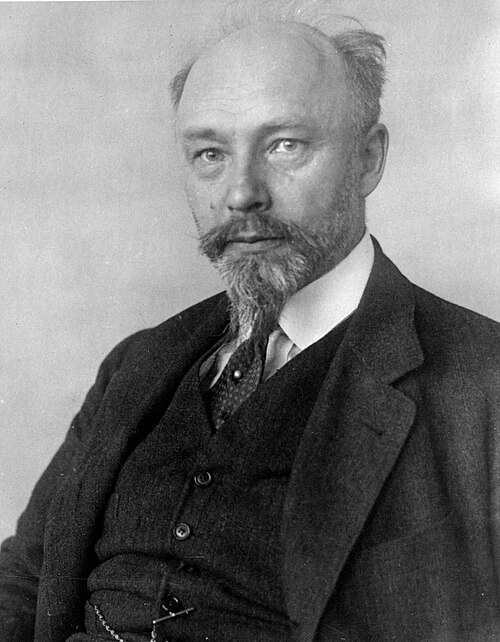
Hermann Alexander Graf von Keyserling was a Baltic German philosopher from the Keyserlingk family. His grandfather, Alexander von Keyserling, was a notable geologist of Imperial Russia. Wikipedia





 FRIENDSHIP is a mirror to presence and a testament to forgiveness. Friendship not only helps us see ourselves through another’s eyes, but can be sustained over the years only with someone who has repeatedly forgiven us for our trespasses as we must find it in ourselves to forgive them in turn. A friend knows our difficulties and shadows and remains in sight, a companion to our vulnerabilities more than our triumphs, when we are under the strange illusion we do not need them. An undercurrent of real friendship is a blessing exactly because its elemental form is rediscovered again and again through understanding and mercy. All friendships of any length are based on a continued, mutual forgiveness. Without tolerance and mercy all friendships die.