
Monthly Archives: March 2026

Vernal Equinox Magic Convening

Friday March 20th
2 pm edt / 11 am pdt
zoom (and recorded)
by contribution
Ladling Liberating Beauty out of the Cauldron of Calamity
(calamity (n.) early 15c., “damage, state of adversity;” 1550s, “a great misfortune or cause of misery,” from Old French calamite (14c.), from Latin calamitatem (nominative calamitas) “damage, loss, failure; disaster, misfortune, adversity,” a word of obscure origin.)
*Cooling out the conflagration
*Rising Aroused in Apocalyptic times
*Revelation – accountability fest…
*Defiant joy, honed by adversity
With
Caroline Casey
&
Amikaeyla Gaston
The word “deliberate” derived from Libra,
and 2 verbs : “librare” – to liberate, and “libare” – to balance….
So to be deliberate is to be in a state of liberating balance.

Quan Yin riding the dragon
So
Let’s deliberately ride this New Moon Tide of Unity – transcending division
Let’s step into the calm at the center of the storm, to gather our wits, make our dedications, partner with what we love, and are, in Nature…
Then
Do not fear the storm – become the storm
Do not fear the chaos, but guide the chaos…
In times of danger – Trickster comes alive in us – and in Nature…
Music and Metaphor be the incarnational garb whereby power enters the world..
Caroline & Ami will honor the available Vernal Green Fire with language and music craft….
And
call in what we need to make it all happen….

To partner with water – Oshun with Ogun, and Mami Watta- to heal the Potomac River, (largest raw sewage catastrophe in American history, right where Caroline lives) and all Rivers, heal the soil, the air, the ancestors …
And always — Oya, whirling her horsetail whip to summon the winds of change.

Oya (Hrana Janto)
“How large a necessary miracle of change would you all like?”
Pretty big….
That our rogue species may have manners again….
Magic is simply a willingness to cooperate with everything
*****************
a great Liberating practice- one small thing…. micro – to waft into macro…
remedy for vitriol and bombast ….
with Blessing….. Wishing Well… by Omid Safi
@brotheromid
Here’s a beautiful gem from a Muslim sage, Nizamuddin Auliya ( (Nizam al-Din Awliya’), the great Sufi from Delhi in India, on how to response those who would wish us evil.
Watch:https://www.youtube.com/shorts/sD6Xsv1mKmo

‘Tis such a worthy aspirational practice….
Keep it going and customize
(and feel free to send such…)
“As for the one who (fill in the blank),
may(fill in the blank)”
And
I am journeying with small group led by Omid to Morocco, for Sufi prayerful pilgrimage…
(April 22nd to early May)
“Bring in the poets and double the madness!”
For me – tis a necessary miracle – Hail Mary – Hail Rumi pass….
So
for all who contribute – whatever windfalls of wherewithal….to make this pilgrimage possible
Will invite to a customized zoom, upon my return – for deep scouting report…
From Casablanca, Marrakesh, Fez and desert
Yes, delighted to contribute to the necessary miracle of Caroline’s journey to Morocco
being ever more Caroline, as she will be syncretizing all gleaned into radio, councils, consulting… !
*****************
And here be last Thursday’s lovely Visionary Activist Show
Reality is a dance
with guest/ally Banafsheh Sayyed
Listen: https://kpfa.org/episode/the-visionary-activist-show-march-12-2026/
*****************
on substack:
The Closure of Hormuz as (Unintentional) Climate Action
Reflecting on Iran’s eco-feminist movement
Max Wilbert
*****************

To protect as much life’s possible….
Sucking the “g” out of “Kingdom”
– leaving the Kindom …….
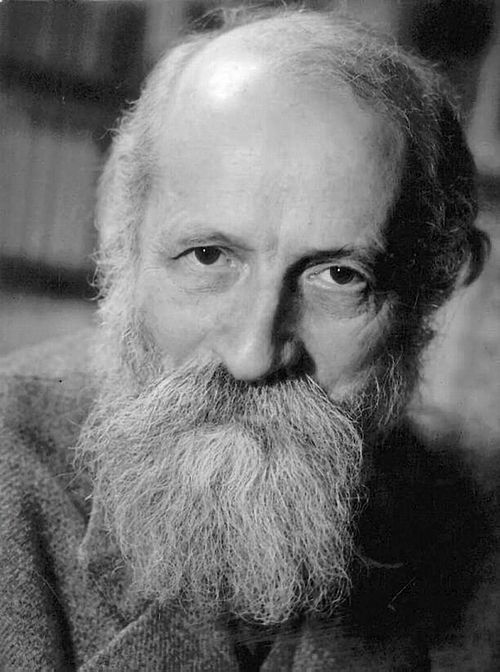
Martin Buber on the I-It relationship
(Image from Wikipedia.org)
“Though the ‘Thou’ is not an ‘It’, it is also not “another ‘I’ “. He who treats a person as “another ‘I’ ” does not really see that person but only a projected image of himself. Such a relation, despite the warmest ‘personal’ feeling is really ‘I’-‘It’.”
~ Martin Buber
Martin Buber was an Austrian-Israeli philosopher best known for his philosophy of dialogue, a form of existentialism centered on the distinction between the I–Thou relationship and the I–It relationship. Wikipedia
Born: February 8, 1878, Vienna, Austria
Died: June 13, 1965
Your Vows to the Future You

Who Could You Be a Year from Now?
| Rob Brezsny Mar 17, 2026 |

Many cultures worldwide have celebrated their New Year as spring begins, around the vernal equinox. I propose we all do that now with a rousing ritual, as described below.
The Sacred Contract with Your Future Self
I invite you to write a letter to the person you will be one year from today. Tell this Future You that you have taken a vow to accomplish three feats by then. Say why these feats are more important to you than anything else.
Describe them. Brainstorm about what you’ll do to make them happen. Draw pictures or make collages that capture your excitement about them. Then create a sanctified space where you will put this letter. Open it a year from now.
+
Why This Works
Let’s talk about why this practice is different from the usual goal-setting that comes every January and often fades by February.
Most goals fail because they’re written to an imaginary version of yourself. You declare you’re going to lose 10 pounds or write a novel or learn Portuguese, but you’re not actually making a promise to anyone real.
You’re performing goal-setting for an audience of cultural expectations. Maybe you post your intentions on social media, announce them at parties, or write them in a journal.
But there’s no actual relationship or real covenant involved. There’s just you, performing the ritual of aspiration without the substance of commitment.
The practice I’m inviting you to do now will work because you’re entering into a relationship with a specific, real person: Future You.
Not the idealized version that’s already perfect and doesn’t need to work at anything. The actual person who will exist one year from today. They will be dealing with the consequences of what Present You does or doesn’t do in the coming months.
When you write to Future You, you’re acknowledging that they are real,. They have needs and hopes, and they’re counting on you. You’re creating accountability not to an abstract standard of self-improvement, but to an actual person who will open this letter and feel either gratitude or disappointment about what you did with this year.
+
How to write this letter so it has optimal power:
Part 1: The Greeting
Start with an intimate welcome and invitation. Example:
“Hello, my beautiful, beloved future self! I love you so much! You’re my hero! Thank you for entering into this daring covenant with me. Let’s collaborate to create the best possible destiny for each other.”
Or:
“To the gorgeous version of me who exists one year from today: I see you. I know you’ve been through things I can’t imagine yet. You have faced challenges and had victories. I made you a promise, and I am asking for your help in fulfilling it.”
The greeting should establish that this is a conversation between two real people who adore each other and are on the same team.
+
Part 2: The Vow
This is where you get serious and invoke the power and glory of your highest powers. Don’t just say “I have three goals.” Say “I am taking a sacred vow.”
A sacred vow is different from a goal. A goal is something you’d like to happen, whereas a vow is something you’re staking your integrity on. A vow has weight and consequences. You could say:
“I am taking a sacred vow to accomplish three feats by the time you read this. These aren’t optional. These aren’t ‘nice to haves.’ They are the three things that will determine whether I spent this past year serving my deepest purpose or betraying it.”
Notice the language: FEATS, not goals. Feats require courage, strenuous effort, and risk. Feats are worthy of being celebrated, even revered. They are the stuff of legends.

Part 3: Why These Three Things Matter More Than Anything Else
This is the heart of the letter. You are boldly and brazenly honest about what actually matters to you, versus what your conditioning and peer pressure try to tell you.
When people fail at their goals, it’s often because they’re pursuing goals that don’t align with their deepest values. They say they want to get in shape, but what they really want is to feel alive in their body.
They say they want to make more money, but what they really want is freedom from financial anxiety. They say they want to write a book or record an album or have an art gallery show, but what they really want is to be taken seriously as a thinker and creator.
So before you name your three feats, I hope you will answer: “What do I want my life to have been about when I look back on this year?” Not what will make you look good. Not what seems responsible or mature or properly ambitious.
When you open this letter one year from now, what will make you feel like you flourished during this precious year of your mysterious life?
Examples of why your feats might matter:
“This feat matters more than anything else because if I don’t do it, I’ll be the same person next year that I am right now, and I can’t bear that. I’ve been stuck in this pattern for five years, and this is the year it ends.”
“This feat matters because my daughter or son is watching how I live my life, and I want them to see someone who keeps promises to themselves, who doesn’t just dream but acts.”
“This feat matters because I’ve been carrying my unrealized potential my whole life like stones in my pocket, and I’m either going to finally actualize it or I need to grieve it and move on. No more middle ground.”
“This feat matters because I survived cancer / divorce / bankruptcy / depression to get here, and I didn’t survive just to play small. I survived to build a more beautiful destiny with this second chance.”
“This feat matters because I’ve glimpsed what I’m capable of at my best, and I want to spend a whole year living closer to that edge. Not fixing what’s broken, but celebrating what’s extraordinary.”
“This feat matters because joy is serious business. This is the year I stop treating pleasure, beauty, and delight as rewards I have to earn and start treating them as the whole point.”
“This feat matters because I’ve been given rare gifts—temperament, circumstances, relationships, hard-won wisdom—and I want to be a worthy steward of them. Not out of obligation, but out of sheer gratitude for being alive.”
“This feat matters because the people and places and ideas I love most are asking something of me, and I finally feel ready to answer. This is my yes.”
“This feat matters because I’ve already done impossible things, and I know now that the fear before a great leap and the exhilaration during it are the same sensation. I want more of that aliveness.”
+
Part 4: Describe Each Feat in Sensory Detail
Don’t just write “Finish my book” or “Create my dream garden” or “Build a stellar intimate relationship.”
Instead, describe what it will feel like when Future You has accomplished your desirable feats:
“You will hold the completed manuscript in your hands. You will feel the weight of it, not just the physical pages but the weight of having actually finished a creation this big. You will remember all the days you chose this instead of easier pleasures and all the moments you pushed through the fear that it wasn’t good enough. And you will know that you’re a soul who finishes what they start.”
Or:
“You will be standing in the garden you planted, harvesting tomatoes in July, and you’ll realize with amazement that you created this. You transformed that dead patch into something alive and beautiful. And you’ll understand that if you can do that, you can do anything.”
The more sensory, specific, and emotionally resonant you make the description, the more power it has to pull you toward it across the year.
+
Part 5: The Brainstorms: Making It Real
Here you shift from vision to strategy. You prove to Future You that you’re serious.
For each feat, brainstorm specifically what you will do to make it happen:
What you’ll do from:
– March-May
– June-July
– August-September
– October-December
+
– Weekly: Protect three mornings per week for nothing but these feats.
– Monthly: Share your progress with trusted allies.
– Daily: Remember why this feels so good and how it amplifies your sense that your life is meaningful.
+
The brainstorms should be specific but also flexible enough to adjust as circumstances change. You’re not striving to control the future. You’re creating conditions that make the future you want more likely.

Part 6: The Visual Component
Words alone may not carry the full freight of your commitment. So draw pictures. Make collages. Create symbols. Visualize the specific scenarios in your imagination.
PS: You don’t have to be an artist. In fact, crude drawings may have more power because they bypass your critical mind and access more primal sources.
+
Part 7: The Closing
End the letter by giving Future You permission to be honest about what happened.
“When you open this letter a year from now, tell the truth. If I kept these vows, celebrate. If I broke them, examine why with compassion but without excuses. Either way, you’re reading this, which means you survived another year, and that’s not nothing. I love you. I’m doing this for you. Everything I do this year, I do with you in mind. See you in 365 days. — Your devoted past self”
+
Creating the Sanctified Space
Don’t just stuff this letter in a drawer. Create a sanctified space for it:
Option 1: The Altar. If you have a personal altar or sacred space in your home, this letter becomes a central element. Place it there along with objects that symbolize your three feats. Light a candle when you place it there. Speak your vows out loud.
Option 2: The Sealed Container. Get a beautiful box, an artful envelope, or a decorated jar. Place it somewhere you’ll see it regularly but can’t casually access.
Option 3: The Buried Treasure. Bury it somewhere on your property in a waterproof container. Mark the spot with a beautiful object. The act of burying it makes it even more ceremonial, and the act of digging it up a year later becomes its own ritual.
Option 4: The Witnessed Vow. Read the letter aloud to someone you trust, then give it to them to hold for a few moments. The presence of a witness makes the vow more binding.
Option 5: The Time Capsule. Create a time capsule that includes the letter, photos from right now, objects that symbolize where you are today, and maybe even recordings of your voice. Make it rich with context so that Future You gets the full picture of who was making these vows.
The key is that the space must feel sacred to you. It should communicate: This is a binding agreement with my future self.
+
The Monthly Check-In Ritual
Don’t wait a year to think about the letter again. Create a monthly ritual where you commune with a copy of the letter without opening its actual container:
On the 21st of each month (or whatever date you wrote it), remember what you wrote. Ask yourself: “Am I keeping my vows? Am I on track? If Future Me opened this today, would they be grateful or disappointed?”
Don’t criticize yourself if you’re off track. Just recommit, adjust, and course-correct.
The letter is a living covenant, not a static document. You’re allowed to renegotiate if circumstances genuinely change. But you’ve got to do it consciously, not by drifting.
+
What Happens When You Open It
One year from now you will perform the ritual of opening this letter. Make it ceremonial. Don’t do it while distracted. Clear your schedule for an hour.
Open the letter. Read what Past You wrote to you. And then write back.
Yes, write a response to Past You. Tell them what happened. Which vows did you keep rigorously, and which did you only partially carry out. Tell the Past You what you learned and what surprised you. What do you want them to know about who you became?
And then—if you want to continue the practice—write a new letter to the person you’ll be on March 21, 2028.

• • • • • • • • • • • • • • • • • • • • • • • • • • • • • • • • • • • • • • • • • • • • • • • • •
Three Types of Feats Worth Vowing
As you choose your three feats, consider that there are different categories of transformative action:
Type 1: The External Achievement. Something you can point to in the world as evidence that you did the thing. A completed manuscript, a degree earned, a house built, a garden planted, a business launched, or a performance given.
Type 2: The Internal Transformation. A shift in how you relate to yourself, to others, to the world. Healing an addiction, developing a spiritual practice, transforming a toxic pattern, learning to receive love, making peace with a difficult part of yourself.
Type 3: The Relational Shift. A change in how you show up in your relationships. Deepening your partnership, healing a family rupture, creating genuine community, or becoming the kind of friend / parent / partner / mentor you want to be.
+
A powerful set of three feats might include one from each of the above categories. That way you’re developing holistically, not just achieving externally while staying stuck internally; not just transforming internally while avoiding external impact; not just focusing on relationships while neglecting your individual growth.
+
The Dark Night Clause
Include this in your letter:
“I know there will be times this year when I want to abandon these vows. There will be moments when they seem impossible, stupid, or irrelevant. I’ll be tempted to tell myself that circumstances changed or that I was naive to think I could do this.
“So I’m writing this now, while I’m clear and committed: Those dark moments are part of the path, not evidence that I should quit. The resistance is the work. The doubt is the initiation.
“When I want to give up, I will remember why these feats matter more than anything else. I will recommit, even if only for one more day.
“This is the vow: not that I’ll never doubt, but that I’ll keep going anyway.”
+
Your Assignment From Past You to Future You
Right now, today, you could:
1. Get materials. Beautiful paper, colored pencils or markers, magazines for collage, a container or envelope that feels charged with magic.
2. Create space. Set aside an hour minimum. Turn off your phone. Light a candle. Put on music that makes you feel deep and rich. Make tea. Settle in.
3. Meditate on the question: What do I want my life to have been about when I look back on this year? Not what should you want, but what do you actually want?
4. Choose your three feats. Don’t overthink it. Your body and your heart know. Choose the three things that make you feel scared and excited in equal measure.
5. Write the letter. Don’t rush it. This is a sacred document.
6. Create the visual component. Draw. Collage. Make it vivid and real.
7. Sanctify the space. Choose how you’ll store this letter and make it ceremonial.
8. Read it aloud. To yourself in the mirror, your spirit allies, or to the universe. Make it real by speaking it.
9. Seal it. Once it’s sealed, it’s done. No changing your mind. It’s a time capsule now.
10. Set a reminder for one year from today, and for monthly check-ins.
And then, live like someone who made a vow. Because you did. And Future You is counting on you. They’re already grateful for what you’re about to do.
Patanjali on a light free from sorrow

A multi-person presidency or a rotating presidency; a multi-person dean or a rotating dean [of The Prosperos]
ChatGPT discusses the idea of a multi-person presidency from the Founding Fathers to the present day below.
This is something The Prosperos needs to consider or at least discuss. If the three-person Executive Council acted, in effect, as dean of the school, then the burden of this job could be equally divided. Another option would be to have a rotating dean on a yearly basis among the three-person Executive Council.–Mike Zonta, BB Editor
ChatGPT:
Several delegates at the Constitutional Convention were open to — or explicitly proposed — a multi-person (plural) executive instead of a single president. They weren’t a unified faction, but they tended to share certain backgrounds and political experiences that made them wary of concentrated power.
Here are the key figures and what shaped their thinking:
Edmund Randolph (Virginia)
Role: Governor of Virginia; introduced the Virginia Plan
Background:
- From a powerful Virginia political family
- Deeply involved in state government after independence
- Worked closely with legislative bodies
Why he favored a plural executive:
- Proposed that the executive be chosen by Congress and possibly consist of more than one person
- Feared a single executive would resemble a monarch
- Trusted collective decision-making over individual authority
George Mason (Virginia)
Role: Influential delegate; author of the Virginia Declaration of Rights
Background:
- Wealthy planter, but also a theorist of republican liberty
- Strong advocate of rights and limits on power
- Suspicious of centralized authority
Why he leaned toward council-type ideas:
- Deep fear of executive tyranny
- Supported adding a council to restrain the executive
- Preferred diffused power rather than a single dominant figure
⚖️ Roger Sherman (Connecticut)
Role: Key compromise-builder (Great Compromise)
Background:
- Self-made man (shoemaker → lawyer → politician)
- Strong believer in legislative supremacy
- Experienced in colonial and state assemblies
View:
- Didn’t strongly push a plural executive, but
- Wanted the executive to be subordinate to Congress, which aligns with distrust of a strong single leader
Elbridge Gerry (Massachusetts)
Role: Delegate who later refused to sign the Constitution
Background:
- Merchant and politician shaped by Revolutionary-era distrust of authority
- Strong opponent of centralized power
Why he supported multiple executives:
- Argued a single executive was the “foetus of monarchy”
- Believed multiple executives would:
- prevent abuse
- reduce corruption
- check ambition
⚔️ George Clinton (New York governor)** (not at the Convention but influential)
Background:
- Anti-Federalist leader
- Military and political figure with strong state-first loyalties
Relevance:
- Represented a broader political current that distrusted centralized executive power
- Would likely have favored shared or weak executive authority
What they had in common
1. Deep fear of monarchy
- All had just fought a war against King George III
- A single executive looked too much like a king
2. State-government experience
- Many came from states where:
- executives were weak
- power was held by legislatures or councils
3. Republican political philosophy
- Believed liberty depends on:
- dividing power
- preventing any one person from dominating
4. Distrust of human nature
- Assumed leaders are prone to ambition and corruption
- A plural executive would force internal checks
⚖️ Why they lost the argument
Delegates like James Madison and Alexander Hamilton pushed back:
- A single executive provides:
- clear accountability (you know who’s responsible)
- decisiveness, especially in crises
- A council could lead to:
- paralysis
- blame-shifting
Bottom line
The advocates of a multi-person executive were:
- Products of the Revolution
- Shaped by fear of concentrated power
- Influenced by state systems that avoided strong governors
They weren’t trying to be radical — they were trying to avoid recreating monarchy in a new form.
A few countries actually do use plural (multi-person) executives today — and they show how the idea the framers debated can work in practice.
Switzerland — the clearest example
Federal Council of Switzerland
- 7-member executive council jointly serves as head of state and government
- Members are elected by the legislature
- Each runs a department (like ministers), but all major decisions are collective
- The presidency rotates yearly — no permanent “leader”
How it works:
- Decisions are made by consensus or majority vote
- Publicly, they present a unified position (even if they disagreed privately)
Why it succeeds:
- Strong political culture of compromise
- Multi-party power-sharing is built into the system
This is the closest modern version of what some framers feared—or hoped for.
Bosnia and Herzegovina — a rotating presidency
Presidency of Bosnia and Herzegovina
- 3 presidents at once:
- one Bosniak
- one Serb
- one Croat
- Chair rotates every 8 months
Purpose:
- Prevent domination by any one ethnic group after the Bosnian War
Challenge:
- Frequent gridlock and division
- Shows the downside of plural executives in deeply divided societies
San Marino — dual heads of state
Captains Regent
- Two co-heads of state serve together
- Terms last only 6 months
Purpose:
- Prevent concentration of power (a very old system, dating back centuries)
Interesting feature:
- Extremely short terms act as a built-in safeguard against abuse
European Union — a partial example
European Commission
- Not a country, but:
- Executive authority is shared among commissioners from different member states
- Led by a president, but power is still collective and negotiated
What these systems show
Advantages of plural executives
- ✅ Prevents concentration of power
- ✅ Forces compromise and negotiation
- ✅ Can represent diverse groups
Disadvantages
- ❌ Slower decision-making
- ❌ Risk of deadlock
- ❌ Harder to assign responsibility (“who’s to blame?”)
⚖️ Back to the U.S. framers
The delegates at the Constitutional Convention ultimately rejected this model because:
- They wanted energy and speed in the executive (especially for war and crises)
- They valued clear accountability
- Figures like Alexander Hamilton argued a single executive would be more effective
Bottom line
Plural executives are not just theoretical — they exist and function today.
- In stable, consensus-driven societies (like Switzerland) → they can work very well
- In divided societies (like Bosnia) → they can become fragile or gridlocked
Trump Is Dismantling US Democracy at a Speed ‘Unprecedented in Modern History’: Watchdog

People participate in a “No Kings” national day of protest in Washington, DC, on October 18, 2025.
(Photo by Amid Farahi/AFP via Getty Images)
“Our data on the USA goes back to 1789. What we’re seeing now is the most severe magnitude of democratic backsliding ever in the country.”
Mar 17, 2026 (CommonDreams.org)
A report released on Tuesday by the V-Dem Institute at the University of Gothenburg in Sweden has found that President Donald Trump and his administration are dismantling democracy in the US at a speed that “is unprecedented in modern history.”
In its report, V-Dem categorizes the first year of Trump’s second term as “a rapid and aggressive concentration of powers in the presidency.”
RECOMMENDED…

‘Batshit Authoritarianism’: Trump Allies Drafting Order to Give Him ‘Extraordinary Power Over Voting’

Call Grows to Impeach Trump, ‘The Most Dangerous Man on the Planet’
In fact, V-Dem says that the Trump administration has accomplished in just one year what most budding autocracies take a decade to achieve, adding that “the speed of decline is comparable to some coups d´état.”
Of particular concern is the failure of the legislative branch of the US government to apply any kind of oversight or check upon the executive branch, the report explains.
“The Republican-controlled Congress seems to have abdicated its constitutional role in favor of the executive branch, ceding significant legislative, fiscal, and oversight powers during 2025,” the report says. “The Trump administration has de facto repeatedly taken over the Congressional ‘power of the purse’—enshrined in the Constitution and in the 1974 Impoundment Control Act—unilaterally cancelling or reallocating federal funding.”
The report also points fingers at the US Senate for repeatedly rolling over and confirming unqualified Trump nominees, which it says is tantamount to letting the White House “sideline” the upper chamber’s authority altogether.
V-Dem goes on to document the administration’s repeated assaults on the judicial branch and the rule of law in general during his second term, starting when Trump issued a mass pardon to more than 1,500 alleged or convicted criminals who stormed the US Capitol on January 6, 2021.
Since then, the administration has waged a pressure campaign against judges who rule against it consisting of “impeachment resolutions and misconduct complaints,” while also using executive orders to punish major law firms simply for representing the president’s political enemies in court.
The lone bright spot in US democracy, says V-Dem, is that the administration has not yet been able to attack states’ powers to administer their own elections, although not for lack of effort.
“Actions taken in 2025 raise concerns regarding the integrity of the 2026 midterms,” the report warns. “This primarily concerns attempts to assert federal control over election processes, which must be decentralized and state-run, according to the Constitution.”
The report notes that Trump has issued an executive order that attempts to override states’ election laws by restricting mail-in voting and mandating voter IDs at polling places nationwide, but adds that “many provisions of this order have been blocked and others are still being challenged in federal court.”
In an interview with The Guardian, V-Dem founder Staffan Lindberg used historical context to explain why Trump’s assault on US democracy is truly without precedent.
“Our data on the USA goes back to 1789,” he said. “What we’re seeing now is the most severe magnitude of democratic backsliding ever in the country.”
He also said that other authoritarian leaders have taken much more time in ripping down their states’ democratic institutions than Trump has.
“For Orbán in Hungary, it took about four years,” Lindberg said, “for Vučić in Serbia, it took eight years, and for Erdoğan in Turkey and Modi in India, it took about 10 years to accomplish the suppression of democratic institutions that Trump has achieved in only one year.”
Our work is licensed under Creative Commons (CC BY-NC-ND 3.0). Feel free to republish and share widely.
Brad Reed is a staff writer for Common Dreams.
988 Suicide and Crisis Lifeline
Are you in a crisis? Call or text 988 or text TALK to 741741
¿Estás en una crisis?Llama o envía un mensaje de texto al 988 o envía un mensaje de texto con AYUDA al 741741









988 Suicide and Crisis Lifeline
The 988 dialing code is available nationwide for call (multiple languages), text or chat (English and Spanish).
On this page
- 988 Suicide and Crisis Lifeline
- About 988 and Crisis Response Services
- 988 and 911
- Supporting 988 Post-Launch Through Federal & State Advocacy
- Key Resources
- Other Helpful Resources
- Available Hotlines
Sign up for email alerts
Receive updates from the American Foundation for Suicide PreventionSubscribe
988 Suicide and Crisis Lifeline
The National Suicide Prevention Lifeline is now the 988 Suicide and Crisis Lifeline (although the previous 1-800-273-TALK (8255) number for the Lifeline will continue to function indefinitely). AFSP has worked with Congressional partners, other non-profit coalition members, and mental health agencies to lead the charge for a 3-digit suicide prevention, mental health, and substance use crisis hotline. From advocating for the Lifeline itself to encouraging budget allocations for the Lifeline’s implementation and maintenance, AFSP has been at the forefront of this movement. AFSP supports increases in federal and state funding for the future 988 crisis response system, including the 988 Suicide and Crisis Lifeline and its network of independently operated state and local crisis centers. Download our issue brief to learn more about AFSP’s policy position and efforts to support the 988 Lifeline and crisis response services.
About 988 and Crisis Response Services
As of July 16, 2022, 988 is the new three-digit dialing code for the National Suicide Prevention Lifeline, now called the 988 Suicide and Crisis Lifeline. Anyone, anywhere in the U.S. can now call, chat, or text 988 and receive resources and supports during a suicide, mental health, or substance use crisis. Connecting a national network of over 180 independently operated state and local crisis call centers, 988 links callers throughout the U.S. to immediate crisis care. Ideally, callers are connected with a local counselor in their own state. However, if the local center is unable to answer, the Lifeline reroutes calls to backup centers in their network, both in- and out-of-state. Currently, the Lifeline provides live crisis center call, text, and chat services in English and Spanish and uses Language Line Solutions to provide caller translation services in over 240 additional languages.
The recent transition from the Lifeline’s 1-800-273-8255 number to the easily memorable 3-digit 988 dialing code represents a monumental opportunity to transform the way we as a country respond to suicide, mental health, and substance use crises. However, insufficient funding and limited capacity to respond to an increasing call volume could hinder the positive impact 988 can have. As the Lifeline’s national and local call centers have geared up for the transition to 988, AFSP has been advocating for increased funding to expand the Lifeline’s capacity, infrastructure, and workforce.
The Substance Abuse and Mental Health Services Administration (SAMHSA) predicted that, in the first year of 988 operations, contacts to the Lifeline would increase more than twofold. This massive increase in demand must be met with adequate resources and supports so that anyone in crisis, regardless of where they are or what time it is, has someone to talk to, someone to respond, and somewhere to go. It is vital that 988 serves as a bridge across the entire crisis care continuum, from call centers to mobile crisis response teams to crisis stabilization facilities, and critical investments will make this possible. While the transition to 988 is just the beginning, and fully realizing a broad, comprehensive crisis response system will likely take years, AFSP has been working hard to urge Congress and state legislatures to take the necessary steps now to sufficiently meet the rising demand for suicide, mental health, and substance use crisis services.
988 and 911
The ultimate goal of 988 is to provide an effective alternative to 911 and law enforcement response to a suicide, mental health, or substance use crisis, so that individuals experiencing a crisis can receive appropriate and supportive assistance during their time of need. Far too often, a mental health call to 911 has resulted in tragedy for those who require a mental health response to their emergency. The 988 and 911 systems will need to be closely coordinated to seamlessly allow referral of callers for appropriate care or response that addresses the unique circumstances present with each crisis encounter. SAMHSA is actively engaged with 911 counterparts at the federal, state, and local levels to plan for smooth coordination between the two services.
Currently, 988 does not have geolocation services, which means that if a person reaches out to the Lifeline by phone, chat, or text, their exact location cannot be tracked or automatically shared with law enforcement. Most calls to the Lifeline result in de-escalation and the dissemination of resources and follow-up services without requiring an in-person response. The Lifeline’s counselors do not need a caller’s location to connect them with relevant mental health resources, unless the caller specifically wants information on local programs and supports. Callers also do not need to disclose any personal information to receive assistance from Lifeline counselors.
988 is intended to provide support and services, with an eye towards person-centered treatment and stabilization through the least invasive intervention possible. While occasionally crisis centers must work with emergency services to ensure the safety of a person who is in immediate danger, the reality is that these instances are rare and only occur when the caller is at the highest level of risk – resulting in fewer than 2% of Lifeline calls requiring in-person emergency response. The Lifeline’s Imminent Risk Policy outlines when call information should be shared with emergency services. In these cases, the connections only occur when rigorous criteria for an active rescue is met – such as an ongoing suicide attempt when the caller’s imminent safety is at risk. When a caller is determined to be at imminent risk, crisis counselors are responsible for connecting with public safety answering points (PSAPs) to provide any available information to assist the PSAP in locating the individual and ensuring their safety. Click here to learn more from Vibrant, the current administrator of the Lifeline.
Going forward, SAMHSA and Vibrant will work with emergency services at the federal, state, and local levels to strengthen the protections for those contacting 988 and to preserve their privacy and ensure their safety.
Supporting 988 Post-Launch Through Federal & State Advocacy
Key Resources
To learn more about the policies that AFSP advocates for in order to sustain and support funding for the 988 Lifeline, please read our one pager here.
To help answer questions from legislators and other decision-makers about 988 legislation and state budget funding, AFSP and Vibrant collaborated on Frequently Asked Questions: 988 & Crisis Response Services
With input from AFSP and several other key partners, NASMHPD’s 988 State Model Bill: Core State Behavioral Health Crisis Services Systems has been updated to address behavioral health equity, health equity, 988/911/law enforcement coordination, financial stability, integration of SAMHSA’s National Guidelines for Youth, Young People, and Families, as well as billing/coding assistance.
NASMHPD summarizes actions states are taking to finance and strengthen their crisis response systems in States’ Options and Choice in Financing 988 and Crisis Services Systems, including specific examples of state legislation.
AFSP is proud to be part of the NAMI-led initiative #ReimagineCrisis Response – the site includes crisis response stories from across the country, details on the main components of an effective crisis response system, and a map of state 988 implementation legislation. The #ReimagineCrisis 988 State Advocacy toolkit includes a 988 State Advocacy Question & Answer, a collaborative effort by AFSP, NAMI, and Vibrant to guide advocates and address other commonly asked questions.
Other Helpful Resources
Consensus Approach and Recommendations for the Creation of a Comprehensive Crisis Response System
Crisis Now: Overview of Crisis Funding Sources Available to State and Localities (2022)
National Association of Counties (NACO): County Funding Opportunities to Support Community Members Experiencing a Behavioral Health Crisis (Funding Chart) (2023)
SAMHSA: 988 Partner Toolkit
SAMHSA: National Guidelines for Behavioral Health Crisis Care: Best Practices Toolkit (2020)
The 988 Formative Research Project: 988 Messaging and Communication Report and Toolkit (2023)
Vibrant 988 Resources
Available Hotlines
988 Suicide and Crisis Lifeline – Phone, text, and chat support available 24/7
Dial 988 (English & Spanish, plus translation services in 240+ more languages)
Text 988 (English & Spanish)
For Veterans (Veterans Crisis Line) – 988 (press 1) or text 838255
En Español – 988 (oprima 2)
For LGBTQ youth and young adults (up to age 25) – 988 (press 3)
Deaf + Hard of Hearing – For TTY Users: Use your preferred relay service or dial 711 then 988
Lifeline Chat — English and Spanish
Crisis Text Line – Text support available 24/7
Text TALK to 741-741
Trevor Lifeline – Phone, chat, and text support for LGBTQ youth
1-866-488-7386 (available 24/7)
Text START to 678-678 (available M-F 3-10pm Eastern/ 12-7pm Pacific)
Trans Lifeline – Phone support for transgender people, by transgender people available 10am-4am Eastern
1-877-565-8860
Connection makes a difference
Sign up for our newsletter
Receive updates from the American Foundation for Suicide PreventionSubscribe
Get Involved
- Find a chapter
- Advocate
- Deliver programs
- Apply for a research grant
- Volunteer with AFSP
- Program calendar
Looking for Help
- Having thoughts of suicide
- After an attempt
- Surviving a suicide loss
- When someone is at risk
- Finding treatment
- Suicide prevention resources
- Supporting diverse communities
Learn about AFSP
- About AFSP
- Careers
- Safe Storytelling Studio
- Research grants
- Policy priorities
- Our impact
- Partners
- Branding
- Store
- Privacy
- Contact AFSP
Ways to Give
- Out of the Darkness Walks
- Giving societies
- Chapter fundraising events
- Matching gifts
- Corporate giving
- Planned giving
- Memorial funds
- Memorial gifts
- Streaming for AFSP
- Social media fundraising
- DIY Fundraising
© 2026 American Foundation for Suicide Prevention. All rights reserved.
Are you in a crisis? Call or text 988 or text TALK to 741741
(Contributed by Robert McEwen, H.W., M.)
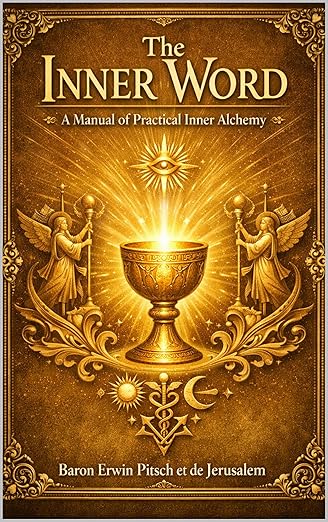
Book: “The Inner Word: A Manual of Practical Inner Alchemy”
The author

The Inner Word: A Manual for Practical Inner Alchemy Kindle Edition
by Erwin Pitsch (Author) Format: Kindle Edition
This book is essential for practitioners of Franz Bardon as well as for any serious student on the mystical path. It provides the missing meditative foundation that clarifies and completes technical hermetic training. By grounding esoteric practice in deep collectedness, ethical discipline, and the systematic development of absorption, it prevents common errors that arise from relying solely on willpower or visualization. For those who seek not only knowledge but genuine transformation, this work offers a necessary framework for integrating occult study with authentic inner realization.
This book presents a structured and uncompromising examination of inner alchemy, meditative absorption, and the relationship between hermetic practice and liberation. It brings together disciplines that have rarely been integrated with clarity: the four jhanas and four formless attainments of early Buddhism, the philosophical precision of the Yoga Sutras of Patanjali, and the letter mysticism of Western hermetic traditions. The result is a coherent framework that challenges common assumptions about occult development and spiritual progress.
The work proceeds from a simple but demanding premise. Extraordinary abilities are not cultivated through force, ritual complexity, or elaborate visualization. They arise as secondary consequences of purification and collectedness. When the mind is stabilized through deep absorption and freed from craving, perception transforms naturally. What many systems attempt to achieve through technique emerges spontaneously from inner clarity.
Unlike many modern presentations of esoteric practice, this book does not emphasize manifestation, power acquisition, or symbolic theatrics. It addresses the structural transformation of the nervous system and the refinement of consciousness. It examines where classical Western methods are effective and where they are incomplete. It situates hermetic letter practice within the broader context of meditative discipline and ethical restraint.
Readers will find detailed reflections on the role of the jhanas, the arupa states, the Brahmaviharas, and the Eightfold Path as foundations for authentic development. The text also offers careful guidance regarding the limits of visualization, the dangers of spiritual materialism, and the importance of daily life discipline. It speaks directly to practitioners who seek liberation rather than spectacle.
In many respects, this synthesis may appear premature. The integration of rigorous meditative absorption with Western esoteric language has not previously been articulated in this form. Certain aspects of the material have traditionally been reserved for advanced students. Yet the need for clarity in an era of confusion makes such articulation necessary.
This is not a book for casual curiosity. It is written for serious practitioners willing to simplify their lives, cultivate restraint, and undertake long term discipline. Its tone is direct, its conclusions sometimes challenging, and its orientation consistently toward freedom rather than fascination.
For those prepared to approach inner work with sobriety and depth, this book offers a precise and methodical path.
(Amazon.com)
A Magical Pisces New Moon: Inspiring Dreams, Purposeful Expansion
Jupiter, new moon Mar 16, 2026 (radiantastrology.com)

Pisces New Moon
28 degrees Pisces
March 18, 2026
6:23 PM PDT | 9:23 PM EDT
The New Moon in Pisces arrives on March 18 at 28 degrees Pisces, near the final degree of the zodiac, and with it comes a profound invitation: to release what has been, and to dream of a new future filled with expanded purpose and self-belief.
Pisces is a sign of mystery, magic and the divine. Archetypally it is associated with the mystic, the dreamer, transformation and dissolution.
Dreams become vivid and imagination becomes epic. When we enter Pisces energy, we are called inward — into the dream space, the sacred quiet where intuition speaks most clearly and we’re transformed by the numinous.
A New Moon is an opportunity to set intentions for the month ahead, and as this one is ruled by Jupiter, it offers expansion, hope and glorious opportunity for the long-term future.
After the Storm: Eclipse Season Closes
Eclipse season has a way of accelerating destiny — rearranging the furniture of our lives in ways we didn’t always ask for. Eclipses shake loose what no longer belongs, reveal what was hidden. They are cosmic surgery — necessary, but rarely gentle.
That season is now behind us.
This New Moon is a true reset — a cleansing breath after the storm. At 28 degrees, just two degrees from the final moment of the zodiac, we stand at the end of one great cycle and the edge of another. This is a liminal space. Sacred and ripe with possibility.
Uranus in Taurus: Liberating Boost
If you have been feeling stuck, stagnant, or quietly complacent — this New Moon can shake things loose.
The lunation forms a sextile to Uranus at 28° Taurus, and this is an activating, liberating influence. Uranus is the great awakener — the planet of breakthroughs, sudden shifts, and inspired disruption. A sextile is an aspect of opportunity: it doesn’t force change upon you, but it opens a door and offers you a gentle but unmistakable nudge to walk through it.
In earthy Taurus, Uranus has been slowly revolutionizing our relationship to stability, resources, and what we truly value. At this New Moon, it sends a current of electric possibility into the Piscean dreamscape — bridging vision with tangible movement. What has felt immovable may suddenly loosen. What has felt too risky may suddenly feel worth the leap. This is the cosmos offering you a way out of the holding pattern — not through force, but through inspired, courageous action taken at exactly the right moment.
Mars in Pisces: Motivated by the Soul
Mars is currently transiting Pisces, adding meaningful depth to this lunation. In most signs, Mars moves with clarity and force. In Pisces, the warrior learns to feel his way forward — action becomes intuitive, motivation flows from spiritual purpose rather than ambition alone. Mars in Pisces asks: What is worth sacrificing my ego? Who needs defending? What higher purpose is worth fighting for?
This placement invites us to pursue our dreams from a place of deep inner calling rather than ego or urgency. At this New Moon, Mars infuses your intentions with quiet but powerful devotion. When you act from the soul, you act with a force that no obstacle can easily extinguish.
Jupiter’s Blessing: Abundance, Belonging, and New Horizons
This New Moon is blessed by its ruler, and Jupiter’s presence is nothing short of luminous. Exalted in Cancer, Jupiter pours forth abundance in its most nourishing form — a sense of being held, supported, and cared for. The warmth of coming home to yourself.
Jupiter recently stationed direct after a retrograde that began last November — a period when many of us experienced dimmed confidence, plans on hold, hope that flickered rather than blazed. That pause is now over. Jupiter moves forward again, forming a powerful current of encouragement with this New Moon: believe in yourself again, reclaim the dreams you set aside, say yes to the larger life that has been quietly waiting.
Mars in Pisces and Jupiter in Cancer form a beautiful harmony here — both water signs, both oriented toward depth and soul-led living. Mars provides the devotional courage to begin; Jupiter provides the faith to keep going.
The Sabian Symbol: Light Through the Prism
The Sabian Symbol for 28° Pisces: “Light Breaking Into Many Colors As It Passes Through A Prism.”
A single beam of white light passes through a prism — and the full spectrum is revealed. Nothing was added. The colors were always there.
This symbol speaks to revelation and wholeness. What you carry within you is multifaceted, prismatic, radiant in ways you may not yet fully see. At this New Moon, allow the light of this moment to illuminate your inner spectrum.
Mercury Stations Direct: Messages and Destiny
On March 20th, Mercury stations direct conjunct the North Node at 8° Pisces — and this is significant. The North Node is our collective point of destiny, and when Mercury aligns with it as it turns direct, significant information is on its way. Conversations delayed, revelations obscured, clarity withheld during the retrograde — these now begin to surface. With Mars also in Pisces amplifying the charge, you may feel moved to act on what you hear or realize. Trust that impulse. When destiny speaks, it is worth answering.
The Aries Equinox: The Astrological New Year
March 20th is also the Spring Equinox and the Aries Ingress — the beginning of the astrological new year. The Sun moves into bold, fiery Aries and the zodiacal wheel begins again. Where Pisces asked us to dream, Aries asks us to begin. The devotional, soul-led energy cultivated by Mars in Pisces doesn’t vanish — it becomes the fuel that fires the season ahead, giving your new beginnings real meaning and staying power.
Dream it. Meditate on the message. Then set it into motion.
Working With This Cycle
- Release the eclipse season residue. Rest, journal, move your body, spend time in nature. Let what was stirred settle before planting new seeds.
- Explore the images in your dreams. Dreams are intended to alert you to important messages and help guide your path through coded symbols. What are they telling you now?
- Revive stalled project in your Pisces-ruled house. With Jupiter direct, something set aside since November may now be ready to breathe again.
- Set intentions for the astrological new year. What are of life is your soul calling for expansion this year?
The threshold is open. Step through it with reverence, devotion, and hope.
(Courtesy of John Atwater, H.W.)