
New Thinking Allowed with Jeffrey Mishlove Mar 19, 2026 James Tunney, LLM, is an Irish barrister and author of The Mystery of the Trapped Light: Mystical Thoughts in the Dark Age of Scientism plus The Mystical Accord: Sutras to Suit Our Times, Lines for Spiritual Evolution; also TechBondAge: Slavery of the Human Spirit, Human Entrance to Transhumanism: Machine Merger and the End of Humanity, and AI-Govnerveance: Care and Possession in Dustopia. His most recent book is Trotsky vs Jesus: Battle of the AI-Millennium. His website is https://www.jamestunney.com/ James explores the concept of theological anthropology — the understanding of human nature derived from beliefs about God — and its implications for Christianity and the modern world. He discusses the significance of the incarnation of Jesus Christ, arguing that it affirms the dignity of the human body and offers a spiritual framework for understanding suffering, morality, and human purpose. Tunney also examines contemporary challenges such as transhumanism, artificial intelligence, and secularization, suggesting that traditional theological perspectives may provide insight into humanity’s future. 00:00:00 Introduction 00:01:47 Defining theological anthropology 00:07:36 Humanity created in the image of God 00:15:36 The incarnation and the dignity of the human body 00:20:38 AI, transhumanism, and the future challenge to humanity 00:28:30 The civilizational significance of the event of Golgotha 00:35:00 Reason, theology, and moral philosophy 00:44:15 Secularization and the historical struggle over religion 00:58:38 Spiritual awakening, virtue, and the social role of religion 01:19:40 Conclusion New Thinking Allowed host, Jeffrey Mishlove, PhD, is author of The Roots of Consciousness, Psi Development Systems, and The PK Man. Between 1986 and 2002 he hosted and co-produced the original Thinking Allowed public television series. He is the recipient of the only doctoral diploma in “parapsychology” ever awarded by an accredited university (University of California, Berkeley, 1980). He is also the Grand Prize winner of the 2021 Bigelow Institute essay competition regarding the best evidence for survival of human consciousness after permanent bodily death. He is Co-Director of Parapsychology Education at the California Institute for Human Science. (Recorded on Thursday, March 5, 2026)
Monthly Archives: March 2026
János “Hans” Selye on acting the role of someone we are not
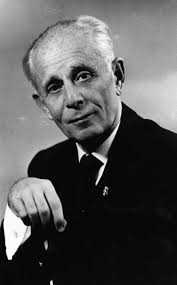
“Most of our tensions and frustrations stem from compulsive needs to act the role of someone we are not.”
—János “Hans” Selye, M.D., The Stress of Life
János Hugo Bruno “Hans” Selye CC was a Hungarian-Canadian endocrinologist who conducted important scientific work on the hypothetical non-specific response of an organism to stressors. Although he did not recognize all of the many aspects of glucocorticoids, Selye was aware of their role in the stress response. Wikipedia
BornJanuary 26, 1907, Vienna, Austria
DiedOctober 16, 1982 (age 75 years), Montreal, Canada
Kierkegaard on finding God’s purpose for you
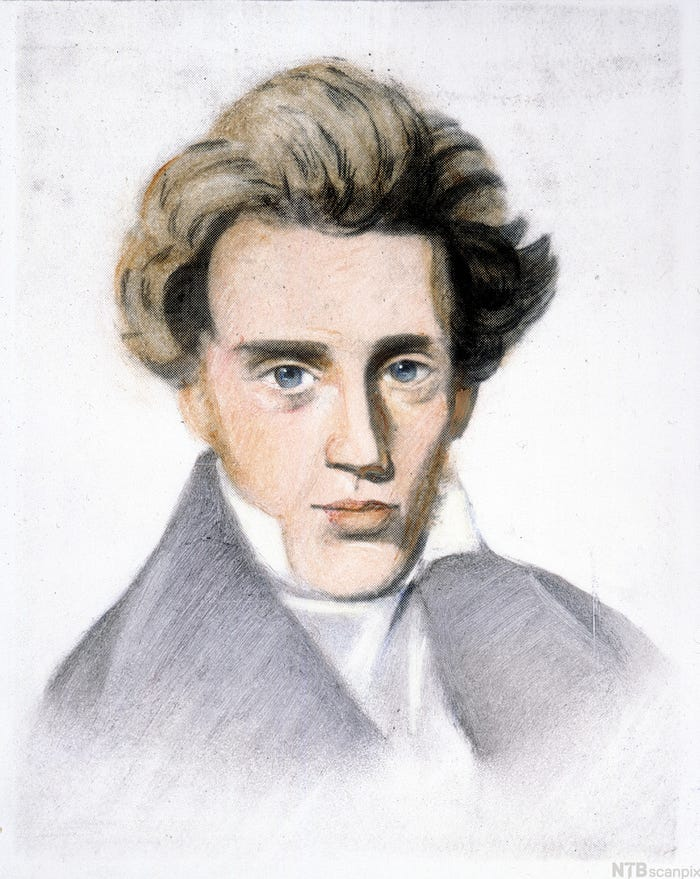
“What matters is to find a purpose, to see what it really is that God wills that I shall do; the crucial thing is to find a truth which is truth for me, to find the idea for which I am willing to live and die.”
~ Kierkegaard
Søren Aabye Kierkegaard was a Danish philosopher, theologian, and writer who is widely considered the father of existentialism. His prolific writing career, spanning 1843–1850, explored themes of faith, existence, and truth. Kierkegaard’s work crossed the boundaries of philosophy, theology, psychology, and literature, and his ideas have had a lasting impact on these fields. Wikipedia.org
Born May 5, 1813, Copenhagen, Denmark
Died November 11, 1855 (age 42 years), Copenhagen, Denmark
‘Trump is aiming for dictatorship’. That’s the verdict of the world’s most credible democracy watchdog

on Mar 18, 2026 02:35 am
Martin Gelin, Repporter Swedish Newspaper Dagens Nyheter – The Guardian (U.K.)
Stephan: The Varieties of Democracy (V-Dem) Institute at Gothenburg University is historically the most accurate geopolitical assessor in the world. I have been telling you for five years now that democracy is declining around the world (see SR archive) and that the United States is one of the countries in which that is happening. One of the worst. The V-Dem Institute now confirms my assessment. I have also told you that this is happening because of the growing precognitive awareness of the coming 2040 catastrophe, which has created an almost universal, if unacknowledged anxiety and fear. (See the SR website for two papers I have published about this future.) I must confess, however, that I did not foresee how quickly American democracy would end, or how many Americans would think that was okay.

A portrait of US president Donald Trump is seen through the snow in Washington, DC, 2 March 2026.
Credit: Andrew Caballero-Reynolds / AFP / Getty
Sweden’s V-Dem Institute warns that the US is no longer a liberal democracy. And autocracy is creeping across Europe too.
The US is no longer a democracy. One of the most credible global sources on the health of democratic nations now says this outright. The Varieties of Democracy (V-Dem) Institute at Gothenburg University reaches the alarming conclusion in its annual report, that the US is hurtling towards autocracy at a faster rate than Hungary and Turkey.
“Our data on the USA goes back to 1789. What we’re seeing now is the most severe magnitude of democratic backsliding ever in the country,” says Staffan Lindberg, founder of the institute.
Since 2012, Lindberg has led his small group of researchers in Sweden to become the world’s leading source for analysis of the health of global democracy. In their latest report, published on Tuesday, they conclude that the US, for the first time in more than […]
Beyond Artemis 2: NASA pursuing a ‘more achievable’ path back to the moon
By Sharmila Kuthunur published yesterday (Space.com)
“The most exciting point is we’re getting back to it — we’re getting back to contemplating what human exploration of the moon could look like.”
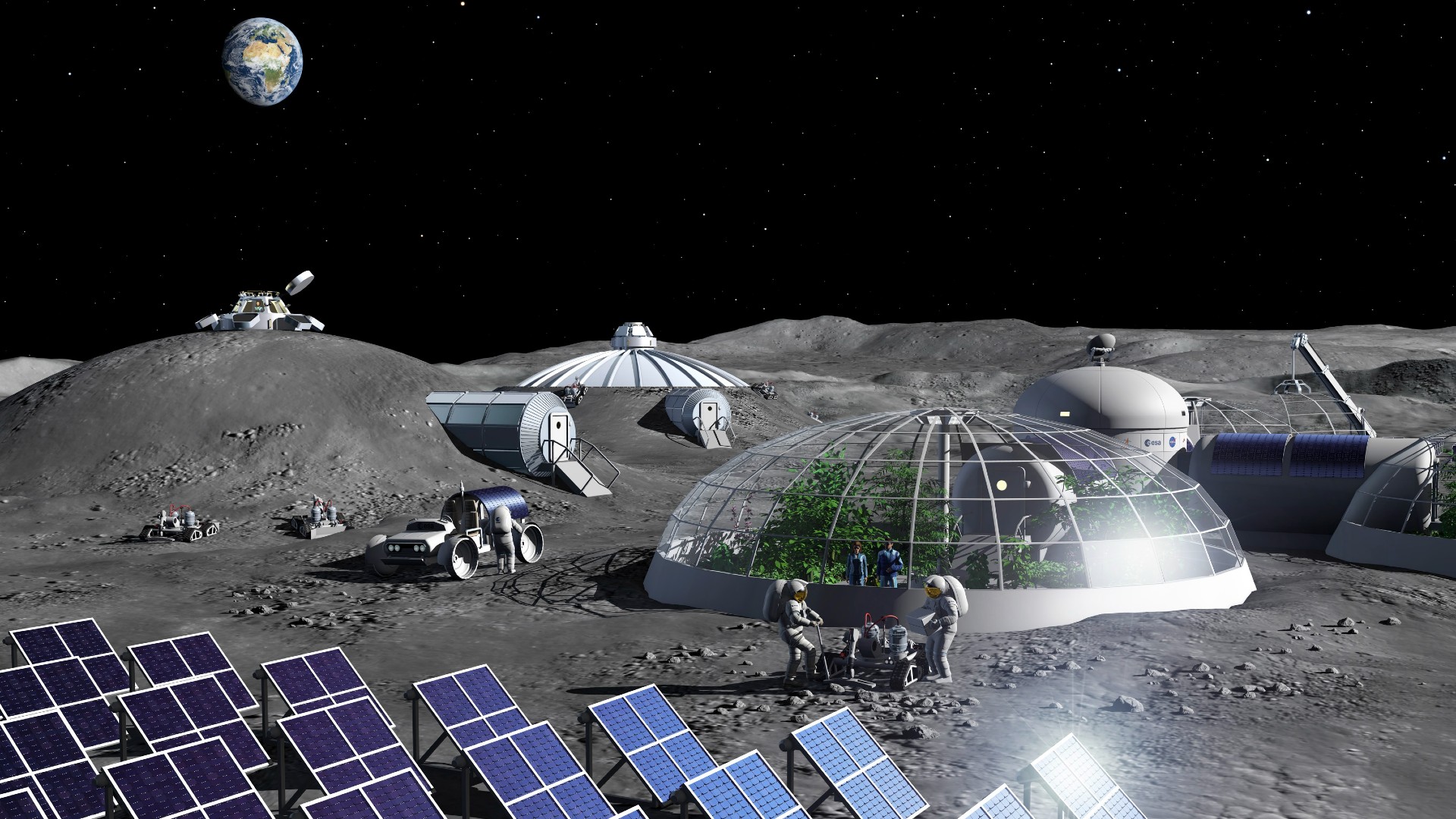
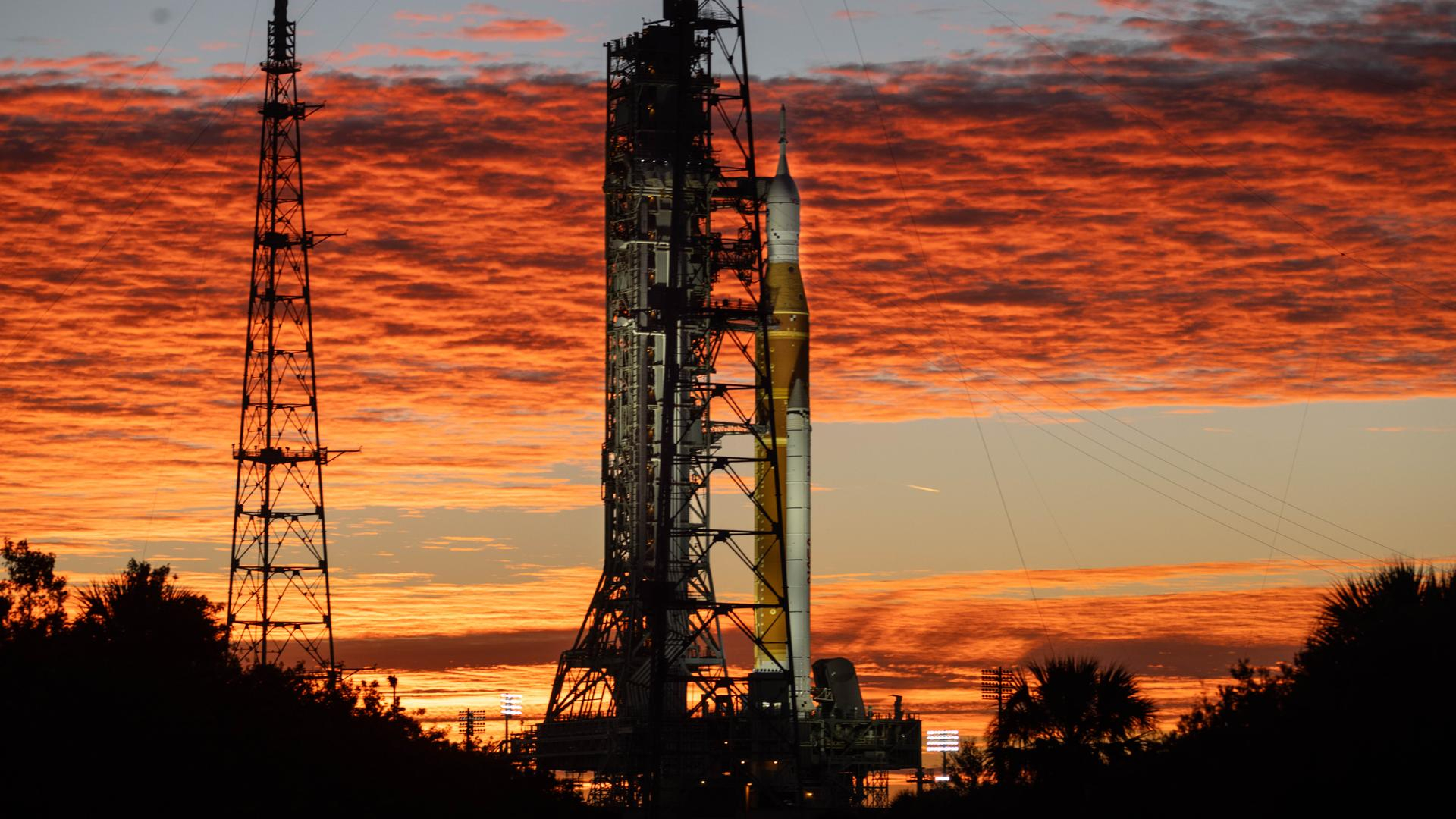
As NASA prepares to send astronauts to the moon for the first time in more than half a century, the agency is revising its long-term plans for Earth’s natural satellite.
Speaking at the Lunar and Planetary Science Conference on Monday (March 16), NASA Associate Administrator Amit Kshatriya said that Artemis 2 remains on track for an April 1 launch. If successful, the mission will send astronauts farther from Earth than humans have ever traveled before, surpassing the distance record set by Apollo 13 in 1970.
“The most exciting point is, we’re getting back to it,” Kshatriya said. “We’re getting back to contemplating what human exploration of the moon could look like.”Article continues below You may like
- NASA may be 1 month away from historic Artemis 2 astronaut launch around the moon
- ‘This is really getting real.’ NASA’s Artemis 2 moon rocket fueling test went so well, astronauts could launch March 6
- 2026 is the year humanity will finally go back to the moon
Click here for more Space.com videos…
The roughly 10-day mission will carry commander Reid Wiseman, pilot Victor Glover, and mission specialists Christina Koch and Jeremy Hansen on a trajectory around the far side of the moon. At closest approach, the moon will appear to them about the size of a basketball held at arm’s length. From that vantage point, the astronauts will document various surface features, including regions scientists believe have never been seen by humans.
“We tell the crew that their verbal descriptions are actually going to be the monumental scientific data set from this mission,” said Ariel Deutsch, a planetary scientist at NASA’s Ames Research Center in California and a member of the science team helping plan Artemis 2 observations. “As humans, the crew provides critical perceptual context that just can’t be replicated with robotic sensors.”
The Artemis 2 crew may spend up to six hours conducting observations, using handheld Nikon cameras, recording verbal descriptions, and making sketches and annotations on tablets. While many lunar targets are large or otherwise easy to identify, scientists are particularly interested in subtle variations in color, lighting and terrain — features human perception can capture in ways that instruments alone may miss, Deutsch said.
Click here for more Space.com videos…
To guide the effort, NASA has developed an interactive lunar atlas to help the crew track priority targets based on lighting and viewing conditions during the flyby. The final observation plan will be uploaded after launch, once the spacecraft’s precise trajectory is confirmed, said Deutsch.
Get the Space.com Newsletter
Breaking space news, the latest updates on rocket launches, skywatching events and more!By signing up, you agree to our Terms of services and acknowledge that you have read our Privacy Notice. You also agree to receive marketing emails from us that may include promotions from our trusted partners and sponsors, which you can unsubscribe from at any time.
Preparation for Artemis 2 has included three years of training rooted in Apollo-era techniques, particularly field geology, along with an intensive “lunar fundamentals” course designed to build the vocabulary and observational skills needed to describe the moon from orbit, said Cindy Evans of NASA’s Johnson Space Center in Houston, who led the geology training program for the crew.
“We practiced a lot their visual observations and their descriptions,” Evans said, “so that they would feel confident in being able to talk about the moon and knowing that they were talking about critical features that are important to lunar scientists back on the Earth.”
A more flexible path back to the moon
Artemis 2 was, until recently, billed as the precursor to a crewed lunar landing in 2028. But in late February, NASA Administrator Jared Isaacman said that milestone will shift from Artemis 3, as originally planned, to Artemis 4, which is now positioned to become the first crewed moon landing since the Apollo era.What to read next
- NASA is overhauling its Artemis program. What does that mean for humanity’s return to the moon?
- NASA’s Artemis 3 astronauts won’t land on the moon after all. ‘This is just not the right pathway forward.’
- NASA chief flies over Artemis 2 moon rocket | Space photo of the day for Feb. 5, 2025
The ultimate destination remains the lunar south pole, a region believed to harbor water ice — a crucial resource for future human exploration — in permanently shadowed craters. But the terrain there is far more challenging than the relatively smooth equatorial sites visited during Apollo, with steep slopes, rugged mountains and extreme lighting conditions.
“The whole point is to get down to the south pole,” Kshatriya said. “I think we agree, still, hopefully, that that’s the right place to go. We are going to keep our sights there.”
To make that goal “more achievable,” NASA is opening up the performance specifications for early Artemis landing missions “in as many ways as we can,” Kshatriya said. The changes allow greater flexibility in spacecraft orbits and mission design, accounting for capabilities and limitations of current systems while giving industry partners more freedom to propose faster paths forward, he said.
“But we’re not yet giving up on the south pole, and I don’t think we will, because I think that’s a place we need to go,” Kshatriya said. “We need to challenge ourselves, and we need to go to some place that we’ve never been.”
The revised strategy places increased emphasis on robotic precursor missions to lay the groundwork for a sustained human presence. NASA envisions a steady cadence of robotic landings near the south pole — potentially as often as monthly — beginning as early as 2027, to gather data on temperature extremes, soil properties and communications challenges.
The data will help reduce risk for future crews and “actually give ourselves a credible shot at aggregating a lunar base in the right spot,” Kshatriya said.
“We’re not just going to plop down a magical bubble dome that everybody lives in and has plants and amazing things,” he said. “We know that that’s not credible.”
The strategy shift comes amid delays to SpaceX’s massive Starship rocket, whose upper stage NASA tapped to be the Artemis program’s first crewed moon lander. Under the original architecture, Artemis 3 depended on the completion of several complex milestones that Starship has yet to demonstrate. These include large-scale transfer and storage of super-cooled propellant in space, as well as a dozen or so refueling flights in Earth orbit before the vehicle can head to the moon.
Click here for more Space.com videos…
NASA has also selected the Blue Moon lander from Blue Origin, which has paused its suborbital space tourism efforts for at least two years to accelerate development of its lunar lander. NASA plans to test the rendezvous and docking capabilities of Orion alongside Starship and/or Blue Moon in Earth orbit during Artemis 3, which is now targeted to launch in 2027
NASA hopes the revised plan will keep it on track for a lunar landing in 2028, while also positioning the agency to return astronauts to the moon before China — and before the end of the current U.S. presidential term in January 2029.
Kshatriya said meeting that timeline will require what he described as “a sea change” in how NASA works with industry.
“It’s going to take NASA folks rolling up their sleeves and getting side by side with industry to finish some of these things,” he said, “which I think a lot of us want to do anyway, but that’s what it’s going to take.”
“It’s ambitious, but I think we can do it.”
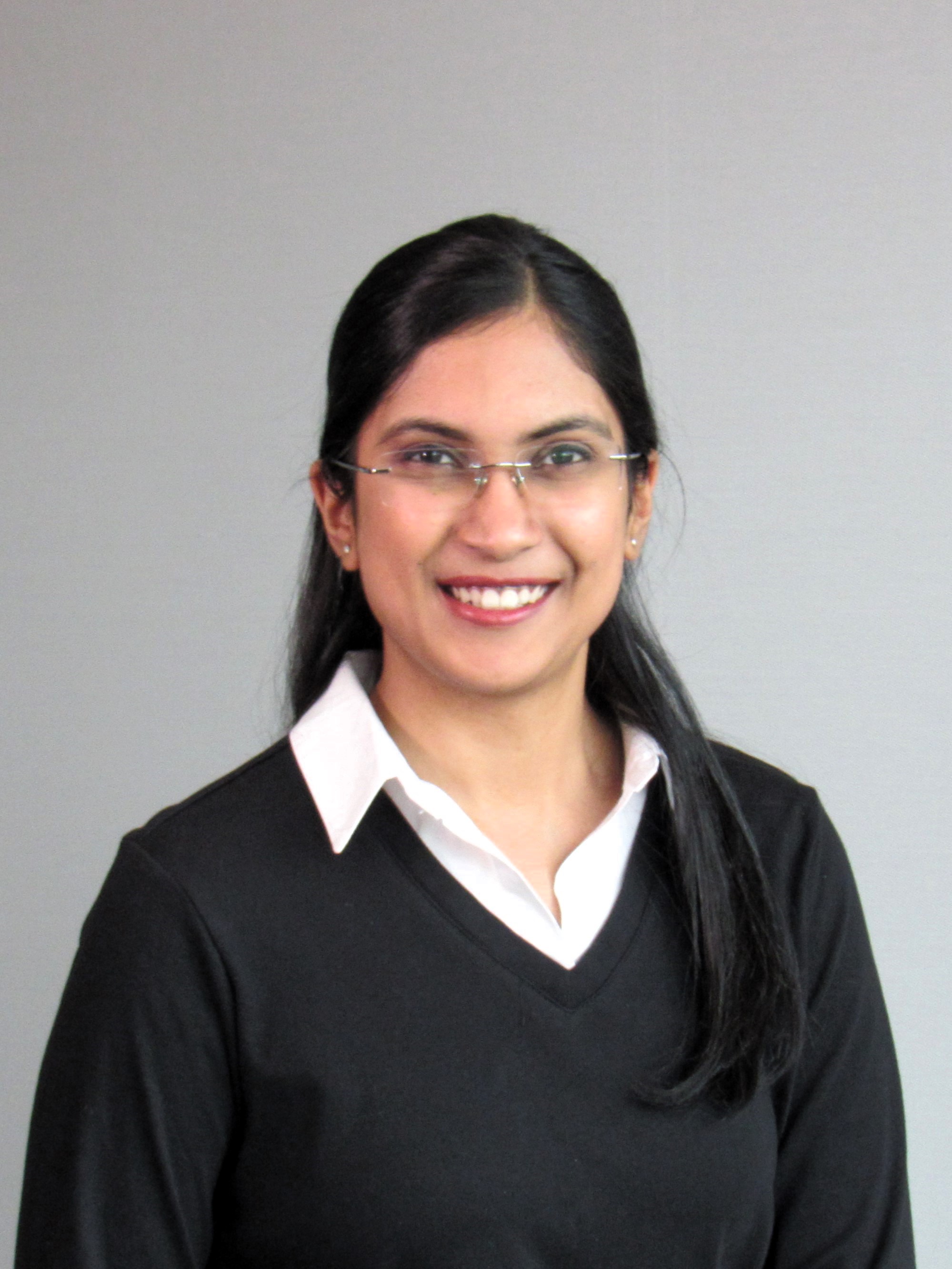
Contributing Writer
Sharmila Kuthunur is an independent space journalist based in Bengaluru, India. Her work has also appeared in Scientific American, Science, Astronomy and Live Science, among other publications. She holds a master’s degree in journalism from Northeastern University in Boston.
Free Will Astrology: Week of March 19, 2026
by Rob Brezsny | March 17, 2026 (NewCity.com)

ARIES (March 21-April 19): In 1960, Aries primatologist Jane Goodall arrived in Tanzania to study the social and family lives of chimpanzees. Her intention was to engage in patient, long-term observation. In subsequent months, she saw the creatures using tools, a skill that scientists had previously believed only humans could do. She also found that “it isn’t only human beings who have personality, who are capable of rational thought and emotions like joy and sorrow.” Her discoveries revolutionized our understanding of animal intelligence. I recommend her approach to you in the coming weeks, Aries. Your diligent, tenacious attention can supplant outmoded assumptions. Let the details and rhythms of what you’re studying reveal their deeper truths. Your affectionate watchfulness will change the story.
TAURUS (April 20-May 20): Ancient Romans had a household deity called Cardea, goddess of hinges and thresholds. She protected the pivot points, like the places where the inside meets the outside and where one state transforms into another. In the coming weeks, you Tauruses will benefit from befriending a similar deity. I hope you will pay eager attention to the metaphorical hinges in your world: the thresholds, portals, transitions and in-between times. They may sometimes feel awkward because they lack the certainty you crave. But I guarantee that they are where the best magic congregates.
GEMINI (May 21-June 20): You are fluent in the art of fruitful contradiction. While others pursue one-dimensional consistency, you thrive on the fact that the truth is too wild and multifaceted to be captured in a single, simple story. You make spirited use of paradox and enjoy being enchanted by riddles. You can be both serious and playful, committed and curious, strong and receptive. In the coming weeks, Gemini, I hope you will express these superpowers to the max. The world doesn’t need another person who separates everything into neat little categories. Your nimble intelligence and charming multiplicity are the gifts your allies need most.
CANCER (June 21-July 22): In traditional Japanese aesthetics, wabi-sabi celebrates imperfection, impermanence and the soulfulness that comes with age. A weathered wooden gate may be considered more beautiful than a new one. Its surface has a silvery grain from years of exposure to rain and sun. Its hinges creak from long use by countless passersby. Let’s invoke this lovely concept as we ruminate on your life, Cancerian. In my astrological estimation, it’s important that in the coming months you don’t treat your incompleteness as a deficit requiring correction. Consider the possibility that your supposed blemishes may be among your most interesting features. The idiosyncratic aspects of your character are precisely what make you a source of vitality.
LEO (July 23-Aug. 22): In medieval Japan, swordsmiths would undertake spiritual purifications before beginning work on a new blade: abstinence, ritual bathing, prayer and fasting. They believed that the quality of their consciousness influenced the quality of their creation—that the blade would absorb the maker’s mental and spiritual state. I bring this to your attention because you’re in a phase when your inner condition will have extra potent effects on everything you build, develop or initiate. My advice: Prepare yourself with impeccable care before launching new projects. Purify your motivations. Clarify your vision. The creations you will be generating could serve you well for a long time.
VIRGO (Aug. 23-Sept. 22): Master chess players don’t necessarily calculate more moves ahead than amateurs. Their years of study enable them to perceive the developing trends in a single glance, bypassing complex analysis. What appears to be stellar intuition is actually compressed expertise. You’re in a phase when you can make abundant use of this capacity, Virgo. Again and again, your accumulated experience will crystallize into immediate knowing. So don’t second-guess your first assessments, OK? Trust the pattern recognition that you have cultivated through the years.
LIBRA (Sept. 23-Oct. 22): The cosmic powers have granted you a triple-strength, extra-long, time-release dose of sweet, fresh certainty. During the grace period that’s beginning, you will be less tempted to indulge in doubt and indecision. A fountain of resolve will rise up in you whenever you need it. Though at first the lucid serenity you feel may seem odd, you could grow accustomed to it—so much so that you could permanently lose up to twenty percent of your chronic tendency to vacillate.
SCORPIO (Oct. 23-Nov. 21): Crows can hold grudges against individual humans for years. But they also remember acts of kindness and bring gifts like shiny objects and buttons to those who’ve helped them. They’re capable of both revenge and gratitude, and they never forget either. I suspect you’re entering a period when you’ll need to decide which of your crow-like qualities to emphasize, Scorpio. You have legitimate grievances worth remembering. You have also received gifts worth honoring. My counsel: Spend twenty percent of your emotional energy on remembering wrongs (enough to protect yourself) and eighty percent on remembering what has helped you thrive. Make gratitude your primary teacher, even as you stay wisely wary.
SAGITTARIUS (Nov. 22-Dec. 21): More than any other zodiac sign, you Sagittarians can be both a discontented rebel and a sunny celebrant of life. You can see clearly what’s out of alignment and needs adjustment without surrendering your wry, amused tolerance. This double capacity will be especially useful to you in the coming days. You may not find many allies who share this aptitude, though, so you should lean on your own instincts and heed the following suggestions: Be joyfully defiant. Be a generous agitator and an open-hearted critic. Blessings will find their way to you as you subvert the stale status quo with creativity and kindness.
CAPRICORN (Dec. 22-Jan. 19): Your persistence and endurance are among your greatest gifts to the world. You’re committed to building useful structures that outlast transitory moods and trends. On behalf of all the other signs, I say THANK YOU!, dear Capricorn. You understand that real power comes from showing up consistently and doing unglamorous work, refraining from the temptation to score quick and superficial victories. May you always recognize that your pragmatism is a form of loving faith. Your cautionary care is rooted in generosity. Now here’s my plea: More than ever before, the rest of us need you to express these talents with full vigor.
AQUARIUS (Jan. 20-Feb. 18): One of your power symbols right now is the place where two tributaries blend into a single river. A second is where your favorite tree enters the earth. Here are other images to excite your imagination and stimulate your creativity: the boundary between cloud and sky; the darkness where your friend’s shadow overlaps yours; and the time between when the sun sets and night falls. To sum up, Aquarius, I hope you will access extra inspiration in liminal areas. Seek the vibrant revelations that arise where one mystery coalesces with another.
PISCES (Feb. 19-March 20): Poet Mark Doty wrote, “The sea doesn’t reward those who are too anxious, too greedy, or too impatient. We should lie as empty, open, and choiceless as a beach—waiting for gifts from the sea.” This quote captures your Piscean genius when it’s working at its best. Others may exhaust themselves trying to force results, but you know that the best gifts often come to those who are patient, open and relaxed. This is true right now more than ever before. I hope you will practice intense receptivity. Protect your permeability like the superpower it is. Be as supple and responsive as you dare.
Homework: What message will you send the person you’ll be in three years? Newsletter.FreeWillAstrology.com
God Angry After New Construction Blocks View Of Creation

Published: March 18, 2026 (TheOnion.com)
THE HEAVENS—Expressing frustration with the sky-rise apartment complex going up right outside His celestial home, God Almighty, Supreme Leader of the Universe, confirmed Wednesday that He was angry about the new construction blocking His view of creation. “I worked hard to have a Heavenly Kingdom from which I can gaze down upon all the beasts of the earth and the birds of the sky, but now I’ve got this giant orange crane obstructing almost everything,” said the Lord, adding that when He sat upon His holy throne, the entire Amazon Rainforest was obscured behind the scaffolding that had been erected for what is estimated to be paradise’s largest building project in nearly 6,000 years. “And by the time they finish putting up these bullshit condos, it won’t just be the breathtaking splendor I can’t see anymore. I won’t even have a view of places like Antarctica, the deserts, the ocean’s dead zones, or Wichita, KS. It’ll just be these dumb luxury apartments. Not to mention the cherubim and seraphim can’t sleep with all the endless drilling and jackhammering going on up here.” God went on to state that the massive new multiunit dwellings would bring down property values on every gold-paved street in heaven.
When Things Fall Apart: Tibetan Buddhist Nun and Teacher Pema Chödrön on Transformation Through Difficult Times
By Maria Popova (themarginalian.org)

In every life, there comes a time when we are razed to the bone of our resilience by losses beyond our control — lacerations of the heart that feel barely bearable, that leave us bereft of solid ground. What then?
“In art,” Kafka assured his teenage walking companion, “one must throw one’s life away in order to gain it.” As in art, so in life — so suggests the American Tibetan Buddhist nun and teacher Pema Chödrön. In When Things Fall Apart: Heart Advice for Difficult Times (public library), she draws on her own confrontation with personal crisis and on the ancient teachings of Tibetan Buddhism to offer gentle and incisive guidance to the enormity we stand to gain during those times when all seems to be lost. Half a century after Albert Camus asserted that “there is no love of life without despair of life,” Chödrön reframes those moments of acute despair as opportunities for befriending life by befriending ourselves in the deepest sense.
“Liminal Worlds” by Maria Popova. Available as a print.
Writing in that Buddhist way of wrapping in simple language the difficult and beautiful truths of existence, Chödrön examines the most elemental human response to the uncharted territory that comes with loss or any other species of unforeseen change:
Fear is a universal experience. Even the smallest insect feels it. We wade in the tidal pools and put our finger near the soft, open bodies of sea anemones and they close up. Everything spontaneously does that. It’s not a terrible thing that we feel fear when faced with the unknown. It is part of being alive, something we all share. We react against the possibility of loneliness, of death, of not having anything to hold on to. Fear is a natural reaction to moving closer to the truth.
If we commit ourselves to staying right where we are, then our experience becomes very vivid. Things become very clear when there is nowhere to escape.
This clarity, Chödrön argues, is a matter of becoming intimate with fear and rather than treating it as a problem to be solved, using it as a tool with which to dismantle all of our familiar structures of being, “a complete undoing of old ways of seeing, hearing, smelling, tasting, and thinking.” Noting that bravery is not the absence of fear but the intimacy with fear, she writes:
In essence, this is the hard work of befriending ourselves, which is our only mechanism for befriending life in its completeness. Out of that, Chödrön argues, arises our deepest strength:
[…]
Things falling apart is a kind of testing and also a kind of healing. We think that the point is to pass the test or to overcome the problem, but the truth is that things don’t really get solved. They come together and they fall apart. Then they come together again and fall apart again. It’s just like that. The healing comes from letting there be room for all of this to happen: room for grief, for relief, for misery, for joy.
“Broken/hearted” by Maria Popova. Available as a print.
Decades after Rollo May made his case for the constructiveness of despair, Chödrön considers the fundamental choice we have in facing our unsettlement — whether with aggressive aversion or with generative openness to possibility:
To stay with that shakiness — to stay with a broken heart, with a rumbling stomach, with the feeling of hopelessness and wanting to get revenge — that is the path of true awakening. Sticking with that uncertainty, getting the knack of relaxing in the midst of chaos, learning not to panic — this is the spiritual path. Getting the knack of catching ourselves, of gently and compassionately catching ourselves, is the path of the warrior. We catch ourselves one zillion times as once again, whether we like it or not, we harden into resentment, bitterness, righteous indignation — harden in any way, even into a sense of relief, a sense of inspiration.
Half a century after Alan Watts began introducing Eastern teachings into the West with his clarion call for presence as the antidote to anxiety, Chödrön points to the present moment — however uncertain, however difficult — as the sole seedbed of wakefulness to all of life:
[…]
We can be with what’s happening and not dissociate. Awakeness is found in our pleasure and our pain, our confusion and our wisdom, available in each moment of our weird, unfathomable, ordinary everyday lives.
Illustration by Lisbeth Zwerger from a special edition of the Brothers Grimm fairy tales
Remaining present and intimate with the moment, she argues, requires mastering maitri — the Buddhist practice of loving-kindness toward oneself, that most difficult art of self-compassion. She contrasts maitri with the typical Western therapy and self-help method of handling crises:
[…]
In the midst of all the heavy dialogue with ourselves, open space is always there.
Another Buddhist concept at odds with our Western coping mechanisms is the Tibetan expression ye tang che. Chödrön explains its connotations, evocative of Camus’s insistence on the vitalizing power of despair:
[…]
Suffering begins to dissolve when we can question the belief or the hope that there’s anywhere to hide.
Decades after Simone de Beauvoir’s proclamation about atheism and the ultimate frontier of hope, Chödrön points out that at the heart of Buddhism’s approach is not the escapism of religion but the realism of secular philosophy. And yet these crude demarcations fail to capture the subtlety of these teachings. She clarifies:
[…]
Hopelessness is the basic ground. Otherwise, we’re going to make the journey with the hope of getting security… Begin the journey without hope of getting ground under your feet. Begin with hopelessness.
[…]
When inspiration has become hidden, when we feel ready to give up, this is the time when healing can be found in the tenderness of pain itself… In the midst of loneliness, in the midst of fear, in the middle of feeling misunderstood and rejected is the heartbeat of all things.
Art from The Lion and the Bird by Marianne Dubuc
Only through such active self-compassion to our own darkness, Chödrön suggests, can we begin to offer authentic light to anybody else, to become a force of radiance in the world. She writes:
Complement the immensely grounding and elevating When Things Fall Apart with Camus on strength of character in times of trouble, Erich Fromm on what self-love really means, and Nietzsche on why a fulfilling life requires embracing rather than running from difficulty, then revisit Chödrön on the art of letting go.
Prosperos Sunday Meeting March 22
 SUNDAY MEETING — MARCH 22 Heather Williams, H.W., M. |
 How to Deal with Humanity’s Identity Crisis! Today we humans are facing an identity crisis. We all must ask ourselves sincerely: WHO AM I? Is there more to me than my body? And what is a digital identity? Am I able to turn it on and off? Am I more than a material, physical, separate thing that can be digitized? In The Prosperos, we connect with our INNATE IDENTITY, and we learn to base our identity on the AXIOMS (self-evident truth). This Sunday, come explore with Heather the journey of awakening to your INNATE IDENTITY! – – – – – – – – – – – – –For more information, click here: https://www.theprosperos.org/prosperos-events/things-or-love-77l23-dbf5s SUNDAY MEETING March 22, 2026 11:00 am Pacific / Noon Mountain / 1:00 pm Central / 2:00 pm Eastern NEW LINK…PLEASE USE THE JOIN BUTTON BELOW FOR MEETING Join Sunday Meeting By contribution. Please click here to contribute: Contribute! Call In Information:One tap mobile +16699006833,,81707590593# US (San Jose) +16694449171,,81707590593# US — Meeting ID: 858 8286 3391 Find your local number: https://us02web.zoom.us/u/kdTAYZq0XQ |
| Copyright © 2026 The Prosperos, All rights reserved. |
The Dinosaur’s Prayer
“Lord, a little more time!”
- Google AI Overview
The phrase “Lord, a little more time!” is referred to as the “Dinosaur’s Prayer,” a concept popularised by author Arthur Koestler to illustrate humanity’s hope to avoid extinction by asking for more time to change its ways. It is also famously referenced in Daniel Quinn‘s novel Ishmael as part of this theme. Los Angeles Times +3
- Origin: Arthur Koestler formulated this as the “Dinosaur’s Prayer” in his essays.
- Context: It represents a plea to avoid the fate of the dinosaurs by overcoming destructive behaviors, specifically referenced in the context of Daniel Quinn’s Ishmael and modern environmental or societal challenges.
- Biblical Parallel: In 2 Kings 20 and Isaiah 38, King Hezekiah begs God for more time to live, and God grants him another 15 years. She Reads Truth +3