Humans Have Evolved to Navigate a Complex World Because of It
by Coltan Scrivner October 27, 2025 (zocalopublicsquare.org)
Your morbidly curious embrace of blood, guts, and all things horrific this spooky season makes clear evolutionary sense, writes psychologist Coltan Scrivner. | Screenshot of the character Sub-Zero’s fatality in the original Mortal Kombat video game. Credit: Emulator/Wikimedia Commons
Macabre forms of entertainment capture the imagination of millions of people. But is this fascination a sign of coldheartedness and moral depravity? Should we be concerned about our morbid curiosity?
Rather than being a sign of moral deficiency, our attraction to the darker side of life appears to be deeply rooted in adaptive mechanisms that helped our ancestors survive and thrive.
Morbid curiosity refers to our curiosity about threats, which makes clear evolutionary sense. In a dangerous world, those who ignore signals of danger don’t last long. Our ancestors who investigated the sounds of predators, learned from others’ misfortunes, and understood the consequences of violence were more likely to survive and pass on their genes.
Today, our brains still harbor those ancient vigilance systems. Morbid curiosity motivates us to explore threatening scenarios safely, gathering information about potential dangers without actually experiencing them. When we watch a horror movie or read about a crime, we’re essentially running simulations, practicing our cognitive and emotional responses to dangerous situations we hope never to encounter in real life.
It’s an intuitive thought that people who enjoy movies with blood, guts, and suffering would be less kind, less compassionate, and lacking in empathy. However, my research shows that this simply isn’t true. Whether measured by standardized psychological surveys or behavioral tasks, the results are the same: morbidly curious people are just as empathetic and compassionate as anyone else.
Engaging with stories about suffering, violence, or death, often forces us to consider multiple perspectives. True crime enthusiasts don’t just learn about perpetrators; they also contemplate victims’ experiences, families’ grief, and the broader social factors that contribute to violence. Horror movies subject vulnerable protagonists to terrorizing monsters—and horror fans take the perspective of those protagonists when watching the film. Their vulnerability and exposure to danger are the very thing that incites fear in the audience. Without evoking empathy, horror movies can’t serve their function: frightening the audience.
Whether measured by standardized psychological surveys or behavioral tasks, the results are the same: morbidly curious people are just as empathetic and compassionate as anyone else.
Engaging with dark content may also help us build psychological resilience and improve our ability to cope with stress, trauma, and adversity. Acting like a psychological vaccine, controlled exposure to threatening scenarios through media can help us develop mental antibodies against real-world difficulties.
Studies show that people who regularly consume horror media report feeling more prepared to handle actual threatening situations. They’ve mentally rehearsed various scenarios and developed confidence in their ability to cope with extreme circumstances. This doesn’t mean they’re desensitized to real suffering; rather, they’ve built a toolkit of psychological resources for managing fear and uncertainty.
Some researchers have harnessed the power of morbid curiosity to create scary games that help kids with anxiety. Mindlight is a bio-feedback video game where the player wears a headband that measures brainwaves associated with relaxation. The premise of the game might sound familiar to horror fans: you are trapped in a mansion with monsters, and you must escape.
With scares tailored for young children, Mindlight allows kids the opportunity to face their fears in a playful setting. To defeat the monsters, players must approach them and shine a light on them, exposing them for what they really are; it’s a wonderful metaphor for what morbid curiosity can do for us in daily life. The headband picks up when the player becomes too anxious, and gives them tips on how to keep their cool. The resulting gameplay is remarkably effective: Mindlight is as powerful at treating anxiety as cognitive behavioral therapy, the gold standard for anxiety treatment.
Like any human trait, morbid curiosity exists on a spectrum. High levels of morbid curiosity on their own are not pathological and are nothing to be concerned about. However, too much of anything—to the exclusion of other things—can become unhealthy. Consuming nothing but dark content can lead to a gloomy worldview. Today, we find ourselves in a world full of negative news from all corners of the Earth at the tap of our fingers. This was not a problem our morbidly curious ancestors ever had to face.
But we shouldn’t feel any shame over our morbid curiosity. Instead, we should seek to understand it as part of what makes us human. Our capacity to be fascinated by darkness while maintaining our compassion reflects the complexity of our psychology. We are creatures capable of confronting life’s most difficult realities—even for entertainment—while still choosing kindness, connection, and hope.
The next time you find yourself drawn to a horror film, violent video game, or true crime podcast, remember that your morbid curiosity makes you a thoughtful, empathetic human trying to understand and navigate a complex world.
Coltan Scrivner is a psychologist, horror entertainment producer, and the author of Morbidly Curious: A Scientist Explains Why We Can’t Look Away. He is also executive director of the Nightmare in the Ozarks Film Festival and the Eureka Springs Zombie Crawl.
Chief Administrative Officer and Majority Partner at Integral Advantage®, an IACET-accredited organization committed to cultivating leadership, strategic capacity, and organizational effectiveness across private and public sector entities. You can follow her on LinkedIn.
In Japanese culture, there is an art known as Kintsugi, meaning “golden repair.” When a delicate object breaks, it is not discarded; instead, it is repaired by mending the cracks with lacquer mixed with powdered gold, silver, or platinum, which enhances its value even further.
Philosophically, Kintsugi is rooted in wabi-sabi, the Japanese worldview that finds beauty in imperfection, impermanence, and the passage of time. It reflects the idea that scars and flaws can be meaningful and valuable, not things to be hidden. This philosophy is a profound metaphor for how we approach adversity in our lives.
The Breaking Points of Life
In my assessment, time doesn’t heal it all, as it often influences how we feel and react to what we perceive, consciously or unconsciously, as similar traumatic events. Throughout life, we face moments that seem capable of breaking us. We experience times that feel overwhelming: losing loved ones, failing at work, being betrayed by a friend, or feeling like we’re not good enough.
Admittedly, these moments come suddenly, are painful, and often leave us feeling broken. No one can escape hardship. Those moments fracture the story of who we thought we were and disrupt our sense of safety, as well as our place in the world.
Dr. Bessel van der Kolk, author of The Body Keeps the Score, explains how trauma is not just a memory. It does not fade away but becomes embedded in the body and mind, affecting relationships, self-perception, and physical health. Healing requires more than suppression—it requires integration and reconnection.
Kintsugi offers a powerful metaphor for personal growth and healing: Just as broken pottery is repaired with gold to create something more beautiful, our emotional scars and life challenges can become sources of strength, resilience, and character. Rather than hiding our past struggles, Kintsugi teaches us to embrace them as essential parts of who we are and to embrace the journey of healing.
The Courage to Acknowledge and Begin
Embracing our “scars” is the starting point of healing. It requires that we first recognize within ourselves that something had a negative impact. “I made a mistake,” while fully realizing what the mistake was. “What you did hurt me!” while accepting that we will need to work through it intentionally. “Losing my childhood friend was one of the most difficult periods of my life.” When you accept and find clarity in the experience, you choose to begin the healing process. You start to fill the fractures with gold, one at a time.
The Power of Imperfection
Too often, we believe we can only move forward once we’ve “fixed” ourselves, silenced the past, or erased the pain. But that belief keeps us stuck. In reality, the journey of healing begins the moment we stop hiding our wounds and start honoring them.
Personal growth doesn’t come from pretending we’re unscathed; it comes from facing what’s broken with courage and care. Like the golden seams in Kintsugi, our imperfections can become a testament to survival, wisdom, and strength. They are not signs of failure, but symbols of transformation.
When we accept what has hurt us, what has changed us, and what is still healing within us, we shift from shame to self-compassion. We stop waiting for perfection and start reclaiming our power piece by piece. In doing so, we don’t just repair what was damaged—we build something stronger, more resilient, and uniquely beautiful. Nothing is ever truly broken, not beyond the possibility of healing, not beyond hope.
What feels like an ending is often the beginning of something more profound. With time, care, and self-compassion, we don’t just recover—we evolve. The pieces may never fit exactly as they once did, but that’s not a flaw; it’s a testament to the enduring nature of love. It’s an invitation to rebuild with intention, to shape a version of ourselves that’s stronger, wiser, and more aligned with who we are becoming.
Reflection and Renewal
Like the Kintsugi way, our journey through pain transforms us. We become people who carry their wounds not as scars to be hidden, but as golden seams—symbols of resilience and renewal.
Think about a moment that “broke” you, personally or professionally. How did it shape the person you are today? If your healing were a piece of Kintsugi pottery, where would the gold appear?
A Final Thought
Healing is not a destination—it’s a way of being. Like Kintsugi, it asks us to see beauty in the broken, not by erasing the damage, but by honoring it with care and reverence. The journey is neither linear nor straightforward, but it is deeply human. And when we choose to repair rather than discard—to stay open rather than shut down—we begin to see that we are not less because of what we’ve endured. We are more, not in spite of the cracks, but because of them.
Bernoulli’s principle explains how heavier-than-air machines defy gravity: the air moving across the top of the wing, helped by the rounded shape, flows faster and is therefore less dense than the air flowing along the flat underside. As a result there is greater pressure on the bottom of the wing, and the craft is lifted skyward. But this fact of physical reality, known to my brain, is ignored by my senses. I stand on the observation deck at the airport gazing onto the miracle of a Boeing 737 preparing for take-off. Loaded with luggage and humans, the monstrous ship whistles across the runway, then jumps gently into midair where it will hang for hours. I stare incredulously. I’ve seen barn owls swoop noiselessly over treetops, Martins play tag in the wind, jeweled hummingbirds maneuver in and out of small openings in the bush. I’ve looked down at endless squares of neighborhoods from the seat of a single-engine Cessna. I’ve even flapped my arms in dreams, lifting my delighted body higher than smokestacks. But not once have I calmly comprehended the sight of a 50-ton jet soaring away from Earth and into the clouds. This is no hollow-boned bird. This is 50 tons leaving the ground. Gracefully.
Ocean liners evoke a similar awe. In 280 B.C. Archimedes calculated the law of the proportion of weight displacement of water by floating bodies. Cruising the lake in an aluminum canoe I can comprehend, both rationally and intuitively, how the metal beneath me stays afloat. But boats were made of wood in 280 B.C. What would Archimedes have thought of a luxury liner carrying 2,000 passengers and weighing thousands of tons? Again, my brain understands how the hull-shape displaces the weight of the water causing the ship to float, but to witness all that steel gliding onto the ocean — or flying into the sky — is for me a miracle.
I ponder the flight of planes and the floating of ships because their functionings are not, in the proper sense of the word, truly miraculous. Big ships float and big planes fly, both within the realm of explainable phenomena. But strictly speaking, a miracle is an effect in the physical world which transcends that explainable realm, surpassing the known natural laws. We think we know a lot, but by this definition alone we are everywhere confronted with miracles, particularly the inscrutable miracle of life. On closer examination of reality we are more challenged to find something which isn’t a miracle than something which is. The oddest miracle is that we perceive so few miracles.
It’s not that we’re inherently blind to the miraculous. We simply see with tired, conditioned eyes. Our tendency is to either overlook the daily world, or examine it as if it were graph paper. We probe, divide, and name the aspects of reality, hoping to discern patterns and consistencies which will lead us to uncover the “natural laws.” But as Heisenberg’s uncertainty principle demonstrates, those laws often tell us more about our minds than about the world. By lending a certain finality to our world views, they might even take us further from the truth. Fortunately our book of natural laws is dreadfully incomplete. Like a threadbare shirt it can’t hide the naked fact of our ignorance.
Back on the deck, mesmerized by the whine of the jet engines, I realize that although the 737 is a man-made miracle, it is nonetheless a miracle of the natural world. Man is part of Nature, and his inventions are inescapably natural. The miracle of flying steel, thanks to Bernoulli, is not one of supernatural agency, and is therefore not a genuine miracle. But to my dim eyes it is miraculous. To my dim eyes there is nothing but miracles.
Miracles? Ah, how easily we forget, in our conceit, that it’s all a miracle. Just a few evenings ago I was reading in Miracle of Love some of Ram Dass’ stories of the loving powers of Neem Karoli Baba. Putting the book aside, I closed my eyes and started wondering about the differences between this miracle worker and myself. Why can’t I feed hundreds of people from eight oranges? Why can’t I heal the sick and lame (including myself)? Or why can’t I be in two places at once? Then, really getting into it, I thought, “Lord, I’m available to do your good work; I’m ready, willing, and able. Just give me a sign!” After a pregnant pause, my sense of humor — that trickster inside my brain (my soul) — gained ascendancy and asked, “Well, Benjamin, how about the sun coming up tomorrow? Will that do?”
Ben Black Raleigh, N.C.
The way I see it, there are but two choices: miracle or illusion. Have you ever wondered what dies during a rebirth? I can’t accept that it’s some “bad” part of myself that I’m better off without. God didn’t make any bad parts of me. Neither did I. What, then, dies to be reborn? (It feels like something’s dying!) Illusions die. Only illusions can die. As we surrender illusions, miracles become commonplace.
Dan Mattingly Durham, N.C.
Miracles are a part of the culture here in Peru. A friend walked all night in a religious procession petitioning for a baby which she had been unable to bear. She had a baby sometime after the procession and claimed it to be a miracle. Interesting? Perhaps.
Twisting and turning the laws of the physical world is not my idea of a miracle. A true miracle is something not unlike the change of heart that occurred within the character of Scrooge in A Christmas Carol. The old miser changed into a generous and loving friend overnight. That is a miracle! To change the color of the atmosphere from a peaceful blue to a blood red is a simple technological task in this age of war but to change the heart filled with fear and hate to one pulsing with love and understanding is truly a miracle.
As a young man in his early twenties I was arrogant and despondent over unemployment. Enclosed in a shell I refused to listen to my counselor but with her care and persistence I opened up to my responsibility for my own life and the happiness that exists within the moment. That was a miracle! Miracles are not “happily ever afters” but deeper understandings and appreciations of the mystery of life.
Jay Bender Ica Peru
We often comment, “It would be a miracle if. . . .” and then cite some relatively mundane occurrence, such as passing an algebra exam, finally getting a real boyfriend, becoming more consistently organized. We overlook the minor miracles which altogether compose the larger ones that can make a positive difference in our lives. Something as simple as knowing what you really want, and then taking the right small steps one at a time to attain it. Miracles aren’t always the Chariots of the Gods, winning a lottery, seeing a UFO; there are often rational explanations for these. Miracles to me now are just making a new friend (which seems harder as I grow older), succeeding in something important, unexpectedly getting noticed and treated kindly and with real interest, and being moved to notice, be kind, and really interested myself — things I formerly took for granted when my world and myself were younger and more tender. Vulnerability and openness are qualities we remember — before we defensively froze and grew numb.
Just cultivating more of a genuine, not nosey, interest in others would be a miracle for me. And finally giving up booze, sugar, caffeine for good, to become a working-out “health nut.” It would be a miracle to break free of my rigid rut of moderately depressed paralysis, so I can actually renounce and perform all these desperately longed-for things. My life may be such, right now, that what seems a miracle to me is just a normal, everyday happening for you.
Susan Prevatte Durham, N.C.
One afternoon ten years ago in a roller-skating rink in Tucson, Arizona, I had an encounter with a small boy. It was and ever shall be a true miracle, so real that for all these years I have held it in silence, as if to protect it for myself and from the watery corruption of language.
During a family reunion at Christmas, I had taken my niece and nephews skating. We were getting ready to leave the skating rink, gathering hats and jackets and changing back into shoes that didn’t float when a skater whizzed by. I stepped back a few inches to regain my balance. The heel of my left boot came down, hard, on something soft and yielding. Even as I looked, I fell to one arm, my weight grinding my heel into a boy’s hand. A tiny brown-haired boy tying his shoes.
I was horrified, the elation of a few moments earlier now gone and before me instead this crying child. I sat beside him, touched his crushed hand with one hand and pulled him to me with my other hand at his neck in a wrestler’s hug. I sought only redemption, forgiveness for my inadvertent blundering. Oh God, help me.
It was as if the depth of my feelings passed into the boy. It was over in a matter of seconds. I let go of him and he lay on his back, pale and sweating. His eyes closed, then opened. He sat up, smiling, tied his other shoe, then stood up and ran off with his skates, one in each small hand.
My world stopped.
For nearly ten years I have quietly lied to myself about that moment. A genuine healing? Yes! And ten years of living has shown me that not only the boy was healed in that awesome moment.
Ray Harold Chapel Hill, N.C.
Miracles are elusive, sometimes camouflaged, and sometimes just plain invisible. Often, caught up in their own misguided thinking, people do not recognize a miracle when it happens. I offer an old story to illustrate.
A long time ago, in a distant land, there lived an old man who had devoted his life to faith in his God. A savage flood beset the country, and the old man moved to higher ground. As the water reached his knees, a boat came by. The driver called out, “Sir, get in our boat and we will take you to safety.”
“No thank you,” the old man replied. “Search for someone more needy. I shall be saved by a miracle from my God.”
The water soon reached the old man’s waist, and another boat came by. The driver called out, “Sir, get in our boat and we will take you to safety.”
“No thank you,” the old man said. “Search for someone more needy. I shall be saved by a miracle from my God.”
As the water approached the old man’s chin, yet another boat came by. The driver called out, “Sir, get in our boat and we will take you to safety.”
“No thank you,” the old man called back. “Search for someone more needy. I shall be saved by a miracle from my God.”
Soon after the old man had drowned, he was in Heaven and ran into his God.
“Excuse me, God,” the old man spoke with a genuine curiosity in his voice, “but why did you let me drown, after I spent my entire life in your service?”
“You allowed yourself to drown, my son.” God said softly. “I sent the boat three times.”
Andy Mellen Elk Rapids, Michigan
My first real experience of being in love with someone who loved herself — and losing that love because of my fear — brought me to a crossroads.
I am reminded of a feeling image — a man living as a ten thousand storied building, only aware of the top floor. With acceptance of a loss, my pain crashed down through the floors of each story. Heavy in mass this shaft of emotion never ricocheted like other false emotions. Pure and powerful, no bulge, no quaver, straight down it surged. It became one solid force that centered me. The I of me was the honesty of feeling the truth.
There was no anger to trick myself with, no jealousy to blur my sight, no excuses diluting myself. With all of the pain came the miracle of real grief.
I have slyly fooled myself so I can fool others so they can fool me about what I am not. This game of denial kept me alive as a child and as a young man, protecting me, burdening all of my relationships. But at 35 I had risked enough, opened up enough, to have been given love. But the more I had the more I needed and wanted. The fear of loss and my inexperience with trust brought the prize of pain.
My loss is felt so greatly I am learning what it is to let life come in and touch me. I am learning to let my soul dance and stretch to make room for the risk of feeling pain — and the miracle of growth.
Mark Lynch Chapel Hill, N.C.
There is a miracle with us, next to us, inside of us every day, and we rarely if ever notice it. That miracle is existence itself. There is something about the “normal” human brain that doesn’t, won’t, can’t see the wonderful impossibility of the universe.
I think the ultimate aim of consciousness is to attune oneself with the miraculous nature of everything: birth, death, trees, building, sex, space, pimples, warts, toenails, emotions, everything. Right now only a very few seem to break out of the trances of their everyday bored routines and obsessive ego building. As a species, we have deeply forgotten the happy absurdity of it all. Wordsworth says, “Getting and spending, we lay waste our power.” The Bible says it thus: we have sold our birthright for a mess of potash.
It is so rare that one comes clean with life that an honest existence could be called a miracle in itself. Especially since we are given such puzzling and often contradictory messages from those who have crossed over to the other side; for example, that one can’t get “there” without effort, yet our efforts are perhaps the biggest blocks to our attainment. We seekers are often left in the uncomfortable position of trying terribly hard not to try so hard — and we are left ultimately waiting for the “miracle” that will shake us loose.
However, in spite of the impossibility of getting “there” from here, I am convinced that some people do, and this conviction leaves me, with the rest of us seekers, struggling not to struggle, trying like mad to trick myself into spontaneity, shaming myself for how ashamed I am of myself, hoping for light by even making love to the darkness, and playing every angle I can on these paradoxes until I find the invisible trigger that will explode me into truth.
THE HEAVENS—Expressing confusion over the primate’s classification as an endangered species on the planet, God, Our Lord and Heavenly Father, announced Monday that He could have sworn He put more gorillas down there. “How are there fewer than 6,000 of the eastern lowland ones left when I swear I made Earth, like, half gorillas?” the Creator of All Things said as He repeatedly counted the remaining great apes from a cloud but failed to reach a total that made any sense to Him. “Where the hell did they all go? Did I put some in South America by mistake? This is so weird—I thought I created billions of those fuckers.” After tiring of His search, God concluded that most of the gorillas down there probably just evolved into guys.
George Takei at the “Free Birds” Premiere at Village Theater on October 13, 2013 in West Hollywood, California. | Shutterstock
George Takei sees echoes of his family’s painful history in the Trump administration’s campaign of immigrant detention and mass deportation.
“On March 14, Donald Trump signed a proclamation invoking the Alien Enemies Act to carry out his mass deportations,” he wrote in a guest essay for the American Civil Liberties Union earlier this year. “The last time this law was invoked was during World War II, when it was weaponized to pave the way for the incarceration of Japanese Americans, including my family.”
The out Star Trek icon has been vocal in his comparisons of masked U.S. Immigration and Customs Enforcement (ICE) officers rounding up undocumented immigrants and throwing them into detainment centers indefinitely and without due process to his family’s own experience in a U.S. internment camp for Japanese Americans during World War II.
There was a chain-link fence around the whole racetrack facility. We were unloaded and herded over to the stable area. Each family was assigned to a horse stall. For my parents, it was a degrading, humiliating, enraging experience to take their three kids to sleep in a smelly horse stall.gay Japanese-American actor George Takei
Following the bombing of Pearl Harbor by Japan in December 1941, and a rise in anti-Japanese sentiment in the U.S., President Franklin Roosevelt signed Executive Order 9066, which authorized the military to establish “military zones” in West Coast states with large Japanese American populations, and to “exclude” civilians from those zones. This led to the forced relocation of over 120,000 Japanese Americans to 10 prison camps around the U.S., each surrounded by guard towers and barbed wire.
“There were no charges. There were no trials. No due process. We were Americans imprisoned in American prison camps,” Takei explained to CNN’s Audie Cornish on a July 3 edition of her podcast The Assignment.https://www.youtube.com/embed/ZQP23uqxQoA?si=_XD1_vwoUBYaD_-B
According to History.com, two Japanese American detainees were shot and killed during a forced night march to one camp in Lordsburg, New Mexico, in March 1942. Guards at the Central Utah Relocation Center shot at at least three people for walking too close perimeter fencing, killing one.
At California’s Manzanar War Relocation Center, several detainees were injured and two killed during an incident that saw police tear-gas a crowd that had gathered near a police station. A guard shot and killed another man at northern California’s Tule Lake Segregation Center in May 1943. The following October, the accidental death of one detainee led prisoners to strike in protest of food shortages and unsafe conditions.
Takei, who was just five years old at the time, and his family were among those sent to the camps.
As he has detailed in countless interviews over the years — as well as his 2012 Broadway show Allegiance and his 2019 graphic memoir They Called Us Enemy — in 1942 he and his family were forced from their Los Angeles home and made to live in converted stables at the Santa Anita racetrack before being relocated to the Rohwer War Relocation Center in Arkansas for the duration of the war.
“I remember the terror of when the soldiers came to our Los Angeles home to order us out, and the confusion and chaos at the Santa Anita racetrack,” Takei recalled in a 2019 Timeinterview. “There was a chain-link fence around the whole racetrack facility. We were unloaded and herded over to the stable area. Each family was assigned to a horse stall. For my parents, it was a degrading, humiliating, enraging experience to take their three kids to sleep in a smelly horse stall.”
In his recent conversation with CNN’s Cornish, he described the “barbed wire prison camps” as located in “the most God-awful places — isolated and barren.”
For four years, Takei told Time in 2019, his family endured “a series of goading terrors.” He recalled having to line up three times each day “to eat lousy food in a noisy mess hall,” having to bathe in communal showers, and searchlights following him when he would go to the latrine at night.
Takei has said that he has made it his mission in life “to raise awareness of this chapter in American history.” Sadly, recent years he has also had to sound the alarm that history is repeating itself via the Trump administration’s policies.
“We have this egocentric monster [in office],” Takei told the Los Angeles Times in July, referring to Trump. “He’s power-crazy and … now he’s causing all sorts of outrageous inhumanity — it’s beyond injustice, it’s inhumanity — and we’re going through that again. The same thing that we went through [when we were] artificially categorized as enemy alien in 1942.”
“That dark chapter in American history left scars that persist to this day. Now, we see history echoing in disturbing ways, as the government attempts to invoke the very same law that was the precursor for the incarceration of Japanese Americans to carry out mass deportations — again, without charge or trial, stripping individuals of due process,” he wrote in his essay for the ACLU.
“We must learn from the past, not repeat it. The erosion of rights and the targeting of communities based on fear and prejudice must be challenged at every turn,” he said, telling Cornish, “Americans need to speak out.”
Subscribe to the LGBTQ Nation newsletter and be the first to know about the latest headlines shaping LGBTQ+ communities worldwide.
John Russell is a writer and editor based in New York City. In addition to covering politics and entertainment for LGBTQ Nation, he has written for Vanity Fair, Slate, People, Billboard, and Out. He also writes about film, TV, and pop culture in his free newsletter Johnny Writes…
On Animism, Amnesia, and the Persons Who Are Not Human
You check your phone. You open Netflix. You can’t say, without looking, where the moon will rise tonight.
And yet: You are Indigenous. We all are.
Somewhere in your bloodline—9 generations back or 400—your ancestors were native to a particular place. They knew the land. They spoke to it, and it spoke back.
Then the cords were cut. Sometimes slowly, through the creep of empire and the severing of old ways. Sometimes violently, through conquest, colonization, forced conversion. However it happened, the connection was broken. (White Christian Europeans devastated the Indigenous cultures of Europe before they decimated America’s Indigenous cultures: tinyurl.com/IndigenousEurope )
Now we live on land whose original languages we don’t speak, whose waters we can’t name, whose Indigenous peoples were displaced for our presence. We scroll through spiritual Instagram posts about “connecting with nature” while we can’t identify five birds in our own backyard.
This essay is about those severed cords and whether they can be reconnected. It’s about animism as visceral connection with the natural world. It’s about the Indigenous person within us who never died, just went into hiding.
THE COST OF CONQUEST
The experiment called the United States was built on the systematic destruction of over 500 Indigenous cultures in North America and the violent decimation of hundreds of Indigenous tribes in West Africa. Stolen land. Stolen labor. Stolen lives. The wealth that made the United States an “economic powerhouse” was extracted from enslaved bodies, stolen land, and decimated Indigenous cultures.
We know this intellectually. But we were schooled to be numb about it. Our history textbooks gave it a paragraph, maybe a chapter if we were lucky, always framed as “unfortunate” or “regrettable” but ultimately necessary for “progress.” We learned about “Manifest Destiny” as if the land was empty and waiting, as if the people who had lived here for millennia were scenery.
In 2025, how many Americans can name more than five tribes and identify where they lived? How many understand that enslaved Black labor was foundational to the emergence of the US as a global economic power?
This amnesia isn’t neutral. It’s active suppression, and it’s hurting us.
When we are complicit in the damage wreaked on Indigenous peoples, we don’t just harm them. We damage the part of ourselves that knows how to be Indigenous. We wound our own capacity for relationship with the living world. We sever ourselves from ancestors who knew how to listen to rivers, read the language of birds, and live as kin with the more-than-human world.
Mythologist Michael Meade says: We all have an inner Indigenous person, and we need to be in close contact with them. Not as a lifestyle choice or wellness trend, but as a fundamental necessity for preserving the natural world and ensuring our survival as a species.
But how do we wake that inner Indigenous person when we’re karmically interwoven with the collective act of destroying Indigeneity itself? How do we learn to see animistically when our culture has spent centuries insisting that rocks and rivers are “just” matter?
This is the work.
WHAT ANIMISM ACTUALLY IS
First, what animism is not: It’s not a “belief system” we adopt. Not a spiritual aesthetic. Not something we “practice” for half an hour twice a week. And definitely not something we learn from a weekend workshop taught by a white person who once did ayahuasca in Peru.
Most Indigenous peoples don’t have a word for animism in their languages. Not because they lack the concept, but because it’s so fundamental, so woven into existence, that it doesn’t need naming.
For Indigenous peoples worldwide, animism isn’t a religious belief. It’s an ontological fact and a lived reality. The world is populated with many kinds of persons, only some of whom are human. Rivers are persons. Mountains are persons. Animals and plants and fungi are persons. Human beings exist in reciprocal relationships with all of them.
An old rootworker I met, Mama Crossed-Rivers, said: Our kin aren’t just the humans with our blood. Our family includes the mountains and rivers, the animal and plant elders, the fungi networks underground, the spirits who dwell in places, the planets and stars, the deities and unseen ones—all those whose lives are tangled up with ours.
This isn’t poetry or metaphor. It’s reality as experienced by people whose perceptual doors haven’t been slammed shut by materialism.
Animism is relationship. The recognition that we live in a world of subjects, not objects. That the forest is speaking if we know how to listen. That the creek carries intelligence and memory. That the coyote who crossed our path has something to tell us.
Here’s what this looks like in practice:
Last autumn, I spent three months visiting the same bend in a creek near my home. Not hiking past it, but sitting with it. The first dozen times, I heard nothing but water over rocks. My mind chattered. I checked my phone.
Then one day, I realized the bend in the creek had a personality. A quality and a presence. The way the water moved around certain rocks felt intentional, even playful. The pool where leaves collected felt like a place of gathering, of holding. I found myself saying “good morning” when I arrived, and meaning it. I gave this bend in the creek a name: Sweet Medicine
This wasn’t hallucination or projection. It was perception finally coming online. The creek—including “my” bend in the creek—had been a person all along. I had simply been too numb to notice.
THE AMNESIA THAT KILLS
Most of us have no idea where we are.
We don’t know our water’s source or where our waste goes. We can’t name five birds or trees. We don’t know where the sun rises in winter or what moon phase it is. We don’t know the story of the soil under our feet.
We live on this earth like hotel guests—passing through, using resources, never learning the place’s name or history or spirit. We have no relationship with where we are because we were never taught that relationship was possible.
This isn’t just sad. It’s suicidal.
Author and activist Arundhati Roy tells us: “To annihilate Indigenous populations eventually paves the way for our own annihilation. They are the only people who practice sustainable living. They may be the gatekeepers to our future.”
The ecocidal juggernaut of modern civilization isn’t an accident. It’s the logical result of a worldview that sees earth as dead matter to exploit rather than a living community of persons to relate with. We can’t destroy what we love. But we can easily destroy what we’ve been taught is “just” a resource, “just” stuff.
Indigenous peoples avoided this trap because they knew, in their daily lived experience, that the river is their relative. They understood that the salmon are people and the mountain participates in the drama of the world.
THE PROGRESSIVE MATERIALIST PARADOX
Here’s what perplexes me: Why are so many politically progressive people adamantly materialist? They are rigidly “skeptical” of the spirit realms, even while knowing that relationship with spirits has been central to virtually every Indigenous culture.
I’m especially puzzled by the dogmatic materialism some environmentalists cling to. They advocate for the earth while refusing to acknowledge that Indigenous peoples’ loving relationship with the land is inherently spiritual—and that this spiritual dimension is essential to their love.
This is more than an intellectual contradiction. It’s a crisis of imagination that cripples our movements.
If we can only defend the earth through policy arguments and carbon metrics, we’ve already conceded the ground. We’re speaking the language of the system that’s killing the world. We’re trying to save what we love by reducing it to data, to resource value, to ecosystem services. This is the very logic that made it killable in the first place.
Indigenous peoples don’t protect the salmon because of their ecosystem service value. They protect the salmon because the salmon are their relatives, because the salmon are people who deserve to live, and because the salmon carry knowledge and memory and deserve respect.
Until we can feel this—not just understand it intellectually, but feel it in our bodies—we will keep losing.
Dream author Robert Moss says: “Indigenous and ancestral shamans know that we are all connected to the world of the animal powers, and that by recognizing and nurturing our relation with animal spirits, we find and follow the natural path of our energies. Yet many of us have lost this primal connection, or know it only as a superficial wannabe symbolic thing that we look up in books and medicine cards without feeding and living every day.”
The question isn’t whether spirits are “real” in some scientifically provable sense. The question is: What becomes possible when we relate to the world as if it’s alive, aware, and populated with other kinds of persons? What changes when we approach the forest as we would approach a gathering of elders: with respect, attention, and the willingness to listen?
Everything changes.
THE RECIPROCITY
Animistic consciousness isn’t a spiritual wellness practice. It’s not about us feeling more connected or peaceful. It’s about recognizing that we have obligations.
If the river is a person, we have responsibilities to it. If the forest is our kin, we have duties. If the animals are elders, we need to listen and learn and give back.
Reciprocity is the foundation of Indigenous ethics. We take, we give. We receive, we reciprocate. We don’t just extract. We participate in the ongoing cycle of gift and gratitude that maintains the world.
Robin Wall Kimmerer, botanist and member of the Citizen Potawatomi Nation, teaches that the first step in reciprocity is simply paying attention, which is itself a form of gift. The land has been ignored, objectified, exploited, and used. To truly see it, to learn its names, to notice its patterns, to recognize its personhood: This is an act of love.
The second step is asking: What does this place need? Not what do I need from it, but what does it need from me? Sometimes the answer is simple: Remove the invasive species. Pick up the trash. Sometimes it’s more complex: Advocate for its protection. Change how we live so we take less.
Learning to navigate relationships with other-than-human persons isn’t an optional spiritual hobby. It’s a fundamental life skill and a source of real joy and intimacy. It’s the only foundation healthy culture can be built on.
Healthy culture means right relationship between humans and the more-than-human world. Recognizing our place in the web—not above it or outside it, but woven into it.
CAN WE ACTUALLY DO THIS?
Is it possible to resurrect our inner Indigenous person?
The answer is both no and yes, and the tension between them is where the real work lives.
No, we can’t erase the history. We can’t undo the genocide, the displacement, and the cultural destruction. Because we benefit from the desecration—even if we and our direct ancestors didn’t personally perpetrate it—we carry that karma. We live in the world created by those unimaginable losses.
We also can’t simply transplant ourselves into Indigenous cultures that aren’t ours. We can’t bypass our own lineage, our own ancestors, our own karma. Cultural appropriation isn’t just disrespectful; it’s spiritually ineffective. We can’t skip the hard work of reclaiming our own severed traditions by borrowing someone else’s intact ones.
But yes, we can wake Indigenous consciousness within ourselves. We can relearn how to be in relationship with the living world. We can recover the capacity to recognize personhood beyond the human. We can remember that we are Indigenous to Earth, if not to this specific place.
This isn’t about becoming Indigenous to where we are now. We’re not. It’s about awakening the Indigenous consciousness that exists in all humans, the original instructions we all carry about how to live as part of the world rather than apart from it.
So how do we do this while carrying the karma of being complicit in indigeneity’s destruction?
We start by acknowledging the contradiction. We don’t resolve it or transcend it. We hold it. We let it be uncomfortable. This discomfort is appropriate. It should be uncomfortable to benefit from stolen land while trying to reconnect with the land. This tension is the price of consciousness at this moment of history.
Then we do the work anyway, not despite the contradiction but because of it. Because the only way to begin repaying the karmic debt is to become people who are capable of relationship again. To become people who know how to love and defend the land. To become people who can be good ancestors.
This requires:
• Humility. We know nothing. We’re beginners at life arts our ancestors once embodied. This will take decades, not weekends. Good. Let it be humbling. Let it crack open our arrogance. The land doesn’t need our cleverness. It needs our willingness to be taught.
• Attention. Real attention. Not scattered, screen-addicted attention, but focused, patient, sustained attention that allows relationship to develop. This means showing up to the same place, repeatedly, in all seasons and weathers. This means putting the phone away. This means being present enough to notice when the red-tailed hawk perches in her usual tree, and when she doesn’t. Attention is the first gift we can offer.
• Time. We can’t speed-run this. There are no shortcuts to intimacy. We have to spend years in the same place, with the same beings, learning the same lessons over and over until they sink from our heads into our bones. The land will teach us on its timeline, not ours.
• Relationship. Multiple kinds:
With the land where we are. Learn it. Love it. Defend it.
With the Indigenous peoples whose territory we occupy. Learn the history. Support their sovereignty. Learn from them if they’re willing to teach. Many Indigenous cultures on this continent are alive and thriving. (https://tinyurl.com/IndigenousToday)
With our own ancestors. If we go back far enough, we’ll find the ones who knew. They’re waiting in our dreams, in our bones, in sudden moments of recognition. They want us to remember.
With the more-than-human beings we share space with. The creek. The crows. The oak tree. The mycelial networks. They’re already in relationship with us—we just haven’t been holding up our end.
• Reciprocity. Give back, always. We can’t just take. Find out what the land needs and provide it. Practice reciprocity in your specific context. Sometimes it’s removing trash. Sometimes it’s planting natives. Sometimes it’s fighting for legal protection. Sometimes it’s singing to the plants, tending them, thanking them. Sometimes it’s putting down herbs or pouring water as an offering. Ask the land. Listen for the answer.
• Action. This isn’t just personal spiritual development. Our inner Indigenous person cares about what happens to the land, the water, the beings we share space with. We defend them. We protect them. We make our animistic knowing political. We show up to the city council meeting about the creek. We block the pipeline. We change how we live. Love without action is just sentiment. The land needs our bodies, our voices, our choices.
THE YEARNING
The world is aching for us to remember.
The land where we live is waiting for us to pay attention. The creek wants to speak. The birds carry secrets they’re ready to share. Our ancestors are reaching through time—watch for them in your dreams—trying to remind us what we’ve forgotten.
Our inner Indigenous person, the part of us that never died but went into hiding, is ready to wake up. It’s who we actually are underneath the amnesia and loss and industrial-consumer programming.
This isn’t about adding something new. It’s about removing what obscures what’s already there. The capacity for relationship with the living world isn’t something we need to acquire. It’s something we need to uncover.
So start where you are.
Learn the names. Not just the common names, but also the Latin names and the Indigenous names if you can learn them respectfully. Names are the beginning of relationship.
Ask the questions. Where does my water come from? Where does my waste go? What grew here before the city? What’s the history of this place? Who lived here? What happened to them? What’s still here?
Pay attention. Go to the same place. Sit. Watch. Listen. Notice what changes. Notice what doesn’t. Let the place teach you its rhythms, its moods, its inhabitants.
Show up. In all weathers. In all seasons. When it’s convenient and when it’s not. Relationships require presence, not just when we feel like it, but consistently. The land will notice if you’re serious.
Be patient. This unfolds on geological time, not Instagram time. You might sit by that creek for six months before you feel anything. That’s fine. Keep sitting. The relationship is forming whether you feel it or not.
Give back. Always. Find out what’s needed and provide it. Let reciprocity become your default mode. Take one, give two. Receive, return. Be part of the cycle.
The river will teach you if you’re willing to be taught. The trees won’t speak in human language, but they’ll communicate through pattern, through presence, through the quality of silence when you stand beneath them. Animals will show you what intelligence looks like when it doesn’t wear human skin. The land will reveal itself as alive, aware, and full of persons.
You can indeed wake your inner Indigenous person. Not by pretending to be something you’re not, but by becoming who you actually are underneath the forgetting.
The world needs this from you. Your ancestors are calling you back. The land is ready to meet you.
Now close the screen. Go outside. There’s a creek waiting to know you.
In a crisis — any crisis — The Prosperos offers Translation. Translation Saturday Meetings is a weekly series of Translation presentations by veteran Translators, live and up to date on the issues of the day.
It is not a Translation workshop, It is not a Translation class. It is not a group Translation, though group participation is encouraged.
It is, however, restricted to those who have taken Translation class. So if you have never taken Translation class, check the calendar tab on The Prosperos website (TheProsperos.org) or get in touch with us and we will schedule a class.
New Thinking Allowed with Jeffrey Mishlove Oct 27, 2025 Psychology and Psychotherapy Paul J. Leslie, EdD, is a psychotherapist in private practice in Aiken, South Carolina. He is professor of psychology at Aiken College. He is author of The Art of Creating a Magical Session: Key Elements for Transformative Psychotherapy, Low Country Shamanism: An Exploration of the Magical and Healing Practices of the Coastal Carolinas and Georgia, Potential Not Pathology: Helping Your Clients Transform Using Ericksonian Psychotherapy, and Shadows in the Session: The Presence of the Anomalous in Psychotherapy. He reflects on why the profession of psychotherapy is diminishing while increasingly more people are seeking help from psychics, mediums, and healing practitioners. Research evidence shows that psychotherapy does work — including a variety of short-term approaches. The most talented therapists, however, do not necessarily follow any particular school or doctrine. Instead, they are focused on the particular needs of their client — and, typically, they learn to rely upon their intuition. He argues that therapists must think of themselves as healers rather than clinicians. New Thinking Allowed host, Jeffrey Mishlove, PhD, is author of The Roots of Consciousness, Psi Development Systems, and The PK Man. Between 1986 and 2002 he hosted and co-produced the original Thinking Allowed public television series. He is the recipient of the only doctoral diploma in “parapsychology” ever awarded by an accredited university (University of California, Berkeley, 1980). He is also the Grand Prize winner of the 2021 Bigelow Institute essay competition regarding the best evidence for survival of human consciousness after permanent bodily death. He currently serves as Co-Director of Parapsychology Education at the California Institute for Human Science. (Recorded on December 16, 2019)
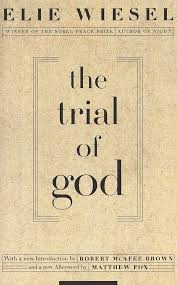
“i speak not of Christ but of those who betray Him. They invoke His teaching to justify their murderous deeds. His true disciples would behave differently; there are no more around. There are no more Christians in this Christian land.” ― Mendel, itinerant Jewish actor fromThe Trial of Godby Elie Wiesel
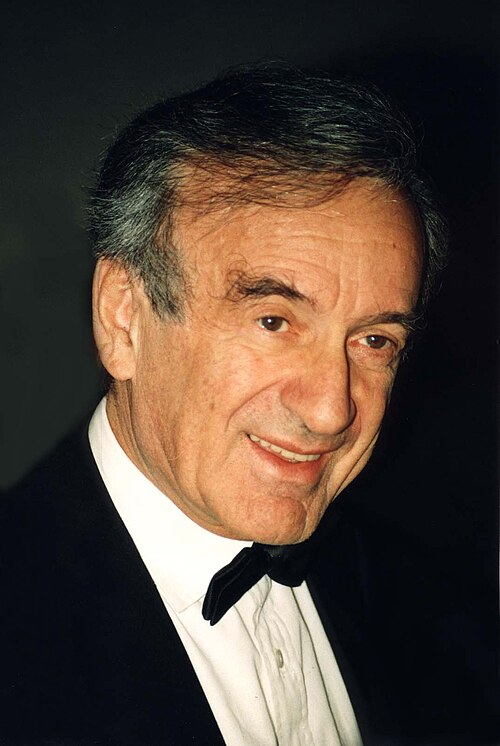
Eliezer “Elie” Wiesel (September 30, 1928 – July 2, 2016) was a Romanian-born American writer, professor, political activist, Nobel laureate, and Holocaust survivor. He authored 57 books, written mostly in French and English, including Night, which is based on his experiences as a Jewish prisoner at Auschwitz and Buchenwald during the Holocaust. Wikipedia
“Simping” is internet slang for a person who shows excessive attention, sympathy, or deference to another person, typically in a one-sided, unreciprocated pursuit of affection or a sexual relationship. It is often used to describe someone, usually a man, who fawns over another person, like a celebrity or crush, to an extent that is seen as lacking self-respect.
Behavior: Examples include showering someone with excessive compliments, gifts, or messages, hoping to gain their favor.
Motivation: The goal is to gain attention, affection, or approval from the other person.
Perception: The term often carries a negative connotation, implying desperation and a willingness to sacrifice self-respect, though its usage has also become more general online.
Evolution: While originally used to criticize men who were seen as overly submissive to women, the term has evolved to apply more broadly to anyone showing excessive, unreciprocated devotion.




 George Takei at the “Free Birds” Premiere at Village Theater on October 13, 2013 in West Hollywood, California. | Shutterstock


.png)