
Monthly Archives: June 2025

Greta Thunberg exemplifies what a human being looks like
Sky News Jun 10, 2025 Greta Thunberg says members of an aid flotilla that attempted to get into Gaza were “attacked and kidnapped” by the Israeli military and taken into Israel “against our will”. The 22-year-old activist was deported from Israel after she and her colleagues were prevented from docking in Gaza on Monday. She said the flotilla was attempting to open up a “humanitarian corridor” following the Israeli blockade of Gaza. Full story: https://news.sky.com/story/israel-rel…
How can creativity help us heal? A doctor and a cartoonist answer
Amy Baxter and Navied Mahdavian | TED Intersections
When medicine mixes with metaphor, what kind of healing transpires? In this unexpected meeting of minds, physician Amy Baxter shares her innovative approach to treating pain, while cartoonist Navied Mahdavian explores how he traces its deeper meaning. From punchlines to pain scales, they reveal how drawing can be diagnostic and why medicine might just need a touch more whimsy. (This conversation is part of “TED Intersections,” a series featuring thought-provoking conversations between experts navigating the ideas shaping our world.)
Want to use TED Talks in your organization?
About the speakers
How a stupidity epidemic is threatening America’s actual existence
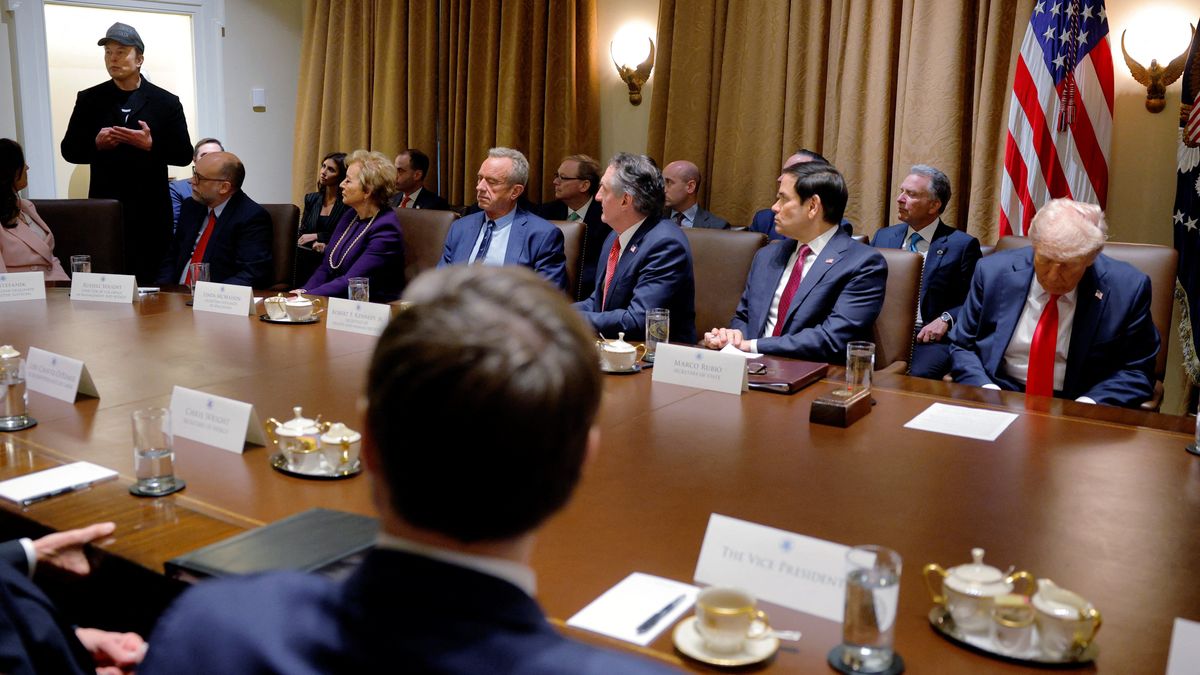
Elon Musk speaks during the first cabinet meeting hosted by U.S. President Donald Trump, at the White House in Washington, DC, U.S., February 26, 2025. REUTERS/Brian Snyder
It may sound like an insensitive statement, but the cold hard truth is that there are a lot of stupid people in the world, and their stupidity presents a constant danger to others. Some of these people are in positions of power, and some of them have been elected to run our country. A far greater number of them do not have positions of power, but they still have the power to vote, and the power to spread their ideas. We may have heard of “collective intelligence,” but there is also “collective stupidity,” and it is a force with equal influence on the world. It would not be a stretch to say that at this point in time, stupidity presents an existential threat to America because, in some circles, it is being celebrated.
Although the term “stupidity” may seem derogatory or insulting, it is actually a scientific concept that refers to a specific type of cognitive failure. It is important to realize that stupidity is not simply a lack of intelligence or knowledge, but rather a failure to use one’s cognitive abilities effectively. This means that you can be “smart” while having a low IQ, or no expertise in anything. It is often said that “you can’t fix stupid,” but that is not exactly true. By becoming aware of the limitations of our natural intelligence or our ignorance, we can adjust our reasoning, behavior, and decision-making to account for our intellectual shortcomings.
To demonstrate that stupidity does not mean having a low IQ, consider the case of Richard Branson, the billionaire CEO of Virgin Airlines, who is one of the world’s most successful businessmen. Branson has said that he was seen as the dumbest person in school, and has admitted to having dyslexia, a learning disability that affects one’s ability to read and correctly interpret written language. But it wasn’t just reading comprehension that was the problem — “Math just didn’t make sense to me,” Branson has said. “I would certainly have failed an IQ test.”
ALSO READ: Exclusive: Big money plan eyes new way to push states further right
READ: We’re watching the largest and most dangerous ‘cult’ in American history
So, what is responsible for his enormous success, both financially and in terms of being a prolific innovator? Branson attributes his success to surrounding himself with highly knowledgeable and extremely competent people. Branson’s smarts come from his ability to recognize his own limitations, and to know when to defer to others on topics or tasks where he lacks sufficient knowledge or skill.
This means you don’t have to be traditionally intelligent or particularly knowledgeable to be successful in life, make good decisions, have good judgment, and be a positive influence on the world. Stupidity is a consequence of a failure to be aware of one’s own limitations, and this type of cognitive failure has a scientific name: the Dunning-Kruger effect.
The Dunning-Kruger effect is a well-known psychological phenomenon that describes the tendency for individuals to overestimate their level of intelligence, knowledge, or competence in a particular area. They may also simultaneously misjudge the intelligence, expertise, or competence of others. In other words, they are ignorant of their own ignorance. The effect has been widely written about, and investigated empirically, with hundreds of studies published in peer-reviewed journals confirming and analyzing the phenomenon, particularly in relation to the dangers it poses in certain contexts.
It is easy to think of examples in which failing to recognize one’s own ignorance can become dangerous. Take for example when people with no medical training try to provide medical advice. It doesn’t take much Internet searching to find some nutritionist from the “alternative medicine” world who is claiming that some herbal ingredient has the power to cure cancer. Some of these people are scam artists, but many of them truly believe that they have a superior understanding of health and physiology. There are many people who trust these self-proclaimed experts, and there is no doubt that some have paid with their lives for it.
What’s particularly disturbing about the Dunning-Kruger effect is that people are attracted to confident leaders, so politicians are incentivized to be overconfident in their beliefs and opinions, and to overstate their expertise. For example, Donald Trump — despite not having any real understanding of what causes cancer — suggested that the noise from wind turbines is causing cancer (a claim that is not supported by any empirical studies). It is well documented that on topics ranging from pandemics to climate change, Trump routinely dismissed the opinions of the professionals who have dedicated their lives to understanding those phenomena, because he thought that he knew better. It’s bad enough that politicians like Donald Trump and Marjorie Taylor Greene don’t recognize their own ignorance and fail to exercise the appropriate amount of caution when making claims that can affect public health and safety — but what is really disturbing is that they are being celebrated for their overconfidence (i.e., stupidity).
It is less surprising that politicians who regularly exhibit the Dunning-Kruger effect are being elected to office when one realizes that they are being voted in by people who also display the Dunning-Kruger effect. A 2008 study by the political scientist Ian Anson surveyed over 2000 Americans in an attempt to see whether or not the effect was playing a role in one’s ability to overestimate their political knowledge. The results clearly showed that the people who scored lowest on political knowledge were the very same people who were the most likely to overestimate their performance. While this is shocking, it also makes perfect sense: the less we know about something, the less of an ability we have to assess how much we don’t know. It is only when we try to become an expert on some complex topic that we truly realize how complicated it is, and how much more there is to learn about it.
This new theory of stupidity I have proposed here — that stupidity is not a lack of intelligence or knowledge, but a lack of awareness of the limits of one’s intelligence or knowledge — is more important right now than ever before, and I’ll tell you why. The same study by Anson mentioned above showed that, when cues were given to make the participants “engage in partisan thought,” the Dunning-Kruger effect became more pronounced. In other words, if someone is reminded of the Republican-Democrat divide, they become even more overconfident in their uninformed positions. This finding suggests, that in today’s unprecedently divided political climate, we are all more likely to have an inflated sense of confidence in our unsupported beliefs. What’s more, those who actually have the greatest ignorance will assume they have the least!
What we are dealing with here is an epidemic of stupidity that will only get worse as divisions continue to increase. This should motivate all of us to do what we can to ease the political division. When we can clearly see the social factors that are causing people to become increasingly stupid, our anger and hatred toward them should dissipate. We do not have much control over our level of intelligence or ignorance, or our ignorance of our ignorance.
But this does not mean that we should accept stupidity as the result of deterministic forces that are beyond our control. After gaining a deeper awareness of our own cognitive limitations and limited knowledge base, we should do what we can to instill this higher awareness in others. We must not just educate the public and our youth; we must teach them to become aware of their own ignorance, and give them the skills they need to search for more knowledge and to detect when they or others are overestimating their knowledge or competency.
We have good reason to be optimistic that this is possible. A 2009 study showed that incompetent students increased their ability to estimate their class rank after being tutored in the skills they lacked. This suggests that we can learn a type of “meta-awareness” that gives us the power to more accurately assess ourselves and our own limitations. Once we can do that, then we can know when we need to do more research on a given topic, or to defer to experts. We can also get better at distinguishing between true experts and those who only claim to be experts (but are really just demonstrating the Dunning-Kruger effect).
We are all victims of the Dunning-Kruger effect to some degree. An inability to accurately assess our own competency and wisdom is something we see in both liberals and conservatives. While being more educated typically decreases our Dunning-Kruger tendencies, it does not eliminate them entirely. That takes constant cognitive effort in the form of self-awareness, continual curiosity, and a healthy amount of skepticism. By cultivating this type of awareness in ourselves, and making an effort to spread it to others, we can fight back against the stupidity crisis that threatens our nation.
NOW READ: It’s obscene: Inside the Medicare Advantage shamBobby Azarian is a cognitive neuroscientist and the author of the new book The Romance of Reality: How the Universe Organizes Itself to Create Life, Consciousness, and Cosmic Complexity. He is also a blogger for Psychology Today and the creator of the Substack Road to Omega. Follow him @BobbyAzarian.
Word-Built World: Nero
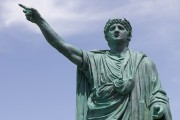
Nero sculpture in his birthplace of Anzio, Italy
Sculptor: Claudio Valenti. Photo: Helen Cook / Wikimedia
A.Word.A.Daywith Anu Garg
I once had a Canadian friend who was a major Anglophile. Big fan of the monarchy. Fine by me. Some people collect stamps, others collect tiaras (vicariously).
When a son was born to William and Kate in 2013, my friend emailed me, brimming with excitement over the arrival of, I quote, “HRH Prince George”.
The little fellow was barely 48 hours old and he was already a His Royal Highness? All he had to do was show up in the right womb?
I’d rather reserve that level of reverence for folks who, say, invent vaccines, compose symphonies, or revolutionize the world with poems or books.
Still, I did the polite thing. I congratulated her… and added, “Lizzie must be thrilled about her new great grandson.” (There went my knighthood.)
She was not amused.
I asked her how she’d feel if the next mayor of her small town were simply the child of the current one. And their child after that. She changed the subject.
To each her own. If someone wants to call Paris Hilton HRH, or refer to Kal-El as Superman, well, it’s a free world. (Though most of us retire the crown and scepter after preschool.)
Kings, queens, dukes, duchesses, it’s a charming idea from another century. Way past its time.
Sure, democracy has its flaws. Sometimes people make a dreadful choice. But the beautiful thing is, they can fix it in the next election. (And yes, sometimes they make the same dreadful choice again. What can I say, people have short memories.) But at least they are not stuck with the same family forever. Or, stripping them from actual power, while supporting them in the lifestyle of the rich and famous.
While most monarchs fade into footnotes, a few live on in the dictionary. This week we’ll meet five kings whose names have become words in the language.
What’s your take on royalty? Share on our website or email us at words@wordsmith.org. Include your location (city, state).
Nero
PRONUNCIATION:
MEANING:
noun: A cruel, depraved, or tyrannical ruler.
ETYMOLOGY:
After Nero (CE 37-68), Roman emperor (54-68), whose name became synonymous with tyranny. Earliest documented use: 1542.
NOTES:
Nero is infamous for his cruelty, excesses, and theatrical self-indulgence. He ordered the deaths of his own mother and at least one of his wives. After being declared a public enemy by the Roman Senate and condemned to death in absentia having fled, he killed himself. As for the story that he fiddled while Rome burned, that’s likely a myth.
Frederick Buechner on listening to your life

Tarot Card forJune 10: The Hanged Man
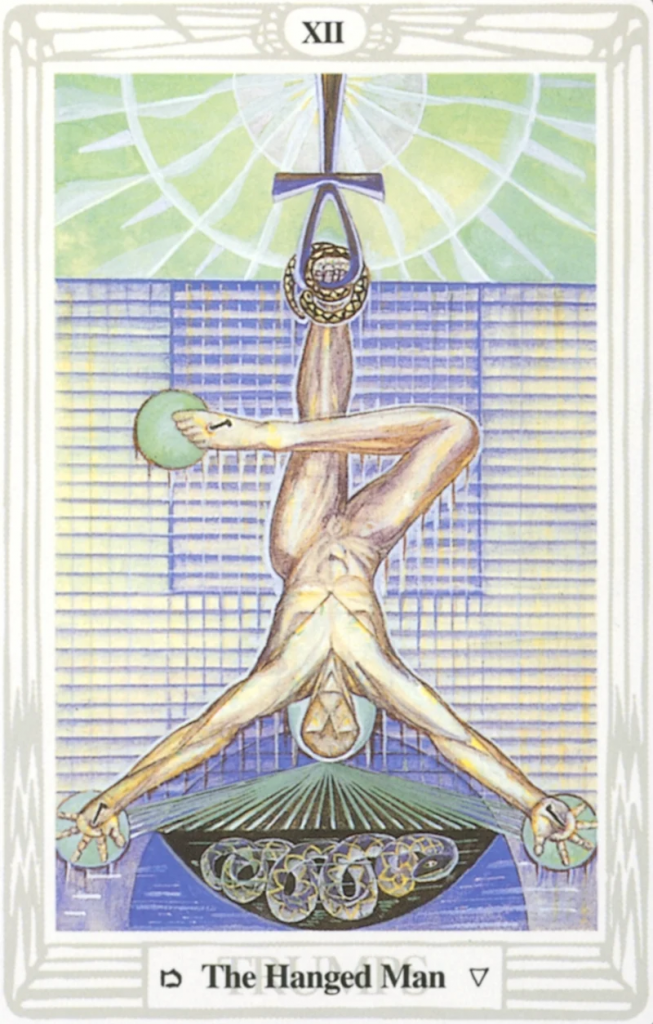
| The Hanged Man The Hanged Man is one of those Major Arcana cards which tend to have a rather poor reputation – undeservedly, in my opinion. He represents the necessary process of surrender and sacrifice, which is probably why he is not greeted with open arms. Yet both actions are a part of everyday life. We just fail to understand that, every time we make a choice between two equally desirable options, we sacrifice one in order to have the other. We surrender one state to achieve another.In fact, the Hanged Man can often indicate a period of apparent inertia, where new concepts and tenets are being absorbed. Once we have digested this new material, we can emerge from our period of inactivity with a fresh approach to things. So sometimes the Hanged Man presents us with an important method of self-development.In most Tarot decks, there’s an important visual link between the Emperor and the Hanged Man – both these figures are depicted with their legs forming the figure 4. 4 is a number connected to ideas about material stability. The Emperor often represents a man who has achieved much in the material sphere. He is usually a dynamic and energetic person who forcefully directs his will toward the attainment of his desires.In a sense, we can see the Hanged Man as an outgrowth of the Emperor – though now it is not the material world which is the object of his aspiration – it is the spiritual realm in which he is interested.So, on a day ruled by the Hanged Man, take a little time out to consider what your current spiritual aspirations are. Write them down and think them over. Think back to the last time you attempted to assess your current journey and see whether you feel you have achieved some of the things you aimed for.And above all, recognise something. This journey of the spirit is like any other – we achieve it step by step, moment by moment. We will always be surrendering things along the way – and we need always to be open to new input, new concepts, new pages to be written in the book of life. Affirmation: “I pause. And in pausing, I see differently.” |
(Angelpaths.com)
The Transactional Interpretation of Quantum Theory with Ruth Kastner
New Thinking Jun 9, 2025 Ruth Kastner, PhD, is a member of the Foundations of Physics group at the University of Maryland, College Park. She is author of The Transactional Interpretation of Quantum Mechanics: The Reality of Possibility, Understanding Our Unseen Reality: Solving Quantum Riddles, and Adventures in Quantumland: Exploring Our Unseen Reality. In this video, rebooted from 2019, she reviews the history of the transactional interpretation of quantum mechanics, originally developed by physicist John Cramer at the University of Washington. She, herself, was responsible for recent modifications to the theory — thus the “relativistic” nomenclature. The theory maintains that enormous action related to the actualization of quantum events takes place outside of the spacetime domain. While this interpretation is not dependent upon consciousness, it allows for the existence of consciousness and is consistent with metaphysical idealism. New Thinking Allowed host, Jeffrey Mishlove, PhD, is author of The Roots of Consciousness, Psi Development Systems, and The PK Man. Between 1986 and 2002 he hosted and co-produced the original Thinking Allowed public television series. He is the recipient of the only doctoral diploma in “parapsychology” ever awarded by an accredited university (University of California, Berkeley, 1980). He is also the Grand Prize winner of the 2021 Bigelow Institute essay competition regarding the best evidence for survival of human consciousness after permanent bodily death. He is Co-Director of Parapsychology Education at the California Institute for Human Science. (Recorded on October 21, 2019)
‘The Science of Revenge: Understanding the World’s Deadliest Addiction–and How to Overcome It’
WGN News Jun 9, 2025 James Kimmel Jr. is a Yale violence researcher and psychiatry lecturer who examines America`s growing addiction to revenge as a special brand of justice; and uncovers the truth behind why we want to hurt the people who hurt us, and how to stop it.
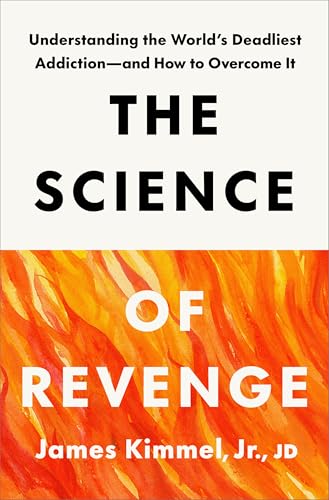
The Science of Revenge: Understanding the World’s Deadliest Addiction—and How to Overcome It
James Kimmel Jr.
In this definitive book on revenge, a Yale psychiatry researcher exposes the unseen neurobiological cause of violence—a compulsive desire for retribution—and offers a profound new understanding of human behavior and breakthrough framework for making our lives and communities safer.
There is a hidden addiction plaguing humanity right now: revenge. Researchers have identified retaliation in response to real and imagined grievances as the root cause of most forms of human aggression and violence. From vicious tweets to road rage, murder-suicide, and armed insurrection, perpetrators almost always see themselves as victims seeking justice. Chillingly, recent neuroimaging studies of the human brain show that harboring a personal grievance triggers revenge desires and activates the neural pleasure and reward circuitry of addiction.
Although this behavior is ancient and seems inevitable, by understanding retaliation and violence as an addictive brain-biological process, we cancontrol deadly revenge cravings and save lives. In The Science of Revenge, Yale violence researcher and psychiatry lecturer James Kimmel, Jr., JD, uncovers the truth behind why we want to hurt the people who hurt us, what happens when it gets out of hand, and how to stop it.
Weaving neuroscience, psychology, sociology, law, and human history with captivating storytelling, Dr. Kimmel reveals the neurological mechanisms and prevalence of revenge addiction. He shines an unsparing light on humanity’s pathological obsession with revenge throughout history; his own struggle with revenge addiction that almost led him to commit a mass shooting; America’s growing addiction to revenge as a special brand of justice; and the startlingly similar addictive behaviors and motivations of childhood bullies, abusive partners, aggrieved employees, sparring politicians, street gang members, violent extremists, mass killers, and tyrannical dictators. He also reveals the amazing, healing changes that take place inside your brain and body when you practice forgiveness. Emphasizing the necessity of proven public health approaches and personal solutions for every level of revenge addiction, he offers urgent, actionable information and novel methods for preventing and treating violence.
(Goodreads.com)
Protesters Urged Not To Give Trump Administration Pretext For What It Already Doing

Published: June 9, 2025 (TheOnion.com)
LOS ANGELES—Responding to escalating clashes between civilian activists and militarized immigration authorities, Los Angeles Mayor Karen Bass publicly urged protesters Monday not to give the Trump administration any pretext for what they’re already doing and will keep doing no matter what. “Angelenos—don’t engage in violence and give the administration an excuse to inflict all the damage they have been inflicting carte blanche for months on end,” said Bass, adding that Trump and his team are just looking for a reason to respond with violence, as they would have done whether or not any of this happened. “Don’t fan the flame that has been fanned behind the scenes at the White House since day one of Trump’s term in office. You wouldn’t want them to start abducting people in broad daylight and deporting them, would you? No, so let’s not become scapegoats for the horrific violations of civil liberties that would have eventually landed at our doorstep regardless.” At press time, Bass warned that Trump was using the actions of protesters to justify sending in the National Guard that had been pre-deployed to the conflict days before it even began.