WASHINGTON—According to the results of a new poll released Thursday by the Pew Research Center, the majority of Americans would swap democracy for a $100 Best Buy gift card. “Our research found that 72% of Americans would agree to give up all free and fair elections in the U.S. forever in exchange for a $100 certificate they could use to purchase a new Bluetooth speaker or couple Keurig coffee makers,” said Pew pollster Dana Felder, who noted that an overwhelming 90% of Americans stated that they would eagerly surrender their First Amendment rights without a second thought for a chance to rummage the bin of discounted DVDs and Blu-rays at the front of the store. “Sixty-five percent of the survey respondents stated that they would choose to live in an autocracy as long as they received free shipping, and another 55% of Americans responded that they would gladly abandon democracy for as little as a 15% off coupon from Bed, Bath, & Beyond. The remaining 28% of Americans who said they would not swap democracy stated they would only do so for a gift certificate to a nice local bakery.” At press time, Felder confirmed that the results were the highest they’d been since 1996 when 80% of Americans stated that they would live under an Islamic theocracy in exchange for a $50 gift card to Radio Shack.
Lou Andreas-Salomé (born either Louise von Salomé or Luíza Gustavovna Salomé or Lioulia von Salomé, Russian: Луиза Густавовна Саломе; 12 February 1861 – 5 February 1937) was a Russian-born psychoanalyst and a well-traveled author, narrator, and essayist from a French Huguenot-German family.[1] Her diverse intellectual interests led to friendships with a broad array of distinguished thinkers, including Friedrich Nietzsche, Sigmund Freud, Paul Rée, and Rainer Maria Rilke.[2]
Life
Early years
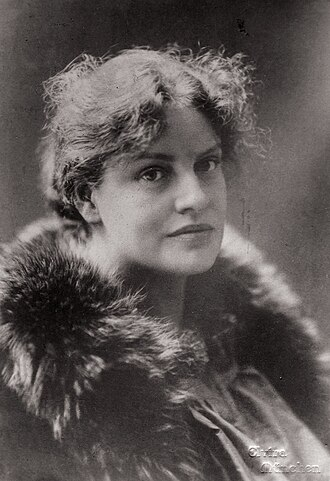
Lou Salomé, circa 1880
Lou Salomé was born in St. Petersburg to Gustav Ludwig von Salomé (1807–1878), and Louise von Salomé (née Wilm) (1823–1913). Lou was their only daughter; they had five sons. Although she would later be attacked by the Nazis as a “Finnish Jew”,[3] her parents were actually of French Huguenot and Northern German descent.[4] The youngest of six children, she grew up in a wealthy and well-cultured household, with all children learning Russian, German, and French; Salomé was allowed to attend her brothers’ classes.
Born into a strictly Protestant family, Salomé grew to resent the Reformed church and Hermann Dalton, the Orthodox Protestant pastor. She refused to be confirmed by Dalton, officially left the church at age 16, but remained interested in intellectual pursuits in the areas of philosophy, literature and religion.
In fact, she was fascinated by the sermons of the Dutch pastor Hendrik Gillot, known in St. Petersburg as an opponent of Dalton’s. Gillot, 25 years her senior, took her on as a student, engaging with her in the fields of theology, philosophy, world religions, and French and German literature. Together they studied innumerable authors, philosophers, theological and religious subjects, and all of this wide-ranging study laid the groundwork for her intellectual encounters with very well-known thinkers of her time. Gillot became so smitten with Salomé that he wanted to divorce his wife and marry his young student. Salomé refused, for she was not interested in marriage and sexual relations. Though disappointed and shocked by this development, she remained friends with Gillot.
Following her father’s death in 1879, Salomé and her mother went to Zürich so Salomé could acquire a university education as a “guest student.” In her one year at the University of Zurich—one of the few schools that accepted female students—Salomé attended lectures in philosophy (logic, history of philosophy, ancient philosophy, and psychology) and theology (dogmatics). During this time, Salomé’s physical health was failing due to lung disease, causing her to cough up blood. Due to this, she was instructed to heal in warmer climates, so in February 1882, Salomé and her mother went to Rome.
Salomé’s mother took her to Rome when Salomé was 21. At a literary salon in the city, Salomé became acquainted with the author Paul Rée. Rée proposed to her, but she instead suggested that they live and study together as ‘brother and sister’ along with another man for company, and thereby establish an academic commune.[5] Rée accepted the idea, and suggested that they be joined by his friend Friedrich Nietzsche. The two met Nietzsche in Rome in April 1882, and Nietzsche is believed to have instantly fallen in love with Salomé, as Rée had earlier done. Nietzsche asked Rée to propose marriage to Salomé on his behalf, which she rejected, although interested in Nietzsche as a friend.[5] Nietzsche nonetheless was content to join Rée and Salomé touring through Switzerland and Italy together, planning their commune. On 13 May, in Lucerne, when Nietzsche was alone with Salomé, he earnestly proposed marriage to her again, and she again rejected him. He was happy to continue with the plans for an academic commune.[5] After discovering the situation, Nietzsche’s sister Elisabeth became determined to separate him from Salomé whom she described as an “immoral woman”.[6] Nietzsche, Rée, and Salomé travelled with Salomé’s mother through Italy and considered where they would set up their “Winterplan” commune. This commune was intended to be set up in an abandoned monastery, but as no suitable location was found, the plan was abandoned.
After arriving in Leipzig in October 1882, the three spent a number of weeks together. However, the following month Rée and Salomé parted company with Nietzsche, leaving for Stibbe without any plans to meet again. Nietzsche soon fell into a period of mental anguish, although he continued to write to Rée, asking him, “We shall see one another from time to time, won’t we?”[7] In later recriminations, Nietzsche would blame the failure in his attempts to woo Salomé both on Salomé, Rée, and on the intrigues of his sister (who had written letters to the families of Salomé and Rée to disrupt their plans for the commune). Nietzsche wrote of the affair in 1883 that he felt “genuine hatred for [his] sister.”[7]
Salomé would later (1894) write a study, Friedrich Nietzsche in seinen Werken (Friedrich Nietzsche in his Works), of Nietzsche’s personality and philosophy.[8]
In 1884 Salomé became acquainted with Helene von Druskowitz, the second woman to receive a philosophy doctorate in Zurich.[citation needed] It was also rumoured that Salomé later had a romantic relationship with Sigmund Freud.[9]
Marriage and relationships
Lou Andreas-Salomé and Friedrich Carl Andreas, 1886
Salomé and Rée moved to Berlin and lived together until a few years before her celibate marriage[10] to linguistics scholar Friedrich Carl Andreas. Despite her opposition to marriage and her open relationships with other men, Salomé and Andreas remained married from 1887 until his death in 1930.
Salomé’s co-habitation with Andreas caused the despairing Rée to fade from Salomé’s life despite her assurances. Throughout her married life, she engaged in affairs and/or correspondence with the German journalist and politician Georg Ledebour, the Austrian poet Rainer Maria Rilke, about whom she wrote an analytical memoir,[11] and the psychoanalystsSigmund Freud (whom she met personally in September 1911, on occasion of the 3rd Congress of Psychoanalysis held in Weimar[12]) and Victor Tausk, among others. Accounts of many of these are given in her volume Lebensrückblick. An affair with the Viennese physician Friedrich Pineles ended in an abortion and a tragic renunciation of motherhood.[13] Her relationship with Freud was still quite intellectual despite gossip about their romantic involvement. In one letter Freud commends Salomé’s deep understanding of people so much that he believed she understood people better than they understood themselves. The two often exchanged letters.[14] Salomé was romantically involved with the handsome and melancholic Victor Tausk, member of the Vienna Psychoanalytic Society, 18 years her junior.[15]
According to Anna Freud, her work Friedrich Nietzsche in seinen Werken (Friedrich Nietzsche in his works) anticipated the psychoanalysis.[16] It was the first book about the German philosopher.[17] Anna Freud and von Salomé, who met in Vienna, had a long-time correspondence, like Sigmund Freud and von Salomé.[18]
Meeting Rilke
In May 1897, in Munich, she met Rilke, who had been introduced to her by Jacob Wassermann.[19] She was 36 while Rilke was only 20. She had already published with some success Im Kampf um Gott “where she exposed the problem of loss of faith (which had been her own for a long time)”, several articles, and the study Jesus der Jude that Rilke had read.[19]
As Philippe Jaccottet reports, Salomé wrote in Lebensrückblick: “I was your wife for years because you were the first reality, where man and body are indistinguishable from each other, an indisputable fact of life itself. I could have said literally what you told me when you confessed your love to me: Only you are real. That is how we became husband and wife even before we became friends, not by choice, but by this unfathomable marriage […] We were brother and sister, but as in a distant past, before the marriage between brother and sister became sacrilegious.”[20]
In 1899 with her husband Friedrich-Carl, then again in 1900, Lou travelled to Russia, the second time with Rilke, whose first name she changed from René to Rainer.[21] She taught him Russian, to read Tolstoy (whom he would later meet) and Pushkin. She introduced him to patrons and other people in the arts, remaining Rilke’s advisor, confidante, and muse throughout his adult life.[10] The romance between the poet and Salomé lasted three years, then turned into a friendship, which would continue until Rilke’s death, as evidenced by their correspondence. In 1937, Freud said of Salomé’s relationship with Rilke: “She was both the muse and the attentive mother of the great poet.”[22]
Death
Lou Andreas-Salomé’s grave in Göttingen
By 1930, Salomé was increasingly weak, suffered from a heart condition and diabetes, and had to be treated several times in the hospital. Her husband visited her daily during a six-week stay after a foot operation, which was arduous for the old, rather ill man, and this made them grow very close after a forty-year marriage marked by hurtful behaviour on both sides and long periods of non-communication.[23] Freud appreciated this from afar, writing: “Only what is genuinely true proves itself so long-lasting.” (“So dauerhaft beweist sich doch nur das Echte.“) Friedrich Carl Andreas died of cancer in 1930, and Salomé herself underwent a difficult cancer operation in 1935. At the age of 74, she ceased to work as a psychoanalyst.
Salomé died of uremia in Göttingen on 5 February 1937. Her urn was laid to rest in her husband’s grave in the cemetery on the Groner Landstraße in Göttingen. She is commemorated in the city by a memorial plaque outside the property where her house stood, a street named after her (Lou-Andreas-Salomé-Weg), and the name of the Lou Andreas-Salomé Institut für Psychoanalyse und Psychotherapie. A few days before her death, the Gestapo confiscated her library (according to other sources it was an SA group who destroyed the library shortly after her death). The reasons given for this confiscation were that she had been a colleague of Sigmund Freud, had practised “a Jewish science”, and owned many books by Jewish authors.[24]
Title page of the 1927 edition of ‘Das Haus’, published by the German Book Community, a national book club.
Salomé was a prolific writer who wrote fiction, criticism and essays on religion, philosophy, sexuality and psychology.[25] A uniform edition of her works is being published in Germany by MedienEdition Welsch.[26] She authored a “Hymn to Life” that so deeply impressed Nietzsche that he was moved to set it to music. Salomé’s literary and analytical studies became such a vogue in Göttingen, where she lived late in her life, that the Gestapo waited until shortly after her death to “clean” her library of works by Jews.
She was one of the first female psychoanalysts and one of the first women to write psychoanalytically on female sexuality,[27] before Helene Deutsch, for instance in her essay on the anal-erotic (1916),[28] an essay admired by Freud.[29] However, she had written about the psychology of female sexuality before she ever met Freud, in her book Die Erotik (1911).
She wrote more than a dozen novels and novellas, including Im Kampf um Gott, Ruth, Rodinka, Ma, Fenitschka – eine Ausschweifung, as well as non-fiction studies such as Henrik Ibsens Frauengestalten (1892), a study of Ibsen‘s female characters, and a book on Nietzsche, Friedrich Nietzsche in seinen Werken (1894). The first English translation of her novel Das Haus (1921) appeared in 2021 under the title Anneliese’s House, in an annotated edition by Frank Beck and Raleigh Whitinger.[30]
Salomé edited a memoir about Rilke after his death in 1926. Among her works is also her Lebensrückblick, which she wrote during her last years based on memories of her life as a free woman. In her memoirs, first published in their original German in 1951, she goes into depth about her faith and her relationships.
Whoever reaches into a rosebush may seize a handful of flowers; but no matter how many one holds, it’s only a small portion of the whole. Nevertheless, a handful is enough to experience the nature of the flowers. Only if we refuse to reach into the bush, because we can’t possibly seize all the flowers at once, or if we spread out our handful of roses as if it were the whole of the bush itself—only then does it bloom apart from us, unknown to us, and we are left alone.[31]
Salomé is said to have remarked in her last days, “I have really done nothing but work all my life, work … why?” And in her last hours, as if talking to herself, she is reported to have said, “If I let my thoughts roam I find no one. The best, after all, is death.”[32]
Mexican playwright Sabina Berman includes Lou Andreas-Salomé as a character in her 2000 play Feliz nuevo siglo, Doktor Freud (Freud Skating).[36]
Salomé is also fictionalized in Angela von der Lippe’s The Truth about Lou,[37] in Brenda Webster‘s Vienna Triangle,[38] in Clare Morgan’s A Book for All and None,[39] in Robert Langs‘ two-act play Freud’s Bird of Prey,[40] and in Araceli Bruch’s five-act play Re-Call (written in Catalan).[41]
Lou Salome, an opera in two acts by Giuseppe Sinopoli with libretto from Karl Dietrich Gräwe, premiered in 1981 at the Bavarian State Opera, with August Everding as General Director, staging by Götz Friedrich and set design by Andreas Reinhardt.[42]
The Locked Body of Lou (Заклученото тело на Лу) is a postmodern novel by Macedonian author Olivera Kjorveziroska, published in 2005. The novel explores the character of Lou Andreas-Salomé from a biofictional perspective.[44]
CIIS Public P • Streamed live on Feb 6, 2025 • Thank your for joining us for our event with Richard Tarnas. Explore key timings in the recording and more below: ???? Key Timings:
CAPTIONS: This event will have computer generated automated captions during the live event. Fully edited captions (with AI and human editors) will appear within 24 hours of the live event. DESCRIPTION: Join CIIS Professor Emeritus and cultural historian Richard Tarnas for an illuminating discussion of the nature of the human journey. This talk draws on the implicit framework and underlying context of Richard’s popular annual state of the world weather reports presented over the last four years with CIIS Public Programs. Richard explores one of C. G. Jung’s most crucial contributions to psychology, the recognition that the unfolding of a human life is at a deep level a spiritual journey. Jung also recognized that our individual psychological unfolding is embedded within larger, ever-evolving historical developments that shape our personal journeys, and that reflect a kind of collective spiritual evolution. Finally, Jung saw that informing both the individual psyche and the collective evolution are powerful archetypal principles and forces that deeply influence human experience and behavior. This archetypal dimension appears to be expressive not only of the human psyche, but of the cosmos itself. Richard invites you to explore with him how we might understand the complex interplay of these important levels of meaning and influence, so we might gain a more profound perspective on the deeper character of human life and experience, especially in our own dramatic, challenging era. Recently recorded: Thursday, February 6
“Perhaps those who seem asleep today, in 20 years something will be awakened in them and those who nwo seem so eager will forget in 10 days. We have to let everyone hear, the result does not belong to us.” –Gurdjieff
“No doubt those unacquainted with inner conflicts–the “Holy War” that one must wage day in and day out with oneself–have not experienced these moments of grace and letting go, and so they develop a rigid, idealized, and false representation of self-mastery.” –Tchekhovitch, A Master in Life
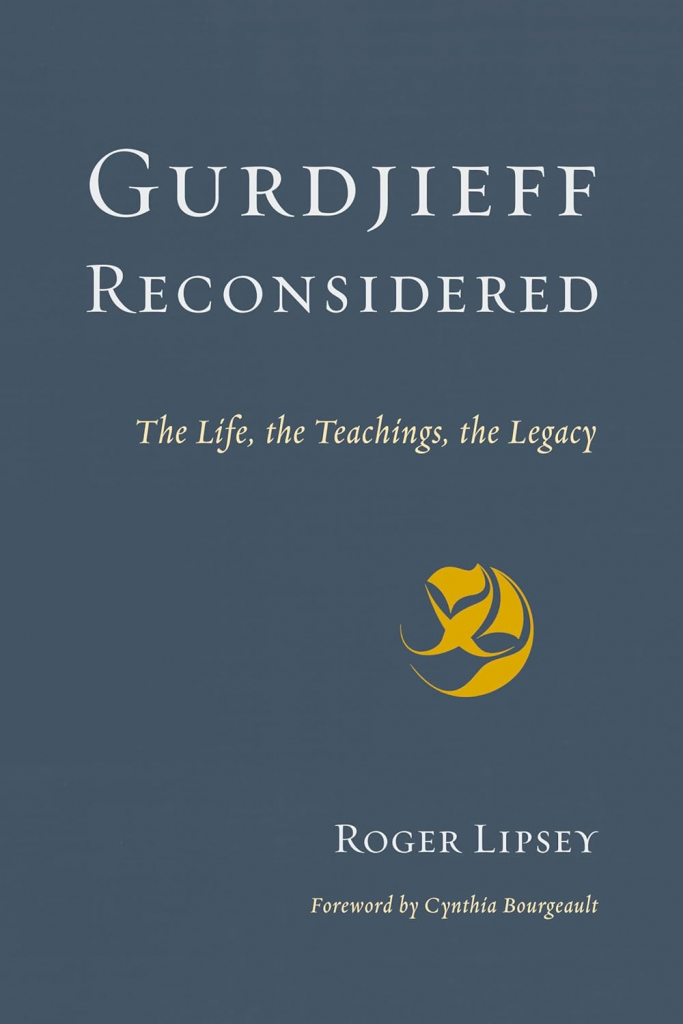
The intuition that we are seen by an intelligence and probity far beyond us insistently recurs in spiritual tradition, from Psalm 139–“Lord, thou hast searched me and known me”–to Václav Havel’s conviction in our own day that we are known and judged by what he called “Being.” –Roger Lipsey, Gurdjieff Reconsidered
It has even been shat during the Occupation, there were meetings [in Paris] attended without incident by Resistance workers and Nazi officials, interested for the moment not by the war but by Gurdjieff. –Roger Lipsey, Gurdjieff Reconsidered
“I wish to be, I can be, I have the right to be, I have the ability to be. I swear to myself that this will never be for my personal profit, but to help others. I wish to be, to help others. This is understood to be a vow.” –Gurdjieff prayer shared with children
“All the time he was talking to me, I felt very strangely that a quite different conversation was taking place between us. He was really telling me what I wanted to know about objective love. I began to understand how the greater does not preclude the lesser, but includes it and, in fact, the greater could not exist without the lesser. I saw how his love was not at all a personal love, but love for all humanity, for all living beings, perhaps even for all creation. Although this was something quite beyond anything I could aspire to or attempt to understand, when I came into contact with it, as I did now, it could only appear to me as personal love, answering the personal love that was the best I had to offer.” –Rina Hands on Gurdjieff
“Make love your aim and begin to look for direction.” —Early Talks 1914-1931
“Real love is the basis of all, the foundations, the source. The religions have perverted and deformed love. It was by love that Jesus performed miracles. Real love joined with magnetism. All accumulated vibrations create a current. This current brings the force of love. Real love is a cosmic force which goes through us. If we crystallise it, it becomes a power – the greatest power in the world. Later you will study magnetism in books, no matter which, it will give you material. And with love as a basis, you will be able to cure paralytics and make the blind see.” —Early Talks 1914-1931
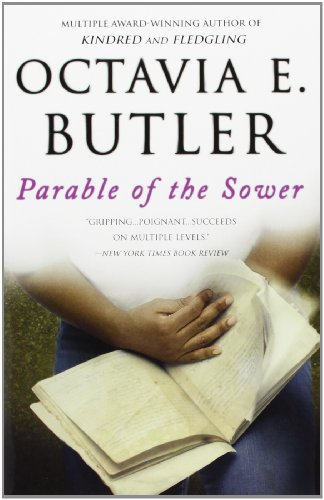
“There is no end To what a living world Will demand of you.” ― Octavia E. Butler, Parable of the Sower
“All that you touch You Change. All that you Change Changes you. The only lasting truth Is Change.” ― Octavia E. Butler, Parable of the Sower
“The world is full of painful stories. Sometimes it seems as though there aren’t any other kind and yet I found myself thinking how beautiful that glint of water was through the trees.” ― Octavia E. Butler, Parable of the Sower
“Embrace diversity. Unite— Or be divided, robbed, ruled, killed By those who see you as prey. Embrace diversity Or be destroyed.” ― Octavia E. Butler, Parable of the Sower
“Create no images of God. Accept the images that God has provided. They are everywhere, in everything. God is Change— Seed to tree, tree to forest; Rain to river, river to sea; Grubs to bees, bees to swarm. From one, many; from many, one; Forever uniting, growing, dissolving— forever Changing. The universe is God’s self-portrait.” ― Octavia E. Butler, Parable of the Sower
“The child in each of us Knows paradise. Paradise is home. Home as it was Or home as it should have been.
Paradise is one’s own place, One’s own people, One’s own world, Knowing and known, Perhaps even Loving and loved.
Yet every child Is cast from paradise- Into growth and new community, Into vast, ongoing Change.” ― Octavia E. Butler, Parable of the Sower
“That’s all anybody can do right now. Live. Hold out. Survive. I don’t know whether good times are coming back again. But I know that won’t matter if we don’t survive these times.” ― Octavia E. Butler, Parable of the Sower
“When apparent stability disintegrates, As it must– God is Change– People tend to give in To fear and depression, To need and greed. When no influence is strong enough To unify people They divide. They struggle, One against one, Group against group, For survival, position, power. They remember old hates and generate new ones, The create chaos and nurture it. They kill and kill and kill, Until they are exhausted and destroyed, Until they are conquered by outside forces, Or until one of them becomes A leader Most will follow, Or a tyrant Most fear.” ― Octavia Butler, Parable of the Sower
“I’m trying to speak–to write-the truth. I”m trying to be clear. I’m not interested in being fancy, or even original. Clarity and truth will be plenty, if I can only achieve them.” ― Octavia E. Butler, Parable of the Sower
“Cities controlled by big companies are old hat in science fiction. My grandmother left a whole bookcase of old science fiction novels. The company-city subgenre always seemed to star a hero who outsmarted, overthrew, or escaped “the company.” I’ve never seen one where the hero fought like hell to get taken in and underpaid by the company. In real life, that’s the way it will be. That’s the way it always is.” ― Octavia E. Butler, Parable of the Sower
“Freedom is dangerous but it’s precious, too. You can’t just throw it away or let it slip away. You can’t sell it for bread and pottage.” ― Octavia E. Butler, Parable of the Sower
“Civilization is to groups what intelligence is to individuals. It is a means of combining the intelligence of many to achieve ongoing group adaptation. Civilization, like intelligence, may serve well, serve adequately, or fail to serve its adaptive function. When civilization fails to serve, it must disintegrate unless it is acted upon by unifying internal or external forces.” ― Octavia E. Butler, Parable of the Sower
“My God doesn’t love me or hate me or watch over me or know me at all, and I feel no love for or loyalty to my God. My God just is.” ― Octavia E. Butler, Parable of the Sower
“Your teachers Are all around you. All that you perceive, All that you experience, All that is given to you or taken from you, All that you love or hate, need or fear Will teach you– If you will learn. God is your first and your last teacher. God is your harshest teacher: subtle, demanding. Learn or die.” ― Octavia E. Butler, Parable of the Sower
“They have no power to improve their lives, but they have the power to make others even more miserable. And the only way to prove to yourself that you have power is to use it.” ― Octavia E. Butler, Parable of the Sower
“It’s better to teach people than to scare them, Lauren. If you scare them and nothing happens, they lose their fear, and you lose some of your authority with them. It’s harder to scare them a second time, harder to teach them, harder to win back their trust. Best to begin by teaching.” ― Octavia E. Butler, Parable of the Sower
“Belief Initiates and guides action— Or it does nothing.” ― Octavia E. Butler, Parable of the Sower
“So I preached from Luke, chapter eighteen, verses one through eight: the parable of the importunate widow. It’s one I’ve always liked. A widow is so persistent in her demands for justice that she overcomes the resistance of a judge who fears neither God nor man. She wears him down. Moral: The weak can overcome the strong if the weak persist. Persisting isn’t always safe, but it’s often necessary.” ― Octavia E. Butler, Parable of the Sower
“Intelligence is ongoing, individual adaptability. Adaptations that an intelligent species may make in a single generation, other species make over many generations of selective breeding and selective dying.” ― Octavia E. Butler, Parable of the Sower
“We’ll have to be very careful how we allow our needs to shape us.” ― Octavia E. Butler, Parable of the Sower
“PRODIGY IS, AT ITS essence, adaptability and persistent, positive obsession. Without persistence, what remains is an enthusiasm of the moment. Without adaptability, what remains may be channeled into destructive fanaticism. Without positive obsession, there is nothing at all.” ― Octavia E. Butler, Parable of the Sower
“We give lip service to acceptance, as though acceptance were enough.” ― Octavia E. Butler, Parable of the Sower
“The essentials,” I answered, “are to learn to shape God with forethought, care, and work; to educate and benefit their community, their families, and themselves; and to contribute to the fulfillment of the Destiny.” ― Octavia E. Butler, Parable of the Sower
“There is no power in having strength and brains, and yet waiting for God to fix things for you or take revenge for you.” ― Octavia E. Butler, Parable of the Sowe
“In order to rise From its own ashes A phoenix First Must Burn.” ― Octavia E. Butler, Parable of the Sower
“These things frighten people. It’s best not to talk about them.” “But, Dad, that’s like … like ignoring a fire in the living room because we’re all in the kitchen, and, besides, house fires are too scary to talk about.” ― Octavia E. Butler, Parable of the Sower
“why can’t I do what others have done—ignore the obvious. Live a normal life. It’s hard enough just to do that in this world.” ― Octavia E. Butler, Parable of the Sower
“I’m still learning how dogged people can be in denial, even when their freedom or their lives are at stake.” ― Octavia E. Butler, Parable of the Sower
“God is Change.
Earthseed: The Books of the Living Lauren Oya Olamina” ― Octavia E. Butler, Parable of the Sower
“All struggles Are essentially power struggles. Who will rule, Who will lead, Who will define, refine, confine, design, Who will dominate. All struggles Are essentially power struggles, And most are no more intellectual than two rams knocking their heads together.” ― Octavia E. Butler, Parable of the Sower
Martha Nussbaum is a lecturer in philosophy, creative writing and children’s literature for the Open University in the UK. His books include Should a Liberal State Ban the Burqa? (2020)andMartha Nussbaum and Politics(2023). His next book, Weird Philosophy, an introduction to philosophy for children, will be published by Puffin in April 2025.
I first encountered Martha C Nussbaum in 1987. She was a guest on Bryan Magee’sBBC television series The Great Philosophers. In each programme, Magee would interview a leading contemporary philosopher about the ideas of a great philosopher of the past; Nussbaum was brought in to discuss Aristotle.
Still in her 30s when the programme was recorded, she was the youngest contributor to The Great Philosophers. She was also the only woman guest over the whole series (there were 15 episodes), which in itself made her something of a trailblazer. There were far fewer women philosophers then than there are now, and Nussbaum was one of the first to achieve a prominent public profile. But her contribution was notable not only because she was a young woman in a field of middle-aged men. Her exposition was sharp, smart and witty; she made ideas that were more than 2,000 years old spring to life. And she has continued in that vein over a long and productive career.
Nussbaum’s style is lucid and elegant, and she can be read for pure pleasure (which is certainly not something you could say of all academic philosophers). She has made important contributions in ethics, political philosophy, international development, feminist philosophy, animal rights, philosophy of emotion, and global justice. From her remarkably impressive body of work (at least 28 books and more than 500 papers), I have chosen here to concentrate on three key areas: the capabilities approach, her theory of emotions and, connected with that, her work on anger. Her treatment of each of these topics offers excellent evidence of how Nussbaum’s work challenges settled positions.
When stated baldly, the capabilities approach (CA) might seem simple – plain common sense. In fact, it is a subtle and far-reaching theory that changes the way we think about human needs. But let me start by stating it baldly: the CA says that it is the task of governments (or other bodies that make policy and distribute resources) to provide all citizens equally with the capabilities needed to lead a flourishing life. (The goal of flourishing, of course, reflects the influence of Aristotle, who held that it’s the primary goal of all organisms to flourish according to their nature.)
The CA could be described as the outcome of three propositions:
All human beings have the right to flourish.
Human flourishing can be broadly defined in universal terms.
It is the task of governments to provide citizens with capabilities to flourish.
Let’s specify what the CA is not. It is not a call for governments to give citizens what they say they need. For citizens may not know what they need. The CA arose in part as a response to the problem of adaptive preferences. A well-known example is the sour grapes phenomenon. The fox claims he didn’t want the grapes because they were green and unripe; but only because he couldn’t reach them. In the same way, people who lead deprived or impoverished lives may suffer from deformation of their preferences.
It’s therefore up to governments (or other appropriate bodies) to put capabilities in place. (Nussbaum has tended to focus on the need to do this for women in particular – not because women are more deserving but because, in many parts of the world, for women the capabilities are in shorter supply.) But what are capabilities? I give Nussbaum’s full list below, but to put the point in general terms, a capability is the opportunity (a genuine, realisable opportunity, not just a formal permission in a published document) to achieve a function required for wellbeing – such as the capability to be adequately nourished, or to be educated, or to choose one’s own partner, or follow the religion of one’s choice.
Nussbaum wants to establish the capabilities as rights to which citizens, in all nations, are entitled
Once the capabilities are known, preferences are likely to change in response. After all, you are more likely to prefer a good you know you can get than one that is out of reach. But in avoiding the Scylla of taking citizens’ preferences at face value, the CA does not veer towards the Charybdis of making their choices for them. This cannot be over-emphasised: the CA does not aim to provide functions that people are required to perform, or goods that they are required to accept. It aims to provide capabilities of which each individual may avail themselves to the extent they see fit. It’s a non-paternalist approach that respects individual autonomy. As Nussbaum puts it in Women and Human Development (2000):
[F]or political purposes it is appropriate that we shoot for capabilities, and those alone. Citizens must be left free to determine their own course after that. The person with plenty of food may always choose to fast, but there is a great difference between fasting and starving, and it is this difference that I wish to capture.
Nussbaum developed the CA in conjunction with the economist and philosopher Amartya Sen. She and Sen had a romantic relationship for several years, and worked on the theory during this period. This is not the only time Nussbaum’s partner has also been her intellectual collaborator; later, when she was in a relationship with Cass Sunstein, they co-edited and both contributed essays to the book Animal Rights (2004). It was, in fact, Sen who originally pioneered the CA. In his book Commodities and Capabilities (1985), he argued that neither opulence nor utility were suitable ways of measuring outcomes. Instead, governments should aim to provide citizens with opportunities to pursue the kind of life they choose.
Unlike Sen, who is wary of being ‘canonical’ about capabilities, Nussbaum fleshes out the detail of the CA by listing 10 specific ones. They are (my parenthetical explanations are summaries of Nussbaum’s):
Life (being able to live a normal human lifespan).
Bodily health (being able to have good health, including reproductive health, and adequate nourishment and shelter).
Bodily integrity (being able to move freely without risk of assault; making one’s own sexual and reproductive choices).
Senses, imagination and thought (being able to use the senses, imagination and thought in a ‘truly human’ way, cultivated by education, and having opportunities to use these powers).
Emotions (being able to have healthy attachments to things and people, to love, to grieve and to feel justified anger).
Practical reason (forming one’s own conception of the good, including liberty of conscience).
Affiliation (A: capability for social interaction, friendship and freedom of assembly; and B: protection against discrimination on grounds of sex, race, caste etc).
Other species (being able to live in relation to the world of nature).
Play (being able to enjoy recreational activities).
Control over one’s environment (A: political – being able to make political choices, including freedom of association and of speech; B: material – being able to hold property).
The list is intended to be universal (the capabilities are appropriate for all human beings) and provisional (in principle, the list could always be amended and updated, perhaps as technology changes our lives, or as we discover more about human needs and psychology).
There are other differences between Sen’s and Nussbaum’s versions of the CA. For Sen, the primary use of the CA is to offer a standard of comparison of quality of life between nations. Nussbaum agrees: but she wants to go further and establish the capabilities as rights to which citizens, in all nations, are entitled. Is the CA, then, basically the same as a human rights approach? Certainly, it is compatible with a human rights approach. One might say it is a form of human rights approach. What distinguishes the CA, though, is that it aims not just to be a formal statement of rights and freedoms, but to provide real opportunities to do or be what one desires. It is also more specific about the actual activities that each person should have the capability to pursue than the abstract claims of human rights declarations.
Another difference between Sen and Nussbaum is that for Nussbaum the notion of reaching a threshold is more important than full capability. The pressing goal is to get each person to a level where they can access the capabilities to at least some extent. For now, there will continue to be inequalities between nation-states. Let’s say that women in the United States have 100 per cent of all the capabilities. (They almost certainly haven’t, but let’s just say.) And let’s say that in Afghanistan they have 0 per cent of the capabilities. (Again, I exaggerate.) For Nussbaum, the task would be to get that Afghan figure moving up towards 10 or 20 per cent – a threshold where women can begin to exercise some of the capabilities. Equality of capabilities with the US would be a far longer-term goal. Sen does not use the notion of a threshold. However, as Nussbaum has pointed out, he also has not explicitly committed to the goal of complete capability equality, so, Nussbaum said, ‘to the extent that his proposal is open-ended on this point, he and I may be in substantial agreement.’
One final difference lies in their presentation of the CA. Like Nussbaum, Sen writes with clarity, but Nussbaum has a warmer, more human style, and in Women and Human Development she includes case studies describing the lives of actual individuals, whom she met while working with development projects in India. This makes the ideas much more accessible, and Nussbaum may be fairly said to have popularised the capabilities approach as well as developing it.
Nussbaum’s universalism has its critics. Mary Beard, in a negative review of Women and Human Development in the Times Literary Supplement, claimed that Nusbaum’s capabilities are in fact based on culturally specific values: they are ‘a set of criteria impossible to frame in anything other than a Western language – and probably in anything other than American English.’
Nussbaum, however, anticipated such criticism and pre-emptively answered it. She made three points. First, the CA does not rule out people choosing local or traditional norms if that’s what they want. Second, she discussed the problem of adaptive preferences: it may well be that some people, especially women, appear to be satisfied with traditional norms, but only because they fear reprisals if they challenge them. If new alternatives become available, attitudes can quickly change. And thirdly, Nussbaum points out that cultures are neither unchanging nor monolithic. It simply is not true that only Westerners value life, or bodily integrity, or liberty of conscience. There are protests against unfair treatment throughout India just as there are in the US.
In short, I think Nussbaum must be absolved of the charge of being too Western in her values, or too paternalist, or too perfectionist. Because her capabilities are at a high level of generality, and because it is optional whether or to what degree one translates them into functioning, and lastly because they seem (to me, at any rate) to form a highly plausible account of basic goods that are widely valued, I contend that their universality holds up. These are worthwhile goals to aim for.
It’s often assumed that the emotions and the intellect are two separate though interacting systems. Sometimes they are thought to be opposed, with emotions clouding rational judgments. Another view is that emotions tell us what we want, and the intellect tells us how to get it: ‘Reason is and ought only to be the Slave of the Passions,’ as David Hume put it in A Treatise of Human Nature (1739). Nussbaum, however, rejects the dichotomy on which both those views are based. For her, the emotions are inseparable from ethical judgments. Her first book on the subject, Upheavals of Thought (2001), builds and defends a theory in which the emotions play a vital role in moral and political philosophy.
The title is taken from Marcel Proust’s novel Remembrance of Things Past (1913) – one of many instances where Nussbaum’s knowledge and love of literature informs her philosophy (it is worth noting that her first degree, from New York University, was in Classics).In a passage used by Nussbaum as an epigraph, Proust writes that M de Charlus falling in love with Charlie Morel produces ‘real geological upheavals of thought’, causing a sudden mountain landscape of ‘Rage, Jealousy, Curiosity, Envy, Hate, Suffering, Pride, Astonishment, and Love.’ In the Proustian view, then, as in Nussbaum’s, emotions are not separate from thought but are a form of thought, which projects outwards to objects in the world. Nussbaum states in her introduction that emotions are ‘intelligent responses to the perception of value’. And this has consequences for ethics:
Instead of viewing morality as a system of principles to be grasped by the detached intellect, and emotions as motivations that either support or subvert our choice to act according to principle, we will have to consider emotions as part and parcel of the system of ethical reasoning.
Emotions such as anger and hatred can be changed through changes in thought
Emotions therefore have an essential cognitive element. But, Nussbaum says, we need a broad definition of ‘cognitive’ that does not entail that the emotion be formulated as a linguistic proposition by the entity experiencing it. That would rule out babies and nonhuman animals as having emotions, when plainly they do have them. To have an emotion, in Nussbaum’s theory, entails ‘thought of an object combined with thought of the object’s salience or importance’, even where this isn’t or cannot be put into words by the thinker.
Some might perhaps find it hard to accept that emotions have a cognitive component. It might seem as if an emotion as primal as, say, grief has nothing to do with cognition. After all, a cow separated from her calf feels grief; are we to ascribe a cognitive component to her moos of distress? Nussbaum would simply answer yes. The cow cannot of course express her grief in the form of a proposition. Nevertheless, her grief arises from knowledge. She knows her calf is important to her, she knows her calf is missing, and she knows this is outside her control (that is why she grieves).
The traditional split between reason and emotion has no place in Nussbaum’s account. She emphasises, too, that there is a continuum, not a cleavage, between the emotions of humans and nonhuman animals, and between childhood emotions and adult emotions. But the fact that emotions have deep roots does not mean we are at their mercy: ‘cognitive views of emotion entail that emotions can be modified by a change in the way one evaluates objects.’ Instead of the Kantian story of a rational will forcibly suppressing unruly passions, ‘we can imagine reason extending all the way down into the personality, enlightening it through and through.’ So emotions such as anger and hatred can be changed through changes in thought – which has consequences for both morality and politics.
Nussbaum’s thought is dynamic – constantly developing throughout her career. Nowhere is this better evinced than in her views on the emotion of anger. In her first version of the 10 capabilities above, the capability of experiencing emotions included as an example justified anger. This reflects the conventional view that anger is a response to unjust treatment and fits in well with Nussbaum’s cognitive account. But later she began to question the conventional view. In her book Anger and Forgiveness (2016), she develops an extraordinarily subtle psychological account of anger, and concludes that it is ‘normatively problematic’. In fact, she wrote an essay for Aeon, ‘Beyond Anger’ (2016), outlining with her customary clarity just why anger is an unreliable guide to action in both private and public realms.
Both that essay and Anger and Forgiveness draw on the Stoic philosopher Seneca’s arguments against anger in his De Ira (On Anger). Nussbaum recognises that Seneca has many good arguments against anger – it is often the result of oversensitivity and self-importance, it puts too much value on rank and status, it is the sign of a weak character, it is not efficacious in deterring bad behaviour in others, and so on. But Nussbaum does not follow Seneca’s Stoic indifference all the way. Some things do matter; some of the things we get angry about do need to be remedied, and we can take steps in that direction. But anger itself should not be involved in the remedy.
Anger, Nussbaum argues (following Aristotle), is Janus-faced: it looks backwards to the injury received, and it looks forwards to retaliation, or the Road of Payback as Nussbaum terms it. The problem is that payback either involves false or incoherent ideas, or it commits us to an unwise, immoral and ultimately unhelpful worldview.
Unlike the road of payback, the road of status does take me where I want to go
Suppose, in the first place, one takes the view that payback – making the offender suffer – somehow annuls the original offence. On this reading, payback leads to justice. It wipes the slate clean. The trouble is that such a reading is rooted in a fundamental error. Causing the offender to suffer does not really wipe the slate clean. The original injury is not thereby removed. Executing a murderer does not resurrect their victim. Torturing a torturer does not remove the pain and scars of those who suffered at their hands. The idea that we can somehow reach into the past via retribution and make it as though the original offence never occurred is a false and incoherent belief.
So that’s one justification for payback eliminated. But Nussbaum considers another: the road of status. Suppose we think of injury in terms of personal status (as indeed many people do). Somebody does me an injury. I feel humiliated, downgraded. I have lost status. But if I can retaliate, injuring my aggressor as severely as or, better, more severely than they injured me, now their status is lowered and mine is back up where it was, or even a little higher. As Nussbaum emphasises, this does actually work. Unlike the road of payback, the road of status does take me where I want to go.
But am I right to want to go there? Nussbaum sees this as morally problematic. A person who sees her relationship to others in terms of competitive prestige has a ‘normative focus [that] is self-centred and objectionably narrow’, as she put it in her Aeon essay. We will not achieve justice nor ameliorate society by thinking in this way. Hence Nussbaum’s position that anger – where this is construed as involving a thirst for retribution – is normatively problematic. And that is why more recent versions of her capabilities list leave out righteous anger.
There is, however, a third way: what Nussbaum terms ‘the Transition’. Like the roads of payback and status, this is also forward-looking, but in a more constructive sense. Transition-Anger takes the form of thinking ‘How outrageous! Something must be done about this!’ It pivots swiftly from the painful feeling of anger to practical planning to make things better. It is welfarist. Securing improved welfaremay indeed happen toinvolve punishment for reasons of deterrence, or to incapacitate dangerous people and keep the public safe, or to reform offenders – but the goal is not to make offenders suffer, nor should harsher suffering be inflicted than is necessary to achieve deterrence, incapacitation or rehabilitation. Nussbaum allows that the emotion of anger can have some limited utility – as a signal that something is wrong, as motivation to put things right, and as a deterrent to warn others not to overstep the mark. But ‘beneficent forward-looking systems of justice have to a great extent made this emotion unnecessary, and we are free to attend to its irrationality and destructiveness.’
Moreover, Nussbaum argues that ‘noble anger’ is an unreliable guide to action. And here she hints at an important psychological truth, in my view insufficiently remarked upon: that feeling angry usually makes one feel righteous. (Indeed, people who have an uneasy sense that they might be in the wrong often get angry – at times, it seems, on purpose – and then their doubts disappear.) It is therefore not a good idea to pursue justice under the influence of anger, because the measures one takes – however unwise, disproportionate or violent – will feel justified.
Perhaps the most important reason for reading Nussbaum is that her philosophy is never divorced from the messy, complex and sometimes painful stuff of real life. This is certainly true of her latest book, Justice for Animals (2023), written in honour of her daughter Rachel Nussbaum Wichert, who worked for Friends of Animals and who died in 2019; and it is true of her forthcoming book. Nussbaum and her daughter had co-authored papers on animal rights; while in hospital, Rachel had read draft chapters of the new book, which applies the CA to the lives of animals. Nussbaum is currently working on a book that will weave together reflections of philosophers on Greek tragedy with the real-life tragedy of her daughter’s death. As in much of her work, the personal, emotional and philosophical strands are intertwined, and her writing is all the more powerful for that.
Translation is a 5-step process of “straight thinking in the abstract” comparing and contrasting what seems to be truth with what you can syllogistically, axiomatically and mathematically (using word equations) prove is the truth. It is not an effort to change, alter or heal anything.
The claims in a Translation may seem outrageous, but they are always (or should always be) based on self-evident syllogistic reasoning. Here is one Translation from this week.
1) Truth is that which is so. That which is not truth is not so. Therefore truth is all that is. Truth being all is therefore total, therefore whole, therefore complete, therefore full, therefore plenty. I think, therefore I am. Since I am and since Truth is all that is, therefore I, being, am Truth. Since, I, being, am Truth, therefore I, being, have all the attributes of Truth. Therefore I, being, am total, whole, complete, full, plenty. Since I am mind (self-evident) and since I, being, am Truth. Therefore Truth is mind. (Two things being equal to a third thing are equal to each other.)
2) Neuropathology is the body’s way of saying, “You’re getting on my nerves.”
Word-tracking: neuropathy: a degenerative disease or disorder of the nervous system nervous: timid, shy, anxious, worried, dread, apprehension nerves: stress threshold nerve: daring, bold stress: strain, strict, constrained, severe, harsh
3) Truth being all that is, is therefore without limit, therefore Truth is limitless, infinite. Since Truth is limitless, infinite, it cannot also be constrained, therefore Truth is stress-free. Truth being one cannot at the same time be divided, therefore there are no doorways, thresholds in Truth. Truth being mind/consciousness and sensation being consciousness, therefore Truth is sensation. Truth being sensation, therefore Truth is a nervous system. Truth being whole, complete, full, plenty, and infinite, and to degenerate being to get worse, there is no possibility of degeneration in truth. Therefore Truth is an unlimited supply of Good. Truth being one, there is no one other than truth to talk to, therefore Truth can only talk to Itself. Truth being one, whole and infinite, therefore the body of truth is infinite.
4) Truth is limitless, infinite. Truth is stress-free. There are no doorways, thresholds in Truth. Truth is sensation. Truth is a nervous system. Truth is an unlimited supply of Good. Truth can only talk to Itself. The body of truth is infinite.
5) Truth is an infinite nervous system sensing Itself as unlimited Good.
Weekly Invitational Translation Group invites your participation. If you would like to submit a Translation on any subject, feel free to send your weekly Translation to zonta1111@aol.com and we will anonymously post it on the Bathtub Bulletin on Friday.
Roman Krznaric | TED Countdown: Overcoming Dilemmas in the Green Transition
• October 2024
How can the lessons of the past help us navigate the turbulence of the present and future? Social philosopher Roman Krznaric explores why history isn’t just a record of what’s gone wrong — it’s also full of solutions, resilience and radical hope. From Edo Japan’s circular economy to the peaceful coexistence of cultures in medieval Spain, he reveals why looking backward can actually help us move forward.




 From the Aloha setting to our dynamic programs,