Jesus was a Capricorn He ate organic food He believed in love and peace And never wore no shoes
Long hair, beard and sandals And a funky bunch of friends Reckon may just nail Him up If He come down again
‘Cause everybody’s gotta have somebody to look down on Prove they can be better than at any time they please Someone doin’ somethin’ dirty, decent folks can frown on You can’t find nobody else, then help yourself to me
Get back, John
Eggheads cursin’, rednecks cussin’ Hippies for their hair Others laugh at straights who laugh at Freaks who laugh at square
Some folks hate the Whites Who hate the Blacks who hate the Klan Most of us hate anything that We don’t understand
‘Cause everybody’s gotta have somebody to look down on Prove they can be better than at any time they please Someone doin’ somethin’ dirty, decent folks can frown on But you can’t find nobody else, then help yourself to me
Help yourself brother Help yourself Help yourself brother
Angela Anaïs Juana Antolina Rosa Edelmira Nin y Culmell (February 21, 1903 – January 14, 1977) was a French-born American diarist, essayist, novelist, and writer of short stories and erotica. Born to Cuban parents in France, Nin was the daughter of the composer Joaquín Nin and the classically trained singer Rosa Culmell. Nin spent her early years in Spain and Cuba, about sixteen years in Paris (1924–1940), and the remaining half of her life in the United States, where she became an established author.
Nin wrote journals prolifically from age eleven until her death. Her journals, many of which were published during her lifetime, detail her private thoughts and personal relationships. Her journals also describe her marriages to Hugh Parker Guiler and Rupert Pole, in addition to her numerous affairs, including those with psychoanalyst Otto Rank and writer Henry Miller, both of whom profoundly influenced Nin and her writing.
In addition to her journals, Nin wrote several novels, critical studies, essays, short stories, and volumes of erotic literature. Much of her work, including the collections of erotica Delta of Venus and Little Birds, was published posthumously amid renewed critical interest in her life and work. Nin spent her later life in Los Angeles, California, where she died of cervical cancer in 1977. She was a finalist for the Neustadt International Prize for Literature in 1976.
Marjorie Hecht 4th October 2024, 02:53 GMT+10 (bignewsnetwork.com)
Humans have had relationships with their pets for thousands of years, talking to them, coddling them, and imbuing them with human attributes. But are these animals “thinking,” and do nonhuman animals have the same sorts of feelings that humans have? Most people with pets would say “yes.”
What does the science say? In recent decades, researchers have begun to find scientific answers to questions of consciousness for a variety of species. The broad consensus is that many animals are sentient (have conscious thought), that there are different types of cognition, and that a larger number of animals require protection and more research is needed for a wider range of species.
At an April 2024 meeting at New York University, 39 prominent scientists from different disciplines issued “The New York Declaration on Animal Consciousness,” emphasizing “strong scientific support for the attributions of conscious experience to other mammals and to birds” and “at least a realistic possibility of conscious experience in all vertebrates (including reptiles, amphibians, and fishes) and many invertebrates (including, at minimum, cephalopod mollusks, decapod crustaceans, and insects).”
The declaration, signed by 480 scientists as of September 2024, further asserts that the evidence should inform decisions about the welfare of these sentient animals. Animal advocates welcome the declaration as progress but note that it includes an ethical dilemma by allowing the continuance of animal research into pain and permitting research in captive settings.
Exploring Animal Minds
Nonhuman animals don’t speak a language humans can understand, so research designs must find ways to measure sentience without direct feedback. The challenge, according to many researchers, is to design research that is appropriate to an organism and its environment. The experiments are inventive and many of the conclusions are speculative. Here are a few examples:
Octopuses also cooperate with other species on mutually beneficial hunting expeditions, as a 2020 observational study documents. Coral reef fish such as groupers search the sea floor for prey possibilities, while the octopus follows them and reaches into rock crevices to grab the prey. Groupers perform the same service for moray eels, signaling to the octopus or eel where to get the prey.
Sometimes, the octopus punches its helper to have better access to the prize–as revealed by an underwater video of the punching event described in a September 2024 Nature article. A co-author of the study, Eduardo Sampaio, and his colleagues used several cameras to collect 120 hours of footage in the Red Sea. Sampaio from the Max Planck Institute of Animal Behavior in Germany, told Nature magazine: “The octopus basically works as the decider of the group. There’s a sign that some cognition is occurring here, for sure.”
Elephants: In northern Bengal, India, scientists studied five instances where an entire elephant herd participated in burying a deceased young elephant. The scientists reported that the elephants carried the dead calf’s body a distance to a suitable spot near a tea plantation, covered it with vegetation, and then the herd observed the body. Later, the elephants visited the site several times as the body decayed.
Zebrafish: One team of scientists explored curiosity in zebrafish, showing them 30 novel objects that were previously unknown to the fish, according to a February 2023 article in the Frontiers. The researchers defined curiosity as “the drive to gain information in the absence of clear instrumental goals such as food or shelter.”
The zebrafish were videoed when different objects were placed in their tank, and the researchers later analyzed the results. Curiosity was ranked by how long the fish looked at the object when it was first introduced, compared with the attention given later to the object when it was reintroduced.
The researchers concluded that ” evidence that zebrafish have the capacity to engage with information-seeking for its own sake suggests that certain forms of cognitive stimulation could be beneficial zebrafish enrichment. Providing free-choice cognitive stimulation opportunities is known to increase welfare in other species and may contribute to positive welfare.” The researchers suggest that their findings point to new avenues for investigation.
It is not easy to determine scientifically whether a species has consciousness. How do we know what another animal’s consciousness is? And how much do we impose anthropomorphic measures in evaluating nonhuman cognition?
There is a wide spectrum of approaches to animal consciousness, from examining a particular attribute of one species to panpsychism, the idea that all matter has consciousness (from the Greek words pan meaning all, and psyche meaning soul).
This latter view is not as far-fetched as some might at first believe. For example, the prominent Tufts University biologist Michael Levin has proposed a framework called TAME (Technological Approach to Mind Everywhere) to rigorously investigate cognitive function at all levels. The framework sets guidelines for empirical testing of cognitive characteristics, such as problem-solving, for everything from microbes to robots. It also helps investigators understand different forms of intelligence.
Emphasizing that there are different forms of cognition, a German interdisciplinary research team argued in a 2020 article that it is important to approach animal consciousness from a perspective that there is not “one cognition” and that research should be “biocentric.” In this view, experimenters should look for the particular physical and social environment of the animal, and what the animal needs to know, not just comparing animal sentience to human consciousness.
In other words, animals may not have a “cluster of skills” the way humans do but may have unique skills that are ecologically relevant to them. Some animals are more adept than humans at particular skills.
Evolving Knowledge-and Debate
In July 2012, a statement similar to the New York Declaration was issued by a prominent group of scientists at the University of Cambridge.
“The absence of a neocortex does not appear to preclude an organism from experiencing affective states. Convergent evidence indicates that non-human animals have the neuroanatomical, neurochemical, and neurophysiological substrates of conscious states along with the capacity to exhibit intentional behaviors. Consequently, the weight of evidence indicates that humans are not unique in possessing the neurological substrates that generate consciousness. Non-human animals, including all mammals and birds, and many other creatures, including octopuses also possess these neurological substrates.”
In other words, the absence of a brain like that of primates is not an obstacle to sentience.
The Cambridge Declaration was criticized for questioning why there should be any doubt about animal consciousness. In a 2013 article titled “After 2,500 Studies, It’s Time to Declare Animal Sentience Proven,” biologist Marc Bekoff wrote: “It’s time to stop pretending that people don’t know if other animals are sentient: We do indeed know what other animals want and need, and we must accept that fact.”
Bekoff, an emeritus professor at the University of Colorado, Boulder, is a cognitive ethologist who co-founded Ethologists for the Ethical Treatment of Animals with Jane Goodall.
The debate, however, continues in the scientific community: How many animals are sentient, and to what degree? What is cognition, what kind of brain is needed to be conscious, and how do human assumptions about consciousness interfere with experiments? There is also a religious argument that a basic difference exists between humans and all other beasts because of the belief that only human beings have souls.
Increase in Research Spurs Animal Welfare Laws
As public and scientific interest in animal sentience has increased in the past decades, so have research publications. A 2022 study noted that publications on animal sentience research increased tenfold from 1990 to 2011. Now, more kinds of animals are included as research subjects.
In the United States, several states have recognized animal sentience in law to some degree. A 2022 publication by the Cornell Journal of Law and Public Policy advocates for making legislation more explicit, by enacting animal welfare laws recognizing that many animals can feel pain and that human treatment of them should be regulated.
The Cornell article notes that the United States was the first country to pass a law protecting animals from human cruelty–1641 in the Massachusetts Bay Colony Code. The Massachusetts Body of Liberties reads: “No man shall exercise any Tirranny or Crueltie towards any bruite Creature which are usuallie kept for mans use.”
There’s no doubt that as scientists investigate more species, they will find further evidence of animal consciousness and new ways to assess it. Accepting the consciousness in other animals will force us to rethink our relationships with them-from research to agriculture to pets to how we experience nature.
Marjorie Hecht is a longtime magazine editor and writer specializing in science topics. She is a freelance writer and community activist living on Cape Cod.
In the late morning of the first day of August in 2023, exactly twenty summers after I arrived in Philadelphia as a lone teenager from a country thirteen centuries America’s senior, I experienced that wonderful capacity for self-surprise as tears came streaming down my face in a windowless government office. I had taken the naturalization ceremony to be just the final checklist item on a long and tedious bureaucratic process. But standing there between an Ethiopian family holding a newborn and a beautiful Burmese woman older than my grandmother, born just after women became citizens of mankind, I found myself profoundly moved, a shaky voice in the chorus reciting the Oath of Allegiance — all these beautiful people from every corner of the world, who had left behind everything they knew of home to partake of this imaginative experiment in freedom, flourishing, and dignity for all.
Detail from the art in Cueva de las Manos, Argentina, created between 7,300 BC and 700 AD.
In preparing for my first election — an election so historic it may be the litmus test for the experiment’s success or failure — I was reminded of an uncommonly insightful investigation of democracy not as a political but as a psychological phenomenon by the reliably revelatory pediatrician turned psychiatrist Donald Winnicott (April 7, 1896–January 28, 1971).
In a 1958 essay found in his posthumous essay collection Home Is Where We Start from (public library), Winnicott examines the meaning of democracy in a way that may “give unconscious emotional factors their full import.” He writes:
An important latent meaning [is] that a democratic society is “mature,” that is to say, that it has a quality that is allied to the quality of individual maturity which characterizes its healthy members.
[…]
In psychiatric terms, the normal or healthy individual can be said to be one who is mature; according to his or her chronological age and social setting there is an appropriate degree of emotional development… Psychiatric health is therefore a term without fixed meaning. In the same way the term “democratic” need not have a fixed meaning… In this way one would expect the frozen meaning of the word to be different in Great Britain, the United States and the Soviet Union, and yet to find that the term retains value because of its implying the recognition of maturity as health.
The full realization of democracy, Winnicott argues, requires the study of society’s emotional development beneath the political machinery of democratic election, which is itself rooted in a fundament of our psychological experience as persons:
The essence of democratic machinery is the free vote (secret ballot). The point of this is that it ensures the freedom of the people to express deep feelings, apart from conscious thoughts. In the exercise of the secret vote, the whole responsibility for action is taken by the individual, if he is healthy enough to take it. The vote expresses the outcome of the struggle within himself, the external scene having been internalized and so brought into association with the interplay of forces in his own personal inner world. That is to say, the decision as to which way to vote is the expression of a solution of a struggle within himself. The process seems to be somewhat as follows. The external scene, with its many social and political aspects, is made personal for him in the sense that he gradually identifies himself with all the parties to the struggle. This means that he perceives the external scene in terms of his own internal struggle, and he temporarily allows his internal struggle to be waged in terms of the external political scene. This to-and-fro process involves work and takes time, and it is part of democratic machinery to arrange for a period of preparation. A sudden election would produce an acute sense of frustration in the electorate. Each voter’s inner world has to be turned into a political arena over a limited period.
In a sentiment evocative of Toni Morrison’s magnificent 2004 commencement address, in which she celebrates true maturity an achievement that is “a difficult beauty, an intensely hard won glory,” Winnicott offers a perspectival definition:
A democracy is an achievement, at a point of time, of a limited society, i.e. of a society that has some natural boundary. Of a true democracy (as the term is used today) one can say: In this society at this time there is sufficient maturity in the emotional development of a sufficient proportion of the individuals that comprise it for there to exist an innate tendency towards the creation and re-creation and maintenance of the democratic machinery.
Out of this insight can arise a kind of formula for predicting the fate of a society:
It would be important to know what proportion of mature individuals is necessary if there is to be an innate democratic tendency. In another way of expressing this, what proportion of antisocial individuals can a society contain without submergence of innate democratic tendency?
The danger of that proportion is what Whitman contoured a century before Winnicott in his own reckoning with democracy, admonishing that “America, if eligible at all to downfall and ruin, is eligible within herself, not without.”
Artist Margaret C. Cook’s illustration for a rare 1913 edition of Walt Whitman’s Leaves of Grass. (Available as a print.)
The antisocial, Winnicott observes, come in three main psychological varieties: the overt kind, who “show their lack of sense of society by developing an antisocial tendency”; those “reacting to inner insecurity by the alternative tendency — identification with authority,” whom he calls “hidden antisocials”; and “indeterminates who would be drawn by weakness or fear into association with [the antisocials].” Of these, he highlights the hidden antisocials as the most dangerous, for their motives are most unconscious. (In every region of life, down to our most intimate relationships, the most unsafe people are those most lacking in self-awareness, most governed by unconscious complexes.)
He considers the psychological peril of the hidden antisocials:
This is unhealthy, immature, because it is not an identification with authority that arises out of self-discovery. It is a sense of frame without sense of picture, a sense of form without retention of spontaneity… Hidden antisocials are not “whole persons” any more than are manifest antisocials, since each needs to find and to control the conflicting force in the external world outside the self. By contrast, the healthy person, who is capable of becoming depressed, is able to find the whole conflict within the self as well as being able to see the whole conflict outside the self, in external (shared) reality. When healthy persons come together, they each contribute a whole world, because each brings a whole person.
In an insight of staggering pertinence to our present political climate, not just in America but throughout the so-called democratic world courting totalitarianism under the guise of individualism, he adds:
Hidden antisocials provide material for a type of leadership which is sociologically immature. Moreover, this element in a society greatly strengthens the danger that derives from its frank antisocial elements, especially since ordinary people so easily let those with an urge to lead get into key positions. Once in such positions, these immature leaders immediately gather to themselves the obvious antisocials, who welcome them (the immature anti-individual leaders) as their natural masters.
In the remainder of the essay, Winnicott goes on to explore the creation of that necessary “innate democratic factor,” which begins with “the ordinary man and woman, and the ordinary, common-place home” — the work of parenting. (The morning after the 2016 presidential election, fearing my new home might come to resemble the dictatorship I was born into, I reached out to the wisest elder I knew — a 100-year-old Holocaust survivor — for perspective and consolation. Reminding me that the grimmest crime against humanity began with a legal election, she insisted that abating the unconscionable cannot be done purely on the level of politics — it must begin, she said, deeper and earlier: by laying the moral foundation of the young.)
Sign in an Italian mountain village. (Available as a print.)
In a passage of astonishing prescience, Winnicott considers the staggering gender disparity in political leadership over history and its root in our developmental psychology:
In psychoanalytical and allied work it is found that all individuals (men and women) have in reserve a certain fear of WOMAN. Some individuals have this fear to a greater extent than others, but it can be said to be universal. This is quite different from saying that an individual fears a particular woman. This fear of WOMAN is a powerful agent in society structure, and it is responsible for the fact that in very few societies does a woman hold the political reins. It is also responsible for the immense amount of cruelty to women, which can be found in customs that are accepted by almost all civilizations.
The root of this fear of WOMAN is known. It is related to the fact that in the early history of every individual who develops well, and who is sane, and who has been able to find himself, there is a debt to a woman — the woman who was devoted to that individual as an infant, and whose devotion was absolutely essential for that individual’s healthy development. The original dependence is not remembered, and therefore the debt is not acknowledged, except in so far as the fear of WOMAN represents the first stage of this acknowledgement.
With haunting foresight into both the fault lines and the opportunities of our time, he adds:
As an offshoot of this consideration, one can consider the psychology of the dictator, who is at the opposite pole to anything that the word “democracy” can mean. One of the roots of the need to be a dictator can be a compulsion to deal with this fear of woman by encompassing her and acting for her. The dictator’s curious habit of demanding not only absolute obedience and absolute dependence but also “love” can be derived from this source.
Kazuo Ishiguro, author of The Remains of the Day, Never Let Me Go, and most recently The Buried Giant, and oh, also our newest Nobel Laureate in Literature, turns 63 today. I have long admired Ishiguro’s work, which seems almost effortless, presenting its multi-faceted subjects with cold-water clarity while nimbly experimenting with genre, style, and subject. He also has the distinction of being among the small class of authors whose work is critically lauded and commercially successful, which is no small feat. So in case you would like to follow in his footsteps—who wouldn’t—here’s Ishiguro on his process, what he likes (and hates) to see in literature, and some advice for young writers.
Don’t write what you know.
“Write about what you know” is the most stupid thing I’ve heard. It encourages people to write a dull autobiography. It’s the reverse of firing the imagination and potential of writers. —from an interview with ShortList
Let go of genre boundaries.
Is it possible that what we think of as genre boundaries are things that have been invented fairly recently by the publishing industry? I can see there’s a case for saying there are certain patterns, and you can divide up stories according to these patterns, perhaps usefully. But I get worried when readers and writers take these boundaries too seriously, and think that something strange happens when you cross them, and that you should think very carefully before doing so . . . I would like to see things breaking down a lot more. I suppose my essential position is that I’m against any kind of imagination police, whether they’re coming from marketing reasons or from class snobbery. —from a conversation with Neil Gaiman in the New Statesman
Write towards emotions, not morals.
I’m not looking for any kind of clear moral, and I never do in my novels. I like to highlight some aspect of being human. I’m not really trying to say, so don’t do this, or do that. I’m saying, this is how it feels to me. Emotions are very important to me in a novel. —from an interview at HuffPost.
In fact, start with the relationships.
I used to think in terms of characters, how to develop their eccentricities and quirks. Then I realized that it’s better to focus on the relationships instead, and then the characters develop naturally.
Relationships have to be natural, to be authentic human drama. I’m a little suspicious of stories that have an intellectual theme bolted on, when the characters stop and debate before they carry on.
I ask myself: What is an interesting relationship? Is the relationship a journey? Is it standard, cliché, or something deeper, more subtle, more surprising? People talk about flat versus three-dimensional characters; you can talk about relationships the same way. —from an interview with Richard Beard.
To eliminate distractions, try a “Crash.”
Many people have to work long hours. When it comes to the writing of novels, however, the consensus seems to be that after four hours or so of continuous writing, diminishing returns set in. I’d always more or less gone along with this view, but as the summer of 1987 approached I became convinced a drastic approach was needed. Lorna, my wife, agreed. . . . So Lorna and I came up with a plan. I would, for a four-week period, ruthlessly clear my diary and go on what we somewhat mysteriously called a “Crash”. During the Crash, I would do nothing but write from 9am to 10:30pm, Monday through Saturday. I’d get one hour off for lunch and two for dinner. I’d not see, let alone answer, any mail, and would not go near the phone. No one would come to the house. Lorna, despite her own busy schedule, would for this period do my share of the cooking and housework. In this way, so we hoped, I’d not only complete more work quantitively, but reach a mental state in which my fictional world was more real to me than the actual one. . . . This, fundamentally, was how The Remains of the Day was written. Throughout the Crash, I wrote free-hand, not caring about the style or if something I wrote in the afternoon contradicted something I’d established in the story that morning. The priority was simply to get the ideas surfacing and growing. Awful sentences, hideous dialogue, scenes that went nowhere—I let them remain and ploughed on. —from “How I Wrote The Remains of the Day in Four Weeks,” as published in The Guardian.
Embrace the “down draft.”
I have two desks. One has a writing slope and the other has a computer on it. The computer dates from 1996. It’s not connected to the Internet. I prefer to work by pen on my writing slope for the initial drafts. I want it to be more or less illegible to anyone apart from myself. The rough draft is a big mess. I pay no attention to anything to do with style or coherence. I just need to get everything down on paper. If I’m suddenly struck by a new idea that doesn’t fit with what’s gone before, I’ll still put it in. I just make a note to go back and sort it all out later. Then I plan the whole thing out from that. I number sections and move them around. By the time I write my next draft, I have a clearer idea of where I’m going. This time round, I write much more carefully. . . . I rarely go beyond the third draft. Having said that, there are individual passages that I’ve had to write over and over again. —from an interview with The Paris Review.
Protect your mind from unwanted influences.
I find that when you’re writing, it becomes quite a battle to keep your fictional world intact. In fact, as I write, I almost deliberately avoid anything in the realm of what I’m working on. For instance, [while working on The Buried Giant] I hadn’t seen a single episode of Game of Thrones. That whole thing happened when I was quite deep into the writing, and I thought, ‘If I watch something like that, it might influence the way I visualize a scene or tamper with the world that I’ve set up.’ —from an interview with Electric Literature.
Make deliberate choices.
Most writers have certain things that they decide quite consciously, and other things they decide less consciously. In my case, the choice of narrator and setting are deliberate. You do have to choose a setting with great care, because with a setting come all kinds of emotional and historical reverberations. But I leave quite a large area for improvisation after that. —from an interview with The Paris Review.
Be sparing with your allusions.
I don’t really like to work with literary allusions very much. I never want to be in a position where I’m saying, “You’ve got to read a lot of other stuff” or “You’ve got to have had a good education in literature to fully appreciate what I’m doing.” . . . I actually dislike, more than many people, working through literary allusion. I just feel that there’s something a bit snobbish or elitist about that. I don’t like it as a reader, when I’m reading something. It’s not just the elitism of it; it jolts me out of the mode in which I’m reading. I’ve immersed myself in the world and then when the light goes on I’m supposed to be making some kind of literary comparison to another text. I find I’m pulled out of my kind of fictional world, I’m asked to use my brain in a different kind of way. I don’t like that. —from an interview with Guernica.
Be careful what you start.
Everything is built on the early part of the process. It’s important to be careful about what projects you take on, in the same way that you should examine someone you want to get married to. It’s different for everyone: should it be based on your experience, or do you write better at greatest distance, do you write best in a genre? Don’t take on a creative project lightly. —from an interview with Richard Beard.
Emily Temple is the managing editor at Lit Hub. Her first novel, The Lightness, was published by William Morrow/HarperCollins in June 2020. You can buy it here.
To understand the origins of multicelled life, researchers are studying a motley assortment of simpler animal relatives. The commonalities they’re unearthing offer a trove of clues about our mutual past.
Support sound science and smart stories Help us make scientific knowledge accessible to all Donate today
Once upon a time, there were a bunch of one-celled microbes, swimming, eating, reproducing, doing all the things that a one-cell bit of life can do.
Then, some time later, there were their descendants, the early animals: multicelled creatures, still swimming, eating, reproducing, but doing it all as teams of cells.
Exactly what happened between those points is a nigh-unfathomable mystery. But that in no way stops scientists from wondering and hypothesizing and investigating how the transition, about 600 million years ago, might have gone down.
The question is an old one, but researchers have made great progress in the past two decades, thanks to the genetic sequencing of single-celled life forms that are animals’ closest kin. It turns out that the unicellular ancestors of animals, way back then, were already remarkably well-equipped to take on teamwork. They probably could adopt a variety of cell shapes and do a number of jobs that came in handy for multicellularity. In fact, they might even have acted as groups, rather than single cells, from time to time.
“They were experimenting with multicellularity,” says Iñaki Ruiz-Trillo, an evolutionary biologist at the Institute of Evolutionary Biology in Barcelona, Spain.
And at some point, that experiment became permanent.
Advantages of upsizing
It was an experiment more than 3 billion years in the making. The earliest living cells appeared about 3.5 billion years ago, and some of them took a big step on the route to animals approximately 2 billion years ago when they added a nucleus in which to store their DNA. These nucleated microbes spawned complex, multicellular lineages several times during evolutionary history, creating fungi, plants and algae. They also gave rise to animals some 600 million or so years ago.
The vast majority of living things have held to a unicellular lifestyle for billions of years, with excellent evolutionary success, so cellular teamwork is hardly guaranteed to arise and far from certain to provide a superior lifestyle. “Multicellularity takes time and energy and resources to develop,” says Thibaut Brunet, an evolutionary cell biologist at the Institut Pasteur in Paris. But for those life forms that made the leap and made it stick, multicellularity presumably offered advantages that outweighed the costs.
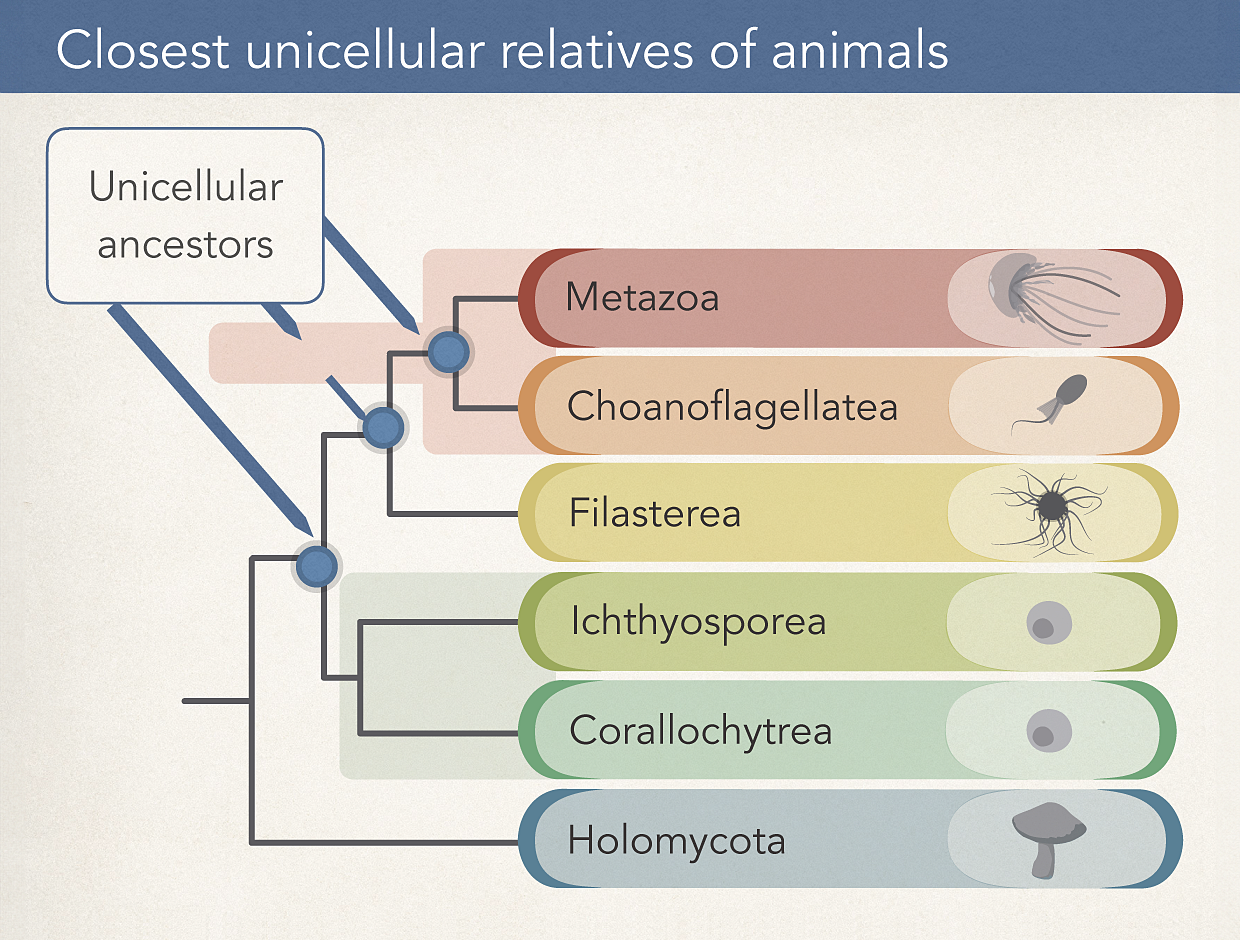
This evolutionary tree shows Metazoa, the group that includes most animals, along with four unicellular cousins and the Holomycota, which includes fungi, as an outgroup for comparison.CREDIT: ADAPTED FROM IÑAKI RUIZ-TRILLO
Size, for one, was probably a factor. Being big means there are more things you can eat, and fewer things that can eat you. Multicellularity also allows you to have different parts that do different things at the same time: nerves to think, muscles to move, a stomach to digest food, and so on.
Researchers speculate that something major must have happened in the world to make teaming up such a good deal. “It must be environmental, to a large degree,” says Will Ratcliff, an evolutionary biologist at Georgia Tech in Atlanta. Two major kinds of Earthly changes stand out as possibilities.
One is the end of the Snowball Earth phase of the planet. This was an age, from roughly 710 to 640 million years ago, with at least two periods when the Earth was, if not wholly icy, at least pretty slushy. A warming climate might have somehow created an opportunity for multicellularity to evolve, Ruiz-Trillo suggests.
Building Bodies
Building a multicellular body with all its different organs and systems took a lot of evolutionary wrangling. A body like our own needs a front and back, an up and down, a left and right — and then rules for constructing and positioning the right number of heads, organs, intestines and so much more. Read our special report on how these decisions get made.
Another possibility is changes to Earth’s oxygen levels. These were initially much lower than today; early microbes did not require oxygen as modern animals do. The first time the planet’s oxygen supply swelled, during the Great Oxygenation Event about 2.4 billion years ago, was when cyanobacteria released oxygen as part of their photosynthesis. To the microbes of the time, the highly reactive gas was poison, and it decimated life forms. A second oxygenation event, of less certain causation, happened between about 850 and 540 million years ago, and this one may have set the stage for the emergence of animals.
Oxygen levels matter to large creatures that need oxygen, Ratcliff says, because the vital gas can diffuse only so far into tissues. For modern animals, the solution is circulatory systems that deliver oxygen through the body. The first big multicellular things, presumably, had not yet evolved such systems. The more oxygen there was on the outside, the more of it could diffuse deep into tissues, and the easier it would be to grow big.
Whatever pressures or opportunities induced our ancestor to commit to multicellularity, it did take that route — but who was “it”? That remains a mystery: Its cells were soft, squishy things that didn’t leave many fossils. “We don’t know what it looked like, and I don’t honestly think we ever will,” says Ratcliff. “It’s very difficult to try to reverse-engineer something that happened the better part of a billion years ago.”
Great-great-grandmama was a one-cell wonder
Still, researchers are trying. To hypothesize what the creatures might have been like, scientists like Ruiz-Trillo take a family-reunion kind of approach: Say you held a giant gathering, inviting all your cousins, second cousins, once-removeds, etc. Then, suppose you lined up all the relatives who share a common ancestor — say, the same great-great-great-grandmother — and looked for common features. If all those cousins have freckles and dimples, say, you could guess that great-great-great-grandmama, too, probably had them.
Scientists do similar studies, albeit of a more technical nature, comparing the genomes of animals with those of our very distant cousins. This is a strange family reunion indeed: In addition to the vast diversity of animals, including some of the earliest groups to branch off the animal family tree, the sponges and comb jellies, scientists know of four sets of one-celled cousins.
Most closely related to animals are the choanoflagellates. Found in fresh and salty waterways, they use whiplike tails called flagella to swim around or to waft bacteria toward them for supper. Rounding out the family reunion are the amoebalike or flagellated filastereans, the ichthyosporeans that often parasitize fish, and the amoeboid or immobile corallochytreans (also known as pluriformeans).
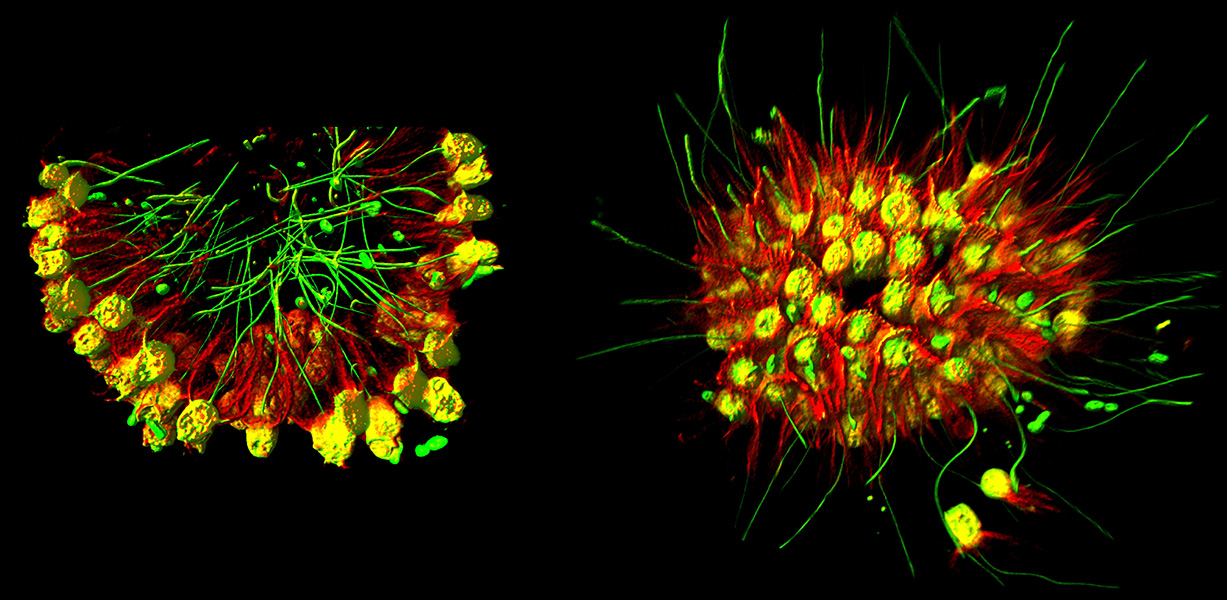
The choanoflagellate Choanoeca flexa can group together into colonies, with the tail structures either pointing in or out. The colonies switch to the tail-out shape in response to sudden darkness. These relatives of multicellular animals were discovered in splash pools on the Caribbean island of Curaçao and were christened “flexa” for the bendy sheet-like structures they formed.CREDIT: THIBAUT BRUNET
None of these things, as they exist today, are the ancestor of animals. Rather, our lineage and theirs all split off from some common ancestor around 600 million years ago, and we’ve all evolved since then. But certain trait similarities between us and them suggest that our long-lost ancestor may have had those traits too.
Over the last decade, scientists have sequenced the genomes of 15 of those distant relatives. And therein lay surprises. These single-cell oddities contain almost as many genes as people, says Brunet, including DNA codes once thought to be animal exclusives. The critters have genes related to ones that make integrinsand cadherins, proteins that help animal cells stick to each other. They have genes for control agents that guide cell identity, akin to the factors that tell an animal cell to be a brain cell or a muscle cell or a stomach cell. And they have genes involved in cell-to-cell communication.
In other words, these critters seem to be pre-adapted for multicellularity, and therefore our shared ancestor probably was too. But what would a unicellular pre-animal, all by its lonesome, have been doing with these kinds of genes?
In one-celled life forms, proteins like cadherins could have been useful because they are adhesive. “I compare them to Velcro,” says Jordi Paps, an evolutionary biologist at the University of Bristol, England. For a unicellular being, adhesive molecules could be a great way to capture passing bacteria for dinner.
Genes that govern cell identity may have helped the single-celled ancestors of animals take different forms at different times. All four close cousins of animals do this. Filastereans, for example, can adopt an amoeba-like shape, with long arms, that can divide into daughter cells, but they can also take on an armless, nondividing form.
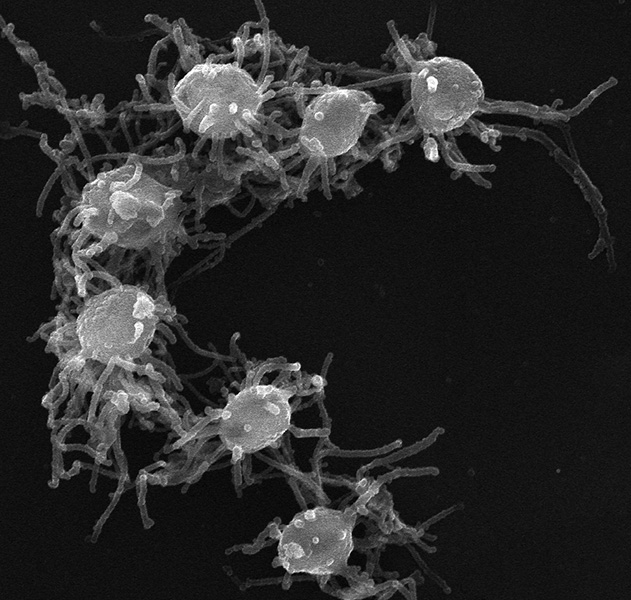
Capsaspora owczarzaki is a filasterean originally found inside a freshwater snail in Puerto Rico. It can take on multiple shapes, including an amoeba-like form with fingerlike projections it uses to attach to surfaces.CREDIT: MULTICELLGENOME LAB
Finally, all four close cousins of animals have times in their lives when they flirt with multicellularity. Some choanoflagellates can make colonies by not fully separating from each other when they divide. At least one filasterean can aggregate once-separated cells. Corallochytreans live with two or so nuclei for a least a little while, while ichthyosporeans divide repeatedly to make a big ball of dozens or hundreds of nuclei before suddenly exploding into separate entities. That suggests the animal precursor, too, may have transiently grouped cells together. It’s not certain why this was beneficial; scientists speculate that the cells might have gained protection by acting in a herd, or traveled or hunted en masse.
Ruiz-Trillo and colleagues suggest the single-celled pre-animal was undergoing serious makeovers during its life cycle. Maybe sometimes it was like an amoeba, able to crawl around seeking food, and maybe other times it grew a flagellum to swim. Perhaps it sometimes survived alone, and other times grouped cells together.
But at any given time, our one-cell cousins can hold only one form, and scientists expect that was probably true of the pre-animal ancestor too. If it was dividing, it probably wouldn’t be able to swim, or to eat, says Brunet. It had to pick. What this means is that even in a single-celled creature, division of labor could have existed and conferred a benefit — but it was managed over time, not space.
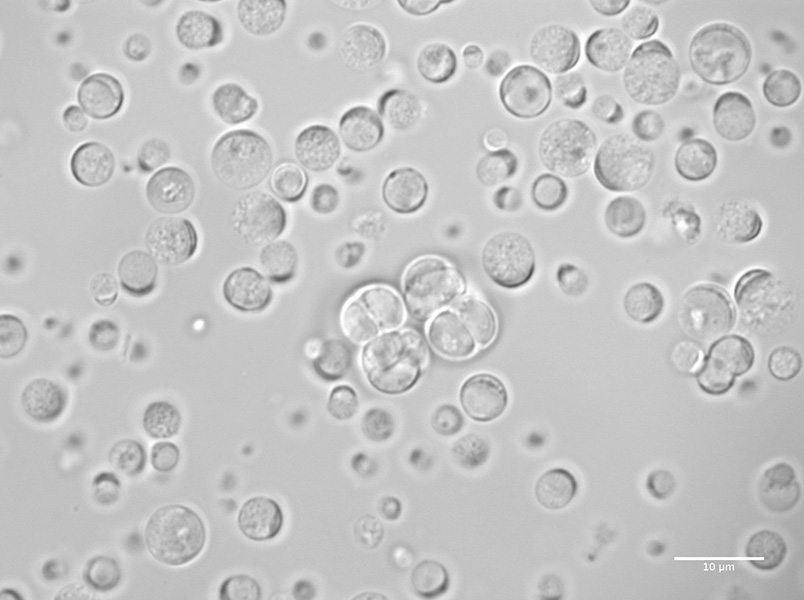
Corallochytrium limacisporum exist as single cells with one or more nuclei. This free-living species was first discovered in lagoons of islands in the Arabian Sea.CREDIT: MULTICELLGENOME LAB / FLICKR
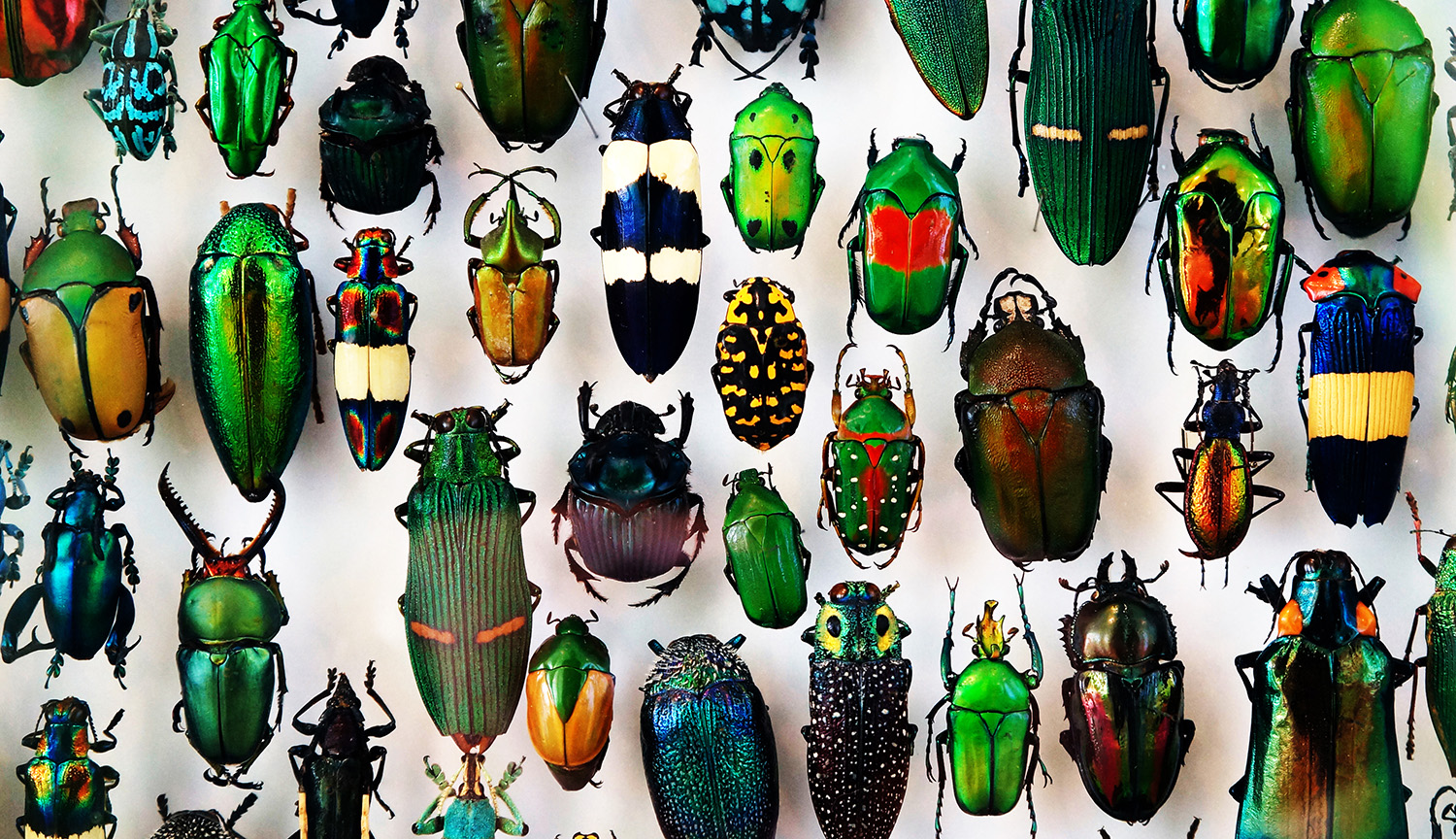
Scientists think a trick to multicellularity was to repurpose the genes that were responsible for those temporal changes to work across space instead, controlling the shapes and jobs that cells do in different body parts. Such gene recycling, or “co-option,” has happened again and again during evolution. Beetles, for example, create their horns with genes co-opted from the genesis of other appendages, such as legs and antennae. Similarly, fish fins for swimming were co-opted so animals could walk on land, and leaves for photosynthesis were co-opted by cacti as spiny defenses. Same genes, different functions.
Acting like animals
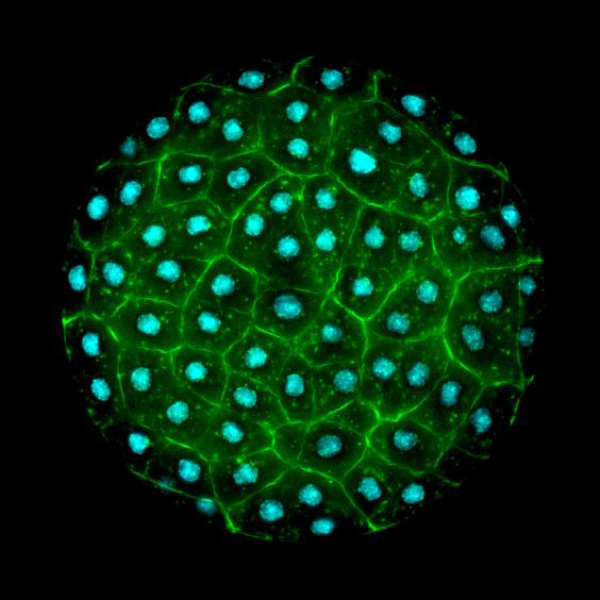
To further investigate the multicelled mystery, a key step is to move beyond genetic comparisons and examine the biology of the one-celled kin of animals, says Omaya Dudin, an evolutionary cell biologist at the University of Geneva. Exploring ichthyosporeans, his group found striking similarities to animal development. When ichthyosporeans create their big balls of nuclei and then separate them, the cells divide in a way that looks a lot like cells dividing in an early animal embryo (like an insect embryo in one species, like a frog or mouse embryo in another).
That doesn’t necessarily mean the shared ancestor of bugs, mammals and ichthyosporeans also performed embryo-like cell division, Dudin says. It could be that the common ancestor just had enough of the necessary genes and abilities for their descendants to evolve remarkably similar division processes.
Still, it does mean that even something that seems very animal-specific, like embryonic division, isn’t necessarily animal-unique.
Ichthyosporeans generate structures with many nuclei before separating into individual cells. This species, Sphaeroforma arctica, was found in an Arctic crustacean.CREDIT: MULTICELLGENOME LAB / FLICKR
In fact, even having multiple cell types at the same time might not be an exclusively animal feature. Observing the multi-nucleate balls of the ichthyosporean Chromosphaera perkinsii, Dudin’s team noted something surprising: There were two kinds of cells, one with flagella and one without. Researchers have also spotted evidence of multiple cell types — most round, but some oblong — in choanoflagellate colonies. That suggests, just maybe, that the precursor of animals might have had moments not just of multicellularity but also of division of cellular labor.
Altogether, it seems clear that our unicellular ancestors were ready for multicellularity. While the act of simply teaming up could have happened quickly, “there was probably a lot of complexity to the origin of animals,” says Brunet. “The full extent of animal multicellular complexity certainly arose over thousands, and most probably millions, of years.”
There are still plenty of details for scientists to iron out: Did the pre-animal look like choanoflagellates, as one popular theory attests, or perhaps adopt a variety of forms at different times? Were the first animals like sponges, as traditionally presumed, or maybe more like comb jellies?
Ruiz-Trillo, who coauthored a look at the roots of multicellularity in the 2023 Annual Review of Microbiology, refuses to name a favorite hypothesis: “I think we don’t have enough data to say,” he says.
To get more data, he’ll have to invite more creatures to the family reunion. And he is busy doing just that, seeking as yet unknown microbes from aquatic sites around the world. So far, he’s identified at least eight new groups of animal cousins by analyzing their genes alone. If scientists can find, grow and study these creatures, they’ll likely find new clues to the origin of multicellular animal-kind.
It should be quite a party.
Knowable Magazine contributor Amber Dance comes from a long line of multicellular life forms.
In Part 1, I talked about the poly-crises humanity is facing. I described Jeremy Rifkin’s new book, Planet Aqua: Rethinking Our Home in the Universe and how it expands the understanding of our world to recognize that our planet is primarily water rather than earth. I also discussed the work of James DeMeo who traced the origins of many of our current problems to a particular time and place in human history–6,000 years ago in the Middle East–and what it can teach us about our present predicament and how to solve it.
For most of human history, despite the many challenges of life, humans lived in relative peace and prosperity. In their book, Nurturing Our Humanity: How Domination and Partnership Shape Our Brains, Lives, and Future, Riane Eisler and Douglas P. Fry, they say,
“For the overwhelming majority of the period that the genus Homo has existed, nomadic foraging constituted the ubiquitous human lifestyle.”
They go on quote anthropologist M.G. Bicchieri who said,
“For more than 99 percent of the approximately two million years since the emergence of recognizable human animal, man has been a hunter and gatherer.”
Eisler and Fry say our ancestors were “The Original Partnership Societies” with the following features of partnership systems that include:
Overall egalitarianism.
Equality, respect, and partnership between women and men.
A nonacceptance of violence, war, abuse, cruelty, and exploitation.
Ethics that support human caring, prosocial cooperation, and flourishing.
As James DeMeo’s research demonstrated, this way of life changed 6,000 years ago.
“With very few exceptions, there is no clear and unambiguous evidence for warfare or social violence on our planet Earth prior to around 4,000 BCE and the earliest evidence appears in specific locations, from which it firstly arose, and diffused outward over time to infect nearly every corner of the globe.”
DeMeo goes on to say,
“A massive climate change shook the ancient world, when approximately 6,000 years ago vast areas of lush grassland and forest in the Old World began to quickly dry out and convert into harsh desert. The vast Sahara Desert, Arabian Desert, and the giant deserts of the Middle East and Central Asia simply did not exist prior to c.4000 BCE.”
There is modern evidence that the area in question is what had been referred to in the bible as “the Garden of Eden.” In their book, Exiles From Eden: Psychotherapy From an Evolutionary Perspective, Kalman Glantz and John K. Pearce cite the work of archaeologist Juris Zarins. He believes this idyllic area of the world now lies under the Persian Gulf, downstream from the ancient civilizations that flowed along the banks of the Tigris and Euphrates. According to Glantz and Pearce
“Eden was not paradise. It was just a place—a place where human beings lived the way all humans lived before the rise of civilization.”
“The ‘Garden of Eden’ myths, which exist in the historical literature of many Old World cultures, appear to be factually rooted in this early period of socially-cooperative and peaceful social conditions, when the Saharasia was green and fruitful,”
says DeMeo.
“Then came the devastating climate change towards aridity, which formed the vast Saharasian desert belt, and humans were literally cast ‘out of the garden’. The rest is history.”
DeMeo’s research shows that the drought that occurred 6,000 years went on for generations and impacted the lives of all who lived at that time. Recent research on the impact of “Adverse Childhood Experiences,” demonstrates that the consequences of childhood trauma are long lasting and cause physical, emotional, and relational health problems throughout our lives.
“Famine and starvation is a severe trauma from which survivors rarely escape unscathed,”
says DeMeo.
“A lot of people die, families are split apart, and babies and children are often abandoned, and suffer enormously. Starvation affects surviving children in an emotionally severe manner. These attitudes and behaviors are deeply protoplasmic in nature, and are passed on to ensuing generations no matter what the climate, by social institutions which reflect the character structure of the average individual at any given period of time.”
Although this kind of trauma impacts both males and females, men and women often deal with the trauma in different ways. The comedian, Elayne Boosler, offers a humorous, yet insightful reflection on this inherent difference. She says,
“When women get depressed they either eat or go shopping. Men invade another country. It’s a whole different way of thinking.”
In my recent book, Long Live Men! The Moonshot Mission to Heal Men, Close the Lifespan Gap, and Offer Hope to Humanity, my second chapter is titled, “Male Violence is Increasing—From School Shootings, to Domestic Violence and Insurrection at the US Capitol. From Irritability and Anger to Depression and Suicide.”
I go on to say,
“Men are the ‘canaries in the coal mine,’ alerting us to the need for change. Canaries were used in goal mines as an early warning system for miners. Toxic gases such as carbon monoxide and methane in the mine would kill the bird before affecting the miners. Male mental illness and breakdown are the world’s early warning signs of impending catastrophe. Things like Irritable Male Syndrome, male depression and aggression, and high suicide rates are alerting us to the toxic nature of our current environment and lifestyles.”
Our Moonshot For Mankind and Humanity
We believe man’s mental, emotional, and relational health is the key to empowering men to live long and well. Our mission is to help men live healthier, happier, more cooperative lives—fulfilling lives of purpose and productivity, where men are supported and valued as they make positive contributions to their families, friends, and communities. When that happens, families grow stronger, communities prosper, and humanity takes its next leap forward.
In 2004 I read a powerful study, “Sexual Selection and the Male:Female Mortality Ratio,” by Daniel J. Kruger, PhD and Randolph M. Nesse, M.D. They examined premature deaths among men in 20 countries. They found that in every country, men died sooner and lived sicker than women and their shortened health-span and lifespan harmed the men and their families. They concluded with a number of powerful statements:
“Being male is now the single largest demographic factor for early death.”
“Over 375,000 lives would be saved in a single year in the U.S. alone if men’s risk of dying was as low as women’s.”
“If male mortality rates could be reduced to those for females, this would eliminate over one-third of all male deaths below age 50 and help men of all ages.”
“If you could make male mortality rates the same as female rates, you would do more good than curing cancer.”
For me, this was a call to action. I invited a number of colleagues who were leading organizations that had proven successful in helping improve men’s health. We launched the non-profit, MoonshotForMankind.Org. We invite you to join us.
We also have an additional way to share information that can be helpful. Come check out our Substack, https://substack.com/@moonshotformankind and hear what our founding members have to say.
There are clearly a number of biologically based reasons why women live longer than men. But we know that even our genes can be modified by changes in our lifestyle and beliefs about ourselves and the world.
The lessons I have learned over the years are these:
We may not be responsible for the traumatic climate change that occurred 6,000 years ago, but we must take responsibility for our present situation. As they say, “Nature bats last.” If humans are not willing to change, nature will force the change upon us.
We would do well to listen to our animal elders. Most species have been here longer than us and are better adapted to life on planet Earth. As historian Thomas Berry reminds us.
“We never knew enough. Nor were we sufficiently intimate with all our cousins in the great family of the earth. Nor could we listen to the various creatures of the earth, each telling its own story. The time has now come, however, when we will listen or we will die.”
When we’re going down the wrong road, it’s never too late to turn around.
We may not be able to turn back to the past, but we can move ahead to the future. As Jeremy Rifkin says,
“We need to reset our perception of waters as ‘resource’ to one where waters are seen as a ‘life source.’ We need to adapt to the hydrosphere rather than trying to adapt the hydrosphere to us. The next stage in the human saga is to rebrand our home ‘Planet Aqua’ and learn to live and thrive in new ways on a unique water planet in the universe.”
You can learn more about Jeremy Rifkin’s work and his book, Planet Aqua: Rethinking Our Home in the Universe here. If you liked this series of articles and would like to read more about how we can create a healthy future for ourselves, our children, and future generations, I invite you to sign up for my free weekly newsletter. You can do so here: https://menalive.com/email-newsletter/
Best Wishes,
Jed Diamond
Founder and VHS (Visionary Healer Scholar) of MenAlive
He then went on Facebook and called homosexuality an “abomination” and trans people “demonically influenced.”
By Greg Owen Friday, October 4, 2024 (lgbtqnation.com)
Photo: Idaho Legislature
A small-town candidate forum in Idaho this week went off the rails when a sitting state senator screamed at a Native American participant, “Why don’t you go back to where you came from?!”
The outburst, following an earlier threat against his Democratic opponent, came from the current state Sen. Dan Foreman (R), a retired cop well known for his rabid Christian nationalist ideology and simmering anger issues. And about an hour into the forum, both were on display when the candidates were asked whether or not they thought there was discrimination in the state.
Trish Carter-Goodheart, a Democratic House candidate who’s a member of the Nez Perce Tribe, responded by saying racism and discrimination are real problems in Idaho, referring to the presence of white supremacist enclaves in the north of the state, which Foreman represents, according to a statement she released after the forum.
After Carter-Goodheart spoke, Foreman stood up and began to yell, saying: “I’m so sick and tired of this liberal bullshit! Why don’t you go back to where you came from?!”
The meltdown was shared by Carter-Goodheart in her statement and corroborated by Julia Parker, Foreman’s Democratic opponent, and Mayor Rose Norris of Kendrick, where the event was held.
“Racist comments like this one that were directed at me have no place in our community,” Carter-Goodheart told the Idaho Statesman. “Intolerance is unacceptable.”
“This is our land,” she added. “We’re never planning on leaving; this is where our ancestors are buried.”
Earlier in the evening, Foreman directed his ire at Parker after she criticized his record as senator. She “better not” do it again, Foreman said, glaring. Asked by Parker if he meant the comment as a threat, he replied, “You heard me.”
The former cop abruptly left the forum after lashing out at tribe member Carter-Goodheart.
But Foreman’s blowup didn’t end there.
In a Facebook post following the event, he claimed he had been “race-baited” into his outburst, goaded by Carter-Goodheart.
The online tirade continued with Foreman labeling abortion “murder,” gender-affirming care for transgender people as “sick and demonically influenced,” and homosexuality as an “abomination.”
“Does the democrat party challenge the Word of God?” Foreman hissed in the post. “Yes, every person in our state and nation has equal rights under the constitution. That is a good thing. But there are no designer or special rights associated with one’s sexual behavior — sorry democrats and other lefties.”
In 2018, Foreman screamed at a group of students from the University of Idaho when they tried to talk to him about sex education and birth control.
A few months earlier, the North Idaho Republican was caught on tape yelling at a man at the Latah County Fair. He told him to “go straight to hell.”
Millions know Thomas Merton as the author of The Seven Storey Mountain, the autobiography that became an international bestseller and a modern spiritual classic. Merton, a prolific spiritual writer and social activist, inspired a generation from the silence and solitude of a Trappist monastery. Decades after his death, he remains a modern spiritual master, a source of wisdom on peace, racial harmony, poverty, alienation, and the engagement of Eastern and Western spiritual traditions. Now Merton is also revealed as a man whose spirituality is rooted in nature, an environmentalist ahead of his time. His writings on nature serve as a primer on eco-spirituality. He approaches ecology as a spiritual issue, one that exposes the degree of human alienation from the sacredness of the planet. When The Trees Say Nothing gathers for the first time over 300 of Merton’s nature writings, grouping them thematically into sections on the seasons, elements, creatures and other topics. Edited by Merton scholar Kathleen Deignan, the collection is cohesive and accessible, drawing from both Merton’s public writings and his recently published private journals. The lyrical writings are enhanced with Deignan’s own informative Introduction, along with a Foreword by Thomas Berry, renowned spiritual mentor for the environmental movement. Unique and powerful on its own, When the Trees Say Nothing is enhanced with the art of John B. Giuliani, known for his stunning iconography. Giuliani’s drawings harmonize exquisitely with Merton’s meditations on nature, making When the Trees Say Nothing a spiritual and aesthetic prize.
Thomas Merton, religious name M. Louis, was an American Trappist monk, writer, theologian, mystic, poet, social activist and scholar of comparative religion. In December 1941 he entered the Trappist Abbey of Gethsemani and in May 1949 he was ordained to priesthood. He was a member of the convent of the Abbey of Our Lady of Gethsemani, near Bardstown, Kentucky, living there from 1941 to his death. Merton wrote more than 50 books in a period of 27 years, mostly on spirituality, social justice and a quiet pacifism, as well as scores of essays and reviews. Among Merton’s most enduring works is his bestselling autobiography The Seven Storey Mountain (1948). His account of his spiritual journey inspired scores of World War II veterans, students, and teenagers to explore offerings of monasteries across the US. It is on National Review’s list of the 100 best nonfiction books of the century. Merton became a keen proponent of interfaith understanding, exploring Eastern religions through his study of mystic practice. His interfaith conversation, which preserved both Protestant and Catholic theological positions, helped to build mutual respect via their shared experiences at a period of heightened hostility. He is particularly known for having pioneered dialogue with prominent Asian spiritual figures, including the Dalai Lama XIV; Japanese writer D.T. Suzuki; Thai Buddhist monk Buddhadasa Bhikkhu, and Vietnamese monk Thich Nhat Hanh. He traveled extensively in the course of meeting with them and attending international conferences on religion. In addition, he wrote books on Zen Buddhism, Confucianism, and Taoism, and how Christianity is related to them. This was highly unusual at the time in the United States, particularly within the religious orders.
(Goodreads.com)
Consciousness, sexuality, androgyny, futurism, space, the arts, science, astrology, democracy, humor, books, movies and more





 An important latent meaning [is] that a democratic society is “mature,” that is to say, that it has a quality that is allied to the quality of individual maturity which characterizes its healthy members.