LET THE NATION-STATE DIE SO THAT DEMOCRACY MAY THRIVE

Self-Governance Is Growing Locally as National Elections Are Foundering—And That’s a Good Thing  

Stop conflating democracy with the nation-state, writes columnist Joe Mathews. “Ecclesiastical, and, political, state of the nation” (1780) by James Gillray. Courtesy of Yale University Library.

by JOE MATHEWS | OCTOBER 8, 2024 (ZocaloPublicSquare.org)

Democracy is not in decline. The nation-state is.

Making that distinction—between democracy and the nation—is crucial to understanding what’s really going on when it comes to self-government on this planet.

It’s a distinction we rarely make. When people around the world talk about how democracy is doing, we talk about democracy almost exclusively at the national level.

We see this every year, when think tanks and NGOs issue reports and rankings on the state of democracy—that consider the national governments only.

Take International IDEA, a Sweden-based intergovernmental organization that supports elections and democracy worldwide. In its September 2024 Global State of Democracy Report, IDEA declared that democracy remained in decline because only 1 in 4 nations were becoming more democratic, while 4 in 9 nations were becoming less so. IDEA also noted that 1 in 5 national elections is now contested by the loser, and that the global average for electoral turnout declined by 10 percentage points (65.2 % to 55.5 %) in the last 15 years.

Similarly, Freedom House, based in Washington D.C., points to growing numbers of nation-states with problematic elections and armed conflict to declare that this is the 18th consecutive year of decline. And, in its 2024 report, Varieties of Democracy, a global think tank in Sweden, says that democracy has been in decline for 15 years in a row because the share of the population living in nations that are becoming more autocratic is higher than the share living in democratizing countries.

To be sure, these national-level trends are not good news. But they paint an incomplete and misleading picture of the state of democracy on this planet, for three big reasons.

The first is rather obvious. Democracy is self-government, the business of everyday people governing themselves. And most democracy on this planet takes place where most people experience the ins and outs of day-to-day existence—in local communities, rather than at the national level.

Second, these global rankings of democracy rest heavily on elections, which are only one democratic process. Yes, trust and participation in elections are declining. But other forms of democracy—in which people themselves make decisions, rather than delegating power to elected representatives—are growing.

Consider four of these forms.

Direct democracy, in which people vote to enact laws or amend constitutions through referenda, is now a part of governance in more than half of countries. But such procedures are mostly used at the local and sub-national levels, according to the new Global State of Direct Democracy report.

Participatory democracy, involving tools that allow residents of a neighborhood or other jurisdiction to formulate budgets or development plans themselves, has been expanding rapidly since the launch of one such tool in 1990 in Porto Alegre, Brazil. People Powered, a global hub for democracy and participation, reports that more than 7,000 budgets—mostly in cities and local schools—have been made through the participatory budgeting process.

Deliberative democracy has become so popular in recent years that practitioners speak of a “deliberative wave.”  The most popular forms of such democracy are citizens’ assemblies—bodies of everyday people, assembled using “sortition” or lotteries rather than through elections. At a recent global conference for the network Democracy R&D, panelists estimated that about 1,000 such assemblies have been held to deliberate on and find solutions to difficult challenges, most at the local level.

Digital democracy is being used worldwide, often locally, to allow ordinary citizens to make proposals, develop policies, and govern their own communities. Among the best-known digital democratic tools is Decidim, an open digital platform developed by the city of Barcelona and now used in hundreds of localities and institutions worldwide.

Nation-states simply can’t manage up or manage down in the 21st-century world.

But beyond all this growth in local democratic practice, there’s a bigger reason why we are misunderstanding the state of democracy: Nation-states are in retreat, regardless of their systems of government. The signals so often interpreted as democratic decline are actually evidence of something larger and more fundamental.

Nation-states everywhere—be they more democratic or more authoritarian—are in crisis, with their rulers losing the ability to govern their own countries. The United States, as a nation, is in danger of breaking apart. So too is Russia, which is caught up in a war in Ukraine, and suffering long-term declines in the health and life spans of its people. Germany is losing its dynamism and cohesion, for sure, but so is China—struggling with a debt crisis, an aging population, profound corruption, and an increasingly isolated dictator in Xi Jinping.

Why is this happening?

“The most momentous development of our era, precisely, is the waning of the nation-state: its inability to withstand countervailing 21st-century forces, and its calamitous loss of influence over human circumstance,” the British novelist and scholar Rana Dasgupta writes in his book After Nations. “National political authority is in decline, and, since we do not know any other sort, it feels like the end of the world.”

Nation-states simply can’t manage up or manage down in the 21st-century world. Looking up, nation-states have proven incapable of handling planetary forces and threats—climate change, finance and capital flows, technological advances, disease, religious-oriented terrorism. If anything, nation-states have made such problems worse, while ceding more and more power (and formerly national functions like surveillance) to multinational institutions like big tech companies from my home state of California.

Looking down, nation-states can no longer unify their peoples. Instead, national leaders routinely exploit divides to maintain power. Almost all wars are between groups of people inside nation-states that are breaking down. Many of these civil wars have been internationalized by other nation-states, seeking short-term advantage. The most awful example is the current civil war in Sudan, fueled by Russia and the United Arab Emirates, which has displaced millions, killed hundreds of thousands by starvation, and reduced the city of Khartoum to a ruin.

GET MORE ZÓCALO

Ideas journalism with a head and heart.

You may opt out or contact us anytime.

War is not the only tool that nation-states use to cling to their diminishing power. Leaders of nation-state democracies and autocracies alike have taken to scapegoating outsiders, especially migrants, and pledging to exert dictatorial power. But such authoritarian performances are really signs of desperation and weakness.

The void left by the decline of the nation-state is frightening, because of the potential for violence as our world’s governance infrastructure falls apart. But that same void is also an enormous opportunity for democracy and for those forms of democracy being practiced more often on the local level.

Tellingly, democracy is finding ways to grow even inside hostile and authoritarian nation-states. Turkey, with a religious autocrat as prime minister, has seen a wave of democratic participation in its cities, particularly Ankara and Izmir. Syria, ruled by a ruthless dictator, is the site of democratic cantons along its border with Turkey. Myanmar, in the midst of a crackdown by its military rulers, is sprouting new forms of local self-government.

Attacks on democracy also are redounding, to democracy’s favor. Ukraine, in the midst of Vladimir Putin’s invasion, is awash in ambitious local plans for rebuilding cities in more democratic and sustainable ways.

Around the world, alliances of cities are working together to address climate change, poverty, and other problems that the failing nation-states can’t solve and in fact are making worse. These alliances, which often combine democratic processes with technocratic expertise, point the way to a brighter future, in which stronger and more democratic local governments handle more of their own problems, together.

Visions of a local planetary replacement for the nation-state system might be dismissed as implausible, but the nation-state idea dates only to 1648, and the modern nation-state is less than a century old. It is obviously vulnerable.

And democracy—and particularly the people-driven forms of democracy now on the rise at the local level—is our best bet to replace that system.

JOE MATHEWSis a columnist for Zócalo Public Square and founder-publisher of the planetary publication Democracy Local.
The magical, mesmerizing migration of monarch butterflies

Jaime Rojo | TED2024

• April 2024

When monarch butterflies migrate, they produce one of the most iconic wildlife spectacles in the world — and provide us with an important indicator of ecological health, says photographer Jaime Rojo. Telling a story about our relationship to the natural world, he shares his experience photographing these mesmerizing insects deep in their remote mountain habitats in Mexico, diving into the latest research into the mysteries of their multi-thousand-mile journey and sharing how each of us can join the growing movement to protect them.

TED is supported by ads and partners

About the speaker

Jaime Rojo

PhotographerSee speaker profile

TRANSLATION® CLASS — OCT 26 & 27

#1  TRANSLATION® CLASS  OCT 26 & 27


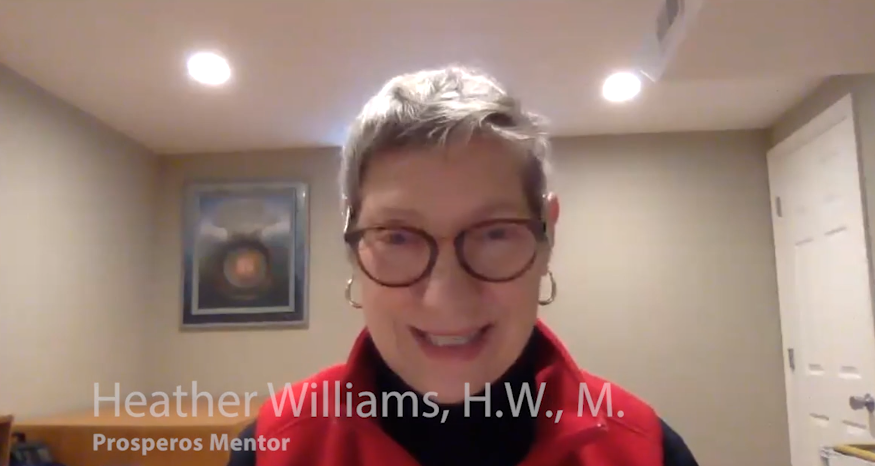
Heather Williams, H.W.,M. will be giving her twelfth Translation® class this coming October 26 & 27. This will be an online class, for about 5 or 6 hours on both Saturday and Sunday. Heather is preparing to offer Translation® examples of her own, plus exercises. She will also offer students a few special stories with Thane speaking.

More info and register here: https://www.theprosperos.org/prosperos-events/translation202403-jmkd7

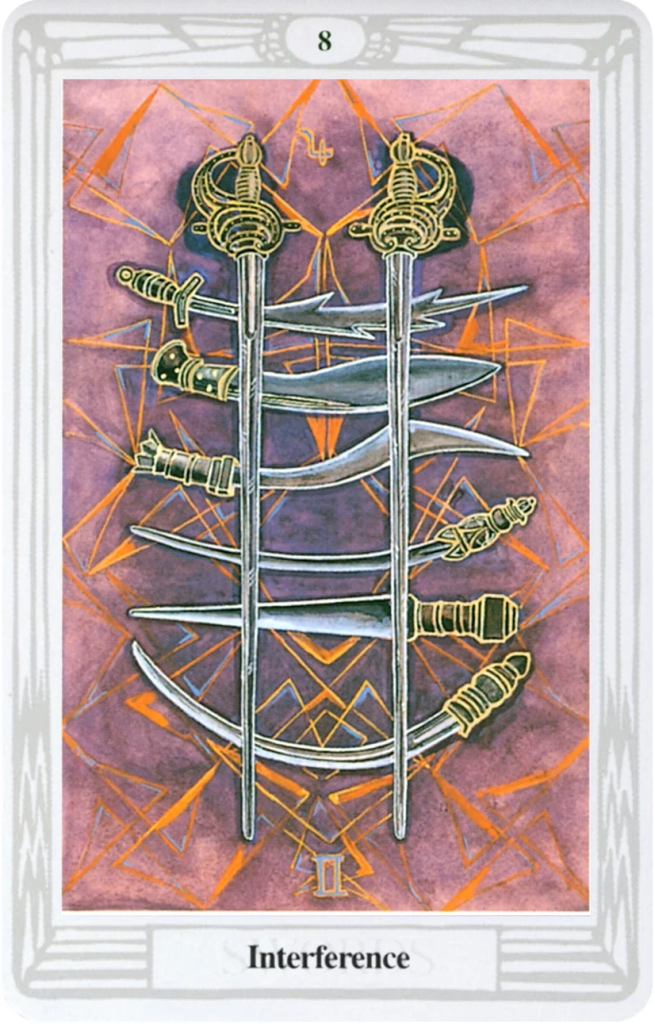
Tarot Card for October 11: Interference

The Eight of Swords

A day which is ruled by the Lord of Interference is bound to present some difficulties. However, as with all Tarot cards, the Eight of Swords carries with it the means of dealing with any obstacles or problems which appear.The first thing to recognise is that anybody’s life has the occasional bump – we would never get anywhere if it did not. Bumps can be caused by all kinds of different things – people, our own attitudes, astrological influences…the possibilities for interference are boundless.Make sure you’re not going around in circles attempting to make a decision through a sense of duty or guilt. That often causes problems when this card is around.Finally keep your eyes open for anyone else who may be deliberately stepping in your path. Often when somebody interferes, merely recognising what they are doing robs their actions of any power over us.However – whatever the source of the problem is, the message of the Eight of Swords is clear. Don’t rush to fight with things that are not currently going your way – you’ll almost certainly fail. Go and find something else to do instead. There will be a better time to deal with the things that are in your way today.Don’t waste your energy hacking away at something that may be better cleared up tomorrow. Don’t frustrate yourself by banging on a door that just will not open. Rely on the idea that things will ease off, and that you will deal with them better for not having wasted hours on them today!Affirmation: “I skilfully direct my energies into the things that will make most difference.”

Eknath Easwaran on the deathless Self

“The eye cannot see it; the mind cannot grasp it.  The deathless Self has neither caste nor race.  Neither eyes or ears, hands or feet.  This Self is infinite, present in the great and small, everlasting and changeless, the source of life.”

Eknath Easwaran (1910-1999)
Indian Spiritual Teacher
AN OPPORTUNITY FOR DAILY REFLECTION BROUGHT TO YOU BY THE SCHOOL OF PRACTICAL PHILOSOPHY

Weekly Invitational Translation: Hurricanes are an Act of God.

Translation is a 5-step process of “straight thinking in the abstract” comparing and contrasting what you think is the truth with what you can syllogistically, axiomatically and mathematically (using word equations) prove is the truth.

The claims in a Translation may seem outrageous, but they are always (or should always be) based on self-evident syllogistic reasoning. Here is one Translation from this week. 

1)    Truth is that which is so.  That which is not truth is not so.  Therefore Truth is all that is.  Truth being all is therefore total, therefore whole, therefore complete, therefore perfect.  I think therefore I am. since I am and since Truth is all that is, therefore I, being, am Truth.  Sicne I, being, am Truth, therefore I, being, have all the attriutes of Truth.  Therefore I, being, am total, whole, complete, perfect.  Since I, being, am Truth and since I am self-evidently the ability to think or consciousness, therefore Truth is the ability to think or Consciousness.  (Two things being equal to a third thing are equal to each other.)

2)    Hurricanes are an Act of God.

Word-tracking:
Act of God:  a natural event without human intervention
hurricane:  evil spirit of the sea, god of the storm, fast, forceful thing
storm:  to stir, to scatter, disturb, destroy
sea:  vast area

3)    Truth being whole, complete and perfect cannot at the same time be scattered, disturbed or destroyed, therefore the wholeness of Truth is indestructible. Truth being all that is, there is no sea or vast area other than Truth, therefore Truth is the only only sea.  Truth being the only sea and Truth being one, therefore united, therefore harmonious, therefore the sea of Truth is at peace.  Truth being all that is, therefore every natural event is an act of Truth.  And Truth being one, there is no division between God and man.  Therefore every natural event is an act of one Consciousness. 

4)     The wholeness of Truth is indestructible.
        Truth is the only only sea. 
        The sea of Truth is at peace. 
      Every natural event is an act of Truth.  
        Every natural event is an act of one Consciousness. 

5)    Every natural event is an act of one Consciousness at peace with Itself.

For information about Translation or other Prosperos classes go to: https://www.theprosperos.org/teaching

Mystical Luminosity with Jonathan Dinsmore

New Thinking • Oct 8, 2024 Jonathan Dinsmore, MS, is an instructor in psychology at the University of Arkansas. He is author of Mystical Luminosity: The Initiation of a Construct Grounded in Phenomenology. Here he shares how the science of psychology can cast illumination on a concept that can be found in virtually every religious and mystical tradition. He claims that this is a real experience that can be studied through the lens of phenomenology. 00:00 Introduction 03:34 The experiences of Federico Faggin and others 10:28 Religious, Near-death, psychedelic descriptions 21:17 Luminosity experience inventory 24:01 Mystical paradoxes 29:20 Bioluminescence 35:42 Phenomenological interviews 43:46 Parsimonious explanations 51:18 Phenomenology 57:12 Conclusion New Thinking Allowed host, Jeffrey Mishlove, PhD, is author of The Roots of Consciousness, Psi Development Systems, and The PK Man. Between 1986 and 2002 he hosted and co-produced the original Thinking Allowed public television series. He is the recipient of the only doctoral diploma in “parapsychology” ever awarded by an accredited university (University of California, Berkeley, 1980). He is also the Grand Prize winner of the 2021 Bigelow Institute essay competition regarding the best evidence for survival of human consciousness after permanent bodily death. (Recorded on September 9, 2024)

Understanding Alfred North Whitehead with Matthew David Segall

New Thinking Allowed with Jeffrey Mishlove • Oct 10, 2024 Matt Segall, PhD, is Associate Professor in the Philosophy, Cosmology, and Consciousness Department at California Institute of Integral Studies in San Francisco, and the Chair of the Science Advisory Committee for the Cobb Institute. He is author of Crossing the Threshold: Etheric Imagination in the Post-Kantian Process Philosophy of Schelling and Whitehead, and Physics of the World Soul: Whitehead’s Adventure in Cosmology. His website is https://footnotes2plato.com/about-me/ Here he brings to life the many historical influences, comparisons, and nuances in the life and work of one of the twentieth century’s greatest thinkers. 00:00 Introduction 02:24 Historical context 10:08 Wittgenstein and logical positivism 16:38 British and German idealism 25:45 Romanticism and esoteric thought 35:52 Descendental vs. transcendental 44:44 Science, technology, and philosophy 47:45 Whitehead and the paranormal 49:27 Can science integrate “etheric imagination”? 53:42 Conclusion New Thinking Allowed host, Jeffrey Mishlove, PhD, is author of The Roots of Consciousness, Psi Development Systems, and The PK Man. Between 1986 and 2002 he hosted and co-produced the original Thinking Allowed public television series. He is the recipient of the only doctoral diploma in “parapsychology” ever awarded by an accredited university (University of California, Berkeley, 1980). He is also the Grand Prize winner of the 2021 Bigelow Institute essay competition regarding the best evidence for survival of human consciousness after permanent bodily death. (Recorded on September 10, 2024)

Alfred North Whitehead (February 15, 1861 – December 30, 1947) was an English mathematician and philosopher. He created the philosophical school known as process philosophy, which has been applied in a wide variety of disciplines, including ecology, theology, education, physics, biology, economics, and psychology. Wikipedia

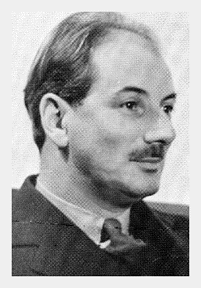
Lewis Mumford on the destiny of mankind

“Let us make one basic assumption: the destiny of mankind, after its long preparatory period of sepration and differentiation, is at last to become one.”

–Lewis Mumford, Thr Transformations of Man:

Lewis Mumford (October 19, 1895 – January 26, 1990) was an American historian, sociologist, philosopher of technology, and literary critic. Particularly noted for his study of cities and urban architecture, he had a broad career as a writer. Wikipedia