The moment we begin to see that there are infinitely many kinds of beautiful lives, we cease being captive to the myth of normalcy — the cultural tyranny that tells us there are a handful of valid ways to be human and demands of us to contort into these accepted forms of being. But the great hoax is that they are Platonic forms — the real reduced beyond recognition into the ideal, an ideal too narrow and symmetry-bound to account for the spacious, uneven, gloriously shambolic reality of being what we are.
Any idea of the normal currently in circulation is not an accurate map of what is customary for a human to be. We are — each one of us — far more compulsive, anxious, sexual, tender, mean, generous, playful, thoughtful, dazed, and at sea than we are encouraged to accept.
Given how opaque we are to ourselves most of the time, how encased our rawest emotional reasons are in elaborate cathedrals of rationalization, we struggle to imagine that anyone else could possibly see, understand, and accept the dazzling complexity with which we live inside. “Does what goes on inside show on the outside?” the young Van Gogh wrote to his brother. “Someone has a great fire in his soul… and passers-by see nothing but a little smoke at the top of the chimney.” Meanwhile, we move among other chimneys — all the taller built by the artful self-masonry of social media — from which we intuitively infer, even if we rationally understand this to be an illusion, that the fires burning in others are far tamer than those roiling in us; that they live with far lesser levels of confusion and complexity; that we are, in other words, not normal by comparison. De Botton writes:
We simply cannot trust that sides of our deep selves will have counterparts in those we meet, and so remain silent and shy, struggling to believe that the imposing, competent strangers we encounter can have any of the vulnerabilities, perversions, and idiocies we’re so intimately familiar with inside our own characters.
A healthy culture, he suggests, calibrates this mismatch of perception and reality by inviting us into the inner worlds of others, worlds just as shambolic as ours — worlds into which literature uniquely invites us.
In those moments when our culture fails to calibrate our insecurities and instead assails us with its mythos of normalcy, in those moments when we lack the psychological skills and emotional resources to face our elemental vulnerabilities with equanimity, tenderness, and patience, we might experience a breakdown. With his singular talent for consolatory perspective-pivoting, De Botton suggests that a breakdown is not a failure of our growth-process but assuring evidence of our ongoing search for better understanding and tending to ourselves:
A breakdown is not merely a random piece of madness or malfunction; it is a very real — albeit very inarticulate — bid for health and self-knowledge. It is an attempt by one part of our mind to force the other into a process of growth, self-understanding and self-development that it has hitherto refused to undertake. If we can put it paradoxically, it is an attempt to jump-start a process of getting well — properly well — through a stage of falling very ill.
[…]
In the midst of a breakdown, we often wonder whether we have gone mad. We have not. We’re behaving oddly, no doubt, but beneath the agitation we are on a hidden yet logical search for health. We haven’t become ill; we were ill already. Our crisis, if we can get through it, is an attempt to dislodge us from a toxic status quo and constitutes an insistent call to rebuild our lives on a more authentic and sincere basis. It belongs, in the most acute and panicked way, to the search for self-knowledge.
Illustration by Margaret C. Cook for a rare 1913 edition of Walt Whitman’s Leaves of Grass. (Available as a print.)
ARIES (March 21-April 19): Aries filmmaker Akira Kurosawa was one of the greats. In his thirty films, he crafted a reputation as a masterful storyteller. A key moment in his development as an emotionally intelligent artist came when he was thirteen years old. His older brother Heigo took him to view the aftermath of the Great Kanto earthquake. Akira wanted to avert his gaze from the devastation, but Heigo compelled him to look. Why? He wished for Akira to learn to deal with fear by facing it directly. I think you Aries people are more skilled at this challenging exercise than all the other signs. I hope you will call on it with aplomb in the coming weeks. You may be amazed at the courage it arouses in you.
TAURUS (April 20-May 20): “When a mountain doesn’t listen, say a prayer to the sea,” said Taurus painter Cy Twombly. “If God doesn’t respond, direct your entreaties to Goddess,” I tell my Taurus friend Audrey. “If your mind doesn’t provide you with useful solutions, make an appeal to your heart instead,” my Taurus mentor advises me. This counsel should be useful for you in the coming weeks, Taurus. It’s time to be diligent, relentless, ingenious and indefatigable in going after what you want. Keep asking until you find a source that will provide it.
GEMINI (May 21-June 20): Gemini philosopher Ralph Waldo Emerson offered advice that’s perfect for you right now. He said, “Though we travel the world over to find the beautiful, we must carry it with us, or we find it not.” Here’s what I will add. First, you very much need to commune with extra doses of beauty in the coming weeks. Doing so will expedite your healing and further your education—two activities that are especially important. Second, one way to accomplish your assignment is to put yourself in the presence of all the beautiful people, places and things you can find. Third, be imaginative as you cultivate beauty within yourself. How? That’s your homework.
CANCER (June 21-July 22): I bet that sometime soon, you will dream of flying through the sky on a magic carpet. In fact, this may be a recurring dream for you in the coming months. By June, you may have soared along on a floating rug over ten times. Why? What’s this all about? I suspect it’s one aspect of a project that life is encouraging you to undertake. It’s an invitation to indulge in more flights of the imagination; to open your soul to mysterious potencies; to give your fantasy life permission to be wilder and freer. You know that old platitude “shit happens”? You’re ready to experiment with a variation on that: “Magic happens.”
LEO (July 23-Aug. 22): On February 22, ancient Romans celebrated the holiday of Caristia. It was a time for reconciliation. People strove to heal estrangements and settle longstanding disagreements. Apologies were offered, and truces were negotiated. In alignment with current astrological omens, Leo, I recommend you revive this tradition. Now is an excellent time to embark on a crusade to unify, harmonize, restore, mend and assuage. I dare you to put a higher priority on love than on ego!
VIRGO (Aug. 23-Sept. 22): My poet friend Jafna likes to say that only two types of love are available to us: too little and too much. We are either deprived of the precise amount and quality of the love we want, or else we have to deal with an excess of love that doesn’t match the kind we want. But I predict that this will at most be a mild problem for you in the coming weeks—and perhaps not a problem at all. You will have a knack for giving and receiving just the right amount of love, neither too little nor too much. And the love flowing toward you and from you will be gracefully appropriate.
LIBRA (Sept. 23-Oct. 22): If the devil card comes up for me in a divinatory Tarot reading, I don’t get worried or scared that something bad might happen. On the contrary, I interpret it favorably. It means that an interesting problem or riddle has arrived or will soon arrive in my life—and that this twist can potentially make me wiser, kinder and wilder. The appearance of the devil card suggests that I need to be challenged so as to grow a new capacity or understanding. It’s a good omen, telling me that life is conspiring to give me what I need to outgrow my limitations and ignorance. Now apply these principles, Libra, as you respond to the devil card I just drew for you.
SCORPIO (Oct. 23-Nov. 21): A taproot is a thick, central and primary root from which a plant’s many roots branch out laterally. Typically, a taproot grows downward and is pretty straight. It may extend to a depth greater than the height of the plant sprouting above ground. Now let’s imagine that we humans have metaphorical taproots. They connect us with our sources of inner nourishment. They are lifelines to secret or hidden treasures we may be only partly conscious of. Let’s further imagine that in the coming months, Scorpio, your taproot will flourish, burgeon and spread deeper to draw in new nutrients. Got all that? Now I invite you to infuse this beautiful vision with an outpouring of love for yourself and for the wondrous vitality you will be absorbing.
SAGITTARIUS (Nov. 22-Dec. 21): Behavioral ecologist Professor Dan Charbonneau has observed the habits of ants, bees, and other social insects. He says that a lot of the time, many of them just lounge around doing nothing. In fact, most animals do the same. The creatures of the natural world are just not very busy. Psychologist Dr. Sandi Mann urges us to learn from their lassitude. “We’ve created a society where we fear boredom, and we’re afraid of doing nothing,” she says. But that addiction to frenzy may limit our inclination to daydream, which in turn inhibits our creativity. I bring these facts to your attention, Sagittarius, because I suspect you’re in a phase when lolling around doing nothing much will be extra healthy for you. Liberate and nurture your daydreams, please!
CAPRICORN (Dec. 22-Jan. 19): “Education is an admirable thing,” wrote Oscar Wilde, “but it is well to remember that nothing worth knowing can be taught.” As I ponder your future in the coming weeks, I vociferously disagree with him. I am sure you can learn many things worth knowing from teachers of all kinds. It’s true that some of the lessons may be accidental or unofficial—and not delivered by traditional teachers. But that won’t diminish their value. I invite you to act as if you will in effect be enrolled in school 24/7 until the equinox.
AQUARIUS (Jan. 20-Feb. 18): The planets Mars and Venus are both cruising through Aquarius. Do they signify that synchronicities will weave magic into your destiny? Yes! Here are a few possibilities I foresee: 1. smoldering flirtations that finally ignite; 2. arguments assuaged by love-making; 3. mix-ups about the interplay between love and lust or else wonderful synergies between love and lust; 4. lots of labyrinthine love talk, romantic sparring and intricate exchange about the nature of desire; 5. adventures in the sexual frontiers; 6. opportunities to cultivate interesting new varieties of intimacy.
PISCES (Feb. 19-March 20): Unlike the Pope’s decrees, my proclamations are not infallible. As opposed to Nostradamus and many modern soothsayers, I never imagine I have the power to definitely decipher what’s ahead. One of my main mottoes is “The future is undecided. Our destinies are always mutable.” Please keep these caveats in mind whenever you commune with my horoscopes. Furthermore, consider adopting my approach as you navigate through the world—especially in the coming weeks, when your course will be extra responsive to your creative acts of willpower. Decide right now what you want the next chapter of your life story to be about. You can make it what you want.
Homework: What helpful tip would you like to deliver to the person you will be a year from now? Newsletter.FreeWillAstrology.com
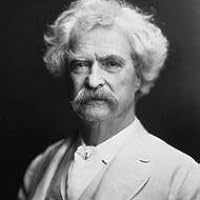
Samuel Langhorne Clemens, known by the pen name Mark Twain November 30, 1835 – April 21, 1910) , was an American writer, humorist, essayist, entrepreneur, publisher and lecturer. He was praised as the “greatest humorist the United States has produced,” with William Faulkner calling him “the father of American literature.” Wikipedia
Sloan Churman • Sep 26, 2011 www.facebook.com/sarahmchurman I was born deaf and 8 weeks ago I received a hearing implant. This is the video of them turning it on and me hearing myself for the first time 🙂 Edit: For those of you who have asked the implant I received was Esteem offered by Envoy Medical.
Police in Owasso, Oklahoma, are investigating the death of a 16-year-old student who died after being involved in a fight with other students in a high school bathroom
Non-binary student dies after school bathroom altercation in Oklahoma
National headlines from ABC News:
OKLAHOMA CITY — Police in Oklahoma are investigating the death of a 16-year-old student who died a day after an altercation in a high school bathroom that may have been prompted by bullying over gender identity.
Neither police nor school officials have said what led to the fight. But the family of Nex Benedict says there had been harassment because the teen was nonbinary.
No cause of death has been released for Benedict, an Owasso High School student in suburban Tulsa who used they/them pronouns. Benedict was able to walk out of the bathroom after the Feb. 7 fight but was taken to a hospital by their family, sent home that night and then died the next day after going back to the hospital.
“What we’re really waiting on is the cause of death, and, of course, we need the toxicology report and the autopsy from the medical examiner’s office for that,” said Owasso Police Lt. Nick Boatman, who said detectives are interviewing staff and students at the school to learn more about what happened.
Nex Benedict’s mother, Sue Benedict, told The Independent the teen suffered bruises all over their face and eyes after they and a transgender student got into a fight in a school restroom with three older girls.
“I didn’t know how bad it had gotten,” Sue Benedict told the outlet.
Malia Pila, Nex Benedict’s sister, described her sibling as a “wonderful child that impacted all of us in ways that are difficult to truly articulate in their importance.”
“We’re deeply, deeply sad about their passing,” she wrote in a text message Wednesday to The Associated Press.
Sue Benedict said in a statement on a GoFundMe page set up to help cover funeral expenses that the family was still learning to use the teen’s preferred name and pronouns.
“Please do not judge us as Nex was judged, please do not bully us for our ignorance on the subject,” she wrote. “Nex gave us that respect and we are sorry in our grief that we overlooked them.”
Owasso police said in a statement on Tuesday that Nex Benedict died on Feb. 8, the day after the fight at the high school. Boatman said investigators will forward the results of that probe to the local district attorney to determine what, if any, charges should be filed.
When asked if the students involved in the fight could be charged with a hate crime, Boatman said: “All crimes and charges will be on the table.”
School officials in Owasso, a suburb about 13 miles (20 kilometers) northeast of Tulsa, said in a statement a physical altercation occurred in a restroom and that students were in the restroom for less than two minutes before the fight was broken up by other students and a staff member.
After the fight, each of the students “walked under their own power to the assistant principal’s office and the nurse’s office,” and school officials recommended to the parent of one of the students involved that they visit a medical facility for further examination.
Police said they were not notified of the altercation until the student arrived at the hospital, and that a report was taken at that time. Police said the student was rushed back to the hospital the following day, Feb. 8, and was pronounced dead.
Oklahoma’s Republican-led Legislature has passed several new laws targeting transgender and nonbinary people in recent years, including bills that prohibit children from receiving gender-affirming medical care and prohibiting the use of nonbinary gender markers on birth certificates.
Gov. Kevin Stitt also has signed bills that prohibit transgender girls and women from playing on female sports teams and prevent transgender children from using school bathrooms that correspond to their gender identity.
Stitt’s office released a statement Wednesday on behalf of the governor and his wife, Sarah.
“Sarah and I are saddened to learn of the death of Nex Benedict, and our hearts go out to Nex’s family, classmates, and the Owasso community,” he said. “The death of any child in an Oklahoma school is a tragedy — and bullies must be held accountable.”
Among the many anti-trans bills being considered this year in Oklahoma are measures to ban gender-affirming care for adults, prohibit school employees from using a student’s preferred pronouns if they don’t correspond with the sex assigned at birth and prohibit state laws or executive orders that recognize any gender besides male and female.
Oklahoma’s Superintendent of Public Schools, Ryan Walters, also has embraced anti-trans policies and faced bipartisan blowback after he appointed a right-wing social media influencer from New York known for posting anti-trans rhetoric to a state library panel. One of Chaya Raichik’s posts on her Libs of TikTok account on the X platform, formerly known as Twitter, last year showing an edited video critical of a public school librarian in Tulsa led to several consecutive days of bomb threats to schools in the district.
“Policies that discriminate and hateful rhetoric spewed by state officials against transgender youth make our schools less safe and deny youth like Nex the future they deserve,” ACLU Oklahoma said in a statement.
In a statement Wednesday, Walters said he mourned the loss of the Owasso student and that he would “pray for God’s comfort for the family and the entire Owasso community.”
—
Reporter Philip Marcelo contributed from New York.
The Austrian philosopher Ludwig Wittgenstein once said: “The limits of my language mean the limits of my world.” This brings up the question: do we live in different worlds, depending on which language we speak?
Each language provides its speakers with a unique palette of words and grammatical structures, which allows them to materialise their imagination into phrases and texts.
Ask a person who speaks two languages natively to write exactly the same text in both of those languages. Now have the text translated into a third, neutral language. You will see that, even though the same writer described the same events, the two translations are not identical. This is because the palettes which the writer had at their disposal when originally crafting the texts provided them with different tools.
Some concepts, which are elegantly captured in one language, do not exist in others at all. This does not only limit speakers in their ability to communicate, but it also affects how they interpret what is happening around them. For language is the tool we use to give meaning to, well, everything.
I know, dear reader, this all sounds very abstract, but let me boil it down to the essence for you: do we live in different worlds depending on which language we speak? Yes, I, an avid language learner, believe we do.
In this article, I will use colours, emotions and general concepts to exemplify that language is not merely a tool for communication, but that it is at the core of who we are, what we think and how we act.
Colour
We see colour as something objective; the sky is blue, just like 1+1= 2, those are facts, right?
Colour is the scattering of light off an object which we perceive with our eyes. Light rays contain a colour spectrum, which is not visible to the naked eye, except for when the light is separated. This happens when light shines through a prism, a transparent, pyramid-shaped object, but also when sunlight reaches the observer’s eye through airborne water droplets. The full spectrum of colours is then majestically visible in the sky in the form of a rainbow.
The visible colour spectrum begins with red and ends with violet. In between, we find every colour imaginable. Mankind has chosen to divide the spectrum and to name the sections between these divisions. The divisions mark the points at which one colour ends and the other begins; the points where green becomes blue and blue becomes violet.
Different languages divide the colour spectrum in different ways. For the first example of this phenomenon, we will use two languages which are close to each other geographically but are very distinct linguistically: Mongolian and Chinese.
The Mongolian language places a division between the lighter and the darker end of (what we as English speakers would think of as) the blue spectrum; light blue and dark blue are distinct colours in Mongolia, described by the words: цэнхэр (tsenkher) and хөх (khokh), respectively. The Chinese people living over the border do not divide blue, and thus these two Mongolian colours become one in the Chinese language: 蓝 (lán).
Mongolian and Chinese belong to different language families, which means that they do not share a common ancestor. These two languages were designed by different people at different times, which makes distinctions like these understandable. But different perceptions of colours also occur between closely related languages.
Danish and Norwegian are almost identical when it comes to vocabulary and they both stem from a common ancestor; they are about as close as two languages could be, yet, there is a very important distinction. In Danish, there is no word for pink. The Danes call it: lyserød, light red, whereas Norwegian, just like English, makes a clear distinction between red and pink and names the colour rosa.
A colour is only a colour if a group of people deem it to be. Some languages do not even recognise the concept of colour, like the Warlpiri language, spoken in Australia’s Northern Territory. Others only have two colours: dark and light. That doesn’t mean that the scientific phenomenon of colour does not exist for the people speaking these languages, but it does mean that the sensation of seeing colours embodies something different to them than it does to English speakers.
Emotion
Language does not only influence the way we see, but also how we feel.
Emotions are not cultural phenomena; everyone around the world feels joy, anger, love and sadness. We use language to give words to what we are feeling, to make sense of the highs and lows which life presents to us.
Languages are cultural phenomena; they develop on the basis of traditional customs, values and historical nuances, resulting in widely diverging vocabularies, also on the subject of emotions. So, even though we all feel the same things, the language we speak may enable us, or in the worst case prevent us, from labelling those emotions and giving them a dedicated space in our psyches.
Let’s start off with an example which most of you will probably have heard of, intelligent readers that you are.
Schadenfreude is a German word which has been borrowed into English, because there is no native equivalent to it. It describes the feeling of getting pleasure out of someone else’s pain. Although it may seem like a sinister emotion, it has an important function in teaching humans inequity aversion, which is a fancy, psychological term to describe a preference for fairness.
The word “schadenfreude” allows us to make sense of the tingling of joy we experience when we see someone running for a train and the doors close, just as they reach the platform. Without a word to label that emotion, we might just think that we are bad people. But the fact that there is a word for it, gives us the comfort to know that others before us have experienced the same emotion.
Just because I know you appreciate it, here are some more examples of words for emotions which do not have an equivalent in English:
Dépaysement (French) — the feeling of disorientation one experiences when visiting a foreign country.
Levensmoe (Dutch) — the sensation of being tired of life.
Forelsket (Norwegian) — the ecstatic excitement one experiences at the beginning of a relationship.
Gender stereotyping
The practice of classifying traits according to gender has been under fire in recent years; popular opinion is rapidly shifting towards the notion that one should be able to do or be anything they want, regardless of their sex.
Gender is, however, ingrained in many of the languages we speak. These languages label nouns as masculine, feminine or neuter. Some languages have gotten rid of gender distinctions over the decades, but many still use them to this date, like Spanish, Romanian, French, German, Arabic, Hebrew and Russian.
The theory of linguistic relativity states that gendered nouns are not merely a grammatical construct but significantly impact the way in which we perceive objects; when asked, female nouns are granted qualities which are often associated with women, and male nouns are associated with traditionally male characteristics.
One study compared the perception of bridges in German and Spanish. In German, bridge is a female noun (die Brücke), whereas in Spanish it is a male one (el puente). When German respondents were asked to describe a bridge in English (a neutral language in which nouns are not gendered), they did so using qualities which are traditionally associated with femininity, like: beautiful, elegant, fragile and peaceful. Spanish speakers described bridges using adjectives like: big, dangerous, long and strong, which are generally seen as male qualities.
This shows that the grammatical practice of attributing gender to nouns contributes to stereotyping on the basis of traditional views associated with those genders. This is all fine and jolly when it concerns bridges, but it becomes more problematic when those qualities are attributed to professions.
Let’s look at the Spanish language again. In Spanish, the word for dentist is always masculine and the word for nurse is always feminine. If dentists, just like bridges, are associated with typical male characteristics, it might discourage young Spanish girls from pursuing a career in dentistry. And boys who like to take care of others may not consider becoming nurses, because they feel like it would dent their manliness.
Throughout this article I’ve been trying to convey to you, dear reader, that language shapes the world we live in. But of course, we do not use words to feel and grammar to see. All of us see and feel the same thing, regardless of what language we speak.
Language does, however, influence the way in which we interpret what we see with our eyes and what we feel with our hearts. Being polished by cultural and historical tendencies for centuries, languages condition their speakers to view matters from a certain perspective.
The quote with which we started this article: “The limits of my language mean the limits of my world,” definitely holds true, so let me leave you with this piece of advice: learn more languages, or learn more about language. It will not only enrich your world but also expand it in ways which you cannot possibly imagine.
CONFUSED = being perplexed or disconcerted; disoriented with regard to one’s sense of time, place, or identity
QUESTION: Are you confused?
STORY: We all live in a “word-built-world”. Look around. I’ll bet that everything you see you name, label or judge it: “That’s a tree, a house, a window, a dog, a cloud, a cat, a person, a car, a knee, a nose, a finger.” Typically, we believe ourselves to be physical things in a physical world and everything appears to be separate from us. Words are important but they can block us from seeing our SOUL. Our SOUL is the formless, ever present, timeless Beingness that we always are – but we seldom are aware of this part of us. And, now with technology and our constant use of computers, we are bombarded with words and images (advertisements, emails, texts, social media posts). It is time for us to learn how to use words as doorways to our Higher Self – SOUL. TRANSLATION® or “Straight Thinking in the Abstract” is a valuable tool. Learn more: https://www.drawingtogether.com/translation-class
QUOTES
“Be willing to plow under the partial, separate self and be planted with the seeds of your far greater Essential SOUL Self.” ~ Thane
“The dangers of not thinking clearly are much greater now than ever before. It’s not that there’s something new in our way of thinking – it’s that credulous and confused thinking can be much more lethal in ways it was never before.” ~ Carl Sagan
“We are buried beneath the weight of information, which is being confused with knowledge; quantity is being confused with abundance and wealth with happiness.” ~ Tom Waits
EXERCISE
STOP.
Sit quietly.
Assume an erect posture. Sense the breath.
Sit calmly and just BE aware of any tension in your body. Observe it. Let it go. Feel the Presence of your SOUL.
Get your pen and paper and write words or draw lines describing the energy of your physical form and the energy of your formless SOUL flowing through you.
Move forward into your day feeling your formless SOUL Energy guiding your bodily form.
I was conceived in a shack by the sea, its shingles bleached and beaten nickel gray. There were waves that day washing over the foundations of the old saltworks. My father told me this, his eyes the blue of a still inlet after rain,
and I can imagine such a thing. My rising like a cry from my father’s throat, breaking free of his longing and swimming, all head and eager tail, all salty, fishy human need— I swim into the dark and heavy egg of my mother. This is me.
My mother’s eyes were green as ocean weeds, but I did not, of course, see them open wide, did not see the pupils swell deep and black as tidal pools. A blade of sea grass swirled oblivious to the wind heavy with the rank sulfur scent of low tide.
(newsletter@thesunmagazine.org)
Consciousness, sexuality, androgyny, futurism, space, the arts, science, astrology, democracy, humor, books, movies and more


Any idea of the normal currently in circulation is not an accurate map of what is customary for a human to be. We are — each one of us — far more compulsive, anxious, sexual, tender, mean, generous, playful, thoughtful, dazed, and at sea than we are encouraged to accept.