
Evan McDerm Dec 25, 2022 The Fifth Dimension Podcast Ep. 227 – Fr. Seán ÓLaoire is a co-founder and the Spiritual Director of Companions on the Journey. He was born in Ireland and was ordained a Catholic priest in 1972. He spent 14 years living and working among the Kalenjin people of East Africa and came to the U.S. in 1987. Fr. Seán has a BSc degree in mathematics and a PhD in Transpersonal Psychology. Full topic discussions include: -Setting God free from our own shadow -Storytelling and the archived wisdom of culture -Developing a new cultural story rooted in mystical traditions -Are we engaged in a battle of good vs evil? -Transhumanism and the inversion of spiritual principles -The sin of refusing God within oneself
Monthly Archives: December 2022
Ten Love Letters to the Earth
by Thich Nhat Hanh
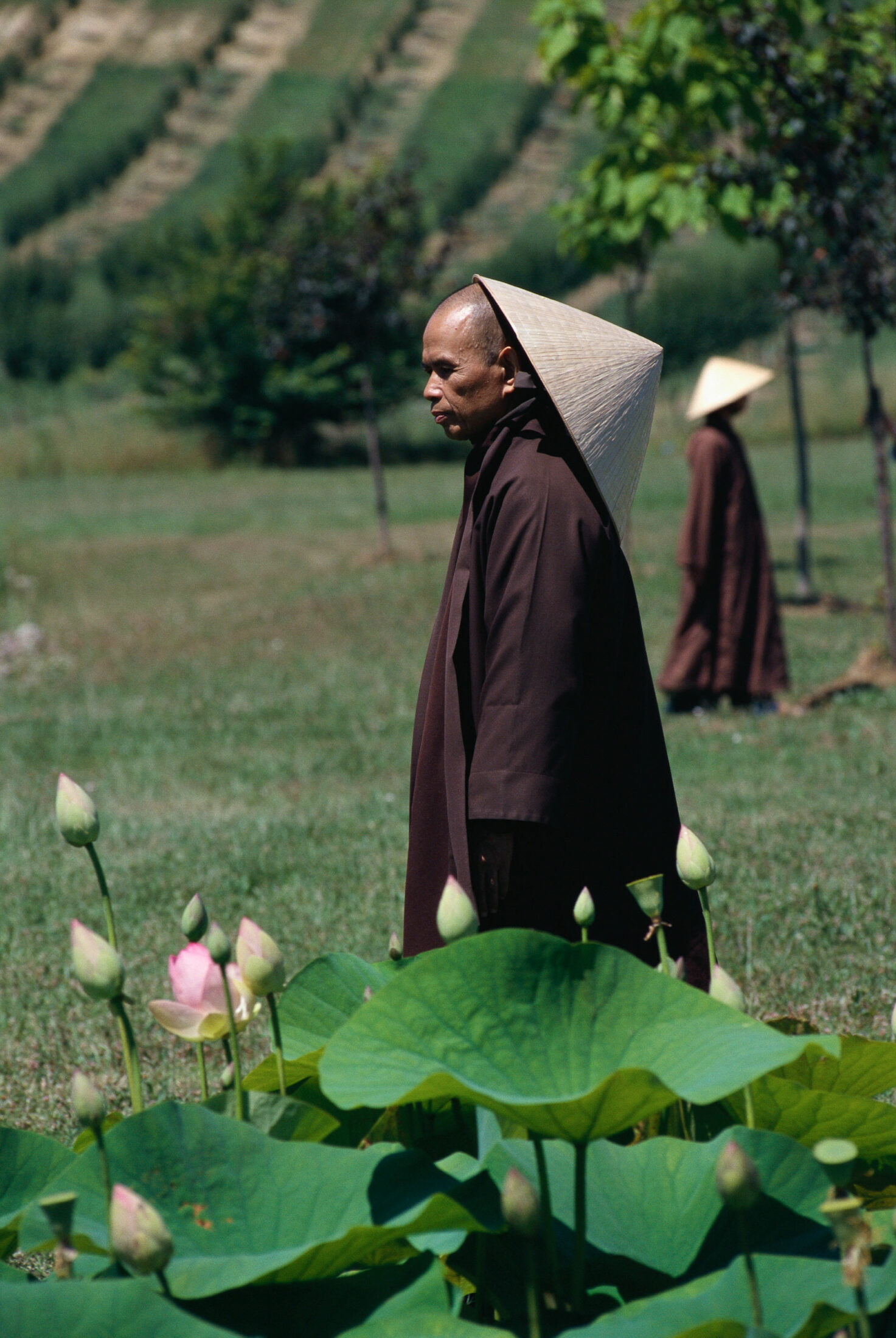
Alison Wright / The Image Bank Unreleased via Getty Images
January 23, 2022 (emergencemagazine.org)
In honor of the passing of Zen Master Thich Nhat Hanh, we are sharing his Ten Love Letters to the Earth. These meditations are an invitation to engage in intimate conversation, a living dialogue, with our Earth.
I
Beloved Mother of All Things
Dear Mother Earth,
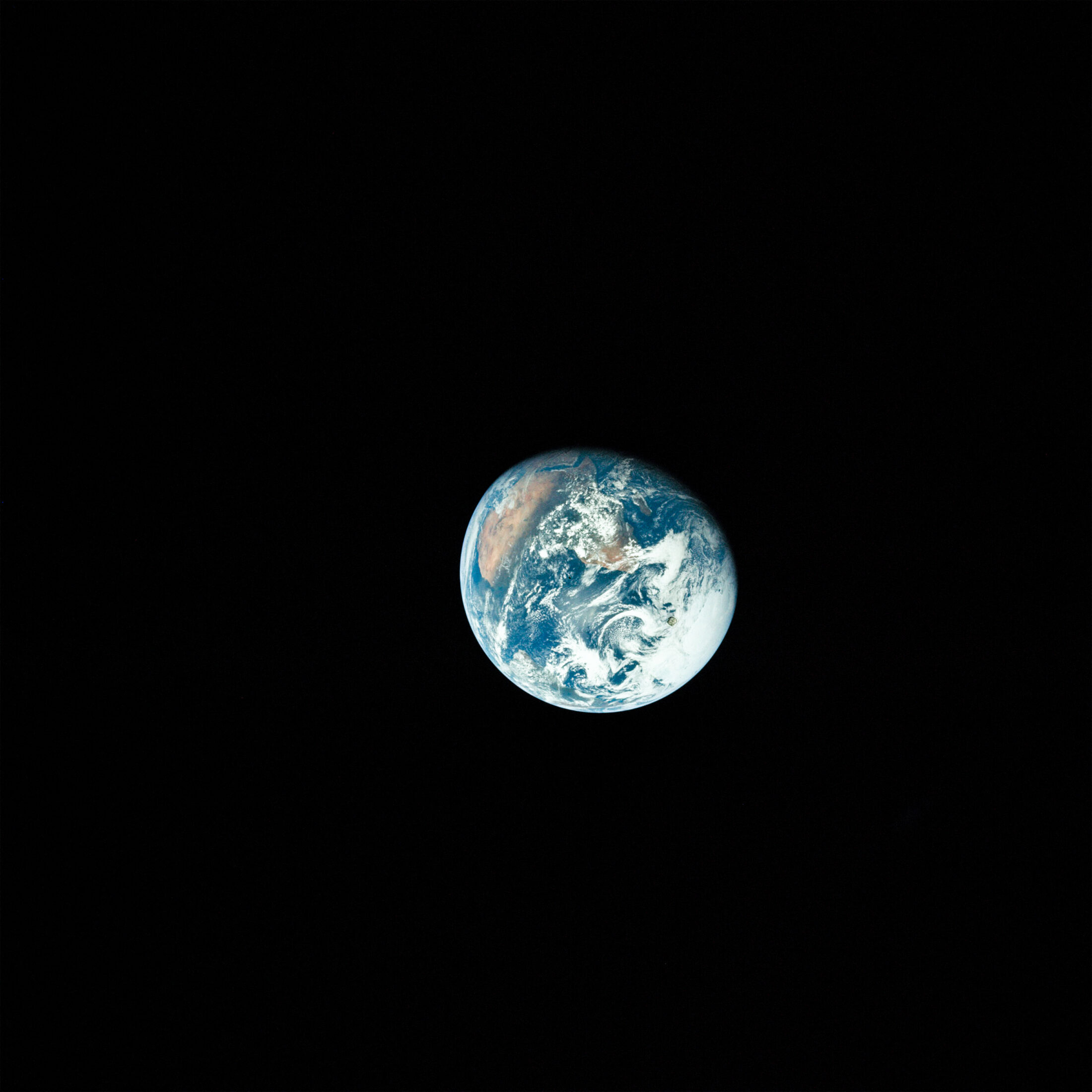
I bow my head before you as I look deeply and recognize that you are present in me and that I’m a part of you. I was born from you and you are always present, offering me everything I need for my nourishment and growth. My mother, my father, and all my ancestors are also your children. We breathe your fresh air. We drink your clear water. We eat your nourishing food. Your herbs heal us when we’re sick.
You are the mother of all beings. I call you by the human name Mother and yet I know your mothering nature is more vast and ancient than humankind. We are just one young species of your many children. All the millions of other species who live—or have lived—on Earth are also your children. You aren’t a person, but I know you are not less than a person either. You are a living breathing being in the form of a planet.
Each species has its own language, yet as our Mother you can understand us all. That is why you can hear me today as I open my heart to you and offer you my prayer.
Dear Mother, wherever there is soil, water, rock or air, you are there, nourishing me and giving me life. You are present in every cell of my body. My physical body is your physical body, and just as the sun and stars are present in you, they are also present in me. You are not outside of me and I am not outside of you. You are more than just my environment. You are nothing less than myself.
I promise to keep the awareness alive that you are always in me, and I am always in you. I promise to be aware that your health and well-being is my own health and well-being. I know I need to keep this awareness alive in me for us both to be peaceful, happy, healthy, and strong.
Sometimes I forget. Lost in the confusions and worries of daily life, I forget that my body is your body, and sometimes even forget that I have a body at all. Unaware of the presence of my body and the beautiful planet around me and within me, I’m unable to cherish and celebrate the precious gift of life you have given me. Dear Mother, my deep wish is to wake up to the miracle of life. I promise to train myself to be present for myself, my life, and for you in every moment. I know that my true presence is the best gift I can offer to you, the one I love.
II
Your Wonder, Beauty and Creativity
Dear Mother Earth,
Each morning when I wake up you offer me twenty-four brand new hours to cherish and enjoy your beauty. You gave birth to every miraculous form of life. Your children include the clear lake, the green pine, the pink cloud, the snowcapped mountain top, the fragrant forest, the white crane, the golden deer, the extraordinary caterpillar, and every brilliant mathematician, skilled artisan, and gifted architect. You are the greatest mathematician, the most accomplished artisan, and the most talented architect of all. The simple branch of cherry blossoms, the shell of a snail, and the wing of a bat all bear witness to this amazing truth. My deep wish is to live in such a way that I am awake to each of your wonders and nourished by your beauty. I cherish your precious creativity and I smile to this gift of life.
We humans have talented artists, but how can our paintings compare to your masterpiece of the four seasons? How could we ever paint such a compelling dawn or create a more radiant dusk? We have great composers, but how can our music compare to your celestial harmony with the sun and planets—or to the sound of the rising tide? We have great heroes and heroines who have endured wars, hardship, and dangerous voyages, but how can their bravery compare to your great forbearance and patience along your hazardous journey of eons? We have many great love stories, but who among us has love as immense as your own, embracing all beings without discrimination?
Dear Mother, you have given birth to countless buddhas, saints, and enlightened beings. Shakyamuni Buddha is a child of yours. Jesus Christ is the son of God, and yet he is also the son of Man, a child of the Earth, your child. Mother Mary is also a daughter of the Earth. The Prophet Mohammed is also your child. Moses is your child. So too are all the bodhisattvas. You are also mother to eminent thinkers and scientists who have made great discoveries, investigating and understanding not only our own solar system and Milky Way, but even the most distant galaxies. It’s through these talented children that you are deepening your communication with the cosmos. Knowing that you have given birth to so many great beings, I know that you aren’t mere inert matter, but living spirit. It’s because you’re endowed with the capacity of awakening that all your children are too. Each one of us carries within ourself the seed of awakening, the ability to live in harmony with our deepest wisdom—the wisdom of interbeing.
But there are times when we have not done so well. There are times when we have not loved you enough; times when we have forgotten your true nature; and times when we have discriminated and treated you as something other than ourself. There have even been times when, through ignorance and unskillfulness, we have underestimated, exploited, wounded, and polluted you. That is why I make the deep vow today, with gratitude and love in my heart, to cherish and protect your beauty, and to embody your wondrous consciousness in my own life. I vow to follow in the footsteps of those who have gone before me, to live with awakening and compassion, and so be worthy of calling myself your child.

III
Walking Tenderly on Mother Earth
Dear Mother Earth,
Every time I step upon the Earth, I will train myself to see that I am walking on you, my Mother. Every time I place my feet on the Earth I have a chance to be in touch with you and with all your wonders. With every step I can touch the fact that you aren’t just beneath me, dear Mother, but you are also within me. Each mindful and gentle step can nourish me, heal me, and bring me into contact with myself and with you in the present moment.
Walking in mindfulness I can express my love, respect, and care for you, our precious Earth. I will touch the truth that mind and body are not two separate entities. I will train myself to look deeply to see your true nature: you are my loving mother, a living being, a great being—an immense, beautiful, and precious wonder. You are not only matter, you are also mind, you are also consciousness. Just as the beautiful pine or tender grain of corn possess an innate sense of knowing, so, too, do you. Within you, dear Mother Earth, there are the elements of Earth, water, air and fire; and there is also time, space, and consciousness. Our nature is your nature, which is also the nature of the cosmos.
I want to walk gently, with steps of love and with great respect. I shall walk with my own body and mind united in oneness. I know I can walk in such a way that every step is a pleasure, every step is nourishing, and every step is healing—not only for my body and mind, but also for you, dear Mother Earth. You are the most beautiful planet in our entire solar system. I do not want to run away from you, dear Mother, nor to hurry. I know I can find happiness right here with you. I do not need to rush to find more conditions for happiness in the future. At every step I can take refuge in you. At every step I can enjoy your beauties, your delicate veil of atmosphere and the miracle of gravity. I can stop my thinking. I can walk relaxingly and effortlessly. Walking in this spirit I can experience awakening. I can awaken to the fact that I am alive, and that life is a precious miracle. I can awaken to the fact that I am never alone and can never die. You are always there within me and around me at every step, nourishing me, embracing me, and carrying me far into the future.
Dear Mother, you wish that we live with more awareness and gratitude, and we can do this by generating the energies of mindfulness, peace, stability, and compassion in our daily lives. Therefore I make the promise today to return your love and fulfill this wish by investing every step I take on you with love and tenderness. I am walking not merely on matter, but on spirit.

IV
Your Stability, Patience, and Inclusiveness
Dear Mother Earth,
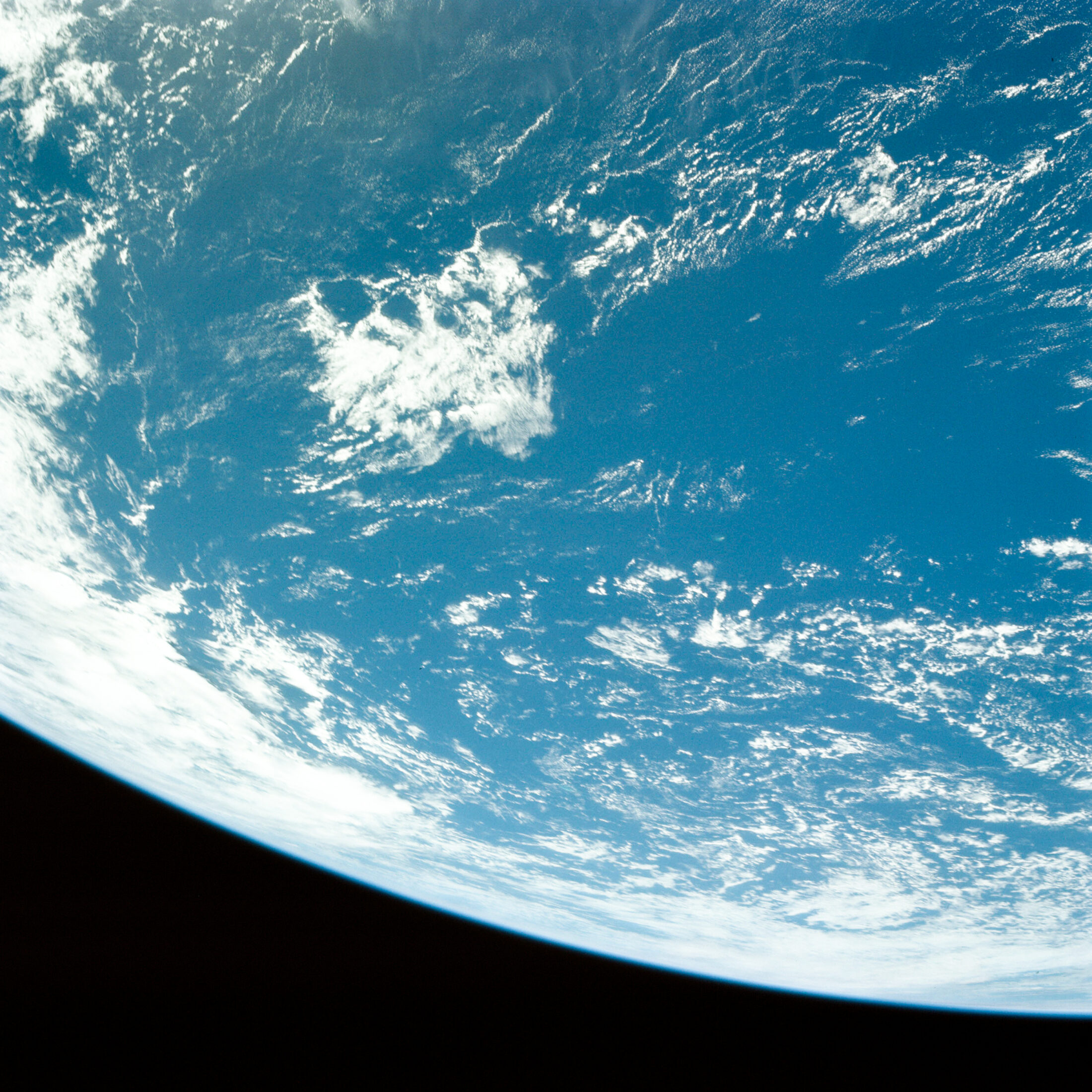
You are this infinitely beautiful blue planet, fragrant, cool, and kind. Your immeasurable patience and endurance makes you a great bodhisattva. Even though we’ve made many mistakes, you always forgive us. Every time we return to you, you are ready to open your arms and embrace us.
Whenever I am unstable, every time I lose touch with myself, or am lost in forgetfulness, sadness, hatred, or despair, I know I can come back to you. Touching you, I can find a refuge; I can reestablish my peace and regain my joy and self-confidence. You love, protect, and nurture all of us without discrimination.
You have an immense capacity to embrace, handle, and transform everything that is cast at you, whether it be great asteroids, refuse and filth, poisonous fumes, or radioactive waste. Time helps you to do this, and your history has shown that you always succeed, even if it takes millions of years. You were able to reestablish equilibrium after the devastating collision that created the moon and have endured at least five mass extinctions, reviving yourself every time. You have an extraordinary capacity to renew, transform, and heal yourself—and also us, your children.
I have faith in your great power of healing. My faith comes from my own observation and experience, not from something others have told me to believe. That’s why I know I can take refuge in you. As I walk, sit, and breathe, I can surrender myself to you, trust wholly in you, and allow you to heal me. I know I don’t have to do anything at all. I can simply relax, release all the tension in my body, and all the fears and worries in my mind. Whether I’m sitting or walking, lying down or standing, I allow myself to take refuge in you, and allow myself to be held and healed by you. I entrust myself to you, Mother Earth. Each one of us needs a place of refuge, but we may not know how to find it or how to get there. Looking deeply today, I can see that my true home, my true place of refuge is you, my beloved planet. I take refuge in you, Mother Earth. I do not have to go anywhere to find you; you are already in me and I am already in you.
Dear Mother, each time I sit in stillness on your Earth, I will be aware that because you are in me, I can embody your wonderful qualities: of solidity, perseverance, patience, and forbearance; of depth, endurance, and stability; of great courage, non-fear, and inexhaustible creativity. I vow to practice wholeheartedly to realize these qualities, knowing that you have already sown these potentials as seeds in the soil of my heart and mind.
V
Heaven on Earth
Dear Mother Earth,
There are those of us who walk the Earth searching for a promised land, not realizing that you are the wondrous place we’ve been looking for our whole lives. You already are a wonderful and beautiful Kingdom of Heaven—the most beautiful planet in the solar system; the most beautiful place in the heavens. You are the Pure Land where countless buddhas and bodhisattvas of the past manifested, realized enlightenment, and taught the Dharma. I do not need to imagine a Pure Land of the Buddha to the west or a Kingdom of God above where I will go when I die. Heaven is here on Earth. The Kingdom of God is here and now. I don’t need to die to be in the Kingdom of God. In fact, I need to be very much alive. I can touch the Kingdom of God with every step. When I touch the present moment deeply in the historical dimension, I touch the kingdom; I touch the Pure Land; I touch the ultimate; and I touch eternity. In deep contact with the Earth and wonders of life, I touch my true nature. The exquisite orchid flower, the ray of sunshine, and even my own miraculous body—if they do not belong to the Kingdom of God, what does? Contemplating the Earth deeply, whether a floating cloud or a falling leaf, I can see the no-birth, no-death nature of reality. With you, dear Mother, we are carried into eternity. We have never been born and we will never die. Once we have realized this, we can then appreciate and enjoy life fully, no longer afraid of aging or death, nor caught in complexes about ourselves, nor yearning for things to be different than they are. We already are, and we already have, what we are looking for.
Continue reading Ten Love Letters to the EarthChrist Is Not A Person: Real Meaning of Christmas
Astral Doorway Dec 25, 2022: Discover the hidden esoteric meanings behind the symbol of Christ, Christmas & the Christified Masters of all the great religions and traditions. Learn the Christic science of Kabbalah and how Kundalini ascends through the Tree of Life (Christmas Tree / Spinal Column) by our individual efforts in the Great Work in the Secret Inner Path. 0:00 – Original Spiritual Meaning of Christ Has Been Lost 2:35 – Jesus & Other Masters Incarnated The Christ Energy 7:10 – Astrological Significance, Faith, Belief & Salvation 10:28 – The True Meaning of the Christmas Tree (Kundalini) 13:28 – Worshipping our Inner Individual Christ-God 14:54 – Powerful Prayer Ritual Meditation (Pater Noster)
Herbie Hancock’s Antidote to Burnout
We are makers of our own myths, but the more we live into them, the more we risk becoming their captives. All creativity rests upon unbelieving our own myths — seeing the world and our place in it afresh over and over, so that we may go on making what has not been made before, remaking ourselves in the process. Burnout is simply what a creative person experiences when they have begun believing their own myth too much. E.E. Cummings hinted at this in his exquisite observation that “the Artist is no other than he who unlearns what he has learned, in order to know himself.” Because the work of self-knowledge is never-ending, to trap ourselves into a static myth of who we are and what we do is to doom ourselves to creative death.
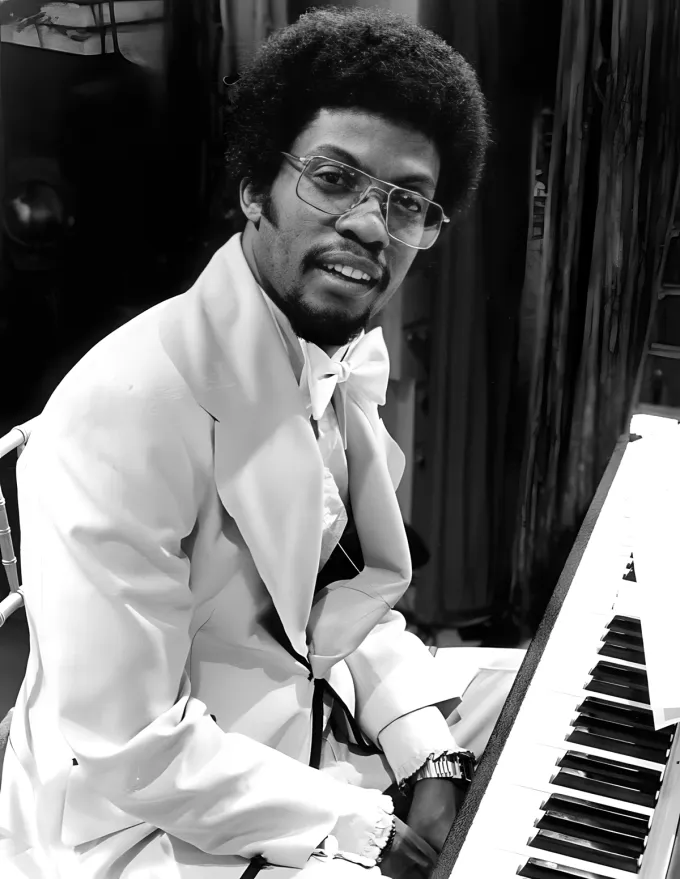
Herbie Hancock, 1976
Hancock reflects:
I’m really fortunate I was able to discover Buddhism. It helped me develop a clearer idea of my relationship with the environment. My personal relationship with everything that’s outside of my personal self. Which includes the people and circumstances that manifest themselves externally. Buddhism really helps you to understand what that is. And in doing so, you have a much better chance. If you recognize something, you stand a fighting chance of dealing with it in a more positive way. It’s when something blindsides you and you don’t see it coming, then you can be knocked over and defeated. So I continue to chant. That is where I went this morning. I went and chanted for an hour at a center that’s near here. In Buddhism we practice and we chant every day.
But the gift of his practice is something more than resilience — something closer to continual regeneration, made possible by the fundamental Buddhist attitude of non-attachment and non-identification with the self. Hancock observes:
[…]
Buddhism really promotes the truth and the fact that the human being really has limitless possibilities. And that the core of what we are is not that thing that we normally define ourselves as. The core of what we are is a human being. And when we define ourselves as a human being, it changes everything. So music now, I look at it from the standpoint of being a human being and use that as the foundation. And then I use what I do to translate what initiates from my humanity into musical terms. That’s why I’m able to make every record be different from every other record.
Complement this fragment of More Songwriters on Songwriting — which also gave us Patti Smith on listening to the creative impulse — with John Lennon on the value of meditation and Bob Dylan’s favorite rabbi teaching, then revisit John Coltrane on perseverance against rejection and David Bowie’s advice to artists.
If Your New Year’s Resolution Includes More Peace in the World Help Us Heal The Males
December 21, 2022
For more than fifty years, I have had one goal: Healing men and the families who love them. I founded MenAlive in 1972 following the birth of our son Jemal and our daughter Angela. Like all parents I wanted my children to grow up in a world where fathers were fully healed and involved with their children throughout their lives. In 2019 I invited a small group of colleagues to join me in creating a Moonshot for Mankind and Humanity.
When I began my work there were very few programs that specialized in gender-specific health care and we the information we had about how to help men was limited. That has changed. There are literally thousands of programs that specialize in helping men and their families and we know a great deal about how to address many of the major problems facing humanity.
In a recent article, “The Man Kind Challenge: Why Healing Men Will Do More Good Than Curing Cancer,” I said that male violence was one of the most significant problems facing humanity and preventing male violence was one of the most important things we could do to improve our world and make it safer for our children, grandchildren, and future generations.
There is an African proverb that says,
“The child who is not embraced by the village will burn it down to feel its warmth.”
We don’t have to wait for the next mass shooting to be reported in the news to know that there are a lot of wounded, angry, and violent males who don’t feel hope, love, and support from their society.
A number of years ago, The World Health Organization issued a report, “World Report on Violence and Health” that took a comprehensive look at violence world-wide. In the Foreword to the report Nelson Mandela says,
“Many who live with violence day in and day out assume that it is an intrinsic part of the human condition. But this is not so. Violence can be prevented. Violent cultures can be turned around. In my own country and around the world, we have shining examples of how violence has been countered.”
The report breaks down violence into three main categories:
- Self-directed violence.
- Interpersonal violence.
- Collective violence.
Self-directed violence primary involves death by suicide. Interpersonal violence occurs most often in families, but also includes violence in communities. Collective violence involves conflicts between groups and includes genocide, terrorism, and war. Women certainly can be driven to violence, but violence is primarily a problem for men. Males do most of the killing and males are the majority of those killed.
Male Violence and Mass Shootings in America
Although mass shootings constitute a small part of the violence in the world, understanding them is important because they can help us better understand violence of all types. Perhaps more than any man, Mark Follman can help us understand male violence. He is a longtime journalist and the national affairs editor for Mother Jones magazine and author of the influential book, Trigger Points: Inside The Mission to Stop Mass Shootings in America.
I recently interviewed Follman and gained new insights about what how we can prevent male violence. You can watch the full interview here.
Follman just wrote a new article, “The Truth About Stopping Mass Shootings, From Sandy Hook to Uvalde” which offers new insights that can help us create a more peaceful world in the coming years. He says,
“Progress begins with rejecting the longstanding narrative that mass shootings are inevitable and will never cease, a theme reliably delivered after each horrific tragedy with the political cri de coeur that ‘nothing ever changes.’ The assertion that mass shootings are an inherent feature of our reality is in its own right fueling the problem, in part by validating this form of violence in the eyes of its perpetrators, who seek justification and notoriety for their actions.”
He goes on to say,
“Now, a decade after Sandy Hook, a spate of gun massacres in 2022—including another nightmare at an elementary school—has only further clarified how America can and should think more broadly about confronting this distressing problem.”
Preventing Male Violence Begins With New Hope and Real Facts
“A decade after Sandy Hook, a spate of gun massacres in 2022—including another nightmare at an elementary school—has only further clarified how America can and should think more broadly about confronting this distressing problem,”
says Follman.
If we think mass shootings are an inevitable part of life and nothing can be done to prevent them, we will mourn our dead, look for someone to blame, and go back to business as usual. If we refuse to see violence as a male problem, we will fail to address issues of male hopelessness, depression, and rage.
Mark Follman offers the following facts and some specific solutions.
- There have been five devastating gun massacres since May 2022.
- All five attacks—in Buffalo, New York; Uvalde, Texas; Highland Park, Illinois; Colorado Springs; and at the University of Virginia in Charlottesville—were carried out by deeply troubled and aggrieved young offenders, ages 18 to 22.
- All showed various combinations of the following warning signs ahead of time:
Aggression and other behavioral and mental health troubles.
Observable deterioration in life circumstances.
Various forms of communicated threats.
Focus on graphic violence, misogyny, and ideological extremism.
Planning and preparation for the attacks.
Follman offers following solutions:
- Shift away from the heavy overemphasis on active shooter response—lockdown drills and the various “target hardening” measures of physical security—to a greater emphasis on active shooter prevention.
- Invest in mental health care and community-based violence prevention, including behavioral threat assessment programs, which can have a broader benefit of helping foster a climate of safety and well-being, from corporate and college campuses to K-12 classrooms.
- Raise the age requirement for gun buyers from 18 to 21.
- Expand the use of extreme risk protection orders, a policy known as red flag laws, for temporarily disarming individuals deemed through a civil court process to pose a danger to themselves or others.
Man Therapy: An Innovative Community Mental Health Program
Man Therapy is a unique and innovative program that addresses these issues. I first heard about the work of Man Therapy when I met its founder and creator, Joe Conrad in November, 2021.
“We realized early on that if we waited until men were in crisis, we would be too late,”
says Grit Digital Health Founder and CEO, Joe Conrad.
“I have always felt that creativity, innovation, and communication could solve any challenge. From the beginning, our team set three goals for Man Therapy:
1) Break through the stigma surrounding mental health by making it approachable.
2) Encourage help-seeking behavior.
3) Reduce suicidal ideation.
“Through research, men told us to just give them the information they needed to fix themselves, so we built a website that provides a broad range of information, resources, and tools to do just that. It is extremely rewarding to know that we are accomplishing our goal of positively impacting and changing men’s lives.”
Those of us who work in the field of men’s mental health, know there is a strong relationship between violence turned outward that leads to problems like mass shootings and the violence turned inward that leads to suicide.
Man Therapy has been doing great work for some time.
“Man Therapy was launched in 2010,”
says Joe Conrad,
“and has had more than 1.5 million visits to the site. Visitors have completed 400,000 ‘head inspections’ and there have been 40,000 clicks to the crisis line.”
A recent A CDC-funded study shows that men who access Man Therapy, as a digital mental health intervention, experience a decrease in depression and suicidal ideation, a reduction in poor mental health days, and an increase in help-seeking behavior. Additionally, this study shows that men in the Man Therapy control group reported statistically significant improved rates of engaging in formal help-seeking behaviors through tools like online treatment locator systems, making or attending a mental health treatment appointment, or attending a professionally led support group.
For more information: Man Therapy: https://mantherapy.org/, Mark Follman’s work: https://markfollman.com/, my free weekly newsletter, https://menalive.com/email-newsletter/.

Jed Diamond
Founder and VHS (Visionary Healer Scholar) of MenAlive
The Deep Meaning of the Cross | Eckhart Tolle Explains
Eckhart Tolle • Dec 6, 2022 Eckhart discusses God, the emanation of the source of all life and the deep meaning we find in the image of the cross. Subscribe to find greater fulfillment in life: http://bit.ly/EckhartYT Want to watch and hear more of Eckhart’s Teachings? Become a member today and join our growing YouTube community! http://bit.ly/ETmembership Did you find this short preview video helpful? Do you want more peace of mind? Or to bring more Presence into your days, your work, and other areas of your life? Join Eckhart Tolle Now, Eckhart’s online community, and get access to his new in-depth teachings every month, practical Q&A sessions with Eckhart, and member-only discounts on Eckhart’s online programs.
BBC presents: Cunk on Earth – Episodes 1 thru 5
The Psychology of Parts: Dissociation, IFS, and the Multiple Yous Inside Your Head
- Niall McKeever
- December 7, 2022 (niallmckeever.com)
We’ve all grown up in the mono-mind paradigm.
This assumes that each of us has one unitary mind, out of which our thoughts and feelings emerge.
Recent developments in neuroscience, as well as the growing evidence base for “parts-based” psychotherapies such as Internal Family Systems (IFS), schema therapy, and transactional analysis are showing that not only is the mono-mind paradigm scientifically inaccurate, it’s also harmful to our mental health.
It leads to the sensation of feeling like we are the “controller” of our experiences, often causing internal conflict, as well as guilt, shame, and self-criticism when we are unable to live up to the demands of our inner drill sergeant.
In actuality, the brain isn’t one thing.
Rather, it’s made up of many structures that communicate with each other through neural networks.
What we commonly think of personality “disorders” then, are not a result of a unitary mind “shattering” into multiple fragments as is commonly assumed. Instead, individuals with diagnoses such as Dissociative Identity Disorder (DID) are very much like the rest of us, with the only difference being that they’ve experienced such significant trauma, that their “parts” get dissociated and disconnected from the rest of the system.
Therefore, a key ingredient in psychological health is being able to lead and manage the many different parts that exist within us, so that we can create a state of internal harmony and coherence between them. In short, we need to learn how to treat our many different selves in just the same way that a loving parent would treat their children.
Part one of this post will explore the scientific basis for the parts-paradigm.
The second part will provide an accessible introduction to the Internal Family Systems model; an approach which is rapidly being adopted by mental health professionals all over the world to help clients work with, heal, and reintegrate their parts.
But before moving forward, let’s look at why this is important.
—
The Benefits of the Parts Paradigm
There are three main benefits of a “parts” view of the psyche.
Firstly, it makes it possible to develop a secure attachment style later in life.
I recently interviewed Dr Janina Fisher for our upcoming Holistic Psychotherapy Summit.
Dr Fisher is a world renowned trauma expert, clinical psychologist, and a former instructor at Harvard Medical School.
In the interview, Janina shared that secure attachment is the foundational element in emotional wellbeing and resilience:
When it’s there, it has a “buffering” effect against stress, helping us to recover from traumas, and increases our sense of safety in the world.
However, when it’s missing, it leads to a whole host of issues.
Our attachment style is usually determined by our relationship with our primary caregiver in early life, meaning the style we end up with is largely outside of our control.
As a result, many of us grow up insecurely attached, which affects our quality of life and relationships well into adulthood.
Interestingly, in another interview for the summit, IFS Founder Dr Richard Schwartz explained that IFS is “attachment theory taken inside”.
Sort of like a “technology” for creating internal secure attachment between the different parts of your personality.
It’s an effective way to “re-parent” and give our “inner children” the love, compassion, and care we might not have received in our most vulnerable developing years.
And this gradually helps us to move from an insecure to a secure attachment style, creating harmony on the inside, and a basic sense of safety in the world.
Secondly, when you realise the multiple nature of your mind, it enables you to take a holistic approach to the key decisions in your life.
You no longer attempt to force yourself into things and shame yourself when you fall short.
Instead you aim to understand the different points of view that each of your parts have, and then make a decision that would be best for the whole system.
It’s like having your own internal committee.
As the leader, you take all points of view on board, ensure each member feels understood, and then make a decision that would be best for your whole being.
Thirdly, the parts-paradigm enables peak performance.
Many of the world’s top performers have embraced it to achieve extraordinary results in their chosen fields. In the “Alter Ego Effect”, author Todd Herman tells the story of Bo Jackson – the only athlete to ever achieve All Star status in both American Football and Baseball.
Bo struggled to control his anger early on in his career, often giving away unnecessary penalties and costing his team games. Then, after watching the cold, unemotional killer “Jason” in the Friday the 13th movies, he had an insight that changed everything.

He decided to adopt the “identity” of Jason while on the sports field, meaning he could disentangle from his emotions while playing, which enabled him to focus all of his energy on the game.
Beyonce credits her alter ego “Sasha Fierce” with giving her the unshakeable confidence she demonstrates on stage.
Actor Rowan Atkinson (most famously known as “Mr Bean”) struggled with a stutter for most of his life, but found that it would miraculously disappear when he was playing the role of another character.
These examples show that there are many potential “parts” within us and that by embracing this and working with it, we can improve both our quality of life and our effectiveness in the world.
Now that we’ve explored some of the benefits, let’s look at the science of the parts paradigm.
—
A Curious Case of Dissociative Identity Disorder

Perhaps the most compelling evidence for a “Parts” view of the psyche is provided by clients with dissociative identity disorder (DID).
DID is a psychiatric condition in which a person’s personality splits off into “sub-personalities” or “alters”, each of which has a separate identity.
Patients with DID have multiple centres of awareness, meaning those who suffer from it have experiences while identified with one part, that are outside of the awareness (and memories) of the other part.
Until recently, there were doubts that the condition existed, with many doctors suggesting it was merely a desperate attempt from patients to get attention.
However, new developments in brain imaging technology have made it possible to investigate what’s really going on.
A famous example, often given by Dr Bernardo Kastrup, involves a German woman with DID who claimed to have a blind “alter” — even though her visual system was perfectly intact.
In other words, when this alter was “online”, the woman claimed to be fully blind.
So, in 2015, scientists monitored her brain activity while this alter was in control.
Shockingly, they found activity in the visual cortex disappeared — even though the woman’s eyes were wide open, and her visual system was perfectly intact.
But when other parts of her personality came back “online”, normal activity resumed in the visual cortex, and she could see again.
Clearly this can’t be faked.
This shows that dissociation is so powerful that it can literally blind someone and prevent them from seeing what is right in front of their eyes.
—
What is dissociation?
Dissociation is a mental ability that enables us to separate from other aspects of our consciousness.
It’s not always pathological.
Peak performers in many domains use it to perform at their best, enabling them to fully embody one aspect of their personality (e.g., the performer or the athlete), and temporarily sever connection with others until the performance is over.
For example, while in the cage, an MMA fighter can fully embody her inner “warrior” and temporarily dissociate from the more caring parts of her nature.

We also dissociate under stress, with many doctors, nurses, and paramedics relying on it to get through crisis situations. This gives them access to critical information and puts them into a flow state. Despite being under immense pressure, they know exactly what to do, and appear calm in the midst of chaos.
In psychotherapy, dissociation is thought of a “cutting off” from ourselves; a fragmentation of one part, or multiple parts, from the rest of the personality, usually caused by traumatic experiences.
If you think about it, most severe traumas are prolonged — especially in childhood.
It’s rarely the case that a child will experience one traumatic event and then afterwards live a happy childhood.
Rather, they are usually trapped in an indefinite unsafe situation.
For example, ongoing childhood abuse, domestic violence, or being trapped in a warzone, as has recently happened to many in Ukraine.
In these instances, the brain relies on dissociation to help us survive.
Because we can’t escape physically, the brain has a mechanism that enables us to escape mentally.
So it severs consciousness from the part of us receiving these deep emotional wounds, and “locks them away” from our conscious awareness, which enables us to carry on with our lives.
Indeed, research shows a strong correlation between DID and traumatic experiences, with severe and prolonged traumas being correlated with the development of dissociative disorders later in life.
—
There are many instances in which individuals experience severe trauma as children which they have no recollection of until years later.
Entrepreneur Tim Ferriss for example, recently revealed on his podcast that he experienced sexual abuse as a child but was completely unaware of it for most of his life.

Then, during a psychedelic experience decades later, the memory came flooding back with devastating effects.
How can we explain this?
—
The Structural Dissociation Model
One of the most significant splits in the brain is between the left and the right hemispheres.
The structural dissociation model suggests that it’s this division that enables us to survive enduring traumatic experiences because it allows us to “fragment” parts of our personality and dissociate from them.
According to this theory, when we experience complex trauma, the left and right brain become increasingly disconnected and communication between hemispheres is reduced.
This reduction in communication enables the left brain to continue “keeping on keeping on” as normal, while the right brain “stores” the trauma outside of conscious awareness, always remaining vigilant and poised for the next source of danger.

So traumatised people are often “carrying” their traumas with them (usually in the nervous system) but may not be consciously aware they are doing so.
Old theories of dissociation were built on the premise that it was a way to avoid remembering.
Sort of like a mechanism that created little “capsules” for storing unwanted memories.
However, the structural dissociation model instead suggests that dissociation is an adaptive process that enables us to continue functioning, despite having experienced awful things.
—
Now that we have a bit more understanding about the benefits and brain basis for the parts paradigm, part two will look at a therapeutic approach that is revolutionising mental health treatment worldwide using a parts-based approach:
Internal Family Systems.
The Body Keeps the Score: Brain, Mind, and Body in the Treatment of Trauma (Book Summary)
- POSTED IN BOOK SUMMARY, BOOKS, EMOTIONS, HABITS, PERSONAL GROWTH
- ON OCTOBER 22, 2019
- BY TIAGO FORTE
- LAST MODIFIED
- JANUARY 31, 2020 (fortelabs.com)
This post is also available in Ukrainian
When I first picked up this book, I wasn’t quite sure what it had to do with me.
It is a book about trauma – what it is, where it comes from, and how to treat it. But I had never experienced abuse, or been caught in a natural disaster, or been attacked. I didn’t have any trauma…
Did I?
As I turned the pages, slowly and then quickly, I was introduced to a completely new conception of trauma unlike anything I had ever encountered before.
I’d spent years immersed in the “personal development” world, obsessed with uncovering hidden truths and rewriting limiting beliefs. I had read countless books on positive psychology, spiritual growth, and overcoming cognitive biases. But somehow I had never taken the time to really understand what lies at the root of a disturbed psychology.
On the pages before me I saw many of the challenges I had encountered in myself, my students, and my clients for years, except this time framed as common side effects of trauma. For example:
- Difficulties with focusing and memory
- Sensory overload and filtering what matters from what doesn’t
- Difficulty sleeping and relaxing
- Learning new information and changing behavior
- Cultivating a sense of confidence and personal agency
- Fear and anxiety around taking risks
- Fully accessing imagination and creativity
- Self-doubt and perfectionism
- Chronic fatigue and exhaustion
- Maintaining motivation and a sense of purpose
I was shocked to learn that not only is attention deficit a common symptom of trauma, but so is hyperfocus. They can both be forms of dissociation – an attempt to escape from the present moment. Even those of us who find it easy to “be productive” are not immune to the impact of trauma.
I thought, could this be the key to so much that plagues us? Could it be the root cause of so many problems that keep us from achieving our most cherished goals and dreams?
I’ve summarized the book The Body Keeps the Score (affiliate link) below because I want the information it contains to spread far and wide. These findings are critically important to everything from education, to social policy, to healthcare, to law enforcement, to personal development, and far beyond. In fact, I have difficulty thinking of any domain that they won’t have an impact on.
The book is written by Dr. Bessel van der Kolk, summarizing his four decades of experience studying the impact of trauma on childhood brain development and emotion regulation. As a clinician and researcher at Harvard University and Boston University, he has published more than 150 academic papers and led studies on the effectiveness of yoga, Eye Movement Desensitization and Reprocessing, neurofeedback, MDMA, theatre, and other methods for treating trauma.
In other words, there is no one more qualified to speak on both the scientific and personal impact of trauma in a wide variety of contexts.
I’ll focus on what I think are the most important, unusual, and powerful points from Dr. Van der Kolk’s message. All research and conclusions come from the book. Any errors or omissions are mine.
Trauma is universal
Trauma is an almost universal part of the human experience, the book establishes early on.
We usually think of trauma as a thing that happens in very extreme circumstances – rape, molestation, physical abuse, extreme neglect, assault, domestic violence, or natural disasters. But this is acute trauma, which is not the only kind.
Even acute trauma is common. Research from the Centers for Disease Control (CDC) found that one in five Americans has been sexually molested as a child; one in four has been beaten by a parent; one in four of us grew up with alcoholic relatives; and one out of eight has witnessed their mother being beaten or hit.
These are appalling numbers, far beyond what even most practitioners expect. Childhood trauma is a silent epidemic, with only one-third of respondents in the landmark ACE study (from which these findings are drawn) reporting no such experiences.
The CDC estimates that overall costs for childhood and adolescent trauma exceed those of cancer or heart disease, and that eradicating child abuse in America would reduce the overall rate of depression by more than half, alcoholism by two-thirds, and suicide, IV drug use, and domestic violence by three-quarters.
But even for those of us who experienced no such incidents, there remains a subtler and less graphic source of trauma: chronic emotional abuse and neglect. Incredibly, Van der Kolk’s research has shown that such abuse and neglect can be just as devastating as physical abuse and sexual molestation.
He cites the research on childhood attachment by his Harvard colleague Karlen Lyons-Ruth, who in the 1980s conducted an influential study that followed children from birth to 20 years old. Their hypothesis was that hostile or intrusive behavior on the part of mothers would be the strongest indicator of mental instability in their adult children.
Instead, they found that a mother’s emotional withdrawal had the most profound and long-lasting impact.
If your caregivers regularly ignore your needs, you learn to anticipate rejection and withdrawal. You cope by blocking out their hostility or neglect and acting as if it doesn’t matter. But the body keeps the score: it remains in a state of high alert, prepared to ward off blows, deprivation, or abandonment.
One of the most devastating effects of this, Van der Kolk found, is “not feeling real inside.” When you don’t feel real, nothing matters. It’s impossible to protect yourself from danger or attend to your own needs. You may resort to extremes in an effort to feel something – even cutting yourself with razor blades or getting into fights with strangers.
And all of this carries into adulthood. It doesn’t just go away on its own. A child who has been ignored or chronically humiliated is likely to lack self-respect. Children who have not been allowed to assert themselves will have trouble standing up for themselves. And many adults who were brutalized as children carry a smoldering rage they can barely contain.
As psychologists have observed all the way back to Freud and Breuer, “the psychical trauma—or more precisely the memory of the trauma—acts like a foreign body which long after its entry must continue to be regarded as an agent that still is at work.”
In other words, the memory of the trauma acts like a splinter in the mind – it is the body’s response to the foreign object that becomes the problem rather than the object itself.
From a neuroscience lens, brain-imaging studies of trauma patients usually find abnormal activation of the insula. The insula integrates and interprets information from sensory organs, and transmits fight-or-flight signals to the amygdala when necessary.
In people with trauma, these signals are firing all the time. It doesn’t require any conscious influence – you just constantly feel on edge, for no apparent reason. You may have a sense that something has gone wrong, or of imminent doom. These powerful feelings are generated deep inside the brain and cannot be eliminated by reason or understanding.
Van der Kolk tells the story of a high-powered trial lawyer he had once worked with. He was driven, successful, and well-respected for his achievements. But he found that he was unable to enjoy them. He would pretend to feel gratified when he won a case, and when he lost it was as though he had seen it coming and was resigned to defeat before it even happened.
The lawyer would get totally absorbed in devising a strategy for winning a case, and would stay up all night enmeshed in the details. “It was like being in combat,” he said. He felt fully alive, and like nothing else mattered. But when the case finished, win or lose, he would lose his energy and sense of purpose.
This story describes a common experience among survivors of trauma: they only feel fully alive when they are totally absorbed, allowing them to escape their current reality, but at the cost of aliveness, motivation, excitement, and purpose in the rest of their lives.
Trauma becomes physical symptoms
When people are chronically angry or scared, constant muscle tension ultimately leads to spasms, back pain, migraine headaches, fibromyalgia, and other kinds of pain.
Other common conditions which often have no clear physical cause include chronic neck pain, digestive problems, spastic colon/irritable bowel syndrome, chronic fatigue, and some forms of asthma. Traumatized children have fifty times the rate of asthma as their non-traumatized peers.
These individuals may visit multiple specialists, undergo extensive diagnostic tests, and be prescribed medications. These measures may provide temporary relief, but none of them address the underlying cause.
Another common symptom is alexithymia, in which a person reports feeling physically uncomfortable without being able to describe exactly what the problem is. This comes from self-numbing, which keeps them from responding to the ordinary needs of their bodies in quiet, mindful ways – shifting in their chair, stretching, drinking water, or going for a walk, for example.
If you’re not aware of what your body needs, you’re unable to take care of it. If you don’t feel hunger, you can’t nourish yourself. If you mistake anxiety for hunger, you may eat too much. And if you can’t feel satiated, you’ll keep eating.
The impact of trauma
The overall effect of trauma can be described as a “loss in the feeling of aliveness, motivation, excitement, and purpose.”
In brain scans of 18 chronic PTSD (Post-Traumatic Stress Disorder) patients, researchers discovered something startling: there was almost no activation of the “self-sensing” areas of the brain when compared to non-traumatized subjects: the medial prefrontal cortex, the anterior cingulate, the parietal cortex, and the insula were dark.
Their conclusion was that “in response to their trauma, and in coping with the dread that persisted long afterward, these patients had learned to shut down the brain areas that transmit the visceral feelings and emotions that accompany and define terror.”
Here’s the problem: those very same areas are also responsible for registering the entire range of emotions and sensations that form the foundation of our self-awareness. What the researchers were witnessing was a terrible tradeoff: in an effort to shut off terrifying sensations, they had also deadened their capacity to feel fully alive.
Traumatized people often lose their sense of purpose and direction, because they cannot check in with themselves about what they truly want, as defined by the most basic sensations in their bodies, which are the basis of emotions like desire and passion. In some cases, the loss of self-awareness is so profound that subjects cannot even recognize themselves in the mirror.
Suppressing one’s core feelings takes a tremendous amount of energy. This leaves less energy for pursuing meaningful goals, making you feel bored and shut down. But at the same time, stress hormones are flooding your body, leading to headaches, muscle aches, bowel problems, sexual dysfunction, or aggressive behavior toward people around you.
This quote powerfully sums up what is missing:
“All of us, but especially children, need such confidence—confidence that others will know, affirm, and cherish us. Without that we can’t develop a sense of agency that will enable us to assert: “This is what I believe in; this is what I stand for; this is what I will devote myself to.” As long as we feel safely held in the hearts and minds of the people who love us, we will climb mountains and cross deserts and stay up all night to finish projects. Children and adults will do anything for people they trust and whose opinion they value.”
With a map of the world based on trauma, abuse, and neglect, traumatized people often seek shortcuts to oblivion. Anticipating rejection, ridicule, and deprivation, they are reluctant to try new options, certain that they will lead to failure. This lack of experimentation traps them in a world of fear, isolation, and scarcity where it is impossible to welcome the very experiences that might change their basic perspective.
A distinct lack of imagination has been noted among traumatized subjects. When they are compulsively and constantly being pulled into the past, they cannot envision a different future.
But imagination is essential to the quality of our lives. It fires our creativity, relieves our boredom, alleviates our pain, enhances our pleasure, and enriches our most intimate relationships. Without it, there is no hope, no chance to envision a better future, no place to go, no goal to reach.
Other common symptoms or effects of trauma include:
Flashbacks and projection
The traumatic event had a beginning, middle, and end. But flashbacks can be even worse: you never know when they will strike, or how long they will last. Traumatized people often “project” their trauma onto people and everyday situations, seeing risks and dangers where there are none.
Othering of self and others
After trauma the world becomes sharply divided – between those who know and those who don’t. People who have not shared the traumatic experience cannot be trusted, because they can’t understand it. Sadly, this often includes their spouse, children, and close friends.
Feeling numb during children’s birthday parties or at weddings makes people feel like monsters, like they are not a part of the human race. As a result, shame becomes the dominant emotion and hiding the truth the central preoccupation.
Disembodiment
Van der Kolk and his colleagues often noted a distinct lack of physical coordination among their subjects: they had trouble playing sports, pitching tents, righting a boat, and even seemed stilted in casual conversation.
He eventually came to understand these as symptoms of a profound disembodiment. Their bodies constantly bombarded by visceral warning signs, they become experts at ignoring their gut feelings and numbing awareness of what’s going on inside.
Panic attacks
People who cannot comfortably notice what is going on within them become vulnerable to any sensory shift, and respond either by shutting down or going into a panic. It is now understood that what drives panic attacks is not the initial trigger, but an escalating fear of the bodily sensations that accompany the panic attack itself.
Chronically elevated stress hormones
Embedded trauma can easily be reactivated at the slightest trigger. Massive amounts of stress hormones flood the system, and take much longer to return to baseline than normal. The insidious effects include memory and attention problems, irritability, and sleep disorders.
Overcontrol and hypervigilance
Being traumatized means continuing to organize your life as if the trauma is still going on. Every new encounter and event is continuously contaminated by the past in an endless loop. A survivor of trauma will devote their entire energy to suppressing inner chaos, leading to a withdrawal from life and a range of conditions such as fibromyalgia, chronic fatigue, and other autoimmune diseases.
In a study on people with PTSD, researchers found that there was no activation in the frontal lobe when they encountered strangers. Instead of experiencing curiosity, there was intense activation in a primitive area known as the Periaqueductal Gray, which generates startle, hypervigilance, cowering, and other self-protective behaviors. In response to being looked at they simply went into survival mode.
Dissociation and avoidance
Dissociation is the essence of trauma. The traumatic experience is split off and fragmented, so that the emotions, sounds, images, thoughts, and physical sensations intrude into the present and are relived. These people respond to even the smallest of irritations as if they are going to be annihilated, and can’t understand why. A common response is to reorganize their lives around trying to avoid these memories. But constantly fighting unseen dangers is exhausting and leaves them fatigued, depressed, and weary.
While reliving trauma can be terrifying and even self-destructive, over time a lack of presence can be even more damaging. The kids who act out are at least given time and attention. But the ones who are simply blanked out don’t bother anybody and are left alone to lose their future bit by bit.
Difficulty integrating traumatic memories
Under ordinary conditions, our emotional and rational memory systems work together to integrate new experiences into a continuous flow. But in traumatic events, many regions shut down: linguistic areas, areas responsible for creating our sense of time and space, and the thalamus, which integrates raw sensory data.
This results in a memory that is not cohesive and organized in a logical narrative, but stored as disorganized “fragments” of images, sounds, and chaotic physical sensations. In effect, a wall is erected between the two parts of a dual memory system. The traumatic memory isn’t integrated into the combined, ever-shifting sense of who we know ourselves to be.
Ordinary memory is social and adaptive – it can be reorganized, condensed down for quicker retelling, or expanded into its full detail depending on the needs of the moment. But the fragmentation and chaos of traumatic memory makes it inflexible – the reenactment is frozen in time, unchanging and always lonely, humiliating, and alienating.
Sensory overload
In normal circumstances, the thalamus serves as a filter or “gatekeeper” for incoming information. This makes it a central component of attention, concentration, and learning, all of which are known to be compromised by trauma.
People with PTSD have the sensory floodgates wide open. Lacking a filter, they are on constant sensory overload. In order to cope, they try to shut themselves down and develop tunnel vision and hyperfocus. If they can’t do this naturally, they may turn to drugs or alcohol to block out the world. The tragedy is that by closing down they are also filtering out pleasure and joy as well.
Addiction to trauma
Van der Kolk noted a common phenomenon among his patients, which he calls “addiction to trauma.”
Many traumatized people seem to seek experiences that would repel most of us, and even sometimes the very experience that traumatized them in the first place. They report a vague sense of emptiness and boredom when they are not angry, under duress, or involved in some dangerous activity.
In an experiment with eight veterans, they were asked to keep their hand in painfully cold water for as long as possible. One group watched the graphic war movie Platoon – and were able to keep their hand in the water 30% longer than a control group.
Reexposure to memories of war-time stress functioned as a relief from pain and anxiety. The researchers calculated that the pain relief they experienced was equivalent to eight milligrams of morphine, about the same dose a person would receive in an emergency room for crushing chest pain.
This could explain why people with trauma paradoxically seek injury or are only attracted to people who hurt them. If you have no internal sense of security, it is difficult to distinguish between safety and danger. If you feel chronically numbed out, potentially dangerous situations may make you feel alive.
Pathways for treatment
The Body Keeps the Score summarizes several decades of research into the nature of trauma. Drawing on Van der Kolk’s work and those of many others, it reveals the discoveries of a new generation of disciplines, including:
- Neuroscience, the study of how the brain supports mental processes.
- Developmental psychopathology, the study of the impact of adverse experiences on the development of mind and brain.
- Interpersonal neurobiology, the study of how our behavior influences the emotions, biology, and mind-sets of those around us.
What these disciplines have revealed is that trauma causes actual physiological changes in the brain. This includes a recalibration of the brain’s alarm system, an increase in stress hormone activity, and alterations in the system that filters relevant information from irrelevant.
Trauma results in a fundamental reorganization of the way the mind and body manage perceptions, plunging people into a perceived world full of risks and threats.
The book presents three pathways by which we can use the brain’s natural neuroplasticity to undo the effects of trauma:
- Top down, by talking, (re-)connecting with others, and allowing ourselves to know and understand what is going on within us, while processing the memories of the trauma.
- By taking medicines that shut down inappropriate alarm reactions, or by utilizing other technologies that change the way the brain organizes information.
- Bottom up, by allowing the body to have experiences that deeply and viscerally contradict the helplessness, rage, or collapse that result from trauma.
Top down, by talking
Although psychoanalysis has fallen out of favor in recent years, the “talking cure” remains one of the most established and popular ways of addressing trauma.
Top-down regulation involves strengthening the capacity of the mind’s “inner manager” to monitor your body’s sensations. Its basic premise is that recounting the traumatic incident in great detail and processing it through language will help the mind to leave it behind.
Here’s the limitation with the talking cure: trauma is preverbal. Neuroscience research shows that very few psychological problems are the result of defects in understanding. Therefore improving one’s understanding doesn’t help. Most psychological problems originate in deeper regions of the brain that drive our perception and action.
A surprising finding of Van der Kolk’s research was that a region in the left frontal lobe called Broca’s area went offline when traumatized subjects experienced flashbacks. Broca’s area is a speech center, and is similarly affected during a stroke. Reliving trauma shuts down people’s ability to express what they are experiencing in words, just as in a stroke.
Continue reading The Body Keeps the Score: Brain, Mind, and Body in the Treatment of Trauma (Book Summary)Rupert Reads from Meister Eckhart for Christmas
Rupert Spira Dec 23, 2022 In celebration of Christmas, Rupert reads a few passages from the book ‘The Complete Mystical Works of Meister Eckhart’. Eckhart’s beautiful words sum up the entire Christmas message. He suggests that the ‘eternal birth’ represents the birth of God’s presence in us in time. The presence of God’s being already shines in each of us as the knowledge ‘I am’ but it is obscured by the content of experience and seems, as a result, to be missing. It is for this reason that God’s divine being seems to need to be reborn in us — because we have overlooked its presence in, and as, our very self. 0:00 Meister Eckhart 0:26 The Eternal Birth 0:58 The Christmas Message 1:18 I am 3:00 Logos 3:15 The Silent Word 5:48 Self Enquiry 06:30 The Ground Of Being 08:40 The Essence Of The Mind 11:20 The Soul Is Free 14:00 The Essence Of The Christian Message