Twenty Days with Julian and Little Bunny by Papa: Nathaniel Hawthorne’s Almost Unbearably Sweet Account of Sole-Parenting His Small Son

By Maria Popova (themarginalian.org)

Nathaniel Hawthorne (July 4, 1804–May 19, 1864) was forty-seven when he became five. He had never had a childhood himself — his father, a sea captain, had died when Nathaniel was a small boy, hurling his mother into a near-catatonic grief from which she never recovered. But when his own small son was left in his sole care for three summer weeks in the mountains, Hawthorne contacted the spirit of childhood with uncommon sweetness and sincerity as little Julian collected flowers, fished with an imaginary rod, “philosophized about rainbows” in the August mist, and ran across the room “with a marvellous swagger of the ludicrousness of which he seems perfectly conscious.” Hawthrone partook of their joint sword-war on the thistles “which represented many-headed dragons and hydras,” climbed trees, engaged in nightly wrestling, and relished the ravishments of nature with childlike wonder.

On July 28, 1851, his wife Sophia — a gifted artist, and sister to the pioneering education reformer and Transcendentalism founding mother Elizabeth Peabody — left for Boston on business for three weeks, taking with her their beloved daughter Una and their newborn baby Rosebud, and leaving the five-year-old Julian in his father’s care in the Red Shanty — the modest red farmhouse they had rented in the Berkshires, where Hawthorne met and cast his spell on the young Herman Melville.

Nathaniel Hawthorne by John Adams Whipple

Melancholy by nature and painfully introverted to the rest of the world, Hawthorne came alive in a different way with his children. “He was capable of being the gayest person I ever saw,” Una would later recall. “He was like a boy.”

Now, alone with Julian and their pet rabbit, Hawthorne was simultaneously five and almost fifty, both playmate and artist at the peak of his powers, trying to write while affectionately grumbling about “the babble which [runs] like a brook through all my thoughts” in the diary he kept for Sophia, rediscovered nearly a century later — the almost unbearably wonderful Twenty Days with Julian and Little Bunny by Papa (public library).

With infinite sweetness, tenderness, and patience, Hawthorne indulged little Julian’s bombardment of questions, nursed his stomachaches, attended to the misfires of childhood with touching amiability (“There had been a deluge in his bed, and nowhere else.”), and curled the boy’s hair each morning before they headed out on their daily expedition for milk, picking flowers and fighting thistles along the way.

It was joyful, but it was hard. “I have all his mother’s anxieties, added to my own,” Hawthorne wrote in the diary. “It must have been weary work [for my father],” Julian would recall half a lifetime later of those three weeks, “though for the little boy it was one uninterrupted succession of halcyon days.”

Julian with his sister Una

Having been made to tip-toe around the baby since her birth in the spring, Julian immediately sets about making unfettered ruckus as soon as he is alone with his father, hammering on an empty box with great enjoyment — Hawthorne, bemused rather than annoyed, lets him — before exhausting himself and growing very pensive about his mother’s absence. Then begins the barrage of queries and musings, pelting the helpless father from dawn until dusk, making it impossible “to write, read, think, or even to sleep (in the daytime).” And yet Hawthorne delights in the “genial and good-humored little man” — “the old gentleman” — with such unalloyed love that he finds it difficult to get annoyed, even as he watches his son “felicitating himself continually on the license of making what noise he pleased… He enjoys his freedom so greatly, that I do not mean to restrain him.”

Hawthorne marvels:

He is never out of temper or out of spirits, and is certainly as happy as the day is long. He is happy enough by himself; and when I sympathize or partake in his play, it is almost too much; and he nearly explodes with laughter and delight.

He meets even the boy’s occasional remonstrations with the loving assessment that his “sharp, quick, high voice” makes him sound “very much like the chattering of an angry squirrel.” When the father does reach the end of his rope, it is only with bemused amiability:

Either I have less patience to-day than ordinary, or the little man makes larger demands upon it; but it really does seem as if he had baited me with more questions, references, and observations, than mortal father out to be expected to endure. He does put me almost beside my propriety; never quitting me, and continually thrusting in his word between the clauses of every sentence of all my reading, and smashing every attempt at reflection into a thousand fragments.

He reflects on the storm of interruptions with lucid and largehearted insight into their deeper roots in human nature, always clearest in children:

Mercy on me, was ever man before so be-pelted with a child’s talk as I am! It is his desire of sympathy that lies at the bottom of the great heap of his babblement. He wants to enrich all his enjoyments by steeping them in the heart of some friend. I do not think him in danger of living so solitary a life as much of mine has been.

A living reminder that even the largest minds and most generous spirits are captors of their time and culture, the diary reveals Hawthorne’s ineptitude in domestic matters and his genuine confusion about how to take care of himself, much less his son, in Sophia’s absence:

Went to bed without any supper — having nothing to eat but half-baked, sour bread.

He does receive the steady help of a part-time housekeeper — a Mrs. Peters, who comes to make breakfast for the two boys and whom Hawthorne regards with respect bordering on deference; only toward the end of the diary, in a passing mention, do we learn that the cherished woman is “a colored angel.” Most of the time, though, Julian is in Hawthorne’s sole care, down to the suppers of crushed currants and plain bread, which father and son savor with perfect contentment upon finishing each long summer day of outdoor adventure. Over and over, Hawthorne delights in the child’s delights:

Julian climbed up into the tree, and sat astride of a branch. His round merry face appeared among the green leaves, and a continual stream of babble came dripping down upon me, like a summer shower.

[…]

After a while, I took him down from the tree; and removing a little way from the spot, we chanced upon a remarkable echo. It repeated every word of his clear little voice, at his usual elevation of talk ; and when either of us called loudly, we could hear as many as three or four repetitions — the last coming apparently from far away beyond the woods, with a strange, fantastic similitude to the original voice, as if beings somewhat like ourselves were shouting in the invisible distance. Julian called “Mamma,” “Una,” and many other words; then he shouted his own name, and when the sound came back upon us, he said that mamma was calling him. What a strange, weird thing is an echo, to be sure!

Together, father and son observe their pet rabbit, who at first “does not turn out to be a very interesting companion” — “with no playfulness, as silent as a fish, inactive,” passing his life “between a torpid half-slumber, and the nibbling of clover-tops, lettuce, plantain-leaves, pig-weed, and crumbs of bread” — but eventually becomes a curious object of meditation. (Shine the beam of curiosity upon even the dullest object and it becomes interesting; polish anything with attention and it becomes a mirror for the meaning of life.) Reflecting on the bunny’s tendency to tremble “as an aspen leaf” and the general “apprehensiveness of his nature,” Hawthorne considers the creature’s unwelt:

I do not think that these fears are any considerable torment to Bunny; it is his nature to live in the midst of them, and to intermingle them, as a sort of piquant sauce, with every morsel he eats. It is what redeems his life from dulness and stagnation.

[…]

The mystery that broods about him — the lack of any method of communicating with this voiceless creature — heightens the interest.

One of Japanese artist Komako Sakai’s tender illustrations for The Velveteen Rabbit

As the days unspool, Hawthorne finds himself “getting rather attached to this gentle little beast” and devoted to satisfying the bunny’s increasingly finicky appetite with only the freshest grass and leaves, shares of his own bread, and borrowed green oats from the neighbor.

He ate a leaf of mint to-day, seemingly with great relish. It makes me smile to see how he invariably comes galloping to meet me, whenever I open the door, making sure that there is something in store for him, and smelling eagerly to find out what it is.

[…]

He has, I think, a great deal of curiosity, and an investigating disposition, and is very observant of what is going on around him. I do not know any other beast, and few human beings, who, always present, and thrusting his little paw into all the business of the day, could at the same time be so perfectly unobtrusive.

Punctuating the diary is Hawthorne’s exquisitely attentive relishment of the living world, once again affirming him as the greatest nature writer of all the nineteenth-century American novelists, second perhaps only to Mary Shelley. In one of many exquisite examples of the unphotographable, he writes:

The heavy masses of cloud, lumbering about the sky, threw deep black shadows on the sunny hill-sides; so that the contrast between the heat and coolness of the day was thus visibly expressed. The atmosphere was particularly transparent, as if all the haze was collected into these dense clouds. Distant objects appear with great distinctness; and the Taconic range of hills was a dark blue substance, with its protuberances and inequalities apparent — not cloud-like, as it often is. The sun smiled with mellow breadth across the rippling lake — rippling with the north-western breeze.

Two days later, on the last day of July, he records another reverie:

It was another cloudy and lowery morning, with a cloud (which looked as full of moisture as a wet sponge) lying all along the ridge of the western hill; beneath which the wooden hill-side looked black, grim, and desolate. Monument Mountain, too, had a cloud on its back; but the sunshine gleamed along its sides, and made it quite a cheerful object; and being in the centre of the scene, it cheered up the whole picture, like a cheery heart. Even its forests, as contrasted with the woods on the other hills, had a light on them; and the cleared tracts seemed doubly sunny, and a field of rye, just at its base, shone out with yellow radiance, quite illuminating the landscape.

Art from Every Color of Light — a stunning Japanese illustrated celebration of the weather and the fulness of life

A week later, admiring “the Kaatskills blue and far on the horizon,” he reverences another atmospheric dazzlement:

Across our valley, from east to west, there was a heavy canopy of clouds almost resting on the hills on either side. It did not extend southward so far as Monument Mountain, which lay in sunshine, and with a sunny cloud midway on its bosom; and from the midst of our storm, beneath our black roof of clouds, we looked out upon this bright scene, where the people were enjoying beautiful weather. The clouds hung so low over us, that it was like being in a tent, the entrance of which was drawn up, permitting us to see the sunny landscape. This lasted for several minutes; but at last the shower stretched southward, and quite snatched away Monument Mountain, and made it invisible, although now it is mistily re-appearing.

Along their rambles, Julian invents Giant Despair — an evil spirit responsible for every misfortune that befalls them, from the cow dung he runs through to the menacing summer storms.

Hawthorne himself frequently touches despair as he dwells on Sophia’s absence — his Phoebe. He misses her terribly. He walks to the post office again and again, anguished each time he finds no letter from her; when the letters do come, he mourns how “excruciatingly short” they are. “I spent a rather forlorn evening,” he writes after another joyful day with Julian, “and to bed at nine.”

Visits from Melville, ever-adoring, distract him, prompting Julian to declare that he now loves “Mr. Melville” as much as he does his mother and Una. (“I do not think he has given Rosebud any place in his affections yet.”) He records:

After supper, I put Julian to bed; and Melville and I had a talk about time and eternity, things of this world and of the next, and books, and publishers, and all possible and impossible matters, that lasted pretty deep into the night.

Herman Melville by Asa Weston Twitchell

When spells of Hawthorne’s lifelong melancholy descend upon him, he finds nothing more salutary than Julian’s contagious cheer. During one of their daily jaunts to the local lake, watching the indefatigable boy amuse himself, he writes:

I lay on the bank, under the trees, and watched his little busyness — his never-wearing activity — as cheerful as the sun, and shedding a reflected cheer upon my sombreness.

Two weeks into this experiment in sole-parenthood, Hawthorne’s longing for Sophia and the girls grows unbearable, prompting an ecstatic outpouring on the pages of the diary he knows she will soon read:

Let me say outright, for once, that he is a sweet and lovely little boy, and worthy of all the love that I am capable of giving him. Thank God! God bless him! God bless Phoebe for giving him to me! God bless her as the best wife and mother in the world! God bless Una, whom I long to see again! God bless little Rosebud! God bless me, for Phoebe’s and all their sakes! No other man has so good a wife; nobody has better children. Would I were worthier of her and them!

And then, immediately, he adds a forlorn reflection on the reality of their absence:

My evenings are all dreary, alone, and without books that I am in the mood to read; and this evening was like the rest. So I went to bed at about nine, and longed for Phoebe.

But then, on the eve of Sophia’s much anticipated and thrice delayed return, Giant Despair deals his cruelest blow — after a spell of shivers in the evening, Bunny is found still and stiff in his lair by morning. Julian, however, becomes a living testament to children’s ability to perceive the naturalness of death as a part of life, before it has been tainted with our adult dogmas and frights. After breakfast, father and son dig a small hole in the garden and bury the creature as Julian whispers his hope that a flower will spring up over the grave, then elaborates on his ecological cosmogony, telling his father:

Perhaps tomorrow there will be a tree of Bunnies, and they will hang all over it by their ears!

One of Maurice Sendak’s illustrations for The Velveteen Rabbit

Twenty Days with Julian and Little Bunny by Papa is a charm of a read in its entirety. Complement it with Hawthorne on life, death, and what fills the interlude with meaning — his touching account of watching his young daughter interact with his dying mother — then revisit Melville’s passionate and heartbreaking love letters to him and Kahlil Gibran’s poetic advice on parenting.
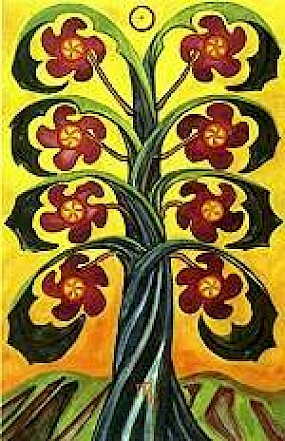
Tarot Card for December 5: The Eight of Disks

The Eight of Disks

The Lord of Prudence is not quite as austere a card as it first sounds. It’s another of those Disks that works on more than one level. In the purely material and mundane sphere it indicates a period where financial resources must be carefully managed.

So long as it does not appear with cards like the Ten of Swords or the Five of Disks, there will not normally be any grave material problem. But there is a warning here that there may be unexpected expense, and good money management will enable us to fund whatever arises.

At the next level, the Eight of Disks can apply to a period where you enter into additional training in order to enhance your career projects. In this case look for cards like the Three of Disks, or the Ace, to indicate some new area of study. Then look for cards like the Universe, or the Sun to indicate the successful outcome of your efforts.

Finally in the spiritual area, when the Lord of Prudence comes up with cards like the PriestessDeath, the Moon, or the Hierophant, you’re approaching a period of rapid spiritual development – almost an initiation. In this case, this card is warning you to be alert for opportunities, ready to deal with stress and pressure, and to manage your energies thoughtfully and carefully. You can perhaps see the correlation which exists with regard to energy management between the material and spiritual definitions of the card – in either case energy must be regulated and respected in order for life to go smoothly and for you to get the best out of your experiences.

The Eight of Disks

(via angelpaths.com and Alan Blackman)

Word Magic with Laurel Airica

New Thinking Allowed with Jeffrey Mishlove • Dec 4, 2022 Laurel Airica is a Linguistic Evolutionary and Educational Entertainer. She is the creator of WordMagic – a way of playing with words that makes people smarter, wiser, kinder, and more literate. Laurel shows in verse and prose how young and old around the globe can collectively, creatively, and quite rapidly take command of the English language and upgrade it to facilitate our essential evolutionary leap from humankind to HumanKindness. She is author of, Horsing Around: The Inside Word on Marriage and Horses, WordMagic: WordPlay That Puts a New Spin on the Whirled and the Book of E: A Book of Alphabet Alchemy. Her website is laurelairica.com. Laurel describes how we can self-awaken through wordplay. She plays with words that coexist with different concepts that are married through sounds, such as a homonym or pun. She has developed an intuitive “inner-standing” of how language echoes and reflects us. She suggests that the English language is the leading software of the western mind. However, words can be debilitating, confusing, and loaded with subliminal and contradictory messages. We can collectively and creatively upgrade language to support evolution in consciousness. Love turned around is the beginning of “evol-ution.” When we know we’re divine – “am-God” – backward of “dogma”, it’s more possible to believe we have supernatural capabilities. New Thinking Allowed CoHost, Emmy Vadnais, OTR/L, is an intuitive healer and health coach based in St. Paul, Minnesota. She is the author of Intuitive Development: How to Trust Your Inner Knowing for Guidance With Relationships, Health, and Spirituality. Her website is https://emmyvadnais.com/ (Recorded on October 14, 2022)

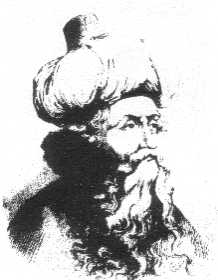
Bio: Ibn Arabi

From Wikipedia, the free encyclopedia

Ash-Shaykh al-Akbar
Muḥyī ad-Dīn
Ibn ʿArabī
ابن عربي
Born28 July 1165
MurciaTaifa of Murcia
(now Murcia, Region of MurciaSpain)
Died16 November 1240 (aged 75)
ṢāliḥiyyaDamascusAyyubid Sultanate
EraMedieval philosophy12th century philosophy13th century philosophy
RegionMiddle Eastern philosophyIslamic philosophy
SchoolFounder of Akbariyya
Main interestsMysticismNames of GodOntologyPoetrySufi metaphysics
showInfluences
showInfluenced
Arabic name
Personal (Ism)Muḥammad
Patronymic (Nasab)ibn ʿAlī ibn Muḥammad ibn ʿArabī
Teknonymic (Kunya)Abū ʿAbd Allāh
Epithet (Laqab)Ibn ʿArabī
Toponymic (Nisba)al-Ḥātimī aṭ-Ṭāʾī
hidePart of a series on Islam
Sufism
Tomb of Abdul Qadir Gilani, Baghdad, Iraq
showIdeas
showPractices
showSufi orders
showList of sufis
showTopics in Sufism
 Islam portal
vte

Ibn ʿArabī (Arabic: ابن عربي, ALA-LC: Ibn ʻArabī‎; full name: أبو عبد الله محـمـد بن علي بن محمـد بن العربي الحاتمي الطائي الأندلسي المرسي الدمشقي, Abū ʻAbd Allāh Muḥammad ibn ʻAlī ibn Muḥammad ibn al-ʻArabī al-Ḥātimī al-Ṭāʼī al-Andalusī al-Mursī al-Dimashqī; 1165–1240), nicknamed al-Qushayrī (القشيري, al-Qushayrī) and Sulṭān al-ʿĀrifīn (سلطان العارفين, Sulṭān al-ʻĀrifīn, ‘Sultan of the Knowers’), was an Arab Andalusian Muslim scholarmysticpoet, and philosopher, extremely influential within Islamic thought. Out of the 850 works attributed to him, some 700 are authentic while over 400 are still extant. His cosmological teachings became the dominant worldview in many parts of the Muslim world.[3]

He is renowned among practitioners of Sufism by the honorific titles ash-Shaykh al-Akbar (الشيخ الأكبر al-Shaykh al-Akbar, ‘the Greatest Shaykh‘; from here the Akbariyya or “Akbarian” school derives its name) and Muḥyī ad-Dīn (محيي الدين Muḥyī al-Dīn, ‘Renewer of the Faith’) Ibn ʿArabī,[4][5][a] and was considered a saint.[7][8] In medieval Europe, he was known as Doctor Maximus (‘Greatest Teacher’).[9]

Biography

‘Abū ‘Abdullāh Muḥammad ibn ‘Alī ibn Muḥammad ibn `Arabī al-Ḥātimī aṭ-Ṭāʾī (أبو عبد الله محمد ابن علي ابن محمد ابن العربي الحاتمي الطائي) was a Sufi mysticpoet, and Arab philosopher from the Tayy tribe[10][11] born in MurciaAl-Andalus on the 17th of Ramaḍān 560 AH (28 July 1165 AD).[12]

Ibn Arabi was Sunni, although his writings on the Twelve Imams were also popularly received among Shia.[13] It is debated whether or not he ascribed to the Zahiri madhab which was later merged with the Hanbali school.[14]

After his death, Ibn Arabi’s teachings quickly spread throughout the Islamic world. His writings were not limited to the Muslim elites, but made their way into other ranks of society through the widespread reach of the Sufi orders. Arabi’s work also popularly spread through works in Persian, Turkish, and Urdu. Many popular poets were trained in the Sufi orders and were inspired by Arabi’s concepts.[15]

Others scholars in his time like al-MunawiIbn ‘Imad al-Hanbali and al-Fayruzabadi all praised Ibn Arabi as ”A righteous friend of Allah and faithful scholar of knowledge”, ”the absolute mujtahid without doubt” and ”the imam of the people of shari’a both in knowledge and in legacy, the educator of the people of the way in practice and in knowledge, and the shaykh of the shaykhs of the people of truth though spiritual experience (dhawq) and understanding”.[16]

Family

Ibn Arabi’s paternal ancestry was from the South Arabian tribe of Tayy,[17] and his maternal ancestry was North African Berber.[18] Al-Arabi writes of a deceased maternal uncle, Yahya ibn Yughan al-Sanhaji, a prince of Tlemcen, who abandoned wealth for an ascetic life after encountering a Sufi mystic.[19] His father, ‘Ali ibn Muḥammad, served in the Army of Abū ʿAbd Allāh Muḥammad ibn Saʿd ibn Mardanīsh, the ruler of Murcia.[20] When Ibn Mardanīš died in 1172 AD, his father shifted allegiance to the Almohad Sultan, Abū Ya’qūb Yūsuf I, and returned to government service. His family then relocated from Murcia to Seville.[6] Ibn Arabi grew up at the ruling court and received military training.[20]

As a young man Ibn Arabi became secretary to the governor of Seville. He married Maryam, a woman from an influential family.[20]

Education

Ibn Arabi writes that as a child he preferred playing with his friends to spending time on religious education. He had his first vision of God in his teens and later wrote of the experience as “the differentiation of the universal reality comprised by that look”. Later he had several more visions of Jesus and called him his “first guide to the path of God”.[21] His father, on noticing a change in him, had mentioned this to philosopher and judge, Ibn Rushd (Averroes),[21] who asked to meet Ibn Arabi. Ibn Arabi said that from this first meeting, he had learned to perceive a distinction between formal knowledge of rational thought and the unveiling insights into the nature of things. He then adopted Sufism and dedicated his life to the spiritual path.[21] When he later moved to Fez, in Morocco, where Mohammed ibn Qasim al-Tamimi became his spiritual mentor.[22] In 1200 he took leave from one of his most important teachers, Shaykh Abu Ya’qub Yusuf ibn Yakhlaf al-Kumi, then living in the town of Salé.[23]

Pilgrimage to Mecca

Ibn Arabi left Andalusia for the first time at age 36 and arrived at Tunis in 1193.[24] After a year in Tunisia, he returned to Andalusia in 1194. His father died soon after Ibn Arabi arrived at Seville. When his mother died some months later he left Andalusia for the second time and travelled with his two sisters to Fez, Morocco in 1195. He returned to Córdoba, Andalusia in 1198, and left Andalusia crossing from Gibraltar for the last time in 1200.[25] While there, he received a vision instructing him to journey east. After visiting some places in the Maghreb, he left Tunisia in 1201 and arrived for the Hajj in 1202.[26] He lived in Mecca for three years,[6] and there began writing his work Al-Futūḥāt al-Makkiyya (الفتوحات المكية), The Meccan Illuminations—which only part of it has been translated into English by various scholars such as Eric Winkel.[27]

Journeys north

After spending time in Mecca, he traveled throughout SyriaPalestineIraq and Anatolia.[6]

In 1204, Ibn Arabi met Shaykh Majduddīn Isḥāq ibn Yūsuf (شيخ مجد الدين إسحاق بن يوسف), a native of Malatya and a man of great standing at the Seljuk court. This time Ibn Arabi was travelling north; first they visited Medina and in 1205 they entered Baghdad. This visit offered him a chance to meet the direct disciples of Shaykh ‘Abd al-Qādir Jīlānī. Ibn Arabi stayed there only for 12 days because he wanted to visit Mosul to see his friend ‘Alī ibn ‘Abdallāh ibn Jāmi’, a disciple of the mystic Qaḍīb al-Bān (471-573 AH/1079-1177 AD; قضيب البان).[28] There he spent the month of Ramaḍan and composed Tanazzulāt al-Mawṣiliyya (تنزلات الموصلية), Kitāb al-Jalāl wa’l-Jamāl (كتاب الجلال والجمال, “The Book of Majesty and Beauty”) and Kunh mā lā Budda lil-MurīdMinhu.[29]: 176 

Return south

In the year 1206 Ibn Arabi visited Jerusalem, Mecca and Egypt. It was his first time that he passed through Syria, visiting Aleppo and Damascus.

Later in 1207 he returned to Mecca where he continued to study and write, spending his time with his friend Abū Shujā bin Rustem and family, including Niẓām.[29]: 181 

The next four to five years of Ibn Arabi’s life were spent in these lands and he also kept travelling and holding the reading sessions of his works in his own presence.[30]

Death

On 22 Rabī‘ al-Thānī 638 AH (16 November 1240) at the age of seventy-five, Ibn Arabi died in Damascus.[6]

More at: https://en.wikipedia.org/wiki/Ibn_Arabi

Wujud

From Wikipedia, the free encyclopedia

Wujūd (Arabic: وجود) is an Arabic word typically translated to mean existence, presence, being, substance, or entity. However, in the religion of Islam, it tends to take on a deeper meaning. It has been said that everything gains its wujūd by being found or perceived by God.[1]

Sufi view

For those of the Sufi tradition, wujūd has more to do with the finding of God than the existence of God. Although wujūd is commonly translated as “existence”, its original meaning is the “being found”. This “being found” is sometimes described as the final stage of fanaa in which one is immersed in the existence or finding of God while all else is annihilated.[1]

“For a Sufi, beyond the realization of the annihilation of the state of nonexistence, there is nothing except existence. There is nothing beyond this nothingness except survival and nothing in death but life. This annihilation implies eternal reunion, as well as existence in full positivity and glory.”[2]

Relation to Wajd

Wajd can be translated to mean ‘ecstasy’. Wujud (which is described as ecstatic existentiality in this instance) is said to occur only after one goes beyond wajd. In other words, ecstasy does not lead to anything other than Being.

Wajd and Wujud can be better understood in terms of tawhid as well. Tawhid (or doctrine of Oneness of God) is described as a beginning and wujud as an end, with wajd being an intermediary between the two. Abu ‘Ali ad-Daqqaq further explains: “Tawhīd entails the encompassing of the servant. Ecstasy (wajd) entails the immersion of the servant. Wujud entails the extinction of the servant.”[3]

The Sufis believe that anyone who experiences wajd brings back some residual knowledge from the object of his finding (wujud). Also, when one gains knowledge from experience, one must attempt to find a contraction to balance it. If one fails to do so, one remains at a lower level of knowledge.[4]

Philosophical view

Abū l-Qāsim al-Junayd reflects on existence by explaining: “When he seizes me with fear, he annihilates me from myself through my existence, then preserves me from myself… Through being made present I taste the flavor of my existence.”[3] He also states “The wujud (finding, experience, ecstasy, existence) of the real occurs though the loss of your self”[3] The self is another major part of existence in Islamic philosophy. Many claim that the existence of the self is proof for the existence of the Other. This ‘Other’ is said to be the only Reality, meaning that “whatever ‘is’ other than the Other is nonexistent.”[2]

As ‘Abd al-Karīm ibn Hawāzin al-Qushayrī puts it: “The first passing away is the passing away of the self and its attributes to endure through the attributes of the real. Then there is the passing away from the attributes of the real through witnessing of the real. Then there is a person’s passing away from witnessing his own passing away through his perishing in the ecstatic existentiality (wujud) of the real”[3]

There is also the view that there are two kinds of Being, corporeal and spiritual. Or, “one which is moved and one which causes motion, though itself unmoved”[5]

Wahdat al-wujūd

Wahdat al-wujūd or ‘unity of being’ can mean that “there is only one Being, and all existence is nothing but the manifestation or outward radiance of that One Being”.[2]

Quotes

“Existence is not an inherent quality of essence, but only a predicate or an accident of essence” [6]

“Absolute Majesty-Beauty, like sheer being-sheer possibility, forms the totality of wujud” [4]

More at: https://en.wikipedia.org/wiki/Wujud#:~:text=Wuj%C5%ABd%20(Arabic%3A%20%D9%88%D8%AC%D9%88%D8%AF)%20is,found%20or%20perceived%20by%20God.

Talking Comparative Mysticism with Filip Holm

“The Arabic word for ‘to be’ is wujud, whose root comes from the word meaning ‘to find’ which connects the idea of existence or being directly to awareness and consciousness.”

–Filip Holm

Seekers of Unity • Feb 20, 2021 What best accounts for the commonality among the world’s mystical traditions? & Is there a shared basic metaphysics of mysticism among the world’s mystical traditions? Filip Holm of @LetsTalkReligion talks religion with @SeekersofUnity We get to chatting about perennialism, essentializing, ineffability and language, language and experience, and the quandary of translations. We talk about: Defining Mysticism, Mystical Experience, Unity as key feature, Dualistic Mysticisms, Duality vs Polarity, Objectivity and Subjectivity, The Real and the Unreal, Ego Death, The Metaphysical Imperative, Unity that unites and transcends religions, Context vs trans-contextual mysticism, The problem of translating mysticism and Filip’s Channel explosion. Filip started the youtube channel Let’s Talk Religion with the aim of increasing religious literacy in the world, by exploring subjects within the field of religion and religious studies from an academic, fair and unbiased perspective, with the firm belief that if religious education is improved and religious literacy in the world increases, there will be more room for discussion, tolerance and understanding. 00:00 Excerpt 01:31 About Filip 04:56 Overview of Convo 06:43 Filip’s story 09:39 a tip for finding one’s passion in life 10:50 Top Misconceptions about Islam 15:00 What is Mysticism? 17:40 Emphasizing Experience? 20:59 Unity as the key feature of Mysticism? 24:05 Any examples of non-unitive Mysticism? Judaism? 29:05 Dualistic Mysticisms? Duality or Polarity? 31:52 Distinguishing between God and creation? 38:24 Do you find truth or beauty in Mysticism? 41:59 What best accounts for the commonality of Mysticism? 44:20 Just chemicals in the brain? 47:50 Breaking down the objective-subjective dichotomy 50:15 Is Plato to blame? 53:00 Is there a shared basic metaphysics of mysticism? 53:13 The Absolute, The Real and the Unreal 1:01:53 Coming back to the real 1:06:05 Therapeutic value of ego death 1:07:07 The necessity of separation/death | God coming to know Godself 1:11:06 The Metaphysical Ethical Imperative 1:13:55 Experiential Ethics 1:17:00 Three Part Structure of Mysticism I-i-I 1:18:57 Filip’s Two Critical Questions: 1. Are we cherry-picking? 1:21:55 Unity that unites and transcends religions 1:29:21 2. Experience and Langue 1:31:05 Context vs Trans-Contextual 1:36:03 Unity not uniformity, One yet Unique, Echad and Yachid 1:38:04 The problem of translating mysticism 1:48:56 Filip’s Channel, Let’s Talk Religion’s Explosive Growth

Lucid Dreaming class on December 10

LUCID DREAMING
Saturday, December 10, 2022, 10:00 AM to 3:00 P.M. Pacific
Presented on Zoom

Register at https://tinyurl.com/vtf7k5j
 
We’re all swimming in our subconscious mind when we dream.
With Lucid Dreaming, we bring the conscious mind to be aware
that we’re dreaming (while we’re in the subconscious mind) and
amazing things can happen. 
Come to class and learn the process of becoming a Lucid Dreamer. 
 
Lucid Dreaming will help to Release the Power of your Dreams
•    Accelerate your Personal Growth
•    Understand the route to your conscious evolution
•    Solve Problems
•    Realize those “not so secret” messages in your unconscious mind.
•    Gain ideas to help in waking life
•    Turn up your creativity
•    Learn to interpret your dreams
•    Practice methods to remember dreams
•    Review of the Latest scientific information on sleep, dreaming and health
Register at https://tinyurl.com/vtf7k5j
What you’ll receive with the Class
•    5 hour class delivered via an online webinar.
•    Class Notes and resource Links
•    Workshop 
•    Invitation to the weekly Dream Group
•    Dream interpretation session with HughJohn
Please register now and I’ll be looking forward to having you in class. Please call me for any questions 310-899-9453. Thanks and Aloha !!!

Register at https://tinyurl.com/vtf7k5j

Krishnamurti’s Last Year at Brockwood Park (1985)

Brockwood Park School • Aug 13, 2012 Originally entitled “The Role of a Flower”, this video shown on British television in 1985 as part of “The Human Factor” TV program, features J. Krishnamurti, founder of Brockwood Park School, here interviewed and giving a talk just months before his death in Ojai California. This will also give you some biographical information as well as insights from people who knew him personally, such as Mary Lutyens, as well as people who used to attend the gatherings. Finally, for those of you who don’t know what K’s talks used to look like in those days, this is a good window into the atmosphere of the way it used to be at Brockwood.

Question: Can Focusing on the Body Get Me Out of My Head?

BY CRAIG HAMILTON | DEC 3, 2020 | 2 COMMENTS (craighamiltonglobal.com)

Many spiritual practices advocate focusing your attention on the body in order to liberate your awareness from the mind. While these approaches are valuable, they probably won’t open you to the deeper dimensions of meditation practice: becoming aware of consciousness itself. In this 5-minute Q&A, Craig explores the practice of liberating yourself from the mind and the body in order to experience the infinite mystery beyond both.

Below the video player is an MP3 version of the talk and an edited transcript, if you’d prefer to engage the content in that way.

Want to download the mp3 version? Click here.


Transcript

Question: 

The idea of the infinite feels like a mental construct. So, to get out of the mind, is the body a good stand in for the self the mind doesn’t know and will never know? 

Answer: 

That’s a good question. 

(Participant) says, the idea of the infinite feels like a mental construct. First, the idea of the infinite is a mental construct. That’s exactly right. Any idea is a mental construct. 

But the infinite is not a mental construct. A lot of work has been done with getting out of the fixation on thought. If you put your attention on your body, on the one hand, yes, that can take you out of your mind and there are a lot of traditional practices that kind of work that way. We’re all so lost in the stream of the monkey mind, let’s just pay attention to the breath. Or let’s just put our attention on our body. When we do that for a little while, what happens? The mind calms down and we feel centered in the body. From a relative point of view, putting our attention on the body certainly is a way out of the mind. 

Taking your attention off your mind and having it somewhere else for a while could open a doorway to a deeper consciousness. So, it’s not a bad thing to do and certainly spiritual teachers ask us to do that. 

But what if instead of trying to focus anywhere in particular, we allowed ourselves to simply not put our attention anywhere on anything? When you can’t put it on your thoughts, and you can’t put it on your feelings, and you can’t put it on your sensations, then where else can it go? That’s the mystery. Then it’s a direct invitation to become aware of consciousness itself, which is infinite and is not a concept. 

I would say it’s not a bad thing to do. But in terms of practicing meditation in the context of direct awakening, I suggest that you challenge yourself to not let it rest on the body and then see what opens up. If you just focus on your body, often you just feel nice and warm and relaxed; and you won’t be challenged to go further into something more profound.