
Fox News Started streaming 21 minutes ago • Started streaming 21 minutes agoGeorgia incumbent Sen. Raphael Warnock speaks to his supporters from his campaign HQ after beating Republican challenger, Herschel Walker.
Monthly Archives: December 2022
“Let’s Misbehave”
“Unleashing the Secrets of Therapeutic Ketamine”
KindraConnect Nov 26, 2022 “Unleashing the Secrets of Therapeutic Ketamine” Hosted by KindraConnect (www.kindraconnect.com) featuring Dr. Randy Scharlach, medical director at Field Trip (www.fieldtriphealth.com) speaks about ketamine-assisted psychotherapy. Using a holistic approach to healing, tackling not just the symptoms, but also the negative thought patterns, lifestyle factors, trauma, coping skills, and chemical systems in the brain, ketamine therapy can be highly effective where other treatments have failed. Dr. Scharlach’s approach to healing draws from both Eastern and Western Traditions. Certified as a psychedelic therapist by the California Institute of Integral Studies, Dr. Scharlach’s expertise is guiding clients towards emotional wellness by learning the nature of the Self. Dr. Randy Scharlach is a graduate of UCLA Medical School and the Yale University Department of Therapeutic Radiology. A center of gravity for the psychedelic renaissance, Field Trip offers a variety of support for psychedelic experiences including ketamine-assisted psychotherapy (ketamin plus follow-up talk therapy) for mental health conditions including depression, anxiety and PTSD and their app, Field Trip available on iOS and Android. Their ketamine psychotherapy is available both at-home and in-person with offices in the US in Los Angeles, New York, San Diego, Seattle, Toronto, Houston, Atlanta, Chicago and Washington DC. Field Trip is offering 10% off; mention code FieldTrip10 when you book therapy. Join the KindraConnect app to meet other people interested in psychedelics. We have 5000 people in our Psychedelic kindred. The KindraConnect app is available on iPhone and Android
(Contributed by John Atwater, H.W.)
Advent: The Second Candle: Peace

Sar Shalom … Hear Ye O Israel the Prince of Peace Cometh
During Advent every Sunday and candle represents an aspect of the Christ Consciousness. Christ is called the Prince of Peace. In looking historically in the New Testament there seems to be little peace for Jesus who was hounded, tortured, and eventually crucified.
The oldest form of the word peace comes from Hebrew word Shalom, translated into Middle English and Anglo-French and Latin… the form of the meaning we currently use came into the language in or about the 15th Century. Only a small piece of the original meaning of the word remains in our understanding of the word. To have peace is to have calmness and silence, to agree… in the common vernacular and even going so far as forming a pact. Way down on the use of the word we find a clue to why Jesus, Christ would be called the Prince of Peace. The clue is a simple to be. Peace has an uncommon usage meaning to be. And here is the passage into the Hebrew language and use of the word Shalom.
We know that our desire, hope, and inspiration are necessary elements of obtaining a state of Christ Consciousness. This first candle is a necessary if we are to understand the path our consciousness must take to exist as consciousness aware of itself as consciousness. Peace becomes the second step we must take.
Peace–Hebrew Shalom … A word study in the New King James version for SHALOM says: Completeness, wholeness, health, peace, welfare, safety soundness, tranquility, prosperity, perfectness, fullness, rest, harmony, the absence of agitation or discord.
Here it is! The path we must realize for the birth to be within our consciousness.
The Prince of Peace is about tranquility but more… Jesus, Christ, the Messiah, (consciousness) represents the place we must come to in an epiphany about our being our existence as consciousness. The Messiah comes to show us we have always been whole, complete perfect. Consciousness, the Christ consciousness, lacks nothing. Is full unto itself without beginning or end … is always present an omnipresent existence of being. To be in a state of Christ Consciousness is to be in a state of surrender to the meaning of the word peace. That is to be in surrender to the nature of reality of the wholeness and perfection of the Christ Consciousness. In this state we are, we exist …we are beingness or isness (To Be) in a state of peace.
Isaiah 9.6 For to us a child is born, to us a son is given, and the government will be on his shoulders. And he will be called Wonderful Counselor, Mighty God, Everlasting Father, Prince of Peace.
This state of peaceful existence is without end… life everlasting is promised because that which is whole, complete, and perfect is without alpha or omega. In the Christ Consciousness we find that wholeness, tranquility the understanding of inner peace will grow (the government, rules, axiomatic understanding of the Christ Consciousness) our understanding of the principles, the axiomatic thought represented by the Prince of Peace grows as we practice the surrender to the ideas contained in the name the Messiah is called Peace.
Peace is an inner attribute that we must unveil, reveal, and acknowledge within ourselves. In lighting our Advent candle of Peace, we are saying I understand the surrender to the Consciousness of Christ, to the wholeness and perfection that is always present. We are symbolically lighting the way for our consciousness to understand that only in the surrender to that which is greater than our will and human understanding do we find life everlasting even within the crucifixion of Jesus. Advent is not just about birth but the whole cycle of birth and death centered in the Judeo-Christian world.
God/Father the creator consciousness has given his only begotten son that we may know life without end. BUT this cannot happen in a man-state consciousness of things. We must move past this state of thinking beyond the idea that we are cloven, or lack whole or are incomplete in our consciousness. This duality of thought is war, the great battle we each fight within our consciousness our battle for our soul. Soul is defined as the essence of our being or that, which is the image of God.
As we celebrate Advent (preparation for the coming light unto the world), the birth of the Messiah, the Christ we now understand that we must have hope and desire. With our first Candle we are celebrating our release from the man-state of thinking, (represented by our sojourn in the desert and freedom from Egypt). We begin by searching our consciousness for that which represents the idea of a cloven god or two gods knowing that there is only one true creator, Truth undivided as whole and complete. We have cleansed our alters of life of these states of duality, knowing that the coming days will never lack in light and inspiration. We take these new realities of understanding with us as we light the second candle. As we light this second candle of peace we realize the Prince of Peace, the Christ Consciousness is always present, always available. We now realize we must surrender our will, ego and man-state thoughts for this greater idea of life if we are to go to heaven, to cross the sands of the desert to heaven to Israel, to enter the Christ Consciousness and be reborn to life everlasting.
We have now realized the first two candles and steps we must take in the preparation of the coming birth within us and unto the world. There are five candles we must light, five steps toward the acceptance/realization of the Christ Consciousness, Truth into our life as an existing and everpresent state of consciousness. This is what is called Translation, moving us from earth bound thoughts to those of Heaven.
© 2012-2022 by Suzanne Deakins
Tarot Card for December 6: The Fool
The Fool
The Fool is the first card of the Tarot and is generally unnumbered, or numbered zero. The Fool is at the start of our journey and is the initiator. Seen by many as the innocent, he has an eagerness and freshness about him. He is young and carefree, entering the World without preconceptions.
The Fool trusts in life and expects his path to be a happy and rewarding one. There is faith in the gods to see him through and a complete absence of fear.
Sometimes the Fool is seen as too carefree – certainly a good dose of other people’s more negative reality could damage him. However, for as long as the Fool has faith in his own purity and innocence, others will not be able to take advantage.
This is the child within. This is how we were before the many experiences of life forced us to build up so many walls. The Fool does not shade himself from the light – here we are born and from here we walk the path. It’s time to jump off the cliff…
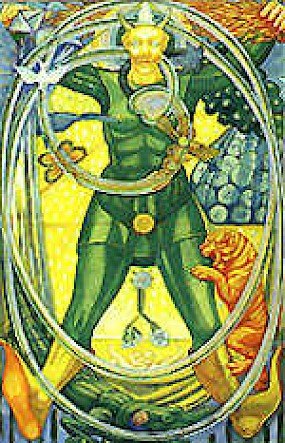
(via angelpaths.com and Alan Blackman)
Op-Ed: My own Mauna Loa eruption
By Mike Zonta, BB editor
December 5, 2022
Yesterday, I returned my Stranger Things DVD to the San Francisco Public Library. It was supposed to be a 2-disk DVD but when I opened it up a few days earlier, there was only one disk (Episodes 5-8) inside.
I feared there might be some problem when I tried to return this DVD, and there was. After I returned the DVD in person, the library claimed online that the DVD was still outstanding. It was after hours and I had no way to contact them. And even if I did contact them, what chance did I have against the authority of the San Francisco Public Library?
My fury began to grow. I was reviewing the arguments in my defense in my mind over and over again. And getting angrier and angrier
Then I realized: Wow. I don’t usually get this angry. Maybe this anger relates to some other time in my life where I felt unjustly accused of something with no feeling of recourse.
Maybe this anger relates to a time in my life when it didn’t feel safe to let it out. And maybe it wasn’t safe.
It’s much easier to get angry with the public library than it would have been with my father.
So this gives me something to work with that I’ve never been in touch with before.
The next day I went to the library. The librarian asked me, “Did the DVD come with one disk or two?” I said, “One.” He said, “Okay.”
Emerson on the “other world”

“Other world! There is no other world! Here or nowhere is the whole fact.”
― R.W. Emerson
Ralph Waldo Emerson, who went by his middle name Waldo May 25, 1803 – April 27, 1882), was an American essayist, lecturer, philosopher, abolitionist, and poet who led the transcendentalist movement of the mid-19th century. Wikipedia
“Nothing Gold Can Stay”
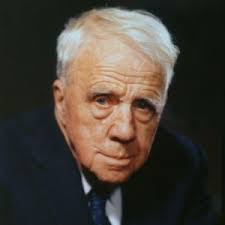
BY ROBERT FROST
Nature’s first green is gold,
Her hardest hue to hold.
Her early leaf’s a flower;
But only so an hour.
Then leaf subsides to leaf.
So Eden sank to grief,
So dawn goes down to day.
Nothing gold can stay.
Robert Lee Frost (March 26, 1874 – January 29, 1963) was an American poet. His work was initially published in England before it was published in the United States. Wikipedia
Emily Dickinson on poetry
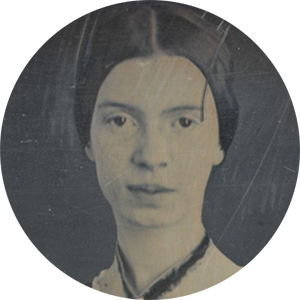
“If I read a book and it makes my whole body so cold no fire can warm me, I know that is poetry. If I feel physically as if the top of my head were taken off, I know that is poetry. These are the only ways I know it. Is there any other way?”
Emily Elizabeth Dickinson (December 10, 1830 – May 15, 1886) was an American poet. Little-known during her life, she has since been regarded as one of the most important figures in American poetry. Dickinson was born in Amherst, Massachusetts, into a prominent family with strong ties to its community. Wikipedia
The Art of Divination: D.H. Lawrence on the Power of Pure Attention
By Marian Popova (themarginalian.org)

“Attention, taken to its highest degree, is the same thing as prayer,” Simone Weil observed as she considered the relationship between attention and grace at the peak of her short life. “Attention without feeling,” Mary Oliver wrote a generation later in her beautiful elegy for her soul mate, “is only a report.”
Before Oliver, before Weil, D.H. Lawrence (September 11, 1885–March 2, 1930) took up the subject of attention as our portal to the sacred in one of the pieces in Sketches of Etruscan Places and Other Italian Essays (public library) — the rich posthumous collection of travel writings that gave us his reflections on the strength of sensitivity.
D.H. Lawrence
Lawrence finds himself contemplating the birds on the walls of the Tarquinia tombs, painted by artists before whose eyes they “flew through the living universe as feelings and premonitions fly through the breast of man, or as thoughts fly through the mind.” For those artists, the birds became a lens on “the complex destiny of all things” — the elemental hunger for truth and meaning we live with, which requires what might best be termed divination.
But at the center of such divination, whether we perform it through art or through science, lies the hallmark of our consciousness — the capacity for unalloyed and prayerful attention, which can turn any object into a miniature of all things and all meaning. (The poet J.D. McCatchy captured this essential fact beautifully in his observation that “love is the quality of attention we pay to things.”)
Lawrence writes:
If you live by the cosmos, you look in the cosmos for your clue. If you live by a personal god, you pray to him. If you are rational, you think things over. But it all amounts to the same thing in the end. Prayer, or thought or studying the stars, or watching the flight of birds, or studying the entrails of the sacrifice, it is all the same process, ultimately: of divination. All it depends on is the amount of true, sincere, religious concentration you can bring to bear on your object. An act of pure attention, if you are capable of it, will bring its own answer. And you choose that object to concentrate upon which will best focus your consciousness. Every real discovery made, every serious and significant decision ever reached, was reached and made by divination. The soul stirs, and makes an act of pure attention, and that is a discovery.
[…]
It is the same with the study of the stars, or the sky of stars. Whatever object will bring the consciousness into a state of pure attention, in a time of perplexity, will also give back an answer to the perplexity.
Couple with Lawrence, lensed through Anaïs Nin, on how to be un-dead and live most fully, then revisit William James’s pioneering investigation of attention and its blind spots and cognitive scientist Alexandra Horowitz on how to walk through the everyday world more attentively.