Words by Martin Wright July 18, 2022 (positive.news)
From Sweden to Sierra Leone, cities are turning the climate crisis into an opportunity for happier, healthier living, reports Martin Wright
“Hot town! Summer in the city…!”
It’s a cracking song – a 1960s anthem to hedonism – and no surprise that it’s been an ‘earworm’ going through my head this morning, as I wrestle with a jammed blind, trying to create some paltry shade for my desk as the mercury soars towards the 40s.
And if that sounds all too familiar, it could seem relatively cool in the not so distant future. Rather masochistically, you may think, I’ve been reading predictions of how summers in the city could get a lot hotter, and not in a good way, as the climate spins out of control.
What caught my eye, though, was not the familiar warnings of what life in a 50-degree city might be like (borderline impossible, basically). Rather, I was struck by the sheer range of responses that cities across the world are starting to put in place to cool the streets. Responses that don’t just turn down the urban thermostat, but that make life sweeter for their people in the here and now.
So as part of its heat action plan, conceived with the US-based Natural Resources Defense Council, the city helped residents in low-income neighbourhoods to clean and coat their roofs with reflective paint, and the results speak for themselves.
“Since we painted the house,” said one, “we don’t feel that hot any more. We feel relaxed, the house feels cool. Our electricity bills are also reduced.”
This simple solution is matched with more sophisticated ones, such as personalised WhatsApp warnings triggered when a heatwave looms.
Painting buildings white is one way of dialling down the heat. Image: Clark Van Der Beken
Where Ahmedabad’s opted for a white-out, Medellín is bringing in the green. Once notorious as Colombia’s cocaine capital, its future reputation could rest on a series of imaginative responses to the climate crisis. These include planting ‘green corridors’ along roads and waterways, providing shady paths for pedestrians and cyclists. Already, this has cut temperatures on busy thoroughfares by 3 degrees Celsius. And it’s had a healing impact on communities, too, with people who had suffered years of violence coming together to be trained as city gardeners.
Spurred on by the UN Environment Programme’s Cool Coalition, other cities are catching the chill. Sierra Leone’s ambitious effort to increase vegetation by 50 per cent. Milan is targeting 3m new trees as part of its 2030 goal of cutting temperatures by 2 degrees C. And Melbourne’s putting urban reforestation at the heart of its plans to reduce the soaring demand for energy-guzzling air conditioners in Australia.
Meanwhile Athens, the European city most threatened by the climate crisis, is regreening its hills, which were famed for their forests in classical times; restoring wastelands as nature parks; and installing fountains to cool the air in the city’s famous squares. Temperatures in Omonia Square, below the Acropolis, have already fallen by 4 degrees C as a result.
Athens is regreening its hills in response to climate change. Image: Constantinos Kollias
In cooler, cloudier Britain, the climate crisis means floods as much as heat. The key here is to soak up water as it falls, so absorbing the force of any flood and slowing its pace, by making our city landscapes less like a smooth sheet of concrete and more like a sponge.
In London’s Hammersmith, regeneration specialist Groundwork has worked with the borough council to ‘spongify’ the environment of three housing estates. Cue green roofs for apartment blocks, ‘renaturalised’ surfaces in place of concrete, and new growing beds. Some 20 residents have been employed as green team trainees, while retrofitting energy-saving (and money-saving) kits in homes has helped win their support.
Winning local hearts and minds is key to a scheme in the Swedish city of Gothenburg, too. Dubbed the country’s rainiest city, it has wrestled for years with too much water in the wrong places. Now it’s turning a problem into something playful, with a couple of ‘rain playgrounds’, including one at a local school. This makes a feature of a downpour, channelling it through the school yard, sending it sploshing into pools, before slowly seeping away into a marshland of puddles and stepping stones. It slows the flow to manageable proportions and, just as importantly, the kids love it.
Initiatives like these won’t cure cities of climate change on their own, of course. But they certainly help. And meanwhile, they make summer in the city a sweeter season altogether. Just not so hot. Not in a bad way, anyway.
Martin Wright is chair of Positive News.
Main image: Bosco Verticale (Vertical Forest) is a leafy residential development in Milan. Credit: Zac Wolff
For many people in the West, the word ‘tantric’ conjures thoughts of extraordinarily lengthy sex sessions – perhaps involving the musician Sting – or yoga. But this oversimplified and often commercialised popular understanding of Tantra belies a subversive philosophy that challenges stereotypes of womanhood. In this video from the British Museum, the curator Imma Ramos takes viewers on a tour of the exhibition ‘Tantra: Enlightenment to Revolution’, tracing Tantra from its roots in 6th-century India up until today. In doing so, Ramos touches on how Tantra’s philosophy of divine feminine power has influenced Hinduism and Buddhism, India’s independence movement, and modern artistic thought and feminist practice.
This is a lovely card, known as Lord of Happiness. It talks about a sense of inner fulfilment and bliss, which radiates outward to touch everybody with whom you come into contact.
At a spiritual level, we’re talking about inner harmony, contentment and tranquillity – an appreciation of the High Powers, feeling at one with the Universe. This feeling leads to feeling that we are blessed by life.
On an everyday level, the card will often come up to mark periods of high achievement, and the resulting sense of pleasure and satisfaction. It will also come up to acknowledge joy and happiness in an emotional relationship.
When this card appears in your reading, it’s important to make the time to simply enjoy your own feelings, to revel in your sense of calmness and joy.
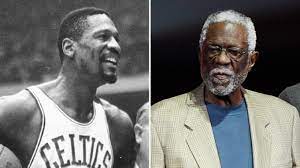
“A great winner is, above all, self-aware. He understands the impact he has on other players. Russell is the first player I would pick to start a team.”
–Bill Bradley on Bill Russell
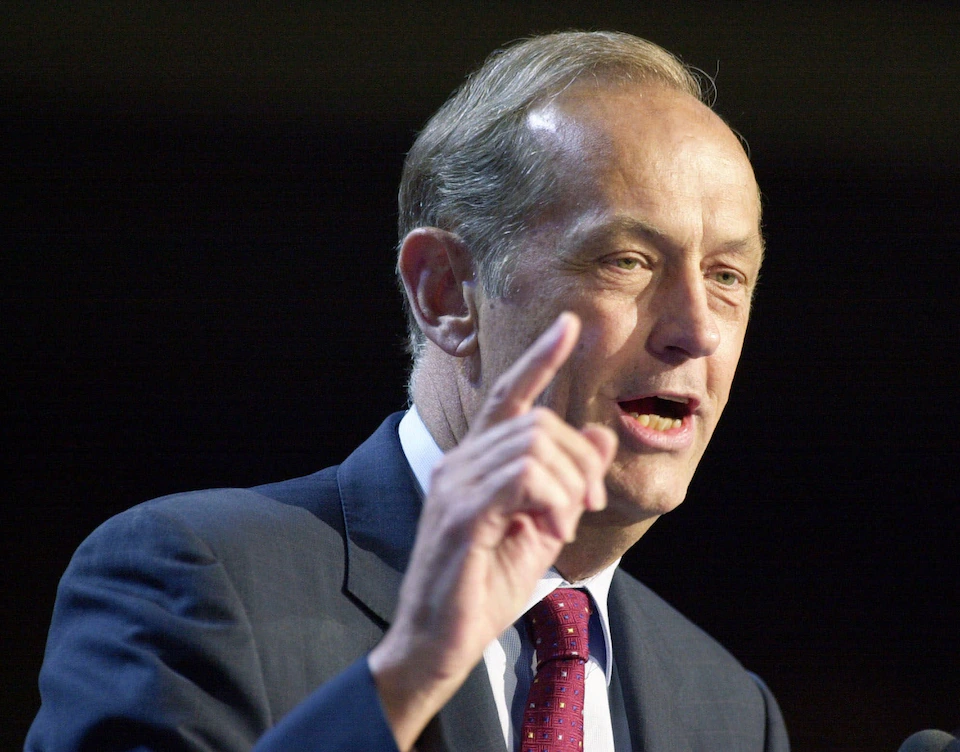
Bill Bradley
William Felton Russell (February 12, 1934 – July 31, 2022) was an American professional basketball player who played as a center for the Boston Celtics of the National Basketball Association from 1956 to 1969. Wikipedia
William Warren Bradley (born July 28, 1943) is an American politician and former professional basketball player. He served three terms as a Democratic U.S. senator from New Jersey. He ran for the Democratic Party’s nomination for president in the 2000 election, which he lost to Vice President Al Gore. Wikipedia
Over the centuries, researchers have found bones and artefacts proving that humans have existed for millions of years. Mainstream science, however has suppressed these facts. Prejudices based on scientific theory act as a ‘knowledge filter’, giving us a picture of prehistory that is largely inaccurate. This book reveals this hidden history.
Learn how the perception of truth has been weaponized in modern politics with this “insightful” account of propaganda in Russia and beyond during the age of disinformation (New York Times).
When information is a weapon, every opinion is an act of war.
We live in a world of influence operations run amok, where dark ads, psyops, hacks, bots, soft facts, ISIS, Putin, trolls, and Trump seek to shape our very reality. In this surreal atmosphere created to disorient us and undermine our sense of truth, we’ve lost not only our grip on peace and democracy — but our very notion of what those words even mean.
Peter Pomerantsev takes us to the front lines of the disinformation age, where he meets Twitter revolutionaries and pop-up populists, “behavioral change” salesmen, Jihadi fanboys, Identitarians, truth cops, and many others. Forty years after his dissident parents were pursued by the KGB, Pomerantsev finds the Kremlin re-emerging as a great propaganda power. His research takes him back to Russia — but the answers he finds there are not what he expected.
Blending reportage, family history, and intellectual adventure, This Is Not Propaganda explores how we can reimagine our politics and ourselves when reality seems to be coming apart.
The manosphere grew out of social movements such as the men’s liberation movement of the 1970s and 80s.[10] Groups now considered to be a part of the manosphere, such as the men’s rights movement, predate the term “manosphere”.[11] The term, a play on the word “blogosphere“, is believed to have first appeared on Blogspot in 2009.[12] It was subsequently popularized by Ian Ironwood, a pornography marketer who collected a variety of blogs and forums in book form as The Manosphere: A New Hope For Masculinity.[13] The term entered the popular lexicon when news media began to use it in stories about men who had committed acts of misogynist violence, sexual assault, and online harassment.[14]
Emma A. Jane identifies the late 2000s–early 2010s as a “tipping point” when manosphere communities moved from the fringes of the Internet towards the mainstream. She hypothesizes this was related to the advent of Web 2.0 and the rise of social media, in combination with ongoing systemic misogyny within a patriarchal culture. Jane writes that the manosphere was well established by the time of the GamerGate controversy in 2014, and misogynistic language such as graphic rape threats against women had entered mainstream discourse, being deployed by men not necessarily identified with any specific manosphere group.[15]
While the specifics of each group’s ideology sometimes conflict, the general ideology of manosphere groups centers on the promotion of masculinity, strong opposition to feminism, and misogyny.[18] Media scholar Debbie Ging writes that several manosphere subgroups, such as MRAs and PUAs, “exaggerate their differences in displays of infight posturing, in spite of the fact that their philosophies are almost identical”.[19] According to criminologist Lisa Sugiura, disparate groups within the manosphere are “united by the central belief that feminine values, propelled by feminism, dominate society and promote a ‘misandrist’ ideology that needs to be overthrown”.[13] Journalist Caitlin Dewey argues that the main tenets of the manosphere can be reduced to (1) the corruption of modern society by feminism, in violation of inherent sex differences between men and women; and (2) the ability of men to save society or achieve sexual prowess by adopting a hyper-masculine role and forcing women to submit to them.[20] In particular, feminists are portrayed as ignoring male victims of sexual assault and encouraging false rape accusations against men.[21]
Jargon
The manosphere has its own distinct jargon.[22] The idea of misandry (hatred of or prejudice against men) is commonly invoked, both as an equivalent to misogyny and a way to deny the existence of institutionalized sexism.[23] A central tenet is the concept of the red pill, a metaphor borrowed from the film The Matrix. It concerns awakening men to the supposed reality that society is dominated by feminism and biased against men.[24] Manospherians believe that feminists and political correctness obscure this reality, and that men are victims who must fight to protect themselves.[25] Accepting the manosphere’s ideology is equated with “taking the red pill”, and those who do not are seen as “blue pilled” or as having “taken the blue pill”.[26] Such terminology originated on the antifeminist subreddit /r/TheRedPill and was later taken up by men’s rights and MGTOW sites.[27]Donna Zuckerberg writes, “The Red Pill represents a new phase in online misogyny. Its members not only mock and belittle women; they also believe that in our society, men are oppressed by women.”[28]
Men are commonly divided into “alpha” and “beta” males[29] within an evolutionary-psychology framework, where “alphas” are seen as sexually dominant and attractive to women, who are hardwired to want sex with alphas but will pair with “beta” males for financial benefits. Among MRAs and PUAs this argument is known as “alpha fux beta bux”.[30]
Associated movements
The manosphere overlaps with white-supremacist and far-right ideologies,[13] including the neoreactionary, white-nationalist alt-right movement.[7] Zuckerberg writes that many alt-right members are either pick-up artists or MGTOW, and “the policing of white female sexuality is a major concern” of the alt-right.[31] The severity of the antifeminism espoused within these communities varies, with some espousing fairly mild sexism and others glorifying extreme misogyny.[32]Racism and xenophobia are also common among groups in the manosphere, and perceived threats against Western civilization are a popular topic.[33]
Radicalization and violence
The manosphere has been associated with online harassment, radicalizing men into misogynist beliefs and the glorification of violence against women.[8] Some sources have associated manosphere-based radicalization with mass shootings motivated by misogyny.[9]
Reddit has been a popular gathering place for manosphere supporters, and several forums on the site are geared toward its ideas.[35] However, in the late 2010s and 2020s Reddit began to take steps to discourage more extreme manosphere subreddits. Some were banned, such as /r/incels (banned in 2017), its successor /r/braincels (banned in 2018), and /r/MGTOW (banned in August 2021[36]); other subreddits such as /r/TheRedPill have been “quarantined”, meaning that a warning is displayed to users about the content of the subreddit and users must sign in before they’re allowed to enter.[37] As a result, some of these communities have found new homes on websites that are more welcoming of extreme content, such as Gab.[38]
Public perception
The manosphere has received significant coverage in the media from its association with high-profile violent attacks including the 2014 Isla Vista killings in California, the 2015 Umpqua Community College shooting in Oregon, and the 2018 Toronto van attack, as well as phenomena such as the sustained online abuse towards female members of the video game community that came to be known as GamerGate.[39] Following the Isla Vista shooting, the killer Elliot Rodger was found to have been an active participant on the PUAHate manosphere forum.[40] Following the attack, Dewey wrote that, while the manosphere was not to blame for Rodger’s attack, “Rodger’s misogynistic rhetoric seems undeniably influenced by the manosphere”.[41] The sociologist Michael Kimmel argued “it would be facile to argue the manosphere … urged [Rodger] to do this. I think those places are kind of a solace … They provide a kind of locker room, a place where guys can gripe about all the bad things that are being done to them by women”.[42]
Arthur Goldwag described the manosphere in the Spring 2012 edition of the Southern Poverty Law Center’sIntelligence Report as an “underworld of misogynists, woman-haters whose fury goes well beyond criticism of the family court system, domestic violence laws, and false rape accusations… [who are] devoted to attacking virtually all women (or, at least, Westernized ones).”[43] He added a caveat later that year, saying, “It should be mentioned that the SPLC did not label MRAs as members of a hate movement; nor did our article claim that the grievances they air on their websites – false rape accusations, ruinous divorce settlements and the like – are all without merit. But we did call out specific examples of misogyny and the threat, overt or implicit, of violence.”[44] In 2018, the SPLC added male supremacy as a category they track on their list of hate groups.[45] The British anti-extremism group Hope not Hate included the manosphere in its 2019 State of Hate report.[32]
Your subjective experience might not end the moment your heart stops, research on near-death experiences suggests.
Credit: Amir Esrafili / Unsplash
KEY TAKEAWAYS
In recent decades, scientists have been studying near-death experiences (NDEs) in an attempt to gain insights into how death overcomes the brain.
Some people who have NDEs can later report, with accuracy, what was taking place around them, even though medical professionals considered them clinically dead or unconscious at the time.
While the exact mechanisms behind NDEs remain unclear, research suggests that we remain conscious for about two to 20 seconds after our breathing and heartbeat stop.
Time of death is considered when a person has gone into cardiac arrest, which is the cessation of the electrical impulse that drives the heartbeat. As a result, the heart locks up. This moment when the heart stops is considered by medical professionals to be the clearest indication that someone has died.
But what happens inside our mind during this process? Does death immediately overtake our subjective experience or does it slowly creep in?
Some scientists are beginning to think that NDEs are caused by reduced blood flow, coupled with abnormal electrical behavior inside the brain. So, the stereotypical tunnel of white light might derive from a surge in neural activity. Dr. Sam Parnia is the director of critical care and resuscitation research, at NYU Langone School of Medicine, in New York City. He and colleagues have investigated exactly how the brain dies.
In previous work, Dr. Parnia has conducted animal studies looking at the moments before and after death. He’s also investigated near-death experiences. “Many times, those who have had such experiences talk about floating around the room and being aware of the medical team working on their body,” Dr. Parnia toldLive Science. “They’ll describe watching doctors and nurses working and they’ll describe having awareness of full conversations, of visual things that were going on, that would otherwise not be known to them.”
Fields marked with an * are required
Medical staff confirm this, he said. But how could people who were technically dead be cognizant of what’s happening around them? Even after our breathing and heartbeat stop, we remain conscious for about two to 20 seconds, Dr. Parnia says. That’s how long the cerebral cortex is thought to last without oxygen. This is the thinking and decision-making part of the brain. It’s also responsible for deciphering the information gathered from our senses.
According to Dr. Parnia, during this period, “You lose all your brain stem reflexes — your gag reflex, your pupil reflex, all that is gone.” Brain waves from the cerebral cortex soon become undetectable. Even so, it can take hours for our thinking organ to fully shut down.
Usually, when the heart stops beating, someone performs CPR (cardiopulmonary resuscitation). This will provide about 15% of the oxygen needed to perform normal brain function. “If you manage to restart the heart, which is what CPR attempts to do, you’ll gradually start to get the brain functioning again,” Dr. Parnia said. “The longer you’re doing CPR, those brain cell death pathways are still happening — they’re just happening at a slightly slower rate.”
Other research from Dr. Parnia and his colleagues examined the large numbers of Europeans and Americans who have experienced cardiac arrest and survived. “In the same way that a group of researchers might be studying the qualitative nature of the human experience of ‘love,’” he said, “we’re trying to understand the exact features that people experience when they go through death, because we understand that this is going to reflect the universal experience we’re all going to have when we die.”
One of the objectives is to observe how the brain acts and reacts during cardiac arrest, throughout both the processes of death and revival. How much oxygen exactly does it take to reboot the brain? How is the brain affected after revival? Learning where the lines are drawn might improve resuscitation techniques, which could save countless lives per year.
“At the same time, we also study the human mind and consciousness in the context of death,” Dr. Parnia said, “to understand whether consciousness becomes annihilated or whether it continues after you’ve died for some period of time — and how that relates to what’s happening inside the brain in real time.”
This article was originally published on Big Think in October 2017. It was updated in July 2022.
STAR TREK II: THE WRATH OF KHAN, Nichelle Nichols, wearing her communications ear piece, 1982. (c)Paramount. Courtesy: Everett Collection. [Nichelle Nichols attended the 1972 SYNCON at Los Angeles, California.]
Posted by D&D Resources | December 24th, 2008 (ncdd.rg)
The SYNCON process was originally developed by the Committee for the Future under the direction of Barbara Marx Hubbard, a social architect and futurist, and Air Force Lt. Col. John J. Whiteside in Washington D.C. in the 1970s. This process was born out of an awareness that attempts to solve problems in a piecemeal fashion usually lead to distrust, further alienation and fragmentation. The intent of the SYNCON process and its supportive technologies is to understand problems and issues in the context of a whole system and to discover cooperative solutions which provide for the improvement of life for all participants.
SYNCON is a process that brings together all stakeholders, all people who have an interest in the future of their community, by functional areas of concern – health, business, economics, education, government, environment, science and technology, arts and media, etc., to discover common goals, to identify community needs and to match those needs with known and required resources. This is a process which invites full participation, where we assume that those who live in their communities know best what they need and want and that they also have many resources to support turning their dreams into reality. A SYNCON is not just a one time face-to-face event, but it uses many different forms of technology to offer virtual participation for those who cannot be brought together. By training local community participants as facilitators, this process can be used to support ongoing community building activities beyond an initial event.
Syncons have been held in different parts of the world, with gang leaders and city officials in Los Angeles to the seacoast of Jamaica and in Washington DC. Using the Syncon process, polarization is overcome and opposition shifts into cooperation. A new type of leadership emerges, which connects people who might feel separate from each other, and different levels of government, community organizations and community groups get involved in creating a new future for their community. By bringing separate parts of the community together, a profound transformation occurs. Participants discover that the whole of the community is far greater than the sum of its parts and that when we come together in this way, a definite increase in hope, enthusiasm and commitment arises, energizing the community with new life.
What is a SYNCON?
The SYNCON process was originally developed by the Committee for the Future under the direction of Barbara Marx Hubbard, a social architect and futurist, and Air Force Lt. Col. John J. Whiteside in Washington D.C. in the 1970s. SYNCONS were held in 25 widely differing venues from University campuses to hotels, from Washington, D.C. to the rural areas of Jamaica and with gang leaders and civic officials in Los Angeles. The process and the technologies supporting it have been used extensively by many different groups since then.
This process was born out of an awareness that attempts to solve problems in a piecemeal fashion usually lead to distrust, further alienation and fragmentation. The intent of the SYNCON process and its supportive technologies is to understand problems and issues in the context of a whole system and to discover cooperative solutions which provide for the improvement of life for all participants.
SYNCON stands for Synergistic Convergence. Synergistic Convergence literally means ‘coming together to work at the same level.’ What that means in the context of our work is that, by bringing together individuals who feel passionately about what is happening in specific areas of life and community and utilizing a small group process, we can discover common needs and potentials resources far beyond that which any one of them would be capable of knowing or accessing on their own. This synergistic process creates passion, excitement and a touch of magic.
In order to accomplish its objectives, SYNCONS convene a wide variety of people – experts and non-experts, young and old, people who are part of the establishment and those who have felt disenfranchised, to deal with problems from every conceivable angle.
Synergistic Convergence is the coming together of individuals in a relationship that works toward the betterment of all. By bringing together divergent perspectives and disciplines in this holistic conferencing process, synergy is created. The process is designed to stimulate creativity by asking people what they want to create, what they need to get it done, and what resources they have to share with others. Synergy occurs out of enlightened self-interest as separate and often opposing people find a better way to realize their own purpose through discovering common goals and matching needs and resources rather than by opposition. Social empathy and trust is fostered.
The SYNCON works because the whole is always greater than the sum of its parts.
For billions of years nature has been responding to crises by creating more comprehensive and complex whole systems. Humanity is now facing an interrelated set of crises that cannot be resolved by doing more of the same. We are confronting whole system crises for which we need to develop whole system responses. SYNCON is one such whole system response process.
It moves away from polarization, win/lose, either/or models, to foster the discovery of how best to get what each group or individual wants by connecting and cooperating within the context of the emerging whole system. The SYNCON model restructures the environment into a circular wheel shape with sectors representing the basic functions of any community, large or small, such as environment, health, governance, business, etc. It gives people a chance to participate within a new process that empowers vision, cooperation and co-creativity. It is continually seeking and amplifying What Works. It is possibility oriented rather than problem oriented.
Information from each SYNCON will be channeled to further research and /or analysis and for dissemination to appropriate institutions, organizations and to the public. The SYNCON process is not about adopting resolutions, but to gather the best information possible about the needs, resources and new possibilities in a particular community and to discover cooperative ways to fulfill these needs and aspirations.
The Objectives of SYNCON
SYNCON is a natural social process that:
Creates a safe environment in which diverse groups and individuals can come to a new understanding of each other’s attitudes and open up to a new level of communication among themselves. People discover that their apparent adversaries share the same long-range goals and aspirations. This discovery helps solve the part of the problem which has been based on a general lack of understanding.
Can assist diverse groups in achieving consensus on goals and means of reaching them. Since the adversary mode is wasteful to human energy, once agreement has been reached, there is new energy available to act rapidly in achieving a common goal.
Offers participants the opportunity to come up with win-win solutions that draw on the growing edge of capacities in the sciences, growth psychology and the arts.
Serves as a training ground for self-selected synergistic leaders in all functions, who can then return to their organizations and institutions to help them change constructively.
Is a model for synergistic democratic decision-making which may serve communities and organizations around the globe – as a new level of county fair/town hall wherein citizens can meet to resolve conflicts, showcase new successes and make decisions with an awareness of the impact of those decisions upon the whole community.
Creates a format through which self-selected members in all functional areas can come together to provide a continuous examination of ‘where we are and where we are going – and, most importantly, how to get there.
How Syncon Works
SYNCON is a process through which diverse groups and individuals can identify commonalities in their long-range goals and work toward solutions in the light of the total capacity of the whole organization or community.
Just as ‘Roberts’ Rules of Order’ gave us a format to ensure that individuals with conflicting ideas could meet without killing one another, SYNCON offers a ‘Synergistic Rules of Order’ to facilitate cooperation and an all-win approach.
SYNCON brings people together in a physically constructed wheel environment. (See accompanying diagram). Participants gather in separate task forces or working groups according to their interest or function, rather than by organization and proceed to lay out what their goals, needs and resources are. Each group meets in its own section of the wheel which is separated from the others by a removable wall.
SYNCON is a tool to examine future options. It begins with the small groups, merges into larger composite groups and, finally, into one total group. This process takes place inside this pre-designed wheel environment, highlighting our present fragmented society. Small groups merge to larger composite groups to one total group
The Sectors of the ‘Wheel’ Represent Functional Areas of Our Society such as:
– Art & Culture Creative expression, sports, ethnicity and the diversity of human societies.
– Environment & Infrastructure Natural ecosystems, human habitats, and the innate interplay of these core aspects of human-earth existence.
– Healing & Wellness From the leading edge of Western medicine to the ancient wisdom of indigenous healing practices, contributing to the fulfillment of a healthy, balanced mind-body-spirit relationship.
– Relationships & Empowerment Families, couples, children and youth, counseling and coaching for healthy communication and clear direction and opportunities in one’s life.
– Energy, Food, & Water Attending to the basic life-support needs of humanity and the resources of the Earth.
– Economics & Business Trade, commerce, and the exchange of goods and services within and among cultures and as a global community.
– Science & Technology Understanding the workings of nature and applying this knowledge in developing innovations that improve the life-conditions of humanity.
– Communications & Media The Internet, television, radio, books, magazines, satellites, PDAs, etc: how (and what) we communicate across town and around the world.
– Governance & Law Policies and legal structures that guide the pursuit of humanity’s quest towards equitable social solutions.
– Social Justice & Security Human rights, peacekeeping, appropriate defense, emergency relief: bringing balance and safety to society.
– Learning & Education From pre-school to graduate school, and beyond to life-long learning.
– Spirituality & Religion The many facets of our metaphysical being and experience and how we celebrate that, as humans in a living cosmos.
Whole System Design
Also included is the center category called Whole System Design. This is where the synthesis of all sectors comes into an integral, comprehensive wholeness. It is included as the ‘one’ in the center since its purpose is to engender social synergy by maximizing the interrelatedness of all of the parts into a new level of understanding and whole system design.
The wheel represents both the whole, and within the whole, the functional areas of any culture, as well as areas of new potential such as Science, Information Technology and any unexplained phenomena – things not yet readily understood by our current scientific methodologies.
Each sector has a steward who is knowledgeable about the key issues of that sector, in the context of the local community. The steward will offer a brief presentation at the outset, which provides a rational framework for identifying goals, needs and resources. Each sector also has a coordinator/facilitator to facilitate the group’s communication flow.
Initially, sectors are separated by removable physical walls, artistically designed panels or other ways to create discreet sections that provide some parameters for each group’s area of focus. Each section’s discussions are videotaped and, through a process of creating the news of the day from within each section, common issues and needs are identified and, beginning on the second day, walls come down between traditionally antagonistic areas, or areas of potential conflict, to allow for joint issues exploration and resources identification. The television component is designed to pick up new agreements and breakthroughs and is played back to the participants as the ‘new’ news. People see themselves as newsmakers, rather than observers. They are featured when they are creative and cooperative, and these videos can be broadcast on local TV reaching thousands of citizens. On the third day all of the walls come down, joint summaries are presented, and the total group examines impacts and matches the goals, needs and resources of the total body.
There are generally six categories of results from the SYNCON process, which creates:
1. Individual and institutional linkages 2. Serious comprehensive education 3. Positive multi-facetted images of the future for positive motivation 4. Policy development 5. Projects – outward manifestations of the value shifts resulting from this process 6. Overcoming polarization and supporting greater citizen participation, thereby enhancing democracy.
Technology Applications
With the technology currently available, participation in SYNCONS can be through both a physical presence as well as through virtual participation. Although there is no replacement for the energetic field that is created by having participants together in the same locale, other forms of participation can offer invaluable input into the process. This can be through a wide variety of virtual participation methods ranging from sophisticated video conferencing technologies, simple cameras broadcasting through portable computers in sectors, smart swarm technologies, instant messaging, SMS, fax messages, text messaging through cell phones and others. The ultimate objective is to ensure that the widest range of issues and options are being shared and considered.
In the advanced SYNCON, every sector of the wheel is linked by video to the coordinating hub. Monitors are in every sector and a hub coordinator is in simultaneous communication with those sections on a central console – open to all. As a result, a hub coordinator can help solve problems by signaling information to a specific section. The system also increases selective interaction among sections that need one another, but might not be aware of it. Thus, a rudimentary self-consciousness and nervous system of a social organization is generated. We are currently in the process of creating the components of this system for the SYNCON process.
This potential for instant two-way communication increases vital interactions and fosters the ability to make decisions based on an awareness of the whole. Along with this, at the end of every day, the video newscasts can synthesize actual SYNCON events and breakthroughs with world news, assisting participants in recognizing that everyone makes news daily. There are no observers on planet Earth. We shape history by our every act.
The documentation of discussion content as well as findings and recommendations in a format that can be readily shared is also critical for effective follow-up action to occur. The ability to match people based on interests, organizations, skills and needs is very important. We must also create effective ways to disseminate the SYNCON summaries.
Sharing What We Learn
The Committee for the Future held demonstration SYNCONS in a variety of different venues. Over the years, we have learned that the SYNCON process can be ongoing, both at the local community level and through a wide range of communication linkages. Ideally, each SYNCON will feed into an information system where the results, breakthroughs, goals, and discovering What Works can by recorded, mapped, connected, and communicated. In this way, each event builds on what has gone on before and contributes to the whole.
Excerpted and adapted from “A Proposal for Rebuilding Communities in the Gulf Coast Using the Syncon Process” by John Zwerver (jzwer@aol.com), at www.evolve.org/pub/doc/chrysalis05_johnsyncon.html
It is common to assume that religion is all about belief. Religious people are ‘believers’. Muslims believe that God revealed the Quran to Muhammad; Christians believe Jesus rose from the dead; Buddhists believe in cyclical rebirth and the non-existence of the self.
But there is more to a religion than a cold set of doctrines. Religions involve spiritual practices, traditions that bind a community together across space and time, and rituals that mark the seasons and the big moments of life: birth, coming of age, marriage, death. This is not to deny that there are specific metaphysical views associated with each religion, nor that there is a place for assessing how plausible those views are. But it is myopic to obsess about the ‘belief-y’ aspects of religion at the expense of all the other aspects of the lived religious life.
Some people become religious because they become convinced on intellectual grounds that the specific doctrines of a particular faith are highly likely to be true. That’s all well and good. But I want to suggest that there are fruitful ways of engaging with religion that don’t involve belief. Perhaps the best way to do this is to sketch some possibilities.
Faiza is what’s called a practising agnostic. She was raised a British Muslim and believes, on the basis of personal experience, that there is a spiritual dimension to existence, a ‘higher power’ as she calls it. But she’s not sure whether that higher power is a personal God. Faiza studied philosophy at university, and was somewhat impressed by arguments for the existence of God, although she didn’t find any of them conclusive. As a young child, Faiza was taught to read the Quran in Arabic: she has some feel for the great beauty of its verses, and finds it plausible that this wondrous text had a divine origin. On the other hand, when she reflects on the plurality of religions around the world, each with their insights and great books, she feels she cannot be too confident that her own religion is the correct one. If she had to give odds, Faiza would say there’s a 50/50 chance of Islam being true. In other words, Faiza is a perfect agnostic regarding the truth of Islam.
There is something noble about living in hope that there is a deeper purpose to existence, in spite of your doubts
Does Faiza believe in Islam? The answer of course depends on what we mean by ‘belief’. According to one standard definition, to believe something is to feel confident that it’s true. Belief, in this sense, doesn’t imply 100 per cent certainty, but it does imply confidence significantly greater than 50 per cent. To take a trivial example, I believe my sister is in London right now, as I know she spends 90 per cent of her life there. I’m not 100 per cent certain – maybe she’s gone to Bath for a work trip – but I’m pretty confident. On this definition of belief, Faiza does not believe in Islam. She’s not confident that it’s false, but nor is she confident that it’s true.
Does her lack of belief mean that it would be irrational for Faiza to practise Islam? It’s hard to see why. Faith is not just an abstract, intellectual affair, but a matter of commitment and engagement. It would be absurd to engage with something as a possibility if you think it has almost zero chance of being true. But from Faiza’s perspective, Islam is a live possibility: it could be true. Faiza can choose to follow the Five Pillars of Islam as an expression not of certainty but of hopeful commitment. Indeed, there is something noble about living in hope that there is a deeper purpose to existence, in spite of your doubts.
My suggestion here is somewhat reminiscent of ‘Pascal’s wager’, the name given to the argument of the 17th-century mathematician Blaise Pascal that it’s rational to bet on God’s existence. Pascal reasoned as follows: if we choose belief in God and it turns out that God exists, then we will gain infinite rewards in the afterlife; whereas if it turns out that God does not exist, then we’ve lost little, apart from maybe not being able to sleep in on a Sunday morning. According to Pascal, it’s worth a punt on God.
There are a couple of familiar problems with Pascal’s wager. For one, it relies on the idea that God will reward/punish each person depending on whether they accept the One True Religion, whereas many contemporary interpretations of religion don’t have this implication. And even if we accept this rather possessive conception of God, how do we decide which religion is the right one? Pascal-style reasoning, at least, can’t help us here.
However, Faiza’s wager, as I am imagining it, is not primarily focused on the life to come but on the benefits of religion in this life. Through the regular and structured practice of her faith, Faiza can deepen her spiritual life over time. Through engagement with community and tradition, she can cultivate virtue and good community. Even if it turns out there is no God, Faiza has lost nothing and gained much.
While Faiza merely lacks belief in the religion of her birth, Pete positively dis-believes in his
Let’s turn now to Pete, who is what is called a religious fictionalist. He was raised a Christian in the US. Like Faiza, he has spiritual convictions. Experiences with psychedelics in his early 20s led Pete to believe that there is a reality greater than what we can perceive with our senses. He finds it hard to pin down exactly what this ‘greater reality’ is but likes to refer to it with William James’s term ‘the “more”’.
However, in contrast to Faiza, Pete is a resolute atheist, at least about the ‘Omni-God’ of traditional Western religion: all-knowing, all-powerful, and perfectly good. In his personal investigations of the philosophical arguments for/against God’s existence, Pete struggled to find any merit in the arguments for, but was overwhelmingly persuaded by the arguments against. Whereas Faiza is 50/50 on the truth of Islam, Pete finds it deeply implausible that an all-powerful and loving God would create a universe with so much suffering, and concludes on this basis that there is, at best, a 5 per cent chance of Christianity being true. We standardly use the phrase ‘don’t believe’ to cover both the situation of Faiza and the situation of Pete, but they are not the same. While Faiza merely lacks belief in the religion of her birth, Pete positively dis-believes in his.
Would it make sense for Pete to continue to be a Christian, in spite of his atheism? Surprisingly, there are ways of interpreting Christianity consistent with Pete’s beliefs. Marcus Borg was a New Testament scholar and liberal theologian who formulated a conception of Christianity involving few of the beliefs standardly associated with Christianity, such as a literal resurrection and a personal God. In his bookThe God We Never Knew (1997), Borg affirmed the existence of God, but a God whose nature could not be expressed in human language, and hence who is not literally ‘all-knowing’ or ‘all-powerful’.
This may strike readers as contrary to the ‘Christian’ idea of God. However, from the very early days of Christianity, there has been a tradition of ‘apophatic’ or ‘negative’ theology, according to which God’s nature is beyond language. Pseudo-Dionysius the Areopagite (late 5th/early 6th centuries) talked of how God is ‘beyond every assertion’ and ‘beyond every denial’. And the late-14th-century text The Cloud of Unknowing was hugely influential in showing Christians how to move beyond the superficial descriptions of God found in ordinary worship to a deeper experience of a God beyond human characterisation. Even some of the Early Church Fathers, such as Origen (c184-253) and Gregory of Nyssa (c335-395) adopted the apophatic approach. While Pete is an atheist about the Omni-God, it’s not so clear that ‘the “more”’ of his psychedelic experiences differs from the God of apophatic Christianity.
In other words, the Christian story is understood not as literal fact but as profound fiction
What about the story of Jesus, including its many miraculous occurrences? While there is much history we can get out of the gospels, Borg argued that, from a religious perspective, we should think of the Christian story not as conveying historical fact, but as expressing what he called the ‘character and passion’ of God. Through meditating on this story, in which God is identified not with the king in his castle but with the naked, executed peasant – the guy who was born in a barn and hung out with the outcasts of society – we are afforded a deep insight into what God truly is. For Borg, the resurrection was not about a corpse coming back to life, but about the transcendent reality he knew through the character of Jesus still being alive and active in the world.
In other words, the Christian story is understood not as literal fact but as profound fiction, one that, as part of the Christian spiritual practice, facilitates a deeper connection with ultimate reality. That’s ‘religious fictionalism’, an approach of engaging with religion as important fiction. The philosopher John Hick defended a similar conception of religion to Borg but broadened to all religion. For Hick, all religions are connecting with the same ultimate reality, but doing so with culturally specific mythological language.
Different things work for different people. It’s possible that Pete will find what he needs in Buddhism or personal spiritual practice. But it’s also possible that the religious symbols from his culture and upbringing will retain a deep resonance for Pete, meaning that Christian practice ‘works’ for him in a way that, say, Buddhism does not. And if he can attach a Borgian interpretation to the words he’s hearing and saying in church services, then Pete could have the option of engaging with Christianity in a way that’s consistent with his philosophical views.
Faiza and Pete are not ‘believers’ in the traditional sense, but they do have spiritual beliefs in a greater reality underlying the world we perceive with our senses. I personally find it harder to see the motivation for engagement with religion in the absence of any kind of belief in a transcendent reality (although there are some such religious fictionalists). However, even in the highly secular United Kingdom, belief in a transcendent reality is not a fringe position. In a recent survey, 46 per cent of UK adults agreed that ‘all religions have some element of truth in them’, and 49 per cent that ‘humans are at heart spiritual beings’. Some of these, of course, will be traditional religious believers. Other will identify as ‘spiritual but not religious’. The purpose of this article is simply to point out that there is a third option that many are not aware of, and that some may find attractive: religion without belief.
Consciousness, spirituality, biography, sexuality, androgyny, futurism, space, the arts, science, astrology, democracy, humor, books, movies and more