
Zoom rolls out its powerful new app with a highly effective yet surprisingly hilarious video:
Monthly Archives: April 2021
My Cancer Journey 4–2

Ned Henry April 2, 2021 · nedhenry.medium.com
OK, well I have not written anything here for a while. I wanted to wrap this up in some kind of neat bow but that is not where this narrative is going. I will continue to write here now and then about my progress with cancer. I have continued writing on my own and will continue that but I am getting into some personal areas where I am confronting some of my own behavior patterns especially about relationships and sexuality. And I don’t want to share that with just everyone. So I have been writing for myself. There are some readers who I do not even know who they are and there are others like family members and some friends that I am not ready to open up and share my life unfolding in this forum. I have looked back at my life as a failure because I have not been able to sustain a relationship. I don’t do that anymore but I do know that I’ve had several chances at relationship and always seemed to make bad decisions. It wasn’t until I wrote about Pattie (I have since deleted that graphic paragraph) that I realized how I actively sabotage relationships. I pulled out that book about borderline personality disorder and started to read it again not thinking about Pattie this time but looking at my own behavior patterns and how I unconsciously but intentionally feel that I do not deserve to be in a happy relationship so I take actions to end any chance I’ve had to last in a long term relationship. I found one of the most beautiful love letters I have ever written in that book. It was to Pattie. It made me think. It made me realize that I did truly have deep feelings for her but I was so confused about the difference between sex and love. I thought when 2 people shared that level of sexual intensity that it had to be love. Not so. I still don’t know what real love is. It usually takes me about 3 years or so to complete the cycle of falling in love to creating conditions for the love affair to end. With Pattie, it was accelerated into a couple of months. With Violet it took 5 years. So I have lots of personal work to do on this on my own. I am not full blown borderline but I do exhibit behavior that can be classified as borderline. Combine that with depression both from my past and from this cancer and chemo, and I know I have some psychological issues to confront. My understanding and thus experience of sexuality is screwed up. I know that. And I know that if I am ever going to have another chance at love that I have to do the work on myself to change my understanding and experience of relationships. And that work needs to be done privately. It’s therapeutic work and I have the tools I need to do this work. And I can get the help I need along the way if it gets to be more than I can handle.
The chemo fatigue has really hit hard. So has the chemo brain fog. I forget things I did 2 weeks ago. And I’m tired all the time. Taking a shower or cooking a meal is a big deal and I need to rest during and after that task at hand. The neuropathy in my foot is not getting better but I am continuing with PT and will be researching acupuncture to try to get the nerves in my foot to reactivate so I can feel my foot normally and get back to an active life again. My last chemo is April 16 and after that I can begin the process of getting all these poisonous drugs out of my system. That will take the month of May so the goal is to be over this fatigue and brain fog by June. The neorpathy will likely take more time that. Nerve repair takes up to a year and the doctor tells me if I can’t get feeling back within a year, then I probably will have this neuropathy for the rest of my life. But I know that once I am done with chemo fatigue, I will have more energy and be able to be more deliberate and regular about my PT exercises. Right now, it’s hit and miss. I do think based on the scan after treatment #3, that the cancer will be gone when they do a full PET CT scan after the last treatment. I don’t know this but based on what I can see and feel and what the oncologist says that I should be one of the lucky ones that comes out of this cancer free. No guarantees of that but if I’m not cancer free in late May then I will start a whole new chemo program. I truly hope I do not have to go that route. I can’t tell you unless you’ve been through it just how difficult getting chemo can be for both body and mind. And it does get worse the longer you get it due to the cummulative nature of the process. I’m nowhere near as clear as I was even a month or two ago. They keep hitting you with drugs which trick your body into killing the cancer, but bottom line these drugs are designed for specific results and most of them are all about killing red blood cells (in my case) so the cancer can be stopped from spreading and ultimately to kill it so it is gone hopefully forever. I will be on some kind of monitoring program once this is all over probably for the rest of my life.
I’m not sure what I am going to do with what I have shared here so far. I may cut and paste it into a narrative that can be saved or I may leave it alone. Not sure if this site will let me do that. But as I do more work on my life especially as it relates to relationships and sexuality, I will keep that private. My screwed up past is not that interesting anyway. Not to say my life is a complete failure. I have been able to recognize and acknowledge some truly magnificent moments in my life so far in this writing exercise. It has not been a total failure. I was lucky to run into a school when I was 23 where I could start to look critically at my life, at the behavior patterns I had developed up to that point, at the reasons I was so unhappy after that trip to Mexico. Why didn’t my life work? The formative Catholic upbringing with the guilt that comes with that and the confusion about sex and never having anyone to talk about what was going on with my body at the time are factors for sure. I even thought I could just will sexual feelings away by going to the seminary and committing to a life of celibacy. I did that for the first 2 years of high school. I tried to figure it out on my own and didn’t. But since I found that school at age 23 and learned some techniques for working on myself and my behavior patterns, I began to make some strides over my lifetime to a more healthy perspective. To move fom being a victim of my circumstances to taking some level of responsibility for my behavior. I still have much more work to do and this writing has been most helpful in letting me uncover areas in my unconscious that are still drivers in my life. I don’t know if I’ll have much more to say about that here. I will put a post out now and then about my progress and recovery. I don’t want to leave you hanging. I am still getting used to the idea that I am writing this both for you and me. So for you I want to communicate how I am doing as I get better. I no longer think I am going to die soon. However, I do think I need to change and cancer has brought that into the limelight. It has forced me out of my confort zone into a place where I need to confront some of my self destructive behavior patterns that have been with me since childhood. So that is my next chapter. But it won’t be for general consumption. Hope you all understand that.
I am grateful to those of you who have hung around with me here. I began this when I was in a panic about my cancer and how aggressive it was and I was literally looking at my death as something that could be imminent. I have looked into myself and found some things I like and some things I don’t like. I have been pretty open and honest from the beginning of 2021 until the middle of March. I know I have lost some friends along the way as I got too personal and therefore destroyed some their preconceived ideas about who I am and what I struggle with. So be it. If I have lost you, I’m sorry. I’m just not the person you thought I was or should be. But that’s the way the cookie crumbles. I’ll take my chances to build a more fulfilling life for whatever time I have left. It’s all I can do. I can’t just coast along any more. At least that is my intention. I will acknowledge the fatigue I feel from the chemo and how that affects me. I’ll rest when I need to and do the research and reading and writing I need to as I progress forward. But I won’t share the intimate and convoluted notions I have picked up over the course of my life. I’ll do that work on my own as it should be and as we all should do. So I’ll keep you posted on my progress until My Journey with Cancer is over but I know that my journey to grow and change and recognize the wholeness underneath the flawed exterior that I present to the world will continue after the cancer chapter is closed. I know that if you have been following me that you are truly pulling for me and your support and prayers and mediations have been so important in my healing process. I thought this healing process would be mostly physical but I now see it is much deeper than that. I created the cancer in consciousness and I have to deal with what that means or I will just repeat the pattern over and over. It may take different forms but the pattern will remain unless I break the cycle and create a new one. And one thing I did get from the years of studying Buddhism, is that reincarnation makes sense to me. I will do my best to in this life knowing that what I don’t finish here will be there the next time around. Hope you have enjoyed the music and the links along the way. It has been a delight for me to share some of those with you, to let you know me better. I want you to know me. There are warts and secrets but also kindness and goodness within me. I am seeing a more whole person than I saw when I started this. And that is progress. Like Jane said, “It’s all good.” See you next time.
Symphony No. 7 – Beethoven
Concertgebouworkest Ludwig van Beethoven Symphony No. 7 in A major, Op. 92 Royal Concertgebouw Orchestra Iván Fischer Het Concertgebouw Amsterdam, 9 & 10 January 2014
Dean Radin – 2nd Buddha at the Gas Pump Interview
BuddhaAtTheGasPump Discussion of this interview in the BatGap Community Facebook Group: https://www.facebook.com/groups/Batga… Also see https://batgap.com/dean-radin-2/ Dean Radin, PhD, is Chief Scientist at the Institute of Noetic Sciences (IONS) and Associated Distinguished Professor of Integral and Transpersonal Psychology at the California Institute of Integral Studies (CIIS). He occasionally gives lectures in the Department of Psychology at Sonoma State University and has served on doctoral dissertation committees at Saybrook University and CIIS. His original career track as a concert violinist shifted into science after earning a BSEE degree in electrical engineering, magna cum laude with honors in physics, from the University of Massachusetts, Amherst, and then an MS in electrical engineering and a PhD in psychology from the University of Illinois, Urbana-Champaign. For a decade he worked on advanced telecommunications R&D at AT&T Bell Laboratories and GTE Laboratories. For three decades he has been engaged in frontiers research on the nature of consciousness. Before joining the research staff at IONS in 2001, he held appointments at Princeton University, University of Edinburgh, University of Nevada, Interval Research Corporation, and SRI International. He is author or coauthor of hundreds of scientific, technical, and popular articles, three dozen book chapters, and three popular books including the award-winning and bestselling The Conscious Universe: The Scientific Truth of Psychic Phenomena (HarperOne, 1997), Entangled Minds: Extrasensory Experiences in a Quantum Reality (Simon & Schuster, 2006), a 2014 Silver Nautilus Book Award, Supernormal: Science, Yoga, and the Evidence for Extraordinary Psychic Abilities (Random House, 2013), and Real Magic: Ancient Wisdom, Modern Science, and a Guide to the Secret Power of the Universe (Penguin Random House). These books have been translated into 14 foreign languages, so far. His technical articles have appeared in journals including Foundations of Physics and Physics Essays to Psychological Bulletin and Journal of Consciousness Studies; he was featured in a New York Times Magazine article; and he has appeared on dozens of television shows ranging from the BBC’s Horizon to PBS’s Closer to Truth. He has given over 400 interviews and talks, including presentations at Harvard, Stanford, Cambridge, Princeton, Virginia Tech, the Sorbonne, the University of British Columbia, and the University of Minnesota, for industries including Google, Johnson & Johnson, Rabobank, and for various government organizations including the US Navy, DARPA, and the National Academy of Sciences. In 2010, he spent a month lecturing in India as the National Visiting Professor of the Indian Council of Philosophical Research, a program sponsored by India’s Ministry of Human Resource Development. In 2013 and 2014, he gave invited lectures in Kuala Lumpur at the International Center for Leadership and Governance, an organization supported by the Central Bank of Malaysia. In 2015 he spoke at the Australian Leadership Retreat, a confidential program of briefings and discussions for Australian government, business, education, and military leaders.
Science Plays the Long Game. But People Have Mental Health Issues Now.
I’ve reported on behavior and mental health for 20 years. As I exit, I can’t help but wonder why researchers have placed so little emphasis on helping people in distress today.


By Benedict Carey April 1, 2021 (NYTimes.com)
When I joined the Science staff in 2004, reporters in the department had a saying, a reassuring mantra of sorts: “People will always come to the science section, if only to read about progress.”
I think about that a lot as I say goodbye to my job, covering psychiatry, psychology, brain biology and big-data social science, as if they were all somehow related. The behavior beat, as it’s known, allowed tremendous freedom: I wrote about the mental upsides of binge drinking, playing the lotto and sports fandom. I covered basic lab research, the science of learning and memory, the experience of recurrent anguish, through the people who had to live with it. And much, much more.
Like most science reporters, I had wanted to report on something big, to have a present-at-the-creation run that would shake up our understanding of mental health problems. At minimum, I expected research that would help people in distress improve their lives.
But during my tenure, the science informing mental health care did not proceed smoothly along any trajectory. On the one hand, the field attracted enormous scientific talent, and there were significant discoveries, particularly in elucidating levels of consciousness in brain injury patients who appear unresponsive;and in formulating the first persuasive hypothesis of a cause for schizophrenia, based in brain biology.
On the other hand, the science did little to improve the lives of the millions of people living with persistent mental distress. Almost every measure of our collective mental health — rates of suicide, anxiety, depression, addiction deaths, psychiatric prescription use — went the wrong direction, even as access to services expanded greatly.
What happened? After 20 years covering the field, here and at The Los Angeles Times, I have a few theories, and some ideas on what might be required to turn things around.
Early on in my job, I started to field a steady stream of calls and emails, usually from parents asking for advice.
“My son is suicidal. We’ve tried everything. What do we do?”
“Our daughter is cutting herself, she’s out of control. Can you recommend a therapist, or someone to talk to?”
More than a few of these queries came from colleagues at The Times. Others came from friends and family.
I always provided suggestions and referrals (with a disclaimer), and helped decode the psychiatric jargon, if needed. I also followed up later, to see how things were going. This second conversation was a reminder, every time, that the mental health system, for all its caring professionals, is chaotic and extremely difficult to navigate. There are few systemwide standards, and vast and hidden differences in quality of care. Good luck finding an authoritative guide to navigating the full range of appropriate options.
In time, those seeking help became the lens through which I saw my job, and their questions became my own. What does a diagnosis of bipolar really mean, in a young child? Is this drug necessary? How trustworthy is the evidence?
One answer to that last question came in the mid-2000s, when the Food and Drug Administration held a series of hearings on whether antidepressant drugs, like Paxil, Prozac and Zoloft, backfired in a small number of users, causing suicidal thinking and behavior.
The hearings were hair-raising. Hundreds of family members who had lost a loved one crowded the rooms, their anger and expectation sucking up most of the oxygen; and some of the parents, it was clear, knew at least as much about the drugs as the doctors.
By 2006, the F.D.A. had concluded that a so-called black-box warning on antidepressant drug labels was warranted, citing the suicide risk for children, adolescents and young adults. Many psychiatrists were dismayed by the decision, insisting it would discourage the use of valuable medications.
The antidepressant wars, as this debate came to be known (it rages on today), also helped uncover the influence of industry money on academic psychiatry. The pharmaceutical industry paid researchers at brand-name institutions to talk up drugs at seminars and conferences; it paid for “expert panels” to promote their use; and it often had outside firms write up the studies themselves, massaging the data.
This state of affairs made it virtually impossible to interpret psychiatric drug studies. Some experiments were undoubtedly honest, rigorous efforts to document the diffuse effects of a medication. Others were no more than “infomercials,” in the phrase of the late Dr. Bernard Carroll, one of the most stubborn critics of his own profession — drug ads, in effect, dressed up as research. The infomercials were usually easy to spot, but not always; and without knowing the back story, the money trail, you couldn’t be sure what to believe.
When it came to judging government-funded research projects — a cleaner enterprise, presumably — I again asked the questions that people in crisis continually asked me. Is this study finding useful for my son, or my sister, in any way? Or, more generously, given the pace of research: Could this work potentially be useful to someone, at some point in their lifetime?
The answer, almost always, was no. Again, this is not to say that the tools and technical understanding of brain biology didn’t advance. It’s just that those advances didn’t have an impact on mental health care, one way or the other.
Don’t take my word for it. In his forthcoming book, “Recovery: Healing the Crisis of Care in American Mental Health,” Dr. Thomas Insel, former director of the National Institute of Mental Health, writes: “The scientific progress in our field was stunning, but while we studied the risk factors for suicide, the death rate had climbed 33 percent. While we identified the neuroanatomy of addiction, overdose deaths had increased by threefold. While we mapped the genes for schizophrenia, people with this disease were still chronically unemployed and dying 20 years early.”
And on it goes, to this day. Government agencies, like the National Institute on Drug Abuse and the National Institute of Mental Health, continue to double down, sinking enormous sums of taxpayer money into biological research aimed at someday finding a neural signature or “blood test” for psychiatric diagnoses that could be, maybe, one day in the future, useful — all while people are in crisis now.
I have written about some of these studies. For example, the National Institutes of Health is running a $300 million brain-imaging study of more than 10,000 young children with so many interacting variables of experience and development that it’s hard to discern what the study’s primary goals are. The agency also has a $50 million project underway to try to understand the myriad, cascading and partly random processes that occur during neural development, which could underlie some mental problems.
These kinds of big-science efforts are well-intended, but the payoffs are uncertain indeed. The late Scott Lilienfeld, a psychologist and skeptic of big-money brain research, had his own terminology for these kinds of projects. “They’re either fishing expeditions or Hail Marys,” he’d say. “Take your pick.” When people are drowning, they’re less interested in the genetics of respiration than in a life preserver.
In 1973, the prominent microbiologist Norton Zinder took over a committee reviewing grants by the National Cancer Institute to investigate viruses. He concluded the program had become a “gravy train” for a small group of favored scientists, and advised slashing their support in half. A hard, Zinder-like review of current behavioral science spending would, I suspect, result in equally heavy cuts.
How can the fields of behavior and brain science begin to turn the corner, and become relevant in people’s lives? For one, prominent scientists who recognize the urgency will have to speak more candidly about how money, both public and private, can warp research priorities. And funders, for their part, will have to listen, perhaps supporting more small teams working to build the psychological equivalent of a life preserver: treatments and supports and innovations that could be implemented in the near future.
There’s a reason that so many people use binge drinking, playing the lotto and runaway eating to support their mental health: because the effects are reliable. Because they don’t require a prescription. And because they’re available, right now.
(Submitted by Michael Kelly, H.W.)
When your authenticity is an act, something’s gone wrong
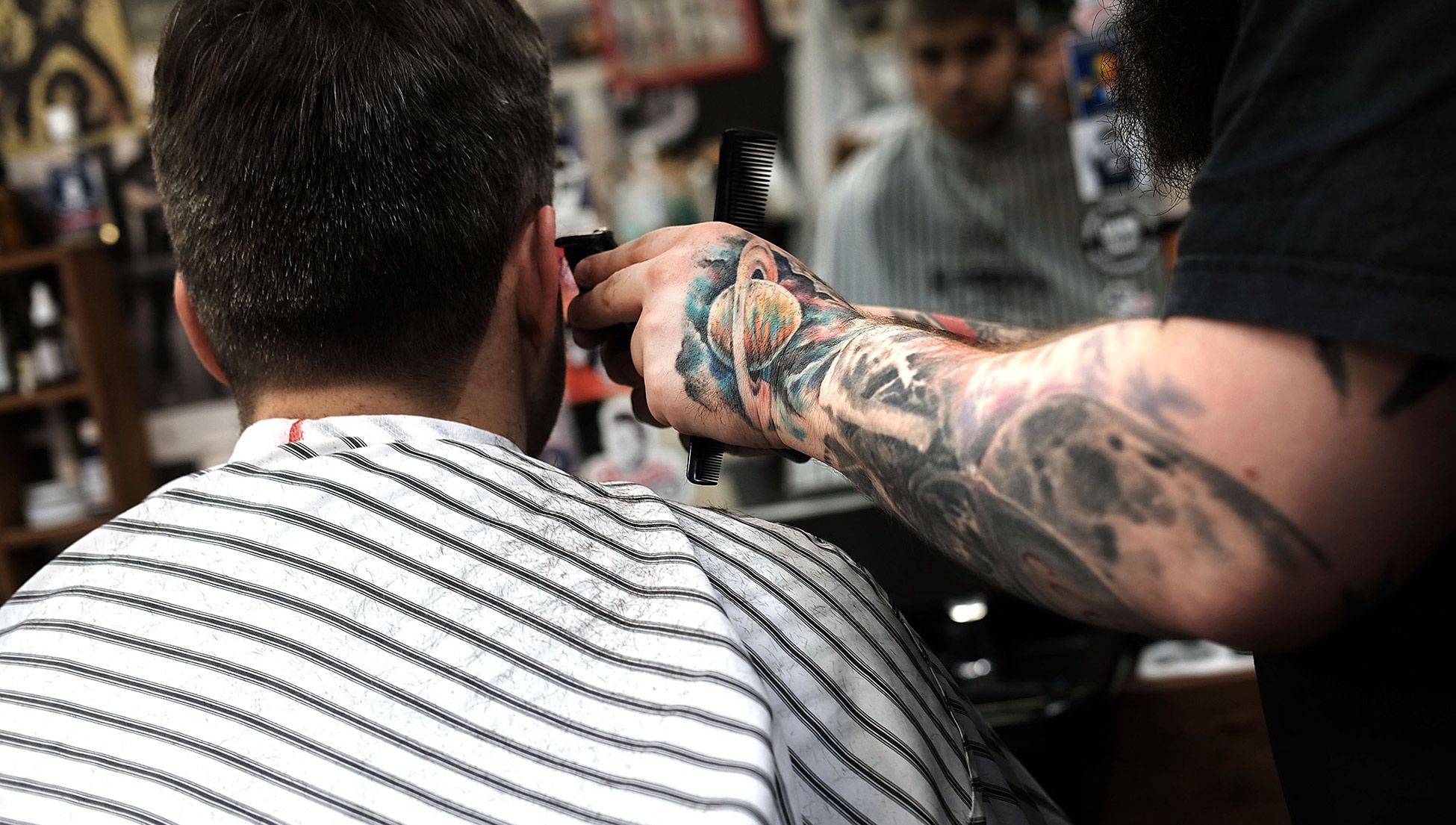
Tough male grooming. Photo by Spencer Platt/Getty
Joseph E Davisis research professor of sociology and chair of the Picturing the Human Colloquy at the Institute for Advanced Studies in Culture at the University of Virginia. His latest book is Chemically Imbalanced: Everyday Suffering, Medication, and Our Troubled Quest for Self-Mastery (2020).
Edited by Sam Dresser
31 MARCH 2021 (psyche.co)
‘Today, there is little premium placed on being authentic,’ writes the American philosopher Gordon Marino in his moving meditation The Existentialist’s Survival Guide: How to Live Authentically in an Inauthentic Age (2018). In our world of ‘selfies, social media branding, and managing your profile on LinkedIn and Facebook … [i]t is not who you are but who you seem to be!’ In interviews for my own sociological book on everyday suffering and our troubled quest for self-mastery, I too found little premium placed on ‘being authentic’. And yet, organisational consultants inform us, in the pages of the Harvard Business Review, that ‘the term “authenticity” has become a buzzword among organisational leaders’. In fact, authenticity is ‘now ubiquitous in business, on personal blogs and even in style magazines’, according to another writer. ‘Everyone wants to be authentic.’
So, which is it? Is authenticity fading away as a personal ethic or is it something everyone wants to be? In fact, both are true – because the meaning of authenticity is changing.
Authenticity, which in its modern sense dates back to the Romantics of the late 18th century, has never had a single meaning. In much of our everyday usage, the term means something more or less analogous to the way that we speak of an object being authentic – as the genuine article, not a copy or a fake. We think of people as authentic when they’re being themselves, consistent with their own personality and without pretence or pretending. And when they’re being reliable and trustworthy, generally resistant to the whims of the moment or the emotional approval of the crowd. In other words, when they show themselves to be stable and consistent over time and in different circumstances.
But, as an ethical ideal – as a standard of what it is good to be, both in the way that we relate to ourselves and others – authenticity means more than self-consistency or a lack of pretentiousness. It also concerns features of the inner life that define us. While there is no one ‘essence’ of authenticity, as Marino observes, the ideal has often been expressed as a commitment to being true to yourself, and ordering your soul and living your life so as to give faithful expression to your individuality, cherished projects and deepest convictions.
The meanings of authenticity that concern the inner life are now fading away
Authenticity in this ethical sense also had a critical edge, standing against and challenging the utilitarian practices and conformist tendencies of the conventional social and economic order. Society erects barriers that the authentic person must break through. Finding your true self means self-reflection, engaging in candid self-appraisal and seeking ‘genuine self-knowledge’, in the words of the American philosopher Charles Guignon. It means making your own those truths that matter crucially to you, as the Canadian philosopher Charles Taylor stresses, the truths that it’s right and necessary to be true to. In this understanding, the inward turn is not an end in itself. It’s a means to personal wholeness and access to shared horizons of meaning that transcend the self and contribute to a richer, more human world.
The meanings of authenticity that concern the inner life are now fading away. They are not, as Marino suggests, and as I too have argued, consistent with how life is generally lived today. But there is an alternative meaning – an authenticity that is harmonious with our times. Here is a mode of authenticity that we might say ‘everyone wants to be’, because here is the mode that everyone is expected to be.
In his book The Society of Singularities (2017), the German social theorist Andreas Reckwitz argues that a larger ‘authenticity revolution’ has swept the world during the past 40 years. The register of values has shifted, he shows, away from anything standardised and regular and toward objects, images, services and events that are regarded as being unique and singular. Think of artisan bread and craft beer, off-the-beaten-path travel destinations and local diversity, online profiles and Spotify playlists, self-tracking and lifelogging, products with ‘stories’ and spaces with ‘atmospheres’. The list is endless, especially among the educated middle classes. Enormous energy is now directed to making things appear ‘authentic’ – that is, particular and distinctive, standing apart from the typical, the ordinary, the mass-produced. Uniqueness has a social status and value of its own.
The high status accorded to the singular, Reckwitz argues, includes people. Each person is enjoined to stand out from the crowd, to achieve something special and extraordinary. Authenticity has become an obligation. Reckwitz captures this conundrum with the paradoxical concept of ‘performative authenticity’. Authenticity, in this sense, is the way to be because to be ‘somebody’ is to develop your unique self, your differentness from others and your noninterchangeable life. Being merely average or well adjusted, or without a cultivated portfolio of special competencies and attractive qualities, is a mark of failure – a mark of inauthenticity – regardless of your inner life and relation to self.
Performative authenticity is tied to economic success and social prestige, which means – and this is a further paradoxical feature – that your specialness and self-realisation have to be performed. In order for people to distinguish themselves, they must seek attention and visibility, and positively affect others with their self-representations, personal characteristics and quality of life. In doing so, they have to take great care that their performance isn’t perceived as staged. To be ‘authentic’ – genuine – they have to give the impression that they’re just being themselves. The effort has to appear effortless, otherwise it will backfire.
Performative authenticity shares with older, inner conceptions of authenticity the notion that each of us has our own unique way of being in the world. But the concepts otherwise diverge. The inner ideal aims at a way of being that is unfeigned and without illusions. It resists the cultivation of an affirming audience, because being a ‘whole’ person, with a noninstrumental relation to self and others, is often at odds with the demands of society. The benefit is a richer, examined life, but there is always the risk of paying a price for living authentically in terms of lesser social acclaim and outward success. Authenticity thus understood, it’s safe to say, was never a ‘buzzword among organisational leaders’.
In the performative mode, by contrast, this tension between self and society disappears. Self-elaboration still requires self-examination, but not necessarily of any inner or even aesthetic kind (‘life as a work of art’). Something more like an inventory is needed, and some schools of psychology and popular self-help actually recommend that the way to know yourself isn’t through personal reflection, but by convening a focus group of those familiar with your personality, desires and talents – ‘likes’ and other social media feedback serve this purpose. Useful personal traits are cultivated in interaction with the appropriation of unusual or unusually combined objects, experiences, styles and identities – a rare breed of dog, special cooking techniques, the obscure knowledge of sneaker brands, an offbeat musical style, a novel sexual orientation, and so on. Together, they’re put to work as the basis for composing and curating your unique difference. This difference has no meaning or standing of its own; it only achieves value, only counts as authentic, when it’s socially recognised as such – as original, interesting, complex – and brings esteem and tangible success.
The performative mode is a further flight into atomism and away from stable sources of meaning
Performing your difference isn’t necessarily a zero-sum game. Markets and digital technologies have greatly expanded the infrastructure of possibilities. It is, however, a competition for scarce attention that requires continuous assessment and feedback, and offers little respite. Like fashions, there’s pressure toward the new and the novel, and what was unique one day might be commonplace the next. Even if you pull off a good performance, there’s a need to be flexible, to be ready to reinvent your difference. There’s always the danger of becoming inconspicuous.
Given the sharp dissimilarities, we can see how authenticity might be both in decline (in the inner mode) and in ascendance (in the performative mode) at the same time. The evidence for the decline of one might be a sign of the rise of the other. In light of the performative mode, we can see why Marino sees that authenticity (in the inner mode) is being lost, as seemingly ‘everyone has become their own unabashed publicist’. We can see why, as I found in my interviews, people laid little stress on the need for introspection and faulted themselves, not for being too caught up in the superficialities of society, but for failing to meet its imperatives of success. In conceptualising the practice of the self and its relation to a good life and a good society, the two modes are nearly mirror opposites.
Marino’s book is called a ‘survival guide’ and what we need to survive might be usefully thought of as distorted pictures of authenticity, including corrupted expressions of the inner mode. In his powerful critique The Ethics of Authenticity (1991), Taylor argues that our contemporary culture of self-fulfilment and unfettered choice is built, in part, on ‘trivialised’ and ‘self-centred modes’ of authenticity. ‘Properly understood,’ however, ‘authenticity is not the enemy of demands that emanate from beyond the self’ – demands of society, nature, tradition, God or the bonds of solidarity – ‘it supposes such demands.’ To bracket them off, he continues, ‘would be to eliminate all candidates for what matters’.
The performative mode is, if anything, a further flight into atomism and away from stable frameworks and sources of meaning. But the problem runs deeper, as the demonstration of specialness and optimised self-development are built into the very standards of success. The performative fosters a detached form of self-awareness that potentially measures everything in terms of its strategic value for visibility, recognition and reward. And, knowing the game, it fosters the sceptical sense that everyone else’s actions carry an ulterior, manipulative intent. Just being ourselves becomes a guise, behind which we fashion ourselves to be – in the worldly scale of values – someone who counts.
The performative mode fosters a profound isolation and sense of insecurity. This mode captures many of the normative standards against which the people I interviewed evaluated themselves and found themselves wanting – they weren’t outgoing enough, positive enough, performing highly enough, moving on from loss or defeat quickly enough, organising their intimate relations contractually enough. They weren’t ‘special’, but ordinary – in dread of being labelled ‘losers’. What I found confirms Reckwitz’s claim that the demand to stand out and prove your worth is ‘a systematic generator of disappointment that does much to explain today’s high levels of psychological disorder’.
Taylor suggests that, to confront false modes of authenticity and open a space to consider alternative conceptions of the good, we should remind ourselves of those features of the human condition that show these modes to be empty. A place to begin, following Marino’s guidance, is with the Danish philosopher Søren Kierkegaard. Our existential condition reveals itself to us most clearly when our lives have become unmoored, when we come face to face with our vulnerability, our dependence, our limits, the seeming meaninglessness of it all. Just here is where Kierkegaard intervenes. If we want to live authentically – properly understood – there’s no wiser guide.
Free Will Astrology for week of April 1, 2021

Ironic English singer-songwriter and pop culture icon Morrissey (pictured in Spain in 2014) has said, “It’s so old-fashioned to work.” (Shutterstock)
A few fun thoughts for April Fools’ Day
- ROB BREZSNY
- Apr. 1, 2021 1:30 a.m. (SFExaminer.com)
- FEATURES
- NEWSLETTER

ARIES (March 21-April 19): Playwright August Strindberg (1849–1912) was a maverick innovator who loved to experiment with plot and language. One of his stories takes place in a dream and the hero is the Christ-like daughter of a Vedic god. He once said that he felt “an immense need to become a savage and create a new world.” Given your current astrological potentials, Aries, I suspect that might be an apt motto for you right now. APRIL FOOL! I half-lied. There’s no need for you to become a savage. In fact, it’s better if you don’t. But the coming weeks will definitely be a good time to start creating a new world.
TAURUS (April 20-May 20): Who says all Tauruses are gentle, risk-avoidant, sensible and reliable? Taurus author Mary MacLane (1861–1929), known as the “Wild Woman of Butte, Montana,” authored shocking, scandalous books. In “I Await the Devil’s Coming,” she testified, “I am not good. I am not virtuous. I am not generous. I am merely a creature of intense passionate feeling. I feel — everything. It is my genius. It burns me like fire.” Can I convince you, Taurus, to make her your role model for the coming weeks? APRIL FOOL! I don’t think you should be EXACTLY like MacLane. Please leave out the part about “I am not good. I am not virtuous. I am not generous” as well as the “I await the devil’s coming” part. But yes, do be a creature of intensely passionate feeling. Let your feelings be your genius, burning in you like a fire.
GEMINI (May 21-June 20): Poet Emily Dickinson had a good sense of humor, so she was probably making a wry joke when she wrote, “The lovely flowers embarrass me. They make me regret I am not a bee.” But who knows? Maybe Emily was being a bit sincere, too. In any case, I advise you to make a list of all the things you regret not being — all the qualities and assets you wish you had, but don’t. It’s a favorable time to wallow in remorse. APRIL FOOL! I was totally lying! In fact, I hope you will do the reverse: Engage in an orgy of self-appreciation, celebrating yourself for being exactly who you are.
CANCER (June 21-July 22): Provocation specialist Lydia Lunch is a singer and poet who’s skilled at generating interesting mischief. She testifies, “My daily existence is a battlecade of extreme fluctuations where chaos clobbers apathy, which beats the s—- out of depression which follows irritability, which slams into anger which eclipses ecstasy, which slips through my fingers far too often.” In the coming weeks, Cancerian, I recommend you adopt her melodramatic approach to living the intense life. APRIL FOOL! I lied. Please don’t be like Lydia Lunch in the near future. On the contrary: Cultivate regal elegance, sovereign poise, and dynamic equanimity.
LEO (July 23-Aug. 22): In 1692, a Swedish man named Thiess of Kaltenbrun was put on trial for being a werewolf. He claimed to be a noble werewolf, however. He said he regularly went down to Hell to do holy combat against the Devil. I suggest you make him your inspirational role model in the coming weeks. Be as weird as you need to be in order to fight for what’s good and right. APRIL FOOL! I half-lied. What I really meant to say was: Be as weird as you need to be to fight for what’s good and right, but without turning into a werewolf, zombie, vampire or other supernatural monster.
VIRGO (Aug. 23-Sept. 22): “I want to hear raucous music, to brush against bodies, to drink fiery Benedictine,” wrote author Anais Nin. “Beautiful women and handsome men arouse fierce desires in me. I want to dance. I want drugs. I want to know perverse people, to be intimate with them. I want to bite into life.” All that sounds like perfect counsel for you to consider right now, dear Virgo! APRIL FOOL! I lied. Nin’s exuberant testimony might be an interesting perspective to flirt with if the COVID-19 virus had been completely tamed. But it hasn’t. So I must instead suggest that you find ways to express this lively, unruly energy in safe and sublimated ways.
LIBRA (Sept. 23-Oct. 22): Here are affirmations that will serve you well in the coming days. 1. “I am willing to make mistakes if someone else is willing to learn from them.” 2. “I am grateful that I’m not as judgmental as all the shortsighted, self-righteous people.” 3. “I assume full responsibility for my actions, except those that are someone else’s fault.” 4. “A good scapegoat is as welcome as a solution to the problem.” APRIL FOOL! All the preceding affirmations are total bunk! Don’t you dare use them. Use these instead: 1. “I enjoy taking responsibility for my actions.” 2. “Rather than indulging in the reflex to blame, I turn my attention to fixing the problem.” 3. “No one can make me feel something I don’t want to feel.” 4. “I’m free from believing in the images people have of me.”
SCORPIO (Oct. 23-Nov. 21): According to author Kahlil Gibran, “If we were all to sit in a circle and confess our sins, we would laugh at each other for lack of originality.” But I challenge you Scorpios to refute that theory in the coming days. For the sake of your sanity and health, you need to commit highly original sins — the more, the better. APRIL FOOL! I lied. Save your novel, imaginative sinning for later. The truth is that now is an excellent time to explore the joyous and healthy practice of being extremely virtuous. Imitate author Susan Sontag: “My idolatry: I’ve lusted after goodness. Wanting it here, now, absolutely, increasingly.”
SAGITTARIUS (Nov. 22-Dec. 21): The coming months would be a great time to start your own university and then award yourself a PhD in Drugless Healing or Mathematical Reincarnation or Political Metaphysics — or any other subject you’d like to be considered an expert in. Hey, why not give yourself three PhDs and call yourself a Professor Emeritus? APRIL FOOL! I’m just joking. The coming months will indeed be an extremely favorable time to advance your education, but with real learning, not fake credentials.
CAPRICORN (Dec. 22-Jan. 19): After his Nirvana bandmate Kurt Cobain committed suicide, Capricorn drummer Dave Grohl was depressed for months. To cheer himself up, he wrote and recorded an album’s worth of songs, playing almost all the instruments himself: drums, lead guitar, rhythm guitar, bass and vocals. I think you should try a similar spectacularly heroic solo task in the coming weeks. APRIL FOOL! I lied. Here’s my true and actual advice: Now is a time when you should gather all the support and help and cooperation you can possibly garner for an interesting project.
AQUARIUS (Jan. 20-Feb. 18): Argentine poet Alejandra Pizarnik told her psychoanalyst León Ostrov that if she were going to steal something, it would be “the façade of a certain collapsed house in a little town called Fontenay-aux-Roses [near Paris].” What was so special about this façade? Its windows were made of “magical” lilac-colored glass that was “like a beautiful dream.” In accordance with astrological omens, I invite you, too, to decide what marvel you would steal — and then go steal it! APRIL FOOL! I half-lied. Yes, definitely decide what you would steal —it’s important to give your imagination permission to be outrageous—but don’t actually steal it.
PISCES (Feb. 19-March 20): I’ve never understood the appeal of singer-songwriter Morrissey, especially since he began endorsing bigoted far-right politicians. However, I want to recommend that you adopt the attitude he once expressed in a letter to a friend. “It was a terrible blow to hear that you actually worked,” he wrote. “It’s so old-fashioned to work. I’d much rather lounge about the house all day looking fascinating.” Be like that in the coming weeks, Pisces! APRIL FOOL! I lied. In fact, you’d be making a silly mistake to lie around the house looking fascinating. It’s a highly favorable time for you to find ways to work harder and smarter.
Homework: Send the secrets you could only tell a stranger. FreeWillAstrology.com
The Astrology Book Club: What to Read This Month, Based on Your Sign
During April Showers, Vaccine Lines, etc.
By Emily Temple
With all the good books that come out each month, it can be hard to decide what to read (or, if you’re anything like the people erstwhile of the Literary Hub office, now of our homes and Slack, what to read first). There are lots of good reasons to pick one book over another, but one we’ve never really explored before here at Lit Hub is . . . astrology. Hence, this “book club,” which is actually just a a literary horoscope guaranteed to come true: a good book to read, based (sort of) on your zodiac sign. April showers might bring May flowers, but they also mean more days to read in bed with a cup of tea. Here’s what you should be cuddling up with (or if you’re one of the lucky ones, taking with you into the newly vaccinated world).

AQUARIUS
Richard Wright, The Man Who Lived Underground, LOA (April 20)
The publication of a previously unpublished Richard Wright novel is a major literary event, and Aquarians are absolutely going to have an opinion about it. Considering their knack for seeing the big picture, and their refusal to let anyone else think for them, that opinion will probably be correct. But first, they’ll need to read it.
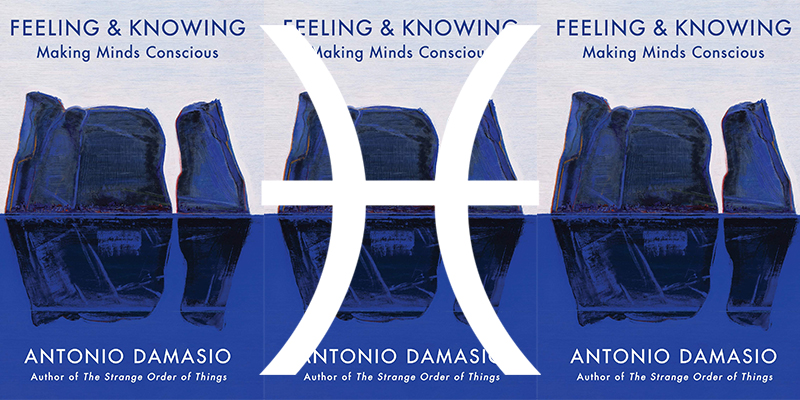
PISCES
Antonio Damasio, Feeling & Knowing: Making Minds Conscious, Pantheon (April 13)
Of all the signs, Pisces is the one most likely to be found meditating on the nature of their own consciousness, that most slippery and essential lens. They should find this new book on the topic, by the director of the Brain and Creativity Institute at UCLA, particularly illuminating.
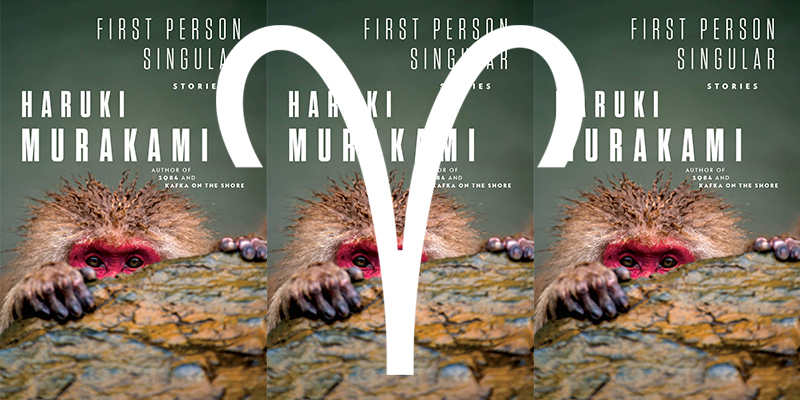
ARIES
Haruki Murakami, tr. Philip Gabriel, First Person Singular, Knopf (April 6)
After all, nobody understands the importance of the first person singular as much as an Aries.
TAURUS
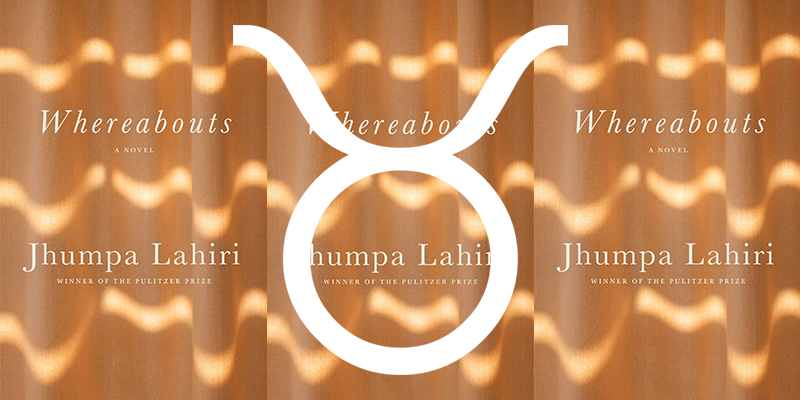
Jhumpa Lahiri, Whereabouts, Knopf (April 27)
Your typical Taurus loves to play favorites—once they love a certain writer, they love them forever, and will read anything they write. Since Tauruses also tend to have very good taste, and appreciate luxurious landscapes, whether physical or emotional, they’re probably Lahiri fans, and like me, they’ve probably been counting down the days until her next novel—this time written in Italian and translated into English. You know, for added luxury.
GEMINI
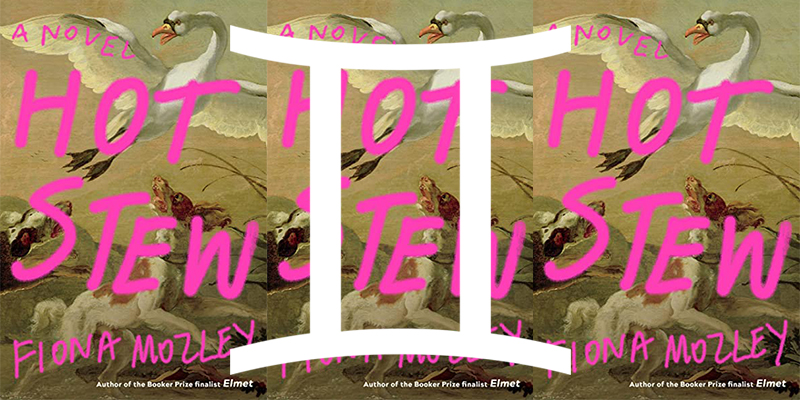
Fiona Mozley, Hot Stew, Algonquin (April 20)
Geminis are always going a mile a minute—sort of like London, and sort of like this novel, which pulls together a large host of fascinating characters, making and spending time in the streets and crumbling buildings of Soho. (It’s also very funny, not for nothing, and a Gemini who appreciates some good intellectual humor will be very satisfied here.)
CANCER
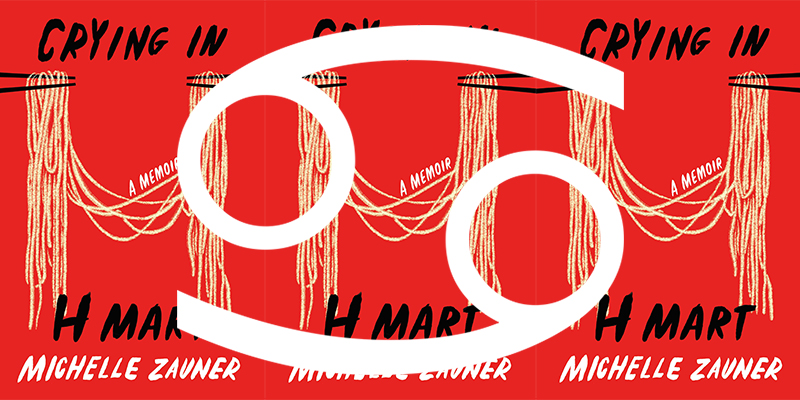
Michelle Zauner, Crying in H Mart: A Memoir, Knopf (April 20)
Most likely to find themselves crying in a public place? Gotta be a Cancer. But to tell you the truth, they’d much rather be cuddled up at home, connecting with a powerful, emotionally resonant memoir, like this debut by the musician also known as Japanese Breakfast. It’s even more perfect that this is a book so much about how food and love entwine—Cancer, as we know, rules the stomach, and these crustaceans know all about eating their feelings. Or just eating while reading.
LEO
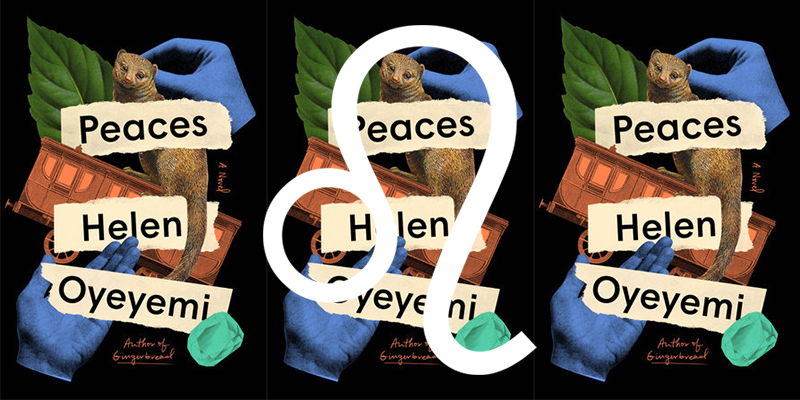
Helen Oyeyemi, Peaces, Riverhead (April 6)
I love Helen Oyeyemi for always being unquestionably, unhesitatingly herself—weird as that may be. She has always had major Leo energy for that reason—but Leos are also helpless romantics (two great people, coming together, what could go wrong), and so I think they will be particularly pleased to find that she has written a love story, just for them.
VIRGO
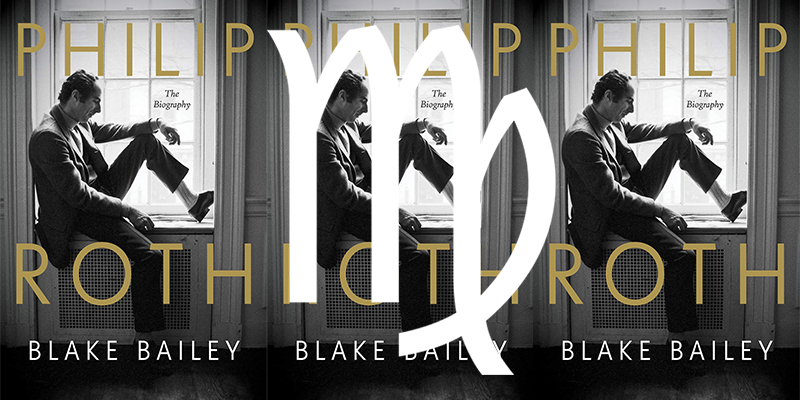
Blake Bailey, Philip Roth: The Biography, W. W. Norton (April 6)
Look, Virgos live to know all the details, and at 912 pages, Bailey’s biography of Philip Roth has quite a few of them. Besides, the story of how Roth sought to control his own biography (and the reader’s assessment of how well he did), is something any Virgo should learn about and file away for later. Just in case!
LIBRA
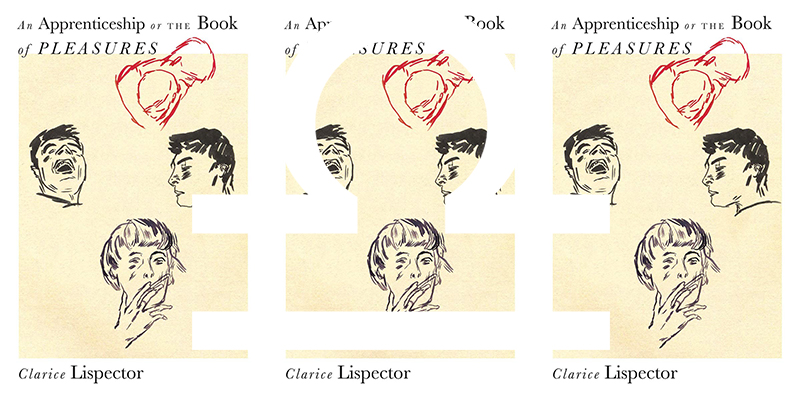
Clarice Lispector, tr. Stefan Tobler, An Apprenticeship, or The Book of Pleasures, New Directions (April 6)
A book of pleasures, you say? Just what every Libra is looking for.
SCORPIO
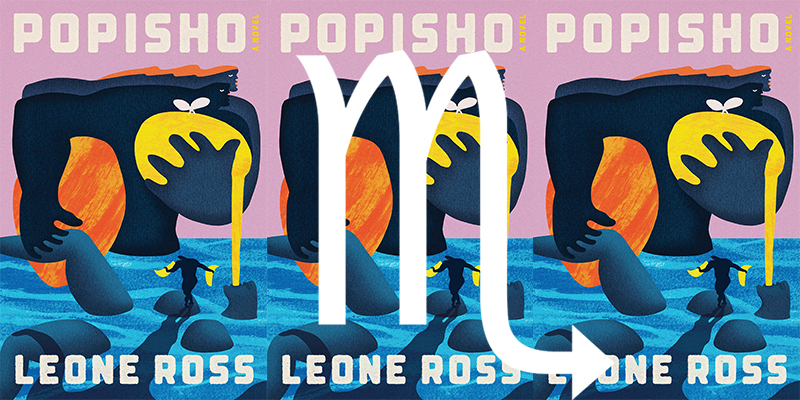
Leone Ross, Popisho, FSG (April 20)
Scorpios want stimulation. Food, sex, enchantment. They are creatures of the senses, and they will find all of them very much indulged by this novel, which is set in a land where everyone is born with a little bit of individual magic, and where one man has been ordained by the gods to feed everyone their perfect meal at the perfect time. Politics, food, and love—what more could a good Scorpio want in a novel?
SAGITTARIUS
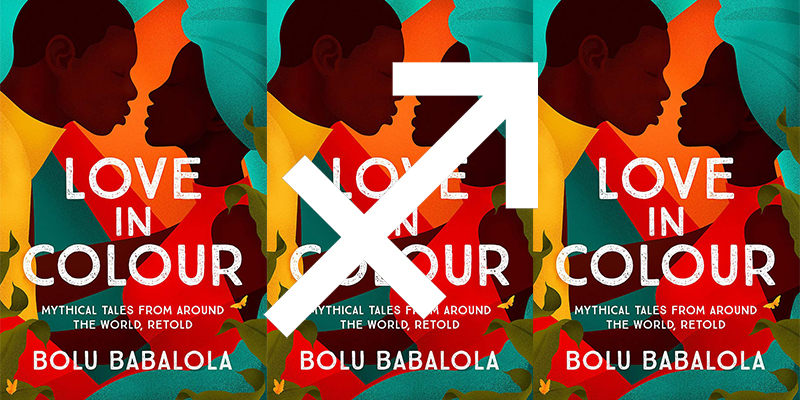
Bolu Babalola, Love in Color: Mythical Tales from Around the World, Retold, William Morrow (April 13)
For my world wanderer and knowledge seeker, who is always looking for a new story to take in (and pass on), I recommend Bolu Babalola’s first collection, which retells folktales from around the world, centering Black love stories. (I first discovered Babalola via her hilarious, perfect tweeting about Love Island, and can confirm that she is the person you want telling you things about love.)
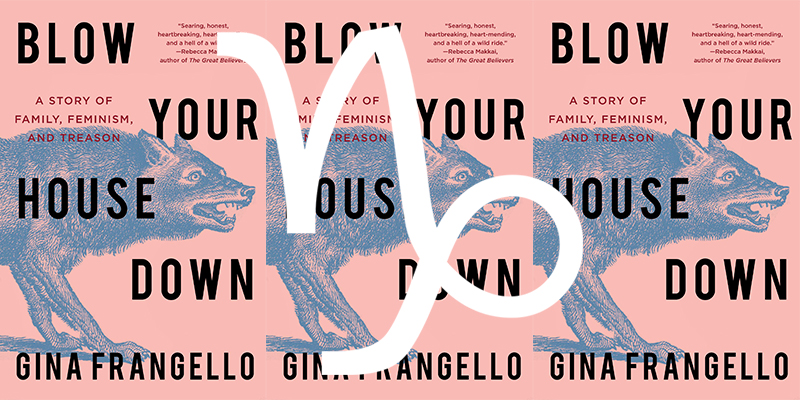
CAPRICORN
Gina Frangello, Blow Your House Down, Counterpoint (April 6)
Caps have been through it and come out stronger—no matter what happens, they never give up. They can sometimes have a hard time connecting with others, but boy do they love memoirs, and Frangello’s incendiary latest, with its intense ups and downs, will give even the most battle-scarred sea goat a run for their money.Antonio Damasioastrologyastrology book clubBolu BabalolaGina FrangelloHaruki MurakamiLeone Rossreading listsRichard Wrightthe Astrology Book Club

Emily Temple
Emily Temple is the managing editor at Lit Hub. Her first novel, The Lightness, was published by William Morrow/HarperCollins in June 2020. You can buy it here.https://www.emilytemple.net/
An honest history of an ancient and “nasty” word
Kate Lister|TEDxUniversityofGlasgow (ted.com)
With candor and cunning, sex historian Kate Lister chronicles the curious journey of an ancient, honest word with innocent origins and a now-scandalous connotation in this uproarious love letter to etymology, queens, cows and all things “cunt.” (This talk contains mature language.)
This talk was presented to a local audience at TEDxUniversityofGlasgow, an independent event. TED’s editors chose to feature it for you.
ABOUT THE SPEAKER
Kate Lister · Sex historianKate Lister is a sex historian and lecturers at Leeds Trinity University.
TEDx was created in the spirit of TED’s mission, “ideas worth spreading.” It supports independent organizers who want to create a TED-like event in their own community.
A trailblazing lesbian hero’s story, finally coming to film
Sally Gearhart’s incredible, multifaceted life—lesbian separatist, gay lib icon, sci-fi author—gets a doc.
By MARKE B.
“I don’t think there are any other films with animated flying psychic lesbians,” filmmaker Deborah Craig told me over Zoom. “We really couldn’t pass it up.”
Craig was speaking about Sally, the film she’s working on, along with coproducer Jörg Fockele and coproducer-editor Ondine Rarey, that chronicles the rambunctious, curious, and inspiring life of unsung radical lesbian hero Sally Gearhart, who is entering her ninth decade. (A Kickstarter campaign to finish the film ends Tue/6; an online birthday party for Gearhart takes place Sun/2.)
The flying lesbians in question are to illustrate Gearhart’s groundbreaking, 1978 speculative fiction novel The Wanderground, a classic of radical feminist separatist literature, in which a group of women flee from male-dominated cities to the forest to live in harmony with the natural world. Also, they have superpowers.
Rediscovering radical lesbian sci-fi is all the rage right now (witness Octavia Butler’s recent climb up the New York Times bestseller list 15 years after her passing), but penning an archetypal vision of queer ecofeminist utopia, and several follow-ups, is just one of the many milestones in an outspoken, intellectual, irascible life marked by both iconic activism and puzzling retreat.
While renowned as a stirring feminist writer-speaker and separatism proponent—eventually establishing her own utopian space in the wilds near Willetts, California—she was by no means a stranger to working side-by-side with gay men in the liberation movement, including Harvey Milk during his final years. As a professor at San Francisco State University, Gearhart helped develop one of the first women and gender studies programs in the United States. Those are just some of the accomplishments covered in Sally, which also showcases a fiercely independent yet infectious personality.
The film is in the middle of production, moving ahead despite COVID interruption, with several more interviews slated, Craig told me. “We started out with a bit of a leg up, because my previous film was a short documentary called A Great Ride, that featured Sally. In that film, she’s one of the lesbian characters navigating the aging process. She was just such an incredible personality with this obviously rich history. After that film, Jörg, Ondine, and I put our heads together and said, we really have to continue this and focus on Sally.
Help us save local journalism!
Every tax-deductible donation helps us grow to cover the issues that mean the most to our community. Become a 48 Hills Hero and support the only daily progressive news source in the Bay Area.Learn More
“This new film follows the whole arc of her life. She came to San Francisco in the 1970s from Texas, and we’re going back to really explore where she came from, all her accomplishments, and what’s going on with her now. It’s really a fascinating trajectory,” Craig said. “The things she’s done have been so important. She’s this brilliant, smart, funny, charismatic person. And we’re here now and she’s almost 90.
“We need to do this while we still have her with us, so she gets the recognition she deserves and people get to know her,” Craig said.
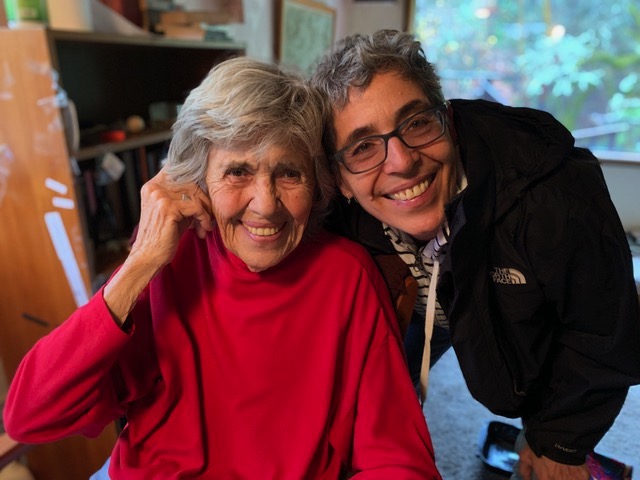
Gearheart was intrinsic to the fight, alongside Harvey Milk, to defeat the 1978 Briggs Initiative, the California ballot proposition that would have banned gay teachers from schools, famously debating rabidly homophobic initiative sponsor John Briggs himself on television. Gearheart handed Briggs’ ass to him, but she and other women activists of the time, like Black lesbian leader Gwenn Craig, appear to be disappearing from the history.
“Sally was right there with Harvey especially during the last year of his life,’ Fockele, who was also on the Zoom call, said. “One of his biggest successes was beating the Briggs initiative and it would never have happened without Sally. Yet in the movie Milk, she’s nowhere to be found. They shot the whole famous KQED debate segment with Briggs, and everyone was there except Sally. Yet in reality she was the one who was front and center, keeping her calm, talking about religion being funny and charming. They did the same with Gwenn Craig, who was also part of the struggle. She’s nowhere in the movie.”
The question of why Gearhart has been generally passed over in the lore of the gay liberation struggle—beyond the narrative limitations and systemic sexism inherent in writing a Hollywood entertainment—”is something that has no easy answers,” Craig said. “Obviously, Milk is just one of the many, many examples of the erasure of women, just like the erasure of people of color and and queer people. It’s essential that the narrative be corrected.
“But in Sally’s case, the more you learn about the issue, the more complex it is—and that’s true about her in every aspect. She was an adamant separatist who loved men, who had male friends and even Republican friends. Separatism has a very complicated history that many people shy away from. And she left town. She had started her own refuge with no electricity, no heat, growing food and living with other women, and when she retired at 60 she moved up there full-time.
“She removed herself from the center of gravity of the gay rights movement and academia to go live in the woods and write fantasy novels and basically say, ‘Fuck it all.’ Now she’s still up there, with people checking in on her, completely living alone, the last one on the land. That’s how we got to know her, for the first film about aging. I called her up and said, ‘I heard you’re in your 80s and cutting your own firewood with a chainsaw, can I see that?’ and then we found out who she was.”
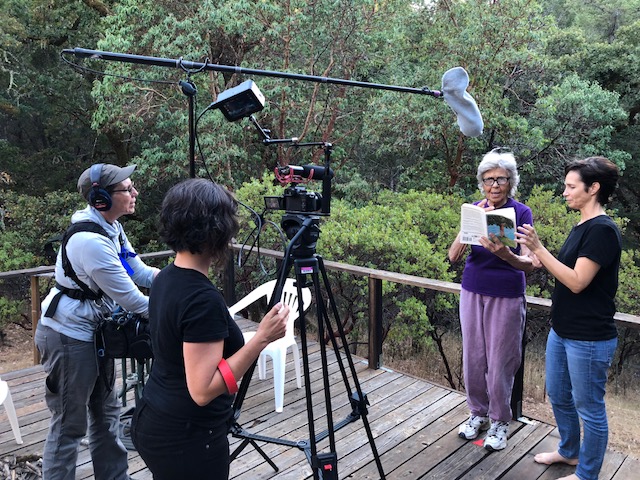
Gearhart, a feisty personality who apparently loves to flirt with any woman in front of or behind the camera, was totally fine with opening up about her life. She especially appreciated that Craig is working with almost all women on the film. “It was important to me that my crew is women, especially in the context of what Sally was fighting for,” Craig said. “She felt comfortable.”
Fockele said, “Right now it seems the only reference we have to that older generation of activists is through movies. Something I’ve experienced, especially around HIV, is that younger generations of queer folks see AIDS as this far away memory, and I feel it’s the same way with queer pioneers, including Sally. Deborah and I are right on the brink of a generation who may have heard of Sally, and there are older people, especially women activists and feminists, who know her. But the most powerful way remember her and present her to younger generations is through film.
“You can look at something like Milk which is important to the activists of the time who were in it, and also so vital to teaching young people who Harvey was. We want to record the actual history and people behind these events before they fade away.”
(Fockele is definitely right about the importance of film in remembering queer heroes—my own first encounter with Gearhart was a PBS rebroadcast in the 1990s of filmmaker Peter Adair’s 1977 Word Is Out: Stories of Some of Our Lives, in which Gearheart, then a women’s studies professor at San Francisco State, giving a fiery speech that made a lasting impression on my tiny gay brain.)
The story of Sally Gearheart as lesbian activist also holds personal resonance for Craig, a longtime filmmaker who specializes in queer stories. “I came out as a lesbian in my teens,” she told me. “I was not a separatist, I was very immersed in the worlds of music and photography, which was a very male world. I never really understood separatism. I’m 30 years younger than Sally, so that wasn’t really my world.
“But getting to know Sally has helped me understand the purpose of separatism, and its historical perspective. Although I knew her name, in the beginning I didn’t know who she really was, how important and multi-faceted her personality and accomplishments were,” Craig said.
“So this has been a process of discovery for me, following her life through all these movements and stages that have so much significance to LGBT history. It’s been about digging into my own queer roots and realizing that Sally’s work in a way gave me the luxury of not having to care about separatism as I was growing up as a lesbian.”
Find out more about the Sally movie Kickstarter campaign here, and Sally’s Sun/2 online birthday party here.
Marke Bieschke is the publisher and arts and culture editor of 48 Hills. He co-owns the Stud bar in SoMa. Reach him at marke (at) 48hills.org, follow @supermarke on Twitter.