In this extraordinary bestseller, Steven Pinker, one of the world’s leading cognitive scientists, does for the rest of the mind what he did for language in his 1994 book, The Language Instinct. He explains what the mind is, how it evolved, and how it allows us to see, think, feel, laugh, interact, enjoy the arts, and ponder the mysteries of life. And he does it with the wit that prompted Mark Ridley to write in the New York Times Book Review, “No other science writer makes me laugh so much. . . . [Pinker] deserves the superlatives that are lavished on him.” The arguments in the book are as bold as its title. Pinker rehabilitates some unfashionable ideas, such as that the mind is a computer and that human nature was shaped by natural selection, and challenges fashionable ones, such as that passionate emotions are irrational, that parents socialize their children, and that nature is good and modern society corrupting. Winner of the Los Angeles Times Book Prize A New York Times Notable Book of the Year and Publishers Weekly Best Book of 1997 Featured in Time magazine, the New York Times Magazine, The New Yorker, Nature, Science, Lingua Franca, and Science Times Front-page reviews in the Washington Post Book World, the Boston Globe Book Section, and the San Diego Union Book Review
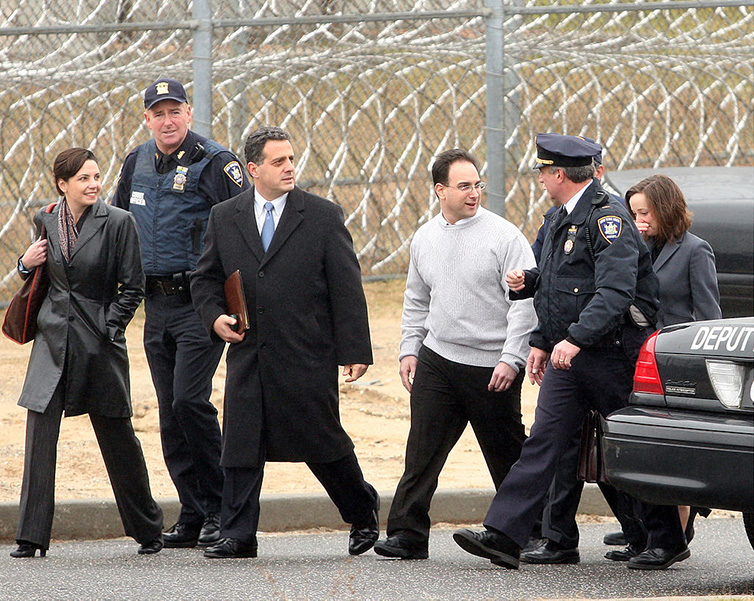
Police thought that 17-year-old Marty Tankleff seemed too calm after finding his mother stabbed to death and his father mortally bludgeoned in the family’s sprawling Long Island home. Authorities didn’t believe his claims of innocence, and he spent 17 years in prison for the murders.
Yet in another case, detectives thought that 16-year-old Jeffrey Deskovic seemed too distraught and too eager to help detectives after his high school classmate was found strangled. He, too, was judged to be lying and served nearly 16 years for the crime.
One man was not upset enough. The other was too upset. How can such opposite feelings both be telltale clues of hidden guilt?
They’re not, says psychologist Maria Hartwig, a deception researcher at John Jay College of Criminal Justice at the City University of New York. The men, both later exonerated, were victims of a pervasive misconception: that you can spot a liar by the way they act. Across cultures, people believe that behaviors such as averted gaze, fidgeting and stuttering betray deceivers.
In fact, researchers have found little evidence to support this belief despite decades of searching. “One of the problems we face as scholars of lying is that everybody thinks they know how lying works,” says Hartwig, who coauthored a study of nonverbal cues to lying in the Annual Review of Psychology. Such overconfidence has led to serious miscarriages of justice, as Tankleff and Deskovic know all too well. “The mistakes of lie detection are costly to society and people victimized by misjudgments,” says Hartwig. “The stakes are really high.”
Tough to tell
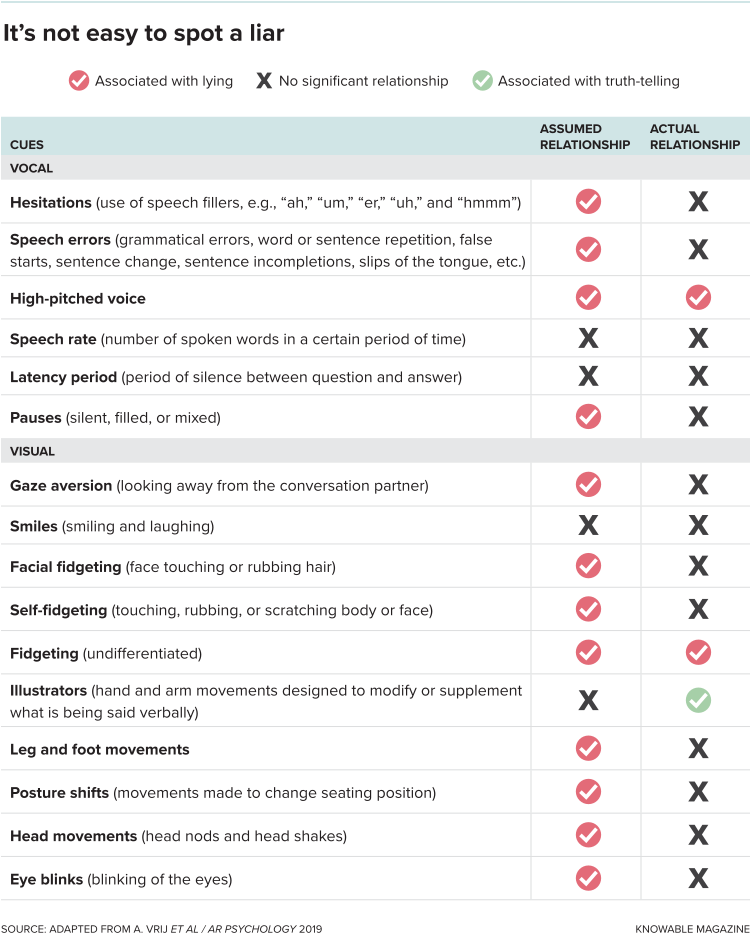
Psychologists have long known how hard it is to spot a liar. In 2003, psychologist Bella DePaulo, now affiliated with the University of California, Santa Barbara, and her colleagues combed through the scientific literature, gathering 116 experiments that compared people’s behavior when lying and when telling the truth. The studies assessed 102 possible nonverbal cues, including averted gaze, blinking, talking louder (a nonverbal cue because it does not depend on the words used), shrugging, shifting posture and movements of the head, hands, arms or legs. None proved reliable indicators of a liar, though a few were weakly correlated, such as dilated pupils and a tiny increase — undetectable to the human ear — in the pitch of the voice.
Three years later, DePaulo and psychologist Charles Bond of Texas Christian University reviewed 206 studies involving 24,483 observers judging the veracity of 6,651 communications by 4,435 individuals. Neither law enforcement experts nor student volunteers were able to pick true from false statements better than 54 percent of the time — just slightly above chance. In individual experiments, accuracy ranged from 31 to 73 percent, with the smaller studies varying more widely. “The impact of luck is apparent in small studies,” Bond says. “In studies of sufficient size, luck evens out.”
This size effect suggests that the greater accuracy reported in some of the experiments may just boil down to chance, says psychologist and applied data analyst Timothy Luke at the University of Gothenburg in Sweden. “If we haven’t found large effects by now,” he says, “it’s probably because they don’t exist.”
Common wisdom has it that you can spot a liar by how they sound or act. But when scientists looked at the evidence, they found that very few cues actually had any significant relationship to lying or truth-telling. Even the few associations that were statistically significant were not strong enough to be reliable indicators.
Police experts, however, have frequently made a different argument: that the experiments weren’t realistic enough. After all, they say, volunteers — mostly students — instructed to lie or tell the truth in psychology labs do not face the same consequences as criminal suspects in the interrogation room or on the witness stand. “The ‘guilty’ people had nothing at stake,” says Joseph Buckley, president of John E. Reid and Associates, which trains thousands of law enforcement officers each year in behavior-based lie detection. “It wasn’t real, consequential motivation.”
Samantha Mann, a psychologist at the University of Portsmouth, UK, thought that such police criticism had a point when she was drawn to deception research 20 years ago. To delve into the issue, she and colleague Aldert Vrij first went through hours of videotaped police interviews of a convicted serial killer and picked out three known truths and three known lies. Then Mann asked 65 English police officers to view the six statements and judge which were true, and which false. Since the interviews were in Dutch, the officers judged entirely on the basis of nonverbal cues.
The officers were correct 64 percent of the time — better than chance, but still not very accurate, she says. And the officers who did worst were those who said they relied on nonverbal stereotypes like “liars look away” or “liars fidget.” In fact, the killer maintained eye contact and did not fidget while deceiving. “This guy was clearly very nervous, no doubt,” Mann says, but he controlled his behavior to strategically counter the stereotypes.
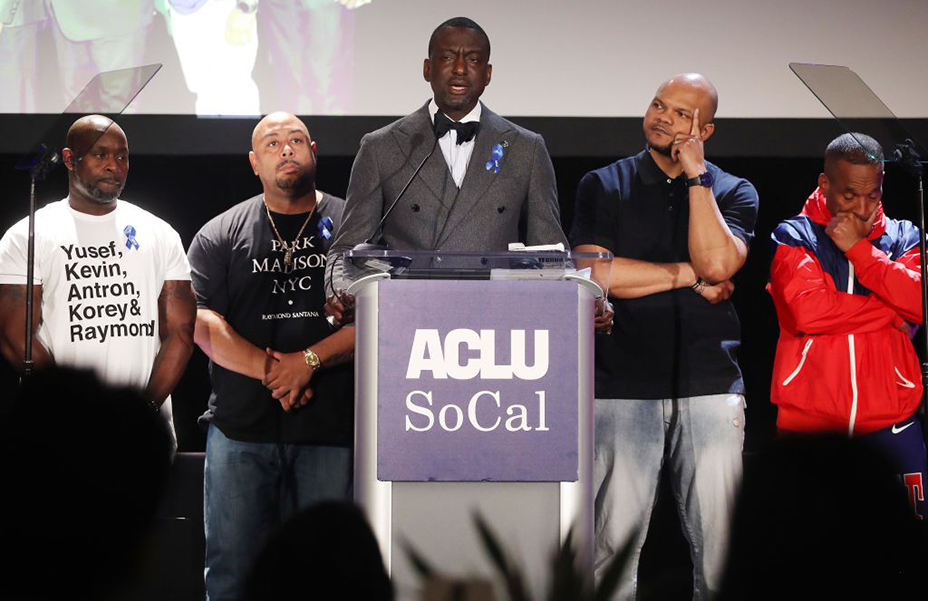
In 1990, five young men were convicted of raping a jogger in New York’s Central Park the year before, after police disbelieved their claims of innocence. The men, popularly known as the Central Park Five, were completely exonerated of the crime and released in 2002 after years in prison. Here, they appear at an awards luncheon of the American Civil Liberties Union in 2019.CREDIT: MARIO TAMA / GETTY IMAGES
In a later study, also by Mann and Vrij, 52 Dutch police officers did no better than chance at distinguishing true and false statements given by family members who’d murdered their relatives but denied it in anguished displays during televised press conferences used in the study. Notably, officers who performed the worst were those who felt that the emotional displays were genuine. But what did that signify? “If a husband killed his wife, he could be upset for all kinds of reasons, like remorse or getting caught,” says Mann. “Nonverbal behavior is so idiosyncratic. If you focus on the nonverbal behavior like emotions, you will trip up.”
From serial killers to students fibbing in laboratory experiments, the lies in all these experiments were spoken. In a study published in 2019, Mann examined nonverbal deceit, such as when someone is trying to conceal illicit activity — a type of deception relevant to detecting bombers or smugglers. She recruited 52 university student volunteers and asked half of them to transport a laptop said to contain sensitive photographs on a ferry ride between two cities. The volunteers were told to try to blend into the crowd and not look “suspicious,” because people would be trying to identify them. The other half of the group were given a regular cell phone to transport, with no instructions to conceal what they were doing.
When Mann showed videos of the ferry rides to 104 other volunteers and asked them to pick out the “smugglers,” the spotters did no better than chance. In interviews afterward, the “smugglers” said they were nervous, but they consciously tried to act normal and control their nerves with tactics such as listening to music or using their phones.
Next, Mann raised the stakes. Half of a new group of 60 volunteers were given an envelope of Russian, Egyptian and Korean currency to conceal, while the other half didn’t “smuggle” anything. But this time, Mann sent two researchers onto the ferry to pace around and scrutinize the passengers, appearing to compare their faces to photos on a cell phone.
This time, 120 observers trying to pick out the “smugglers” on video guessed correctly just 39.2 percent of the time — well below chance. The reason, Mann says, is that the “smugglers” consciously made an effort to look normal, while the “innocent” control volunteers just acted naturally. Their surprise at the unexpected scrutiny looked to the observers like a sign of guilt.
The finding that deceivers can successfully hide nervousness fills in a missing piece in deception research, says psychologist Ronald Fisher of Florida International University, who trains FBI agents. “Not too many studies compare people’s internal emotions with what others notice,” he says. “The whole point is, liars do feel more nervous, but that’s an internal feeling as opposed to how they behave as observed by others.”
Studies like these have led researchers to largely abandon the hunt for nonverbal cues to deception. But are there other ways to spot a liar? Today, psychologists investigating deception are more likely to focus on verbal cues, and particularly on ways to magnify the differences between what liars and truth-tellers say.
Marty Tankleff, in white sweater, being released from prison after serving 17 years wrongfully convicted of murdering his parents. Officials thought that Tankleff’s claims of innocence must have been lies because he didn’t show enough emotion. There is no good evidence that you can reliably spot a liar by the way they act.CREDIT: ANDREW THEODORAKIS / NY DAILY NEWS VIA GETTY IMAGES
For example, interviewers can strategically withhold evidence longer, allowing a suspect to speak more freely, which can lead liars into contradictions. In one experiment, Hartwig taught this technique to 41 police trainees, who then correctly identified liars about 85 percent of the time, as compared to 55 percent for another 41 recruits who had not yet received the training. “We are talking significant improvements in accuracy rates,” says Hartwig.
Another interviewing technique taps spatial memory by asking suspects and witnesses to sketch a scene related to a crime or alibi. Because this enhances recall, truth-tellers may report more detail. In a simulated spy mission study published by Mann and her colleagues last year, 122 participants met an “agent” in the school cafeteria, exchanged a code, then received a package. Afterward, participants instructed to tell the truth about what happened gave 76 percent more detail about experiences at the location during a sketching interview than those asked to cover up the code-package exchange. “When you sketch, you are reliving an event — so it aids memory,” says study coauthor Haneen Deeb, a psychologist at the University of Portsmouth.
The experiment was designed with input from UK police, who regularly use sketching interviews and work with psychology researchers as part of the nation’s switch to non-guilt-assumptive questioning, which officially replaced accusation-style interrogations in the 1980s and 1990s in that country after scandals involving wrongful conviction and abuse.
Slow to change
In the US, though, such science-based reforms have yet to make significant inroads among police and other security officials. The US Department of Homeland Security’s Transportation Security Administration, for example, still uses nonverbal deception clues to screen airport passengers for questioning. The agency’s secretive behavioral screening checklist instructs agents to look for supposed liars’ tells such as averted gaze — considered a sign of respect in some cultures — and prolonged stare, rapid blinking, complaining, whistling, exaggerated yawning, covering the mouth while speaking and excessive fidgeting or personal grooming. All have been thoroughly debunked by researchers.
With agents relying on such vague, contradictory grounds for suspicion, it’s perhaps not surprising that passengers lodged 2,251 formal complaints between 2015 and 2018 claiming that they’d been profiled based on nationality, race, ethnicity or other reasons. Congressional scrutiny of TSA airport screening methods goes back to 2013, when the US Government Accountability Office — an arm of Congress that audits, evaluates and advises on government programs — reviewed the scientific evidence for behavioral detection and found it lacking, recommending that the TSA limit funding and curtail its use. In response, the TSA eliminated the use of stand-alone behavior detection officers and reduced the checklist from 94 to 36 indicators, but retained many scientifically unsupported elements like heavy sweating.
An officer of the US Transportation Security Administration watches travelers at an airport. The agency still uses behavioral indicators to pick out suspicious people, even though this has little scientific basis.CREDIT: SCOTT OLSON / GETTY IMAGES
In response to renewed Congressional scrutiny, the TSA in 2019 promised to improve staff supervision to reduce profiling. Still, the agency continues to see the value of behavioral screening. As a Homeland Security official told congressional investigators, “common sense” behavioral indicators are worth including in a “rational and defensible security program” even if they do not meet academic standards of scientific evidence. In a statement to Knowable, TSA media relations manager R. Carter Langston said that “TSA believes behavioral detection provides a critical and effective layer of security within the nation’s transportation system.” The TSA points to two separate behavioral detection successes in the last 11 years that prevented three passengers from boarding airplanes with explosive or incendiary devices.
But, says Mann, without knowing how many would-be terrorists slipped through security undetected, the success of such a program cannot be measured. And, in fact, in 2015 the acting head of the TSA was reassigned after Homeland Security undercover agents in an internal investigation successfully smuggled fake explosive devices and real weapons through airport security 95 percent of the time.
In 2019, Mann, Hartwig and 49 other university researchers published a review evaluating the evidence for behavioral analysis screening, concluding that law enforcement professionals should abandon this “fundamentally misguided” pseudoscience, which may “harm the life and liberty of individuals.”
Hartwig, meanwhile, has teamed with national security expert Mark Fallon, a former special agent with the US Naval Criminal Investigative Service and former Homeland Security assistant director, to create a new training curriculum for investigators that is more firmly based in science. “Progress has been slow,” Fallon says. But he hopes that future reforms may save people from the sort of unjust convictions that marred the lives of Jeffrey Deskovic and Marty Tankleff.
For Tankleff, stereotypes about liars have proved tenacious. In his years-long campaign to win exoneration and recently to practice law, the reserved, bookish man had to learn to show more feeling “to create a new narrative” of wronged innocence, says Lonnie Soury, a crisis manager who coached him in the effort. It worked, and Tankleff finally won admittance to the New York bar in 2020. Why was showing emotion so critical? “People,” says Soury, “are very biased.”
Editor’s note: This article was updated on March 25, 2021, to correct the last name of a crisis manager quoted in the story. Their name is Lonnie Soury, not Lonnie Stouffer.
Jessica Seigel is an award-winning journalist and New York University adjunct journalism professor. Her work has appeared in the Washington Post, the New York Times, Salon and National Geographic Traveler, on NPR, and more. Follow her on Twitter at @Jessicaseagull
You may have heard of this concept that’s expressed in all of the world’s major meditation traditions, from Advaita Vedanta and Sufism to Buddhism and Kabbalah, that claims we’re “one with everything.”
It sounds nice, but what does that actually mean?
Nondualism is pointing to the direct first-person experience, upon careful inspection, revealing that the mind contains no separate observer from its contents. The result is a feeling of unity and connection to the world.
When living from a place of nondual recognition, you don’t see the computer in front of you but rather feel as if you are the computer. It’s as if the world appears to be occurring inside of “you.” That is to say, inside of nondual awareness. The duality of separation between self and other disappears.
You realize nonduality when your sense of being a witness, or subject, looking out at the world disappears. If you don’t think this is possible, try the reverse – locate the part of you that appears to be the witness right now…
And you’ll quickly realize that you can’t locate one. It’s just a mental construct.
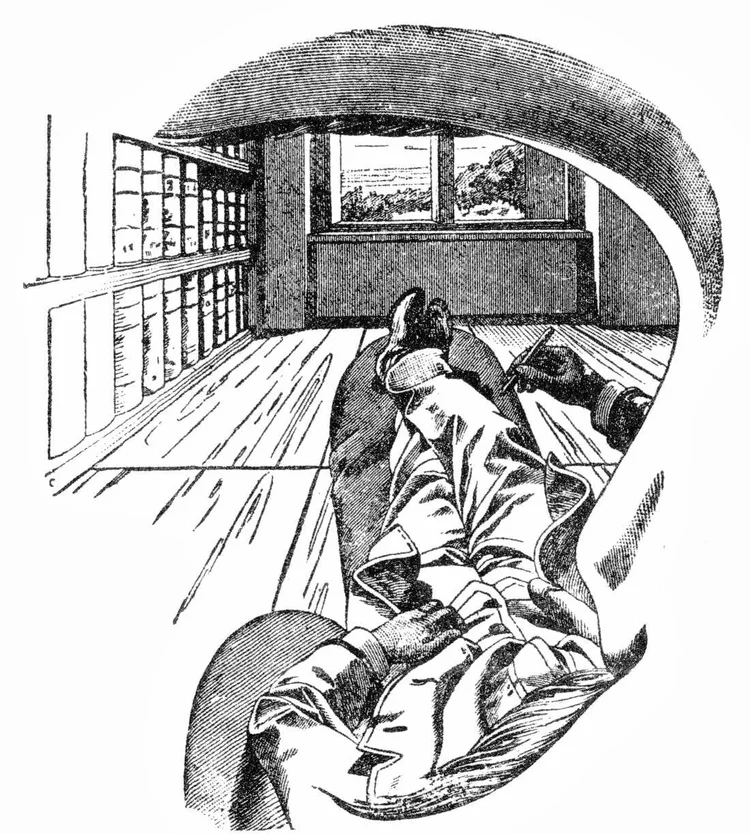
This is a drawing by Ernst Mach that led English philosopher Douglass Harding to perceive the world in a nondual way. Harding developed the popular “Headless Way” meditation, a technique for realizing nonduality. Notice that from your first-person perspective, this is how your world appears. There’s no separate self unless you image there to be one and give it a name, “I.”
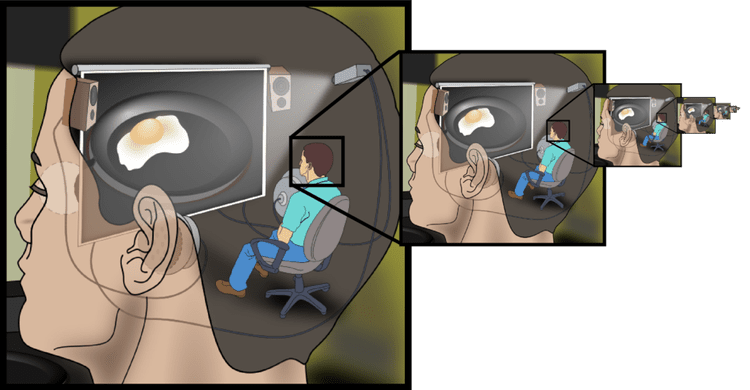
We spend all of our lives walking around and thinking we’re a tiny mini-me located somewhere in our heads. But, upon further inspection, it becomes clear that the feeling of being a subject looking at objects is an illusion.
It’s likely that a baby experiences the world in a nondual way before they’re given a name and create models of selfhood. Now, you might wonder why we’d want to “regress” into a toddler’s view of the world.
The key is that an adult who recognizes nonduality will still be able to operate fully, but will no longer be burdened by the mental baggage of “I, me, mine” stories running in their head. It turns out that most of our mental suffering comes from this dualistic mentality. We feel like a mini-me in the head that always has to uphold its dignity, figure out its identity, and solve some problem that it concocts.
Nonduality isn’t making metaphysical claims that, “Hey this is the way the Universe works.” Rather, it’s useful in so far as it’s something that you, and everyone else, can directly experience for themselves as an enhanced mode of being, like a flow state. By recognizing the nondual state you’re upgrading your mental software.
For nondual guided meditations and in-depth instruction, try FitMind.
Nonduality and Science
Nonduality is compatible with modern science. The materialist scientific worldview states that your entire experience of the world is being generated by a brain. Therefore, it stands to reason, you’ve never actually seen the real world. What you think is “real” had to enter your eyes, ears, and other senses and then get projected in your brain somewhere.
Following that logic, everything you experience in your brain is a part of you. The world as you experience it is inside of you. Even your feeling of having a head is, according to science, appearing inside your head. Where that head is exactly, is a matter of philosophical debate without an answer.
Where are “you” located? Upon careful observation, it becomes clear that there’s no “you” that exists separate from the field of nondual awareness.
One of the leading theories of consciousness, called Multimodal User Interface (MUI) Theory, was developed by cognitive psychologist Donald Hoffman. MUI suggests that you’re not experiencing reality at all, just projecting a user interface that helps you navigate the world. As an analogy, take the icons on your computer screen. A trashcan on your desktop computer is not a real trashcan, but it’s useful for discarding unwanted files so that you don’t have to deal with the tangle of underlying code and wires in your computer. Similarly, your projection of the world is a mental simulation to help you navigate a vastly complex amount of “real world” data.
But thinking about the metaphysics and philosophy of nonduality, while interesting, isn’t necessarily useful. All of this is just to say that nonduality does not contradict modern science. In fact, theories like Hoffman’s are starting to support the concept as a closer picture of reality.
What’s important here is that if you notice your experience of the world very carefully it’s all occurring in the same place – your field of nondual awareness.
What is nondual meditation?
Nonduality is available at any moment if you learn to direct your awareness in a particular way. Meditation is one way of predictably revealing nonduality.
There are meditation techniques designed specifically to uncover nondual awareness. If you’ve been practicing the methods taught on the FitMInd meditation app, you may have already experienced this.
It’s important to note that nondual meditation doesn’t strive for a particular state. Rather, it’s trying to point out and uncover the true nature of mind as it already is. Unlike many “effortful” techniques, the nondual meditations are often trying to relax the very part of the mind that’s striving.
Neuroscientist and philosopher Sam Harris gives a clear analogy. Picture someone tapping on a window through which you’re staring and trying to get you to see the pane of glass itself rather than just the objects that appear through the glass.
When you perceive the world such that there is no constructed observer and instead you appear to be everything in your awareness, that’s nonduality. What matters is your direct experience of this, which can be glimpsed if you pay careful attention and are able to drop your conditioned ideas and conceptions about how the world works.
For example, you know that you have a head but the Headless Way exercise (see below) gets you to reexamine your direct experience. What does it feel like? And that’s a pointer toward nonduality.
This is such a big part of meditation because it’s completely liberating. You’ll notice that as you glimpse nondual awareness in practice it’s very enjoyable and, in fact, a life-changing perspective.
Nondual Meditation Techniques
The primary traditions that were focused on uncovering nonduality with direct “pointing out” methods were Advaita Vedanta and Tibetan Buddhist Mahamudra and Dzogchen.
Here are a few of the popular nondual meditation techniques, primarily derived from these traditions:
Just Being – A practice in which you rest the mind without intentions, effective for revealing the nondual nature of mind when it’s not striving to solve problems.
Self-Inquiry – A method of meditation in which you inquire deeply into the nature of “I.” For straightforward instruction in this method, check out Ramana Maharshi’s explanation in this online pdf.
Headless Way – Richard Lang, a disciple of Douglas Harding and the primary teacher of the Headless Way meditation technique, came on The FitMind Podcast to discuss it in more detail.
Glimpse – Glimpses are a broad name (possibly coined by Loch Kelly) for short practices that can give us a “glimpse” of nonduality.
Awareness of Awareness – Another type of meditation meant to reveal nonduality by directing attention toward the context, rather than the contents, of experience.
Some of these have many names or are broad terms for a category of nondual practice. For example, there are many forms of self-inquiry.
Below are two nondual guided meditation from famous teachers Loch Kelly and Diana Winston, who led these meditations on The FitMind Podcast.
After years of striving in her “deliberate mindfulness” practice, Diana discovered the nondual meditation practices. She calls the state they lead to “natural awareness,” but it has traditionally been called advaita, anatta, shunyata, rigpa, or tathagatagarbha. The very fact that this has so many names across cultures should clue us into the fact that it is a universal human experience.
Similar to Diana, Loch Kelly practiced traditional mindfulness meditation for years before discovering stabilizing nondual meditation techniques like Tibetan Mahamudra and Dzogchen. He calls these “glimpse practices” that can help you shift you into nondual awareness with repeated use.
Here’s Loch demonstrating a couple of his glimpses, or pointers.
Once you’ve glimpsed nonduality, the practice becomes to continue to glimpse it until this becomes a new, default way of living.
And if you haven’t tasted nondual awareness yet, there’s no need to worry. It can take some time and repeated practice of the techniques. The key is not to strive for any result, but rather just to do the practices with curiosity and an open mind and let things unfold.
Summary of Nondual Awareness
In this blog post, we’ve covered the key facts about a timeless and simple (yet hard to grasp in words) subject. Ultimately, however, philosophizing about nondual awareness won’t help; it’s an experience you have to have for yourself.
Thankfully, there are meditation techniques, like Mahamudra and Dzogchen, devised over thousands of years of people experimenting with their minds, that can predictably induce nondual experiences.
For nondual guided meditations and in-depth instruction, try FitMind. Below is a video summarizing much of what’s written above and also giving further guided nondual instruction, similar to what you’d find on the FitMind meditation app.
Aili BresnahanAssociate Professor of Philosophy, University of Dayton
Disclosure statement
Aili Bresnahan does not work for, consult, own shares in or receive funding from any company or organization that would benefit from this article, and has disclosed no relevant affiliations beyond their academic appointment.
“Ring around the Rosie, a pocket full of posies, ashes, ashes, we all fall down!”
I grew up singing that refrain in the 1970s in New York City’s East Harlem neighborhood, holding hands with other children while skipping around in a circle before we’d all wind up laughing and cross-legged on the ground.
I didn’t know then, and was not to learn for many years, that the Mother Goose rhyme and its accompanying dance, sprang from London’s Great Plague of 1665. The tragic origin of that joyful childhood routine suggests that dancing in the face of tragedy can signify the affirmation of life and resilience in the face of struggle, death and despair.
The ‘Ring Around the Rosie’ dance and rhyme originated during an outbreak of bubonic plague in 17th-century Britain.
Still dancing
Many years later, I was still dancing, both socially and as a student at a performing arts high school. My classmates and I would dance in the street, in Central Park – wherever and whenever we could. These were scenes straight out of the movies, Broadway show and TV series “Fame,” which our school inspired.
Transparent, research-based, written by experts – and always free.
Later, I studied law and philosophy. Eventually, through interdisciplinary work in dance studies as well as philosophy, I discovered that dance is good for people as individuals, as well as for society as a whole.
Dance is good because it expresses human nature – it’s not just fun, although it is certainly fun. It’s not just exercise, either.
At its best, dance is an extension and expression of who we are as human beings in ways that can allow us to share emotions that increase our sense of community and connection. This is why, in good times and bad, in times of war, slavery, fleeing homelands and during pandemics, kids still bounce, leap and spin.
They are feeling. And they want to share these feelings with others. This doesn’t stop when schools go online. This doesn’t stop when parks and playtimes are limited by fears of contagion. Kids still want to connect with each other in physical and rough-and-tumble ways. And one of the ways they want to do this is through dancing.
‘Fame’ celebrated the joy of dance.
An outlet for natural impulses
The idea that something is good when it is part of helping human beings to flourish comes from Aristotle, the ancient Greek philosopher.
Dance helps children to flourish because it is an outlet for their natural impulses that has emotional and social benefits. As the philosopher of dance and religion Kimerer LaMothe has explained, a desire to dance and to move your body is the beginning point of all human life.
Soon after babies come into the world, they begin to move. This is readily apparent when observing toddlers and young children, who have a natural energy and joy and a love of exploring space and the world around them.
What this means is that when parents allow or encourage their kids to dance they are just stoking something that is already natural to them and that they often already like.
Plato, who was Aristotle’s teacher and is widely considered the father of Western philosophy, advocated that dance training be used for the civic education of children, for both health and citizenship reasons. But dance training need not be formal to benefit kids.
TikTok
I’m glad to see so many kids finding ways to dance together during this COVID-19 pandemic. As a college professor I can see blank and pale faces in required Zoom classes as my students slump in their childhood bedrooms or in empty dorms.
They are either alone, as is the case for the foreign students who remained in the U.S., or back with their families – and may be experiencing an array of stress brought about by social isolation, economic distress and illness.
Many may just want or need to dance it out.
My daughter, for example, belongs to one of Dartmouth College’s dance teams, Ujima. She and her teammates have kept up both rehearsals and flash performances through social media platforms like Instagram and YouTube. Rehearsing, she tells me “is one of the few things keeping me sane and connected to my friends right now.”
Another thing I think is keeping them and their peers sane is TikTok. The short video app that features many dance challenges has gained more popularity during the COVID-19 pandemic as kids of all ages have struggled with isolation away from their school friends.
The most popular TikTok dancers, such as Connecticut teen Charli D’Amelio whose dances have been downloaded more than 2 billion times, are those who seem real and friendly – and are performing simple dances that anyone can learn.
Dance for kids today, I believe, is about friendship, caring and connection.
Some videos of the three freestyle-dancing Dutch sisters who call themselves ‘Let It Happen’ have gone viral.
This is not about Powell or even about Trump anymore. It’s about the complete abdication of integrity by leaders on the right — Republican officeholders, conservative opinion leaders and right-wing TV.
By Mona Charen Mar 25, 2021 (chicago.suntimes.com)
Sidney Powell speaking during a press conference at the Republican National Committee headquarters in Washington, DC. on November 2020. US President Donald Trump’s personal lawyer Rudy Giuliani and campaign lawyer Jenna Ellis reportedly said that Powell is not a member of the Trump legal team.
The Big Lie is starting to unravel. One of Donald Trump’s disinformation stars, Sidney Powell, is backing down. But while we’re considering the matter of truth and lies, let’s recall when conservatives cared about truth (or seemed to).
In the 1990s, Guatemalan activist Rigoberta Menchu was a phenomenon. Of Mayan descent, she offered harrowing testimony about the conduct of the Guatemalan military during that country’s civil war. Her 1983 as-told-to memoir, “I Rigoberta Menchu,” was a sensation. In 1992, she was awarded the Nobel Peace Prize.
When it came to light that Menchu had distorted key aspects of her autobiography, right and left responded very differently. David Stoll, an anthropologist, learned through archival research and interviews with more than 120 people that some of her tales were false. A younger brother she said had died of starvation never existed. Another brother, whom she claimed had been tortured to death in front of her parents, died in completely different circumstances. A New York Times investigation confirmed Stoll’s findings.
Columnists
In-depth political coverage, sports analysis, entertainment reviews and cultural commentary.
Liberals tended to excuse Menchu, on the grounds that her story revealed a “larger truth.” Some argued that while details of her story might not have been strictly true, the overall narrative remained valid because it “raised our collective consciousness” about the Maya people.
Conservatives were appalled that Menchu’s Nobel Prize was not rescinded, and galled that some liberals defended Menchu’s invocation of “my truth.” There was no “my truth” or “your truth” they countered. There was only the truth.
The Menchu story comes to mind because this week we’ve witnessed further evidence of just how corrupted the right has become. The assault on truth is Donald Trump’s most damaging legacy.
It’s not good for Dominion Voting Systems and Smartmatic that allies of the president grossly defamed them, but it may turn out to be good for the country that they are availing themselves of legal remedies.
Powell, a key propagandist in Trump’s big lie about the 2020 election, has issued a response to Dominion Voting Systems defamation lawsuit. Let’s review some of the statements Powell made after the election:
Appearing on Newsmax on Nov. 17, Powell said she had a video showing Dominion founder John Poulos bragging, “I can change a million votes, no problem at all.” The video did not exist.
At a press conference with Rudy Giuliani and others, Powell said Dominion had been “created in Venezuela by Hugo Chavez to make sure he never lost an election.” She said the machines had an algorithm that automatically flipped votes, and that George Soros’ “No. 2 person” was “one of the leaders of the Dominion project.” Also false.
Her tone has changed.
The reply Powell’s lawyers issued to Dominion’s complaint is a climb down. After challenging the court’s jurisdiction and venue (standard lawyer maneuvers) and adding the claim that her comments were First Amendment-protected political speech, they get to the substance and things get truly mind-bending.
Sure, Powell’s reply acknowledges, she made a series of claims about the election being stolen, but because she was clearly speaking in a political context, her comments must be construed as standard political exaggeration.
The election truther’s argument, then, is that any factual claim, no matter how false, is insulated from consequences under defamation law if it is connected to politics. This is worse than “my truth.” This is the claim that any politically motivated lie is fine.
But Powell takes it to another level. She next argues that the very outlandishness of her false statements is a defense. Sure, her reply acknowledges, Powell had said, “Democrats were attempting to steal the election and had developed a computer system to alter votes electronically.” But “no reasonable person would conclude that the statements were truly statements of fact.”
So, that’s it. The great lie that has poisoned our politics and inspired an attack on the Capitol and bids to become the incubus of future extremism and violence was such absurd bilge that “no reasonable person would believe it.”
Of course, millions of Americans did and do believe it. The crazed mob that stormed the Capitol believed every word. Polls have found that between two-thirds and three-quarters of Republicans believe the election was fraudulent.
This is not about Powell or even about Trump anymore. It’s about the complete abdication of integrity by leaders on the right — Republican officeholders, conservative opinion leaders, right-wing TV and so forth. At first they countered Trump’s lies. Soon after, they began to avoid them. Next, they pretended to find them amusing. Then they shrugged. Finally, they joined. When enough people in authority tell lies, they cripple their audience’s capacity for reason. A few meritorious lawsuits cannot repair that.
Keep your eye on Evanston, Ill., which this week became the first U.S. city to make reparations available to its Black residents through home loan repairs or down payments on property.
Reparations – financial amends for discrimination and slavery – is among the most controversial of social programs sought by progressives.
Evanston’s City Council made it real with a revolving $400,000 fund for qualifying residents. Qualifiers have lived in or been a direct descendant of a person who lived in the Chicago suburb between 1919 and 1969 and who suffered discrimination in housing because of city ordinances, policies or practices against Blacks.
The program will be underwritten through donations and revenue from a 3% tax on the sale of recreational marijuana. The goal is distribution of $10 million in 10 years in chunks of up to $25,000 per household.
In this age of me-first, it is stunning to see some Americans willing to acknowledge with public policy that we of current generations owe something to those who had suffered not only through slavery but decades of approved and formalized discrimination.
Getting policy approved for the elimination of unfair poverty and bias deserves celebration. And the discussion itself feels important, which should inspire us to learn how we got to this point.
So far, these entities are considering providing reparations in some form:
California cities
Amherst, Mass.
Providence, R.I.
Asheville, N.C.
Iowa City, Iowa
Georgetown and Brown universities
the Episcopal Church
the Jesuit order
Congress is once again debating a federal reparations study, an idea stagnant for decades. President Joe Biden has offered support, unlike the Former Guy, who rejected the whole concept of acknowledging institutional racism in America.
Practical discussion of reparation programs started taking off after last summer’s Black Lives Matter protests following the police killing of George Floyd in Minneapolis.
The arguments for and against are not always straightforward. Debates range from how much the history of slavery is worth to whether reparations are paid to individuals or communities to is there such a thing as payments for historical ill-worth.
Even among Black Americans, programs are seen as paternalistic or segregating. Some ask whether investment in overturning centuries of housing discrimination will make a wide difference in the lives of Black communities that badly trail the ability to build wealth and share fully in the American Dream.
Agreement on Need, Not Payment
Even in Evanston, population 73,000, the liberal home of Northwestern University, debate over how to approach reparations has yielded unusual splits.
Alderman Robin Rue Simmons, an architect of the measure, told The Washington Post, “It is the reckoning.
“We’re really proud as a city to be leading the nation toward repair and justice.”
But the details show disagreement among officials, residents and activists for racial equity. There was debate about using money for housing grants and mortgage assistance rather than cash payments to individuals. Housing grants are targeted to residents who can show that they or their ancestors were victims of redlining and other discriminatory practices. No one knows exactly how many people that might mean or how to show it.
Another alderman, Cicely L. Fleming, voted no. She said, “I 100 percent support reparations. What I can’t support is a housing program being termed as reparations.”
In a noteworthy 2014 Atlantic article author Ta-Nehisi Coates used Chicago area neighborhoods to lay out the case for reparations to rebalance the wealth lost by the generations surviving slavery who were made subject to continuing waves of mortgage redlining and discriminatory practices that met with official urban approval over decades. The article helped to update and focus on practical calls for reparation for centuries of bias, and, like others mentioned below, offers loads of scholarly references for learning.
“Chicago’s impoverished black neighborhoods—characterized by high unemployment and households headed by single parents—are not simply poor; they are ecologically distinct,” he argued. Chicago was not alone. he said.
Carefully exploring sociological studies, he outlined the case that while the daily lives of Black Americans had improved, Black neighborhoods still suffer demonstrably worse performance in income, health, environment, poverty, teen pregnancy and lack of education, among other measures. Wrestling publicly with reparations as policy, he said, “matters as much as—if not more than—the specific answers that might be produced…
“More important than any single check cut to any African American, the payment of reparations would represent America’s maturation out of the childhood myth of its innocence into a wisdom worthy of its founders.”
A 2020 Brookings Institution study traced much of the economics, finding that the racial wealth gap resulted from a lack of financial capital to provide improvements in social services. It said, “Wealth is positively correlated with better health, educational, and economic outcomes. Furthermore, assets from homes, stocks, bonds, and retirement savings provide a financial safety net for the inevitable shocks to the economy and personal finances that happen throughout a person’s lifespan.”
The study argued for reparations aimed at improving neighborhoods.
Last summer, New York Times writer Nikole Hannah-Jones, the force behind the paper’s 1619 Project, argued that the natural resolution of issues raised by the Black Lives Matter protests must be reparations.
“The process of creating the racial wealth chasm begins with the failure to provide the formerly enslaved with the 40 acres they were promised,” one interviewee told her. “So, the restitution has never been given, and it’s 155 years overdue.”
What’s Ahead
Congress has before it H.R. 40, last considered in 2019. It refers to the Civil War-era broken promise to give former slaves “40 acres and a mule.” Under the bill, $12 million would be spent to establish a commission to study the history of slavery and discrimination and create a proposal for remedies.
Rep. Sheila Jackson Lee, D-Tex., took up the yearly cause from the late John Conyers, D-Mich., to create the 13-member commission. House subcommittees have retold the stories of slavery in an attempt to win the day. California Secretary of State Shirley Weber who guided a parallel state law as a California assemblywoman to establish a task force to study reparations for descendants of enslaved people argued that the federal government should follow suit.
UCLA School of Law professor E. Tendayi Achiume, an expert in international human-rights law, added that while popular conceptions of reparations tended to be relatively narrow and focus only on financial compensation, the international system emphasizes a more comprehensive approach that may also include transforming political, economic and social institutions.
Opponents have included Rep. Burgess Owens (R-Utah) and former football star Herschel Walker, a Donald Trump supporter, who argued that reparations are divisive.
“Reparations teach separation. Slavery ended over 130 years ago. How can a father ask his son to spend prison time for a crime he committed?” Walker told the committee.
Senate Minority Leader Mitch McConnell (R-Ky.) said in 2019 he believed reparations aren’t a “good idea”, and “No one currently alive was responsible for that.”
Sen. Tim Scott of South Carolina, the only Black Republican senator, also rejected the idea last year: “I don’t think reparations help level the playing field — it might help more eruptions on the playing field.”
It would appear that consideration reparations are starting to kick into a higher gear. We should help.
As the Senate minority tries to kill H.R. 1, which would add many more Americans to the voting rolls, there is a simple and effective mechanism to build support for the bill to expand the franchise.
Corporate America needs to step up or face a serious reputational risk for not supporting the For The People Act.
That bill would ensure voting by mail, which, despite fact-free Trumpian claims of fraud, works as well or better than in-person voting, It would make sure people are not limited to Tuesdays to cast ballots, a practice enacted early in America’s history when men with property voted, but few working men cast ballots.
Passage in the Senate requires a 60-vote majority. How absurd. A minority of senators hold the power to prevent majority rule. Repealing or revising the filibuster rule would allow a majority vote to pass H.R. 1, with Vice President Kamala Harris casting the tie-breaking vote if Republican resolve endures against popular voting.
But imagine if Corporate America comes out for H.R. 1 as strongly as it did recent efforts to oppress Latinx and LGBTQ Americans, which it would if pressure is brought to bear hard and credibly.
A narrower voter base will divide and weaken the United States. Deny people their right to vote or impose barriers to casting ballots and America represents the privileged, not the people.
The most powerful economic force in America is corporations. Fewer than 3,300 companies control more than 80% of all business assets. This tiny slice of America’s nearly six million companies rings up more than half the total corporate sales each year. And if there is one thing many of these corporation’s CEOs have said again and again is that discrimination is bad for business.
Starbucks and Lyft teamed in a get-out-the-vote effort for the 2020 election.
Limiting the franchise is rank discrimination at its most base level, a threat to the strength of our democracy. Blocking voting is exactly what is sought by the Russian president and meddler, Vladimir Putin, who says democracy is a joke and less bluntly that dictators should rule. Putin, the man Trump said he admires and trusts, knows that over time a narrower voter base will divide and weaken the United States. Deny people their right to vote or impose barriers to casting ballots and America represents the privileged, not the people.
What could be more un-American than to keep people from voting? We literally fought a war over this since enslaved people, who by law were not human, could not vote. America spent more than seven decades seeking suffrage until women, at least nominally, got the right to vote a century ago in the 19thAmendment.
I can’t imagine that a single one of those 3,266 big companies would publicly take a stand against enabling citizens to vote. That doesn’t mean they don’t practice racial, gender and religious bigotry with their workers and customers, good intentions or not. All of the many formal complaints and lawsuits tell you that many of them do discriminate.
What you don’t see is major companies proclaiming, as many did before the Civil Rights, Feminist and Gender equality movements, “bigots are us.”
A Stain on America
Bigotry, especially racial and gendered bigotry, has been a stain on our country from before its founding. It’s a stain that millions of people want to protect from the political solvent of government by the people because of their own prejudice and the benefits they perceive flow to them from limiting who votes.
Putting big companies on the spot can help change that. In the past, we’ve seen how as the dominant force in American life, the biggest corporations, can influence the law to reduce discrimination. These moves have not always been successful. But on the whole, they have been tremendously positive in moving America toward a society of equal justice for all.
In 2015 nearly 400 companies joined in asking our Supreme Court to strike down state laws barring same-sex marriage. The firms ranged from Aetna, Amazon and Apple to Northrup Grumman to Zoom and Zynga. By a 5-4 vote, our Supreme Court in Obergefell v. Hodges held that denying same-sex marriage violated a fundamental Constitutional right and violated the 14th Amendment due process and equal protection clauses.
That post-Civil War reform amendment has been under attack by Donald Trump, GOP leader Mitch McConnell and a few senators because it grants citizenship to anyone born in American territory. Some people such as anti-taxers want to repeal the entire amendment, an argument I’ve heard at national gatherings. Some conventioneers believe our federal government is a criminal organization.
Corporate America intervenes when it is smart for business. And that means when the public makes clear they will move their dollars to a competitor. Here are some examples of Corporate America doing the right thing to oppose bigotry laws.
Consider the silly bathroom bills that discriminated against people whose sexual orientation isn’t binary. Republicans in North Carolina said their discriminatory legislation wouldn’t cost the state a dime. In fact, the state suffered $3.8 billion in lost business over a dozen years, according to a richly detailed Associated Press investigation.
Brian Moynihan, CEO of Bank of America, North Carolina’s biggest company, was front and center in saying discrimination is bad for business. He told a March 2017 World Affairs Council meeting in Charlotte, just after a loudmouth bigot became president:
“Companies are moving to other places because they don’t face an issue that they face here. What’s going on that you don’t know about? What convention decided to take you off the list? What location for a distribution facility took you off the list? What corporate headquarters consideration for a foreign company — there’s a lot of them out there — just took you off the list because they just didn’t want to be bothered with the controversy?”
A year earlier, Disney took a public stand against bigotry in Georgia. “Although we have had great experiences filming in Georgia, we will plan to take our business elsewhere should any legislation allowing discriminatory practices be signed into state law.” The company said the legislation would permit religious groups and organizations to discriminate based on sexuality.
The legislature passed that law, but Republican Nathan Deal, at the time Georgia’s governor, vetoed it. “Our people work side by side without regard to the color of our skin, or the religion we adhere to. We are working to make life better for our families and our communities. That is the character of Georgia. I intend to do my part to keep it that way,” the governor said.
Arizona Discriminates
In 2010, after Arizona passed what amounted to a “show me your papers” law designed to discriminate against Latinx peoples, numerous companies, trade associations and individual businesses canceled conventions, sales meetings and other events in the Copper State, which as a territory was part of the Confederacy.
The companies were not alone. Cities from St. Paul to San Francisco adopted policies that banned most official travel to Arizona.
In 2012 our Supreme Court struck down most of Arizona’s anti-Latinix law. It upheld only the section requiring police officers who lawfully stop someone for an unrelated reason to determine immigration status.
That surviving provision created a zone of bigotry so wide that one of my middle-aged children was caught in it. She looks as Latinx as I do, which is to say not at all. An Arizona patrol officer stopped and questioned her for 20 minutes. His grounds? Oregon license plates were on her car.
Repeatedly he asked where in Mexico she grew up, ignoring her New York driver’s license, proper registration and insurance documents and her careful civil statements that she was born in Northern California and had never been to Mexico. Such harassment under the pretense of law in Arizona remains commonplace.
Corporate pressure doesn’t always work.
Indiana still has a bigotry law signed by Mike Pence more than a decade ago.
In 2016 more than 80 CEOs sent a letter to North Carolina’s governor telling him they would invest and spend their money elsewhere if a bill barring any future protections for lesbian, gay, bisexual and transgender people became law. Gov. Pat McCrory signed the bill anyway.
Politicians depend on donations from PACs, which in good measure are funded with corporate money. Money talks, especially in the Senate.
NBC News Lee Wong, chairman of the West Chester, Ohio, Township Board of Trustees, condemned anti-Asian violence during an impassioned speech that has now gone viral.» Subscribe to NBC News: http://nbcnews.to/SubscribeToNBC » Watch more NBC video: http://bit.ly/MoreNBCNews NBC News Digital is a collection of innovative and powerful news brands that deliver compelling, diverse and engaging news stories. NBC News Digital features NBCNews.com, MSNBC.com, TODAY.com, Nightly News, Meet the Press, Dateline, and the existing apps and digital extensions of these respective properties. We deliver the best in breaking news, live video coverage, original journalism and segments from your favorite NBC News Shows. Connect with NBC News Online! NBC News App: https://smart.link/5d0cd9df61b80 Breaking News Alerts: https://link.nbcnews.com/join/5cj/bre… Visit NBCNews.Com: http://nbcnews.to/ReadNBC Find NBC News on Facebook: http://nbcnews.to/LikeNBC Follow NBC News on Twitter: http://nbcnews.to/FollowNBC Follow NBC News on Instagram: http://nbcnews.to/InstaNBC
Today, Bank of England Governor, Mark Carney, announced that Alan Turing will appear on the new £50 polymer note.
Published on 15 July 2019 (bankofengland.co.uk)
Making the announcement at the Science and Industry Museum in Manchester, the Governor also revealed the imagery depicting Alan Turing and his work that will be used for the reverse of the note. The new polymer £50 note is expected to enter circulation by the end of 2021.
Alan Turing was chosen following the Bank’s character selection process including advice from scientific experts. In 2018, the Banknote Character Advisory Committee chose to celebrate the field of science on the £50 note and this was followed by a six week public nomination period. The Bank received a total of 227,299 nominations, covering 989 eligible characters. The Committee considered all the nominations before deciding on a shortlist of 12 options, which were put to the Governor for him to make the final decision.
Mark Carney, Governor of the Bank of England, commented: “Alan Turing was an outstanding mathematician whose work has had an enormous impact on how we live today. As the father of computer science and artificial intelligence, as well as war hero, Alan Turing’s contributions were far ranging and path breaking. Turing is a giant on whose shoulders so many now stand.”
Alan Turing provided the theoretical underpinnings for the modern computer. While best known for his work devising code-breaking machines during WWII, Turing played a pivotal role in the development of early computers first at the National Physical Laboratory and later at the University of Manchester. He set the foundations for work on artificial intelligence by considering the question of whether machines could think. Turing was homosexual and was posthumously pardoned by the Queen having been convicted of gross indecency for his relationship with a man. His legacy continues to have an impact on both science and society today.
The shortlisted options demonstrate the breadth of scientific achievement in the UK, from astronomy to physics, chemistry to palaeontology and mathematics to biochemistry. The shortlisted characters, or pairs of characters, considered were Mary Anning, Paul Dirac, Rosalind Franklin, William Herschel and Caroline Herschel, Dorothy Hodgkin, Ada Lovelace and Charles Babbage, Stephen Hawking, James Clerk Maxwell, Srinivasa Ramanujan, Ernest Rutherford, Frederick Sanger and Alan Turing.
Sarah John, Chief Cashier, said: “The strength of the shortlist is testament to the UK’s incredible scientific contribution. The breadth of individuals and achievements reflects the huge range of nominations we received for this note and I would to thank the public for all their suggestions of scientists we could celebrate.”
The new £50 note will celebrate Alan Turing and his pioneering work with computers. As shown in the concept image, the design on the reverse of the note will feature:
A photo of Turing taken in 1951 by Elliott & Fry which is part of the Photographs Collection at the National Portrait Gallery.
A table and mathematical formulae from Turing’s seminal 1936 paper “On Computable Numbers, with an application to the Entscheidungsproblem” Proceedings of the London Mathematical Society. This paper is widely recognised as being foundational for computer science. It sought to establish whether there could be a definitive method by which any theorem could be assessed as provable or not using a universal machine. It introduced the concept of a Turing machine as a thought experiment of how computers could operate.
The Automatic Computing Engine (ACE) Pilot Machine which was developed at the National Physical Laboratory as the trial model of Turing’s pioneering ACE design. The ACE was one of the first electronic stored-program digital computers.
Technical drawings for the British Bombe, the machine specified by Turing and one of the primary tools used to break Enigma-enciphered messages during WWII.
A quote from Alan Turing, given in an interview to The Times newspaper on 11 June 1949: “This is only a foretaste of what is to come, and only the shadow of what is going to be.”
Turing’s signature from the visitor’s book at Bletchley Park in 1947, where he worked during WWII.
Ticker tape depicting Alan Turing’s birth date (23 June 1912) in binary code. The concept of a machine fed by binary tape featured in the Turing’s 1936 paper.
The full note design including all the security features will be unveiled closer to it entering circulation.






 We believe in the free flow of information
/cdn.vox-cdn.com/uploads/chorus_image/image/69027439/1229743076.0.jpg)