In an address last June at Rutgers, the State University of New Jersey, Glenn Seaborg suggested that if the democratic idea is to prevail, everyone must to some extent become “a philosopher and futurist” before he becomes an activist. Following is an excerpt from Seaborg’s remarks:
What kind of future do we want? One of our greatest problems now is that many do not know, some who think they know have not really thought as deeply nor as far as they should, and still others who may have considered the matter more thoroughly have not shared their thoughts widely enough, if at all. In short, we have a desperate need today for dialogue, discussion and debate on the most fundamental issues of life. And these should not take place only in the class room or the conference room. There must be the broadest public examinations and airings of these issues on the highest level.
In a number of my speeches over the past several years I have repeated the thought that our scientific-technological age, with all its rapid change and social implications, is forcing us into a new philosophical age, an era when we must think more deeply than ever before, gain and share more human insights and wisdom than the wisest sages of the past, in order to survive, no less to improve and grow creatively. The events of recent weeks and months convinced me more than ever we must enter such an age. We must think through where we are, where we would like to go and how we should get there.
This does not imply that the “there” is a final goal, a future Utopia to be achieved, or a past paradise lost to be retrieved. But it does mean that we need some vision of the world as we believe it should or might be. And the idea of that vision as only “visionary” or of its planning being the domain of a chosen few must not prevail. If we believe at all in the democratic ideal, and particularly in the “participatory democracy” we hear so much of today, every man must to some extent be both philosopher and futurist before he becomes an activist. If he is not, he may find too late that the “different drummer” to whose beat he is marching is leading him and the thoughtless legions who might join him not to Utopia but to oblivion.
I realized there are many who see in what I am saying the ultimate “cop- out.” “Enough talk, enough thinking,” they say. “Seize the day, and the power.” But have we had enough of either thought or communication in the real sense? Haven’t we been talking at rather than with each other? Hasn’t our thinking been more the reinforcement of comfortable, time-worn beliefs—often outdated, irrelevant ideas—rather than the mind-probing and soul- searching we need? And haven’t we been seizing the day—and the power (and even each other’s buildings and lands)—for centuries, often with disastrous results and today in the face of what some consider impending doom? What we must seize now is something which is far greater than anything we have ever known before. It is the opportunity given to us through centuries of work and growth and knowledge, all culminating in today’s science and technology, and in our instruments of government and education, all of which give us the only real power that counts—that with which we can build physically and spiritually a world and a mankind that could exist only in men’s minds in the past.
Mr. Seaborg believes that the complexity of man’s social and physical system necessitates development of people educated to deal with such complexity. In another address before the Manufacturing Chemists Association at White Sulphur Springs, West Virginia, he said:
We are faced with a staggering task in education and public communication in the days ahead. For to share more fully and effectively in the work and planning of the extremely complex social and physical system we must create today a “participating citizen” who will have to become something of a “super-citizen,” one who has been educated, in the fullest sense of the word, to understand and evaluate today’s facts of life and the web of complexities in which they are woven. This is a far cry from what industry thinks of today as merely “the consumer.”
It seems to me that one of the greatest tests that we face today is the making of such a citizen as the mainstay of our society. Participation will either start to become meaningful and productive in our society or it will degenerate into senseless noise and destruction. We must do everything possible to prevent the latter, as history has shown repeatedly that the resulting chaos always leads to a repressive society.
Another lesson we have been learning, and its impact is falling on us very harshly in many ways, is the need for more and better planning, for a greater degree of constructive foresight. And in a sense we may find that the computer is our new crystal bait, helping us to project alternative futures and choose the best to strive for.
We are seeing today in an increasing number of areas—our natural environment and resources, our cities, our transportation systems, our social and governmental institutions—how we are becoming the victims of our own shortsightedness and self-centeredness. The laws of the marketplace can no longer be the principal guide of the affairs of man. Many natural limitations and manifestations of human stress are already indicating that we are going to have to take a larger, longer look at human affairs on this planet and try to determine more rationally where we want to go and how we want to get there. Thinking and planning on such a cosmic scale, as this implies, are naturally frightening to most of us. We have learned well the lesson of human fallibility in planning. Planning has always implied restrictions on individual freedom and the need to forego some immediate gratification to achieve a future gain. Often such a sacrifice did not seem necessary.
We had other reasons for not taking the longer view. We have always had new physical frontiers to move on to and substantial margins for error to fall back on when our gambles on short-term gains didn’t pay off. But as our earthly frontiers—our space and resources—are diminished, and as our activities—social and physical—increase in scope and power, we must grow both wiser and more confident in our dealings with the future. If we cannot conceive, agree on and work towards many long-range goals in this country and this world we may he in dire trouble as a nation and as a species. We have come face to face with this realization of what we broadly call our environmental problem
I believe that this problem—more accurately, a whole series of complex interrelated problems—may be the one that starts us thinking and acting more as a comprehensive society in this nation, and, hopefully, as a single mankind on this planet.
“Our job is to lovingly and consciously cooperate with the forces at work on this globe at this time. Astrology provides a way to link the individual with a conscious attunement to the planetary forces that are part of and affect the whole.”
More than fifteen years ago, Alan Oken pioneered the development of New Age astrology with the publication of three books collected in this comprehensive edition.
Now, newly updated, Alan Oken’s Complete Astrology charts the cosmological pathway to greater personal fulfillment and spiritual attunement through a deeper, more intuitive understanding of our own power–and the age we live in. Featuring state-of-the-art astrological charts and diagrams, line drawings, charts of contemporary celebrities, an exhaustive bibliography and much more, this new edition of the classic trilogy is one of the most accessible and informative guides to the heavens ever written.
For beginners and experts alike, Alan Oken’s Complete Astrology is your key to understanding the laws of the new planetary age.
Scientists at the University of Pittsburgh have taken a “major step” toward a potential drug treatment for COVID-19.
Pitt School of Medicine researchers discovered the smallest biological molecule to date that “completely and specifically” neutralizes the SARS-CoV-2 virus, according to a report published Monday in the journal Cell.
The scientists reported that a tiny antibody component — 10 times smaller than a full-sized antibody — can be used to create a therapeutic and preventative drug called Ab8 and found it to be “highly effective” in preventing the SARS-CoV-2 in mice and hamsters.
“Ab8 not only has potential as therapy for COVID-19, but it also could be used to keep people from getting SARS-CoV-2 infections,” co-author Dr. John Mellors, chief of the Division of Infectious Diseases at UPMC and Pitt, said in a Monday press release. “Antibodies of larger size have worked against other infectious diseases and have been well tolerated, giving us hope that it could be an effective treatment for patients with COVID-19 and for protection of those who have never had the infection and are not immune.”
The work was done in conjunction with scientists from the University of North Carolina at Chapel Hill, the University of Texas Medical Branch at Galveston, the University of British Columbia and the University of Saskatchewan.
Pitt researchers are expected to discuss their work in more detail Tuesday.
Ginsburg was born and grew up in Brooklyn, New York. Her older sister died when she was a baby, and her mother died shortly before Ginsburg graduated from high school. She then earned her bachelor’s degree at Cornell University, and became a wife to Martin D. Ginsburg and mother before starting law school at Harvard, where she was one of the few women in her class. Ginsburg transferred to Columbia Law School, where she graduated tied for first in her class. Following law school, Ginsburg entered into academia. She was a professor at Rutgers Law School and Columbia Law School, teaching civil procedure as one of the few women in her field.
Ginsburg spent a considerable part of her legal career as an advocate for the advancement of gender equality and women’s rights, winning multiple arguments before the Supreme Court. She advocated as a volunteer attorney for the American Civil Liberties Union and was a member of its board of directors and one of its general counsels in the 1970s. In 1980, President Jimmy Carter appointed her to the U.S. Court of Appeals for the District of Columbia Circuit, where she served until her appointment to the Supreme Court. Ginsburg received attention in American popular culture for her fiery liberal dissents and refusal to step down, leading to her being dubbed “The Notorious R.B.G.”, a play on the name of rapper The Notorious B.I.G.[3]
Joan Ruth Bader was born on March 15, 1933, in the New York City borough of Brooklyn, the second daughter of Celia (née Amster) and Nathan Bader, who lived in the Flatbush neighborhood. Her father was a Jewish emigrant from Odessa, Ukraine, then in the Russian Empire, and her mother was born in New York to Austrian Jewish parents.[9][10][11] The Baders’ older daughter Marylin died of meningitis at age six, when Ruth was 14 months old.[2]:3[12][13] The family called Joan Ruth “Kiki”, a nickname Marylin had given her for being “a kicky baby”.[2]:3[14] When “Kiki” started school, Celia discovered that her daughter’s class had several other girls named Joan, so Celia suggested that the teacher call her daughter “Ruth” to avoid confusion.[2]:3 Although not devout, the Bader family belonged to East Midwood Jewish Center, a Conservative synagogue, where Ruth learned tenets of the Jewish faith and gained familiarity with the Hebrew language.[2]:14–15 At age 13, Ruth acted as the “camp rabbi” at a Jewish summer program at Camp Che-Na-Wah in Minerva, New York.[14]
Celia took an active role in her daughter’s education, often taking her to the library.[14] Celia had been a good student in her youth, graduating from high school at age 15, yet she could not further her own education because her family instead chose to send her brother to college. Celia wanted her daughter to get more education, which she thought would allow Ruth to become a high school history teacher.[15] Ruth attended James Madison High School, whose law program later dedicated a courtroom in her honor. Celia struggled with cancer throughout Ruth’s high school years and died the day before Ruth’s high school graduation.[14]
Bader attended Cornell University in Ithaca, New York, where she was a member of Alpha Epsilon Phi.[16] While at Cornell, she met Martin D. Ginsburg at age 17.[15] She graduated from Cornell with a bachelor of arts degree in government on June 23, 1954. She was a member of Phi Beta Kappa and the highest-ranking female student in her graduating class.[16][17] Bader married Ginsburg a month after her graduation from Cornell. She and Martin moved to Fort Sill, Oklahoma, where he was stationed as a Reserve Officers’ Training Corps officer in the Army Reserve after his call-up to active duty.[15][18][17] At age 21, she worked for the Social Security Administration office in Oklahoma, where she was demoted after becoming pregnant with her first child.[13] She gave birth to a daughter in 1955.[13]
In the fall of 1956, Ginsburg enrolled at Harvard Law School, where she was one of only nine women in a class of about 500 men.[19][20] The Dean of Harvard Law reportedly invited all of the female law students to dinner at his family home and asked the female law students, including Ginsburg, “Why are you at Harvard Law School, taking the place of a man?”[a][15][21][22] When her husband took a job in New York City, Ginsburg transferred to Columbia Law School and became the first woman to be on two major law reviews: the Harvard Law Review and Columbia Law Review. In 1959, she earned her law degree at Columbia and tied for first in her class.[14][23]
Early career
At the start of her legal career, Ginsburg encountered difficulty in finding employment.[24][25][26] In 1960, Supreme Court Justice Felix Frankfurter rejected Ginsburg for a clerkship position due to her gender. She was rejected despite a strong recommendation from Albert Martin Sacks, who was a professor and later dean of Harvard Law School.[27][28][b] Columbia Law Professor Gerald Gunther also pushed for Judge Edmund L. Palmieri of the U.S. District Court for the Southern District of New York to hire Ginsburg as a law clerk, threatening to never recommend another Columbia student to Palmieri if he did not give Ginsburg the opportunity and guaranteeing to provide the judge with a replacement clerk should Ginsburg not succeed.[13][14][29] Later that year, Ginsburg began her clerkship for Judge Palmieri, and she held the position for two years.[13][14]
Academia
From 1961 to 1963, Ginsburg was a research associate and then an associate director of the Columbia Law School Project on International Procedure; she learned Swedish to co-author a book with Anders Bruzelius on civil procedure in Sweden.[30][31] Ginsburg conducted extensive research for her book at Lund University in Sweden.[32] Ginsburg’s time in Sweden also influenced her thinking on gender equality. She was inspired when she observed the changes in Sweden, where women were 20 to 25 percent of all law students; one of the judges whom Ginsburg watched for her research was eight months pregnant and still working.[15]
Her first position as a professor was at Rutgers Law School in 1963.[33] The appointment was not without its drawbacks; Ginsburg was informed she would be paid less than her male colleagues because she had a husband with a well-paid job.[26] At the time Ginsburg entered academia, she was one of fewer than 20 female law professors in the United States.[33] She was a professor of law, mainly civil procedure, at Rutgers from 1963 to 1972, receiving tenure from the school in 1969.[34][35]
In 1972, Ginsburg co-founded the Women’s Rights Project at the American Civil Liberties Union (ACLU) and, in 1973, she became the Project’s general counsel.[17] The Women’s Rights Project and related ACLU projects participated in over 300 gender discrimination cases by 1974. As the director of the ACLU’s Women’s Rights Project, she argued six gender discrimination cases before the Supreme Court between 1973 and 1976, winning five.[27] Rather than asking the court to end all gender discrimination at once, Ginsburg charted a strategic course, taking aim at specific discriminatory statutes and building on each successive victory. She chose plaintiffs carefully, at times picking male plaintiffs to demonstrate that gender discrimination was harmful to both men and women.[35][27] The laws Ginsburg targeted included those that on the surface appeared beneficial to women, but in fact reinforced the notion that women needed to be dependent on men.[27] Her strategic advocacy extended to word choice, favoring the use of “gender” instead of “sex”, after her secretary suggested the word “sex” would serve as a distraction to judges.[35] She attained a reputation as a skilled oral advocate and her work led directly to the end of gender discrimination in many areas of the law.[38]
Ginsburg volunteered to write the brief for Reed v. Reed, 404U.S.71 (1971), in which the Supreme Court extended the protections of the Equal Protection Clause of the Fourteenth Amendment to women.[35][39][c] In 1972, she argued before the 10th Circuit in Moritz v. Commissioner, on behalf of a man who’d been denied a caregiver deduction because of his gender. As amicus she argued in Frontiero v. Richardson, 411U.S.677 (1973), which challenged a statute making it more difficult for a female service member (Frontiero) to claim an increased housing allowance for her husband than for a male service member seeking the same allowance for his wife. Ginsburg argued that the statute treated women as inferior, and the Supreme Court ruled 8–1 in Frontiero’s favor.[27] The court again ruled in Ginsburg’s favor in Weinberger v. Wiesenfeld, 420U.S. 636 (1975), where Ginsburg represented a widower denied survivor benefits under Social Security, which permitted widows but not widowers to collect special benefits while caring for minor children. She argued that the statute discriminated against male survivors of workers by denying them the same protection as their female counterparts.[41]
Ginsburg filed an amicus brief and sat with counsel at oral argument for Craig v. Boren, 429U.S.190 (1976), which challenged an Oklahoma statute that set different minimum drinking ages for men and women.[27][41] For the first time, the court imposed what is known as intermediate scrutiny on laws discriminating based on gender, a heightened standard of Constitutional review.[27][41][42] Her last case as an attorney before the Supreme Court was in 1978 Duren v. Missouri, 439U.S. 357 (1979), which challenged the validity of voluntary jury duty for women, on the ground that participation in jury duty was a citizen’s vital governmental service and therefore should not be optional for women. At the end of Ginsburg’s oral argument, then-Associate Justice William Rehnquist asked Ginsburg, “You won’t settle for putting Susan B. Anthony on the new dollar, then?”[43] Ginsburg said she considered responding, “We won’t settle for tokens”, but instead opted not to answer the question.[43]
Legal scholars and advocates credit Ginsburg’s body of work with making significant legal advances for women under the Equal Protection Clause of the Constitution.[35][27] Taken together, Ginsburg’s legal victories discouraged legislatures from treating women and men differently under the law.[35][27][41] She continued to work on the ACLU’s Women’s Rights Project until her appointment to the Federal Bench in 1980.[35] Later, colleague Antonin Scalia praised Ginsburg’s skills as an advocate. “She became the leading (and very successful) litigator on behalf of women’s rights—the Thurgood Marshall of that cause, so to speak.” This was a comparison that had first been made by former Solicitor General Erwin Griswold who was also her former professor and dean at Harvard Law School, in a speech given in 1985.[44][45][d]
Ginsburg officially accepting the nomination from President Bill Clinton on June 14, 1993
President Bill Clinton nominated her as an Associate Justice of the Supreme Court on June 14, 1993, to fill the seat vacated by retiring Justice Byron White. Ginsburg was recommended to Clinton by then-U.S. Attorney GeneralJanet Reno,[23] after a suggestion by Utah Republican Senator Orrin Hatch.[52] At the time of her nomination, Ginsburg was viewed as a moderate. Clinton was reportedly looking to increase the court’s diversity, which Ginsburg did as the only Jewish justice since the 1969 resignation of Justice Abe Fortas. She was the second female and the first Jewish female justice of the Supreme Court.[50][53][54] She eventually became the longest-serving Jewish justice ever.[55] The American Bar Association’sStanding Committee on the Federal Judiciary rated Ginsburg as “well qualified”, its highest possible rating for a prospective justice.[56]
During her subsequent testimony before the United States Senate Committee on the Judiciary as part of the confirmation hearings, she refused to answer questions about her view on the constitutionality of some issues such as the death penalty as it was an issue that she might have to vote on if it came before the court.[57]Chief Justice William Rehnquist swearing in Ginsburg as an Associate Justice of the Supreme Court, as her husband Martin Ginsburg and President Clinton watch
At the same time, Ginsburg did answer questions about some potentially controversial issues. For instance, she affirmed her belief in a constitutional right to privacy and explained at some length her personal judicial philosophy and thoughts regarding gender equality.[58]:15–16 Ginsburg was more forthright in discussing her views on topics about which she had previously written.[57] The United States Senate confirmed her by a 96–3 vote on August 3, 1993,[e][34] she received her commission on August 5, 1993,[34] and she took her judicial oath on August 10, 1993.[60]
Ginsburg’s name was later invoked during the confirmation process of John Roberts. Ginsburg herself was not the first nominee to avoid answering certain specific questions before Congress,[f] and as a young attorney in 1981 Roberts had advised against Supreme Court nominees’ giving specific responses.[61] Nevertheless, some conservative commentators and Senators invoked the phrase “Ginsburg precedent” to defend his demurrers.[56][61] In a September 28, 2005, speech at Wake Forest University, Ginsburg said that Roberts’ refusal to answer questions during his Senate confirmation hearings on some cases was “unquestionably right”.[62]
Supreme Court jurisprudence
Ginsburg characterized her performance on the court as a cautious approach to adjudication.[63] She argued in a speech shortly before her nomination to the court that “[m]easured motions seem to me right, in the main, for constitutional as well as common law adjudication. Doctrinal limbs too swiftly shaped, experience teaches, may prove unstable.”[64] Legal scholar Cass Sunstein has characterized Ginsburg as a “rational minimalist”, a jurist who seeks to build cautiously on precedent rather than pushing the Constitution towards her own vision.[65]:10–11Sandra Day O’Connor, Sonia Sotomayor, Ginsburg, and Elena Kagan, October 1, 2010. O’Connor is not wearing a robe because she was retired from the court when the picture was taken.
The retirement of Justice Sandra Day O’Connor in 2006 left Ginsburg as the only woman on the court.[66][g]Linda Greenhouse of The New York Times referred to the subsequent 2006–2007 term of the court as “the time when Justice Ruth Bader Ginsburg found her voice, and used it”.[68] The term also marked the first time in Ginsburg’s history with the court where she read multiple dissents from the bench, a tactic employed to signal more intense disagreement with the majority.[68]
With the retirement of Justice John Paul Stevens, Ginsburg became the senior member of what is sometimes referred to as the court’s “liberal wing”.[35][69][70] When the court split 5–4 along ideological lines and the liberal justices were in the minority, Ginsburg often had the authority to assign authorship of the dissenting opinion because of her seniority.[69][h] Ginsburg has been a proponent of the liberal dissenters speaking “with one voice” and, where practicable, presenting a unified approach to which all of the dissenting justices can agree.[35][69]
Abortion
Ginsburg discussed her views on abortion and sexual equality in a 2009 New York Times interview, in which she said about abortion that “[t]he basic thing is that the government has no business making that choice for a woman”.[72] Although Ginsburg has consistently supported abortion rights and joined in the court’s opinion striking down Nebraska‘s partial-birth abortion law in Stenberg v. Carhart, 530U.S. 914 (2000), on the 40th anniversary of the court’s ruling in Roe v. Wade, 410U.S. 113 (1973), she criticized the decision in Roe as terminating a nascent democratic movement to liberalize abortion laws which might have built a more durable consensus in support of abortion rights.[73] Ginsburg was in the minority for Gonzales v. Carhart, 550U.S. 124 (2007), a 5–4 decision upholding restrictions on partial birth abortion. In her dissent, Ginsburg opposed the majority’s decision to defer to legislative findings that the procedure was not safe for women. Ginsburg focused her ire on the way Congress reached its findings and with the veracity of the findings.[74] Joining the majority for Whole Woman’s Health v. Hellerstedt, 579U.S. 15-274 (2016), a case which struck down parts of a 2013 Texas law regulating abortion providers, Ginsburg also authored a short concurring opinion which was even more critical of the legislation at issue.[75] She asserted the legislation was not aimed at protecting women’s health, as Texas had claimed, but rather to impede women’s access to abortions.[74][75]
Gender discrimination
Ginsburg authored the court’s opinion in United States v. Virginia, 518U.S. 515 (1996), which struck down the Virginia Military Institute‘s (VMI) male-only admissions policy as violating the Equal Protection Clause of the Fourteenth Amendment. VMI is a prestigious, state-run, military-inspired institution that did not admit women. For Ginsburg, a state actor such as VMI could not use gender to deny women the opportunity to attend VMI with its unique educational methods.[76] Ginsburg emphasized that the government must show an “exceedingly persuasive justification” to use a classification based on sex.[77]Commissioned portrait of Ginsburg in 2000
Ginsburg dissented in the court’s decision on Ledbetter v. Goodyear,550U.S. 618 (2007), a case where plaintiff Lilly Ledbetter filed a lawsuit against her employer claiming pay discrimination based on her gender under Title VII of the Civil Rights Act of 1964. In a 5–4 decision, the majority interpreted the statute of limitations as starting to run at the time of every pay period, even if a woman did not know she was being paid less than her male colleague until later. Ginsburg found the result absurd, pointing out that women often do not know they are being paid less, and therefore it was unfair to expect them to act at the time of each paycheck. She also called attention to the reluctance women may have in male-dominated fields to making waves by filing lawsuits over small amounts, choosing instead to wait until the disparity accumulates.[78] As part of her dissent, Ginsburg called on Congress to amend Title VII to undo the court’s decision with legislation.[79] Following the election of President Barack Obama in 2008, the Lilly Ledbetter Fair Pay Act, making it easier for employees to win pay discrimination claims, became law.[80][81] Ginsburg was credited with helping to inspire the law.[79][81]
Search and seizure
Although Ginsburg did not author the majority opinion, she was credited with influencing her colleagues on the case Safford Unified School District v. Redding, 557U.S. 364 (2009).[82] The court ruled that a school went too far in ordering a 13-year-old female student to strip to her bra and underpants so female officials could search for drugs.[82] In an interview published prior to the court’s decision, Ginsburg shared her view that some of her colleagues did not fully appreciate the effect of a strip search on a 13-year-old girl. As she pointed out, “They have never been a 13-year-old girl.”[83] In an 8–1 decision, the court agreed that the school’s search went too far and violated the Fourth Amendment and allowed the student’s lawsuit against the school to go forward. Only Ginsburg and Stevens would have allowed the student to sue individual school officials as well.[82]
In Herring v. United States, 555U.S. 135 (2009), Ginsburg dissented from the court’s decision not to suppress evidence due to a police officer’s failure to update a computer system. In contrast to Roberts’ emphasis on suppression as a means to deter police misconduct, Ginsburg took a more robust view on the use of suppression as a remedy for a violation of a defendant’s Fourth Amendment rights. Ginsburg viewed suppression as a way to prevent the government from profiting from mistakes, and therefore as a remedy to preserve judicial integrity and respect civil rights.[84]:308 She also rejected Roberts’ assertion that suppression would not deter mistakes, contending making police pay a high price for mistakes would encourage them to take greater care.[84]:309
International law
Ginsburg also advocated the use of foreign law and norms to shape U.S. law in judicial opinions, a view rejected by some of her conservative colleagues. Ginsburg supported using foreign interpretations of law for persuasive value and possible wisdom, not as precedent which the court is bound to follow.[85] Ginsburg expressed the view that consulting international law is a well-ingrained tradition in American law, counting John Henry Wigmore and President John Adams as internationalists.[86] Ginsburg’s own reliance on international law dated back to her time as an attorney; in her first argument before the court, Reed v. Reed, 404 U.S. 71 (1971), she cited two German cases.[87] In her concurring opinion in Grutter v. Bollinger, 539 U.S. 306 (2003), a decision upholding Michigan Law School’s affirmative action admissions policy, Ginsburg noted there was accord between the notion that affirmative action admissions policies would have an end point and agrees with international treaties designed to combat racial and gender based discrimination.[86]
Other activities
Portrait of Ginsburg, c. 2006
At his request, Ginsburg administered Vice PresidentAl Gore‘s oath of office to a second term during the second inauguration of Bill Clinton on January 20, 1997.[88] She was the third woman to administer an inaugural oath of office.[89] Ginsburg is believed to be the first Supreme Court justice to officiate at a same-sex wedding, performing the August 31, 2013, ceremony of Kennedy Center President Michael Kaiser and John Roberts, a government economist.[90] Earlier that summer, the court had bolstered same-sex marriage rights in two separate cases.[91][92] Ginsburg believed the issue being settled led same-sex couples to ask her to officiate as there was no longer the fear of compromising rulings on the issue.[91]
The Supreme Court bar formerly inscribed its certificates “in the year of our Lord”, which some Orthodox Jews opposed, and asked Ginsburg to object to. She did so, and due to her objection, Supreme Court bar members have since been given other choices of how to inscribe the year on their certificates.[93]
Despite their ideological differences, Ginsburg considered Scalia her closest colleague on the court. The two justices often dined and attended the opera together.[94] In her spare time, Ginsburg has appeared in several operas in non-speaking supernumerary roles such as Die Fledermaus (2003) and Ariadne auf Naxos (1994 and 2009 with Scalia),[95] and spoke lines penned by herself in The Daughter of the Regiment (2016).[96]
In January 2012, Ginsburg went to Egypt for four days of discussions with judges, law school faculty, law school students, and legal experts.[97][98] In an interview with Al Hayat TV, she stated that the first requirement of a new constitution should be that it would “safeguard basic fundamental human rights like our First Amendment“. Asked if Egypt should model its new constitution on those of other nations, she said Egypt should be “aided by all Constitution-writing that has gone on since the end of World War II”, she cited the United States Constitution and Constitution of South Africa as documents she might look to if drafting a new constitution. She said the U.S. was fortunate to have a constitution authored by “very wise” men but pointed out that in the 1780s, no women were able to participate directly in the process, and slavery still existed in the U.S.[99]
During three separate interviews that were conducted in July 2016, Ginsburg criticized presumptive Republican presidential nominee Donald Trump, telling The New York Times and the Associated Press that she did not want to think about the possibility of a Trump presidency. She joked that she might consider moving to New Zealand.[100][101] She later apologized for commenting on the presumptive Republican nominee, calling her remarks “ill advised”.[102]Ginsburg speaking at a naturalization ceremony at the National Archives in 2018
Ginsburg’s first book, My Own Words published by Simon & Schuster, was released October 4, 2016.[103] The book debuted on the New York Times Best Seller List for hardcover nonfiction at No. 12.[104] While promoting her book in October 2016 during an interview with Katie Couric, Ginsburg responded to a question about Colin Kaepernick choosing not to stand for the national anthem at sporting events calling the protest “really dumb”. She later apologized for her criticism calling her earlier comments “inappropriately dismissive and harsh” and noting she had not been familiar with the incident and should have declined to respond to the question.[105][106][107]
In 2018, Ginsburg expressed her support for the #MeToo movement, which encourages women to speak up about their experiences with sexual harassment.[108] She told an audience, “It’s about time. For so long women were silent, thinking there was nothing you could do about it, but now the law is on the side of women, or men, who encounter harassment and that’s a good thing.”[108] She also reflected on her own experiences with gender discrimination and sexual harassment, including a time when a chemistry professor at Cornell unsuccessfully attempted to trade her exam answers for sex.[108]
Personal life
Martin and Ruth Ginsburg at a White House event, 2009
A few days after Bader graduated from Cornell, she married Martin D. Ginsburg, who later became an internationally prominent tax attorney practicing at Weil, Gotshal & Manges. Upon her accession to the D.C. Circuit, the couple moved from New York to Washington, D.C., where her husband became professor of law at Georgetown University Law Center. Their daughter, Jane C. Ginsburg (b. 1955), is a professor at Columbia Law School. Their son, James Steven Ginsburg (b. 1965), is the founder and president of Cedille Records, a classical music recording company based in Chicago, Illinois. Ginsburg was a grandmother of four.[109]
After the birth of their daughter, her husband was diagnosed with testicular cancer. During this period, Ginsburg attended class and took notes for both of them, typed her husband’s dictated papers and cared for their daughter and her sick husband—all while making the Harvard Law Review. They celebrated their 56th wedding anniversary on June 23, 2010. Martin Ginsburg died of complications from metastatic cancer on June 27, 2010.[110] They spoke publicly of being in a shared earning/shared parenting marriage including in a speech Martin Ginsburg wrote and had intended to give before his death that Ruth Bader Ginsburg delivered posthumously.[111]
Although Bader was raised in a Jewish home, she became non-observant when she was excluded from the minyan for mourners after the death of her mother. There was a “house full of women”, but Bader, as a woman, was excluded. Orthodox Judaism requires that 10 Jewish men (over the age of 13) be present for a minyan, and women are excluded from being counted. She notes that her attitude might be different, following her attendance at a bat mitzvah ceremony in a more liberal stream of Judaism where the rabbi and cantor were both women.[112] In March 2015, Ginsburg and Rabbi Lauren Holtzblatt released “The Heroic and Visionary Women of Passover”, an essay highlighting the roles of five key women in the saga: “These women had a vision leading out of the darkness shrouding their world. They were women of action, prepared to defy authority to make their vision a reality bathed in the light of the day.”[113] In addition, she decorated her chambers with an artist’s rendering of the Hebrew phrase from Deuteronomy, “Zedek, zedek, tirdof“, (“Justice, justice shall you pursue”) as a reminder of her heritage and professional responsibility.[114]
Following her appointment to the Supreme Court in 1993, Ginsburg deviated from the traditional American court dress by wearing a French robe d’avocat, as opposed to the typical judicial robe worn in the United States. The French robe differs from the American with its exposed buttons, open sleeves, standing collar, and white rabat. On the left shoulder of the robe are two buttons intended for the fastening of an epitoge, traditionally worn by French lawyers. In later years, Ginsburg would shift from the traditionally uniform white French rabat and begin wearing more varied and fanciful jabots, necklaces, and other forms of neckwear. Some time later, fellow Supreme Court justice Sandra Day O’Connor and other women on the court would follow Ginsburg’s lead and begin wearing the French robe d’avocat as well.
Ginsburg had a collection of lace jabots from around the world.[115][116] She stated in 2014 that she has a particular jabot that she wears when issuing her dissents (black with gold embroidery and faceted stones) as well as another she wears when issuing majority opinions (crocheted yellow and cream with crystals), which was a gift from her law clerks.[115][116] Her favorite jabot (woven with white beads) is from Cape Town, South Africa.[115]
Health
In 1999, Ginsburg was diagnosed with colon cancer; she underwent surgery that was followed by chemotherapy and radiation therapy. During the process, she did not miss a day on the bench.[117] Ginsburg was physically weakened by the cancer treatment, and she began working with a personal trainer. Since 1999, Bryant Johnson, a former Army reservist attached to the Special Forces, has trained Ginsburg twice weekly in the justices-only gym at the Supreme Court.[118][119] Ginsburg saw her physical fitness improve since her first bout with cancer; she was able to complete 20 push-ups in a session before her 80th birthday.[118][120]
Nearly a decade after her first bout with cancer, she again underwent surgery on February 5, 2009, this time for pancreatic cancer.[121][122] Ginsburg had a tumor that was discovered at an early stage.[121] She was released from a New York City hospital on February 13 and returned to the bench when the Supreme Court went back into session on February 23, 2009.[123][124][125] After experiencing discomfort while exercising in the Supreme Court gym in November 2014, she had a stent placed in her right coronary artery.[126][127]
Ginsburg’s next hospitalization would help her detect another round of cancer.[128] On November 8, 2018, Ginsburg fell in her office at the Supreme Court, fracturing three ribs, for which she was hospitalized.[129] An outpouring of public support followed.[130][131] Although the day after her fall, Ginsburg’s nephew revealed she had already returned to official judicial work after a day of observation,[132] a CT scan of her ribs following her November 8 fall showed cancerous nodules in her lungs.[128] On December 21, Ginsburg underwent a left-lung lobectomy at Memorial Sloan Kettering Cancer Center to remove the nodules.[128] For the first time since joining the Court more than 25 years earlier, Ginsburg missed oral argument on January 7, 2019 while she recuperated.[133] She returned to the Supreme Court on February 15 to participate in a private conference with other justices in her first appearance at the court since her cancer surgery in December 2018.[134]
Months later in August 2019, the Supreme Court announced that Ginsburg had recently completed three weeks of focused radiation treatment to ablate a tumor found in her pancreas over the summer.[135] By January 2020, Ginsburg was cancer-free, however, by May 2020, Ginsburg was once again receiving treatment for a recurrence of cancer.[136] She reiterated her position that she “would remain a member of the court as long as I can do the job full steam”, adding that she remained fully able to do so.[137][138]
Death
“My most fervent wish is that I will not be replaced until a new president is installed.”
—Ginsburg’s dying words, dictated to her granddaughter.[139]Mourners gather at the Supreme Court after the announcement of Ruth Bader Ginsburg’s death
Ginsburg died from complications of pancreatic cancer on September 18, 2020, at age 87.[140][141] Days before her death, aware of the United States presidential election scheduled in less than two months, and hoping for the inauguration of a new president to replace Donald Trump in just over four months, she dictated a final statement to her granddaughter: “My most fervent wish is that I will not be replaced until a new president is installed.”[6] It was reported that she will be interred in Arlington National Cemetery.[142]
More at: https://en.wikipedia.org/wiki/Ruth_Bader_Ginsburg
In a rather primitive fashion, astrology has passed down to us what have long been known as the “houses” of a horoscope. Like a sign of the zodiac, a house is merely one-twelfth of a circle, so there are twelve astrological houses to a horoscope just as there are twelve astrological signs to the zodiac. The twelve houses represent the very same basic astrological principles outlined in Lessons Two to Seven.
When a surveyor is measuring land, he has to have one “point” from which to begin his measurements, and so it is with astrology. If we can be sure of one point on the circumference of a circle, we can measure off the other points. Some other starting point would do just as well, but we have to have some point from which to begin. In Lesson One, we began measuring the zodiac from that mathematical point where a straight line can be drawn through both the plane of the earth’s orbit and the plane of the earth’s equator. Some other point would have done just as well, so long as we were sure of it.
If we could see the plane of the earth’s orbit, it would cut across the sky from that point on the eastern horizon where the Sun rises, to that point on the western horizon where the sun sets. Follow the course or the Sun from sunrise to sunset, across the sky, and that is the plane of the earth’s orbit. It is the ecliptic, the plane of the zodiac. In winter, this circle will be lower in the southern sky than in summer, for in winter the earth tilts northward away from this great circle, and in summer it tilts back southward again, so that the great circle comes farther north to our observation.
We will use that mathematical point where the rising Sun crosses the circle of the horizon as a point from which to measure. In other words, the point where you can see the Sun rise on the eastern horizon is what we call the ascendent. We will measure the astrological houses from this point.
Different schools of astrology measure the “houses” in three different planes of space. Although we will explain all three planes later, for the present, we will confine ourselves to one of these planes, the one which our experience has indicated as most reliable. You can investigate the other two planes at your leisure. We will keep everything in the same plane of space, the plane of the earth’s orbit. We will measure the “houses” along this plane in the same manner that we measure the zodiacal signs along this plane, but there will be one important difference. The houses will remain fixed with the earth. They will move only as the earth moves, while the zodiacal signs move only in accord with that straight line that passes through both the plane of the earth’s orbit and the plane of the earth’s equator. The zodiac is almost, but not quite, stationary with the fixed stars. There is actually a slippage, and in something like 26,000 years, the zodiac slips all the way around the circle of the fixed stars.
Starting at the ascendent, or point where the Sun crosses the eastern horizon as it rises, we will divide the circle into twelve equal parts, going counterclockwise, each space occupying 30 degrees of space, and these twelve spaces will be the twelve astrological houses of the horoscope.
A more primitive astrology has identified these twelve houses with twelve departments of life. Let us see what these departments of life are. In describing them, to avoid confusing the student, we will omit some claims which our experience has caused us to consider false. We will list the houses together with the things in life to which they are supposedly related, and in making this listing we will adhere to the same somewhat primitive conception that has been passed down to us. In this way, the student will have a better grasp of the entire situation when we are through. We urge you to realize that there is a certain primitiveness in this historic presentation, and yet, regardless of its primitive aspects, it is actually ingenious. It is ingenious in that it is basically sound. It is primitive only in that it jumps all the way from the mathematical to the material world, with too little consideration for the psychological and emotional factors that lie between. However, this is only an attempt to practice and make astrology useful, and if that is a fault, we possess the fault to a greater degree today than did our ancestors. The important thing to realize is that there are many points where a psychological or emotional cause can be interrupted before it manifests in material consequences. That is the difference between fatalism and free will. The latter is dependent upon knowledge and education, and to an ignorant person or one who does not care to improve himself, life can actually be more or less a matter of fatalism.
First, we will present a table showing the various factors with which the houses of the horoscope have become identified in the astrology that has been passed down to us. Then, on page six, we show a diagram illustrating the twelve houses of the horoscope and also listing the factors with which each house has become associated or identified.
The astrologers of at least the last 2000 years have watched the planets travel around the circle, passing from one house to another. They have called some planets favorable, others unfavorable, and they have forecast good fortune for the department of life described by a particular house when a “favorable” planet passed that way misfortune when a “malefic” planet crossed a house. Astrology is not as simple as that, and although this conception is on the primitive side, it is, nevertheless, basically correct. In many instances, it has been ignored or looked upon as superstition merely because of its simplicity, but the basic principles are true, despite the fact that they have been mixed up with much that is untrue.
THE ASTROLOGICAL HOUSES
HOUSE IDENTIFICATION
NUMBER
1. Self, personality, personal expression and physical appearance
2. Money.
3. The mind, relatives, brothers and sisters, short journeys.
4. Home, parent of opposite sex, land, mines and real property.
5. Children, personal projects, speculation and gambling.
6. Help, pets, inferiors, employees, etc.
7. Marriage and partnership affairs.
8. Death, debts, money of other people, partners, etc.
9. Religion, philosophy, education, long distance travel, life in foreign countries.
10. Business, the factor of authority, parent of same
11. Friends and social matters.
12. Work, service.(We omit the words prisons, hospitals, mental institutions. These will be transferred to the 6th, and this will later be explained.)
When we think of the dark ages we have passed through since the days when master minds must have known a great deal more about astrology, it is less difficult to understand that errors have crept into the subject. It is more difficult to understand how knowledge survived at all through those centuries of ignorance, bias, bigotry, prejudice and intolerance. Even the church did all in its power to destroy this knowledge.
In the previous table we present the astrological houses and their meanings as they appear in a horoscope. Compare this with the diagram in Lesson Eight, and you will see that our numbering matches the counterclockwise count in that diagram. The counterclockwise count illustrates the manner in which the twelve astrological principles described in Lessons Two to Seven fit into the twelve astrological houses, while the clockwise count shows how they fit into the zodiac. In other words, the houses run in one direction, while the signs of the zodiac run in the opposite direction. The planets go through the zodiac in a counterclockwise direction, while they go through the houses in a clockwise direction. The planets move from west to east, but because the earth turns from west to east, and the houses turn with the earth, the planets move across the sky and through the houses from east to west, just as the Sun and Moon rise in the east and set in the west.
Once in every 23 hours and 56 minutes, the houses and the zodiacal signs will be found in the relationship shown in the diagram on page 14, Lesson Eight. Then, the zodiac will appear to move westward, and it will go all around the circle of the houses.
This constant change of zodiac to houses ever continues. Human emotion and psychology are also ever in a state of flux.
Employing the same designations for the twelve astrological principles as those explained in Lessons Two to Seven, we can now identify the astrological houses with these principles in the same manner in which we have identified them with the zodiacal signs. It will be noted that this is contrary to a system that has been taught by many astrologers who have attempted to identify Aries with the First House, Taurus with the Second House, etc., with both houses and zodiacal signs running to a counterclockwise count. We abandoned this system as an error more than 20 years ago and have never had reason to return to it.Lesson Eight, identifies the 2nd House with Cancer, the Individual Survival Dynamic, and money. Money is man-made, but it is an outgrowth of the struggle for individual survival. If a man has money he can buy food when he needs it. It is known that the ancients associated Saturn with death, and they called the 8th House the House of Death. Here, we associate Capricorn and Saturn with the 8th House, while the system we abandoned attempted to associate death with Scorpio. In actual practice, we are sure that the student will find that this system works, while the Aries-First- House system does not appear to function. That is the important thing. To those of you who have never studied the Aries-First- House system, you may be better off. There is much that you will not have to unlearn.
The two counts agree insofar as Gemini is related to the Third House and Sagittarius is related to the Ninth. These are the points where the two counts cross. Leo is related to the First House principle, Cancer to the Second House, Taurus to the Fourth House, Aries to the Fifth House, Pisces to the Sixth House.
Our experience caused us to shift the association of prisons, hospitals, secret enemies, asylums, etc., from the Twelfth to the Sixth, which was designated as the House of health. Obviously, people who are confined to prisons hospitals, asylums, etc., are sick people It is all a health factor. People who have secret enemies are usually mentally sick people. A mental condition usually has to exist before the secret enemies are created. Other people do not have secret enemies. Some people go forth and make friends of their enemies.
Aquarius is related to the Seventh House, Capricorn to the Eighth House, Scorpio to the Tenth House, Libra and Venus, the planet that was always associated with social matters, are related to the Eleventh House, known as the House of Friends, and Virgo is associated with the Twelfth House.
Everyone’s favorite astrology book, having sold over 500,000 copies, is now even easier to use with an interactive CD-ROM This edition of The Only Astrology Book You’ll Ever Need still includes all of the detailed information about how to cast your own chart the old-fashioned way and, more importantly, how to interpret it once you’re finished. But the CD-ROM in this new edition allows the reader to cast his or her chart in just a few minutes by inputting the date, time and place of birth into the computer, producing a personalized astrological chart in just a few minutes. In addition to revealing the planets’ influence on romance, health, and career, The Only Astrology Book You’ll Ever Need takes a closer look at the inner life of each sign. Celebrated astrologer Joanna Martine Woolfolk offers abundant insights on the personal relationships and emotional needs that motivate an individual, on how others perceive astrological types, and on dealing with the negative aspects of signs. Readers will also welcome the inclusion of new discoveries in astronomy. (less)
Paperback with CD Rom, 461 pagesPublished January 25th 2006 by Taylor Trade Publishing (first published 1982)More Details…Edit Details
Help the work today! Your donation contributes to the ongoing work of the Rudhyar Archival Project.
CHAPTER ONE: The Birth of the United States as a Collective Person – 1
In an article entitled “Can It Happen Here?” in the October 17, 1969, issue of Life magazine, Edward Kern wrote:
There is a social revolution which seems only to have begun; but there is also something more profound — a revolution in consciousness. Conceivably it could alter the whole aspect of America and produce a new species of American.This was written before the governmental crisis that has come to be known as Watergate began to flood the collective consciousness of the American people, compelling all men and women earnestly concerned with the future of this country and of its way of life to question many of the things they had always taken for granted.
Watergate is only a symptom. The highly complex situation and the involved meshing of interrelated practices — and malpractices — to which it refers is not without antecedents. But the way it broke out and spread, and the character of the President around which it has pivoted, whatever his personal role in the chain of events, present a unique subject of study not only to the social historian but to every objectively thinking American. If that person is convinced of the validity of astrology and aware of the astrological factors which operated at the beginning of the nation and have been operating both at the time of the 1972 electoral campaign and throughout this 1973-1974 period, the Watergate crisis appears in an even more significant, deeply symbolic, aspect. Watergate has brought to light problems, dilemmas and compromises that have been inherent in the fabric of American society since its beginnings. It impels us to look far beyond the illegal machinations of a few persons in and around the White House, and perhaps to wonder if we had truly understood and properly evaluated the way in which our institutions were formed and have developed during the two centuries of our national existence. We must reconsider the meaning and purpose of the United States of America.
We cannot understand this meaning and purpose unless we are aware of all the factors that contributed to the formation of “these United States,” giving the nation its unique character and, what is more, its place in time and space and its function in the historical process of man’s evolution — an evolution we believe to be toward higher, more encompassing forms of collective consciousness incorporated into pervasive and lasting institutions. How can we estimate and formulate this unique character? Astrology can give a significant answer to this question, in the same way in which it is able to characterize the meaning and purpose of an individual person, and to outline the essential curve of development of his life and personality. The astrologer erects a birth chart for the exact time and place of a person’s first positive act of relationship to his cosmic and social environment, his first breath. We can do this for an individual person, and we can also do it based on the moment and place that can be considered the “first breath” of a collective person, in this case the United States of America.
I shall presently discuss the problem involved in the determination of the exact moment of such a symbolic first breath, but first it seems necessary to define as clearly as possible what in my opinion an astrological birth chart represents, and what can be inferred from it. Many people acquainted with astrology in its popular form may think that all astrologers agree as to what a birth chart represents and what the basic factors used in its interpretation signify. This, however, is not the case; there are many schools of astrology, just as there are many schools of philosophy, psychology and medicine. The homeopaths and the osteopath’s approaches to disease and cure are fundamentally different from that of the allopath , the officially recognized M.D. Behavioristic psychology and Jungian or transpersonal psychology view the human psyche and its reactions in totally different ways. For the empiricist and the metaphysically oriented philosopher, men and the universe have dissimilar, if not totally opposite meanings.
Apartment Sessions Join our mailing list: https://mailchi.mp/41b66ac8ba8a/apart… “if your time to you is worth savin’, the you’d better start swimmin’ or you’ll sink like a stone, for the times, they are a-changin'” We may do this on a regular basis, essentially an Apartment Sessions residency outside trump tower, same place, same song. We see this as our duty as artists, to strengthen community in fearful times. Would y’all show up when you can? @Apartment Sessions — trump tower – The Times, They Are a-Changin’ Words and Music by Bob Dylan Special Thanks to NYPD Officers Maldonado and Stapleton Video – Liz Maney Camera 2 – Eric Tortora Pato Sound – Evan Tyor Performed by the Apartment Sessions Family and passersby S.P. Monahan, Georgia Sackler, Song Yi Jeon, Ethan Crystal, RJ Vaillancourt, Josh Plotner, Ally Jenkins, Kaitlyn Raitz, Jessica McIlquham, Rob Taylor, Jake Ohlbaum, Daniel Emond, Allie Dobyns, Lauren Stamm, Chloe Solomon, Chuck Waterfield, Dane Scozzari, Will Leet, Meg Halcovage, Cynthia Meng, Robyn Carter, Martin Palms, Shoshana Seid-Green, Ella Mora, Shubh Saran, and Eleanor Konrad. Let us know who we missed! Create, Love, and #resist
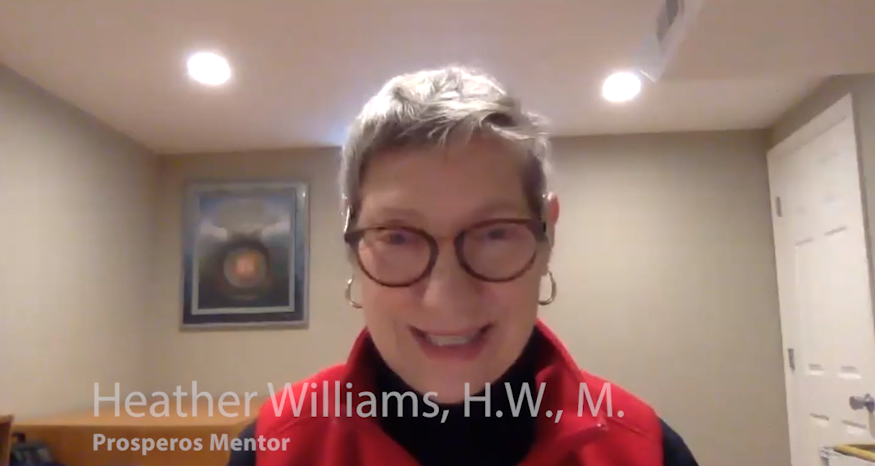
It was 1972 when I remember standing in the Inner Space Center (just outside the classroom) thinking to myself: “The Prosperos School is definitely the right place for me to do “the WORK” of waking up to who I AM. Also, I feel that I must give up drawing to do this “WORK and I wonder if drawing will come back to me? Then a voice said: It will come back if it is meant to.”Ten years later (1982) I was drawing and painting as an artist apprentice to Jan Valentin Saether living with him and his family in Malibu. I continued Translating/RHSing and stayed connected with The Prosperos.
Twenty years later (1992) I was leading drawing exercises as an assistant for the Louise Hay International Teacher Trainings. I was fortunate to travel to Italy, England, Australia, Mexico, Canada and all around the USA with Louise Hay. I continued Translating/RHSing and stayed connected with The Prosperos.
Thirty years later (2002) my book, Drawing as a Sacred Activity, was published by New World Library Now I needed a steady income and decided to get my teaching credential at CSUSM (Cal State University San Marcos). I taught ART and Special Education in the Vista Unified School District until 2017. I continued Translating/RHSing and stayed connected with The Prosperos.
Here it is 2020, 50 years after my first class with Thane at the Sir Francis Drake Hotel in San Francisco. I continue Translating/RHSing and stay connected with The Prosperos – AND – I am seeing ever more clearly how important it is that each one of us DRAW OUT OUR CREATIVITY TO SERVE OTHERS. We each are unique. We are the only person in the world who sees this world through our eyes and so we each have a responsibility to know more about how we construct our unique Point of View…and drawing is one way to explore this.
You might be interested to know that my upcoming drawing class incorporates some of The Prosperos class known as COSMIC INTENTION THERAPY. Learn more at my website: https://www.drawingtogether.com/drawing-classes
CLASS TITLE: DRAWING AS A SACRED ACTIVITYTEN LESSONS every Wednesday DATE: Begins September 30 – end December 2 TIME: 9:00 am PT; 10:00 am MT; 11:00 am CT; Noon ET (Most are 60 minutes, some will be 90 minutes) FEE: Contribution Basis












.jpg)

