“Does the Language We Speak Affect Our Perception of Reality?” by Philip Perry

Article Image
Cartoonist’s portrayal of Ali Abdullah Saleh, former president of Yemen.


Ethnobotanist and hallucinogenic scion Terrence McKenna said in one of his lectures that, “Culture is your operating system.” Through hallucinogenic drugs, McKenna posited, one could shed that operating system for a time and gain union with nature, other humans, and even an ancient mode of thinking which could give us insight into modern life. He wanted to bring about an “Archaic Revival,” which would end estrangement from society and reconnect us with one another.

That puts a lot of emphasis on the power of language and culture. To some experts, language is considered a technology, perhaps the most powerful one of all. Eminent explainer of Zen Alan Watts said that in our culture, we often mistake words for the phenomenon they represent. “The menu is not the meal,” he said. Another insight, “We seldom realize…that our most private thoughts and emotions are not actually our own. For we think in terms of languages and images which we did not invent, but which were given to us by our society.”

For centuries, linguists have more or less been split into two camps on the subject. One argues that language shapes thought, while the other claims that it is impossible for language to do so.  American linguist Benjamin Lee Whorf, modernized this debate. The idea that language shapes reality has henceforth been known as “Whorfianism.”  He famously said,” Language is not simply a reporting device for experience but a defining framework for it.” Language in his view shapes the way we think, and determines what we think about.

Whorf studied the language of the Hopi of the American Southwest, and determined that their and Anglo-American culture were vastly different. This was due he said to differences in language. For instance, their perception of time was completely different. With English speakers, time is broken up into units, such as minutes, hours, and days. It’s a resource or a commodity. For the Hopi time is a never-ending stream. In this view, a phrase such as “wasting time” is impossible to conceive. How can you waste that which never ends?

A Hopi man in Arizona.

Whorfianism fell out of favor. One reason, as The Linguistic Society of America cites, is that we are able to remember and experience things for which we have no words. The taste of an unknown fruit is no less sweet. What’s more, changing the phonetic sounds of a word doesn’t change the facts about what it represents. Because of this, in 1994 psychologist Steven Pinker proclaimed Whorfianism dead. Pinker contends that we all think in images and bits of audio which our brain interprets as language. But it doesn’t end there.

Consider the interpretation of The Literary Society, who perceive thoughts, language, and culture as three strands braided together that make up human experience. They are hard to parse out. Whorfianism is starting to see a resurgence among some in the linguistic community. This is due in part to the work of Professor Lera Boroditsky, an assistant professor of psychology, neuroscience, and symbolic systems at Stanford University. Whorfianism was considered untestable. Boroditsky wondered if it actually was.

She and fellow researchers at Stanford and MIT traveled the world collecting data, and comparing as divergent language systems as Greek, Russian, Chinese, Aboriginal Australian, and more. Boroditsky and her team found that those who are multilingual think differently from those who aren’t. The professor wrote that, “…when you’re learning a new language, you’re not simply learning a new way of talking, you are also inadvertently learning a new way of thinking.”

And within any language system subtle changes in grammar, even mistakes that are accidentally carried on, have a significant impact on that culture’s worldview. “Language is a uniquely human gift, central to our experience,” Boroditsky wrote. “Appreciating its role in constructing our mental lives brings us one step closer to understanding the very nature of humanity.” Simply put, different cultures emphasize different aspects of experience. It is this change in emphasis that makes learning a new language difficult, especially one so different from our own.

Students learning a second language.

Boroditsky along with colleague Dr. Alice Gaby at Monash University, came up with an empirical method to test the influence of language on thought. The Pormpuraaw were selected as subjects. This is an aboriginal community in northern Australia. Their native tongue is Kuuk Thaayorre. Instead of direction words like left and right, their language uses only the cardinal directions: north, south, east, and west. Instead of saying, “Please move your plate to the left” for instance, in Kuuk Thaayorre you would say, “Please move your plate south southwest.” Another example, “There’s a spider on your northeastern arm.” Without being constantly aware of your geographical position, you simply cannot communicate in this language, past a few simple words.

The result Boroditsky writes is that “Speakers of languages like Kuuk Thaayorre are much better than English speakers at staying oriented and keeping track of where they are, even in unfamiliar landscapes or inside unfamiliar buildings.” But it goes beyond this. Their focus on spacial relations influences many other aspects of life including, “…time, number, musical pitch, kinship relations, morality, and emotions.”

The researchers set out to find how this emphasis on geographic location affects the Pormpuraaw’s outlook on time. To do so, they showed volunteers a set of images depicting time’s passage, such as a crocodile growing up, a banana being eaten, or a man aging. Researchers wanted participants to put the pictures into their correct order. Each volunteer was given two separate occasions to do so.

A Pormpuraaw man during a traditional dance.

The direction a language reads in is pivotal for this exercise. For Anglophones, the images would be placed from left to right, while a native Hebrew speaker would arrange them from right to left. All the Kuuk Thaayorre speakers arranged the pictures from east to west. If they were facing south, the pictures went from left to right. But if they were facing north, they went from right to left. Such arrangement held true whether the person faced east or west. It didn’t matter whether the researcher mentioned what direction the subject was facing or not.

But these findings go beyond better understanding of a specific community. Boroditsky said that they have much broader implications for “…politics, law, and religion.” Truly, if we can account for cultural differences properly, we should be better at bridging the gaps between peoples, and can deal with individuals and groups from different backgrounds more fairly.

Beyond her research, “Other studies have found effects of language on how people construe events, reason about causality, keep track of number, understand material substance, perceive and experience emotion, reason about other people’s minds, choose to take risks, and even in the way they choose professions and spouses.”

Boroditsky said that people from different cultures diverge according to “patterns of metaphor” within language. These surface in art as well. For example when it comes to symbolism, “German painters are more likely to paint death as a man, whereas Russian painters are more likely to paint death as a woman.” In 85% of all artistic renderings, the sex of the figure portrayed relates directly to the grammatical gender of the word in the artist’s native tongue. The next step according to Prof. Boroditsky, is to find out is whether it is culture that shapes thought which language only conveys, or if it is language itself that does the shaping.

To learn about how language changes the brain, click here:
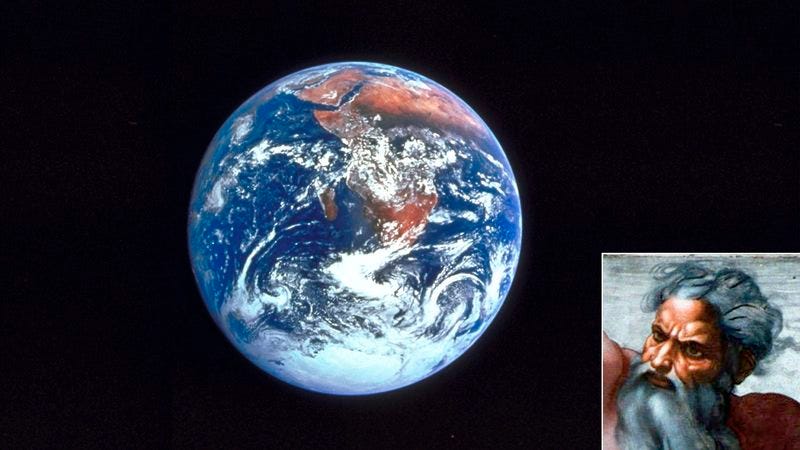
 

Heavenly Authorities Arrest God For Leaving Children In Overheating Planet (theonion.com)

THE HEAVENS—Charging the supreme being with felony reckless endangerment, heavenly authorities placed the Lord our God, Divine Creator and Ruler of the Universe, under arrest Monday for leaving His children trapped in an overheating planet. “While it’s possible for even the most attentive deity to momentarily forget how quickly a planet’s temperature can rise, that’s no excuse for such horrifying negligence,” said the archangel Selaphiel, noting that The Almighty had put not just one of his children at risk, but billions. “Frankly, we’re lucky we got there and pried open the atmosphere when we did or they would have all been gone in less than 100 years.” At press time, a tearful God said He had only left to run a brief errand just on the other side of the galaxy and said He would never forgive Himself.

Xi Jinping, the crazy environmentalist

“Any harm we inflict on nature will eventually return to haunt us.  This is a reality we have to face.” 

–President Xi Jinping speaking at the opening session of the 19th Communist Party congress on Wednesday (Oct. 18).  Xi Jinping (born June 15, 1953) is a Chinese politician. He is the current General Secretary of the Communist Party of China, President of the People’s Republic of China, and Chairman of the Central Military Commission. Wikipedia

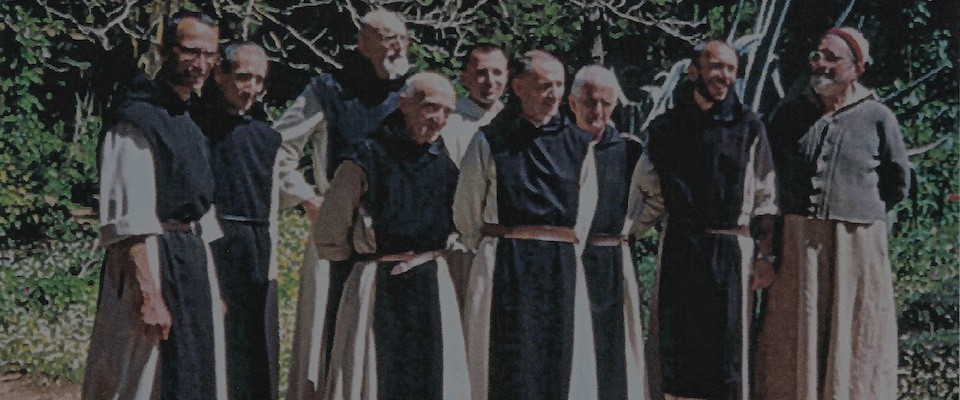
A LETTER FROM THE MONKS OF THE TIBHERINE by Dom Christian de Chergé

On May 24, 1996, a group of Islamic terrorists announced that they had “slit the throats” of seven French Trappist monks whom they had kidnapped from the monastery of Tibherine in Algeria and held as hostages for two months. Prior to the kidnapping, the superior of the monastery, Father Christian de Chergé, had left with his family this testament “to be opened in the event of my death.”

If it should happen one day—and it could be today—that I become a victim of the terrorism which now seems ready to encompass all the foreigners living in Algeria, I would like my community, my Church, my family, to remember that my life was given to God and to this country. I ask them to accept that the One Master of all life was not a stranger to this brutal departure. I ask them to pray for me: for how could I be found worthy of such an offering? I ask them to be able to associate such a death with the many other deaths that were just as violent, but forgotten through indifference and anonymity.

My life has no more value than any other. Nor any less value. In any case, it has not the innocence of childhood. I have lived long enough to know that I share in the evil which seems, alas, to prevail in the world, even in that which would strike me blindly. I should like, when the time comes, to have a clear space which would allow me to beg forgiveness of God and of all my fellow human beings, and at the same time to forgive with all my heart the one who would strike me down.

I could not desire such a death. It seems to me important to state this. I do not see, in fact, how I could rejoice if this people I love were to be accused indiscriminately of my murder. It would be to pay too dearly for what will, perhaps, be called “the grace of martyrdom,” to owe it to an Algerian, whoever he may be, especially if he says he is acting in fidelity to what he believes to be Islam. I know the scorn with which Algerians as a whole can be regarded. I know also the caricature of Islam which a certain kind of Islamism encourages. It is too easy to give oneself a good conscience by identifying this religious way with the fundamentalist ideologies of the extremists. For me, Algeria and Islam are something different; they are a body and a soul. I have proclaimed this often enough, I believe, in the sure knowledge of what I have received in Algeria, in the respect of believing Muslims—finding there so often that true strand of the Gospel I learned at my mother’s knee, my very first Church.

My death, clearly, will appear to justify those who hastily judged me naive or idealistic: “Let him tell us now what he thinks of it!” But these people must realize that my most avid curiosity will then be satisfied. This is what I shall be able to do, if God wills—immerse my gaze in that of the Father, to contemplate with him his children of Islam just as he sees them, all shining with the glory of Christ, the fruit of his Passion, filled with the Gift of the Spirit, whose secret joy will always be to establish communion and to refashion the likeness, delighting in the differences.

For this life given up, totally mine and totally theirs, I thank God who seems to have wished it entirely for the sake of that joy in everything and in spite of everything. In this “thank you,” which is said for everything in my life from now on, I certainly include you, friends of yesterday and today, and you my friends of this place, along with my mother and father, my brothers and sisters and their families—the hundredfold granted as was promised!

And you also, the friend of my final moment, who would not be aware of what you were doing. Yes, for you also I wish this “thank you”—and this adieu—to commend you to the God whose face I see in yours.

And may we find each other, happy “good thieves,” in Paradise, if it pleases God, the Father of us both.  Amen.  Inchallah.

Algiers, December 1, 1993

Translated by the Monks of Mount Saint Bernard Abbey, Leicester, England.

Baba Kuhi of Shiraz – Only God I Saw

Baba Kuhi of Shiraz (980 – 1050) was an Iranian Sufi poet-mystic.  He traveled extensively in search of stories concerning Sufi shaikhs and their sayings, and he spent many years in retreat and prayer in a mountain cave just north of Shiraz.  Of his works, a book on Ḥallāj (a Persian mystic) called Bedāyat ḥāl al-Ḥallāj wa nehāyatohu has survived.

In the market, in the cloister–only God I saw
by Baba Kuhi of Shiraz

English version by Reynold A. Nicholson

In the market, in the cloister–only God I saw.
In the valley and on the mountain–only God I saw.
Him I have seen beside me oft in tribulation;
In favour and in fortune–only God I saw.
In prayer and fasting, in praise and contemplation,
In the religion of the Prophet–only God I saw.
Neither soul nor body, accident nor substance,
Qualities nor causes–only God I saw.
I oped mine eyes and by the light of His face around me
In all the eye discovered–only God I saw.
Like a candle I was melting in His fire:
Amidst the flames outflashing–only God I saw.
Myself with mine own eyes I saw most clearly,
But when I looked with God’s eyes–only God I saw.
I passed away into nothingness, I vanished,
And lo, I was the All-living–only God I saw.

Calvin on air!

This is the logo 

Stacy King and I will be co-hosting the show and having a party in the process with our very spec... 


Stacy is from Washington, Illinois! So you can say she is a transplant from the midwest and she very pleased about it!

In her own words:


“I’m very athletic, I coached Women’s Division One Volleyball…  “I’m fun-loving entertaining opinionated and the best friend anyone could ever want!!!”


And she is also very excited to Co-Host this week’s Rainbow Radio!

This is the divider 

Calvin Harris is a Native of Los Angeles and a former student at Prosperos School on Ontology in Santa Monica. He loves humanity and as being a native of Los Angeles he has had a world of experience in diversity and all the wonderful colors of the rainbow that make up the human spirit


Calvin is one who has surrounded himself with this richly textured community of contradictory and diverse individuals with a passion for life and a flair for success, innovation, and creativity. In his vocation, he performs the roles of mentor, teacher, storyteller, or loving friend.Those that seek him out, are those ready to make a change, find their way through adversity, clamity, and confusion. And those that have the courage to participate and engage in the processes that will bring about their change, their piece, their happines. .

This is the divider 

Tune in this Saturday at KX935.com and click listen now to hear the show live. Or check back later if you are busy and play it at your leasure as a podcast! Either way, I think you will find the show and guests features very interesting and fun!

Gerard Senehi’s Limitless Experience


Gerard Senehi’s new video shows different ways he infuses his brand of optimism – one where not knowing creates the space to discover so much more.

As a mentalist and entertainer, he loves to create an experience that people find difficult to comprehend or categorize. This not only creates a sense of wonder and mystery but makes room for what’s Unknown, and creates an opening through which something extraordinary can come through…

Gerard says, “As human beings we have limitless capacity to think, create, and care…and thus there is an infinite space where so much is possible. The biggest limitation to that space is thinking we already know.”

“How Living in Big Inner Cities Makes People Healthier and Happier” by Derek Beres

Article Image

People participate in a free outdoor yoga class in Bryant Park in New York City. (Spencer Platt/Getty Images)

It’s strange, this desire we show for neatly packaged stories. Our brains love easy narratives. We like our folklore quickly digestible. Take the agriculture myth: humans were hunter-gatherers, someone figured out farming, the world began planting. End of story.

That story is way more complex, as James C Scott argues in his fascinating new survey of the formation of the earliest states, Against the Grain. Sedentism didn’t just happen; societies rebelled against the formation of cities. The transition to an agrarian state didn’t take one generation, but 160 of them—4,000 years in total. 

“Clearly our ancestors did not rush headlong into the Neolithic revolution or into the arms of the earliest states,” writes Scott.

Interestingly, common history states that agriculture happened, then people started clustering together. Yet there is evidence that sedentism began occurring before farms were in place. Widespread food distribution networks—and the tax revenue they supplied—might have taken millennia, but humans forming cities is old indeed. Humans have long known that crowding into small spaces and working together is to our benefit. 

Crowded subway station in New York City.

Commuters pass through Grand Central Terminal during morning rush hour in New York City. (Mario Tama/Getty Images)


Which is what recent research published in The Lancet argues. Recognizing the global pervasiveness of obesity and diseases too much sedentism promotes, such as cardiovascular disease and type 2 diabetes, the study’s authors claim that living in areas with tight social networks fosters physical activity and emotional bonds. As co-author Chinmoy Sarkar told Reuters,

“As cities get more and more compact, they become more walkable. In denser residential areas, they are better designed and more attractive destinations. We are less dependent on our cars and use public transport more.” 

This research comes in the wake of prime minister Theresa May’s announcement that the British government is lending $2.6 billion for the construction of 25,000 rental homes in the social housing sector. This is on top of another $13.2 billion that will help new homeowners secure property by lowering deposit requirements.

For the paper’s authors, Sarkar and Chris Webster, time and space are relevant issues. Lower population densities, they argue in a paper from January, means less specialized services, fewer chances for social interactions, less populated city centers, and longer travel times for health care services (specifically, emergency services). Of course, infectious diseases are more likely to spread in densely packed neighborhoods, though the authors believe quicker access to health care makes it a worthwhile tradeoff.

We often treat disease like early cities, as if a clear-cut story explains the process: you get sick, you need medicine, you get better. Only disease does not work like that either. In fact, one of the number one indicators that your immune system will resist disease is your social support network. Humans are no islands floating through a world of infectious agents. We are an interconnected species inextricably linked to our environment. The more we populate our environment with others, the healthier we are. 

This does not mean a city is automatically utopia, however. The authors point out that design is crucial: 

“Health status and risk originates from complex interactions between an individual’s inherent physiology and genetics interacting with contextual socio-economic, built and natural environmental variables.”

The built environment (BE) must promote active living, which includes plenty of green areas, spaces for walking and cycling, and make access to public transportation and designated walking regions easy to reach.Being able to socially interact is critical, so designing such meeting places is mandatory. Spaces for natural healing, such as parks and hiking trails, reduces physiological and psychological stress. Reducing noise and air pollution is a must. And facilitating nutritious food companies while limiting junk food providers is also paramount to the success of a healthy city. 

Central Park in New York City

Patrons sit before a free concert in Central Park by the New York Philharmonic in New York City. (Mario Tama/Getty Images)


Such models are hard to imagine in a free market like America, especially given its growing insistence on less governmental intervention. While a city like Los Angeles, where I live, is booming with fresh, natural food choices, we are also experiencing a housing crisis for both homeless and low income residents as well as middle class citizens, plus a dearth of immediate green spaces.

The authors do consider supply-side economics next to public health initiatives. While admitting regulations are sometimes necessary, they point to high taxes on cigarettes and alcohol as effective means for promoting healthier lifestyles, wondering if that can translate into city planning. Such a translation is difficult to imagine in some cities, however. The median home price in my neighborhood of Palms is $939,800, well beyond the means of most Angelenos. The health of cities, in some ways, is like the health of individuals: good for those who can afford it. 

Which doesn’t escape the authors. Having spent decades in city planning, they conclude with their own questions. Does one giant park or several smaller ones make more sense? What is the proper balance of public zones and private real estate? How are different age demographics best served from neighborhood to neighborhood? How do you best separate industry, a necessary component of a city, with residential regions?

Sarkar is optimistic that well informed data presented to local governments will be a no-brainer: 

“With evidence, we can plan multi-functional, attractive neighborhoods that promote physical activity, promote social interaction, and shield from negatives such as pollution and feeling unsafe.”

Their questions above, among many others, will define city planning in the decades to come. One thing the authors are certain of is that cities are better for the health of humans. How to honor that fact remains to be seen.

Derek is the author of Whole Motion: Training Your Brain and Body For Optimal Health. Based in Los Angeles, he is working on a new book about spiritual consumerism. Stay in touch on Facebook and Twitter.

Blame it on Theatre! (with forward by Calvin Harris, HWM)

It is fall, here in Southern California, as such the days are growing shorter, and the need for physical recreation now turns to mental recreation, due to hours spent indoors increases, and as the sun moves across the sky more quickly and drops from the horizon sooner.

One preoccupation besides the Football games that can move to the forefront of things to do is the Fall-Winter Theater Season, this can include anything from state-of-the-art theaters to a world-renowned symphony and a plethora of live performances, I’d suggest giving a live stage performance ago. Much that I have learned about human interaction or some of what I now know about my own inner-personal interactions was revealed to me in a non-combative observational way, presented to me on stage.

I began looking for these clues, after hearing my Teacher Thane, tell about these insights in his class lectures for The Prosperos on self- observation and self-awareness. He would reference live theatrical performance or musicals as a way to unlock some unknown factor, to perceive something about our situation that we normally would not see, a place to glimpse authenticity, or Truth based reality rather than on sense testimony alone.

In the Foot Lights LA, a theatrical publication handed out at the recent musical performance of Cabaret, that I attended, I had a chance to read a story, I’d like to share. written by Peter Finlayson, called Blame it on Theatre. The article had a resonance with this concept of seeing beyond sense testimony and the function of Theatre.

“Blame it on Theatre” by Peter Finlayson

I’ve found myself in an interesting position of late. Through the genius of social media, I’ve had the opportunity of being reacquainted with people I’ve not seen since I came to California. Back in 1981, it means I’ve had a bit of catching up to do. The first thing I discovered was that for those that were true friends, well, we are still friends. Getting past all the ‘what have you been up to’ took about a nano-second before we were back to conversation and feeling we shared as if we hadn’t missed a beat in 35 plus years.

What was a little surprising was that even though I am still most assuredly a child of the 60’s and an unabashed left-leaning liberal, many of my old friends had adopted more conservative positions. So as always been my want, political discussion quickly ensued, and the current political climate certainly added fuel to the debate.

At the same time, I’ve also had the opportunity to engage with my more recently acquired friends, mostly theatre-makers, on the same topics. The resulting conversations really brought me to think – how did I, a radical loud-mouthed protester who’d marched on Washington, the capital not the man, suddenly appear to be opposed to both right and left, positions that were being vociferously expressed to me by people I assumed to share values.

I’ve become a centrist? Not possible!

Thank god, those that were friends are still friends, and no permanent scars were created. But why was it that I was arguing against both sides, this is all in regard to free speech, and I was essentially saying the exact same thing to both, and being met with exhaustive fervency in opposition.

I blame it on Theatre!

What? Yep! My passion for change has been tempered by my passion for theatre.  For a while I was feeling a bit like Data on Star Trek, Next Generation, rapidly scanning my memories as to what has influenced me the most to seek a position of principal with the understanding that the principal has limitations.

Theatre Always serves as an allegory, and in the 3-plus millennia of recorded history, there is an over-riding principle that is essentially the moral of virtually every play. Moderation. Heroes become tragic when they act in haste or out of self-interest.  In comedy, heroes become fools when acting for the same reasons.  Causes are not noble if concern for “others” is not part of the equation.

Before you scream foul and yell that theatre is not a voice of caution, hear me out.  It is not caution that drives theatre, it is understanding. It is the demand that for me to reflect upon the evil men do, I must first understand that they come not from a position of evil, but from a position of self-interest. “My morals are more important”, “my wants are more immediate”, “my judgment is superior”. 

Theatre Teaches us the nuances, the difference between caution and moderation. Theatre teaches us that we may be individuals, but are more assuredly a part of the whole. What impacts us, impacts everyone.

In its very process of creating a living play, the moderation I speak of is demanded of everyone at every level. A play, a musical, is the very essence of the social experience.

The participants, from writer to stagehand, are individuals. Each has a vision and a want to execute the play to bring a sense of fulfillment to the audience.  Yet the writer ultimately knows that there are words that will change. The actor knows that the director is there to make sure the performance fits the scene. The designer may want the best set he or she has ever created, but it must serve the play.

Individually we are as the theatre-makers. Our will, our reason, our logic, dictates that certain things must occur for the betterment of humanity.  The merits of the effort are determined not by the contributor, but the reality of value perceived by those around us.  In a very real sense, it is the whole of humanity that determines what is best.

For more than 3000 years, theatre has expressed the position that the consequence of action is more important than the action itself. It demands of both artist and audience to take a journey of understanding and at a conclusion, become aware that intent is never the cause of the conclusion, the intent is only a catalyst to a journey.

The beauty that is expressed in theatre is that we must take the journey. We must examine the life we witness, we must encourage action, but we must do so with the weight of humanity upon our shoulders.

So what’s the takeaway? Jacques in Shakespeare’s “As You Like It.” tells us, “All the world’s a stage, and all the men and women merely players….” While the monologue is about Life played out on stages…. I think it also an admonition. Play the role, fit into the moment.

Respect ourselves for the roles we play, but accept that our wants will not be the determiner of accomplishments. Theatre teaches us to moderate our expectations to see beyond the vista of our eyes, and then act.

Hope you found value.

Calvin

Consciousness, sexuality, androgyny, futurism, space, the arts, science, astrology, democracy, humor, books, movies and more