“A Year of Reimaging” by Calvin Harris, H.W., M. (siteofcontact.net)

the silence of the forest.jpg

We are now headed towards the Fall of the Year in the 2017 cycle. A year of “Re-imaging the Evolution of You.”  Pages for this year will still need to be written. It is in the doing, your actions that writes the pages of the year, and find Life in bud anew, waiting to be uncovered. How shall we do it?  We all know that life is never uninteresting. It has always had some twists and turns.  It is never in a straight line. It is not linear, even though the seasons may lead you to think so.  It is a non-repeating time loop.

In this season, we will inevitably be asked to create and breathe new life into concepts that have lost their meaning along the way. Words like “growth” and “accomplishment” have turn to seed with new vision and brought alive again in the fire of direct experience.

In many ways, the path has very little to do with just “growing, ” like the fall, old branches on a tree start to appear barren from shed leaves and deflated  canapes,  it can fool one into thinking there is no life. Yet like nature in Spring, Fall is about the business of reorganization, shedding, and storing to bring about new life and growth.  Thus, like the tree, “growing” is also about pruning, recycling, and reorganization. Those processes extend and make room for “new growth” within us.

Let us feel that creative urge being and yet not seen within us. Realizing it is the ancient and wild urging of Love wanting a new form from us.  What should that form be? Love’s manifestations in life have many possibilities. That love of living, if it is in the realm of your attention,  is to move you within the twist and turns of life, within the maze of life, as it were, to the place of not-knowing, a place of newness, so new meaning can emerge and take susccessful flight.

Photo by Fred Espenak

For many of us, success has come to refer to a condition removed from Love, in which you no longer have to be in direct contact with your vulnerability, your sensitivity, and only in touch with a small band of the emotional spectrum. But this is not success. In part, yes, but it will not satisfy the longing for wholeness that Love’s drive  demands,  and that Love fulfills. Drives that have been placed inside us from our Source.

Source, Agape (Love) as the reference point, makes success more than just loveless organized stepping stones creating re-calibrated answers from life’s journey, it move us deeper, into a dark rich pregnant creative realization of new discoveries and reformulations of Love’s presence and pure essence.

Yes, the Summer season seems to be giving way and the Fall season about to offer new clean pages upon which to write. Each day a new page to re-image life, waiting to be written with new questions to be asked, compared, embraced, and all to be loved and lived.

You see, within each season there is a reevaluating, reorganizing, recycling, or cleaning out of things, based on what your eyes are seeing at any given time.  It is your state of awareness, and what it is now picking up from your terrain. The form grasped by your awareness, can be something you did not suspect or understand from the form when seen at first look.

Today carve out that quiet time just to give yourself over without reserve, to consider and re-imagine one of your pages or chapters from the year. Remember what your words gave birth to. Now in review of your words you start the process of new ground prep, or seeds for planting. Words represent a common language. Tilling the soil represented by a reworking of your common language. To change words can cause a trans-formative change not only to your language, but in-turn creates self-discovery that will unlock seedlings and grow from to all sorts of hidden places.

I want to close with these words:

“All the tools and engines on earth are only extensions of man’s limbs and senses.” – Ralph Waldo Emerson.

For comment on this article, or to talk about mentoring and coaching programs that re-energize, or reconnect you.  Contact me at : things2cal@gmail.com

Bessel van der Kolk – how to detoxify the body from trauma


In an interview with Dipl. Psych., Dipl. Wi.-Ing. Bernhard Trenkle, Prof. Bessel van der Kolk illustrates the manifold consequences of traumatic experiences on body and mind, how trauma therapy can contribute to “detoxication” and which therapeutic methods are especially appropriate therefor. He briefly introduces his recent research project and enlarges on the development and capabilities of the fields of neurofeedback and mindfulness.


In this interview Prof. Bessel van der Kolk and Dipl. Psych., Dipl. Wi.-Ing. Bernhard Trenkle discuss various approaches for trauma therapy. Which methods are effective, how do the approaches develop and what is the future of trauma therapy?


Acclaimed psychiatrist Bessel van der Kolk explores his field’s long, complex, and stubborn history with trauma. Dr. van der Kolk explains how psychiatry as a whole avoided progress, often misdiagnosing trauma as hysteria or, in the case of shell-shocked soldiers, malingering. The experiences of abused women and children were more or less ignored for a century. They’re still being ignored in ways, he says. Psychiatry is still too focused on abstract diagnoses and not cognizant enough of the traumatic experiences that lead to them. His latest book “The Body Keeps the Score” (http://goo.gl/0xyBfp) was written to draw attention to how traumatic disorders can be avoided.


Bessel van der Kolk’s Website:
http://www.http://besselvanderkolk.net

Website of the Milton Erickson Institut Rottweil:
http://www.meg-rottweil.de

(Courtesy of Bruce King.)

“Albert Einstein’s Essay on Racial Bias in 1946” by Trent T. Gilliss

“‘Torch Tower’ burns a 2nd time, living up to its name” by Matthew Haag and Ben Hubbard (nytimes.com)

The Associated Press

A huge fire in Dubai raced up the sides of one of the world’s tallest residential skyscrapers on Friday, raining flaming debris on the streets below and causing a frantic nighttime evacuation by residents.

Firefighters put out the flames within a few hours, and no serious injuries were reported, but the blaze raised new questions about safety in the skyscraper-studded cities of the Persian Gulf.

Several skyscrapers in the United Arab Emirates, including Dubai, have caught fire in recent years, most notably a 63-story luxury hotel that was engulfed in flames on New Year’s Eve in 2015.

The building in which Friday’s fire occurred — known as the Torch Tower — had also caught fire in 2015, and parts of the building were still being renovated from the last blaze when the new one struck.

Investigators blamed flammable siding for the first fire there, echoing the cause of a blaze at Grenfell Tower in London that killed more than 80 people in London in June.

After the 2015 Torch Tower fire, the authorities announced added restrictions on exterior paneling on new construction, and forbade it on towers taller than nine stories. But the new rules did not immediately apply to older buildings.

The authorities have previously acknowledged that at least 30,000 buildings across the United Arab Emirates were built with siding that could potentially cause a fire to spread rapidly, according to news reports.

Friday’s fire erupted soon after midnight at the 1,100-foot skyscraper, in the northern end of the densely populated Marina district, where some residents were returning home from nights out and others were in bed.

Fire alarms sounded, building staff members pounded on residents’ doors to evacuate them from the building’s hundreds of apartments and firefighters from four stations were deployed, the Dubai Media Office, an official agency, said on Twitter.

“You never think it’s going to happen to you,” Alireza Aletomeh, a resident of the tower, told The Associated Press, adding that her residence contained cash furniture, paintings — “many things that are very valuable to me.”

Mr. Aletomeh, a sales manager who lives on the 54th floor of Torch Tower, he had been returning home when security guards told him to stay in the street because of the fire.

His roommate, who was home at the time, collected their passports and left the apartment — but it took him two hours to come get out of the building because the stairwell was crowded with other residents, Aletomeh said.

As the fire spread to up to 50 of the Torch Tower’s 79 aboveground floors, residents of nearby buildings posted pictures of the blaze on social media.

About 60 of the building’s floors were damaged in the 2015 fire, and investigators concluded that the exterior cladding, made of aluminum panels with combustible plastic cores, had accelerated the flames.

Dubai is one of seven emirates that make up the United Arab Emirates, and the city has seen dizzying growth in recent decades as it has transformed from a desert backwater to a sprawling business and transportation hub.

Photo

A fire broke out early Friday at the Torch Tower, an 86-story residential building in Dubai in the United Arab Emirates. CreditKarim Sahib/Agence France-Presse — Getty Images

On Friday, firefighters had the blaze under control by 3:30 a.m., according to the Dubai Civil Defense. And by daybreak the government said the fire had been quenched in “record time.

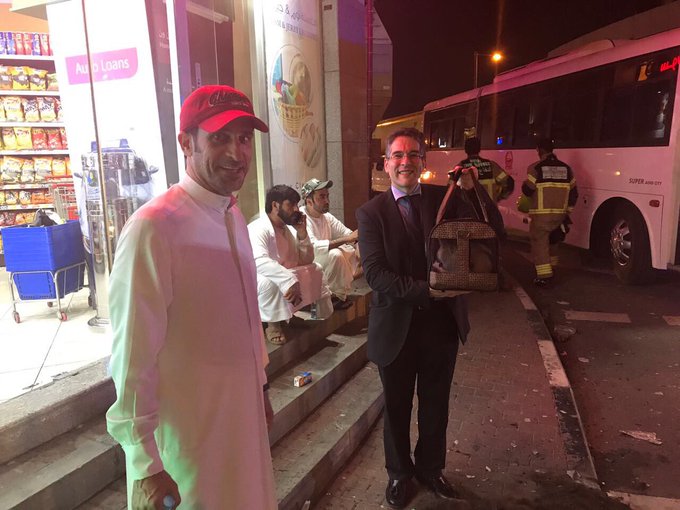
Later in the day, as the streets around the tower were reopened to traffic, the Dubai Media Office posted a picture of one resident reuniting with his cat, which had been rescued from the blaze.

James Baldwin on our history

“The story of the Negro in America is the story of America. . . .  Not  everything that is faced can be changed.  But nothing can be changed until it is faced.  History is not the past.  It is the present. We carry our history with us.  We are our history.  If we pretend otherwise, we literally are criminals.”

–James Arthur “Jimmy” Baldwin (August 2, 1924 – December 1, 1987) was an American writer and social critic. His essays, as collected in Notes of a Native Son, explore palpable yet unspoken intricacies of racial, sexual, and class distinctions … Wikipedia

“I Have Decided to Stick With Love” by Martin Luther King, Jr.

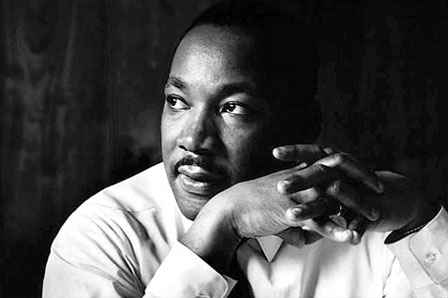
I’m concerned about a better World. I’m concerned about justice; I’m concerned about brotherhood and sisterhood; I’m concerned about truth. And when one is concerned about that, he can never advocate violence. For through violence you may murder a murderer, but you can’t murder murder. Through violence you may murder a liar, but you can’t establish truth. Through violence you may murder a hater, but you can’t murder hate through violence. Darkness cannot put out darkness; only light can do that.

And I say to you, I have also decided to stick with love, for I know that love is ultimately the only answer to humankind’s problems. And I’m going to talk about it everywhere I go. I know it isn’t popular to talk about it in some circles today. And I’m not talking about emotional bosh when I talk about love; I’m talking about a strong, demanding love. For I have seen too much hate. […] and I say to myself that hate is too great a burden to bear. I have decided to love. If you are seeking the highest good, I think you can find it through love. And the beautiful thing is that we aren’t moving wrong when we do it, because John was right, God is love. He who hates does not know God, but he who loves has the key that unlocks the door to the meaning of ultimate reality.

And so I say to you today, my friends, that you may be able to speak with the tongues of men and angels; you may have the eloquence of articulate speech; but if you have not love, it means nothing. Yes, you may have the gift of prophecy; you may have the gift of scientific prediction and understand the behavior of molecules; you may break into the storehouse of nature and bring forth many new insights; yes, you may ascend to the heights of academic achievement so that you have all knowledge; and you may boast of your great institutions of learning and the boundless extent of your degrees; but if you have not love, all of these mean absolutely nothing. You may even give your goods to feed the poor; you may bestow great gifts to charity; and you may tower high in philanthropy; but if you have not love, your charity means nothing. You may even give your body to be burned and die the death of a martyr, and your spilt blood may be a symbol of honor for generations yet unborn, and thousands may praise you as one of history’s greatest heroes; but if you have not love, your blood was spilt in vain. What I’m trying to get you to see this morning is that a man may be self-centered in his self-denial and self-righteous in his self-sacrifice. His generosity may feed his ego, and his piety may feed his pride. So without love, benevolence becomes egotism, and martyrdom becomes spiritual pride.

Excerpted from Martin Luther King Jr’s ​speech, “Where do we go from here?” delivered at the 11th Annual SCLC Convention, Atlanta, Ga. August 16, 1967

“Before Manliness Lost Its Virtue” by David Brooks

Photo

CreditEric Thayer for The New York Times

August 1, 2017 (nytimes.com)

The Trump administration is certainly giving us an education in the varieties of wannabe manliness.

There is the slovenly “I don’t care what you think” manliness of Steve Bannon. There’s the look-at-me-I-can-curse manliness that Anthony Scaramucci learned from “Glengarry Glen Ross.” There is the affirmation-hungry “I long to be the man my father was” parody of manliness performed by Donald Trump. There are all those authentically manly Marine generals Trump hires to supplement his own. There’s Trump’s man-crush on Vladimir Putin and the firing of insufficiently manly Reince Priebus.

With this crowd, it’s man-craving all the way down.

It’s worth remembering, when we are surrounded by all this thrusting masculinity, what substantive manliness once looked like. For example, 2,400 years ago the Greeks had a more fully developed vision of manliness than anything we see in or around the White House today.

Greek manliness started from a different place than ours does now. For the ancient Greeks, it would have been incomprehensible to count yourself an alpha male simply because you can run a trading floor or sell an apartment because you gilded a faucet handle.

For them, real men defended or served their city, or performed some noble public service. Braying after money was the opposite of manliness. For the Greeks, that was just avariciousness, an activity that shrunk you down into a people-pleasing marketer or hollowed you out because you pursued hollow things.

The Greeks admired what you might call spiritedness. The spirited man defies death in battle, performs deeds of honor and is respected by those whose esteem is worth having.

The classical Greek concept of manliness emphasizes certain traits. The bedrock virtue is courage. The manly man puts himself on the line and risks death and criticism. The manly man is assertive. He does not hang back but instead wades into any fray. The manly man is competitive. He looks for ways to compete with others, to demonstrate his prowess and to be the best. The manly man is self-confident. He knows his own worth. But he is also touchy. He is outraged if others do not grant him the honor that is his due.

That version of manliness gave Greece its dynamism. But the Greeks came to understand the problem with manly men. They are hard to live with. They are constantly picking fights and engaging in peacock displays.

Take the savage feuding that marks the Trump White House and put it on steroids and you get some idea of Greek culture. The Greek tragedies describe cycles of revenge and counter-revenge as manly men and women wreak death and destruction on each other.

So the Greeks took manliness to the next level. On top of the honor code, they gave us the concept of magnanimity. Pericles is the perfect magnanimous man (and in America, George Washington and George Marshall were his heirs). The magnanimous leader possesses all the spirited traits described above, but he uses his traits not just to puff himself up, but to create a just political order.

The magnanimous man tries to master the profession of statecraft because he believes, with the Athenian ruler Solon, that the well-governed city “makes all things wise and perfect in the world of men.” The magnanimous leader tries to beautify his city, to arouse people’s pride in and love for it. He encourages citizens to get involved in great civic projects that will give their lives meaning and allow everybody to partake in the heroic action that was once reserved for the aristocratic few.

The magnanimous man has a certain style. He is a bit aloof, marked more by gravitas than familiarity. He shows perfect self-control because he has mastered his passions. He does not show his vulnerability. His relationships are not reciprocal. He is eager to grant favors but is ashamed of receiving them. His personal life can wither because he has devoted himself to disinterested public service.

The magnanimous man believes that politics practiced well is the noblest of all professions. No other arena requires as much wisdom, tenacity, foresight and empathy. No other field places such stress on conversation and persuasion. The English word “idiot” comes from the ancient Greek word for the person who is uninterested in politics but capable only of running his or her own private affairs.

Today, we’re in a crisis of masculinity. Some men are unable to compete in schools and in labor markets because the stereotype of what is considered “man’s work” is so narrow. In the White House, we have phony manliness run amok.

But we still have all these older models to draw from. Of all the politicians I’ve covered, John McCain comes closest to the old magnanimous ideal. Last week, when he went to the Senate and flipped his thumb down on the pretzeled-up health care bill, we saw one version of manliness trumping another. When John Kelly elbowed out Anthony Scaramucci, one version of manliness replaced another.

The old virtues aren’t totally lost. So there’s hope.

Francois Truffaut on Jeanne Moreau

In 1965, Truffaut told a reporter for Time magazine, “She has all the qualities one expects in a woman, plus all those one expects in a man — without the inconveniences of either.”

–from “Jeanne Moreau, Femme Fatale Star Of French New Wave Film, Dies at 89” by Anita Gates, August 1, 2017, New York Times. Jeanne Moreau (January 23, 1928 – July 31, 2017) was a French actress, singer, screenwriter and director. She won the Cannes Film Festival Award for Best Actress for Seven Days… Wikipedia

Sam Shepard on love between a man and a woman

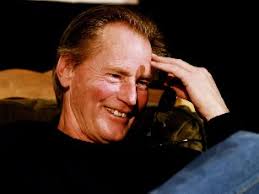
As for love between a man and a woman, Mr. Shepard, whose long relationship with the actress Jessica Lange cast an unwanted spotlight on his private life, described that as “terrible and impossible.” He later explained: “It’s impossible the way people enter into it feeling they’re going to be saved by the other one. And it seems like many, many times that quicksand happens in a relationship when you feel that somehow you can be saved.”

–from “His Plays About the West Forged a New Frontier” by Ben Brantley, August 1, 2017, New York Times.  Samuel Shepard Rogers III, known professionally as Sam Shepard (November 5, 1943 – July 30, 2017), was an American playwright, actor, author, screenwriter, and director whose body of work spanned over half a century. Wikipedia