“Mind Must Manifest” by Randy Ramsley

“Mind must manifest.” This is the premise on which all esoteric teachings are built. The ancient teachings from Hermes, the Gnostics, Buddha, Jesus and so many other “mutants” recognize the infinite potential inherent in the human mind, and they strive to teach us how to think. The great teachings strive to facilitate transcended thinking.

Thane’s T-Field is an illustration designed to elucidate the mystery of the human equation. It is an illustration designed to show us the way to move our thoughts from the confines of our limited thinking where they serve to manifest limited experiences. It is an illustration designed to symbolically demonstrate Infinite Mind and Infinite Potential, human thinking in relation to Infinite Thinking, and the possibility of causing human thinking to expand or move beyond the limited human view, eliminate the reducing valve and release the free flowing thought of Infinite Mind.

The definitions that are associated with the T-Field are all essential to establishing a common language that can be used to point at the inexpressible life experience straight thinking initiates. Mind must Manifest.

“Fences, the movie . . . or sometimes are we the re-enactment?” by Calvin Harris H.W., M.

Life, they say is like an onion, and I guess this is how I came to write this account of Fences the movie. The first draft came out of my writing group. A motley group of folks come together to do two strange things – we write as a group, and listen to each other, these are odd things to do in a world of singularity and quick unseen social interactions.

Our small enclave evokes the magic of storytelling simply by the act of picking two cards. Two 2×4 inch Prompt cards with odd situations and subject combinations. Our minds then work its alchemy in transforming those cards into histories and futures, dreams and nightmares, finding Truths from lies and along the way laughter, tears, release, and wows.

This time the two cards that were picked were: “Movie Director” and “The Last Night in the Old House” my mind raced quick to events of the last few days, and like the onion, it peeled back more than what was thought to be there.

As pen hits the page, my mind raced through emotions and events … and yet quickly circled back to the film Fences.  It seems that I have a long history with that playwright’s new film of 2017, yes, a hauntingly long history that lay buried, yes memories, maybe unspoken, but like the elephant in the middle of the room, the observation must be given voice.

The first time I became aware of Fences, was in 1987, back then it was a full fledge high grossing play on Broadway in New York. I read about it in the Los Angeles Times, Theater section.   Sullivan, the theater critic had written the article in anticipation of its Los Angeles opening. The article was as much about James Earl Jones (Voice of Dart Vader, Star Wars movie fame) as it was about the play Fences or the incredible author August Wilson who won both a Pulitzer Prize for Drama and the Tony Award that same year for Fences.

I was excited about going to the play and in process of plans …I saw a billboard picture of James Earl Jones with a baseball bat, for the show… I don’t remember where I saw it, but I remember the words that tumbled out of my mouth in seeing that picture “Jones looks like my father”, I was shocked at how much he looked like my father and a cold shiver ran down my back.  Within a few weeks, some televised show had the briefest of a clip showed Jones doing a scene from the show, a bead of sweat formed on my forehead ….I don’t remember what happen, which is to say  I did not see that play.

I was involved at that time in a form of psychotherapy (or what I like to call the study of the Soul), with a group known as The Prosperos. It seemed that at the time of the plays L.A. opening, my sessions with my Mentor became more often, some bouts with intense emotions. In the meantime, I was reading more books, steered on in part by lively discussions through my once a month dinners with Mary Ritley (known to some as writer M.R. Ritley) discussion about ordinary people, about archetype symbol’s, totems, and the re-enactment of identity in cultural history. Somehow the Play was gone and a distant memory but not the dominos benefits it unleashed in my life.

Over the last decade, my family and myself due in part to illness and the death of my mother – my siblings and I have grown closer. More able to discuss openly our growing up years. I receive a phone call the first of January 2017 from my Brother Michael urging me to go to see a movie, he said: “I want you to see this movie and then let’s talk”.  I knew from his tone, it would be one of those conversations about fathers and sons. I smile to myself, and into the phone, I said yes, I would. knowing on some level it would be of more benefit to us…the phone rang off.

A day later I went to see the film. Then two days later at writing group came this prompt ““Movie Director” and “The Last Night in the Old House”.  My thoughts began followed by my pen into these words.

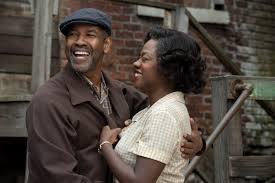
In the opening scene of film Fences, the first thing I was struck by was the weight that Denzel Washington had put on for the role of Troy Maxson, the protagonist.   Denzel’s gait and stance was that of a hardworking man from the 1950, He seemed massive. Denzel the Director had done his job on period history and transporting us back in time in the movie. And when Denzel opens his mouth uttering the first words about his life struggles, I felt the bead of sweat and a single tear run from my eyes. I did not need to hear the words he spoke, I knew the words before they were spoken. Denzel playing Troy Maxson, the husband and father describing his struggle to find and maintain job, family, and somehow in the process losing a dream, but he would carry on, the best way he knew how, responsible, hardworking, and sacrificing. Strange I thought how these things can eat away your soul if your dreams aren’t in them.

As I heard the lines of the movie unfold and each character already familiar to me from my past appear, either seen or spoken of, my heart would be wrenched a bit like a sponge of its water.

An example is Troy talking about the act of claiming his manhood, it was Freeling, yet I felt the weight of the price for doing so, was there no other way? trapped in a process as old as time, fenced in, living more a re-enactment of some ancient scene from Mary Renault’s book “The King Must Die” or from the historical playwright James Goldman’s “The Lion in Winter.” a struggle, a fight against self-doubt,  fear, yes death itself. I knew that battle, what it took for Troy to become Troy himself. To realize something, almost hidden, Troy had beaten fear even of death.

I had tried to brace myself, for I knew, like a good RHS the archetype characters were not finished with me yet, and (laughingly now) seeing myself braced not wanting to see or hear what I needed to hear and see played out with Troy and his son Cory… that is when I heard the words “COME ON”, Troy said “COME ON” that is when the floodgates of emotions open wide within me because I knew Cory had stepped up and his father had answered – “COME ON”-. this realization, you know, win or lose that relationship is changed forever, so in the yard of that old house father, son, and symbolic ball bat – fight it out, and as my tears fall I know these are not tears of sorrow but of sweet release for the son who now becomes the prōtagōnistēs symbol, no matter if beaten, racked with pain or whatever, that he is no longer fenced or bound by fear. How do I know you see at that moment, I had the cathartic release, It Was Mine. My Confirmation of my coming into my Authentic Self as I had picked myself up off the floor, long ago, that last night, in the old house that no longer was my home. 

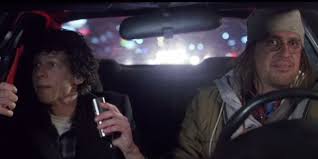
Movie dialogue: “THE END OF THE TOUR”

LIPSKY:  What are you doing here [Minnesota]? I mean, why aren’t you in New York?

DAVID:  Every time I go to New York, I get caught up in this – there’s this enormous hiss of egos at various stages of inflation and deflation. It’s me-me-me.

Screenplay by Donald Margulies
Directed by James Ponsoldt
Based on “Although Of Course You End Up Becoming Yourself: A Road Trip With David Foster Wallace” by David Lipsky

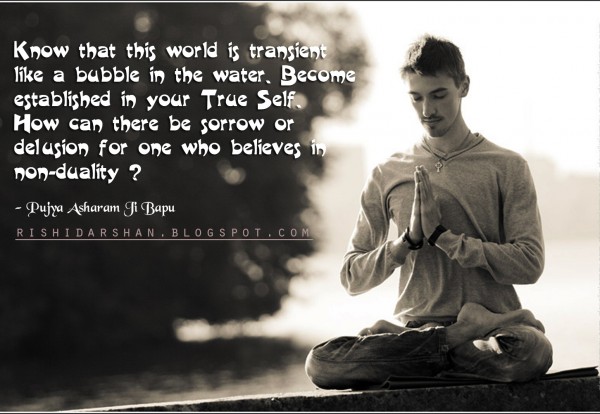
Science and Nonduality (SAND)

Science and Nonduality (SAND) aims at fostering a new relationship to spirituality, free from religious dogma, based on timeless wisdom traditions, informed by cutting-edge science, and grounded in direct experience.

Perspective and purpose

With the Scientific Revolution, empirical discoveries began to undermine religious doctrine, and tension grew between those who sought truth through rational inquiry based on observation and those who accepted the authority of various religious dogmas. While the liberation of science from religion resulted in tremendous technological advances, it also led to the fragmentation of knowledge and to a science no longer engaged with the big questions of what it means to be human, to be conscious, and to seek meaning and purpose.

If our civilization is to be saved from its own excesses, it is urgent to answer the longing of those with a deep spiritual intuition who cannot find their way through a religious world so alienated from the contemporary mind. It is vital to give birth to spiritual paths which are 100% compatible with a modern view of the world.

SAND honors and nurtures the exploration and experience of nonduality as a pathway to greater wisdom and wellbeing in the context of the unique challenges of the 21st century, and seeks to:

  • Heal the schism between science and spirituality while forging a new understanding of what it means to be human – inspired by the mystics and grounded in modern science.
  • Create a safe and authentic container for exploring, experiencing and dialoguing about the interconnectedness of all aspects of life.
  • Develop and share resources to facilitate the integration of this experience into daily life.
  • Celebrate the mystery of life and the love that emanates from it!

SAND is inspired to develop a vibrant community of individuals who share this vision, believing the time is right for the fragmentation of knowledge that has occurred over the last four hundred years to give way to a new integrative paradigm in which science and spirituality reenter into meaningful dialogue – bridging an empirically responsible and non-dogmatic spirituality with a humanistic science willing to consider questions of context, perception, meaning and purpose.

SAND provides for this reintegration by creating a forum for deep and respectful dialogue across disciplines – with conferences, media, online community and local gatherings. 

Nonduality Across the Disciplines

Nonduality has as many facets as there are human endeavors. Mystics describe the non-dual experience in many ways, as loving, expansive, blissful and unitive, lacking any sense of separation. More than just a feeling, the experience conveys deep and liberating insights into the truth of life and death, self and world. Yet life continues to happen, things change and turn, and each turning is unique. Viewing life turns through the lens of these insights creates a fuller, freer, happier life – the beginning of awakening.

Mystics and sages are not the only ones to assert and describe nonduality. Philosophers speak of reality as unencumbered by the dualistic oppositions we so often get lost in; a reality lacking such distinctions as mind/matter, subject/object, reality/appearance, self/other, substance/attribute, essentialism/nihilism, past/future, here/there, true/false, good/evil – all binary pairs that cause fracturing, and suffering. Scientists, after having successfully used analytic reductionism (“taking things apart”) as a powerful tool for centuries, are now converging with the nondual view, seeing the whole as more than just the sum of its parts. Cosmologists seek a first cause to the universe. Mathematicians describe their pursuit of truth and beauty as a practice for communion with the Divine. Physicists look for the ultimate constituents of matter. Neuroscientists attempt to correlate physiological observables with reported mystical experiences and psychic phenomena. Transpersonal psychologists investigate these effects on mental health. Deep ecologists explore the potential benefits of nondual perspectives on sustainability and global health.

World religions teach nonduality in their esoteric branches, including Jewish Kabbalah, Islamic Sufism, Christian Mysticism, Hindu Advaita-Vedanta, Buddhist Shentong, Madhyamaka or Zen, and Taoism. Many indigenous and shamanistic teachings are also nondual in essence. Aboriginal and modern cultures alike explore the realms of psyche – from separate ego-bound mind to transpersonal realms to nonduality – using methods including meditation, altered breathing, music, dancing, drumming and medicinal plants or substances.

The arts celebrate and cultivate the experience of nonduality. From painting to filmmaking, music to typography, sculpture to found-object art, horticulture to cooking, poetry to digital media, ballet to Tai Chi, literature to architecture – nonduality is muse, subject and symbol.

We hold the space for further exploration by bringing individuals from diverse backgrounds together to deepen the experience of various modes of nondual expression, contributing to the overall health of the global community.

The SAND gathering is a celebration of the core truth of existence – that in our distinct and individualistic arisings and turnings, we are truly not limited, bound, or separate.

Website at:  https://www.scienceandnonduality.com/

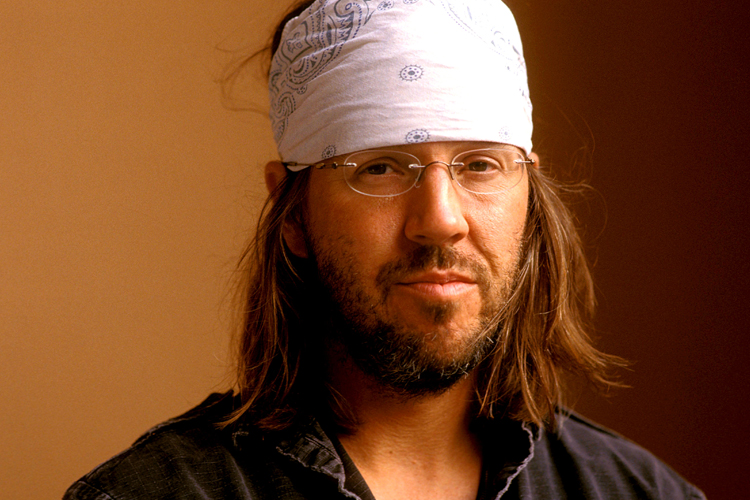
Writer: David Foster Wallace

David Foster Wallace
world copyright Giovanni Giovannetti/effigie

“Well, I think being shy basically means being self-absorbed to the extent that it makes it difficult to be around other people.”

–David Foster Wallace via Although Of Course You End Up Becoming Yourself: A Road Trip with David Foster Wallace by David Lipsky

David Foster Wallace (February 21, 1962 – September 12, 2008) was an American novelist, short story writer, and essayist, as well as a professor of English and creative writing. Wikipedia

“Sweet Darkness” by David Whyte

“SWEET DARKNESS”

by David Whyte


When your eyes are tired
the world is tired also.

When your vision has gone,
no part of the world can find you.

Time to go into the dark
where the night has eyes
to recognize its own.

There you can be sure
you are not beyond love.

The dark will be your home
tonight.

The night will give you a horizon
further than you can see.

You must learn one thing.
The world was made to be free in.

Give up all the other worlds
except the one to which you belong.

Sometimes it takes darkness and the sweet
confinement of your aloneness
to learn

anything or anyone
that does not bring you alive

is too small for you.

David Whyte (born November 2, 1955) is an English poet of Irish extraction. He is quoted as saying that all of his poetry and philosophy is based on “the conversational nature of reality”. Wikipedia

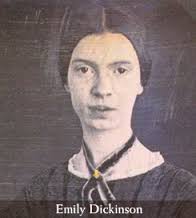
Poem by Emily Dickinson

I’m Nobody! Who are you?

Emily Dickinson, 18301886

I’m Nobody! Who are you?
Are you – Nobody – too?
Then there’s a pair of us!
Don’t tell! they’d advertise – you know!

How dreary – to be – Somebody!
How public – like a Frog –  
To tell one’s name – the livelong June –  
To an admiring Bog!

Emily Elizabeth Dickinson (December 10, 1830 – May 15, 1886) was an American poet. Dickinson was born in Amherst, Massachusetts. Although part of a prominent family with strong ties to its community, Dickinson lived much of her life in reclusive isolation. Wikipedia