Government: Federalist Papers No. 68

AlexanderHamilton.jpg

All these advantages will happily combine in the plan devised by the convention; which is, that the people of each State shall choose a number of persons as electors, equal to the number of senators and representatives of such State in the national government, who shall assemble within the State, and vote for some fit person as President. Their votes, thus given, are to be transmitted to the seat of the national government, and the person who may happen to have a majority of the whole number of votes will be the President. But as a majority of the votes might not always happen to centre in one man [sic], and as it might be unsafe to permit less than a majority to be conclusive, it is provided that, in such a contingency, the House of Representatives shall select out of the candidates who shall have the five highest number of votes, the man [sic] who in their opinion may be best qualified for the office.
–The Federalist Papers, by Alexander Hamilton (as played by Lin-Manuel Miranda in the musical Hamilton)

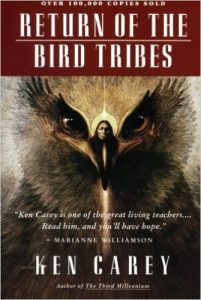
Book recommendations: Two by Ken Carey

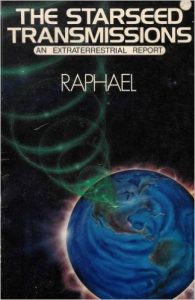
starseedtransmissions

The Starseed Transmissions: An Extraterrestrial Report

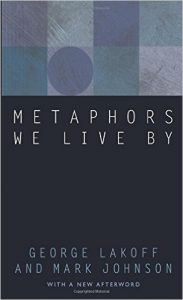
Book recommendation: “Metaphors We Live By”

metaphors

The now-classic Metaphors We Live By changed our understanding of metaphor and its role in language and the mind. Metaphor, the authors explain, is a fundamental mechanism of mind, one that allows us to use what we know about our physical and social experience to provide understanding of countless other subjects. Because such metaphors structure our most basic understandings of our experience, they are “metaphors we live by”—metaphors that can shape our perceptions and actions without our ever noticing them.

In this updated edition of Lakoff and Johnson’s influential book, the authors supply an afterword surveying how their theory of metaphor has developed within the cognitive sciences to become central to the contemporary understanding of how we think and how we express our thoughts in language.

(Amazon.com.  Recommended by Hanz Bolen, H.W., M.)

Sunday Night Translation Group: December 11

Translation is a 5-step process using syllogistic reasoning to transform man and the universe back into Being. Being is the perfect, essential nature of all, and through the process of Translation, reality is uncovered and thus revealed. Through word tracking, getting to the essence of the words we use to express our current view of reality, we are uncovering essence, which is the only true reality.

Sense testimony:

Diabetes is caused by a pancreas overworked to exhaustion.

Conclusions:

  1.  Truth is the commonwealth of predigested, inexhaustible supply; all being useful to all; all relating to all; never overworked, waste-free.
  2. I am one with life truth beingness. Life is infinite cannot be exhausted.
  3. The Universal Truth, Pristine Being is the I Am I, that is whole, sound flow of order and harmony.
  4. Truth is One Self Evident Charge Bearing Accomplishing Digesting all with Sound Harmonious Flow.
  5. To come.

Sunday Night Translation Group: December 4

Translation is a 5-step process using syllogistic reasoning to transform man and the universe back into Being. Being is the perfect, essential nature of all, and through the process of Translation, reality is uncovered and thus revealed. Through word tracking, getting to the essence of the words we use to express our current view of reality, we are uncovering essence, which is the only true reality.

Sense testimony:

The emotional pre-programmed anxiety/obsession of people will persuade, or seduce them away from their innate self.

Conclusions:

1)  Truth the all power energy is the one thinker; the all embracing oneness of Love’s Sweet Pleasure!
2)  The Truth possesses, leads, I We Thou spontaneously, fluently, pleasingly and abundantly as the Universal Integrity Trust that is all there is.
3)  Truth is one director, guide, seducer common to all, inhabiting all, carrying all, possessing all; sweet, gentle, pleasing, soft, pleased with Itself, obsessed with Itself.
4)  To come.

Jessye Norman – Les Chemins de l’amour (Poulenc)

Les chemins de l’amour

par Poulenc (1940)

Les chemins qui vont à la mer
Ont gardé de notre passage,
Des fleurs effeuillées
Et l’écho sous leurs arbres
De nos deux rires clairs.
Hélas! des jours de bonheur,
Radieuses joies envolées,
Je vais sans retrouver traces
Dans mon cœur.

Chemins de mon amour,
Je vous cherche toujours,
Chemins perdus, vous n’êtes plus
Et vos échos sont sourds.
Chemins du désespoir,
Chemins du souvenir,
Chemins du premier jour,
Divins chemins d’amour.

Si je dois l’oublier un jour,
La vie effaçant toute chose,
Je veut, dans mon cœur, qu’un souvenir repose,
Plus fort que l’autre amour.
Le souvenir du chemin,
Où tremblante et toute éperdue,
Un jour j’ai senti sur moi
Brûler tes mains.


The pathways of love

The paths that lead to the sea
have kept, of our passing-by,
flowers with fallen petals
and the echo, beneath their trees,
of both our bright laughters.
Alas! of the days of happiness,
radiant joys now flown,
I wander without finding their trace again
in my heart.

Paths of my love,
I still seek you,
lost paths, you are no more
and your echos are hollow.
Paths of despair,
paths of memory,
paths of the first day,
divine paths of love.

If one day I have to forget him,
life effacing everything,
I wish, in my heart, that one memory should remain,
stronger than the other love.
The memory of the path,
where trembling and utterly bewildered
one day, upon me, I felt
your hands burning.

© translated by Christopher Goldsack