
TDC • May 19, 2011 During his speech about the uprisings across the arab world, President Obama took a moment to acknowledge the heroic act of self-immolation by Mohamed Bouazizi that sparked the peaceful revolution in Tunisia and the uprisings across the rest of the region.
Right and Left

2 days ago (democritikos.medium.com)
Do these categories still matter?
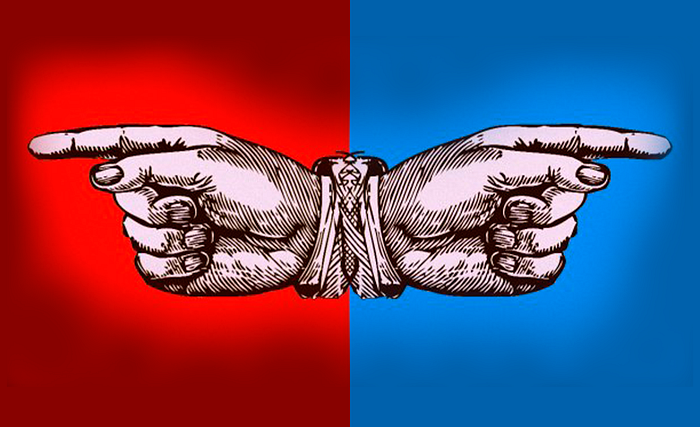
At some point, a question often arises in political science classrooms, conversation between political enthusiasts, journalistic gatherings and family reunions: Does it make sense to talk about left, right, or even centre today?
Accepting the challenge of giving my own interpretation, based on political history, and taking the bull by the horns, I can say that this question has answers, convoluted and complex, but it is not unanswerable, as is often claimed in order to try to put the matter to rest.
Initially left and right were categories designating a literal place, a position: during the French Revolution, the midwife of modern politics, those on the left of the king were those in favour of extending citizenship rights to the common people or third estate, which included everything from rich non-aristocrats to farmers. In other words, 80 to 90% of France. That was at least the theory.
To the right of the king sat the defenders of the privileges of the aristocratic and estamental society, the prevalence of the king as the exclusive sovereign (or with shared but still prevalent sovereignty), and the political and social influence of the Church.

Of course, this origin shows how arbitrary these concepts are, for if the French deputies had sat differently, the names would have been switched around. There is nothing intrinsic, essential…right?
It’s true that a culturalist look reveals some references that could be interpreted as related to the moral value given to the terms left and right: for example, in the Christian tradition, someone is often referred to as being “at the right hand of God”, in positive terms, while the sinister (sinistra = left, in latin) is regarded as negative. Being left-handed has been frowned upon for centuries. In Spanish being “left-handed” with someone or something is linked with weakness, while “getting right” or “doing something right-handed” implies order or correctness. In fact, in English the term right coincides with the meaning of correct. Numerous right-wing political parties have taken advantage of these fortunate coincidences.
During the French Revolution, there was the far left, such as the most radicalized Jacobins (La Montagne, the Hebertists, etc.), led by Robespierre or Saint-Just. There was the far right, like the staunchest supporters of absolutism and the divine right of kings. And there was the centre, the Plain, the moderates who defended a mixed system of shared power, a kind of constitutional monarchy, as did some of the Girondins and personalities such as Madame de Staël. These were the initial “winners” of the Revolution, for the king was not deposed until 1793, and only then was the first French Republic created.

But the left of the time also won, (a largely liberal left, and not socialist; and a republican liberalism, concerned with enlightening citizenship, with public schools, with building states, not dissolving them into nothingness as some so-called classical liberal sor libertarians claim today) because a Constitution was adopted, France was declared a nation (not just a kingdom) and sovereignty was placed in the hands of the people.
Subjects became citizens, and the elimination of all privilege based on birth was promoted. Economic restrictions were also removed and the road to capitalism was paved. Blue blood was no longer to imply a person’s success and social advancement. From this inheritance comes nationalism, which although it may sound strange today, was initially linked to progress and to the left of the time, as it defended that sovereignty was not royal, but national/popular, and that people were not subjects of the Crown, but citizens of the Nation. The Cadiz Constitution in 1812 in Spain, inherited these values and became one of the most advanced in the world, as well as the Trienio Liberal of 1820–1823, which I studied attentively in previous blog pieces . (in Spanish). The invasion of a coalition of absolutist powers destroyed the liberal government and reinstated Fernando VII.
Exhibition: Spain’s Trienio liberal (1820-1823)
Edit description
Trienio Liberal (Liberal Triennium) (1820-1823)
Trienio Liberal (1820-1823)
That said, let us look at the present: hundreds of years have passed since the Revolution. In that time, what is understood by left and right has adapted, there have been thousands of changes and replacements, and above all — in my opinion — two key meanings that have altered the old denominations: on the one hand, the original left, which was liberal, built a market model that attacked the old guild and estates system of the Ancien Régime. The Carlists and the Malcontents are a good example of this in the case of Spain.
However, the illiberal right wing ended up taking over the market and national sovereignty, which definitively defeated the model of the Ancien Régime and gave way to liberal, constitutional and capitalist states. From the shortcomings and difficulties of this model, different ideologies emerged and grew, such as socialism, anarchism and syndicalism.

Marxism, which followed socialism, gave impetus to the latter in many countries and claimed to be the real left, the one that was now with a people whom the liberal bourgeoisie had left marginalised, becoming in their eyes a new aristocracy that replaced that of the Ancien Régime and prevented the democratisation of nation-states. They were not without reason, because the increasingly conservative liberals refused to extend the vote out of a fear — logical at the time — of the demagogic populism of the overwhelmingly illiterate masses, who tended to take revenge on the elites. Elites that often not only squeezed but also suffocated.
In this context, socialism and trade unionism were revived with great force, and conservatism and liberalism, historical rivals (in the 19th century there was always a Liberal and a Conservative Party in each country), came closer together in the face of the “red menace”. This led both liberals and conservatives towards parties and philosophies that were close to each other, always with their nuances, because in truth the triumph of liberalism and its national-constitutional ideas was of such magnitude that it can be said that it died of success, by convincing others of its ideas, especially because of the nationalist and economic candy , so attractive then and now.
Thus, by the end of the 19th and the beginning of the 20th century, it could be said that the right had regrouped in a new conservative-liberal version, and the left, even with its more “centrist” exceptions, was seduced by the powerful social discourse of socialists and trade unionists. At its extreme, it was already embracing anti-establishment options such as anarchism and communism. Revolution was emblematic of the leftist and socialist movementst, despite the fact that historically it was the liberals who were the first modern revolutionaries. But, in the eyes of the new left, they were all sustainers of the evil of evils: capitalism.

All this means that in a way the original right took over the ideas of the original left, and then the new socialist left condemned both liberalism and conservatism, because for socialists the key struggle was that of capitalism-proletarian revolution. They made a total dichotomy : either you defend the workers or you are with the capitalist ruling class.
But then came, after the nightmarish 20th century and the totalitarianisms, a gigantic consensus which meant a new twist for the left-right divide: socialists and many communists renounced revolutions and the smoking ruins of”popular democracies” (dictatorships in the name of the people) , accepted representative democracy and modifying market societies from within; conservatives accepted the progressive secularisation of societies, the liberalisation of customs and the need for reforms; in turn, liberals accepted that a democracy collapses without a middle class and without some kind of redistribution of wealth: hence the consensus of welfare states. Keynes, for example, was not a socialist, he was more of a social-liberal or social-democrat.
Was John Maynard Keynes a liberal?
People should be free to choose. It was their freedom not to choose that troubled him | Schools brief

An economist born out of the bloody price that two World Wars had exacted, and someone who saw how the horror of war had shattered economic and political orthodoxies: capitalist states intervening in their economies to support the war effort; communist states turning to the market or nationalism, and allying with their theoretical enemies to defeat fascism; colonial powers unravelling; women working in jobs previously off-limits to them, and so on. World War II truly changed the world. Nothing was left untouched, not even ideologies.
This new social liberalism (and the lesser known ordoliberalism), combined with a faith in globalisation as opposed to nationalism (which had brought misery) was the product of the renunciation of the maxims of different ideologies. For more than a few analysts, the traditional right and left had died. Or at least, it was one of their deaths.
The battleground between left and right became more about identities (feminism, LGBT+ rights, racial minorities, etc.) than about economics, sovereignty or revolutions. Therefore, we could say that the left and the right, simplistically speaking, merged on many of the issues. But these mixtures have led the discontented to reactivate new lefts and new rights that have other dividing lines (other cleavages, in political science). And that is the key. For example, the dividing line is obviously no longer whether absolutism yes or absolutism no, but the positions on globalisation, immigration, subsidies or the extension of certain civil rights. Different kinds of left-wing and right-wing populism as well as new waves of nationalism based on Carl Schmitt’s model of friend-enemy and on the idea of clash of civilizations have emerged from the economical crisis and social tensions.
How populist authoritarian nationalism threatens constitutionalism or: Why constitutional…
The problem with movements and parties spearheaded by “populist” leaders such as Putin, Erdoğan, Orbán, Kaczyński or…

Additionally, the debate now revolves around the position on what kind of national identity is projected and promoted: civic and secular nationalism or identity essentialism. And there, behind the proposals that we see today, if one pulls the historical thread, one can still distinguish the ideological roots, the traditions of thought to which they adhere. It is not enough to say “right” and “left”, you have to be precise. Because obviously, for the rightists of the 19th century, today’s rightists would be leftists, and for the leftists of the 19th century, today’s leftists would be rightists. Let’s remember the Declaration of the Rights of Man, issued a month after the fall of the Bastille, clearly stated “Property is an inviolable and sacred right”, but also “Law is the expression of the general will”. Nowadays, many leftists criticize the first satatement, while many conservatives criticize the latter.
Today people continue to claim the labels of left, right or centre, and therefore they remain relevant. They cannot simply be thrown away, in an effort to mix everything or cut o ut any philosophical debate. Like so many social categories, if they exist it is because people still believe in them, they still have something to tell about ourselves, even if it is something about our prejudices and common places. However, we must not abandon ourselves to simplification: what is it to be a liberal? And a socialist? And a conservative? And an environmentalist? And a nationalist?
Geography also alters these assumptions, since the American left claims to be liberal, while in Europe the liberal tends to be identified with the right… at the same time, the European right is a thousand times more social than the American right, although they may later coincide on some migratory or traditional moral issues.
The 1970s and 1980s marked a new turning point when market fundamentalism triumphed, initially rejected by both the left and the conservative right, and later taken up by the latter in the face of the certain stagnation of Keynesianism. But from there new divides emerged, today relatively clear: you know that it is very difficult for a left-wing party or voter to promote the privatisation of schools, while if you hear that proposal without knowing the political colour you are going to tend to think it comes from the right. 100% of the time? No, but I dare say 80% of the time.
But if we make a reality check to daily policies, we will find left-wing parties supporting that a region of the same country gets control of tax collection while they criticize tax havens (Spain), or a conservative party recently passing a law in favor of gay marriage (Greece). Reality never stops showing how difficult labeling is.
Catalonia’s frustrated dream: to tax and spend like Basques – France 24
Catalonia’s frustrated dream: to tax and spend like Basques
– France 24 Catalonia’s frustrated dream: to tax and spend like Basqueswww.france24.com

Because of the legacy of liberalism, on the one hand, and socialism, on the other, there are options that both believe in progress but along different paths: some believe that material progress will come from competition in an open and deregulated market; and others believe that the state should lead and even play the leading role in growth. Many defend a position that sees both the market and the state as indispensable and complementary agents.
Add to this the nationalist debate, which is a question of how far one’s space and one’s power go, i.e. a question of identity and sovereignty. And you can find nationalists on the right and on the left. It is more complicated to find capitalist libertarians — or anarchists — who are also nationalists.
In conclusion: there are many rights and many lefts, they have changed over time and it is not possible to divide them into two perfectly compartmentalized blocs. The political arc is profoundly mixed. But there are historical threads — and traditions of thought — that can be traced to understand what remains today. The origin of ideas is important, it brings us closer to the why of things.
It is for this, as for so many other reasons, that history is fundamental to understanding politics. Never trust those who talk a lot about politics but don’t know history: they are like scientists who dismiss the work of those who came before them, while making everyone excited with their great projects. But… What great projects are based on nothing?

Written by Democrítikos
Espacio de análisis político, histórico y cultural. Soy David, un periodista interesado en informar, formar y entretener. Pensamiento crítico y ecuánime.
What It’s Like to Be a Sociopath

Talk Feb. 23, 2024 (NYTimes.com)
By David Marchese Photo Illustration by Bráulio Amado
Sociopaths are modern-day boogeymen, and the word “sociopath” is casually tossed around to describe the worst, most amoral among us. But they are not boogeymen; they are real people and, according to Patric Gagne, widely misunderstood. Gagne wrote “Sociopath,” her buzzy forthcoming memoir, to try to correct some of those misunderstandings and provide a fuller picture of sociopathy, which is now more frequently referred to as antisocial personality disorder. As a child, Gagne found herself compelled toward violent outbursts in an effort to try to compensate for the emotional apathy that was her default. As she got older, those compulsive behaviors turned into criminal ones like trespassing and theft. Eventually, she discovered that there was a name — that dreaded word — that could be used to describe and explain her experiences of remorselessness, criminality and lack of empathy. The desire to destigmatize her experience and also to help others who may share it (Gagne previously worked as a therapist to those with the disorder and has also written about sociopathy) put Gagne on a path that led to “Sociopath.” “I’m not trying to say, ‘Sometimes we do bad things, but we’re really sweet on the inside,’” says Gagne, who is 48. “I’m saying there is more to this personality type.”about:blank
When I hear the word “sociopath,” I think of an antisocial, uncaring person who is interested only in satisfying his or her own desires. What’s a clearer picture? Sociopathy is a perilous mental disorder; the traits1
1
Traits may include lack of remorse, deceitfulness and a disregard for the feelings of others as well as right and wrong.associated with sociopathy aren’t great. But that only tells part of the story. The part that’s missing is you can be a sociopath and have a healthy relationship. You can be a sociopath and be educated. That’s a very uncomfortable reality for some people. People want to believe that all sociopaths are monsters and that all monsters are easy to spot.about:blank
In the book, you write about stabbing a classmate with a pencil when you were a kid, and then as you got older trespassing2
2
Specifically, breaking into people’s homes.and stealing cars. You don’t succumb to those sociopathic compulsions anymore. How did you learn to control these urges? As a kid, I didn’t understand why I was acting out the way that I was. All I knew was I felt this pressure, and something in my brain was telling me, Punch that kid, and you’ll feel better. As I got older I understood, OK, there’s a name for this, there is a whole group of people who share this diagnosis. Once I understood that I wasn’t out in space untethered and going crazy, I was on the path to understanding that when I had those feelings of “go steal a car,” I could go, Yes, I could do that, but now I understand what’s going on. That understanding helped break the cycle — or at least redirect the compulsion toward something less destructive.about:blank
What does that redirecting look like in practice? Every once in a while, I will have an urge to do something destructive just because I can, and my redirect is, Do you want this destructive behavior? Or do you want to continue to maintain this life that you have, which requires that you not do those things? I have to have that conversation with myself.about:blank
What’s a recent sociopathic impulse that you had? This is a very vanilla example. When I go to the grocery store and I come home, if anything that I’ve purchased has gone bad, I’ll make a mental note: I’m stealing this next time.about:blank
You write about your difficulty with understanding other people’s emotions, feeling apathy and lacking empathy. But you also write about experiencing love. Why are you innately able to feel love but not, say, empathy? The way I experience love seems to be very different from the so-called neurotypical experience. My experience of love seems less emotional. If I had to explain what love feels like to me, I would say symbiotic. So, a relationship that’s beneficial to both people involved. Not transactional, not possessive, not ego-driven. Mutual homeostasis. It’s not that I’m unable to access emotions or empathy. It’s that my experience of those emotions is different.about:blank
When you write about becoming a mom,3
3
Gagne has two school-age children.you say that profound feelings of love toward your child were non-intrinsic, and you had to work to experience them. Can you tell me about that work? As a woman — forget my personality type — you’re inundated with all these images: Your child is born, it’s incredible. I did not experience that. I didn’t have that immediate baby is born, I’m overwhelmed with love. It was, I don’t know this person. This person is very loud! That connection just isn’t there. It’s not innate. But over time, you can build it. Much like when I first met David:4
4
Gagne’s husband, whom she has known since they were teenagers.I knew right away that this person was going to be important in my life, but I didn’t have those sweeping romantic, flowery emotions affiliated with that experience. That was the same when I first met my son. Now I just think he’s a great kid!about:blank
Are you able to describe how you’ve built a sense of morality? Just because I don’t care about someone else’s pain, so to speak, doesn’t mean I want to cause more of it. I enjoy living in this society. I understand that there are rules. I choose to follow those rules because I understand the benefits of this world, this house where I get to live, this relationship I get to have. That is different from people who follow the rules because they have to, they should, they want to be a good person. None of those apply to me. I want to live in a world where things function properly. If I create messes, my life will become messy. I think people are uncomfortable with the idea of, You don’t really care? What does it matter? What does it matter why I choose to help the woman cross the street? Why does it matter why I choose to pick up a wallet and hand it to the person in as opposed to keeping it? It’s not because I’m a good person. It’s not because I would feel shame or guilt. But why does that matter?about:blank
What advice do you have for neurotypical people about how best to interact with someone who identifies as sociopathic? I’m not sure neurotypicals need any, because I have been identifying as a sociopath for years now, and my experience with people who don’t know that has been positive. I have yet to encounter anybody who, when I disclose my diagnosis, acts afraid or upset. I think, inherently, neurotypicals are fascinated by sociopathy because it’s a relatable disorder. Everybody has that darkness in them. Everybody has those thoughts that they shoo away because of guilt. If more conversations between neurotypical and so-called neurodivergents were to occur, it would benefit both. It would benefit the sociopathic person because that acceptance lets 80 percent of the air out of the balloon, but it would help the neurotypicals, like, Oh, I can share things with this person that maybe I couldn’t share with other people. I get more secrets from strangers after telling them my diagnosis; you wouldn’t believe the things that people have told me because they feel safe.about:blank
What secrets do they tell you? Oh, man. I was sitting across from a man at a dinner party — this was like two years ago — and my diagnosis came up, and 30 seconds afterward he said, “You know, I have thoughts of killing my wife a lot.” Not to normalize that, but I was like, Tell me about that. And he goes: “I’ve really thought about it. I’ve reached out to people about hiring somebody to kill her.”about:blank
So people just assume that you’re a sympathetic audience? Yeah, because these are things you’re not supposed to think about. So to be able to talk to somebody — you don’t have to worry that I’m going to start clutching my pearls.about:blank
You were a practicing therapist, and we think of therapists as highly empathic, invested in the emotions and stories of their clients. So how did you relate to your clients? I didn’t relate to them. Now, that is not to say I didn’t care about my patients. The easy answer is, of course I care about you. I wouldn’t continue to see you if I didn’t, but why do you need that reassurance from me? My job is to help you understand what’s going on with you. My job is to help you take your emotions, separate them out, explore your motivation. That’s my job. I think that I was a good therapist because I was able to parse those things out unemotionally. My gift to my therapy patients was that I was able to lend them sociopathy: Why do you care? What does it matter? What do you need from that? That, I felt, helped them achieve things that maybe a nonsociopathic therapist couldn’t have offered.about:blank
In the book, you describe things like mirroring people back to themselves or your conscious and intentional manipulation in the moment. Is that happening now? Listen, everyone has a front-facing persona. Most people use that persona as a preference: a desire to be liked, a fear of judgment, wanting somebody to be friends with them. But sociopaths use it out of necessity, and that’s a really important distinction. My decision to mask5
5
By which Gagne means adopting prosocial mannerisms.is not because I have some dark ulterior motive. It’s because you guys are interesting to me. Neurotypical emotions are so colorful and complex. In order for me to engage with you, you have to feel comfortable with me. In order for you to feel comfortable with me, I have to mask. I find that people are unnerved by me when I’m not masking. Because otherwise I’m quiet. I ask invasive questions. I stare. My affect is low. The bottom line is that I want you to feel comfortable, so I engage. I smile. I mirror. It’s not nefarious; it’s necessary. The issue here is motivation. I don’t mask because I’m secretly trying to kill you. I mask because I want you to feel comfortable because I find you interesting.about:blank

What’s an invasive question you want to ask me? Why are you interested in me? Why are you interested in sociopathy? Talk to me about your darkness. I’m not expecting answers.about:blank
You want to get into it? Oh, yes. I find neurotypical people absolutely delightful!about:blank
I’ll give you two reasons I’m interested: I was sent the book, and I started reading, and the opening involved you as a second grader stabbing a kid in the head with a pencil. I thought, Holy moly, readers will be interested in this! So there was a mercenary quality to my own interest. Then also, there are times when I’ve wondered if the skills that I’ve learned from doing my job over the years are basically just forms of interpersonal manipulation, and I was curious to talk to you as a roundabout way of exploring that question for myself. Where does that question reach you?about:blank
What do you mean? Do you manipulate people in order to execute your job?about:blank
I think there is a degree of manipulation, but what do we really mean by manipulation? Is manipulation by definition negative, or does manipulation just mean intentionally creating a certain interpersonal context? That sounds like a justification to me, which means you’re sidestepping shame or sidestepping guilt.about:blank
I disagree. That would be like saying therapists are always guilty of “manipulation.” Just so we’re clear, when I said justification, I wasn’t trying to say that what you were doing was bad. You’re talking to a sociopath! I don’t think anything that you’re doing is bad. Yes, you are manipulating people to a certain extent — to your point — in the way that I might manipulate somebody in therapy, but I would never feel the need to justify it, and your justification came so quickly. That’s why I was like, Hey, what’s happening that you felt the need to defend your answer?about:blank
We don’t usually say we have to justify a positive thing. That’s probably why I reacted that way. What else? How much of that dark side of sociopathy can you relate to? And if you don’t have an easy answer for that, was it comforting to read about somebody who was open with their experience of being fully immersed in their darkest impulses and a lot of times carrying them out?about:blank
Well, I would say that one question that the book raised for me was the extent to which a lot of behaviors that people do could be considered sociopathic, and we just don’t understand them that way. Plenty of us do things that we know are bad because the transgressions feel good. It feels good. Why? I think it feels good because it feels free. To do something bad, it’s like, I don’t give a [expletive]. The consequences — be it internal guilt or getting thrown in jail — happen after. In this moment, I’m going to do this because it feels [expletive] great to just not care. That is what the sociopath experience is almost all the time. One piece of advice I would give to anyone who sees themselves in my description is to find an external philosophy that works for you. I liked karma. It seemed clean. It seemed organized. Find that philosophy for yourself, because you’re not going to get to rely on internal checks and balances.about:blank
I realize I didn’t quite understand what you meant when you said that you can experience empathy, just differently. What is empathy to you? Eventually as I got older, what I started to realize is that if I can connect to something that I can internalize naturally, I use that as a bridge to broaden my empathic response. For example, I’ve found frequently that a lot of people who exhibit sociopathic symptoms have strong feelings for pets. That’s a great bridge: You would feel upset if something happened to this animal that you care about. Now let’s extend that feeling to someone close to you that you have a strong relationship with.about:blank
But when you say “extend that feeling,” is it cognitive understanding that you’re describing or an emotional response? At first it is cognitive. Then, over time, that does grow into the emotion. It’s the understanding of it that leads to the feeling. I’m sure you’ve had a situation where someone is explaining something to you, and at first you’re like, I don’t care.about:blank
Multiple times a day! [Laughs.] Great. Now, imagine if that’s your first instinct, but you understand that you have to be like, Oh, yeah, I understand that I have to care. That is cognitive empathy. You’re not faking it, but you’re internalizing it. That’s your first take on something, and then maybe you get to know the situation better, or you find something about that situation that you can anchor to, and then the feeling kicks in.about:blank
Do you see your sociopathy as beneficial to you? I think my sociopathy is entirely beneficial to me. I see my friends struggling with guilt. On an almost daily basis I think, I’m glad I don’t have that. The psychological characteristics of sociopathy are not inherently bad. Lack of remorse and shame and guilt has been misappropriated to mean this horrible thing, but again, just because I don’t care about you doesn’t mean I want to cause you more pain. I like that I don’t have guilt because I’m making my decisions based on logic, based on truth, as opposed to ought or should. Now, there is a flip side. I don’t have those natural emotional connections to other people, but I’ve never had those. I don’t feel like I’m missing anything. Just because I love differently doesn’t mean my love doesn’t count.about:blank
Opening illustration: Source photograph by Kristia Knowles, via Simon & Schusterabout:blank
This interview has been edited and condensed for clarity from two conversations.
(Contributed by Michael Kelly, H.W.)
Awareness
By Heather Williams, H.W., M. (with permission)
February 13, 2024 (TheProsperos.org)
AWARENESS = the state of being aware; knowledge and understanding that something is happening or exists
QUESTION: Are you aware that you are awareness?

STORY: The person in this drawing points a finger at a mirror and says that the “object of awareness” is not awareness. WOW! That’s true! Physical things, like fingers, mirrors, books, tables, chairs, windows, etc., are objects that appear to be separate from us. And, it is typical for us all to identify, label, name and judge things as good/bad, like/dislike, beautiful/ugly, etc. However – the ability to be aware is not a thing! Awareness is Consciousness and Consciousness is the formless, timeless, dimensionless, changeless – Higher Mind part of us that is always with us. Consciousness is our innate Essential Eternal Self.
If you are interested in being more aware of your Higher Self – enjoy this exercise. Sit still for one minute and ask yourself:
- Who am I? (answer: Awareness)
- Where am I? (answer: on earth in a physical body)
- What is needed now? (answer: listen to your Heart).
Today with the rapid advance of technology and Artificial Intelligence it is vitally important for every human being to know that we are more than machines.
QUOTE
“The Being develops and matures by the development of presence and attention: the body is the medium of transformation.” ~ Red Hawk
“Being aware of being aware is the essence of meditation.” ~ Rupert Spira
“Awareness is the greatest agent for change.” ~ Eckhart Tolle
“Enlightened leadership is spiritual if we understand spirituality not as some kind of religious dogma or ideology but as the domain of awareness where we experience values like truth, goodness, beauty, love and compassion, and also intuition, creativity, insight and focused attention.” ~ Deepak Chopra
EXERCISE
STOP.
Sit quietly. Assume an erect posture.
Sense the breath. Sit calmly for one minute and repeat the Awareness Exercise: 1) Who am I? 2) Where am I? 3) What is needed now?
FEEL Awareness as an Energy flowing through you and your body and through everything around you.
Get your pen and paper and write words or draw lines expressing the FEELING of AWARENESS flowing through your body.
Move forward into your day more aware of your innate Essential Eternal Self – Being Awareness.
March 2024 Astrology Night at SoulFood Coffeehouse
Rick Levine • Streamed live on Mar 1, 2024 THE COSMIC PICTURE THROUGH A WIDE-ANGLE LENS with RICK LEVINE Recorded with live audience on March 1, 2024 at 6:30 pm in Redmond, WA. Join me for a deep dive into the meaning of these times, why so many things seem so out of control, and what the long-term view of humanity is. We explore the urgency of the USA’s Pluto Return, Saturn & Neptune joining up at the beginning of Aries, Uranus shifting into Gemini, the importance of the Lunar Nodes, and the potential of the current Chiron-Node conjunction. We make the connection between the current eclipse cycle (first eclipses with Pluto back in Aquarius), and the looming conjunction of expansive Jupiter with Uranus (the modern ruler of Aquarius). After an intermission, we return to do three attendees’ charts live to demonstrate the use and efficacy of astrology in real time. ASTROLOGY NIGHT is a live event held on the first Friday evening of every month at SoulFood Coffeehouse in Redmond, WA. The event is live streamed and archived for the public here on YouTube.
(Contributed by John Atwater, H.W.)
Salon Calvin March 22

Calvin Harris, H.W., M.
Event: Salon* Calvin evening
Date: Friday, March 22, 2024
Time: 4:00 pm to about 7 pm Pacific Time
Where: Over Zoom
I’m excited to give you notice of the second in the 2024 Salon Calvin presentations.
The Salon this time will be a film William Shakespeare’s Hamlet** followed by a conversation on the film. William Shakespeare published Hamlet in 1603. The Play is set in the Kingdom of Denmark. We the audience follow the thinking and actions of young Prince Hamlet as he grapples with grief, betrayal, and the pursuit of justice after the death of the King, his father. Its intricate plot, rich characterizations, and thematic depth contribute to its enduring popularity to this day. The story unfolds with a backdrop of political intrigue and family conflict, with Hamlet’s inner turmoil and philosophical reflections intensifying the depth of the play, while showcasing Shakespeare’s masterful exploration of the human psyche.
I can tell you that this salon will help you reclaim the appreciation of good Storytelling, by reimagining the past as you offer your ideas for your new and beautiful futures. Join us as we find coalition and harmony between the advancement of Online technology and the advancement of the human spirit.
Mark the Date in your Calendar
See you there!
Calvin
*Salon: A salon is a gathering of people with the aim “either to please or to educate”. Calvin’s Salons are in the tradition of the French literary and philosophical movements of the 17th and 18th centuries. An intimate gathering of diverse people hosted by a salonnière who moderates conversation in the pursuit of cognitive growth and artistic experience. Salon Calvin’s Updated method involves videos, movies, and books as cultural entertainment and insightful commentary and analysis for Salon participants to discuss, exchange ideas, and enjoy.
**For Prosperos Students know that the material being discussed is one of the recommended Books from Thanes High Watch Reading List.
Carl Jung on dreaming and awakening

Zelensky Challenges Putin To Settle Ukraine War On The Dance Floor
PublishedYesterday (TheOnion.com)
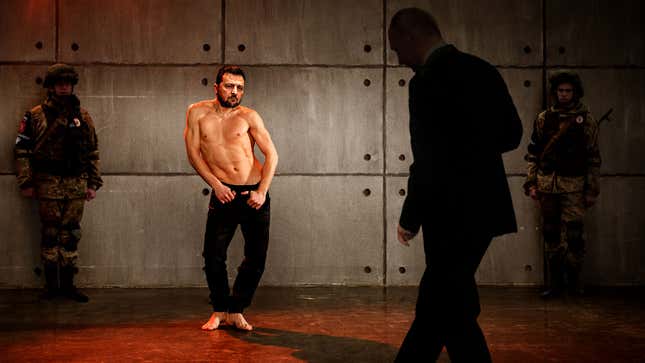
GENEVA—In an impassioned speech at a peace summit hosted in Switzerland, Ukrainian President Volodymyr Zelensky issued a striking challenge to his Russian counterpart Thursday, inviting Vladimir Putin to settle the war between their two nations on the dance floor. “After two years of fighting we have reached a stalemate, and so today I declare it is time to stop dropping the bombs and start dropping the beat,” said Zelensky, who, as drums and bass kicked in through the summit’s language-interpretation headphones, ripped off his shirt and began to pop, lock, and drop to raucous applause. “I say to Mr. Putin: If you want peace, if you want an end to this intractable conflict, then get your ass up off that dais, get down here on the floor, and get that booty clapping! Whoever wins will gain full control over all 230,000 square miles of Ukrainian territory. And five, six, seven, eight!” At press time, the dance battle had been suspended indefinitely after Putin sprayed a powerful nerve agent directly in Zelensky’s face, causing him to collapse to the ground and convulse uncontrollably.
Four New Books in Translation Test the Bounds of Reality
THE SHORTLIST
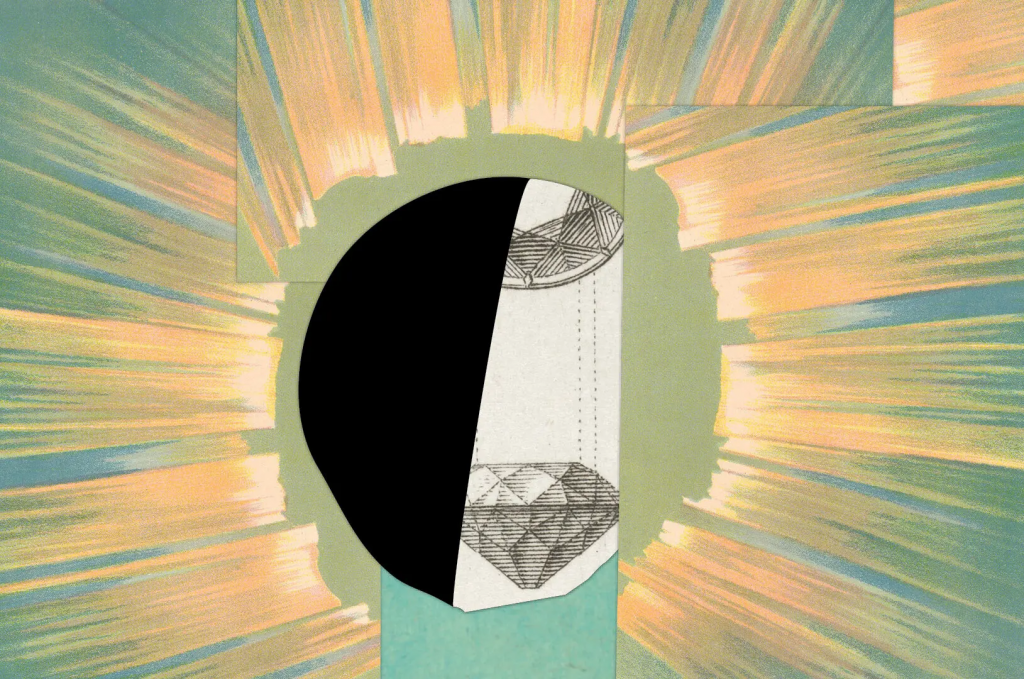
A roundup of international fiction from Congo, Sweden, Bolivia and India.
Credit…John Gall
By Anderson Tepper
Anderson Tepper is curator of international literature at City of Asylum in Pittsburgh.
- Feb. 18, 2024 (NYTimes.com)
Fiston Mwanza Mujila, the award-winning Congolese author of “Tram 83,” writes novels and poetry that move to an infectious, syncopated rhythm. His latest work, THE VILLAIN’S DANCE (Deep Vellum, 279 pp., paperback, $16.95), especially revels in this spirit. In 1990s Zaire, where Mobutu Sese Seko’s reign is on its last legs, survival is itself an elaborate hustle. The Kinshasa nightclubs are packed, the streets teeming with teenage runaways and rumors of insurrection. Just across the border, in an Angola racked by civil war, the diamond mines are a magnet for get-rich dreamers.
All the characters have their own dilemmas to work out: Sanza, who has fallen in with a glue-sniffing street gang; Molakisi, eager to reinvent himself in Angola; Franz, an Austrian writer who spends more time at the Mambo de la Fête than working on his “African” novel. The plots and vendettas zig and zag, eventually intersecting. Throughout, the voices of the children strike some of the book’s most compelling notes. “We had the experience of the street — glue, rivalries with opposing gangs, rain, tangles with soldiers — yet people always insisted on saddling us with the pompous, dreary label of child,” bemoans Sanza.
Mujila’s frenetic energy is captured in rapturous language by Roland Glasser, translating from the French. Recalling the gritty, exuberant novels of the South African Zakes Mda (“Ways of Dying”) and the Congolese Alain Mabanckou (“African Psycho”), Mujila has brought to life a feverish tale of Africa’s underclass, whose demands — like the author’s — are hard to resist. As one character remarks, “We want reality, the mines, the glue, the Villain’s Dance!”

If “The Villain’s Dance” is immersed in Congolese reality, Balsam Karam’s THE SINGULARITY (Feminist Press, 219 pp., paperback, $16.95) — though also concerned with the marginalized and ignored — hovers at a distance from its material.
In an unnamed coastal city, children congregate in sweltering alleyways and abandoned lots, far from the tourists who flock to the seaside cafes. The youths and their families are migrants from an embattled foreign land, unsure how to navigate this new world. Young women are disappearing — possibly abducted — including a girl simply called the Missing One. Her mother desperately looks for her everywhere, while her grandmother quietly keeps vigil: “From here she can see the movement of loss and doesn’t know what to do; she sees it all the time and fears it as she sits there watching over the alley.”
Karam — who is of Kurdish ancestry and moved to Sweden as a young child — has an eye for poignant shifts in perspectives. The story of a mother searching for her daughter runs parallel to that of a visitor, herself a former refugee and soon-to-be mother, wrestling with her own history of displacement. The two narratives refract and then come together in a poetic convergence. There is a haunting, hushed tone to the novel, neatly evoked by Saskia Vogel’s translation from the Swedish, that probes the disorienting effects of exile. As Karam writes of the bereft mother of the Missing One: “The inner distances are greater — between memory and memory and from experience to experience time no longer passes, and the woman does not know where she is or why.”

The Bolivian writer Liliana Colanzi’s debut story collection, YOU GLOW IN THE DARK (New Directions, 112 pp., paperback, $14.95), in a lively translation by Chris Andrews, is an eerie mix of the familiar and unreal. The stories take place in prehistoric caves and peasant villages, but also feature nuclear power plants, interstellar travel and drones.
Colanzi writes with a sense of menace about power clashes in a landscape that often resembles the Bolivian Altiplano. Her characters speak versions of Spanish and Aymara, and are preoccupied with threats both real and imagined (radiation, poison, the Devil). The title story, based on a radiological accident in Brazil in 1987, takes on an otherworldly quality in Colanzi’s hands. Local citizens, engulfed by “the glow of death, the phosphorescence of sin,” are left to ponder the existential meaning of this unnatural disaster.
In another story, “The Narrow Way,” teenage sisters dream of escaping their father’s religious cult; they’re held captive in a compound where “beyond the perimeter lies the jungle with its shadows, and beyond that, the city with its illusions.” An “obedience collar” keeps them from crossing a magnetic field that delivers increasingly powerful shocks. Will they ever experience freedom, and what will be its consequences?
Like other Latin American writers such as Samanta Schweblin, Fernanda Melchor and Mónica Ojeda, Colanzi is intent on blending genres (horror, cyberpunk, literary fiction). Her reality is a warped one, shifting between a violent past and frightening future, where the heat and toxic radiation — and the babble of inner voices — combine to create a hallucinatory vision.

The Kashmiri writer Hari Krishna Kaul’s stories, on the other hand, are firmly rooted in his contested homeland in the late 20th century. Kaul, who died in exile in 2009 at the age of 75, left an intricate body of work that amounts to sly, detailed portraits of domestic life set against the backdrop of religious and political tensions.
But even when Kaul’s tales focus on the mundane, fault lines open up. Several stories in his collection FOR NOW, IT IS NIGHT (Archipelago, 205 pp., paperback, $22) involve crushing bouts of loneliness and despair, often prompted by the isolation of curfews and avalanches. “For now, it is night. For now, it is dark. For now, it is cold. In this darkness and this cold, I am alone,” reflects a housebound character in the title story. In “Tomorrow — A Never-Ending Story,” things take a surreal turn as two boys repeat their grade-school class for decades, failing to age as the town around them transforms.
“For Now, It Is Night” is an enthralling — and welcome — reclamation of Kaul’s fiction by a team of four translators (including his niece, Kalpana Raina). Kaul’s work shimmers with questions of reality and illusion, home and exile. “Just like the stalled traffic which had begun to move,” thinks a Kashmiri adrift in Delhi in “A Moment of Madness,” “his stagnant life would be revitalized if he allowed himself to think about Kashmir again.” But, as Kaul reminds us, it’s never that easy. “A person may walk or take a flight,” the character later muses, “but can a destination ever be reached?”

Explore More in Books
Want to know about the best books to read and the latest news? Start here.
- James Baldwin wrote with the kind of clarity that was as comforting as it was chastising. His writing — pointed, critical, angry — is imbued with love. Here’s where to start with his works.
- After nationwide protests over racial inequality led publishers to promise they would reshape their overwhelmingly white industry, a survey showed they made little progress toward a more diverse publishing work force.
- Aaron Lansky spent a lifetime building the Yiddish Book Center, one of the country’s leading Jewish cultural institutions. He’s ready to hand over the reins.
- For three decades, the iconographer Mark Doox has explored anti-Blackness in America and in the church. That work has culminated in a book, “The N-Word of God.”
- Do you want to be a better reader? Here’s some helpful advice to show you how to get the most out of your literary endeavor.
- Each week, top authors and critics join the Book Review’s podcast to talk about the latest news in the literary world. Listen here.
(Contributed by Michael Kelly, H.W.)
Stumble
By Heather Williams, H.W., M. (with permission)
February 9, 2024 (TheProsperos.org)
STUMBLE = to make an error; blunder; to trip in walking; to move carelessly
QUESTION: Have you ever stumbled?

STORY: Everyone has stumbled. I’ll bet you stumbled at one time. Yes, I stumbled about six months ago. I was washing the outside windows when I stumbled accidentally and fell off of a little ladder. My ankle was twisted and it really hurt when I walked on it. Thankfully nothing was broken. I quieted my mind and listened to my heart – gently asking for guidance in how to tend to this unfortunate accident. It took two weeks for my ankle to fully heal and for me to walk without any pain. Yes, our life on this earth journey is full of potholes and cracks! We all stumble and fall now and then. Thankfully, today many people are learning to STOP, quiet the mind and listen to their heart and allow their True, Innate, Inner Self to heal their wounds. Remember that the first stage of SELF REMEMBERING is experienced when we place our attention in the NOW of the body and FEEL the Energy of remembering that our True Self is LOVE, Consciousness, Beingness, SOUL here NOW. Give it a try right now!
QUOTES
“It is by going down into the abyss that we recover the treasures of life. Where you stumble, there lies your treasure.” ~ Joseph Campbell
“First stage of Self Remembering is consciously knowing I am here now, in this body. Second stage is consciously being aware of my surroundings. Third stage is allowing Divine Energy to flow through me.” ~ Red Hawk
“All men die. You may say: ‘Is that encouraging?’ Surely yes, for when a man dies, his blunders, which are of the form, all die with him, but the things in him that are part of the life never die, although the form be broken.” ~ Annie Besant
EXERCISE
STOP.
Sit quietly.
Assume an erect posture. Sense the breath.
Sit calmly for one minute.
Listen to your heart and ask for guidance in remembering a time when you stumbled.
Get your pen and paper and write a few words or draw a few lines expressing how a stumble helped you to SELF REMEMBER and open up to the Energy of SOUL.
When ready, move forward into your day ALLOWING your Heart to guide you.