
The On Being Project Oct 19, 2020“ How to Be Alone” by Pádraig Ó Tuama is part of our “Poetry Films” series, which features animated interpretations of beloved poems from our archive. Check out the full series here: • Poetry Films . We know poetry to be a critical pillar of public life. It rises up when official language fails us. And it gives voice to what is human and what is true, how we connect and what questions we hold. Poetry has moved to the heart of what we offer, which is why we’re excited to have partnered with talented illustrators, animators, and directors to reimagine poetry in visual, dynamic ways. You can listen to and read this poem here: https://onbeing.org/poetry/how-to-be-… Illustration & Animation by Leo G Franchi (http://www.lacar.tv/) Sound by Chris Heagle Music by Gautum Srikishan STAY IN TOUCH Facebook: https://www.facebook.com/onbeing Instagram: https://www.instagram.com/onbeing/ Newsletter: https://onbeing.org/newsletter/ OUR PODCASTS On Being with Krista Tippett: https://onbeing.org/series/podcast/ Poetry Unbound: https://onbeing.org/series/poetry-unb…
Tag Archives: On Being
“Love is the best revenge”

An On Being Listening Party, with Krista and Padraig
The On Being Project Apr 17, 2023 We gathered the beautiful humans of On Being from all around the world to listen together to the final episode of our exhilarating 2023 podcast season – Krista’s conversation with Dr. Vivek Murthy. It was a joy.
Creativity and the Everyday Brain
Rex Jung
Last Updated August 20, 2015
Original Air Date March 22, 2012 (onbeing.org)
Few features of humanity are more fascinating than creativity; and few fields are more dynamic now than neuroscience. Rex Jung is a neuropsychologist who puts the two together. He’s working on a cutting edge of science, exploring the differences and interplay between intelligence and creativity. He and his colleagues unsettle long-held beliefs about who is creative and who is not. And they’re seeing practical, often common-sense connections between creativity and family life, aging, and purpose.
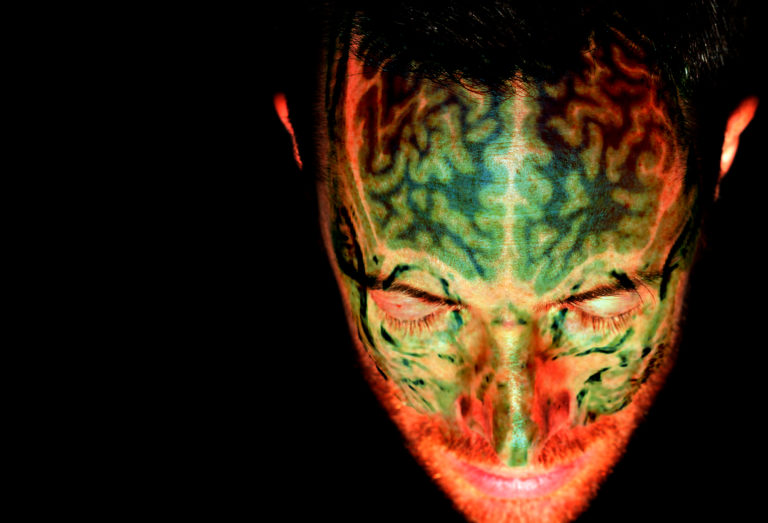
Image by Simon Drouin/The Neuro Bureau, © All Rights Reserved.
Guest
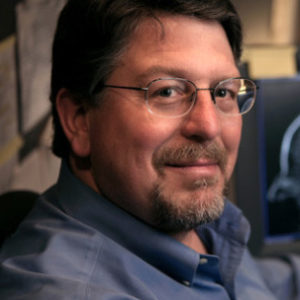
Rex Jung is an Assistant Professor of Neurosurgery at the University of New Mexico in Albuquerque. He’s a Distinguished Senior Advisor to the Positive Neuroscience Project, based at the University of Pennsylvania.
Transcript
August 20, 2015
KRISTA TIPPETT, HOST:Few features of humanity are more fascinating than creativity, and few fields are more dynamic now than neuroscience. Rex Jung is a neuropsychologist who puts the two together. He’s working on a cutting edge of science, and getting a new view of the creativity of the everyday as of the genius. He and his colleagues unsettle long-held beliefs about who is creative and who is not. They’re seeing practical, often common-sense truths about how we prime our brains to unlock what is novel and useful.
Rex Jung has notably helped describe something called transient hypofrontality. In layman’s terms, it’s now possible to see the difference between intelligence and creativity in the brain. We can watch the brain calm its powerful organizing frontal lobes and become more meandering, less directed, in order to make creative connections. And Rex Jung gives himself over to a meandering conversation with us, on new connections we might make between creativity and family life, creativity and aging, creativity and purpose.
[music: “Seven League Boots” by Zoe Keating]
REX JUNG:This work with creativity is important because I think it is a uniquely human characteristic that provides meaning in one’s life — whether it’s spiritual, personal, familial — it really hits all those buttons.
[music: “Seven League Boots” by Zoe Keating]
MS. TIPPETT:I’m Krista Tippett and this is On Being.
[music: “Seven League Boots” by Zoe Keating]
MS. TIPPETT:Rex Jung is an assistant research professor in the department of neurosurgery at the University of New Mexico. I spoke with him in 2012. He spends about half his time counseling people rebuilding their lives with brain illness or injury. In this role, he says, he’s a kind of “existential neuropsychologist.” And this informs the other half of his life, in the laboratory.
MS. TIPPETT:It’s hard for me to think of a subject more interesting than human creativity and I wonder…
DR. JUNG:[laughs]
MS. TIPPETT:I mean, that’s me. I mean, I’ve always been interested in this and I just wonder where do you see the roots or do you see the roots of this interest of yours that’s really come to define your life’s work? Did you start being interested in creativity as a subject or in yourself early in your life?
DR. JUNG:Well, it’s a long story. I didn’t come to this field by any straight path, and I didn’t come to this subject by a straight path either, so I came to study the neurosciences through volunteering for Special Olympics and understanding how different brains work through how they don’t work. And I wanted to do that sort of work and, to do that, you had to be a neuropsychologist or neurologist or a neurosurgeon or something like that. So I chose neuropsychology.
When I got into neuropsychology and started doing research, I got interested in intelligence and I studied that for a number of years. Over time, it came to my awareness that intellectual capacity of the brain doesn’t tell the whole story, that there’s other human capacities, particularly human capacities, that are of interest, particularly creative capacity, and that this might be something different than intelligence and uniquely different to human brains.
MS. TIPPETT:Right, and so that volunteering you did with Special Olympics, was that when you were still, say, in high school or before you went to college? Or was this when you were older?
DR. JUNG:It was in my lost years, so my undergraduate degree [laughs] is in finance [laughs].
MS. TIPPETT:[laughs] OK. See, that’s an important piece of this story.
DR. JUNG:Yes. So, as I said, it’s a long story. So I worked in the business world and became, I don’t know, disenchanted or bored or something like that and started volunteering for Special Olympics with friends of mine, coaching basketball and volleyball and track. You know, over time, I quit my job and started working in the sheltered workshop for adults with mental retardation, so that really started moving me in the direction of looking at brains front and center. There is really something very profoundly important and interesting going on there that I wanted to explore further.
MS. TIPPETT:Yeah, and that touched on this idea of intelligence, but as you’re saying, wasn’t at all encompassed by the way we usually talk about intelligence or our brains.
DR. JUNG:Yeah. It was intelligence and oftentimes it’s absence, the way we look at it in psychometric properties, and yet there was a lot going on there, a lot of creativity, a lot of personality, a lot of — I remember in particular working with Alonzo Clemons, who’s pretty well-known in the autistic savant community. And he’s an artist and he does these beautiful sculptures of animals. He suffered a traumatic brain injury early in life and it’s left him mentally retarded and, you know, socially retarded. And yet, he was able to produce these profoundly creative three-dimensional representations of cattle and horses and giraffes. It’s just amazing, the creative capacity that he had in his brain. So, again, that was one of the seeds that got me interested in the interplay between intelligence and creativity.
MS. TIPPETT:So at this point, what is your working definition of creativity? It may be interesting, too, to hear how that definition has evolved. Like where did you start and what nuance has been added over time?
DR. JUNG:Well, I’m pretty humble about this because I’m a newcomer to the field. So I’m an expert in intelligence, but I’m a carpetbagger to creativity [laughs]. So I’ve adopted the definition that I found when I got here, and the definition of creativity is something both novel and useful. And I like that dynamic interplay of novelty and usefulness. If something is just novel, it could be useless. It could be the word salad of a patient with schizophrenia. That’s novel, but it’s not particularly useful within a given context and utility — mere utility is not enough. It has to be something new. It has to be useful. It has to be also within a social context so that novelty and usefulness might be in play, but within a given social context, it might not be recognized at that time. Van Gogh is a good example, where his novel and useful paintings were novel and useful, but not within the social context within which he was at that time. If we found ourselves in possession of a Van Gogh at this point, we would be quite happy, but at that time, it was mostly for his brother.
MS. TIPPETT:So what have you learned? What do you see that’s been surprising and new?
DR. JUNG:I guess the most surprising thing and the most gratifying thing is that one of our hypotheses was supported. Usually, when we make hypotheses — or when I make hypotheses anyway — it’s almost 180 degrees opposite of what I hypothesized [laughs]. So the fact that creativity is something different than intelligence is gratifying in that we’re finding different brain networks than we found to be involved with intelligence, and the way in which the brain networks are engaged is surprising.
With intelligence, the back part of the brain and the front part of the brain are integrated in a way that allows intelligence to work well. And the story with intelligence is more is better. Greater cortical thickness, more neurons, higher connectivity between those neurons, and more biochemicals subserving those neurons was almost invariably better for intelligence.
MS. TIPPETT:OK.
DR. JUNG:With creativity, the story was more subtle and different. In particular regions of the brain, particularly the frontal lobes, less was better. There’s a down regulation of the frontal lobes that appeared to foster creative cognition the way we were measuring it, and I can get into that as well but…
MS. TIPPETT:So when that goes down, what is shutting down that the brain is normally doing if it’s lit up there?
DR. JUNG:It’s not shutting down as much, but it’s allowing a freer interplay of different networks in the brain so that the ideas literally can link together more readily. So with intelligence, there’s you know, the analogy I’ve used is there’s this superhighway in the brain that allows you to get from Point A to Point B. With creativity, it’s a slower, more meandering process where you want to take the side roads and even the dirt roads to get there, to put the ideas together. So the down regulation of frontal lobes, in particular, is important to allow those ideas to link together in unexpected ways.
MS. TIPPETT:Is that — there’s this term “transient hypofrontality.” Is that a description?
DR. JUNG:That is, yeah.
MS. TIPPETT:A formal description of what you just said?
DR. JUNG:[laughs] And I’d like to give credit to Arne Dietrich who’s a collaborator and friend of mine from American University in Beirut who coined this term. But, yeah, the transient hypofrontality is what appears to be happening and both of those terms are important. It’s transient. [laughs] It’s not permanent hypofrontality.
MS. TIPPETT:Right. You meander for a while and then you go back to being direct?
DR. JUNG:Yeah, because you need your frontal lobes later to push ideas forward in hypothesis tests and whatnot. But this transient hypofrontality appears to be conducive for extrapolating out and analogizing and looking at metaphor and whatnot to pull different concepts that you have in your toolbox together.
[music: “Send And Receive” by Tycho]
MS. TIPPETT:I’m Krista Tippett and this is On Being. Today, “Creativity and the Everyday Brain” — with neuropsychologist and creativity researcher, Rex Jung.
[music: “Send And Receive” by Tycho]
MS. TIPPETT:So there are a number of core qualities or indicators of creativity that are part of your studies. It was really interesting to me that one of them is humor. That’s one of the primary expressions of creativity that you see.
DR. JUNG:I think so. I think the expression of humor is a creative act. And you know, it’s novel, it’s useful, it fits the definition that’s socially relevant, and it’s unexpected, which is another definition of creativity and that’s the definition of humor is that you’re going in a certain direction and it kind of takes a turn of phrase or turn of events that makes something humorous. So we straight up measure humor in our studies as one of the variables of interest.
MS. TIPPETT:You’re right, we’ve had — I mean, I grew up in the era where everybody got tested for IQ, and then it kind of went away because no one really knew what to do with it or whether that was responsible or what it really measured, what it mattered. And still, our kind of cultural vocabulary about intelligence doesn’t necessarily include something like humor, but the minute you say that, you say that that is an expression of creativity, it’s just obvious.
DR. JUNG:I think it’s obvious. And certainly when we measured it, it was correlating with our other measures of creativity. It was not correlating with our measures of intelligence. So, you know, this overlap between it and things that look like, sound like the duck that is creativity made sense. And you said something about intelligence that I want to correct. I mean, there is some cultural baggage with intelligence. The fact that —
MS. TIPPETT:The IQ, you mean?
DR. JUNG:Yeah, an IQ test. I mean, it’s been around for 100 years, it’s measured incredibly accurately, and it has really profound predictive capabilities for things like educational success, work success, even longevity. So, there’s something very important going on with intelligence so we can’t throw the baby out with the bathwater, to use a tired old cliche. However, it’s not enough. So I think when you were speaking of being tested as a child, as I probably was, on intelligence tests and they didn’t know what to do with it, I think it probably reflects the fact that intelligence tests are very good at predicting, you know, academic success and what you’ll do in school and whatnot. But then beyond that, when you get into life [laughs] writ large, it gets more complicated. I work with very intelligent people everyday of my life — I don’t work with a lot of creative people so there’s something else going on.
MS. TIPPETT:I mean, you also — I think in your work and in your writing, when you’re out there speaking, you are also correcting some other assumptions that are out there. One thing I’ve heard you talk about that really surprised me was that this idea that we’ve somehow gotten about the left brain, right brain — that if you’re a left-brain person, you’re logical and, if you’re a right-brain person, you’re imaginative, and you’re probably stuck on that side of things. You’ve said that that’s just not true.
DR. JUNG:Well, it’s demonstrably not true. And it’s just so easy to fall into these what we call “folk psychologies,” these easy kind of metaphors for science. They have a grain of truth in them. All of them do, but it falls apart when you look at more closely. So with left brain, right brain, for example, there is a series of studies by a neuroscientist, Gazzaniga, and a neurosurgeon, Sperry, who were doing corpus callosotomies, and that’s going to take some explanation.
So the corpus callosum is a bundle of wires that connect the two hemispheres basically, white-matter myelinated axons that connect the two — right brain and left brain — to one another and they communicate back and forth. In people with epilepsy, they decided to sever the corpus callosum so that the seizures couldn’t progress from one hemisphere to the other. This would stop it in its track. There’s no way for the electrical firestorm to propagate from one hemisphere to the other.
So in severing the corpus callosum, the left hemisphere from the right, they discovered that the left hemisphere, as you say, was more logical and linear and language was often located in the left hemisphere, and the right was more synthetic and visual spatial. This got taken up in the popular press as the right brain was more creative. And, you know, in our neuroscientific studies, you’ll often find correlates in the right hemisphere that are related to creative cognition, divergent thinking or personality variables, but that doesn’t mean that creativity somehow resides in your right brain. It takes lots of parts of your brain working in tandem to do creative things. If you didn’t have your left hemisphere, I guarantee you wouldn’t be creative.
MS. TIPPETT:Right, right, well especially that useful part…
DR. JUNG:[laughs] Exactly.
MS. TIPPETT:…that’s innovative and useful, and novel and useful. Another — so I was actually stunned and very excited about a New Yorker article that also said that this idea that we have about brainstorming as the best way to elicit creativity from a group of people and all the ground rules that go with that, about no questions, no judgment, that in fact has now been proven not to be true, but that it’s never held up scientifically. And I just want to ask you about that because you’ve studied creativity.
DR. JUNG:No, no. I do, and I get asked about that a lot. Well, what about brainstorming? It’s like brainstorming is the worst thing you can do [laughs]. The main reason why is because of this process of trying out strange new ideas versus when you put people together in a room, almost invariably they will try to conform socially. So you will get creative ideas, but you won’t get as creative when people are trying to please each other than when they’re trying to push the envelope. And so the studies invariably show that the quality of the creative ideas that people put out individually are invariably higher in quality than those done in a group format. So another myth bites the dust. And again, I mean, there’s always what about the writers of “Saturday Night Live” or something like that? They work in group formats. Yeah, but it’s different. I mean, they’re — where you have collaboration like that, there’s often an element of antagonism involved and critical interplay as opposed to cooperativeness.
MS. TIPPETT:Right. So could we — could we state that with positive affect and say relationship? [laughs]
DR. JUNG:Yes. [laughs]
MS. TIPPETT:Which includes enough knowledge to be constructively antagonistic.
DR. JUNG:Yes, constructively antagonistic.
[music: “Wall Me Do” by Carl Stone]
MS. TIPPETT:It seems to me also, and this is a subtle point, but this feels important also, that the contrast to brainstorming where creativity can be demonstrated, there is still interaction. It’s a funny thing because, with brainstorming, you have rooms full of lots of people and they’re all spewing forth ideas, but they’re not interacting. That article talked about some building at MIT where there were just all kinds of informal interactions and conversations that happened all the time, as you say, with people who got to know each other over time, so they could be asking interesting questions of each other. I just found it very comforting because it struck home. It felt like, yes, yes, that is how it works when it works.
DR. JUNG:It is, and it’s more serendipitous. So you have Noam Chomsky at MIT rubbing shoulders with physicists and coming up with his…
MS. TIPPETT:…kind of by accident, right? Just ’cause he happened to be in that building.
DR. JUNG:By accident, exactly. Because he’s interacting with chemists and physicists and mathematicians by happenstance, he’s able to think differently about his ideas. And that’s one of the things about creativity, you know, getting what we call “stovepiped”. Having too narrow of a field of view really stifles creativity. So being able to broaden the horizons in that magical building at MIT, the name of which I can’t remember…
MS. TIPPETT:…I wrote it down. It’s Building 20.
DR. JUNG:Building 20. OK, we’ll call it Building 20 at MIT, that magical building where you could have this exchange of ideas and people running into each other and it’s kind of cold and dingy and people didn’t really want to be there.
MS. TIPPETT:Yeah, it was not the perfect environment.
DR. JUNG:No. It’s not this great, you know, Googleplex, where [laughs] you have ping-pong tables and it’s all perfectly designed to foster creativity supposedly. It’s kind of a dingy old building, it sounded like to me, where people were relegated when they didn’t have real office space for them and they were forced to think outside of their comfort zone. That’s kind of what I think is going on in the frontal lobes in this transient hypofrontality, where you’re getting outside of your comfort zone — where your brain has worn ruts in the road — and traveling other paths.
MS. TIPPETT:Right. Walking down the hallway to get a glass of water and stopping someplace you didn’t expect to stop to think about a certain thing.
DR. JUNG:Hey, yeah. Look at this person that I ran into. And an idea is merged with another idea and it’s novel, it’s useful, it’s relevant. So I think that’s how it works in the physical space, and that’s a nice analogy for how I think it’s working in brain space.
MS. TIPPETT:I want to ask you about another one of these ideas, and this is, again, as a parent. Now this is one I’ve never seen industries built on, but it’s something that’s, to me, proven true in life, that there’s a connection between boredom and creativity, or between not having things given to you to do and then, you know, I think I’ve felt that with my children. When they actually are bored, it may be a really good thing for them ultimately because they have to come up with something. But then recently, I also interviewed a humorist, a very creative, brilliant person named Kevin Kling, who also just talked about, you know, being a child and how, back then, he did not have a schedule [laughs] and how much time he and his brother had just hanging around with nothing to do and actually how much came out of that.
DR. JUNG:I think, yeah, I talk to people about my childhood and how recess was the most important class of the day. [laughs]
MS. TIPPETT:Yeah.
DR. JUNG:Where you — there’s the knowledge acquisition portion and then there’s the place where you have to let the ideas flow. If you’re always in knowledge acquisition mode, which is important, you have to put ideas in your head in order to put them together in novel and useful ways. But if you’re constantly in knowledge acquisition mode, there’s not that quiet time to put it together. This gets to another important creative trick, I guess, if you will, but almost invariably you hear, how do you induce transient hypofrontality? How can you do that? Some people’s brains, as we reported in our studies, are more set up that way.
You hear lots of stories of, you know, in history from Archimedes’ bath, where he discovered density by immersing himself in a bath and looking at displacement, he figured out he could measure how much gold is in a crown or something like that and cried, “Eureka!” But this warm bath or the long walk of Beethoven or Kekulé awakening from a dream and imagining a snake swallowing its own tail and thinking of a benzene ring. All of these have in common this hypofrontal state, whether it’s induced by a warm bath, walk, meditation, exercise, yoga.
MS. TIPPETT:There’s free space in there. There’s what we might call “downtime”.
Continue reading Creativity and the Everyday Brain