Did you consciously click on it, or was this choice driven by something deeper beyond your control?
Why is it so challenging to break free from bad habits?
What draws us towards certain things, while simultaneously repelling us from others?
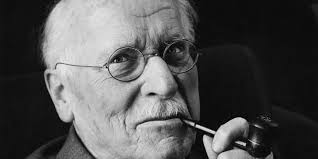
The answer to these questions can be found in one of Carl Jung’s most brilliant and, simultaneously terrifying theories — the notion of the future self.
For Jung, our future self already exists; it is not just a potentiality. What’s more, this future self attempts to manifest itself in our present reality all the time. How?
Through our attention.
The mechanism that directs your attention in the present is your future self attempting to manifest itself in your present reality.
Now, attention is different from willpower and concentration. Let’s make a distinction here.
All of us know what is good for us: eating healthily, sleeping well, working out, and eliminating harmful addictions like smoking, alcohol, and drugs. Yet, how many of us do all these things? We all aspire to feel and look good, but it’s so damn hard for us to stick to these basic beneficial practices. Isn’t that so weird? Why is that the case? Why can’t we simply tell ourselves what we need to do and then just do it?
One might say this is a matter of discipline. But again, discipline is something entirely different. Discipline is merely a measure of the strength of one’s willpower. It implies an inner conflict between what should be done for a greater future reward and what we want to do right now. What we want to do right now is driven by our attention — our future self.
I am sure you forced yourself to study for exams you did not want to in school, and finish a presentation at work that bored you to tears. That is all willpower and discipline in action.
Yet, some things naturally grip you. Instantly. They feel effortless.
What is driving our attention to those things?
I was watching an interview with LeBron James the other day. At the age of 17, he decided to cover his back with a tattoo that said — ‘The Chosen 1.’ Twenty years later, very few can dispute that he is indeed the best basketball player to ever play the game.
That is a perfect example of Jung’s idea of the future self.
Some people are born with a talent that soon becomes so obvious where things are going. They lose themselves in something — there is no effort, it’s intuitive and natural. While willpower certainly plays a role, there are deeper, unconscious forces guiding these actions that form our destiny in life.
Some may say the things that grab our attention are completely random. But are they? Maybe if you are schizophrenic, but again, that is debatable.
It seems to me that we are not in control. There are predetermined forces that are at play.
This can be liberating for some people. It suggests that you do not need to fight, struggle, and force yourself to do things you do not want to do. The pressure of constantly overthinking about choices is somehow alleviated. Instead, we should relax and stay open, following whatever interests us; it is our future self trying to tell us something after all. Our interests and spontaneous attention are not random but may be meaningful pointers toward our potential and destiny in life.
By allowing our attention to be consumed by our passions, we are slowly becoming more and more competent in whatever we do. This can lead to a more authentic and fulfilling life.
In education, Jung’s theory of the future self calls for a more individualized approach to learning. This approach would focus on a child’s natural inclinations as indicators of their future potential, rather than adhering strictly to external standards and expectations. Particularly with the rise of AI and the anticipated elimination of many existing jobs, ‘making a living’ should not be the primary factor dictating what a child should pursue in school.
This theory might also explain the often inexplicable drive and inspiration guiding artistic and creative pursuits. Consider some of the world’s great artists — writers, poets, musicians, painters — who often struggle to articulate the origin of their creative impulses. Their work appears to be guided by an unexplainable force that consumes their entire being.
But then, most of us are not very talented, our attention is not drawn to something creative or meaningful. Instead, for many, attention is captured by pornography, smoking, junk food, and mindless scrolling on our phones. And that is precisely what is so frightening about this idea.
On one hand, this theory can lead to greater self-acceptance and self-love, by recognizing our natural inclinations as part of a larger, predetermined journey and something we have not consciously chosen. Yet, there’s a significant danger involved — the passive acceptance of life, and letting ourselves be completely consumed by catastrophic habits under the guise of ‘destiny’.
What about those who are plagued by intrusive thoughts of harming themselves or others? What happens to personal responsibility if the script of our life has already been written?
I will not pretend to have answers to those questions. No one does. What I am certain of, however, is that resistance is not a long-term solution. The more one observes oneself and the human condition, the more apparent it becomes that we are not the masters of our own house.
I’ve watched numerous documentaries and interviews featuring some of the most violent individuals in human history. The latest was about Jeffrey Dahmer, who killed and dismembered seventeen males. In an interview, Dahmer described the driving force behind his actions as an ‘addictive, surging energy’ beyond his control. He admitted that ‘the compulsive obsession with what I was doing overpowered any sense of revulsion.’
‘That’s what I am. Why am I trying to pretend to be something I’m not? I do think I was born this way. Like, I don’t think there was something that happened that made me like this. Because this was always just how I was,’ Jeffrey Dahmer stated.
Most of us have experienced compulsions before. Obsessive-compulsive disorder affects around 3% of the population. The compulsion to clean and the compulsion to kill someone may have completely different consequences, but the source seems the same — an underlying force directing our attention, compelling us to fulfill our perceived destinies.
Is life worth living if it’s a constant struggle against one’s nature? And if one decides to end everything because it becomes too much — could this be yet another manifestation of their future self, asserting influence in our present reality?
I really cannot seem to find a better explanation than what Carl Jung had to offer. Can you?
In my future articles, I will attempt to link these observations to the concepts of karma, free will, and responsibility. I will do my best to provide an explanation for the ‘problem’ of evil and subsequently connect this with the existence of God and the nature of love. Why would someone be born a serial killer? Why would someone have to be killed by one? Is there a deeper meaning to all that? I think there is, and I will do my best to explain.
If you have any ideas about topics or questions that I could address in my future articles, please feel free to post them in the comments.
For the psychologist Carl Jung the modern condition is not one inherently different from that of our far past. However it is one we are forced to interpret differently. He says:
I recall a professor of philosophy who once consulted me about his cancer phobia . He suffered from a compulsive conviction that he had a malignant tumor , although nothing of the kind was ever found in dozens of X-ray pictures. “Oh . I know there is nothing.’ “ he would say. “but there might be something. “ What was it that produced this idea ? It obviously came from a fear that wasn’t installed by conscious deliberation . The morbid thought suddenly overcame him. and it had a power of its own that he could not control . It was far more difficult for this educated man to make an admission of this kind than it would have been for a primitive to say that he was plagued by a ghost. The malign influence of evil spirits is at least an admissible hypothesis in a primitive culture , but it is a shattering experience for a civilized person to admit that his troubles are nothing more than a foolish prank of the imagination . The primitive phenomenon of obsession has not vanished : it is the same as ever, it is only interpreted in a different and more obnoxious way. (Jung, Man and His Symbols)
For Jung much of the modern world, by refusing to partake in the symbols that might allow us to understand our unconscious minds, means we find ourselves paralysed by an inability to properly relate to the parts of our minds not superficially accessible to us.
Indeed as the world has been increasingly literalised we have come to believe that aspects of our minds, emotions, instincts, behaviours are either transparent to us or else are or in time will be transparent the investigation of the physical sciences. We might observe that in the age of hyper-technology forms such as social media cause us to become even more driven by impulse and self-projection. Jung again says in Man and His symbols:
What we call civilized consciousness has steadily separated itself from the basic instincts. But these instincts have not disappeared. They have merely lost their contact with our consciousness and are thus forced to assert themselves in an indirect fashion. This may be by means of physical symptoms in the case of a neurosis, or by means of incidents of various kinds, such as unaccountable moods, unexpected forgetfulness, or mistakes in speech. A man likes to believe that he is the master of his soul. But as long as he is unable to control his moods and emotions, or to be conscious of the myriad secret ways in which unconscious factors insinuate themselves into his arrangements and decisions, he is certainly not his own master.
Yet for Jung the solution lies in his own psychological work. Much of Man and His Symbols focuses on the importance of things such as dream interpretation, and the understanding of the unconscious psyche through Jung’s schema of mythology and psychology. Myths and dreams both have an importance in Jung’s work.
Yet some problems arise for anyone who tries to make coherent sense of Jung’s body of writings. Some of his observations have become integrated into modern language (such as introvert/extrovert) but many have largely been rejected or are seen as too mystical for science to take seriously. At times Jung’s reliance on his own dream interpretations seems to border on the superstitious, and his assimilating of all religious and mythic traditions into his own scheme mean a heavy reliance lies upon his own ability to winnow and interpret. As profound as some of his observations may be Jung is the centre of his own religion. So what can we learn from Jung’s observations at the very cusp of the modern world?
Perhaps we can learn the obvious but disregarded idea that stories, myths and images relate us to ourselves in a way that is as useful as anything else. While there is some use in understanding ourselves physically, seeking psychological wholeness involves a wider comprehension of ourselves as selves in a narrative and symbolic world.
We might consider this from the perspective of the problem of perception. When we look at a table we see a table, but no physical analysis can understand how this is so. There are no “table atoms”, just atoms, nor is there some constituent substance that makes a table partake in table-ness and so make it in some sense the same in kind as any other table. We interpret the world in forms that have their own meaning, and a belief that these forms can be reduced to some underlying reality that is more real than the forms themselves leaves us no nearer properly understanding them. The current approach of much modern neuroscience and philosophy is to use words like “illusion” or “epiphenomenon”, or to use language such as Anil Seth in his Ted Talk titled “Your brain hallucinates your conscious reality”.
Yet we find unavoidably as Jung has pointed out that metaphors and stories have a kind of truth we lose if we simplify them to mechanistic explanations. Even if it were true that the brain “hallucinates” reality, however contradictory such a phrase may be, it leaves us no closer to understanding ourselves, let alone finding a path to wholeness. To consider Jung’s earlier comparison between a person haunted by a ghost and a person who has some neurosis they know is neurosis but seem to in some sense not have control over themselves, we see the same problem manifesting itself. Sometimes we have not gained anything by refusing to call a table a table.
You could argue in many ways Jung tried to create a psychological religion, one that synthesised myth into his own Scheme and turned them into his own psychological heuristics. Perhaps this in itself could be argued to be a kind of reductionism, one that does not allow us to see the context of religious ideas. But Jung like many other great thinkers and philosophers of the pre-hypermodern age foresaw many of the profound problems we ourselves now have to find a path beyond.
Throughout the course of human history, countless individuals have made significant contributions to our understanding of the human psyche and the complex workings of the mind. However, few have left as profound an impact on the field of psychology as Carl Jung.
A pioneering Swiss psychiatrist and psychoanalyst, Jung’s theories on the collective consciousness have not only reshaped our worldview but have also provided invaluable insights into the nature of dreams, archetypes, and the human quest for meaning.
In order to truly appreciate the significance of Carl Jung’s theory on collective consciousness, one must delve into the depths of his remarkable life and work. Born in 1875 in Kesswil, Switzerland, Jung grew up in an era marred by societal upheavals, rapid industrialization, and an increasing disconnect between individuals and their inner selves. It was within this context that Jung’s fascination with the human mind began to take shape.
“A group experience takes place on a lower level of consciousness than the experience of an individual. This is due to the fact that, when many people gather together to share one common emotion, the total psyche emerging from the group is below the level of the individual psyche. If it is a very large group, the collective psyche will be more like the psyche of an animal, which is the reason why the ethical attitude of large organizations is always doubtful. The psychology of a large crowd inevitably sinks to the level of mob psychology. If, therefore, I have a so-called collective experience as a member of a group, it takes place on a lower level of consciousness than if I had the experience by myself alone.” ― C.G. Jung, The Archetypes and the Collective Unconscious
Jung’s theory of the collective consciousness stemmed from his observations of the recurring themes and symbols that appeared in the dreams and fantasies of his patients. He believed that these shared motifs were not mere coincidences, but rather manifestations of a deeper, collective unconscious that transcended individual experiences.
This collective unconscious, according to Jung, was a reservoir of archetypes — universal symbols and images that are deeply embedded in the human psyche and emerge spontaneously in dreams, myths, and cultural expressions.
“Real liberation comes not from glossing over or repressing painful states of feeling, but only from experiencing them to the full.” ― C.G. Jung, The Archetypes and the Collective Unconscious
One of the most groundbreaking aspects of Jung’s theory was his recognition of the profound interconnections between the individual and the collective. He postulated that our personal unconscious, shaped by our individual experiences and memories, is intricately intertwined with the collective unconscious, which contains the shared experiences of the entire human race.
This collective consciousness, Jung argued, influences our thoughts, emotions, and behaviors in ways that are often beyond our conscious awareness.
By studying the dreams and myths of various cultures, Jung unearthed a wealth of common symbols and archetypes that appeared across different societies and epochs. These archetypes, such as the wise old man, the nurturing mother, and the shadow, embody fundamental aspects of the human experience and reflect universal patterns of thought and behavior.
Jung’s theory on collective consciousness highlighted the profound significance of these archetypes in shaping both individual lives and the broader fabric of society.
Furthermore, Jung believed that the exploration and integration of the collective unconscious were essential for individual growth and psychological well-being. He asserted that by delving into our dreams, fantasies, and cultural myths, we can access the wisdom and transformative potential of the collective consciousness.
This process, known as individuation, involves becoming aware of and integrating our unconscious aspects, thereby achieving a state of wholeness and self-realization.
The implications of Jung’s theory on collective consciousness extend far beyond the realm of psychology. They have profound implications for fields such as literature, art, philosophy, and even spirituality. Jung’s ideas have influenced countless artists, writers, and thinkers, who have sought to explore the depths of the human psyche and tap into the rich symbolism of the collective unconscious.
His concepts have provided a framework for understanding the symbolism and metaphorical language present in works of art, literature, and religious texts, further enriching our understanding of human culture and expression.
Deep within each of us lies a hidden world of dreams, symbols, and shared experiences that transcend language and culture. This mysterious realm is at the heart of Carl Jung’s groundbreaking theory on collective consciousness, which has not only redefined our understanding of the human psyche but also transformed various aspects of art, literature, and spirituality.
Journey with us as we unveil the enigma behind Carl Jung’s most intriguing concept: the collective unconscious.
Key Takeaways
Carl Jung’s theory of collective consciousness suggests that all human beings share a pool of inherited knowledge, experiences, and instincts.
Archetypes -universal symbols or patterns- shape our understanding of reality and play an essential role in shaping individual behavior and attitudes toward the world.
Dreams offer insights into universal archetypes shared by humans across cultures and time periods, providing access to the collective unconscious.
Jung’s contributions range from reshaping psychoanalysis to influencing modern art, literature, and culture while bringing together psychology with spirituality and religion.
What is the Theory of Collective Consciousness?
Carl Jung’s theory on collective consciousness suggests that human beings are connected to each other and their ancestors through a shared consciousness, which he believed was shaped by universal archetypes, signs, symbols, and patterns of thinking that exist in the inherited experiences of the unconscious psyche.
“The mirror does not flatter, it faithfully shows whatever looks into it; namely, the face we never show to the world because we cover it with the persona, the mask of the actor.” ― C.G. Jung, The Archetypes and the Collective Unconscious
In other words, it suggests that all human beings share an inherited pool of knowledge, experiences, and instincts. In essence, our conscious minds are like icebergs floating above the surface of this deep ocean called the collective unconscious. Beneath these individual thoughts and experiences lies an intricate web of connections formed by archetypes — universal themes or symbols that shape and inform our understanding of reality.
Just as DNA carries genetic information passed down through generations within a species; similarly, according to Jung’s theory, every human being inherits these archetypes which reside beneath our everyday awareness and manifest themselves in various aspects such as dreams or myths.
“If it be true that there can be no metaphysics transcending human reason, it is no less true that there can be no empirical knowledge that is not already caught and limited by the a priori structure of cognition.” ― C.G. Jung, The Archetypes and the Collective Unconscious
A classic example can be found in widely recognized motifs such as “The Hero’s Journey” or symbolic figures like “The Wise Old Man,” which appear consistently across diverse cultures throughout history despite having no direct connection with one another.
Explanation Of Archetypes And Their Role In Shaping It
Archetypes are fundamental symbols or patterns of thinking that exist in the collective unconscious. They are universal and shared by all human beings, regardless of cultural background.
“When, for instance, a highly esteemed professor in his seventies abandons his family and runs off with a young red-headed actress, we know that the gods have claimed another victim.” ― C.G. Jung, The Archetypes and the Collective Unconscious
One of the most well-known archetypes is the hero archetype. This archetype represents our desire for greatness, courage, and triumph over adversity. The hero can be seen in many myths and stories from different cultures around the world.
Jung believed that accessing these archetypes through dreams or other means could help individuals gain insight into their psyches and connect with their ancestral ties to humanity’s collective consciousness.
The Significance Of Dreams In Accessing The Collective Unconscious
Dreams are an essential component of Carl Jung’s theory on the collective unconscious. According to Jung, dreams provide access to the collective unconscious and can offer insights into universal archetypes shared by human beings across cultures and time periods.
“We have let the house our fathers built fall into decay, and now we try to break into Oriental palaces that our fathers never knew. Anyone who has lost the historical symbols and cannot be satisfied with substitutes is certainly in a very difficult position today: before him there yawns the void, and he turns away from it in horror. What is worse, the vacuum gets filled with absurd political and social ideas, which one and all are distinguished by their spiritual bleakness.” ― C.G. Jung, The Archetypes and the Collective Unconscious
Dreams tap into a part of our minds that is beyond our conscious control and can reveal hidden aspects of ourselves and the world around us. For example, recurring dreams about being chased or falling could be interpreted as expressions of universal fears related to survival or loss of control.
Jung believed that accessing the collective unconscious through dreams requires a shift in perception from a rational mindset to one that is open to intuition and spontaneity.
This process involves allowing oneself to remain receptive to whatever emerges from the subconscious mind without judgment or interpretation.
Jung’s Influence On Modern Psychology, Arts, And Culture
Jung’s theory has had a profound influence on modern psychology, inspiring new developments in psychoanalysis and analytical psychology.
His ideas challenged traditional Freudian theories by emphasizing the importance of subjective experience and the integration of spirituality and religion in psychological practice.
Jung believed that psychotherapy should focus on helping individuals achieve individuation, a process through which one becomes more fully integrated with their true self.
This involved exploring both conscious and unconscious aspects of oneself, including repressed memories, dreams, and fantasies.
Jung’s approach to therapy and his emphasis on the integration of spirituality has been influential in developing modern approaches to psychology such as transpersonal psychology.
The concept of archetypes shapes our understanding of the world and has influenced many artistic movements, including surrealism and expressionism.
In addition, Jung’s work has also had a significant influence on literature. His concept of the shadow self, or the hidden parts of our personality that we repress or deny, is central to many literary works exploring themes such as identity and personal growth.
Connection To Spirituality And Religion
Jung argued that myths and symbols found in different religions across cultures reveal similarities in a spiritual sense due to universal archetypes shared within the human psyche.
For example, the archetype of “the hero” appears in many religious traditions — from Jesus Christ in Christianity to Buddha in Buddhism.
Understanding these concepts is crucial as it allows them to appreciate how religion impacts individuals’ mental health while also pointing out potential areas where divine interventions might occur during therapy sessions.
Criticisms And Controversies Surrounding Jung’s Theory
Critics have accused Jung of being anti-Semitic and racist, while others have criticized his approach to therapy as lacking scientific rigor.
These allegations stem from his writings about race and culture, where he discussed certain ethnic groups in a manner that is now viewed as problematic.
For example, he referred to African people as “primitive” and described Jewish people as having a “peculiar nature.” While these statements are undoubtedly controversial today, it is important to remember the context in which they were written.
It should also be noted that Jung’s personal diaries reveal instances where he expressed sympathy for Nazi Germany during World War II. This has further fueled accusations of anti-Semitism against him.
However, there is no evidence suggesting that Jung was an active supporter of the Nazi regime or harbored any ill-will towards Jewish people beyond the societal norms of his era.
While Carl Jung’s approach to therapy has been criticized for its lack of structure and focus.
Unlike other forms of psychotherapy that emphasize specific techniques and goals, Jungian analysis tends to be more open-ended and focused on exploring the unconscious psyche.
Additionally, some critics argue that Jung’s emphasis on symbolism and mythology may not be effective for all individuals seeking treatment. For example, those who are more rational or logical in their thinking may struggle to connect with the symbolic language used in Jungian analysis and it lacks empirical evidence and relies too heavily on subjective interpretation.
Despite these criticisms, many psychologists continue to draw upon Jung’s theories today, particularly in the areas of analytical psychology and archetypal symbolism.
Overall, while there may be disagreements over the specifics of his ideas, there is little doubt that Carl Jung continues to be a significant figure in the field of psychology and beyond.
The Role Of Collective Consciousness In Shaping Societal Values And Behaviors
Collective consciousness plays a vital role in shaping societal values and behaviors, and as globalization continues to reshape our world, it is increasingly important for individuals to be aware of their place within the collective unconscious.
Human beings are not only connected to each other through shared experience but also through a group consciousness that influences their thinking, acting, and decision-making processes.
The process of socialization further reinforces these cultural norms and beliefs as individuals learn from their families, peers, and schools about what’s right or wrong within their culture.
This knowledge gets ingrained into the individual’s psyche over time as they interact with different people from varied backgrounds.
For example, if someone were to say “Diamonds are forever,” many people associate this statement with love and commitment because it has been popularized through advertisements for decades.
The Impact Of Globalization On The Collective Unconscious
Globalization has had a profound impact on the collective unconscious. As people become more interconnected, cultural exchange and hybridity have led to new archetypes emerging within the collective unconscious.
For example, as Western culture spreads globally, it is influencing and blending with other cultures to form new archetypes that represent this fusion of traditions. At the same time, globalization can also lead to cultural homogenization and loss of traditional customs and values which could result in alienation from one’s own roots.
This can create a sense of fragmentation and disconnection from the ancestral ties that make up our shared human experience.
The Importance Of Individual Awareness And Responsibility In Collective Consciousness
The concept of collective consciousness underscores the idea that we are all connected in some way, and our actions can have a ripple effect on others. To fully tap into this collective consciousness, it is essential to cultivate individual awareness and responsibility.
By becoming more conscious of ourselves and our role in society, we can start to understand how our thoughts and actions impact the world around us. Furthermore, taking responsibility for our actions means acknowledging that we have agency over our lives and recognizing the power we wield to make positive changes both within ourselves and in society as a whole.
The Enduring Legacy Of Carl Jung’s Collective Unconscious Theory
Carl Jung’s theory of collective unconscious has a lasting impact on psychology and philosophy, offering the potential for transformative societal change through accessing shared experiences and knowledge not accessible to the conscious mind.
As we explore and understand our shared experiences and inherited narratives, we can begin to dismantle harmful patterns of thinking and behavior that have been ingrained in our culture.
Jung believed that by accessing the collective unconscious, we can tap into a source of creativity and innovation that lies beyond individual consciousness.
This idea is central to his theory of synchronicity, which suggests that events in the external world are connected to internal psychological processes.
Examples of collective transformation through accessing the collective unconscious include social movements such as #MeToo or #BlackLivesMatter — both began by amplifying marginalized voices with shared experiences towards an ultimate goal; creating structural changes via society-wide reforms.
Applications Of Carl Jung’s Collective Unconscious Theory
Exploration of the Collective Unconscious: Jung’s theory provides a framework for exploring the collective unconscious through dreams and symbols. This can help individuals gain insight into their own unconscious patterns of thought and behavior.
Understanding Cultural Myths and Symbols: By recognizing shared archetypes in myths and symbols across cultures, we can gain a better understanding of the human experience and our connections to each other.
Personal Growth and Individuation: Jung believed that accessing the collective unconscious could lead to personal growth and individuation, or the process of becoming one’s true self.
Therapy: Analytical psychology, which is based on Jung’s theories, can be used as a form of therapy to help individuals uncover unconscious patterns that may be contributing to mental health issues.
Creative Expression: Jung believed that art and creativity were important ways for individuals to access the collective unconscious and express universal themes and emotions.
Social Justice: Understanding shared cultural archetypes can help facilitate empathy, understanding, and social justice by recognizing the interconnectedness of all humans.
Spirituality: Accessing the collective unconscious through meditation or prayer can help individuals connect with a higher power or divine consciousness.
Final Thoughts
Carl Jung’s theory on collective consciousness has fundamentally reshaped our worldview, illuminating the intricate interplay between the individual and the collective, and offering valuable insights into the nature of dreams, archetypes, and the human quest for meaning.
It provides insight into how our shared experiences, universal archetypes, and inherited patterns of thinking shape not only our individual psyche but also society as a whole.
This exploration can lead to greater empathy, self-awareness, and personal growth.
Through this process of individuation, individuals come to recognize their unique qualities while also recognizing their interconnectedness with others.
By recognizing the existence and significance of the collective unconscious, Jung has provided a powerful tool for self-discovery, personal growth, and the exploration of the human condition.
As we delve deeper into the mysteries of our own minds and strive to understand the intricate tapestry of our shared human experience, Jung’s legacy continues to guide us toward a more profound understanding of ourselves and the world
By exploring the role of archetypes and the importance of accessing the collective unconscious through dreams, he reshaped our worldview in significant ways.
Despite controversy and criticism surrounding his ideas, Jung’s work continues to be influential in modern psychology, arts, and culture. His theories offer insights into how we can better understand ourselves as individuals and as members of society.
You know, life is a funny thing. One moment you’re just going about your day, minding your own business, and then — bam! — you’re hit with a moment so eerily familiar, so uncannily coincidental, that it feels like the universe is playing tricks on you. I remember the first time I felt that way, the feeling almost knocked me off my feet.
“We often dream about people from whom we receive a letter by the next post. I have ascertained on several occasions that at the moment when the dream occurred the letter was already lying in the post-office of the addressee.” ― C.G. Jung, Synchronicity: An Acausal Connecting Principle
I was just a kid then, thumbing through a dusty old book about Carl Jung, the Swiss psychiatrist. He was a man of deep thoughts, a man who spent his life investigating the strange connections between our mind and the world around us. He had a word for these weird coincidences, those moments where it feels like there’s something more going on — he called it “synchronicity.”
“We put thirty spokes together and call it a wheel; But it is on the space where there is nothing that the utility of the wheel depends. We turn clay to make a vessel; But it is on the space where there is nothing that the utility of the vessel depends. We pierce doors and windows to make a house; And it is on these spaces where there is nothing that the utility of the house depends. Therefore just as we take advantage of what is, we should recognize the utility of what is not.” ― C.G. Jung, Synchronicity: An Acausal Connecting Principle
“Synchronicity,” the book said, was “the coincidence in time of two or more causally unrelated events which have the same meaning.” In simple terms, it’s when two things happen that seem related, but there’s no logical connection between them. Like dreaming about an old friend, and then bumping into them in the supermarket the next day. Or having a thought about learning to play the guitar, and then out of the blue, someone gifts you one.
Jung believed these weren’t just random happenings, but rather a peek into a deeper, hidden layer of reality where our minds and the world around us intertwined in the most unexpected ways. He thought that these synchronicities, these meaningful coincidences, were a result of our personal thoughts and feelings interacting with the collective unconscious — a wellspring of universal images and themes that we all share deep in our psyche.
“I do believe in an everyday sort of magic — the inexplicable connectedness we sometimes experience with places, people, works of art and the like; the eerie appropriateness of moments of synchronicity; the whispered voice, the hidden presence, when we think we’re alone.” ― Charles de Lint
I remember one story in the book that really made me pause. It was about a patient of Jung’s, who was describing a dream about a scarab beetle. Just as she was speaking, a golden scarab beetle — a creature not often seen in Europe — tapped on the window of the room. Jung opened the window, and the beetle flew in. The timing was so uncanny, so meaningful, it couldn’t be dismissed as mere chance.
As I read through the book, I felt my heart pounding. The world, according to Jung, was so much more interconnected than we usually perceive. Everything, every person, every thought, every event, was part of a grand, unfolding pattern. He urged us to pay attention to these synchronicities, to not dismiss them as just coincidences, but view them as a guide, a compass pointing us towards our true selves, our purpose in life.
“Because the eye gazes but can catch no glimpse of it, It is called elusive. Because the ear listens but cannot hear it, It is called the rarefied. Because the hand feels for it but cannot find it, It is called the infinitesimal. … These are called the shapeless shapes, Forms without form, Vague semblances. Go towards them, and you can see no front; Go after them, and you see no rear.” ― C.G. Jung, Synchronicity: An Acausal Connecting Principle
Jung’s writings stirred something deep within me. I remember feeling a sense of wonder, a sense of awe at the universe. I felt like I was being lifted from the mundane, materialistic world into a realm where everything had meaning, everything was connected.
Decades have passed since then, and science has made great strides — quantum physics, consciousness research, you name it. But even with all these advancements, we still have a long way to go in understanding the profound phenomenon of synchronicity that Jung illuminated.
“Naturally, every age thinks that all ages before it were prejudiced, and today we think this more than ever and are just as wrong as all previous ages that thought so. How often have we not seen the truth condemned! It is sad but unfortunately true that man learns nothing from history.” ― Carl Jung, Synchronicity: An Acausal Connecting Principle
So, my friend, next time you encounter a coincidence that’s too strange to be a mere chance, don’t just brush it off. Pay attention, look for the hidden meaning, the mysterious connection between your inner world and the world around you.
Because, who knows? You might just find a doorway to a world alive with cosmic meaning. After all, we all hold the key to unlocking the secrets of synchronicity. And maybe, just maybe, we need Jung’s wisdom now more than ever to light our path ahead.
In the realm of human consciousness and the study of the mind, few figures have left as profound an impact as Carl Gustav Jung. Through his groundbreaking theories and extensive exploration of the human psyche, Jung unveiled a hidden dimension of our mental landscape — the collective unconscious.
This concept, which encompasses deep-rooted archetypes and shared patterns of thought, has forever transformed our understanding of reality and our place within it.
Jung’s remarkable insights into the collective unconscious emerged during his tireless pursuit of unraveling the mysteries of the human mind. Born in Switzerland in 1875, he embarked on a path that would lead him to become a psychiatrist, psychoanalyst, and among the 20th century’s most significant intellectuals.
“A group experience takes place on a lower level of consciousness than the experience of an individual. This is due to the fact that, when many people gather together to share one common emotion, the total psyche emerging from the group is below the level of the individual psyche. If it is a very large group, the collective psyche will be more like the psyche of an animal, which is the reason why the ethical attitude of large organizations is always doubtful. The psychology of a large crowd inevitably sinks to the level of mob psychology. If, therefore, I have a so-called collective experience as a member of a group, it takes place on a lower level of consciousness than if I had the experience by myself alone.” ― C.G. Jung, The Archetypes and the Collective Unconscious
His collaborations with Sigmund Freud and the subsequent development of analytical psychology paved the way for a new understanding of the human psyche, liberating it from the constraints of traditional psychoanalysis.
The cornerstone of Jung’s theory lies in the concept of the collective unconscious, which he saw as an innate reservoir of shared experiences and symbolic imagery that transcends individuality. While the personal unconscious contains repressed memories and individual experiences, the collective unconscious encompasses the inherited, universal elements of the human psyche.
It is a vast storehouse of archetypes, ancient symbols, and mythical motifs that exist beyond individual consciousness but profoundly shape our perceptions, behaviors, and cultural expressions.
By delving into the collective unconscious, Jung revealed the profound interconnectedness of humanity. He recognized that our individual experiences are not isolated, but rather intertwined with the collective experiences of our ancestors and the broader human family.
This collective reservoir of unconscious material serves as a wellspring of inspiration, creativity, and transformative potential. It influences our dreams, fantasies, and the narratives that underpin our cultural, religious, and artistic expressions.
Understanding the power of the collective unconscious grants us access to the hidden realms of our shared humanity. It unveils the archetypal patterns that underlie the myths, symbols, and rituals found in diverse cultures across time and space.
Jung believed that by engaging with these archetypes, we can connect with the fundamental essence of our human nature and gain insights into the universal aspects of the human condition.
Moreover, exploring the collective unconscious can foster profound personal growth and self-realization. By becoming aware of the archetypal forces at play within us, we gain a deeper understanding of our motivations, fears, and desires.
We can uncover the hidden aspects of ourselves and integrate them into a more cohesive and authentic identity. Through this process of individuation, we move towards wholeness, aligning our conscious awareness with the deep currents of the collective unconscious.
By exploring the depths of our collective psyche, we can tap into a wellspring of wisdom, creativity, and resilience. We can navigate the complexities of our world with greater awareness, compassion, and a profound sense of our place within the tapestry of existence.
As we embark on a journey to understand Jung’s profound exploration of the collective unconscious, we open ourselves to a world of infinite possibilities. We step into a realm where ancient myths and contemporary experiences intertwine.
In this blog post, we’ll delve into Jung’s intriguing ideas and explore how embracing the collective unconscious can create profound transformations in our lives and society as a whole.
Key Takeaways
Swiss psychologist Carl Jung’s theory on the collective unconscious and archetypes provide powerful insight into our shared human experience, allowing for personal growth and connection with others on a deeper level.
The collective unconscious plays a significant role in shaping behavior and decision making in modern society, from marketing strategies to political elections.
Accessing the collective unconscious requires patience and practice through techniques such as dream analysis, active imagination, visualization exercises, and guided meditation sessions. Incorporating these techniques into therapy can lead to positive transformation on both an individual and cultural level.
Carl Jung’s Contributions To Psychology
Carl Jung’s contributions to psychology have left a significant mark on the field, shaping the way we understand and analyze human behavior. A Swiss psychiatrist, he was one of the pioneers in exploring the depths of our unconscious mind.
Jung introduced groundbreaking concepts like introversion and extraversion in personality studies, offering insight into how individuals process their thoughts and feelings. One of his most revolutionary ideas is the notion of collective unconscious.
“Real liberation comes not from glossing over or repressing painful states of feeling, but only from experiencing them to the full.” ― C.G. Jung, The Archetypes and the Collective Unconscious
This concept not only influenced psychology but also impacted areas such as philosophy, religion, literature, art therapy, and even marketing strategies. Furthermore, he founded analytical psychology — an approach that integrates an individual’s personal experiences with these larger cultural forces at play by examining dreams and myths for clues about inner struggles or growth opportunities.
Understanding Carl Jung And The Collective Unconscious
Carl Jung’s contributions to Psychology include his theory on the collective unconscious, which he saw as a common storehouse of archetypes and patterns that every individual share.
Distinction Between Personal And Collective Unconscious
Carl Jung believed that the human psyche is composed of both personal and collective unconsciousness. The personal unconscious is unique to each individual and contains repressed or forgotten thoughts, memories, and experiences.
In contrast, the collective unconscious is shared by all humanity and consists of universal archetypes or symbols that are inherited from our ancestors.
“Were it not for the leaping and twinkling of the soul, man would rot away in his greatest passion, idleness.” ― C.G. Jung, The Archetypes and the Collective Unconscious
An example of an archetype in the collective unconscious would be the concept of the “shadow,” which represents aspects of ourselves we don’t want to acknowledge. This idea appears in myths from around the world as a monster lurking in dark corners waiting to devour us when we’re vulnerable.
Archetypes And Symbols
Archetypes and symbols are some of the most fundamental concepts in Carl Jung’s theory of the collective unconscious. According to Jung, archetypes are universal patterns that exist within the human psyche and have been inherited from our ancestors’ experiences.
Symbols, on the other hand, are images or representations that elicit a particular emotional response in individuals and have deep meaning beyond their physical form.
“The mirror does not flatter, it faithfully shows whatever looks into it; namely, the face we never show to the world because we cover it with the persona, the mask of the actor.” ― C.G. Jung, The Archetypes and the Collective Unconscious
For example, the image of a serpent is an archetype that represents transformational power.
Understanding these archetypes and symbols provides insight into our deepest fears, desires, and motivations and can help us better navigate through life’s challenges.
The Role Of Religion In The Collective Unconscious
Religion serves as a manifestation of the collective unconscious, tapping into universal concepts and symbols that are expressed across diverse world religions.
How Religion Manifests As A Part Of The Collective Unconscious?
Religion is a fascinating aspect of the collective unconscious, and its influence can be seen in cultures around the world. According to Jungian theory, religious symbols and motifs are archetypal images that have been passed down through generations and are present within all individuals.
“If it be true that there can be no metaphysics transcending human reason, it is no less true that there can be no empirical knowledge that is not already caught and limited by the a priori structure of cognition.” ― C.G. Jung, The Archetypes and the Collective Unconscious
For example, many religions incorporate concepts like creation myths or divine beings that represent universal ideals such as compassion or justice. These shared themes point to deeper underlying truths about humanity’s collective experiences and aspirations.
Similarities And Universality Of World Religions
Carl Jung believed that religion is a manifestation of the collective unconscious, and as such, there are universal concepts and symbols that appear in religions across the world.
“When, for instance, a highly esteemed professor in his seventies abandons his family and runs off with a young red-headed actress, we know that the gods have claimed another victim.” ― C.G. Jung, The Archetypes and the Collective Unconscious
For example, almost all religions have some form of creation story or myth, often involving a divine being who brings order out of chaos.
Another similarity among world religions is the idea of transcendence — the belief in something larger than oneself. This can manifest in various ways, such as through prayer or meditation or by adhering to certain moral principles.
The Collective Unconscious In Modern Society
The collective unconscious plays a significant role in shaping behavior and decision-making in modern society, from the products we buy to the political leaders we elect.
Impact On Behavior And Decision Making
The collective unconscious plays a significant role in shaping our behavior and decision-making, often without us even realizing it. Our thoughts, emotions, and actions are influenced by archetypes and symbols stored within the collective unconscious that have been passed down through generations.
“We have let the house our fathers built fall into decay, and now we try to break into Oriental palaces that our fathers never knew. Anyone who has lost the historical symbols and cannot be satisfied with substitutes is certainly in a very difficult position today: before him there yawns the void, and he turns away from it in horror. What is worse, the vacuum gets filled with absurd political and social ideas, which one and all are distinguished by their spiritual bleakness.” ― C.G. Jung, The Archetypes and the Collective Unconscious
In marketing and branding, companies use archetypes to appeal to their target audience’s subconscious desires and motivations. By understanding how these universal concepts resonate with people on a deep level, marketers can create more effective campaigns that tap into consumers’ emotional responses.
Use Of Collective Unconscious In Marketing And Branding
The principles of the collective unconscious have been employed in marketing and branding for many years now. Companies use archetypes and symbols to evoke particular emotions or associations with their brand, tapping into the shared experiences of their target market.
“But the very fact that this process is unconscious gives us the reason why man has thought of everything except the psyche in his attempts to explain myths. He simply didn’t know that the psyche contains all the images that have ever given rise to myths, and that our unconscious is an acting and suffering subject with an inner drama which primitive man rediscovers, by means of analogy, in the processes of nature both great and small.” ― C.G. Jung, The Archetypes and the Collective Unconscious
For instance, a luxury car manufacturer might create ads that portray the driver as powerful, confident, and successful — all qualities associated with the King archetype.
These techniques work because they tap into deeply ingrained patterns within our minds — concepts that are hard-wired into our collective psyche through centuries of cultural evolution.
By speaking directly to these universal themes and symbols, companies can create an emotional connection with consumers on a subconscious level.
Applications Of The Collective Unconscious In Personal Growth And Transformation
Accessing the collective unconscious can lead to personal transformation by providing insights into our deepest motivations and desires, allowing us to connect more deeply with ourselves and others, and fostering greater creativity and intuition.
Techniques For Accessing The Collective Unconscious
Accessing the collective unconscious is not a straightforward process, but there are several techniques that one can use to tap into this deeper level of consciousness. One common method used by therapists and psychologists is dream analysis.
“That the gods die from time to time is due to man’s sudden discovery that they do not mean anything, that they are made by human hands, useless idols of wood and stone.” ― C.G. Jung, The Archetypes and the Collective Unconscious
Another technique for accessing the collective unconscious is through active imagination. Active imagination involves entering a meditative state and allowing oneself to explore images, thoughts, and emotions that arise spontaneously.
Visualization exercises are also useful in accessing the collective unconscious. These involve picturing different scenarios or environments in one’s mind’s eye and paying attention to any images or sensations that come up during these visualizations.
Overall, accessing the collective unconscious requires patience and practice, but it can lead to profound insights about oneself, others, and our shared human experience on a deeper level than everyday consciousness allows us to perceive.
Incorporating The Collective Unconscious In Therapy And Counseling
Incorporating the collective unconscious in therapy and counseling can be a transformative experience for clients seeking personal growth. One technique for accessing the collective unconscious is through dream analysis, which involves exploring recurring symbols and themes in dreams to uncover underlying emotions and patterns.
“there is good reason for supposing that the archetypes are the unconscious images of the instincts themselves, in other words, that they are patterns of instinctual behaviour.” ― C.G. Jung, The Archetypes and the Collective Unconscious
By incorporating elements of the collective unconscious into therapy sessions, counselors can help clients gain insight into their own behaviors and thought processes. This can lead to increased self-awareness, improved interpersonal relationships, and ultimately, greater fulfillment in life.
Connection With Others And The World Around Us
Understanding the collective unconscious can give us important insights into our connections with others and the world around us. According to Carl Jung, we each have a personal unconscious that is shaped by our unique experiences and memories.
However, we also share a collective unconscious that contains archetypes and symbols common to all of humanity.
“[R]eal liberation comes not from glossing over or repressing painful states of feeling, but only from experiencing them to the full.… By accepting the darkness, the patient has not, to be sure, changed it into light, but she has kindled a light that illuminates the darkness within. By day no light is needed, and if you don’t know it is night you won’t light one, nor will any light be lit for you unless you have suffered the horror of darkness.” ― C.G. Jung, The Archetypes and the Collective Unconscious
One way to connect with the collective unconscious is through dreams. Our dreams often contain imagery that taps into universal concepts and symbols. Through dream analysis or other techniques for accessing the subconscious mind, we can uncover hidden truths about ourselves and our relationships with others.
Final Thoughts
Jung’s concept of the collective unconscious also holds significant implications for our perception of reality. It challenges the prevailing notion of an objective and purely materialistic world.
Instead, it suggests that our experience of reality is profoundly influenced by the unconscious archetypal structures that shape our perceptions, beliefs, and values. This understanding invites us to question the limitations of our subjective experiences and to acknowledge the potential for alternative ways of knowing and interpreting the world.
“We should never forget that in any psychological discussion we are not saying anything about the psyche, but that the psyche is always speaking about itself. It is no use thinking we can ever get beyond the psyche by means of the “mind,” even though the mind asserts that it is not dependent on the psyche. How could it prove that?” ― C.G. Jung, The Archetypes and the Collective Unconscious
In a time when humanity grapples with myriad challenges, Jung’s insights into the power of the collective unconscious offer a guiding light. They remind us of our shared heritage, our interconnectedness, and the capacity for transformation that every one of us possesses.
By understanding these concepts, we can gain a deeper connection with others, and our world religions, and even utilize this knowledge for personal growth.
In conclusion, exploring the theories of Carl Jung and the collective unconscious has the potential to unlock hidden secrets about ourselves and the world around us.
By understanding and embracing these universal concepts, we can experience personal growth and connection with others on a deeper level. From marketing strategies to counseling techniques, incorporating Jung’s ideas into our lives can lead to positive transformation on both an individual and cultural level.
“If only a world-wide consciousness could arise that all division and fission are due to the splitting of opposites in the psyche, then we should know where to begin.” ― C.G. Jung, The Essential Jung: Selected Writings
Carl Gustav Jung (July 26, 1875 – June 6, 1961) was a Swiss psychiatrist and psychoanalyst who founded analytical psychology. Jung’s work has been influential in the fields of psychiatry, anthropology, archaeology, literature, philosophy, psychology, and religious studies. Wikipedia
Consciousness, sexuality, androgyny, futurism, space, the arts, science, astrology, democracy, humor, books, movies and more