
From Wikipedia, the free encyclopedia
| Antonio Gramsci | |
|---|---|
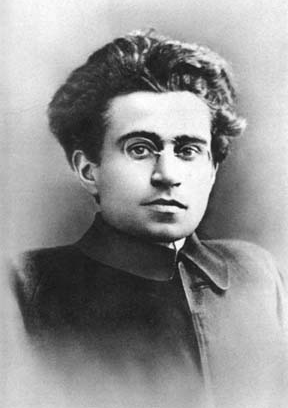
| Gramsci in 1916 | |
| Born | Antonio Francesco Gramsci 22 January 1891 Ales, Kingdom of Italy |
| Died | 27 April 1937 (aged 46) Rome, Italy |
| Alma mater | University of Turin |
| Notable work | Prison Notebooks |
| Era | 20th-century philosophy |
| Region | Western philosophy |
| School | Continental philosophyWestern Marxismneo-MarxismMarxist humanism[1] |
| Main interests | Politicsideologyculture |
| Notable ideas | Cultural hegemonyAmericanism as Fordistbourgeoisie as the hegemonic groupbuilding a counter-hegemony to challenge capitalist powerwar of positionthe distinction between traditional and organic intellectuals |
| Secretary of the Communist Party of Italy | |
| In office 14 August 1924 – 8 November 1926 | |
| Preceded by | Amadeo Bordiga |
| Succeeded by | Palmiro Togliatti |
| Member of the Chamber of Deputies | |
| In office 6 April 1924 – 9 November 1926 | |
| Personal details | |
| Political party | PSI (1913–1921) PCd’I (1921–1937) |
| Signature | |


Antonio Francesco Gramsci (UK: /ˈɡræmʃi/ GRAM-shee,[6] US: /ˈɡrɑːmʃi/ GRAHM-shee,[7] Italian: [anˈtɔːnjo franˈtʃesko ˈɡramʃi] ⓘ; 22 January 1891 – 27 April 1937) was an Italian Marxist philosopher, linguist, journalist, writer, and politician. He wrote on philosophy, political theory, sociology, history, and linguistics. He was a founding member and one-time leader of the Italian Communist Party. A vocal critic of Benito Mussolini and fascism, he was imprisoned in 1926 where he remained until his death in 1937.
During his imprisonment, Gramsci wrote more than 30 notebooks and 3,000 pages of history and analysis. His Prison Notebooks are considered a highly original contribution to 20th-century political theory.[8] Gramsci drew insights from varying sources — not only other Marxists but also thinkers such as Niccolò Machiavelli, Vilfredo Pareto, Georges Sorel, and Benedetto Croce. The notebooks cover a wide range of topics, including the history of Italy and Italian nationalism, the French Revolution, fascism, Taylorism and Fordism, civil society, the state, historical materialism, folklore, religion, and high and popular culture.
Gramsci is best known for his theory of cultural hegemony, which describes how the state and ruling capitalist class — the bourgeoisie — use cultural institutions to maintain power in capitalist societies. In Gramsci’s view, the bourgeoisie develops a hegemonic culture using ideology rather than violence, economic force, or coercion. He also attempted to break from the economic determinism of orthodox Marxist thought, and so is sometimes described as a neo-Marxist.[9] He held a humanistic understanding of Marxism, seeing it as a philosophy of praxis and an absolute historicism that transcends traditional materialism and traditional idealism.