February 25, 2024 (newsletter@email.businessinsider.com)
Intuitive Machines/NASA
Dispatch
Back to the moon
It took more than 50 years, but an American moon lander is back on the lunar surface.
The Odysseus lander, made via a collaboration between NASA and commercial operator Intuitive Machines, touched down on Thursday. It followed a string of failed landings, including one just last month from Astrobotic.
It’s an incredible feat of science and ingenuity. It also has the potential to fuel a new space race.
The Odysseus launch was part of NASA’s Artemis program, which involves commercial giants like SpaceX and smaller companies like Intuitive Machines, which went public in a SPAC deal last year.
And whereas the Apollo program was about getting to the moon, Artemis is about staying there. The goal: to pave the road to human settlements beyond earth.
“We are what we imagine. Our very existence consists in our imagination of ourselves. Our best destiny is to imagine, at least, completely, who and what, and that we are. The greatest tragedy that can befall us is to go unimagined.”
–N. SCOTT MOMADAY
Navarre Scotte Momaday (1934 – January 24, 2024) was an American novelist, short story writer, essayist, and poet. His novel House Made of Dawn was awarded the Pulitzer Prize for Fiction in 1969, and is considered the first major work of the Native American Renaissance. Wikipedia
Pierre Lemarquis, author of Art That Heals. Photo: Sylvain Thiollier
French neuroscientist, musician, and author Pierre Lemarquis’s book, Art That Heals, writes about “science-backed evidence that seeing or making art can play a crucial role in healing our bodies and minds. [The book] weaves together art history, philosophy, and psychology while citing astounding current findings from his field of neuroscience about the healing power of art.”
“Research on the subject has been accumulating for some years. A 2019 World Health Organization report, based on evidence from over 3000 studies, ‘identified a major role for the arts’ [in the] prevention of illnesses. And in 2018, doctors in Montreal, Canada, made headlines when they started prescribing patients who suffer from certain diseases with museum visits to visit the Montreal Museum of Fine Arts.”
Lemarquis is also “president of a new French association called An Invitation to Beauty, which offers ‘cultural prescriptions’ to patients, including artwork viewings. The UNESCO-supported organization has created an art collection of original works to loan to patients for their rooms at France’s Lyon Sud Hospital, and this program is set to expand.”
Neurological studies show that “art of all kinds acts on our brains in a multi-faceted, dynamic way. Neural networks are formed to achieve heightened, complex states of connectivity. In other words, art can ‘sculpt’ and even ‘caress’ our brains. When observing art, we can get the feeling that we are participating in art’s creation, or putting ourselves in the artist’s shoes.”
“The art-activated areas of our brains that light up when both making or contemplating art, release hormones and neurotransmitters when stimulated, which are beneficial to our health and make us feel good. These include dopamine (lacking among Parkinson’s patients), serotonin (found in antidepressants) as well as endorphins and oxytocin, which both can support pain management and reduction. Adrenaline and cortisone can be activated so as to have an invigorating effect on the body, or on the contrary, they can be blocked for a relaxing effect, depending on the artwork. All of these hormones can help treat mental illness, memory loss, or illnesses associated with stress, among other health concerns.”
“Our brains capture a lot more information than we are conscious of,” Lemarquis says. When perceiving an artwork in-person, for instance, the brain is “lit up, by something akin to beams from a lamp.”
“You don’t treat an illness, you treat a person,” says Lemarquis. “You need medicine that’s purely scientific to address the illness, and medicine that’s a little artistic, to address the person, their humanity. The two are complementary. People need to dream. They need imagination.”
The creator of the Polyvagal Theory explains the principles in simple terms that are accessible to all. Since Stephen Porges first proposed the Polyvagal Theory in 1994, its basic idea―that the level of safety we feel impacts our health and happiness―has radically shifted how researchers and clinicians approach trauma interventions and therapeutic interactions. Yet despite its wide acceptance, most of the writing on the topic has been obscured behind clinical texts and scientific jargon. Our Polyvagal World definitively presents how Polyvagal Theory can be understandable to all and demonstrates how its practical principles are applicable to anyone looking to live their safest, best, healthiest, and happiest life. What emerges is a worldview filled with optimism and hope, and an understanding as to why our bodies sometimes act in ways our brains wish they didn’t. Filled with actionable advice and real-world examples, this book will change the way you think about your brain, body, and ability to stay calm in a world that feels increasingly overwhelming and stressful. 3 black-and-white figures; 1 color figure (tip-in page)
The Lord of Wealth talks not only about material wealth and its appropriate use, but about the inner wealth and resources that we all have. This is a card that teaches us that the harvest we gather in our lives is the end result of all that we have put into living – and more importantly, how we have used the riches at our disposal.We make our own realities with every thought, every deed, every wish. And when we direct our energies positively we shall arrive – as a perfectly natural consequence – at the Ten of Disks. Of course, if we direct our energies negatively we’ll find ourselves with the Ten of Wands, or the Ten of Swords – neither of which are happy cards!There is a warning connected to this card though. When we have created sufficient wealth to make ourselves comfortable and contented, if we have a surplus, then we must make that surplus work. We cannot expect energy to flow freely in our lives if we hoard it, and try to hang on to it. This is as pointless as trying to save up the breeze so that it will blow on a stuffy day! There are some things in life you cannot clutch tight in the hand without crushing their value out of them.If this card comes up in an everyday reading, it re-assures that financial and material matters are proceeding well, and that there is no cause for concern.If it comes up in a more spiritually based reading, then we need to be applying the underlying principles to our lives – so in this case, we need to be letting our inner wealth show, in order to manifest that into our lives.
“We begin naïve, now that’s the true fool, we really don’t know anything, but the end of the journey is what I like to call the second naïveté, returning back to another kind of innocence, maybe we weren’t wrong when we spoke of second childhood, a kind of non-need to impress people, a kind of non-need to be important, a freedom to say almost silly things, because there’s no competition anymore–that’s a great freedom.”
Fr. Richard Rohr is a globally recognized ecumenical teacher bearing witness to the universal awakening within Christian mysticism and the Perennial Tradition. He is a Franciscan priest of the New Mexico Province and founder of the Center for Action and Contemplation (CAC) in Albuquerque, New Mexico. Fr. Richard’s teaching is grounded in the Franciscan alternative orthodoxy—practices of contemplation and expressing itself in radical compassion, particularly for the socially marginalized.
Fr. Richard is author of numerous books, including Everything Belongs, Adam’s Return, The Naked Now, Breathing Under Water, Falling Upward, Immortal Diamond, Eager to Love, and The Divine Dance: The Trinity and Your Transformation (with Mike Morrell).
Fr. Richard is academic Dean of the Living School for Action and Contemplation. Drawing upon Christianity’s place within the Perennial Tradition, the mission of the Living School is to produce compassionate and powerfully learned individuals who will work for positive change in the world based on awareness of our common union with God and all beings. Visit cac.org for more information.
SCREEN-TIME = “time spent watching television, playing a video game, attending a class on zoom or using an electronic device with a screen
QUESTION: Are you facing a screen right now?
STORY: In 2019 I began teaching my drawing classes on zoom. I discovered that I kinda liked being able to share my love of drawing without having to get all dressed up, drive five miles, park my car and carry my equipment into a building. Ten to twelve people show up on my screen in little square frames. I see and hear them and they see and hear me. I share stories, images, photos, drawings. We are able to ask questions, dialogue about various techniques, share meditations and more. Some of my students are young; most are adults. Many live in other states and even other countries and would have had to pay large amounts of money to attend an in-person class. Screen-time is great AND I believe it is wise for all of us (especially the young ones) to step away from “screen-time” now and then. Go out and walk in nature. Contemplate and FEEL the living energy flowing through you and the birds, squirrels, trees, clouds, distant hills, sunshine, other people and more.
QUOTES
“Nature is the source of all true knowledge.” ~ Leonardo da Vinci
“Whether you are a parent or not, carving out time to turn off your devices, to disconnect from the wired world and engage with the real people who are all around you, is one of the best gifts you can give yourself and the people you love.” ~ Alan Brown
“It’s not just about limiting screen time; it’s about teaching kids to develop good habits in real life. As well as managing their screen time.” ~ Cynthia Crossley
“Nature is not a place to visit. It is home.” ~ Gary Synder
EXERCISE
STOP.
Sit quietly.
Assume an erect posture. Sense the breath.
Sit calmly and contemplate your “screen-time” experience and your “out-in-nature” experience.
Get out your pen and paper and write words or draw lines expressing both experiences.
Move forward into your day appreciating and paying attention to the natural world around you.
He asks the most terrible people alive, or sometimes just conspicuouslydodgy people, the bluntest questions imaginable. They evade; he follows up—ruthlessly. They’re reduced to puddles of incoherence. We get to peer inside the mystery of moral failure—an accomplishment few other writers can manage. Just as valuable are his straightforward informational interviews, especially these pastmonths in which Chotiner has been methodically flushing outall-too-shroudedfactsof the inhumanity on the ground in Israel and Palestine, from all sides.
One of Chotiner’s best interviews ran this past November. A leader of the militant West Bank settlement movement told him that Jews have a sacred duty to occupy all the land between “the Euphrates in the east and the Nile in the southwest,” that nothing west of the Jordan River was ever “Arab place or property,” and that no Arabs, even citizens, should have civil rights in Israel. Stunning stuff, and extremely valuable to have on the record, especially given the settler movement’s close ties to Benjamin Netanyahu’s government.
I praise Chotiner, however, as a bridge to a separate point: Even the most learned and thoughtful observers of Israel and Palestine miss a basic historic foundation of the crisis.
Return to that November interview. Chotiner asked, “So rights are not some sort of universal thing that every person has. They’re something that you can win or lose.” The settler answered, “That’s right.” He followed up: “When you see Palestinian children dying, what’s your emotional reaction as a human being?” She replied: “I go by a very basic human law of nature. My children are prior to the children of the enemy, period. They are first. My children are first.” Chotiner responded with incredulity: “We are talking about children. I don’t know if the law of nature is what we need to be looking at here.” The settler, nonplussed, repeated herself: “I say my children are first.”
It’s a remarkable thing to hear such horrifying sentiments, unadorned. But it is also remarkable how surprised we are by them. I’ve been reading an outstanding 2005 study, The Jewish Radical Right: Revisionist Zionism and Its Ideological Legacy, by historian Eran Kaplan. You should too. One of the things you’ll learn: That settler is repeating almost word for word the doctrines of one of Zionism’s original political traditions—the faction that ended up winning, and whose foundations were literally fascist.
I USE THE WORD “FASCIST” in the literal sense. Do not flinch from it. The founders of Revisionist Zionism certainly didn’t. Respect them enough to take them at their word.
In 1928, a prominent Revisionist named Abba Ahimeir published a series of articles entitled “From the Diary of a Fascist.” They refer to the founder of their movement, Ze’ev Jabotinsky (his adopted first name is Hebrew for “wolf”), as “il duce.” In 1935, his comrade Hen Merhavia wrote that Revisionists were doing what Mussolini did: “establish a nucleus of an exemplary life of morality and purity. Like us, the Italian fascists look back to their historical heritage. We seek to return to the kingdom of the House of David; they want to return to the glory of the Roman Empire.” They even opened a maritime academy in Italy, under Mussolini’s sponsorship, for the navy they hoped to build in their new Israeli state. “[T]he views and the political and social inclinations of the Revisionists,” an Italian magazine reported, “are absolutely in accordance with the fascist doctrine … as our students they will bring the Italian and fascist culture to Palestine.”
“Revisionism was, first and foremost, an attack on modernity.”
Like all fascists, Revisionists believed the most exemplary lives were lived in violence, in pursuit of return to a racially pure arcadia. Their rivals, the Labor Zionists, who beat out the Revisionists in the political battle to establish the Jewish state in their own image, hardly shrank from violence, of course. But they saw it as a necessary evil—and defensive. Revisionists believed in violence, offensive violence, as a positive good. “Now it is not enough to learn how to shoot,” Jabotinsky’s successor as Revisionist leader put it in 1945, five years after Jabotinsky’s death. “In the name of historical justice, in the name of life’s instinct, in the name of truth—we must shoot.”
And like all fascisms, it expressed an overwhelming ethnic chauvinism. One of the kookiest things I learned from Kaplan’s book was that Jabotinsky believed “the Semitic sounds of Arabic were but a series of noises without distinction or character,” with which Hebrew had little in common. Hebrew was actually a Mediterranean language, Jabotinsky believed. Recovering the non-guttural sound of real Hebrew “would evoke in the nation’s youth the true national characteristics that had all but disappeared in the Diaspora.”
“Revisionism was, first and foremost,” Kaplan writes, “an attack on modernity … an attempt to revise the course of Jewish history and release it from the hands of the champions of such ideals as progress, rationality, and universal rights.”
YOU MIGHT IMAGINE, IF YOU HAD a typical American education like mine, this doctrine could never get far among Jews, of all people, who introduced the world to those ideals. “Western civilization,” as my high school world history teacher said, “walks on two legs: Jerusalem and Athens.” Dancing in circles, kibbutzim, wars only because hostile neighbors forced them on us: That was what the typical American Jewish education taught us Israel was all about.
Only if you were more sophisticated in such matters would you know that in 1977, the very same young Revisionist who praised killing “in the name of life’s instinct, in the name of truth” became Israel’s prime minister. As a commander in Israel’s War of Independence, Menachem Begin wrote a telegram to his forces who had just massacred over a hundred Arabs before razing their village: “Continue thus until victory. As in Deir Yassin, so everywhere, we will attack and smite the enemy. God, God, thou has chosen us for conquest.” In 1946, an underground militia Begin led set a bomb in Jerusalem’s King David Hotel, in an attempt to chase the British out of the country, that murdered 91 civilians.
I’m no expert on Israeli history and politics. (If I get anything wrong here, or if you disagree, I want to hear from you at infernaltriangle@prospect.org. All these essays are conversations.)
I am, however, an expert on how another nation—this one—has made forgetting, repressing, and distorting the ugliest parts of its past a foundation of its self-understanding. Generations learned about happy slaves from Gone With the Wind, and even the best-informed white observers—like me—were only vaguely aware of the 1921 Tulsa Race Massacre, where airplanes literally bombed a thriving Black neighborhood out of existence, slaughtering hundreds, until an HBO show based on a comic book brought it to the cultural fore. I feel like I have something valuable to say about this particular America-Israel special relationship—partly based on what I haven’t known.
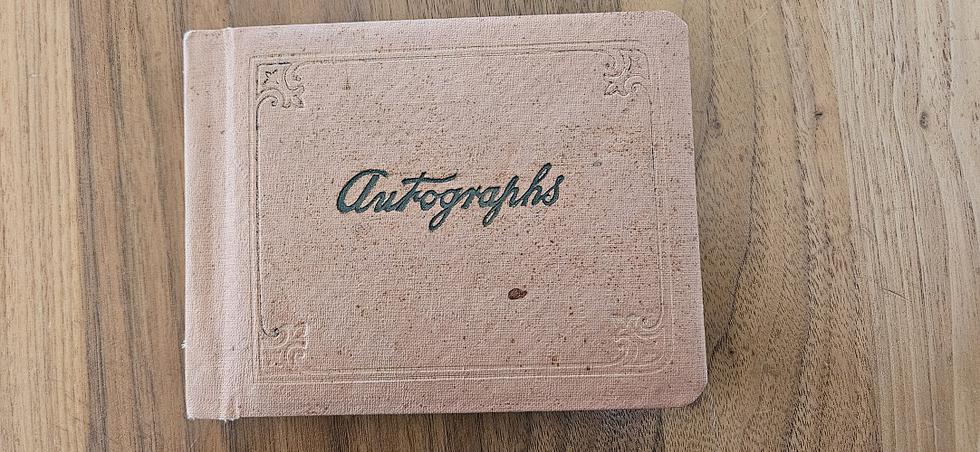
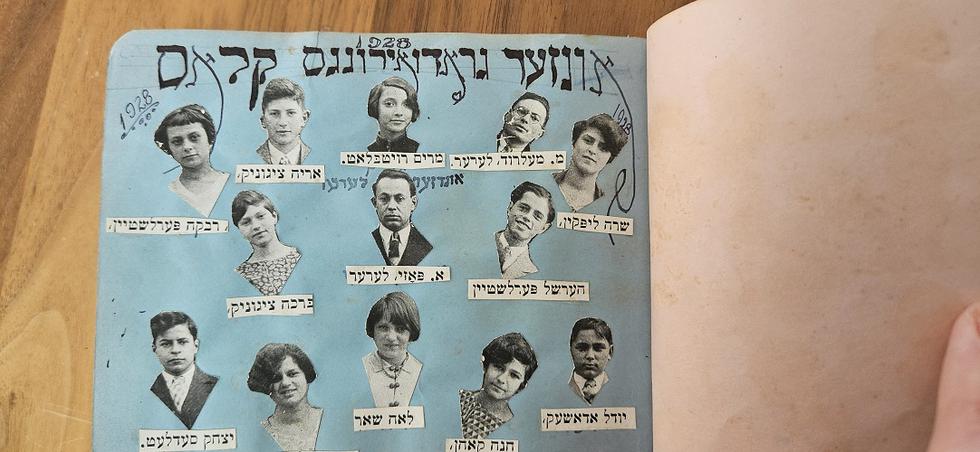
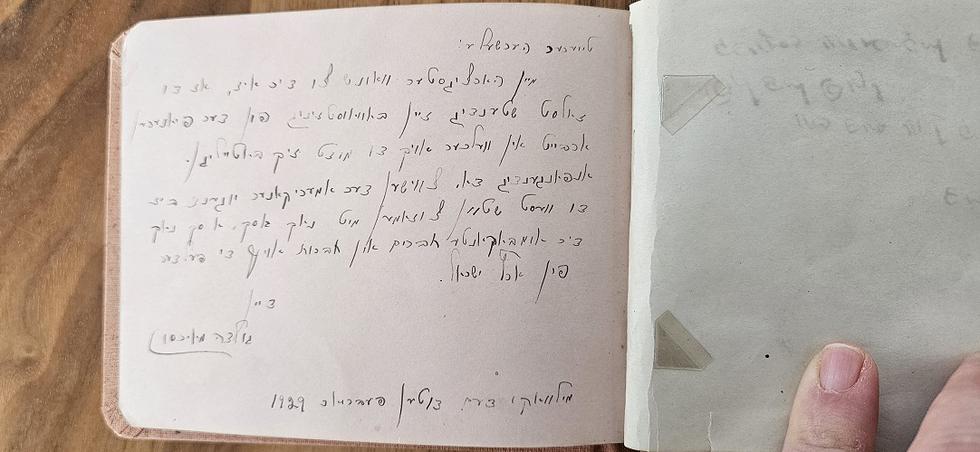
An autograph book that once belonged to the author’s grandfather contains a Yiddish inscription signed by Golda Meir.
COURTESY RICK PERLSTEIN
An autograph book that once belonged to the author’s grandfather contains a Yiddish inscription signed by Golda Meir.PrevNext
Israeli history was everywhere during my upbringing—for instance, in our basement rec room, where we displayed the framed first issue of a newspaper that used to be called The Palestine Post, but then, what with its banner headline “State of Israel Is Born,” became The Jerusalem Post. But I only learned about the King David Hotel bombing when I was around 30, at … the King David Hotel.
Kaplan starts his 2005 monograph by noting that this “dark side of the Zionist dream … has long been ignored and overlooked by both the Zionist (and Israeli) academic and the political leadership.” Just so: I have a textbook, Understanding Israel, by the distinguished Israeli academic Amos Elon, published in 1976 for the American Sunday school market, written on a high school level. It mentions Jabotinsky and Revisionism precisely once.
I asked my Facebook friends what they knew about Revisionist Zionism: Almost without exception, they knew less than what I knew about the Tulsa Race Massacre before exploring it further after seeing Watchmen on HBO.
With trepidation, I reached out to Isaac Chotiner to ask him what he had known about Revisionism when he was so shocked by the settler reciting its doctrines. (And make no mistake: What this settler told him was doctrine. “For Jabotinsky,” Kaplan writes, “human rights, civil equality, and even political equality could not create harmony among individuals. Only the common ties of blood, history, and language could bring people together.”) I explained to Isaac my idea for this essay, with himself as its proof text. Graciously, he gave me his blessing. He had known practically nothing about Revisionism, too.
READING UP ON REVISIONISM, your head might spin at how many of the things you understood as Judaism and Zionism, like bet follows aleph, simply are not so. For instance, everyone has heard the joke “Two Jews, three opinions.”
Now, I will never hear it again without cringing.
Kaplan quotes Amos Oz: “Israel is a fiery collection of arguments, and I like it this way.” Jabotinsky did not like it that way. He was a political monist. “In a healthy soul there is only one ideal,” he wrote. Same for nations: Like Maoists pursuing cultural revolution, Revisionists wished to “purge the Zionist agenda of all other aspirations.” Kaplan summarizes their ideal: “When a person is one with the nation, there is no room for individuality.”
Astonishingly, Revisionists abjured the entire tradition of rabbinic learning: the Hebrew Bible, as a heroic chronicle of a race mighty of warlords, required no interpretation. They especially despised any interpretation that found in Judaism a universalist moral vision—especially the socialist one of their Labor Zionist rivals, the tradition that won the battle to determine Israel’s reality and future.
Until, that is, having won that battle, Labor Zionism, by this late date, lost the war.
Reading Kaplan, I thought of my grandpa, who grew up in the labor Zionist hotbed of Milwaukee. Its matriarch Golda Meir wrote in Yiddish (Revisionists despised Yiddish) in his autograph book how she looked forward to seeing him some day in Eretz Yisrael. He was sent to agricultural college to prepare to pursue the foundational Labor Zionist dream, “making the desert bloom” as a farmer. Long story, which I tell in this interview: He ended up staying in Milwaukee instead, but was always puttering around his garden in Sabra-like khaki shorts and work shirt.
Ze’ev Jabotinsky would have hated my grandfather: To him, farming was emasculating diasporic silliness.
In Jabotinsky’s allegorical novel Samson, Samson’s father teaches the future warrior king, “It is a sin to rape the land. She is our mother.” Kaplan paraphrases the lesson: Liberated from the farmer’s life, “Samson’s spiritual powers become so great that by merely standing by the side of the road, he made traveling merchants stop and give him their goods.” Revisionist ideology called upon Jabotinsky’s disciples to follow the same path, to become what Joseph Klausner, the Revisionist historian and author, described as the ideal warrior: “the warrior of life as part of life itself.”
And I thought of my late father, during my childhood in the age of Menachem Begin. He may also have hardly heard of Ze’ev Jabotinsky. But political ideas can be transmitted in ways far more strange and subtle than via mere books and doctrines. Sometimes, they are just in the air. Dad displayed a full-size replica of an Uzi on his office wall. The model Israeli tanks and warplanes he built in the basement as a hobby were scattered around the house, even hanging from fishing line from the ceiling. He might not have quite had words to express it, but Jabotinsky-style visions of the redemptive power of violence were what his Zionism was all about.
You may know how the story of Revisionism and Israel now plays out. Jabotinsky had a close associate named Benzion, who begat a son, Benjamin Netanyahu, who as prime minister, Kaplan notes, is if anything closer to Jabotinsky’s original Revisionist vision. Begin focused mostly on Revisionism’s vision of territorial conquest. “To Begin,” Kaplan writes, “the Jews were in a constant battle against Amalek.”
If you’ve been following the news from Gaza, you’ll understand the reference.
But Netanyahu added back something Begin had neglected: Zionism as a totalizing reactionary cultural project. For instance, his supporters launched a magazine, Azure, whose editor pressed the idea that Zionism went astray when it embraced “the universalist heritage of the Enlightenment.”
A few weeks back, I recorded a segment for the show Democracy Now!. As I awaited my turn, I heard host Amy Goodman interview Simone Zimmerman, founder of the activist group IfNotNow, which calls itself “a movement of American Jews organizing our community to end U.S. support for Israel’s apartheid system and demand equality, justice, and a thriving future for all Palestinians and Israelis.” I heard Zimmerman say of the war there, “It’s so deeply contrary to our values as Jewish people.” And I knew why she was wrong—at least if by “our” she means all Jews.
I also have come to understand why that kind of utterance never quite made sense to me: They certainly weren’t values I learned in my natal home, looking up at celebratory F-15s. In the course of Zionism’s longer history, it makes even less sense. Say it plain: That is one set of Jewish values. Another celebrates razing Arab villages, just like another set of American values than my own celebrates razing Black ones. In both cases, it is up to people with a stake in those nations to give their all to determine that the humane set of values prevails.
Rick Perlstein is the author of a four-volume series on the history of America’s political and cultural divisions, and the rise of conservatism, from the 1950s to the election of Ronald Reagan. He lives in Chicago.
The number of migrants seeking to cross the U.S.-Mexico border has divided Congress and communities alike, leaving no clear path forward on immigration. But as a largely Christian nation, it’s reasonable that Americans should turn to the ultimate moral authority to solve this issue: Jesus Christ. Here’s how Jesus would handle the crisis at the border, according to Christians.
“I assume he’d immediately disregard the border, fly to the United Kingdom, and execute that heathen Eric Idle for spitting in the face of God in the ’70s.”
“I don’t pretend to know the Lord’s mind. But I’ll tell you what Satan would do: Provide them with food and water and give them shelter in our country.”