Richard Feynman: The Man Who Only Used His Intellect to Enjoy Life

Ali

Ali

4 days ago (ali.medium.com)

Richard Feynman | Source: Caltech Digital Collections

It was a decade ago that I met Richard Feynman when I happened to be casually spending some time at a library. My reason for being there was to peacefully watch the rain behind the comfort of one of the library windows. The library was indeed a perfect location for this purpose of mine, and as the rain began to subside, my eyes wandered over the book which I had selected purely for the sake of its beautiful cover and title. As I quickly skimmed over its pages, I noticed a particularly interesting sentence at the bottom of one page: “I have to understand the world, you see.”

That was a rare moment where I found myself saying “aha” as I was ecstatic with this remarkable discovery. In my excitement, I had wished to order a round of tea for all of the patrons of the library and endlessly speak to them about the book which I held in my hands and its author, Richard Feynman.

“I have to understand the world, you see.” Surely you’re joking, Mr. Feynman!, p.231

I, unfortunately, met Richard Feynman later than I would’ve liked, as no one had mentioned him to me until that point. That is why I wished to close this metaphorical gap by reading all of his works that I could get my hands on, as well as watching all documentaries pertaining to him and interviews with him. I wanted to see the world through his eyes.

Even today, whenever my life’s joy takes a slight dip, I turn back and take yet another look at Feynman’s comments on life in order to regain my felicity. Yes, it’s his ability to put the utmost passion, zeal, and excitement into mentioning even the simplest things in life which revive me, probably since emotions are contagious.

Feynman had the rare and unique ability to take a very different look at seemingly even the most basic of things, such as, at times, the hundreds or thousands of flowers we pass by on the road. As an example of this, during a joint interview with one of his friends who is an artist on the BBC program titled “Horizon,” it is possible to look at his comments and really understand his perspective:

FEYNMAN: THE PLEASURE OF FINDING THINGS OUT (1981)

The full-length original BBC ‘Horizon’ film. RICHARD FEYNMAN, physicist, adventurer and Nobel Laureate, tells the story…

vimeo.com

“I have a friend who’s an artist that has sometimes taken a view of which I don’t agree with very well. He’ll hold up a flower and say, ‘Look how beautiful it is,’ and I’ll agree. Then he says, ‘I, as an artist, can see how beautiful this is, but you, as a scientist, take this all apart, and it becomes a dull thing,’ And I think that he’s kind of nutty. First of all, the beauty that he sees is available to other people and me, too, I believe. I can appreciate the beauty of a flower. At the same time, I see much more about the flower than he sees. I could imagine the cells in there, the complicated actions inside, which also have beauty. I mean, it’s not just beauty at this dimension, at one centimeter; there’s also beauty at smaller dimensions, the inner structure, also the processes. The fact that the colors in flowers evolved to attract insects to pollinate them is interesting; it means that insects can see the color. It adds a question: Does this aesthetic sense also exist in the lower forms? Why is it aesthetic? All kinds of interesting questions which the science knowledge only adds to the excitement, the mystery, and the awe of a flower. It only adds. I don’t understand how it subtracts.”

Today, we call that monologue Feynman’s “Ode to the Flower.”

Furthermore, I had once encountered a cute animation by the creative designer Fraser Davidson, who had used his amazing art to embellish Feynman’s words, which were already of extremely high quality and elegance. Simply put, it was stunningly beautiful, and I humbly extend my congratulations to him.

Video: https://cdn.embedly.com/widgets/media.html?src=https%3A%2F%2Fplayer.vimeo.com%2Fvideo%2F67501824%3Fapp_id%3D122963&dntp=1&display_name=Vimeo&url=https%3A%2F%2Fvimeo.com%2F67501824&image=http%3A%2F%2Fi.vimeocdn.com%2Fvideo%2F439412726_1280&key=a19fcc184b9711e1b4764040d3dc5c07&type=text%2Fhtml&schema=vimeo

All physicists who produce something of benefit for mankind are special individuals. However, Richard Feynman can be said to hold a place even more special than that of physicists.

Richard Feynman was the type of person who would play the bongo or draw people that he saw on pieces of paper in his pocket to clear his mind after simplifying some of the most complicated topics in the world. Editors of Abackus.com have compiled many of his drawings here. I highly suggest you check them out.

Some of Feynman’s drawings. | Source: The Beautiful Drawings of Richard Feynman

This can be solely attributed to the sense of humor he possessed as well as his eccentric nature. It wasn’t difficult to notice that he used his expansive intelligence to simply have fun. Yes, Feynman dabbled in physics purely for the sake of entertainment. He had decided to go down this route in a bid to come out of the state of depression he had fallen into following the passing of his wife, Arline Greenbaum, where he found himself no longer able to enjoy life. He describes how he came to this decision on page 157 of his book titled Surely You’re Joking, Mr. Feynman:

– So I got this new attitude. Now that I am burned out, and I’ll never accomplish anything, I’ve got this nice position at the university teaching classes which I rather enjoy, and just like I read the Arabian Nights for pleasure, I’m going to play with physics, whenever I want to, without worrying about any importance whatsoever.

Left: Richard and Arline | Right: Richard Feynman and Arline Greenbaum at the Albuquerque Sanatorium | Source: Sotheby’s

This decision was a turning point for him as he became a man who was able to use physics to understand the world and put what he understood into terms that enabled those around him to understand it as well. That is why when he discovered this ability, he spectacularly expressed it by saying: “If we have understood the essence of something, we can explain it on all levels.”

Feynman identified himself as a man who was generally curious about anything and everything. His father had taught him to harbor a positive curiosity towards his environment. When strolling through a park one day, his father pointed out a bird and said:

“See that bird? What kind of bird is that? It’s Spencer’s warbler. Well, in Italian, it’s a Chutto Lapittida. In Portuguese, it’s a Bom da Peida. In Chinese, it’s a Chung-long-tah, in Japanese, it’s a Katano Tekeda. You can know the name of that bird in all the languages of the world, but when you’re finished, you’ll know absolutely nothing about the bird. You’ll only know about humans in different places, and what they call the bird. So let’s look at the bird and see what it’s doing — that’s what counts.”

That is why Richard Feynman wasn’t speaking nonsense when he stated that he must understand the world around him. For example, when sitting at a cafeteria for lunch, he notices some children throwing around a plate and finds himself enjoying the physics related to it. The operations he made that day would get him interested in quantum mechanics again. Furthermore, he would later receive a Nobel prize for his work in quantum mechanics. In one of his interviews, Feynman recalls that day as follows:

“When I was eating lunch, some kids threw a blue medallion on the plate of the Cornell sign in the cafeteria. When the plate came down, it wobbled , nd the blue thing went around like this. And I wondered what the relation was between the tubes. I was just playing. So I played around with the equations of motion of the rotating these, and I kept continuing to play with it. This rotation led me to a similar problem of the rotation of the spin of an electron according to Dirac’s equation. And that just led me back into quantum electrodynamics. Everything just poured out.”

Richard Feynman had incredible ideas about the life we live. The assumptions he would make for the future in everyday life would later become true. At his There is Plenty of Room at the Bottom lecture at the American Physical Society in Pasadena, he would talk about some of his predictions. For example, he would say the following about how the computers of his time were too large and that they needed to be made smaller:

“I don’t know how to do this on a small scale in a practical way, but I do know that computing machines are very large; they fill rooms. Why can’t we make them very small, make them of little wires, little elements — and by little, I mean little? For instance, the wires should be 10 or 100 atoms in diameter, and the circuits should be a few thousand angstroms across.”

Everybody who has analyzed the logical theory of computers has come to the conclusion that the possibilities of computers are very interesting — if they could be made to be more complicated by several orders of magnitude. If they had millions of times as many elements, they could make judgments. They would have time to calculate what is the best way to make the calculation that they are about to make. They could select the method of analysis which, from their experience, is better than the one that we would give to them. And in many other ways, they would have new qualitative features.

If I look at your face, I immediately recognize that I have seen it before. (Actually, my friends will say I have chosen an unfortunate example here for the subject of this illustration. At least I recognize that it is a man and not an apple.) Yet there is no machine that, with that speed, can take a picture of a face and say even that it is a man; and much less that it is the same man that you showed it before — unless it is exactly the same picture.

If the face is changed; if I am closer to the face; if I am further from the face; if the light changes — I recognize it anyway. Now, this little computer I carry in my head is easily able to do that. The computers that we build are not able to do that. The number of elements in this bone box of mine is enormously greater than the number of elements in our “wonderful” computers. But our mechanical computers are too big; the elements in this box are microscopic. I want to make some that are submicroscopic.

If we wanted to make a computer that had all these marvelous extra qualitative abilities, we would have to make it, perhaps, the size of the Pentagon. This has several disadvantages. First, it requires too much material; there may not be enough germanium in the world for all the transistors which would have to be put into this enormous thing.

There is also the problem of heat generation and power consumption; TVA would be needed to run the computer. But an even more practical difficulty is that the computer would be limited to a certain speed. Because of its large size, there is finite time required to get the information from one place to another. The information cannot go any faster than the speed of light — so, ultimately, when our computers get faster and faster and more and more elaborate, we will have to make them smaller and smaller.

But there is plenty of room to make them smaller. There is nothing that I can see in the physical laws that say computer elements cannot be made enormously smaller than they are now. In fact, there may be certain advantages.

At one point in his talk, he mentioned how computers needed to distinguish people in a photograph. Years later, this process would be coined and achieved under the name “Digital Image Processing.”

Many of Feynman’s talks and the lessons he gave are incredibly valuable. He had a special knack for teaching, making him an incredible physics teacher. His approach to physics and his teaching style was mesmerizing. For many, he was able to picture incredibly complex physical occurrences in a manner that anyone could understand. He seemed to have made it his duty to explain the most complicated of subjects.

Richard Feynman teaching at Cornell University. | Source: BBVA OpenMind

For example, in his latest book, “Feynman’s Lost Lesson,” he describes the complex orbit that planets take using Euclidean Geometry. When you consider that Euclidean Geometry is taught in middle school, it is clear the scale of Feynman’s achievement. When explaining how magnets attract each other, for example, you can see that he is describing the universe’s mechanics in a simplified manner. For another example, you can see how he can explain how a fire is formed in the video below.

https://cdn.embedly.com/widgets/media.html?src=https%3A%2F%2Fwww.youtube.com%2Fembed%2FN1pIYI5JQLE&display_name=YouTube&url=https%3A%2F%2Fwww.youtube.com%2Fwatch%3Fv%3DN1pIYI5JQLE&image=http%3A%2F%2Fi.ytimg.com%2Fvi%2FN1pIYI5JQLE%2Fhqdefault.jpg&key=a19fcc184b9711e1b4764040d3dc5c07&type=text%2Fhtml&schema=youtube

“The atoms like each other to different degrees. Oxygen, for instance, in the air, would like to be next to carbon, and if they get near to each other, they snap together. If they’re not too close, though, they repel, and they go apart, so they don’t know that they could snap together.

It’s just as if you had a ball, it was trying to climb a hill, and there was a hole it could go into, like a volcano hole, a deep one. It’s rolling along, it doesn’t go down in the deep hole because if it starts to climb the hill and then rolls away again. But if you make it go fast enough, it will fall into the hole.

And so, if you set something like wood and oxygen, there’s carbon in the wood from the tree, and the oxygen comes and hits it, the carbon, but not hard enough, it just goes away again, the air is always coming, nothing is happening.

If you can get it faster by heating it up somehow, somewhere, or somehow, get it started, a few of them come fast, they go over the top, so to speak, they come close enough to the carbon and snap-in, and that gives a lot of jiggly motion, which might hit some other atoms, making those go faster, so they can climb up and bump against other carbon atoms, and they jiggle, and they make them others jiggle, and you get a terrible catastrophe, which is one after the other all these things are going faster and faster and snapping in and the whole thing is changing. That catastrophe is a fire.

It’s just a way of looking at it, and these are happening, they’re perpetual, once they get started, it keeps on going, the heat makes the other atoms capable of reaching to make more heat, to make other atoms and so on. So this terrible snapping is producing a lot of jiggling, and if I put, with all that activity of the atoms there and I put a cup of coffee over that massive wood, that’s going this, it’s going to get a lot of jiggling. So that’s what the heat of the fire is. And then, of course, if; you see this is what happens when you start it like it just goes on and on

Wonder where, how they get started, why is that the wood has been sitting around all this time with the oxygen all this time, and it didn’t do this earlier or something? Where did I get this from? Well, it came from a tree. And the substance of the tree is carbon, and where did that come from? That comes from the air, and it’s carbon dioxide from the air.

People look at trees, and they think it comes out of the ground. The plants grow out of the ground. But if you ask where the substance comes from? You find out where does it come from, and trees come out of the air? They surely come out of the — no, they come out of the air.

The carbon dioxide in the air goes into the tree, and that changes it, kicking out the oxygen, pushing the oxygen away from the carbon, and leaving the carbon substance with water. Water comes out of the ground, you see, only how that getting there came out of the air, didn’t it? It came down from the sky. So, in fact, most of the tree, almost all of the tree, is out of the ground. I’m sorry, it’s out of the air. There’s a little bit from the ground, some minerals, and so forth.

Now, of course, I told you the oxygen, and we know that oxygen and carbon stick together very tight. How is it that the tree is so smart as to manage to take the carbon dioxide, which is the carbon and oxygen nicely combined, and undo that so easily? Ah, life. Life has some mysterious force.

No, the sun is shining, and this is sunlight that comes down and knocks this oxygen away from the carbon, so it takes sunlight to get the plant to work. And so the sun, all the time, is doing the work of separating the oxygen away from the carbon, the oxygen is some kind of terrible by-product, which it spits back into the air and leave in the carbon and water and stuff to make the substance of the tree. And then we take the substance of the tree and stick it in the fireplace. All the oxygen made by these trees and all the carbon would much prefer to be close together again.

Next question, how is the sun so jiggly, so hot? I got to stop somewhere. I leave you something to imagine.”

All of his lessons were recorded very intricately because not everyone could technically take them. Therefore, there had to be a way for his classes to reach everyone. It is possible to find many of his lessons online today, whether in audio or video format. Caltech University actually organized a dedicated website for all of its lectures. You can find them at Feynman Lectures — Caltech. Many of those lectures have been written down and turned into a three-book series called “The Feynman Lectures on Physics.” I recommend them to anyone who enjoys physics.

The Feynman Lectures on Physics | See the reviews on Amazon.

Richard Feynman was closely interested in whether or not his students were learning. He not only wanted his students to learn but for all students to learn. For example, shortly after deciding to become a guest teacher in Brazil to teach others his knowledge, he started learning Portuguese. That is because he thought that a student could best learn in their mother tongue. This was a beautiful approach. His not knowing Portuguese wasn’t a con for him. Furthermore, he didn’t have to relearn Physics lessons in Portuguese. However, he was a teacher that genuinely cared about his students’ education and one that gave them the necessary respect.

Richard Feynman in Brazil | Source: Caltech Archives

Feynman’s only addition to the Brazilian education system wasn’t his lectures either. During his one-year stay, he started to observe and note the fundamental setbacks of the education system in the country. For example, to the observation that, although students in Brazil start learning Physics at a much younger age, there are fewer famous Brazilian physicists, he concluded:

By flipping the pages at random, putting my finger in, and reading the sentences on that page, I can show you what’s the matter — how it’s not science but memorizing in every circumstance. Therefore I am brave enough to flip through the pages now, in front of this audience, to put my finger in, to read, and to show you. So I did it. I stuck my finger in, and I started to read: “Triboluminescence. Triboluminescence is the light emitted when crystals are crushed.” I said, “And there, have you got science? No! You have only told what a word means in terms of other words. You haven’t said anything about nature — what crystals produce light when you crush them, why they produce light. Did you see any students go home and try it? He can’t. “But if, instead, you were to write, ‘When you take a lump of sugar and crush it with a pair of pliers in the dark, you can see a bluish flash. Some other crystals do that too. Nobody knows why. The phenomenon is called “triboluminescence.” ‘Then someone will go home and try it. Then there’s an experience of nature.”

For other educators to also be able to implement these observations, he summarized his experiences into seven items:

• Don’t just teach your students to read.
• Teach them to question what they read and what they study.
• Teach them to doubt.
• Teach them to think.
• Teach them to make mistakes and learn from them.
• Teach them how to understand something.
• Teach them how to teach others.

When Feynman’s supernatural observational skills combined with his great problem-solving ability, there were very rational outcomes. For example, when he craved something sweet one day, he came up with a brilliant solution to the ever-lingering question of “What should I eat” by deciding to only eat chocolate ice cream as dessert for the rest of his life. While Feynman’s solution might not be suitable for everyone, it is a brilliant solution when you look further.

In 1978, when the surrounding area of his forest house in Altadena experienced a fire, he insured his home for flood protection. This action of his puzzled others as there was no river near his house. However, in 1979, the area experienced heavy rains, and many houses experienced flood damage resulting from landslides. His incredible physics knowledge and observational skills helped him take the necessary precautions.

He would also give insightful advice to those he would meet. When Pulitzer Prize winner Herman Wouk decided to write a book about World War II, he wanted to interview Richard Feynman. That was because Richard Feynman was a part of the Manhattan Project, which developed the atomic bomb. At the end of their discussion, when Feynman found that Wouk was a devout man, he told Wouk that to understand this world, he should learn Calculus as it was, “The Language that God Speaks.” This was no simple piece of advice as Feynman didn’t undermine Wouk’s devoutness but instead used a persuasion method that Wouk would be open to. Following Feynman’s advice, Herman Wouk would later enroll in a high school to learn Calculus. He would then go on to write “The Language God Talks: On Science and Religion.”

John von Neumann, Richard Feynman, & Stanislaus Ulam at Los Alamos during #ManhattanProject. | Source: AtomicHeritage

In summary, Richard Feynman was a great man. However, the reason why he is so vital, in my opinion, has nothing to do with his Nobel prize or his having lectured at the largest of universities. Feynman’s view on the world, his endless curiosity, his understanding of himself and living his life accordingly, his brainstorming to understand things and spreading that to others around him, his wits, and especially his disregard for ideas that many people would die on a hill for make him such a great scientist.

Furthermore, even though he was so passionate about physics, his ability to keep his emotions under control made him a great person. The letter he wrote exactly 16 months after losing his first love Arline Greenbaum matches the wordplay and aesthetic that famous poets like Honore de Balzac and Voltaire wrote to their lovers.

October 17, 1946

D’Arline,

I adore you, sweetheart.

I know how much you like to hear that — but I don’t only write it because you like it — I write it because it makes me warm all over inside to write it to you.

It is such a terribly long time since I last wrote to you — almost two years but I know you’ll excuse me because you understand how I am, stubborn and realistic; and I thought there was no sense to writing.

But now I know my darling wife that it is right to do what I have delayed in doing, and that I have done so much in the past. I want to tell you I love you. I want to love you. I always will love you.

I find it hard to understand in my mind what it means to love you after you are dead — but I still want to comfort and take care of you — and I want you to love me and care for me. I want to have problems to discuss with you — I want to do little projects with you. I never thought until just now that we can do that. What should we do. We started to learn to make clothes together — or learn Chinese — or getting a movie projector. Can’t I do something now? No. I am alone without you and you were the “idea-woman” and general instigator of all our wild adventures.

When you were sick you worried because you could not give me something that you wanted to and thought I needed. You needn’t have worried. Just as I told you then there was no real need because I loved you in so many ways so much. And now it is clearly even more true — you can give me nothing now yet I love you so that you stand in my way of loving anyone else — but I want you to stand there. You, dead, are so much better than anyone else alive.

I know you will assure me that I am foolish and that you want me to have full happiness and don’t want to be in my way. I’ll bet you are surprised that I don’t even have a girlfriend (except you, sweetheart) after two years. But you can’t help it, darling, nor can I — I don’t understand it, for I have met many girls and very nice ones and I don’t want to remain alone — but in two or three meetings they all seem ashes. You only are left to me. You are real.

My darling wife, I do adore you.

I love my wife. My wife is dead.

Rich.

PS Please excuse my not mailing this — but I don’t know your new address.

I want to end this piece with this piece of advice he gave to all of humankind:

Fall in love with some activity, and do it! Nobody ever figures out what life is all about, and it doesn’t matter. Explore the world. Nearly everything is really interesting if you go into it deeply enough. Work as hard and as much as you want to on the things you like to do the best. Don’t think about what you want to be, but what you want to do. Keep up some kind of a minimum with other things so that society doesn’t stop you from doing anything at all.

Note 1: Beyond Euclid! is my weekly newsletter that brings you only high-quality math and science stuff to ensure you are having a good week. Please do yourself a favor by subscribing to Beyond Euclid and enjoy it! And if you can be a member and support my work, that would be awesome! Thank you!

Note 2: I get commissions for purchases made through Amazon links in this post.

Ecstasy Study Guide

Cultivating Chronic Bliss

ROB BREZSNY
MAR 26, 2024 (freewillastrology@substack.com)

Author and activist adrienne maree brown writes fabulous books like Pleasure Activism: The Politics of Feeling Good and Emergent Strategy: Shaping Change, Changing Worlds. She does many other marvelous things, too. She’s a doula, Black Feminist, ex-director of the Ruckus Society, and science fiction writer.

She had me on her Witch School podcast recently. Here’s the link.

A summary of our conversation: We discuss ecocide, holding each other tight, the duality of the moment, abiding in paradox, finding the ways that life moves toward life, daddy witchcraft, adoring our stories, arguing with people who want nothing but transcendence, celebrating the privilege of being in this miraculous and mysterious mode, recording dreams as a child, Feral Paradise University, and cultivating a state of ecstatic altered awareness as a way of life.

adrienne and me

+

ECSTATIC STUDY GUIDE: Strategies for cultivating a chronic, low-key, blissful union with everything

1. Nothing primes your ecstatic skill better than invoking and expressing thanks.

Would you like to make yourself smarter and more beautiful? Are you interested in increasing your capacity for ecstasy and improving your health?

Consider the possibility of celebrating regular Gratitude Fests. During these orgies of appreciation, you could confer praise and respect on the creatures, both human and otherwise, that have played key  roles in inspiring you to become yourself. You would devote yourself to invoking and expressing thanks.

Who teaches and helps you? Who sees you for who you really are? Who nudges you in the direction of your fuller destiny and awakens you to your signature truths? Who loves you brilliantly?

+

2. Jungian analyst Arnold Mindell explores the relationship between mind and body. He thinks you can achieve optimal physical health if you’re devoted to shedding outworn self-images.

In his book The Shaman’s Body, he says, “You have one central lesson to learn—to continuously drop all your rigid identities. Personal history may be your greatest danger.”

Kate Bornstein, author of Gender Outlaw: On Men, Women and the Rest of Us, agrees. Raised as a boy, she later became a woman, but ultimately renounced gender altogether. “I love being without an identity,” she says. “It gives me a lot of room to play around.”

What identities would be healthy, even ecstatic, for you to lose? Describe the fun you’d have if you were free of them.

+

3. One of my favorite memories is gazing into my daughter Zoe’s face just moments after her complicated birth. She had been through a heroic ordeal that scared the hell out of me, and yet she looked calm, beatific, and amused.

“She’s part-Buddha and part-elf,” I thought to myself as I held her in my arms.

Gazing back at me, her shiny face blended two states I had never before witnessed together in anyone, let alone in an infant: elegant compassion and playful serenity.

This revelation imprinted me like a blood oath and has informed my life and my work ever since.

Do you have a comparable memory? A time when a key to your destiny was suddenly laid bare? A turning point when you got a gift that has fueled your quest for years?

Revisit that breakthrough. Then ask life for another one.

4. My old philosophy professor Norman O. Brown would periodically interrupt his lectures, tilt his head upward as if tuning in to the whisper of some heavenly voice, and announce in a puckish tone, “It’s time for your irregular reminder: We’re already living after the end of the world. No need to fret anymore.”

The implication was that the worst had already happened. We had lost much of the cultural riches that had given humans meaning for centuries. All that was going to be taken from us had already been taken.

On the bright side, that meant we were utterly free to reinvent ourselves. Living amidst the emptiness, we had nowhere to go but up. What remained was alienating, but it was also fresh.

Working from the hypothesis that you’re living after the end of the world, what are you free to do that you weren’t able to do before? Who are you free to be?

+

5. Many people sincerely think that they will be called before God to account for themselves on Judgment Day.

If you yourself have held that belief, you can stop worrying about it. The fact is, according to a survey of over 800 dissident bodhisattvas, urban witch doctors, sacred agents, and undercover geniuses, that you are called before “God” on Judgment Day on a regular basis.

Since you still exist, you have apparently passed every test so far. “God” obviously keeps finding you worthy.

You shouldn’t get overconfident, of course. But maybe from now on you can assume that although there may be a world of pressure on you, that pressure is natural, merciful, and exactly what you need.

Try this experiment: For seven days, see what it feels like to be secure in your knowledge that you have passed the tests of Judgment Day many, many times.

+

6. Writing on Salon.com, Scott Rosenberg recalled how in his youth he loved to play the fantasy role-playing game Dungeons & Dragons.

“You’d have to choose not one but two ‘alignments’ for your character,” he mused. “Good and evil, of course, but also ‘law’ and ‘chaos.’ And among the people I ran with, ‘chaotic/good’ was the thing to be, because it let you trust other people and still have fun.”

Try out the “chaotic/good” approach for the character you play in your actual life.

+

7. The water you drink is three billion years old, give or take five million years. The stuff your body is made of is at least 10 billion years old, probably older, and has been as far away as 100,000 light-years from where it is right now. 

The air you breathe has, in the course of its travels, been literally everywhere on the planet, and has slipped in and out of the lungs of almost every human being who has ever lived.

Would you act differently if you had a visceral sense of these facts? What unprecedented behavior might you express?

+

8. We tried to get our manifesto Bigger, Better, More Original Sins excerpted in Taboo Busters, a zine published by American expatriates in Berlin.

Unfortunately, the editors didn’t like the spin we put on the subject of taboos. They’re fixated on depraved vices and sickening violations and contrived rejections of conventional values: smuggled photos of dead celebrities lying in morgues, for instance; paintings of religious scenes that use the artist’s blood or other bodily fluids; hospital scenes of Iraqi children with gangrenous stumps where their limbs once were; performance artists who do Marquis de Sade imitations.

Our approach is different. We’re connoisseurs of taboo-busting that yields uplifting pleasures; we identify and initiate transgressions that don’t hurt anyone and expand our intelligence and improve the world.

Here are a few examples: midwife Ida May Gaskin’s suggestion that a partner can expedite the birth process by giving erotic pleasure to the woman in labor; our idea that satirizing one’s own cherished beliefs is the most honest form of mockery; the Menstrual Temple of the Grail’s classes that teach men how to symbolically menstruate in order to learn to love rather than fear the Dark Goddess (described in my book The Televisionary Oracle); my ability to use principles formulated by people I mostly disagree with, as in the case of St. Paul’s “I die daily.”

Are there examples of this kind of taboo-busting in your life? Make a list of uplifting transgressions that expand your intelligence and push you in the direction of cosmic consciousness and improve the world.

9. Question: Which part of you is too tame, overcivilized, and super-domesticated, and what are you going to do about it?

Answer, from a reader named Jason R.:

“I was like a mole in a suburban backyard. I had just one little path I trod each day: to the compost pile and back. I chewed on orange rinds and leftover cabbage. I was tamed by the comfort of my familiar environment, content to have a narrow vision.

“But then I was eaten by a hawk, and became part of a wild, free body. Now I perch on the tops of trees and the peaks of roofs. I survey giddy-wide horizons, from the river to the mesa and far beyond.

“I have a wealth of choices. Where to fly? What to hunt? Who are my allies? My thoughts breathe deep, like the slow explosion of sun on the morning lake.”

How would you answer the same question?

+

10. The outsourcing of fortune-telling is well underway. Psychics and astrologers from India have been showering me with email invitations to take advantage of their services.

One I especially liked: “By the grace of the oceanic flames of goodness that by night simmer the roof of our temple and by day water the roots of our foolish wisdom, we have pledged to slave away our many reincarnations to cause the happy encroachment of bubbling karma on your masterful head. We will coax and guide the effects of various planets, comets, satellites, and dolmens, guaranteeing their flavor to fall on the living accidents of your love so as to ease your slippery upheaval to health.”

In the course of your life, you will probably get puzzling offers of help like this. You may even be given gifts you can barely make sense of and blessings that are unlike anything you imagined you needed.

What might you do to receive them in the spirit in which they’re offered? Here’s one possibility: Cultivate living accidents of love so as to ease your slippery upheaval to health.

+

11. I love this excerpt from “The Seeker,” a poem by Rilke in his Book of Hours (translated by Robert Bly):

I am circling around God,
around the ancient tower,
and I have been circling
for a thousand years,
and I still don't know
if I am a falcon, or a storm,
or a great song.

Here’s my own permutation:

I am circling around love,
around the throbbing hum,
and I have been circling
for thousands of days,
and I still don't know
if I am a wounded saint,
or a rainy dawn,
or a creation story.

Compose your own version.

+

12. I swear the woman standing near me at Los Angeles’ Getty Museum was having an erotic experience as she gazed upon van Gogh’s Irises. She was not touching herself, nor was anyone else.

But she was apparently experiencing waves of convulsive delight, as suggested by her rapid breathing, shivering muscles, fluttering eyelids, and sweaty forehead.

Fifteen minutes later, I saw her again in front of Jean-Honoré Fragonard’s The Fountain of Love. She was only slightly more composed. In a friendly voice, I said, “This stuff really moves you, doesn’t it?”

“Oh, yeah,” she replied, “I’ve not only learned how to make love with actual flowers and clouds and fountains, I can even make love with paintings of them.”

Do you have any interest in mastering the method in this maestro’s madness? Where will you begin?

+

13. Many visionaries and prophets expect there to be a huge and sudden shift in the world’s story sometime soon. A sizable proportion of them even predict that it will be “in the twinkling of an eye”—a sudden cascade of events that completely changes everything everywhere.

Some paint the scenario in broad, catastrophic strokes, expecting something—they’re not sure what—that will have the impact of a large meteor strike or nuclear war or pandemic disease.

Others harbor a more benign but equally fuzzy expectation, speculating that maybe some higher psychic powers will kick in to the multitudes all at once, or that benevolent extraterrestrials will arrive to solve our energy crisis.

What very few of the prophets do, however, is make a precise prediction about exactly will happen. Their visions contain no assurances, no specifics.

And in my view, that’s worse than useless. It fills us with a vague buzz of fear or amorphous sense of hope, but offers no concrete directions about what to do to prevent the dreaded thing or help create the hoped-for thing.

And the fact is, as I see it, they can’t possibly know what the Big Shift is—if, that is, a Big Shift is really looming. The very nature of any Big Shift will be so unexpected, so beyond our imaginations, and so utterly alien to what we understand, that we can’t possibly delineate its contours in advance.

I’m reminded of Jung’s formula, which is that we don’t so much solve our problems as we outgrow them. We add capacities and experiences that eventually make us bigger than the problems.

This theory can be applied in reverse: If we have not yet grown wiser than our current predicament, then we can’t see what the evolved state is beyond the predicament. Our minds are as-yet incapable of embodying the vision that will catapult us beyond the problem we’re stuck in.

When the Big Shift comes, whether or not it comes in the twinkling of an eye, it will be something that no one foresaw, let alone described in detail.

It will be beyond our comprehension, unlike anything we could have visualized headed our way. (Thirty years ago, did anyone imagine the Internet or the impact it’s having?)

And if that’s true, then the inescapable conclusion is: There’s no use trying to plan ahead for it. It’s counterproductive to hold a particular scenario in our mind as the likely development. And it’s downright crazy to harbor a chronic sense of dread about an unknowable, unimaginable series of events.

The best way to prepare for a Big Shift is to cultivate mental and emotional states that ripen us to be ready for anything: a commitment to not getting lost inside our own heads; a strategy to avoid being enthralled with the hypnotic lure of painful emotions, past events, and worries about the future; a trust in empirical evidence over our time-worn beliefs and old habits; a talent for turning up our curiosity full blast and tuning in to the raw truth of every moment with our beginner’s mind fully engaged; and an eagerness to dwell gracefully in the midst of all the interesting questions that tease and teach us.

Everything I just described also happens to be an excellent way to prime yourself for a chronic, low-grade, always-on, simmering-at-low-heat brand of ecstasy—a state of being more-or-less permanently in the Tao, in the groove, in the zone.

Try it!

+

14. The Beauty and Truth Lab term “blisssavvvy” means “highly skilled at inducing states of rapture, synergy, and ecstatic empathy.” Do you have any ideas about how you could cultivate blisssavvvy?

+

15. While loitering on a sidewalk outside a nightclub in San Francisco, I found the cover of a booklet lying in the gutter.

Written by Marilena Silbey and Paul Ramana Das, it was called How to Survive Passionate Intimacy with a Dreamy Partner While Making a Fortune on the Path to Enlightenment.

Sadly, the rest of the text was missing. Ever since, hungry for its wisdom, I’ve tried to hunt down a copy of the whole thing, but to no avail.

I’m hoping you will consider writing your own version of the subject. If you do, please send it to me.

• • • • • • • • • • • • • • • • • • • • •• • • • • • • • • • • • • • • • • • • •

• • • • • • • • • • • • • • • • • • • • •• • • • • • • • • • • • • • • • • • • •

Bully Update: Netanyahu Cancels Delegation to US After It Abstains From Cease-Fire Vote at U.N.

Caitlin Yilek/CBS News

Netanyahu Cancels Delegation to US After It Abstains From Cease-Fire Vote at U.N.Israeli Prime Minister Benjamin Netanyahu. (photo: Ronen Zvulun/AFP)

26 march 24 (RSN.org)

Israeli Prime Minister Benjamin Netanyahu said Monday he will not send a delegation to Washington after the U.S. refused to veto a United Nations Security Council resolution calling for an immediate cease-fire in Gaza.

The Security Council passed the resolution on Monday that called for a cease-fire during the Muslim holy month of Ramadan, which ends in two weeks. The resolution also demands the unconditional release of the remaining hostages that have been held captive since the Oct. 7 terror attack by Hamas.

The U.S. abstained from the vote, which Netanyahu’s office said was a “clear retreat from the consistent position of the U.S.” since the start of the Israel-Hamas war.

“This withdrawal hurts both the war effort and the effort to release the hostages, because it gives Hamas hope that international pressure will allow them to accept a cease-fire without the release of our hostages,” Netanyahu’s office said.

Netanyahu made it clear to the U.S. on Sunday that he would not send the delegation to the U.S. to discuss the Israeli military’s plans for an operation in Rafah without the veto, according to his office.

State Department spokesman Matthew Miller said Israel’s statement was “surprising and unfortunate.”

The U.S. had concerns about the resolution because it did not condemn the terrorist attack, but did not veto it because its call for a cease-fire and the release of hostages is consistent with U.S. policy, Miller said, calling the resolution “non-binding.”

White House spokesman John Kirby called the cancelation “disappointing” and said the U.S. was “perplexed by this” because the U.S. abstention “does not represent a shift in our policy.”

“The prime minister’s office seems to be indicating through public statements that we somehow changed here. We haven’t, and we get to decide what our policy is,” Kirby said. “It seems like the prime minister’s office is choosing to create a perception of daylight here when they don’t need to do that.”

Kirby said the U.S. still supports Israel and is providing weapons systems and other capabilities for the country to defend itself.

The rift has added to growing tensions between the longtime allies over Rafah, a city near Egypt’s border where more than 1 million displaced Palestinians are estimated to have taken refuge after fleeing fighting elsewhere in Gaza.

The Biden administration has supported Israel’s right to defend itself in response to the terrorist attack, but has become more critical of Netanyahu’s government amid a humanitarian crisis in Gaza and has urged restraint in Rafah. Israel says it needs to proceed with its Rafah operation to destroy the remaining Hamas battalions there.

“We don’t believe that a major ground operation in Rafah is the right course of action, particularly when you have a million and a half people there seeking refuge, and no conceived plan, no verifiable plan to take care of them,” Kirby said. “We’ve been very consistent on that.”

Israeli Defense Minister Yoav Gallant is still visiting Washington this week to meet with Secretary of State Antony Blinken, Defense Secretary Lloyd Austin and national security adviser Jake Sullivan, but those meetings are separate from those with the now-canceled delegation, Kirby said.

Easter thoughts from Steve Martin

“As we age we become our better selves, or our worse selves”.

–Steve Martin, 78

(Courtesy of William P. Chiles)

Stephen Glenn Martin (born August 14, 1945) is an American comedian, actor, writer, producer, and musician. Known for his work in comedy films, television, and recording, he has received many accolades, including five Grammy Awards, a Primetime Emmy Award and an Honorary Academy Award, in addition to nominations for two Tony Awards. Wikipedia

Bully Update: Putin’s Enemies of Choice

Timothy Snyder/Substack

Putin’s Enemies of ChoiceThe aftermath of a Russian missile attack in the Ukrainian city of Zaporizhzhia. (photo: Patrick Colson-Price/USA Today)

26 march 24 (RSN.org)

ALSO SEE: Timothy Snyder: Thinking About (Substack)

This past Friday, 22 March, a horrifying terrorist attack took place in Crocus City Hall in the outskirts of Moscow. Islamic State plausibly claimed responsibility.

Earlier that day, Russian authorities had designated international LGBT organizations as “terrorist.” Also earlier that day, Russia had carried out massive terror attacks on Ukrainian cities. Those actions reveal the enemies Putin has chosen. As the attack on Crocus City Hall demonstrated, his choices have nothing to do with actual threats facing Russians.

Russia and the Islamic State have long been engaged in conflict. Russia has been bombing Syria since 2015. Russia and the Islamic State compete for territory and resources in Africa. Islamic State attacked the Russian embassy in Kabul. This is the relevant context for the attack outside Moscow. The horror at Crocus City Hall obviously has nothing to do with gays or Ukrainians or any other of Putin’s enemies of choice.

Putin had publicly dismissed the real threat. The United States had warned Russia of a coming attack by Islamic State. The United States operates under a “duty to warn,” which means that summaries of intelligence about coming terrorist attacks are passed on, even to states considered hostile, including (to take recent examples) Iran and Russia. Putin chose to mock the United States in public three days before the attack.

People reasonably ask how a terror attack could succeed in Russia, which is a police state. Regimes like Russia’s devote their energy to defining and combating fake threats. When a real threat emerges, the fake threats must be emphasized. Predictably (and as predicted), Putin sought to blame Ukraine for Crocus City Hall.

What if Russians realize that Putin’s designations of threats are self-serving and dangerous? What if they understand that there are real threats to Russians ignored by Putin? He has devoted the security apparatus to the project to destroying the Ukrainian nation and state. What if Putin’s obsession with Ukraine has only made life worse for Russians, including by opening he way to actors who are in fact threats to Russian life, such as Islamic State?

These are the questions Putin must head off. It is not easy, however, to blame Ukraine for Islamic State terrorism. Putin’s first media appearance, nearly a day after the attack, was far from convincing. The specifics he offered were nonsensical. He claimed that the suspects in the terrorist act were heading for an open “window” on the Russian-Ukrainian border.

The term “window” is KGB jargon for a spot where the border has been cleared for a covert crossing. That the leader of the Russian Federation uses this term in a public address is a reminder of his own career inside the KGB. Yet Putin had obviously not thought this claim through, since a “window” must involve a clear space on both sides of the border. For escaping terrorists, it would be the Russian side that opened the window. By speaking of a “window” Putin indicated that the terrorists had Russian confederates preparing their exit, which he presumably did not mean. It seems that Putin was hastily making things up.

Setting aside the “window” business, though, the whole idea that escaping terrorists would head for Ukraine is daft. Russia has 20,000 miles of border. The Russian-Ukrainian part of it is covered with Russian soldiers and security forces. On the Ukrainian side it is heavily mined. It is a site of active combat. It is the last place an escaping terrorist would choose.

And there is no evidence that this is what happened. Russia claims that it has apprehended suspects in Bryansk, and claimed that this means that they were headed for Ukraine. (Western media have unfortunately repeated this part of the claim.) Regardless of whether anything about these claims is true, Bryansk would suggest flight in the direction of Belarus. Indeed, the first version of the story involved Belarus, before someone had a “better” idea.

In moments of stress, Russian propaganda tries out various ways to spin the story in the direction preferred by the Kremlin. The reputed suspects are being tortured, presumably with the goal of “finding” some connection to Ukraine. The Kremlin has instructed Russian media to emphasize any possible Ukrainian elements in the story. Russian television propaganda published a fake video implicating a Ukrainian official. The idea is to release a junk into the media, including the international media, and to see if anything works.

Amidst the flotsam and jetsam are those who spread Russian propaganda abroad, who try out versions more extreme than Putin’s. Putin does not directly deny that Islamic State was the perpetrator — he simply wants to direct attention towards Ukraine. But actors outside Russia can simply claim that Ukraine was at fault. Such actors push the discussion further than the Kremlin, and thereby allow Russia to test what might work abroad.

As a result, we have a bizarre discussion that leads to a harmful place. Islamic State claims responsibility for Crocus City Hall. The Islamic State publishes dreadful video footage. Russia cannot directly deny this but seeks help anyway in somehow pushing Ukraine into the picture. Those providing that help open a “debate” by denying that Islamic State was involved and making far more direct claims about Ukraine than the Kremlin does. (This brazen lying leads others to share of Islamic State perpetration video (don’t share it; don’t watch it). So the senseless “debate” helps Islamic State, since the reason it publishes perpetration videos is to recruit future killers.)

Meanwhile, Russia’s senseless war of aggression against Ukraine continues. In its occupied zones, Russia continues to kidnap Ukrainian children for assimilation and continues to torture Ukrainians and place them in concentration camps. It continues to send glider bombs, drones, cruise missiles and rockets at Ukrainian towns and cities.

On the same day as the attack at Crocus City Hall, Russia carried out its single largest attack to date on the Ukrainian energy grid, leaving more than a million people without power. Among other things it fired eight cruise missilesat the largest Ukrainian dam. Russia attacked the city of Zaporizhzhia (the consequences are in the four photos) and other cities throughout Ukraine.

On Friday Russia fired, in all, eighty-eight missiles and sixty-three explosive drones into Ukraine. And that represents just a single day (if an unusually bad one) of a Russian war of terror in Ukraine that has gone on for more than two years.

Putin is responsible for his mistakes inside Russia. And he is at fault for the war in Ukraine. He is trying to turn two wrongs into a right: into his own right to define reality however he likes, which means his right to kill whomever he chooses.

Bully Update: Netanyahu Put Israel on a Collision Course With America. The UN Cease-Fire Vote Is the Dire Result

Alon Pinkas/Haaretz

Netanyahu Put Israel on a Collision Course With America. The UN Cease-Fire Vote Is the Dire ResultIsraeli Prime Minister Benjamin Netanyahu. (photo: Brookings)

26 march 24 (RSN.org)

We have repeatedly written since last November that this would happen, and the U.S. warned Israel incessantly it was in the cards. Israel ignored the threats and is now disingenuously pretending to be surprised and shocked

Monday’s UN Security Council resolution “demanding” an immediate cease-fire – adopted by 14 members, with the United States abstaining – puts Israel on a collision course with both the UNSC and, particularly, the Americans.

No one should be surprised by this. We have repeatedly written since last November that this would happen, and the U.S. warned Israel incessantly it was in the cards. Israel ignored the threats and is now disingenuously pretending to be surprised and shocked.

When you ignore U.S. requests, dismiss a president’s advice, inundate the secretary of state with endless spin, casually deride American plans, exhibit defiance and intransigence by refusing to present a credible and coherent vision for postwar Gaza, and actively pursue an open confrontation with the administration – there’s a price to pay.

Alongside his unwavering and unconditional support, President Joe Biden warned Israel that there are also consequences. Vice President Kamala Harris followed suit, as did Secretary of State Antony Blinken on numerous occasions since October 7.

Most recently, Senate Majority Leader Sen. Chuck Schumer publicly warned Israel of the ramifications of Prime Minister Benjamin Netanyahu’s patterns of behavior and imprudent policies.

Seriously engaging the U.S. on any of the above issues, without necessarily agreeing to everything, would have prevented the current deep (and deepening) rift. However, Mr. Netanyahu deliberately preferred a showdown with the world and the United States. He managed to turn a just war and an imperative, justifiably harsh retaliation into world condemnation.

The U.S.’ decision to abstain, refraining from vetoing a cease-fire vote for the first time since October 7, puts substantial added political pressure on Israel and increases its already dire state of isolation in two arenas: the Security Council itself, and relations with the United States.

In terms of the Security Council, Israel will conveniently tell itself that the resolution is not a big deal, there will be no sanctions, the sun will shine today and, besides, the UN was always and remains anti-Israel.

Perhaps. But that’s not the point. A Security Council resolution binds all UN members. Furthermore, it requires that council member-states assist in the implementation of any adopted resolution. That doesn’t mean sanctions, but it is a very unpleasant place for any country – let alone a democracy, not to mention a U.S. ally – to be in.

The more significant arena is U.S.-Israeli relations. Their deterioration under Mr. Netanyahu has been written about extensively and profusely over the past year, but the Security Council resolution is a new low.

Most recently, Blinken warned Israel of an impending isolation that it is living in defiant and unwise denial of. “The Israelis seemed oblivious to the fact that they are facing major, possibly generational damage to their reputation not just in the region but elsewhere in the world. … We are concerned that the Israelis are missing the forest for the trees and are making a major strategic error in writing off their reputation damage,” wrote Assistant Secretary of State Bill Russo, the official overseeing global public affairs in the State Department, in a memo leaked to NPR.

For the past four months, the United States has negatively revised its assessment of Israel under Netanyahu: He does not behave as an ally. He has accrued a debilitating credibility deficit over the years on a multitude of issues and behavioral patterns. He failed to come up with a plan for postwar Gaza – and he is seriously suspected of prolonging the war for his own political survival.

His ongoing recalcitrance finally exhausted America’s patience.

Is AI More Creative Than Humans?

A new study answers the question but raises a few of its own.

Updated March 20, 2024 |  Reviewed by Ray Parker (psychologytoday.com)

KEY POINTS

  • A new study compared human and AI performance on various creative tasks.
  • It found AI excelled in originality and elaboration, sparking debate about the “soul” of AI creativity.
  • The study used objective scoring to evaluate creativity, avoiding human rating biases.
Shutterstock/AIGenerated

Source: Shutterstock/AIGenerated

Sometimes, it feels like the battle lines between artificial intelligence (AI) and humanity are drawn—a computational comparison that focuses on speed and accuracy. However, the domain of creativity provides a more complex basis for analysis and is often “the last holdout” for the uniqueness that defines humanity.

However, in the quest to unravel the creative potential of AI, particularly through the lens of large language models (LLMs), a simple question frames the discussion: Is AI more creative than humans? A new study puts man against machine to ask this simple question and reveal insights that might cut to the core of our very humanity.

Defining a Framework of Creativity

At the heart of this exploration are four distinct tasks, each crafted to probe various facets of creative thought:

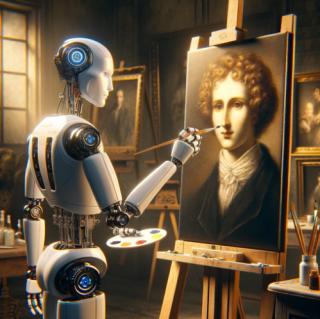
Art: DALL-E/OpenAI

Source: Art: DALL-E/OpenAI

  • The Alternative Uses Task. Challenges participants to envision novel uses for everyday items, pushing the boundaries of conventional thinking.
  • The Consequences Task. Explores the ability to foresee the ripple effects of hypothetical scenarios, stretching the imagination to its limits.
  • The Divergent Associations Task. Tests the capacity to generate a list of unrelated nouns, showcasing the breadth of conceptual thinking.
  • The Visual Combinations Task. Engages participants in merging unrelated images to weave new, cohesive narratives, highlighting the ability to synthesize and create harmony from diversity.

article continues after advertisement

Setting an Even Playing Field

The study sought a balanced comparison between human creativity and GPT-4’s capabilities. With 151 human participants matched against 151 instances of GPT-4 responses, the evaluation focused on the quality, originality, and elaboration of ideas, transcending mere quantitative measures.

For this analysis, traditional human ratings, commonly used to evaluate divergent thinking tasks, were not employed for scoring. Instead, the study utilized the open creativity scoring (OCS) tool to automate the scoring of semantic distance, thus capturing the originality of ideas objectively by assigning scores based on the remoteness (uniqueness) of responses.

This method circumvents potential human-centered issues such as fatigue, biases, and the cost of time, which could influence the scoring process. The automated scoring approach has been found to correlate robustly with human ratings, suggesting that it effectively captures the essence of creativity without the need for a separate group of humans to evaluate the responses of both the human and AI arms of the study.​

AI Offers Bold Originality and Elaboration

The results of this comparative study offer compelling insights into the creative prowess of GPT-4. Notably, an independent sample t-test revealed no significant differences in total fluency between humans and GPT-4, indicating a level playing field in terms of the quantity of generated ideas.

However, the crux of creativity lies in originality and elaboration. A detailed analysis of variance for originality, based on semantic distance scores, uncovered significant main effects, favoring GPT-4 regardless of the prompt, with notable interaction effects between the group and prompt, highlighting GPT-4’s superior performance in originality across different scenarios.

Furthermore, when comparing elaboration scores, which quantify the detail within each valid response, GPT-4’s responses were significantly more elaborate than those of human participants. For instance, in response to using a fork, where a human might simply suggest “as a hair comb,” GPT-4’s elaboration would encompass a more detailed narrative, illustrating its ability to weave richer, more complex ideas from a single prompt.

Is AI Creativity Contrived?

The reliance on automated scoring systems like the OCS tool in evaluating the creative outputs of AI and humans raises questions about the nature of creativity itself. While these systems can objectively assess the originality and elaboration of responses based on semantic distance, they may overlook the intrinsic, intangible qualities that human creativity embodies.

article continues after advertisement

Creativity, in its purest form, is often seen as an expression of something uniquely human—some may even say the soul. It’s this manifestation of the innermost thoughts and feelings that transcend mere linguistic or conceptual novelty. The concern that AI-generated ideas, despite their originality or complexity, might lack the depth, intentionality, and emotional resonance that human creativity inherently possesses is poignant.

It touches upon the broader debate of whether creativity can be genuinely replicated or remains an inherently human trait, deeply intertwined with consciousness and subjective experience.

In this context, the study’s approach, while innovative and rigorous in its methodology, may inadvertently overlook these qualitative aspects of creativity, leading to a perception that AI’s creative endeavors, no matter how sophisticated, are somewhat contrived, lacking the “soul” that human artists infuse into their creations.

The Future of Collaborative Creativity

The findings of this study, particularly the detailed results supporting GPT-4’s superior originality and elaboration, prompt a reevaluation of the nature of creativity. It suggests a future in which AI’s creative potential not only rivals but in certain aspects surpasses human creativity, opening up new horizons for collaborative innovation. The question “Is AI more creative than humans?” thus evolves into a dialogue about the synergistic possibilities between human ingenuity and artificial intelligence, heralding a new era of creative exploration in which the fusion of human and AI creativity redefines the boundaries of innovation and artistic expression.

About the Author

John Nosta

John Nosta is an innovation theorist and founder of NostaLab.

Online:

 Nostalab Official WebsiteLinkedInTwitter

Tarot Card for March 27: The Four of Swords

The Four of Swords

The Lord of Truce marks a period where we are able to rest and recover, after a difficult time in our lives. It will appear after trauma – the breakdown of a relationship; a troublesome and worrying time financially; an operation or major illness.There will always have been conflict and stress beforehand, this card marks the kind of breathing space we often need in order to clarify our view of the situation, to gather our strength and to decide how best to move forward. When this card appears in a reading, the first thing it tells us is that it is time to rest, time to stop worrying about the things that have happened.However, it must be noted that Truce is not peace. This is a respite – a down time in which we can catch our breath, ease our tension and relax for a brief time. But once that has been done, we need to recognise that there is still more to be done – the battle isn’t over yet. So when acting under the influence of this card, bear in mind that first you must take it easy, but then you must begin to plan your next step.If we fail to do that, then when the effect of the Lord of Truce passes away, we shall be left high and dry, with no route planned for our future. And in that case the turmoil which preceded this card may well manifest again.Sometimes, when the card comes up with a ‘person’ card, it indicates that a rift can begin to be mended between two people who have been at loggerheads previously. In this case, again, it is important to stress that this card does not indicate peace – as before, much more work will need to be done before the damage is entirely healed. We need to be on our guard, too, for other people running personal agendas which may mean that the ‘truce’ is more convenient than sincere.

Morning Meditation

Haizhan Zheng

With every breath, I breathe in God’s love

Endless love and power are available to me, whenever I remember who I am. I am a child of the universe, a thought in the Mind of God, forever surrounded and sustained by the substance of divine mind.

I open my mind today to the recognition of my true nature and the nature of the universe. I open my eyes today to the love that is all around me. With every breath, I breathe in the holy substance that infuses all things.

On this day, I remember and will not forget that love is all around me. I acknowledge love’s presence in myself and others, and breathe in with every breath all the power it bestows.

With every breath, I breathe in God’s love

Macron: Believing Russia Will Stop at Donbas, Crimea Is a Mistake

Orysia Hrudka/Euromaidan Press

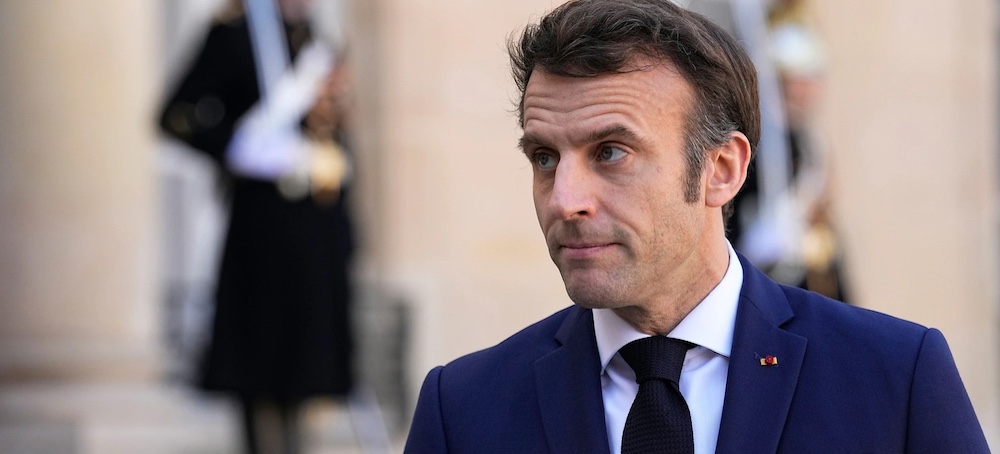
Macron: Believing Russia Will Stop at Donbas, Crimea Is a MistakeFrench President Emmanuel Macron. (photo: Michel Euler/AP)

25 march 24 (RSN.org)

French President Emmanuel Macron cautioned against underestimating Russia’s intentions.

In a statement following the conclusion of a European Union summit in Brussels, French President Emmanuel Macron warned against underestimating Russia’s ambitions in the ongoing war.

Speaking to reporters, Macron emphasized that it would be a misjudgment to assume that Russia’s aggressive actions would be limited to the Donbas and Crimea.

He also highlighted that the Kremlin’s portrayal of the situation as a war due to “Western intervention on Ukraine’s side” raises questions about the broader military goals of Russia. “By using this term, one is also even opening up uncertainty about Russia’s military objectives,” Macron said.

Macron’s assertion that it would be a mistake to think Russia plans to halt its aggression in the Donbas and Crimea regions aligns with his broader stance on the necessity for Europe to prepare for war to maintain peace. In an interview earlier this month, Macron emphasized that Europe’s security is directly linked to the situation in Ukraine and that the continent must not show weakness. He reiterated the importance of keeping the option of sending Western troops open. This marks Macron’s shift from a more diplomatic approach to a firmer stance on military readiness.

Consciousness, sexuality, androgyny, futurism, space, the arts, science, astrology, democracy, humor, books, movies and more