Communities of Color in St. Paul, and Across the Country, Are Making Efforts to Remember and Rebuild
The 1956 National Interstate and Defense Highways Act reshaped the nation, but at the cost of displacing thousands of households. Author Ryan Reft highlights how one community in Minnesota is suturing itself back together. Courtesy of Library of Congress.
by RYAN REFT | DECEMBER 4, 2023 (ZocaloPublicSquare.org)
How do you remember—and reconnect—a neighborhood destroyed by highway construction over a half-century ago?
Since 1983, this has been the mission of Saint Paul, Minnesota’s annual Rondo Days festival. “[You see] everyone you grew up with and everybody you’ve ever known, your childhood and everything,” said former Rondo resident Brian White, Sr. in 2015. “You might see people you haven’t seen since you were five, six years old out here.”
It may mix historical exhibits, field day tournaments, 5K runs, picnics, dances, and religious services, but the festival is no ordinary reunion. Rather, it is an effort to memorialize a riven historically Black community, while also giving living reminder to the persistence of the Rondo diaspora.
Since the early twentieth century, Pullman porters, factory and packinghouse workers, and accountants all populated Rondo, making it “a hub, a place where military, professional, and streetwise Black people gathered, talked, and exchanged ideas,” Marvin Roger Anderson, a co-founder of Rondo Days told the St. Paul Pioneer Press in 1990. By the 1950s, bounded by Rice Street to the east, Lexington Parkway to the west, and University and Selby Avenues to the north and south, Rondo’s roughly 1.25 square miles were home to about 80% of St. Paul’s Black population.
It was a place of “beautiful and gracious homes,” remembered former resident Joyce Williams in a 2016 oral history interview, with “hardwood floors, beautiful woodwork, hutches, [and] stained glass windows.”
In 2021, while testifying to the Minnesota House transportation committee, Representative Ruth Richardson called Rondo “the heartbeat of the Black community” of St. Paul.
Nonetheless, between 1956 and 1968, the state of Minnesota and the city of St. Paul razed the neighborhood in order to make way for I-94, the east-west interstate that runs from Michigan to Montana. Richardson pointed out that, far from an accident, the decision to route the highway through Rondo was intentional: Officials had dismissed an alternative, less destructive plan through an “underutilized industrial area.”
The highway construction devastated St. Paul’s Black middle class. Over 600 Black families lost their homes, alongside longstanding businesses and institutions. Rondo residents also lost the ladder to generational wealth: a 2020 study suggested that, compounded over time, the lost home equity added up to nearly $160 million.
The 1956 National Interstate and Defense Highways Act—at the time, the single biggest federal infrastructural investment in the nation’s history—reshaped the nation in countless ways. And it came at great cost. Between 1957 and 1977, nearly 1 million Americans lost their homes to highway construction, most of them people of color. Since the early 1990s, some 6,300 additional families have been displaced by highway expansion projects.
The highway construction devastated St. Paul’s Black middle class. Over 600 Black families lost their homes, alongside longstanding businesses and institutions. Rondo residents also lost the ladder to generational wealth.
Planners knew that the interstates threatened urban communities. In 1958, the Sagamore Conference—convened by the Highway Research Board and attended by top federal, state, and municipal officials, academics, and civic leaders—issued a report clearly noting the perils of highway construction. It warned of widespread displacement, with low-income, non-white, and elderly residents facing the “greatest potential injury.” (Nevertheless, to this day, literature from the Department of Transportation that is used frequently in planning and engineering graduate programs self-servingly casts this history as a series of minor, unexpected, and unintended consequences.)
In some cities, “freeway revolts” did halt construction, but this advocacy failed to include non-white homeowners. In Memphis, the white, middle-class-led Citizens to Preserve Overton Park successfully challenged the construction of a highway corridor for I-40 in the Supreme Court. But Black activists in Nashville who organized a similar group to challenge I-40 construction through their community failed in the U.S. Court of Appeals, and the Supreme Court denied the case a hearing. Nashville’s Black community could only stand by as the highway ripped through its businesses, homes, and institutions.
In June 2021, Secretary of Transportation Pete Buttigieg initiated new efforts at the Department of Transportation (DOT) to address this problematic legacy, dedicating $1 billion to “reconnect cities and neighborhoods racially segregated or divided by road projects.”
But money doesn’t do anything on its own. To repair the damage that the planners of the 1950s wrought on communities of color, we have to address both the physical infrastructure itself, and the stories we tell about it. That means first, acknowledging and reckoning with the interstates’ history and, second, community-based efforts to restore the physical fabric of the divided neighborhoods.
To change the cultural narrative of the highways, urban planners Sarah Jo Peterson and Steven Higashide advocate for “truth and reconciliation” carried out, in part, by existing institutions such as the Transportation Research Board and university researchers, or perhaps even a Congressional commission. “If we have any hope of avoiding future injustices, we have to fully understand the past,” notes Higashide.
These efforts feed physical solutions like ReConnect Rondo, which received a $2 million grant from Buttigieg’s Department of Transportation Reconnecting Communities and Neighborhoods Grant Program in February 2023. ReConnect Rondo is aligned with but independent from Rondo Days: an initiative “to create Minnesota’s first African American cultural enterprise district connected by a community land bridge” that will “repair, restore, and revitalize Rondo.”
Nearly 25 years ago, St. Paul journalist Joe Soucheray wrote that the Rondo Days festival “comes in softly and touches in a healing way the fading scar of Rondo Ave.” Over the years, this soft touch has had an impact, including by efforts to make the community more visibile through signage, a tribute at the local library, and Rondo’s inclusion in a permanent exhibit at the Minnesota History Center. More recently, a small pocket park called the Rondo Commemorative Plaza opened with the intention to honor the community and welcome new members, such as Somali, Karen, Hmong, and Oromo residents. ReConnect Rondo’s dream of physically and psychologically suturing the old community through a land bridge serves as an extension of this decades-long project.
The eventual Rondo land bridge will be the physical culmination of the efforts catalyzed by Rondo Days. But it is only possible today thanks to the labor of locals, former residents, and activists to make the community’s narrative known. Now it’s up to the rest of us to build it.
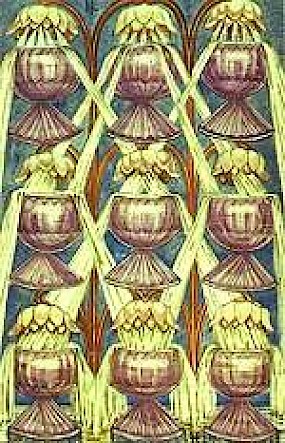
This is a lovely card, known as Lord of Happiness. It talks about a sense of inner fulfilment and bliss, which radiates outward to touch everybody with whom you come into contact.
At a spiritual level, we’re talking about inner harmony, contentment and tranquillity – an appreciation of the High Powers, feeling at one with the Universe. This feeling leads to feeling that we are blessed by life.
On an everyday level, the card will often come up to mark periods of high achievement, and the resulting sense of pleasure and satisfaction. It will also come up to acknowledge joy and happiness in an emotional relationship.
When this card appears in your reading, it’s important to make the time to simply enjoy your own feelings, to revel in your sense of calmness and joy.
Ms. Davis is the author, most recently, of “Floating in the Deep End: How Caregivers Can See Beyond Alzheimer’s.”
Sign up for the Opinion Today newsletter Get expert analysis of the news and a guide to the big ideas shaping the world every weekday morning. Get it sent to your inbox.
In the wake of Sandra Day O’Connor’s passing, I saw a photo of her with my father, Ronald Reagan, after he had nominated her to be the first woman on the Supreme Court. They were outside on the grounds of the White House, walking side by side, smiling, obviously in the midst of a conversation. These were two people who were athletic, strong, driven to make a difference in the world.
I find it poignant to see them in that form, knowing, as we now do, that both would later be eroded by dementia. Both would make the rare choice to go public with the news of their diagnosis. And both would die from complications of the disease, which always wins in the end.
But before any of that, the disease would come for Sandra Day O’Connor’s husband, John Jay O’Connor III.
The justice will long be remembered for breaking the gender barrier on the Supreme Court, a brave public victory that reverberated across the American judiciary, across the legal profession she had to fight so hard to join, across the nation’s workplaces. She also deserves credit, however, for having broken a second boundary: She spoke with rare candor about how Alzheimer’s disease plays out — with its heavy responsibility and complex ethical issues — within the private confines of a marriage.
Sandra Day and John O’Connor met in the early 1950s when both were students at Stanford Law School. An appointment to work on a Law Review article together extended into a couple of beers, and soon they’d gone on 40 dates in 40 days. John was charming and impressed by her intellect. By the time he asked her to marry him, she had reportedly turned down three other proposals (including one from William Rehnquist: “To be specific, Sandy, will you marry me this summer?”). She accepted John’s, and they were wed in 1952.
She followed him to Germany when he served in the Army; when they returned, they made their home in Arizona, where they raised three sons until her 1981 appointment required a move to Washington, D.C. “The first 25 years,” she would later say, “he made the decisions — where we would live, what job he would take, what he would do, what our life was going to be. And after I went on the court, I’m afraid I was making many of those decisions … It balanced out.”
When John received his diagnosis, in 1990, Justice O’Connor cared for him as best she could. “In the early days of my husband’s illness,” she later told a Senate committee on aging, “I often took him to court with me because he could not be left alone.” She added, “Many caregivers make similarly difficult decisions each and every day.” As she explained, “Alzheimer’s disease is a family disease.” In 2005, she announced that she would resign to spend more time with her husband. But by the next year, it became clear that he needed a different kind of care. The decision was made to place him in a facility.
Credit…Bettmann/Getty Images
My father had died two years before, and during the decade of his illness, I paid close attention to what other people chose to share about Alzheimer’s. There was a notable silence about placing a family member in a facility designed to provide safe, appropriate care. I so admired Sandra Day O’Connor’s openness, and I imagined the thousands of people in similar situations who felt gratitude that someone was shining a light on a dilemma that so many suffer through in the shadows.
In 2007, she went even further, allowing her son Scott to disclose that John had fallen in love with a resident at the facility — and that he did so with the former justice’s blessing. In an interview with KPNX-TV, a Phoenix station, Scott described how his mother would watch John and his new partner sitting on a bench together, clearly smitten with each other. “Mom was thrilled that Dad was relaxed and happy and comfortable living here.” She continued to visit him, though he no longer recognized her.
People with Alzheimer’s lose connections, memories become frayed threads, but the desire for companionship runs deep — deeper than the disease. It’s fairly common for patients to develop new romantic, even sexual, relationships. But it’s something that few people feel comfortable talking about.
A decade later, she spoke again about dementia. This time, it was her own. She did as my father had, writing a letter to “Friends and Fellow Americans.” In it, she said, “While the final chapter of my life with dementia may be trying, nothing has diminished my gratitude and deep appreciation for the countless blessings in my life.” It was her last public statement.
A person’s legacy isn’t all about the grand sweep of history; sometimes it’s about quiet choices that touch the lives of others. We’ll never know how many people were affected by Sandra Day O’Connor’s candor, how many people she inspired to let their own husband or wife find a different kind of happiness than they once would have envisioned. She chose to stand firmly in love and happiness for the man she spent so many years with. That, too, deserves to be remembered.
Patti Davis is the author, most recently, of “Floating in the Deep End: How Caregivers Can See Beyond Alzheimer’s.”
The Times is committed to publishing a diversity of letters to the editor. We’d like to hear what you think about this or any of our articles. Here are some tips. And here’s our email: letters@nytimes.com.
Novara Media • Premiered Dec 3, 2023 • Downstream – NEW episodes every Sunday 6pm UK Blindboy is an Irish podcaster, author and musician. In his most recent short story collection, ‘Topographia Hibernica’, he uses an ancient colonial document used to subjugate the Irish people as inspiration for a tale that honours the human, animal and emotional geography of Ireland. Blindboy sat down with Ash to talk about Eminem, Israel and Palestine and why cats are magical. Novara Live broadcasts every weekday from 6PM on YouTube and Twitch. Episodes of Downstream are released Sundays at 6PM on YouTube.
Victor Frankl was an Austrian psychiatrist, neurologist, and Holocaust survivor. He is best known for his influential book “Man’s Search for Meaning,” which explores his experiences in concentration camps and the importance of finding purpose and meaning of life.
Here are my best 100 quotes from his book:
1. If a book has one passage, one idea with the power to change a person’s life, that alone justifies reading and re-reading it and finding room for it on one’s shelves. This book has several such passages.
2. Life is not primarily a quest for pleasure, as Freud believed, or a quest for power, as Alfred Adler taught, but a quest for meaning.
3. Forces beyond your control can take away everything you possess except one thing, your freedom to choose how you will respond to the situation.
4. You cannot control what happens to you in life, but you can always control what you will feel and do about what happens to you.
5. The man, whose self-esteem had always depended on the respect of others, is emotionally destroyed.
6. Don’t aim at success — the more you aim at it and make it a target, the more you are going to miss it. For success, like happiness, cannot be pursued; it must ensue, and it only does so as the unintended side-effect of one’s dedication to a cause greater than oneself or as the by-product of one’s surrender to a person other than oneself.
7. We were unable to clean our teeth, and yet, in spite of that and a severe vitamin deficiency, we had healthier gums than ever before.
8. If someone now asked of us the truth of Dostoevski’s statement that flatly defines man as a being who can get used to anything, we would reply, “Yes, a man can get used to anything, but do not ask us how.”
9. There are things which must cause you to lose your reason or you have none to lose.
10. An abnormal reaction to an abnormal situation is normal behaviour.
11. It is not the physical pain which hurts the most (and this applies to adults as much as to punished children); it is the mental agony caused by the injustice, the unreasonableness of it all.
12. What did the prisoner dream about most frequently? Of bread, cake, cigarettes, and nice warm baths.
13. It is well known that humor, more than anything else in the human make-up, can afford an aloofness and an ability to rise above any situation, even if only for a few seconds.
14. No man should judge unless he asks himself in absolute honesty whether in a similar situation he might not have done the same.
15. I generally answered all kinds of questions truthfully. But I was silent about anything that was not expressly asked for. If I were asked my age, I gave it. If asked about my profession, I said “doctor,” but did not elaborate.
16. “Listen, Otto, if I don’t get back home to my wife, and if you should see her again, then tell her that I talked of her daily, hourly. You remember. Secondly, I have loved her more than anyone. Thirdly, the short time I have been married to her outweighs everything, even all we have gone through here.”
17. At times, lightning decisions had to be made, decisions which spelled life or death. The prisoner would have preferred to let fate make the choice for him.
18. We found out just how uncertain human decisions are, especially in matters of life and death.
19. The consciousness of one’s inner value is anchored in higher, more spiritual things, and cannot be shaken by camp life. But how many free men, let alone prisoners, possess it?
20. The experiences of camp life show that man does have a choice of action. There were enough examples, often of a heroic nature, which proved that apathy could be overcome, irritability suppressed.
21. Man can preserve a vestige of spiritual freedom, of independence of mind, even in such terrible conditions of psychic and physical stress.
22. Everything can be taken from a man but one thing: the last of the human freedoms — to choose one’s attitude in any given set of circumstances, to choose one’s own way.
23. Even though conditions such as lack of sleep, insufficient food and various mental stresses may suggest that the inmates were bound to react in certain ways, in the final analysis it becomes clear that the sort of person the prisoner became was the result of an inner decision, and not the result of camp influences alone.
24. Dostoevski said once, “There is only one thing that I dread: not to be worthy of my sufferings.”
25. An active life serves the purpose of giving man the opportunity to realize values in creative work, while a passive life of enjoyment affords him the opportunity to obtain fulfillment in experiencing beauty, art, or nature.
26. But not only creativeness and enjoyment are meaningful. If there is a meaning in life at all, then there must be a meaning in suffering.
27. Instead of taking the camp’s difficulties as a test of their inner strength, they did not take their life seriously and despised it as something of no consequence.
28. “Life is like being at the dentist. You always think that the worst is still to come, and yet it is over already.” Varying this, we could say that most men in a concentration camp believed that the real opportunities of life had passed. Yet, in reality, there was an opportunity and a challenge.
29. Emotion, which is suffering, ceases to be suffering as soon as we form a clear and precise picture of it.
30. Those who know how close the connection is between the state of mind of a man — his courage and hope, or lack of them — and the state of immunity of his body will understand that the sudden loss of hope and courage can have a deadly effect.
31. Woe to him who saw no more sense in his life, no aim, no purpose, and therefore no point in carrying on. He was soon lost.
32. It did not really matter what we expected from life, but rather what life expected from us.
33. We needed to stop asking about the meaning of life, and instead to think of ourselves as those who were being questioned by life — daily and hourly.
34. Life ultimately means taking the responsibility to find the right answer to its problems and to fulfill the tasks which it constantly sets for each individual.
35. The meaning of life, differ from man to man, and from moment to moment. Thus it is impossible to define the meaning of life in a general way.
36. No man and no destiny can be compared with any other man or any other destiny. No situation repeats itself, and each situation calls for a different response. Sometimes the situation in which a man finds himself may require him to shape his own fate by action.
37. Sometimes man may be required simply to accept fate, to bear his cross.
38. Every situation is distinguished by its uniqueness, and there is always only one right answer to the problem posed by the situation at hand.
39. There was no need to be ashamed of tears, for tears bore witness that a man had the greatest of courage, the courage to suffer.
40. When the impossibility of replacing a person is realized, it allows the responsibility which a man has for his existence and its continuance to appear in all its magnitude.
41. A man who becomes conscious of the responsibility he bears toward a human being who affectionately waits for him, or to an unfinished work, will never be able to throw away his life.
42. The immediate influence of behavior is always more effective than that of words. But at times a word was effective too, when mental receptiveness had been intensified by some outer circumstances.
43. I quoted from Nietzsche: “Was mich nicht umbringt, macht mich stärker.” (That which does not kill me, makes me stronger.)
44. I had no intention of losing hope and giving up. For no man knew what the future would bring, much less the next hour.
45. What you have experienced, no power on earth can take from you.
46. All we have done, whatever great thoughts we may have had, and all we have suffered, all this is not lost, though it is past; we have brought it into being. Having been is also a kind of being, and perhaps the surest kind.
47. Human kindness can be found in all groups, even those which as a whole it would be easy to condemn.
48. From all this we may learn that there are two races of men in this world, but only these two — the “race” of the decent man and the “race” of the indecent man. Both are found everywhere; they penetrate into all groups of society.
49. Life in a concentration camp tore open the human soul and exposed its depths. Is it surprising that in those depths we again found only human qualities which in their very nature were a mixture of good and evil?
50. No one has the right to do wrong, not even if wrong has been done to them.
51. Apart from the moral deformity resulting from the sudden release of mental pressure, there were two other fundamental experiences which threatened to damage the character of the liberated prisoner: bitterness and disillusionment when he returned to his former life.
52. During psychoanalysis, the patient must lie down on a couch and tell you things which sometimes are very disagreeable to tell.
53. Now, in logotherapy the patient may remain sitting erect but he must hear things which sometimes are very disagreeable to hear.
54. Logotherapy focuses rather on the future, that is to say, on the meanings to be fulfilled by the patient in his future.
55. According to logotherapy, this striving to find a meaning in one’s life is the primary motivational force in man.
56. This meaning is unique and specific in that it must and can be fulfilled by him alone; only then does it achieve a significance which will satisfy his own will to meaning.
57. Man, however, is able to live and even to die for the sake of his ideals and values!
58. Not every conflict is necessarily neurotic; some amount of conflict is normal and healthy.
59. Suffering is not always a pathological phenomenon; rather than being a symptom of neurosis, suffering may well be a human achievement, especially if the suffering grows out of existential frustration.
60. Mental health is based on a certain degree of tension, the tension between what one has already achieved and what one still ought to accomplish, or the gap between what one is and what one should become.
61. I consider it a dangerous misconception of mental hygiene to assume that what man needs in the first place is equilibrium or, as it is called in biology, “homeostasis,” i.e., a tensionless state.
62. What man actually needs is not a tensionless state but rather the striving and struggling for a worthwhile goal, a freely chosen task.
63. What matters, therefore, is not the meaning of life in general but rather the specific meaning of a person’s life at a given moment.
64. Man should not ask what the meaning of his life is, but rather he must recognize that it is he who is asked.
65. Logotherapy tries to make the patient fully aware of his own responsibleness; therefore, it must leave to him the option for what, to what, or to whom he understands himself to be responsible.
66. The more one forgets himself — by giving himself to a cause to serve or another person to love — the more human he is and the more he actualizes himself.
67. The meaning of life always changes, but that it never ceases to be.
68. According to logotherapy, we can discover this meaning in life in three different ways: (1) by creating a work or doing a deed; (2) by experiencing something or encountering someone; and (3) by the attitude we take toward unavoidable suffering.
69. Love is the only way to grasp another human being in the innermost core of his personality.
70. In logotherapy, love is not interpreted as a mere epiphenomenon of sexual drives and instincts in the sense of a so-called sublimation. Love is as primary a phenomenon as sex.
71. When we are no longer able to change a situation — just think of an incurable disease such as inoperable cancer — we are challenged to change ourselves.
72. It is one of the basic tenets of logotherapy that man’s main concern is not to gain pleasure or to avoid pain but rather to see a meaning in his life.
73. But let me make it perfectly clear that in no way is suffering necessary to find meaning. I only insist that meaning is possible even in spite of suffering — provided, certainly, that the suffering is unavoidable.
74. To suffer unnecessarily is masochistic rather than heroic.
75. The burden of unavoidable unhappiness is increased by unhappiness about being unhappy.
76. Some of the people who nowadays call on a psychiatrist would have seen a pastor, priest or rabbi in former days.
77. Procreation is not the only meaning of life, for then life in itself would become meaningless, and something which in itself is meaningless cannot be rendered meaningful merely by its perpetuation.
78. Ironically enough, in the same way that fear brings to pass what one is afraid of, likewise a forced intention makes impossible what one forcibly wishes.
79. The more a man tries to demonstrate his sexual potency or a woman her ability to experience orgasm, the less they are able to succeed.
80. Pleasure is, and must remain, a side-effect or by-product, and is destroyed and spoiled to the degree to which it is made a goal in itself.
81. I also bear witness to the unexpected extent to which man is capable of defying and braving even the worst conditions conceivable.
82. Man does not simply exist but always decides what his existence will be, what he will become in the next moment.
83. Man is capable of changing the world for the better if possible, and of changing himself for the better if necessary.
84. Man has both potentialities within himself; which one is actualized depends on decisions but not on conditions.
85. After all, man is that being who invented the gas chambers of Auschwitz; however, he is also that being who entered those gas chambers upright, with the Lord’s Prayer or the Shema Yisrael on his lips.
86. Optimism is not anything to be commanded or ordered. One cannot even force oneself to be optimistic indiscriminately, against all odds, against all hope. Faith and love cannot be commanded or ordered either.
87. But happiness cannot be pursued; it must ensue. A human being is not one in pursuit of happiness but rather in search of a reason to become happy,
88. Once an individual’s search for a meaning is successful, it not only renders him happy but also gives him the capability to cope with suffering.
89. People have enough to live by but nothing to live for; they have the means but no meaning. To be sure, some do not even have the means.
90. As soon as they could fill their abundant free time with some sort of unpaid but meaningful activity — their depression disappeared although their economic situation had not changed and their hunger was the same. The truth is that man does not live by welfare alone
91. A strong meaning orientation plays a decisive role in the prevention of suicide.
92. Study the lives of people who seem to have found their answers to the questions of what ultimately human life is about as against those who have not.
93. I know that without the suffering, the growth that I have achieved would have been impossible.
94. As for the concept of collective guilt, I personally think that it is totally unjustified to hold one person responsible for the behavior of another person or a collective of persons.
95. Live as if you were living for the second time and had acted as wrongly the first time as you are about to act now.
96. In the past, nothing is irretrievably lost, but rather, on the contrary, everything is irrevocably stored and treasured.
97. One may see that there is no reason to pity old people. Instead, young people should envy them. Instead of possibilities in the future, they have realities in the past — the potentialities they have actualized, the meanings they have fulfilled, the values they have realized — and nothing and nobody can ever remove these assets from the past.
98. Nihilism does not contend that there is nothing, but it states that everything is meaningless.
99. But everything great is just as difficult to realize as it is rare to find.
100. The world is in a bad state, but everything will become still worse unless each of us does his best.
Devising a sort of incompleteness theorem of the heart’s truth, Nussbaum writes:
We deceive ourselves about love — about who; and how; and when; and whether. We also discover and correct our self-deceptions. The forces making for both deception and unmasking here are various and powerful: the unsurpassed danger, the urgent need for protection and self-sufficiency, the opposite and equal need for joy and communication and connection. Any of these can serve either truth or falsity, as the occasion demands. The difficulty then becomes: how in the midst of this confusion (and delight and pain) do we know what view of ourselves, what parts of ourselves, to trust? Which stories about the condition of the heart are the reliable ones and which the self-deceiving fictions? We find ourselves asking where, in this plurality of discordant voices with which we address ourselves on this topic of perennial self-interest, is the criterion of truth? (And what does it mean to look for a criterion here? Could that demand itself be a tool of self-deception?)
With an eye to Proust’s In Search of Lost Time and its central theme of how our intellect blinds us to the wisdom of the heart, Nussbaum contemplates the nature of those experiences “in which the self-protective tissue of rationalization is in a moment cut through, as if by a surgeon’s knife”: Proust’s protagonist, Marcel, has rationally convinced himself that he no longer loves his beloved, Albertine, but is jolted into confronting the falsity of that rationalization upon receiving news of her death; in the shock of his intense sorrow, he instantly gains the knowledge, far deeper and more sinewy than the intellect’s, that he did, in fact, love Albertine.
Proust tells us that the sort of knowledge of the heart we need in this case cannot be given us by the sciences of psychology, or, indeed, by any sort of scientific use of intellect. Knowledge of the heart must come from the heart — from and in its pains and longings, its emotional responses.
Such a conception of love’s knowledge, to be sure, stands radically against the long intellectual tradition of rationalism stretching from Plato to Locke like an enormous string of reason that plays only one note, deaf to the symphonic complexity of the emotional universe. The Proustian view calls for a restoration of lost nuance. Pointing to “the pseudotruths of the intellect,” Nussbaum revisits Marcel’s predicament, wherein the intellect has imposed an illusory sense of order and structure upon the entropy of the emotions:
The shock of loss and the attendant welling up of pain show him that his theories were forms of self-deceptive rationalization — not only false about his condition but also manifestations and accomplices of a reflex to deny and close off one’s vulnerabilities that Proust finds to be very deep in all of human life. The primary and most ubiquitous form of this reflex is seen in the operations of habit, which makes the pain of our vulnerability tolerable to us by concealing need, concealing particularity (hence vulnerability to loss), concealing all the pain-inflicting features of the world — simply making us used to them, dead to their assaults. When we are used to them we do not feel them or long for them in the same way; we are no longer so painfully afflicted by our failure to control and possess them. Marcel has been able to conclude that he is not in love with Albertine, in part because he is used to her. His calm, methodical intellectual scrutiny is powerless to dislodge this “dream deity, so riveted to one’s being, its insignificant face so incrusted in one’s heart.” Indeed, it fails altogether to discern the all-important distinction between the face of habit and the true face of the heart.
Nussbaum considers how our over-reliance on the intellect for clarity about love produces instead a kind of myopia:
Intellect’s account of psychology lacks all sense of proportion and depth and importance… [Such a] cost-benefit analysis of the heart — the only comparative assessment of which intellect, by itself, is capable — is bound, Proust suggests, to miss differences of depth. Not only to miss them, but to impede their recognition. Cost-benefit analysis is a way of comforting oneself, of putting oneself in control by pretending that all losses can be made up by sufficient quantities of something else. This stratagem opposes the recognition of love — and, indeed, love itself.
[…]
To remove such powerful obstacles to truth, we require the instrument that is “the subtlest, most powerful, most appropriate for grasping the truth.” This instrument is given to us in suffering.
Our intelligence, however lucid, cannot perceive the elements that compose it and remain unsuspected so long as, from the volatile state in which they generally exist, a phenomenon capable of isolating them has not subjected them to the first stages of solidification. I had been mistaken in thinking that I could see clearly into my own heart. But this knowledge, which the shrewdest perceptions of the mind would not have given me, had now been brought to me, hard, glittering, strange, like a crystallised salt, by the abrupt reaction of pain.
Central to this method of truth-seeking is what Nussbaum calls catalepsis — “a condition of certainty and confidence from which nothing can dislodge us.” To be cataleptic — from the Greek katalēptikē, derived from the verb katalambanein, meaning “to apprehend,” “to firmly grasp” — is to have a firm grasp of reality. But, of course, the implied antinomy is that because reality is inherently slippery, either the firmness of such catalepsis or its conception of reality is false.
Noting the pre-Socratic Greek philosopher Zeno’s view that we gain knowledge of the heart’s truth through powerful impressions that come directly from reality, Nussbaum returns to Proust’s Marcel:
The impression [that he loves Albertine] comes upon Marcel unbidden, unannounced, uncontrolled… Surprise, vivid particularity, and extreme qualitative intensity are all characteristics that are systematically concealed by the workings of habit, the primary form of self-deception and self-concealment. What has these features must have escaped the workings of self-deception, must have come from reality itself.
We notice, finally, that the very painfulness of these impressions is essential to their cataleptic character. Our primary aim is to comfort ourselves, to assuage pain, to cover our wounds. Then what has the character of pain must have escaped these mechanisms of comfort and concealment; must, then, have come from the true unconcealed nature of our condition.
Detail from Musikalische Unterhaltung by Hans Makart, 1874.
And yet there exists another, more dimensional possibility. Nussbaum writes:
For the Stoic the cataleptic impression is not simply a route to knowing; it is knowing. It doesn’t point beyond itself to knowledge; it goes to constitute knowledge. (Science is a system made up of katalēpseis.) If we follow the analogy strictly, then, we find that knowledge of our love is not the fruit of the impression of suffering, a fruit that might in principle have been had apart form the suffering. The suffering itself is a piece of self-knowing. In responding to a loss with anguish, we are grasping our love. The love is not some separate fact about us that is signaled by the impression; the impression reveals the love by constituting it. Love is not a structure in the heart waiting to be discovered; it is embodied in, made up out of, experiences of suffering.
[…]
Marcel is brought, then, by and in the cataleptic impression, to an acknowledgment of his love. There are elements of both discovery and creation here, at both the particular and general levels… Before the suffering he was indeed self-deceived — both because he was denying a general structural feature of his humanity and because he was denying the particular readiness of his soul to feel hopeless love for Albertine. He was on a verge of a precipice and thought he was safely immured in his own rationality. But his case shows us as well how the successful denial of love is the (temporary) extinction and death of love, how self-deception can aim at and nearly achieve self-change.
We now see exactly how and why Marcel’s account of self-knowledge is no simple rival to the intellectual account. It tells us that the intellectual account was wrong: wrong about the content of the truth about Marcel, wrong about the methods appropriate for gaining this knowledge, wrong as well about what sort of experience in and of the person knowing is. And it tells us that to try to grasp love intellectually is a way of not suffering, not loving — a practical rival, a stratagem of flight.
Noting the contrast between the mutuality of love and the asymmetry of infatuation — after all, Marcel’s confrontation of his feelings for Albertine doesn’t require her participation at all and can be conducted as a wholly solitary activity — Nussbaum adds:
What Marcel feels is a gap or lack in himself, an open wound, a blow to the heart, a hell inside himself. Is all of this really love of Albertine?
[…]
The heart and mind of another are unknowable, even unapproachable, except in fantasies and projections that are really elements of the knower’s own life, not the other’s.
Proust’s protagonist arrives at this conclusion himself:
I understood that my love was less a love for her than a love in me… It is the misfortune of beings to be for us nothing else but useful showcases for the contents of our own minds.
And yet this conclusion, Nussbaum argues, is but a form of self-protection — in denying one’s porousness to the other and instead painting love as a curious relationship with oneself, it bolsters the illusion of self-sufficiency as a hedge against the suffering which love entails. Such a conception is ultimately a form of self-delusion masking the true nature of love and what Nussbaum calls its “dangerous openness.” Reflecting on Proust’s ultimate revelation, she writes:
Love … is a permanent structural feature of our soul.
[…]
The alternations between love and its denial, suffering and denial of suffering … constitute the most essential and ubiquitous structural feature of the human heart. In suffering we know only suffering. We call our rationalizations false and delusive, and we do not see to what extent they express a mechanism that is regular and deep in our lives. But this means that in love itself we do not yet have full knowledge of love — for we do not grasp its limits and boundaries. Sea creatures cannot be said to know the sea in the way that a creature does who can survey and dwell in both sea and land, noticing how they bound and limit one another.
All creative people, however public or performative their work may be, yearn for that contemplative space where the mind quiets and the spirit quickens. The ongoing challenge of the creative life is how to balance the outward sharing of one’s gift with the inward stewardship of the soul from which that gift springs.
How to master that delicate balance is what Dutch author-illustrator duo Marc Veerkamp and Jeska Verstegen explore in Bear Is Never Alone (public library), translated by Laura Watkinson.
In the middle of the forest, Piano Bear is performing for a rapt and ravenous audience insatiable for his music.
As all the creatures’ delight in his gift for beautiful music metastasizes into a demand, Piano Bear begins yearning for stillness and solitude. But everywhere he turns, the other animals follow with their incessant incantation of “MORE!”
Finally, pushed to his limits, Piano Bear startles the forest with a great big roar of exasperation, then immediately curls up into a ball of shyness.
Just as he thinks he is at last alone, Piano Bear notices a quiet presence that has been there in the crowd all along — a lone zebra striped with her own gift: words.
As a token of gratitude for all the beautiful music she has been silently enjoying, the zebra offers to read Piano Bear a story. Cautious at first of another intrusion, he comes to see that there is great joy in a shared solitude — a testament to Rilke’s insistence that the highest task of a bond between two souls is for each to “stand guard over the solitude of the other.”
“An honorable human relationship… in which two people have the right to use the word ‘love,’” Adrienne Rich wrote, “is a process, delicate, violent, often terrifying to both persons involved, a process of refining the truths they can tell each other.”
And yet if the two pillars of friendship and loving relation are truth and tenderness, as Emerson believed, something terrible and irreconcilable happens when the truth itself is untender — it becomes impossible to discern the honorable thing to do, the loving thing to do, the correct shape of loyalty. Cornered between two imperfect options, one is forced to weigh the agony of hurting a beloved soul against the agony of duplicity, that pernicious poison of trust — a cruel reminder of how much pain human beings can inflict in just trying to be good, how altogether difficult it is to be a human being in tender and trusting relation to other human beings in a world rife with paradoxes, moral ambiguities, and impossible choices.
To tell the truth despite its untenderness — “it is important to do this,” Adrienne Rich reminds us, “because we can count on so few people to go that hard way with us” — is to be savaged by the unequaled soul-ache of having caused hurt while trying to do the right thing.
In the wake of it, trembling with desire for forgiveness and self-forgiveness, one longs for an apology so vast and powerful as to subsume the impossibility of the choice — an apology grand enough to allay all the vulnerabilities of being human, fallible, and famished for connection.
That longing comes alive in a consolation of a poem by Ellen Bass:
HOW TO APOLOGIZE by Ellen Bass
Cook a large fish — choose one with many bones, a skeleton you will need skill to expose, maybe the flying silver carp that’s invaded the Great Lakes, tumbling the others into oblivion. If you don’t live near a lake, you’ll have to travel. Walking is best and shows you mean it, but you could take a train and let yourself be soothed by the rocking on the rails. It’s permitted to receive solace for whatever you did or didn’t do, pitiful, beautiful human. When my mother was in the hospital, my daughter and I had to clear out the home she wouldn’t return to. Then she recovered and asked, incredulous, How could you have thrown out all my shoes? So you’ll need a boat. You could rent or buy, but, for the sake of repairing the world, build your own. Thin strips of Western red cedar are perfect, but don’t cut a tree. There’ll be a demolished barn or downed trunk if you venture further. And someone will have a mill. And someone will loan you tools. The perfume of sawdust and the curls that fall from your plane will sweeten the hours. Each night we dream thirty-six billion dreams. In one night we could dream back everything lost. So grill the pale flesh. Unharness yourself from your weary stories. Then carry the oily, succulent fish to the one you hurt. There is much to fear as a creature caught in time, but this is safe. You need no defense. This is just another way to know you are alive.
This is a lovely card, known as Lord of Happiness. It talks about a sense of inner fulfilment and bliss, which radiates outward to touch everybody with whom you come into contact.At a spiritual level, we’re talking about inner harmony, contentment and tranquillity – an appreciation of the High Powers, feeling at one with the Universe. This feeling leads to feeling that we are blessed by life.On an everyday level, the card will often come up to mark periods of high achievement, and the resulting sense of pleasure and satisfaction. It will also come up to acknowledge joy and happiness in an emotional relationship.When this card appears in your reading, it’s important to make the time to simply enjoy your own feelings, to revel in your sense of calmness and joy.
Yesterday, I found myself reflecting on how much I’ve changed in these past years. It’s like looking back at an old photo and realizing you’re not the same person smiling back at the camera.
If you had told me four years ago that I’d leave the city I’ve lived in my whole life, buy a house in the countryside, and work online instead of in a normal office job, I’d have told you that you were out of your mind. Or, if you had told me my family was filled with dysfunctional patterns, and I, too, was carrying those patterns in my relationships… I’d have flat-out laughed at you.
It’s funny how life unfolds, revealing layers we never knew existed.
Like most people, I was programmed to follow a script — the conventional narrative that society deems as the “right” path. I was programmed to have a certain job, follow a certain timeline, and have a certain lifestyle. It was as if everything was already planned and defined for me, and all I had to do was play my part.
I can’t pinpoint the exact moment when the shift began, but somewhere along the line, my mind opened to the idea that maybe, just maybe, there was another way to live.
Maybe, just maybe, the script I was handed was merely a suggestion, and I held the pen to write my own story.
I’m incredibly grateful for all the changes I’ve experienced. However, something I’m still learning is how to navigate the world once we realize how dysfunctional everything is.
I mean, how do we keep moving forward when the curtain has been pulled back, revealing the messy truth behind the polished performance we once thought was reality?
When you embark on the journey of inner work, peeling back the layers of your psyche, you begin to uncover a complex array of elements that have remained hidden.
Within yourself, you find the scars of past wounds, the remnants of coping mechanisms developed over time, the echoes of fears that have shaped your actions, and the insecurities that have silently influenced your choices. You begin to connect the dots between events and emotions, understanding why certain triggers evoke specific responses and recognizing the roots of your relational patterns.
Finally, everything makes sense. You understand how your past has shaped you, and why you are the way you are.
Then, as the layers of your own psyche become clearer, you begin to see those same layers in others. It’s like gaining a new set of lenses through which you view the world — lenses that reveal the intricacies and complexities that lie beneath the surface of every individual.
You observe the friend who habitually people-pleases, unable to utter the word “no”. You recognize their internal struggle, and you see how desperate they are for acceptance and validation.
You also observe the family member who reacts with anger every time you attempt to set healthy boundaries. You notice the emotional turbulence beneath the surface — suddenly, it’s clear that their inability to deal with your assertiveness stems from their inability to be honest with themselves.
As time goes by, you realize the dance of fears, wounds, and insecurities is not exclusive to your own story; it’s a universal ballet performed by every person you encounter.
This realization doesn’t stop at the personal level — it extends to societal dynamics.
The more you notice how people act together, follow the same rules, and share the same worries and fears, the more you see something’s not quite right. It’s like we’re all reading from the same script, even if it doesn’t make much sense.
As this awareness sinks in, you start questioning the so-called “normal” way of doing things.
Do I really have to live this way? Do I really have to keep friendships that drain me, or work a job that leaves me exhausted? Do I really need to drink alcohol to socialize? Do I really need to have an enmeshed relationship with my family, ignoring my well-being and personal boundaries?
Then, you go deeper.
Is there any possibility that I can choose a different path? Is there any possibility to cultivate relationships that uplift me and work in a job that aligns with my well-being? Is there any possibility to redefine my family dynamics and set healthy boundaries?
In asking these questions, a door opens to the prospect of crafting a life that is more authentic, fulfilling, and in harmony with your true self. You realize the possibility of choosing a different path isn’t just a theoretical concept… It’s a tangible, inviting reality waiting to be explored.
As you make those changes, you stop playing your part in the dysfunction. Instead, you start redefining the narrative of your life, steering it in a direction that resonates with your values and authenticity.
However, when you make a conscious choice to break the dysfunction, many people around you won’t understand the shifts you’re making. Some may even criticize you or suggest there’s something wrong with you. When that happens, here’s what I want you to know: their responses don’t speak to the validity of your choices— they’re a reflection of their own insecurities and unmet needs.
The only reason they react the way they do is because the changes you’re implementing act as a mirror, reflecting back the dysfunction they are entrenched in. The dysfunction that used to be entrenched in you too.
We all need validation. In their case, the way they receive that validation is by seeing others live in dysfunctional patterns. Your decision to veer off this path doesn’t validate them— it challenges them. It reminds them of the choices they could make but haven’t. It reminds them of the discomfort they’re not ready to confront within themselves.
So, don’t take it personally. Instead, remind yourself that your choices are about your journey, not theirs.
When we evolve, it’s tempting to believe we can inspire others, share our journey with them, and help them see the new reality in front of us.
However, more often than not, that’s not the case.
While change and growth are accessible to anyone, some people are simply not ready to embrace the unfamiliar terrain of transformation. And that’s okay. Each person has their own pace, and their own path to navigate.
The best we can do is continue our journey authentically, hoping that our evolution might spark curiosity and courage in those around us, planting seeds of change that may bloom in their own time.







 We deceive ourselves about love — about who; and how; and when; and whether. We also discover and correct our self-deceptions. The forces making for both deception and unmasking here are various and powerful: the unsurpassed danger, the urgent need for protection and self-sufficiency, the opposite and equal need for joy and communication and connection. Any of these can serve either truth or falsity, as the occasion demands. The difficulty then becomes: how in the midst of this confusion (and delight and pain) do we know what view of ourselves, what parts of ourselves, to trust? Which stories about the condition of the heart are the reliable ones and which the self-deceiving fictions? We find ourselves asking where, in this plurality of discordant voices with which we address ourselves on this topic of perennial self-interest, is the criterion of truth? (And what does it mean to look for a criterion here? Could that demand itself be a tool of self-deception?)