Anam Cara and the Essence of True Friendship: Poet and Philosopher John O’Donohue on the Beautiful Ancient Celtic Notion of Soul-Friend

By Maria Popova (themarginalian.org)

Aristotle laid out the philosophical foundation of friendship as the art of holding up a mirror to each other’s souls. Two millennia later, Emerson contemplated its two pillars of truth and tenderness. Another century later, C.S. Lewis wrote“Friendship is unnecessary, like philosophy, like art, like the universe itself… It has no survival value; rather it is one of those things which give value to survival.”

But nowhere do the beauty, mystery, and soul-sustenance of friendship come more vibrantly alive than in the 1997 masterwork Anam Cara: A Book of Celtic Wisdom (public library) by the late, great Irish poet and philosopher John O’Donohue (January 1, 1956–January 4, 2008), titled after the Gaelic for “soul-friend” — a beautiful concept that elegantly encapsulates what Aristotle and Emerson and Lewis articulated in many more words.

John O’Donohue

O’Donohue examines the essence and origin of the term:

In the Celtic tradition, there is a beautiful understanding of love and friendship. One of the fascinating ideas here is the idea of soul-love; the old Gaelic term for this is anam caraAnam is the Gaelic word for soul and cara is the word for friend. So anam cara in the Celtic world was the “soul friend.” In the early Celtic church, a person who acted as a teacher, companion, or spiritual guide was called an anam cara. It originally referred to someone to whom you confessed, revealing the hidden intimacies of your life. With the anam cara you could share your inner-most self, your mind and your heart. This friendship was an act of recognition and belonging. When you had an anam cara, your friendship cut across all convention, morality, and category. You were joined in an ancient and eternal way with the “friend of your soul.” The Celtic understanding did not set limitations of space or time on the soul. There is no cage for the soul. The soul is a divine light that flows into you and into your Other. This art of belonging awakened and fostered a deep and special companionship.

Illustration by Maurice Sendak from Let’s Be Enemies by Janice May Udry

The kind of friendship one finds in an anam cara, O’Donohue argues, is a very special form of love — not the kind that leads us to pit the platonic against the romantic but something much larger and more transcendent:

In this love, you are understood as you are without mask or pretension. The superficial and functional lies and half-truths of social acquaintance fall away, you can be as you really are. Love allows understanding to dawn, and understanding is precious. Where you are understood, you are at home. Understanding nourishes belonging. When you really feel understood, you feel free to release yourself into the trust and shelter of the other person’s soul… This art of love discloses the special and sacred identity of the other person. Love is the only light that can truly read the secret signature of the other person’s individuality and soul. Love alone is literate in the world of origin; it can decipher identity and destiny.

But being an anam cara requires of a purposeful presence — it asks that we show up with absolute integrity of intention. That interior intentionality, O’Donohue suggests, is what sets the true anam cara apart from the acquaintance or the casual friend — a distinction all the more important today, in a culture where we throw the word “friend” around all too hastily, designating little more than perfunctory affiliation. But this faculty of showing up must be an active presence rather than a mere abstraction — the person who declares herself a friend but shirks when the other’s soul most needs seeing is not an anam cara.

O’Donohue writes:

The heart learns a new art of feeling. Such friendship is neither cerebral nor abstract. In Celtic tradition, the anam cara was not merely a metaphor or ideal. It was a soul-bond that existed as a recognized and admired social construct. It altered the meaning of identity and perception. When your affection is kindled, the world of your intellect takes on a new tenderness and compassion… You look and see and understand differently. Initially, this can be disruptive and awkward, but it gradually refines your sensibility and transforms your way of being in the world. Most fundamentalism, greed, violence, and oppression can be traced back to the separation of idea and affection.

The anam cara perspective is sublime because it permits us to enter this unity of ancient belonging.

O’Donohue borrows Aristotle’s notion of friendship and stretches it to a more expansive understanding:

A friend is a loved one who awakens your life in order to free the wild possibilities within you.

[…]

The one you love, your anam cara, your soul friend, is the truest mirror to reflect your soul. The honesty and clarity of true friendship also brings out the real contour of your spirit.

Anam Cara is a soul-stretching read in its entirety, exploring such immutable human concerns as love, work, aging, and death through the timeless lens of ancient Celtic wisdom. Complement it with poet and philosopher David Whyte on the true meaning of friendship, love, and heartbreak, then treat yourself to O’Donohue’s magnificent On Being conversation with Krista Tippett — one of the last interviews he gave before his sudden and tragic death.

If you realize how vital to your whole spirit — and being and character and mind and health — friendship actually is, you will take time for it… [But] for so many of us … we have to be in trouble before we remember what’s essential… It’s one of the lonelinesses of humans that you hold on desperately to things that make you miserable and … you only realize what you have when you’re almost about to lose it.

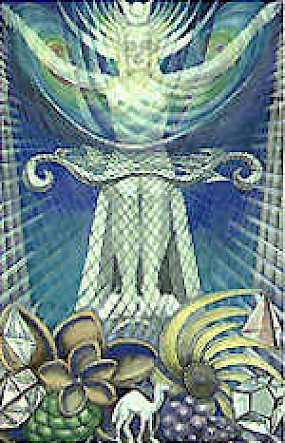
Tarot Card for December 7: The Priestess

The Priestess

The Priestess (or High Priestess, Papess, Pope Joan, Isis) is numbered two. This is the representation of the Goddess. She is the complementary partner of the Magician, possessing all his skill and ability, but with far more insight and psychism. She is more subtle yet somehow far more noticeable.

She is almost always shown with the Lunar Crescent, conveying her natural affinity with the forces of Nature and natural cycles. The Magician generates his own power, whereas the Priestess draws upon the forces of life itself.

She sits between two pillars with veils suspended between them – it is the Priestess who allows us to penetrate the innermost secrets of life. She is also the bridge between our conscious and Higher selves, by teaching us through our dreams and our subconscious. It is in our subconscious that we hold the keys to the Universe.

The Priestess

(via angelpahts.com and Alan Blackman)

WETIKO IN A NUTSHELL

Wetiko in a Nutshell

Wetiko in a Nutshell

WETIKO IN A NUTSHELL

BY PAUL LEVY, AUTHOR OF WETIKO: HEALING THE MIND-VIRUS THAT PLAGUES OUR WORLD

(innertraditions.com)

A contagious psycho-spiritual disease of the soul is currently being acted out en masse on the world stage via an insidious collective psychosis of titanic proportions. This mind-virus—which Native Americans have called “wetiko”—covertly operates through the unconscious blind spots in the human psyche, rendering people oblivious to their own madness and compelling them to act against their own best interests. Wetiko is a psychosis in the true sense of the word, “a sickness of the spirit.” Wetiko covertly influences our perceptions so as to act itself out through us while simultaneously hiding itself from being seen.

Wetiko bewitches our consciousness so that we become blind to the underlying, assumed viewpoint through which we perceive, conjure up, and give meaning to our experience of both the world and ourselves. This psychic virus can be thought of as the “bug” in “the system” that informs and animates the madness that is playing out in our lives, both individually and collectively, on the world stage.

Before being able to treat this sickness that has infected us all, we have to snap out of our denial, see the disease, acknowledge it, name it, and try to understand how it operates so as to ascertain how to deal with it—this is what my book Wetiko is all about.

The Normalization of Wetiko

A few years ago I ran into a friend whom I hadn’t seen for a while. He asked me what I had been up to. I answered that I was writing about the collective psychosis that our species had fallen into. His response was telling. He asked me what made me think there was a collective psychosis going on. His question left me speechless; I literally didn’t know how to respond. What made him think there wasn’t a collective psychosis going on, I wondered. Could he give me one piece of evidence? Our collective madness had become so normalized that most people—my friend was extremely bright, by the way—didn’t even notice.

Many of us have become conditioned to thinking that if we were in a middle of a collective psychosis it would mean that people would be doing all sorts of “crazy” things such as running around naked and screaming, for instance. This ingrained idea, however, gets in the way of recognizing the very real collective insanity in which all of us are—both passively and actively—participating. If we want to envision what a collective psychosis could actually look like, it might be a real eye-opener to realize it would look exactly like what is happening right now in our world.

What Is Wetiko Really?

Wetiko is a cannibalizing force driven by insatiable greed, appetite without satisfaction, consumption as an end in itself, and war for its own sake, against other tribes, species, and nature, and even against the individual’s own humanity. It is a disease of the soul, and being a disease of the soul, we all potentially have wetiko, as it pervades and “in-forms” the underlying field of consciousness. Any one of us at any moment can fall into our unconscious and unwittingly become an instrument for the evil of wetiko to act itself out through us and incarnate in our world. If we see someone who seems to be taken over by wetiko and we think they have the disease and we don’t, in seeing them as separate we have fallen under the spell of the virus ourselves.

Wetiko induces in us a proclivity to see the source of our own pathology outside of ourselves—existing in “the other.” Wetiko feeds off of polarization and fear—and terror—of “the other.” Seeing the world through a wetiko-inspired lens of separation/otherness enlivens what Jung calls “the God of Terror who dwells in the human soul,” and simultaneously plays itself out both within our soul and in the world at large. Wetiko subversively turns our “genius” for reality-creation against us in such a way that we become bewitched by the projective tendencies of our own mind.

Falling under wetiko’s spell, we become entranced by our own intrinsic gifts and talents for dreaming up our world in a way that not only doesn’t serve us, but rather is put at the service of wetiko (whose agenda is contrary to our own). Our creativity then boomerangs against us such that we hypnotize ourselves with our creative genius, which cripples our evolutionary potential. To the extent we are unconsciously possessed by the spirit of wetiko, it is as if a psychic tapeworm or parasite has taken over our brain and tricked us, its host, into thinking we are feeding and empowering ourselves while we are actually nourishing the parasite (a process which will ultimately kill its host—us).

In wetiko disease, something that is not us surreptitiously, beneath our conscious awareness, takes the place of and plays the role of who we actually are. Shape-shifting so as to cloak itself in our form, this mercurial predator gets under our skin and “puts us on” as a disguise. Miming ourselves, we become a copy, a false duplicate of our true selves. We are then truly playing out a real version of the imposter syndrome.

The Sickness of Exploitation

Wetiko is powerless to control our true nature, but it can control and manipulate this false identity that it sets up within us. When we fall under the sway of wetiko’s illusion, we simultaneously identify with who we are not, while dissociating from and forgetting who we actually are—giving away our power, not to mention ourselves, in the process.

Disconnecting from our own intrinsic agency, we open ourselves to be used, manipulated, and exploited by outside forces. Indigenous author Jack Forbes, who wrote the classic book about wetiko entitled Columbus and Other Cannibals, refers to wetiko as “the sickness of exploitation.” Wetiko can be conceived of as being an evil, cannibalistic, vampiric spirit that inspires people under its sway to take and consume another’s resources and life-force energy solely for their own profit, without giving anything of value back from their own lives. Wetiko thus violates the sacred law of reciprocity in both human affairs and the natural world as a whole.

The main channel of wetiko’s transmission is relational. It exists through our relationships with ourselves, each other, and the world at large. Like a vampire that can’t stand the light of day, the wetiko virus can’t stand to be illumined. However, in seeing how it covertly operates through our own consciousness, we take away its seeming independence, autonomy, and power over us, while at the same time empowering ourselves. The way the vampiric wetiko covertly operates within the human psyche is mirrored by the way it works in the outside world.

Jung never tired of warning us that the greatest danger threatening humanity today is the possibility that millions—even billions— of us can fall into our unconscious together in a collective psychosis, reinforcing each other’s madness in such a way that we become unwittingly complicit in creating our own destruction. When this occurs, humanity finds itself in a situation where we are confronted with—and battered by—the primal, primordial, and elemental forces of our own psyche.

The Internal Origins of Wetiko

The most depraved part of falling under the thrall of wetiko is that, ultimately speaking, it involves the assent of our own free will; no one other than ourselves is ultimately responsible for our situation. There is no objective entity called wetiko that exists outside of ourselves that can steal our soul—the dreamed-up phenomenon of wetiko tricks us into giving it away ourselves.

People under the sway of wetiko are implicated in and willingly subscribe to their own enslavement. They do this to the point that when offered the way out of the comfort of their prison they oftentimes react violently. They symbolically—and sometimes literally—try to kill the messenger who is showing them the path to freedom. Ultimately speaking, in wetiko disease we are not being infected by a physical, objectively existing virus outside of ourselves. Rather, the origin and genesis of the wetiko psychosis is endogenous; its roots are to be found within the human psyche. The fact that wetiko is the expression of something inside of us means that the cure for wetiko is likewise within us.

If we don’t understand that our current world crisis has its roots within and is an expression of the human psyche, we are doomed to unconsciously repeat and continually recreate endless suffering and destruction in increasingly amplified forms, as if we are having a recurring nightmare. In my language, the inner situation within ourselves is getting “dreamed up” into materialized form in, through, and as the world.

In waking life we are continually dreaming right beneath the threshold of consciousness, especially when we are under the influence of our unconscious complexes. In other words, when we are “under the influence” of our activated unconscious, we will unknowingly recreate our very inner landscape via the medium of the outside world. What can be more dreamlike than that?

What is happening in the world today is reflecting—and both literally and symbolically revealing to us—something unknown within our own psyche. At the same time, in a nonlinear acausal feedback loop that happens both atemporally (outside of time) and over (linear) time, events in our world are informed and shaped by the very inner psychological process they are reflecting. The inner and outer are simultaneously co-arising and reciprocally co-evoking each other. This is to say that what is happening within us and what is arising in our world have a mysterious interconnection; the inner and the outer are ultimately not separate nor separable.

Recognizing the correlation between the inner and the outer, between the micro and the macro, is the doorway into being able to see wetiko and wake up to the dreamlike nature that wetiko is simultaneously hiding and revealing depending on our point of view and level of awareness. Recognizing the connection between what is happening out in the world with what is taking place within our minds becomes a channel or secret doorway that leads beyond our merely personal psychological issues, empowering us to deal with the essential problem of our time.

Dreaming Wetiko

The wetiko psychosis is a dreamed-up phenomenon, which is to say that we are all potentially participating in and actively cocreating the wetiko epidemic in each and every moment. Like a collective dream, the wetiko epidemic is the manifestation of something in our shared collective unconscious taking on material form. Wetiko is literally demanding that we pay attention to the fundamental role that the psyche (the source of our dreams) plays in creating our experience of ourselves and of the world.

Forgetting the crucial role that the psyche plays in creating our experience, we marginalize our own intrinsic authority, tragically dreaming up both internal and external authoritarian forces to limit our freedom and mold our experience for us. Never before in all of human history has our species been forced to confront the numinous, world-transforming powers of the psyche on so vast a scale. Even with the ongoing multiple catastrophes that are converging in our world, it is not beyond the bounds of possibility that the darkness that is emerging today might become the soil out of which a regenerative age and nobler culture arise.

Although the source of humanity’s inhumanity to itself, wetiko is at the same time a potential catalyst for our evolution as a species. Recognizing the dreamed-up nature of the wetiko epidemic can become the impetus for us to awaken to the dreamlike nature of the universe itself.

In a circular process without beginning or end, we are being dreamed up by the universe while dreaming up the universe at one and the same time. To see this not only demands that we have an expansion of consciousness, it is the very expansion itself. The less wetiko is recognized, however, the more seemingly powerful and dangerous it becomes. Wetiko can only be seen when we begin to realize the dreamlike nature of our universe, step out of the illusory viewpoint of the separate self, and recognize the deeper underlying field of which we are all expressions, in which we are all contained, and through which we are all interconnected.

These are interrelated insights of the same multifaceted realization. The energetic expression of this realization, and the wetiko dissolver par excellence, is compassion. Connecting with the compassion that is our nature we find ourselves in very good company. Being the unmediated expression of recognizing the dreamlike nature, compassion reciprocally co-arises with lucidity. In other words, if we’re genuinely awakening to the dreamlike nature of reality, both lucidity and compassion will be inseparably united components of our experience.

As if an instrument of a higher intelligence, wetiko literally invites—make that demands—that we become conscious of and step into our intrinsic creative power and agency, or suffer the consequences. Instead of mutating so as to become resistant to our attempts to heal it, the wetiko virus forces us to mutate—to evolve— relative to it. Wetiko is a quantum phenomenon, in that it contains within itself the potential to be either the deadliest poison or the most healing medicine. Will wetiko destroy us? Or will it catalyze our evolution and wake us up?

Democracy works — we just need better leaders

Lindiwe Mazibuko | TED Democracy

South Africa transitioned to democracy in the 1990s with a visionary constitution, but the promises of that constitution are largely unfulfilled to this day. Public leader Lindiwe Mazibuko explores how poor leadership failed to deliver a better life for the country’s citizens — and shares her mission to cultivate a new generation of ethical leaders who can revitalize democracy in South Africa and beyond.

About the speaker

Lindiwe Mazibuko

Public leaderSee speaker profile

Lindiwe Mazibuko is the former Parliamentary Leader for the opposition Democratic Alliance in South Africa.

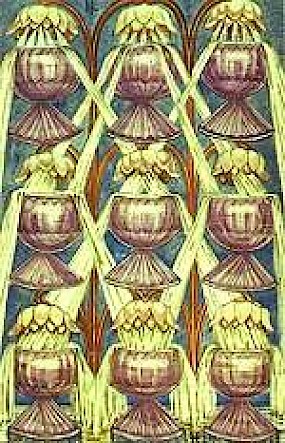
Tarot Card for December 6: The Nine of Cups


The Nine of Cups

This is a lovely card, known as Lord of Happiness. It talks about a sense of inner fulfilment and bliss, which radiates outward to touch everybody with whom you come into contact.

At a spiritual level, we’re talking about inner harmony, contentment and tranquillity – an appreciation of the High Powers, feeling at one with the Universe. This feeling leads to feeling that we are blessed by life.

On an everyday level, the card will often come up to mark periods of high achievement, and the resulting sense of pleasure and satisfaction. It will also come up to acknowledge joy and happiness in an emotional relationship.

When this card appears in your reading, it’s important to make the time to simply enjoy your own feelings, to revel in your sense of calmness and joy.

The Nine of Cups

(via angelpaths.com and Alan Blackman)

The fear of a looming Trump dictatorship

Analysis by Ishaan Tharoor Columnist

December 4, 2023 at 12:00 a.m. EST (WashingtonPost.com)

You’re reading an excerpt from the Today’s WorldView newsletter. Sign up to get the rest free, including news from around the globe and interesting ideas and opinions to know, sent to your inbox every weekday.

Donald Trump at a campaign rally in Florida on Nov. 8. (Octavio Jones/Reuters)

Former congresswoman Liz Cheney of Wyoming is the poster child of a Republican establishment abandoned by the party’s far-right base. Now, she’s billboarding what may come next: In an interview with CBS aired Sunday, Cheney lamented the extent to which the Republican Party had been “co-opted” by Trumpism and said she feared the potential of a vengeful Trump presidency in 2025.

“One of the things that we see happening today is a sort of a sleepwalking into dictatorship in the United States,” Cheney said.

Cheney’s refusal to accept former president Donald Trump’s false claims that the 2020 election had been stolen from him — and her decision to publicly rebuke Trump for his role in stoking the Jan. 6, 2021, Capitol riot — got her ostracized from the GOP and cost her the House seat. She has spent the months since campaigning against his potential reelection, to little avail. Trump is the heavy favorite to emerge as the Republican presidential nominee, no matter the slew of legal cases against him and even the prospect of imprisonment.

In her CBS interview, Cheney said a Trump victory could mark the end of the American republic. “He’s told us what he will do,” she said. “It’s very easy to see the steps that he will take.”

Trump touts authoritarian vision for second term: ‘I am your justice’

This isn’t mere hyperbole. As my colleagues have reported over the past year, Trump has made clear his stark, authoritarian vision for a potential second term. He would embark on a wholesale purge of the federal bureaucracy, weaponize the Justice Department to explicitly go after his political opponents (something he claims is being done to him), stack government agencies across the board with political appointees prescreened as ideological Trump loyalists, and dole out pardons to myriad officials and apparatchiks as incentives to do his bidding or stay loyal.

In election rallies, Trump has vowed punitive action on all perceived enemies. “I am your retribution,” he told supporters at one event. In another, he promised to “root out the Communists, Marxists, fascists, and the radical-left thugs that live like vermin within the confines of our country, that lie and steal and cheat on elections.”

Scholars of 20th-century fascism are less than impressed. “Trump is also using projection: note that he mentions all kinds of authoritarians — communists, Marxists, fascists and the radical left — to set himself up as the deliverer of freedom,” Ruth Ben-Ghiat, a historian at New York University, told The Washington Post last month. “Mussolini promised freedom to his people too and then declared dictatorship.”

Jennifer Mercieca, a historian of American political rhetoric at Texas A&M University, underscored the point over the weekend after Trump cast President Biden at an Iowa rally as “the destroyer of American democracy.” “Trump’s Iowa speech continues his use of fascist rhetoric: it’s us versus them, he tells his supporters, and ‘they’ are enemies who cheat,” Mercieca told my colleagues. “Authoritarians have a lot of rhetorical tricks for explaining away anti-democratic actions as actually ‘democratic.’”

U.S. democracy slides toward ‘competitive authoritarianism’

Some commentators are looking squarely at Trump and Trumpism as a direct existential threat to the future of U.S. democracy. In a widely circulated opinion essay for The Post, Robert Kagan charted how, “in just a few years, we have gone from being relatively secure in our democracy to being a few short steps, and a matter of months, away from the possibility of dictatorship.”

Kagan sees a scenario where Trump’s mounting legal challenges galvanize his push for power, rather than check his rise. “Indicting Trump for trying to overthrow the government will prove akin to indicting Caesar for crossing the Rubicon, and just as effective,” he wrote. “Like Caesar, Trump wields a clout that transcends the laws and institutions of government, based on the unswerving personal loyalty of his army of followers.”

Not for nothing have a bevy of Trump-inclined, right-wing intellectuals floated the idea of “Caesarism” — an embrace of a strongman to flush out the perceived weaknesses and failures of the republic — as a necessary political solution for the moment. In Kagan’s view, the institutional checks and balances of the United States are failing to arrest this authoritarian drift.

In the event of a return to the White House, Trump and his allies have already said they would marshal more executive power than his predecessors. A Trump election victory could also boost Republican congressional control, and many members of the GOP seem content to march in lockstep with Trump. Then there are the courts, which the former president stacked with a huge number of loyalists.

“A conservative litigant can guarantee a sympathetic judge by filing their lawsuit in a federal court in Texas, where a handful of hard-right judges have exclusive control over the docket,” noted the New Republic’s Matt Ford. “From there they go on to the Fifth Circuit Court of Appeals, where conservatives have a clear majority — Trump alone appointed almost half of its members. And then the last stop is the Supreme Court, where half of the conservative supermajority are also Trump appointees.”

Europe’s far right goes mainstream

Among traditional allies of the United States, there’s no shortage of trepidation over what might be around the corner. “Whoever comes to the White House, one case would be a catastrophe, the other case would be much better,” German defense minister Boris Pistorius told reporters last week.

But while European policymakers are fretting about Trumpist disturbances to transatlantic ties, the future of the NATO alliance and U.S. support for the war in Ukraine, they are more circumspect about the threat to American democracy itself. Far-right movements are in the ascendant in many countries in Europe, including Germany, but the continent’s parliamentary structures may restrain them more effectively than an anachronistic U.S. system that seems primed to usher in minority rule.

“The Trump dictatorship will not be a communist tyranny, where almost everyone feels the oppression and has their lives shaped by it,” wrote Kagan. “In conservative, anti-liberal tyrannies, ordinary people face all kinds of limitations on their freedoms, but it is a problem for them only to the degree that they value those freedoms, and many people do not.”

Indeed, as my colleague Philip Bump observed last month, recent polling shows considerable numbers of Americans, and a plurality among right-wingers, endorse the idea that the country needs a strong leader who may bend the rules. “For many Americans, a turn toward authoritarianism isn’t seen as a negative,” Bump wrote. “Many Americans support that idea.”

washingtonpost.com © 1996-2023 The Washington Post

The Buddhist Definition of Mindfulness

It’s probably not what you think

Sandra Pawula

Sandra Pawula

Published in The Taoist Online

6 days ago (thetaoist.online)

Woman in coral exercise pants sitting with her legs crossed, hands on her knees, and eyes closed.
Photo by Nataliya Vaitkevich on Pexels

The most popular definition of mindfulness originated with Jon Kabat-Zinn, Ph.D., Professor of Medicine emeritus at the University of Massachusetts Medical School.

You see Kabat-Zinn’s definition almost everywhere. It’s plastered across social media in countless memes. It’s quoted in an endless number of articles on modern-day mindfulness. It’s difficult to miss if you’re interested in mindfulness.

It is:

“Mindfulness is awareness that arises through paying attention, on purpose, in the present moment, non-judgementally.”—Jon Kabat-Zinn

Kabat-Zinn sometimes adds, “…in the service of self-understanding and wisdom.”

I admire Kabat-Zinn. He spearheaded the modern mindfulness movement through his world-renown Mindfulness-based Stress Reduction (MBSR) program, which first opened its doors in 1979.

Kabat-Zinn’s MBSR teachings have helped thousands of people manage stress, cope with pain, and improve focus and productivity. I’ve taken his MBSR course more than once myself.

Kabat-Zinn’s definition of mindfulness works just fine in a modern-day context. But is it the same as the Buddhist definition of mindfulness?

Let’s investigate.

Remembering in Mindfulness Meditation

The Pali word “sati” is universally translated as “mindfulness” across all Buddhist traditions. The primary connotation of sati is to remember, to recollect, to call to mind.

You can find this meaning of sati as early as the Buddha’s teachings in the Satipatthana Sutta, known in English as The Discourse on the Foundations of Mindfulness. The same explanation has been taught by later Buddhist scholars such as Vasubhandu, Asanga, and Tsongkhapa.

But the main point is that we have to remember to remember.

As you can see, there’s no mention of the present moment or non-judgement either—not that they’re irrelevant in mindfulness practice. But the main point is that we have to remember to remember.

In the context of mindfulness meditation, what is it that we remember? What is it that we recollect?

  1. You recollect the instruction and the method or you wouldn’t be able to practice mindfulness at all. And you may practice it in correctly. In this case, you’re recalling something you learned in the past.
  2. You remember the object of your practice. In the first stage of mindfulness you typically focus on an object like the breath, a physical form like a statue or a flower, or a sense experience like hearing the sounds that arise around you. You lightly place your attention on the selected object. But you have to remember to keep it there, don’t you? This is present-centered mindfulness.
  3. You recollect what to do if your mind becomes agitated or dull and you lose your mindfulness. This entails remembering what to do in the future.

Strictly speaking, in a Buddhist context, mindfulness can involve the past, the present, and the future.

Mindfulness and Remembering in Everyday Life

Mindfulness isn’t limited to meditation. In fact, we practice mindfulness meditation so we can be more mindful in every moment.

While taking my calcium this morning, I realized how uncomfortable it would be if I were to mindlessly swallow the small plastic tube contained in the bottle, presumably for freshness. It’s about the same size as the calcium capsules, making it a scary possibility.

It would be easy to do, wouldn’t it?

When we’re lost in thought, we sometimes don’t see what’s right in front of us—the small plastic tube in the vitamin bottle, the freeway exit, or a critical instruction on the paper in our hand.

Aside from possibly saving you from choking, mindfulness can assist you in another critical way. It can help you reduce negative thoughts and emotions and increase positive ones, thus leading to a happier life.

The Indo-Greek King Menander I (Milinda in Pali), who ruled a large ancient kingdom from 160 to 130 BCE, asked the enlightened Buddhist monk Nagasena, “What is mindfulness?”

Nagasena replied:

“Mindfulness when it arises it calls to mind wholesome and unwholesome tendencies with faults and faultless, inferior and refined, dark and pure, gathered with their counterparts.”

Nagasena’s definition of mindfulness intimately connects the practice with happiness and suffering, which results from acting upon wholesome or unwholesome tendencies.

When you get caught in anger, jealous, or envy, you’re likely to feel unhappy, right? When you focus on peace, kindness, and compassion, you’re likely to feel happier, right?

A mindful person is aware of the consequences of their action.

The regular practice of mindfulness creates more space in your mind. In that space, you can more easily discern between thoughts, words, and actions that bring benefit and ones that bring harm. With this clarity of mind, you can make wiser choices.

As such, mindfulness leads to ethical discipline (sila in Sanskrit).

Simply said, a mindful person is aware of the consequences of their action. They resist knee-jerk reactions based in attachment or aversion. They consistently choose to engage in beneficial behaviors.

That’s a simple formula for happiness.

The Buddhist definition of mindfulness automatically includes a caring attitude (Skt. “apramada”).

Mindfulness requires a mix of several different mental factors. The primary ones include mindfulness (the ability to remember to stay present to the object of your attention), alertness, and a caring attitude.

The caring attitude protects the mind from straying into the negative and keeps it on a positive track. Thus, mindfulness automatically encompasses ethical discipline (“sila” in Skt), which is often absent as a focus in modern mindfulness.

“Mindfulness meditation should be more than just watching what you are doing. What you really need to watch is your motivation.” — Thubten Zopa Rinpoche

Concluding Thoughts

The definition of mindfulness differs between modern-day mindfulness and Buddhism. But it’s not a matter of one being right and the other being wrong.

The popular definition of mindfulness originated with Jon Kabat-Zinn and his Mindfulness-based Stress Reduction program, introduced in 1979. It can serve you well if you’re engaged in mindfulness practice for practical reasons—like less stress, less pain, or less anxiety.

The Buddhist definition of mindfulness adds the connotation of remembering, recollecting, and calling to mind. In this context, mindfulness also encompasses a caring attitude, which can make the difference between your behaviors resulting in happiness or suffering.

What do you think? Does it help to have the expanded Buddhist definition of mindfulness or are you satisfied with the popular one?

For more inspiration, sign up for my bi-monthly Wild Arisings newsletter and receive access to free self-discovery resources.

Sources:

You might also like:

How to Gain the Most from a Spiritual Teaching

A classic Buddhist instruction on how to listen

Sandra Pawula

Written by Sandra Pawula

·Writer for The Taoist Online

Essays to calm your mind, ease your heart and connect with your inner wisdom. Writer | mindfulness expert | trauma survivor. https://sandrapawula.substack.com/

‘Wood wide web’—the underground network of microbes that connects trees—mapped for first time

Global census of forest fungi suggests warming could trigger soil carbon bomb

Dermocybe
A fungus known as a Dermocybe forms part of the underground wood wide web that stitches together California’s forests.KABIR GABRIEL PEA

Trees, from the mighty redwoods to slender dogwoods, would be nothing without their microbial sidekicks. Millions of species of fungi and bacteria swap nutrients between soil and the roots of trees, forming a vast, interconnected web of organisms throughout the woods. Now, for the first time, scientists have mapped this “wood wide web” on a global scale, using a database of more than 28,000 tree species living in more than 70 countries.

“I haven’t seen anybody do anything like that before,” says Kathleen Treseder, an ecologist at the University of California, Irvine. “I wish I had thought of it.”

Before scientists could map the forest’s underground ecosystem, they needed to know something more basic: where trees live. Ecologist Thomas Crowther, now at ETH Zurich in Switzerland, gathered vast amounts of data on this starting in 2012, from government agencies and individual scientists who had identified trees and measured their sizes around the world. In 2015, he mapped trees’ global distribution and reported that Earth has about 3 trillion trees.

Inspired by that paper, Kabir Peay, a biologist at Stanford University in Palo Alto, California, emailed Crowther and suggested doing the same for the web of underground organisms that connects forest trees. Each tree in Crowther’s database is closely associated with certain types of microbes. For example, oak and pine tree roots are surrounded by ectomycorrhizal (EM) fungi that can build vast underground networks in their search for nutrients. Maple and cedar trees, by contrast, prefer arbuscular mycorrhizae (AM), which burrow directly into trees’ root cells but form smaller soil webs. Still other trees, mainly in the legume family (related to crop plants such as soybeans and peanuts), associate with bacteria that turn nitrogen from the atmosphere into usable plant food, a process known as “fixing” nitrogen.

The researchers wrote a computer algorithm to search for correlations between the EM-, AM-, and nitrogen-fixer–associated trees in Crowther’s database and local environmental factors such as temperature, precipitation, soil chemistry, and topography. They then used the correlations found by the algorithm to fill in the global map and predict what kinds of fungi would live in places where they didn’t have data, which included much of Africa and Asia.

Local climate sets the stage for the wood wide web, the team reports today in Nature. In cool temperate and boreal forests, where wood and organic matter decay slowly, network-building EM fungi rule. About four in five trees in these regions associate with these fungi, the authors found, suggesting the webs found in local studies indeed permeate the soils of North America, Europe, and Asia.

By contrast, in the warmer tropics where wood and organic matter decay quickly, AM fungi dominate. These fungi form smaller webs and do less intertree swapping, meaning the tropical wood wide web is likely more localized. About 90% of all tree species associate with AM fungi; the vast majority are clustered in the hyperdiverse tropics. Nitrogen fixers were most abundant in hot, dry places such as the desert of the U.S. Southwest.

Charlie Koven, an Earth system scientist at the Lawrence Berkeley National Laboratory in California, applauds what he says is the first global forest microbe map. But he wonders whether the authors missed some important factors that also shape the underground world. Hard-to-measure processes such as nutrient and gas loss from the soil could affect where different microbes live; if so, the study’s predictions could be less accurate, he says.

Despite such uncertainties, having the first hard numbers for which tree-associated microbes live where will be “very useful,” Treseder says. The findings could, for example, help researchers build better computer models to predict how much carbon forests will squirrel away and how much they will spew into the atmosphere as the climate warms, she says.

Crowther, however, is ready to make a prediction now. His results suggest that as the planet warms, about 10% of EM-associated trees could be replaced by AM-associated trees. Microbes in forests dominated by AM fungi churn through carbon-containing organic matter faster, so they could liberate lots of heat-trapping carbon dioxide quickly, potentially accelerating a climate change process that is already happening at a frightening pace.

That argument is “a little bit more tenuous” to Treseder. She says scientists are still puzzling out how different soil fungi interact with carbon. But, she adds, “I’m willing to be convinced.”


RELEVANT TAGS:

PLANTS & ANIMALS

ABOUT THE AUTHOR

Gabriel Popkin

Gabriel Popkin is a journalist based in Mount Rainier, Maryland.

Consciousness, sexuality, androgyny, futurism, space, the arts, science, astrology, democracy, humor, books, movies and more