Free Will Astrology: Long-Term Forecasts

Rob Brezsny

Rob Brezsny

3 days ago (Medium.com)

Long-Term Forecasts

CAPRICORN (Dec. 22-Jan. 19): “All the things I really like to do are either illegal, immoral, or fattening,” quipped Capricorn author Alexander Woollcott (1887–1943). Since he was never arrested, I conclude he didn’t get to enjoy some of the activities he relished. Was he immoral? Not exactly, though he could be caustic. Offering his opinion about a famous pianist, he said, “There is absolutely nothing wrong with Oscar Levant that a miracle couldn’t fix.” The good news for you, Capricorn, is that 2024 will be mostly free of the problems Woollcott experienced. You will be offered an abundance of perfectly legal and moral enjoyments. They may sometimes be fattening, but so what?

AQUARIUS (Jan. 20-Feb. 18): Author Augusten Burroughs is a devoted urban dweller. He says, “When I get a craving for nature, I turn on TV’s Discovery Channel and watch bear-attack survivors recount their horror.” Martial arts master Morihei Ueshiba had a different perspective. “Mountains, rivers, plants, and trees should be your teachers,” he advised. “Study how water flows in a valley stream, smoothly and freely between the rocks.” I recommend Ueshiba’s approach to you in 2024, Aquarius — not Burroughs’. Here are my predictions: 1. You will have no dangerous encounters with nature. 2. You will learn more than ever from the wild world. 3. To the degree that you wander in the outdoors, your spiritual life will thrive.

PISCES (Feb. 19-March 20): A study done at Union College in New York found that being fraternity members raised students’ future income by 36 percent, but lowered their grade point average by 0.25 points. Would you make a similar trade-off, Pisces? Would you pursue a path that made you more successful in one way but less successful in another? I suspect you will encounter unusual decisions like this in 2024. My job is not to advise you what to do, but to make you alert for the provocative riddles.

ARIES (March 21-April 19): Aries educator Booker T. Washington advised us, “Do the common thing in an uncommon way.” That’s a useful motto for you in the coming months. If you carry out ordinary activities with flair, you will generate good fortune and attract excellent help. As you attend to details with conscientious enthusiasm, you will access your finest inner resources and exert constructive influences on the world around you. Be thorough and unique, persistent and imaginative, attentive and innovative. Adore your chores in 2024!

TAURUS (April 20-May 20): Taurus philosopher John Stuart Mill (1806–1873) was among the smartest people who ever lived. As is often the case with geniuses, he believed in the supreme value of liberty for all. He was a feminist long before that word existed. Like another genius, architect Frank Lloyd Wright, he thought that “individuality realized is the supreme attainment of the human soul, the master-master’s work of art. Individuality is sacred.” I nominate Mill to be a role model for you in 2024, Taurus. This could be a time when you reach unprecedented new heights and depths of unique self-expression and liberation. PS: Here’s a quote from Mill: “Eccentricity has always abounded where strength of character has abounded; and the amount of eccentricity in a society has been proportional to the amount of genius, mental vigor, and moral courage which it contained.”

GEMINI (May 21-June 20): Emotionally and spiritually, you will ripen at a robust rate in 2024. Your intelligence will mature into wisdom in surprising and gratifying ways. Harvesting rich lessons from long-smoldering confusions and long-simmering mysteries will be your specialty. PS: Some of you Geminis joke around and say you never want to grow up. But I hope you minimize that attitude in the coming months.

• • • • • • • • • • • • • • • • • • • • • • • • • • • • • • • • • • • • • • • • • • • • • • • • • • • • • • •
START EXPLORING YOUR LONG-RANGE FUTURE

This week my EXPANDED AUDIO HOROSCOPES offer you a teaser, sneak-peek look of some major themes you’ll be working and playing with in 2024.

Who do you want to be in the coming year? What do you want to do? Where do you want to go? Your destiny is more wide-open than you might imagine. You have a lot of power to shape the flow of events.

I hope to inspire you to take advantage of the possibilities!

The cost is $7, with a discount for multiple purchases.

To get your sneak peek of some of 2024’s major themes:

1. Go to https://RealAstrology.com

2. Register and/or log in

3. Then click on the link “This week (Dec. 19, 2023).”

  • • • • • • • • • • • • • • • • • • • • • • • • • • • • • • • • • • • • • • • • • • • • • • • • • • • • • • •

CANCER (June 21-July 22): Indigenous people study the intelligence of animals and incorporate it into their own lives. If you’re game to do that in 2024, I suggest you choose elephants as a source of teaching and inspiration. Have fun studying and meditating on their ways! Here are a few facts to get you started. Problem-solving is one of their stengths. They are experts at learning how to get what they need and passing that knowledge on to their offspring. They seldom suffer from sickness, but if they do, they often self-medicate with plants in their environment. Elder females are the knowledge keepers, retaining inner maps of where food, drink, and other resources are located.

LEO (July 23-Aug. 22): Writer Janet Champ speaks about the joy of locating “the big wow, the big yesyesyes.” It happens when you find something or someone you regard as “better, greater, cuter, wiser, more wonderful than anything you have ever known.” I’ll be lavish and predict you will encounter a big wow and yesyesyes like this in 2024. Will you know what to do with it? Will you be able to keep it? Those possibilities are less certain, but I have high hopes for you. For best results, cultivate a vivid vision of how the big wow and big yesyesyes will benefit others as well as you.

VIRGO (Aug. 23-Sept. 22): In 1916, most women in the world could not vote. Many men considered women to be inferior — lacking in courage and initiative. It was the Dark Ages! That summer, two sisters named Augusta and Adeline Van Buren rebelled against the stereotypes by riding their motorcycles across America. Roads were poor, rains were frequent, and police arrested them frequently for wearing men’s clothes. Male-dominated media derided them, with one newspaper criticizing their escape from “their proper roles as housewives.” I nominate them to be your role models in 2024, no matter what gender you are. It will be a favorable time to transcend conventional wisdom, override decaying traditions, and be a cheerful rebel.

LIBRA (Sept. 23-Oct. 22): For hundreds of years, European nations stole land and resources from Indigenous people all over the world. Among the thefts were art, ritual objects, cultural treasures, and human skeletons. Museums in the West are still full of such plunder. But in recent years, some museums have begun to return the loot. Germany sent back hundreds of artifacts to Nigerian museums. France restored many objects to the African country of Benin. Let’s apply this scenario as a useful metaphor for you in 2024, Libra. Is there a part of your past that was hijacked? Your memories appropriated or denied? Your rightful belongings poached, or your authentic feelings infringed upon? It’s time for corrections and healing.

SCORPIO (Oct. 23-Nov. 21): I suggest we choose the brilliant Scorpio physicist and chemist Marie Curie (1867–1934) as your role model in 2024. She is the only person to win a Nobel Prize in two different fields. She managed to pursue a rigorous scientific career while raising two children and having a fulfilling marriage. Being of service to humanity was a central life goal. She grew up in poverty and sometimes suffered from depression, but worked hard to become the genius she aspired to be. May the spirit of Marie Curie inspire you, dear Scorpio, as you make dramatic progress in expressing your unique soul’s code.

SAGITTARIUS (Nov. 22-Dec. 21): In my fairy tale about your year ahead, I see you searching for treasure. It’s not a wild and wandering exploration, but a diligent, disciplined quest. You are well-organized about it, carefully gathering research and asking incisive questions. You ruminate on the possibilities with both your logical and intuitive faculties. You meditate on how you might make adjustments in yourself so as to become fully available for the riches you seek. Your gradual, incremental approach gives you strength. You draw inspiration from your sheer persistence and relentless inquiry. And it all pays off by the second half of 2024.

Rob Brezsny

Written by Rob Brezsny

I write the column Free Will Astrology and wrote the book Pronoia Is the Antidote for Paranoia: How the Whole World Is Conspiring to Shower You with Blessings

The 13 Best Books on Philosophy According to Mark Manson

Novel Nest

Novel Nest

Aug 10, 2023 (Medium.com)

Photo By Maria Midoes

Mark Manson, known for his candid insights and thought-provoking perspectives, has compiled a list of thirteen remarkable books that offer profound insights into the intricate realms of philosophy.

From ancient wisdom to contemporary reflections, these books have left an indelible mark on Manson’s understanding of life, meaning, and the human condition.

Let’s embark on a journey through the 13 best books on philosophy according to Mark Manson.

Affiliate Disclaimer: This post features Amazon affiliate links, which means I may earn a small commission if you make a purchase through these links.

1. The Republic by Plato

Plato, a foundational figure in Western philosophy, challenges our understanding of governance and the nature of justice in “The Republic.” This thought-provoking work presents a vivid portrayal of an ideal society, a utopian vision that continues to stimulate discussions on political theory and social order.

“The heaviest penalty for declining to rule is to be ruled by someone inferior to yourself.”

― Plato, The Republic

2. The Nicomachean Ethics by Aristotle

Aristotle’s exploration of ethics and human flourishing in “The Nicomachean Ethics” is a cornerstone of moral philosophy. Through Aristotle’s insightful examination, readers are invited to contemplate the principles that underpin virtuous living and the pursuit of the ‘good life.’

“For the things we have to learn before we can do them, we learn by doing them.”

― Aristotle, The Nicomachean Ethics

3. Meditations by Marcus Aurelius

In “Meditations,” Marcus Aurelius, the Roman emperor and Stoic philosopher, offers a personal guide to self-improvement and resilience. Aurelius’ reflections provide a window into the mind of a leader grappling with the challenges of power, duty, and inner peace.

“You have power over your mind — not outside events. Realize this, and you will find strength.”

― Marcus Aurelius, Meditations

4. On the Shortness of Life by Seneca

Seneca’s concise yet profound treatise on the brevity of life, “On the Shortness of Life,” prompts us to reconsider our priorities and the meaningful use of our limited time. This Stoic meditation encourages us to embrace the present moment and cultivate a life of purpose.

“You act like mortals in all that you fear, and like immortals in all that you desire”

― Lucius Annaeus Seneca, On the Shortness of Life: Life Is Long if You Know How to Use It

5. Confessions by St. Augustine

“Confessions” by St. Augustine represents one of the earliest autobiographical works and is a cornerstone of Christian theology. Augustine’s introspective exploration of faith, sin, and redemption has resonated across centuries, inviting readers to engage with the complexities of human spirituality.

“The mind commands the body and is instantly obeyed. The mind commands itself and meets resistance.”

― St. Augustine of Hippo, Confessions

6. Meditations of First Philosophy by Rene Descartes

Descartes’ declaration “I think, therefore I am” in “Meditations of First Philosophy” ignited a philosophical revolution. By challenging established beliefs and advocating for rational skepticism, Descartes laid the groundwork for modern philosophical inquiry.

“It is only prudent never to place complete confidence in that by which we have even once been deceived.”

― René Descartes, Meditations on First Philosophy

The Ultimate Digital Reading Journal (My First Digital Product)

How I Organize Every Single Book I’ve Read

medium.com

7. Ethics by Benedict de Spinoza

Benedict de Spinoza’s “Ethics” redefines our understanding of God, nature, and human emotions. Through his rationalist approach, Spinoza offers a comprehensive exploration of ethics that challenges traditional religious and moral frameworks.

“Emotion, which is suffering, ceases to be suffering as soon as we form a clear and precise picture of it.”

― Baruch Spinoza, Ethics

8. An Essay Concerning Human Understanding by John Locke

In “An Essay Concerning Human Understanding,” John Locke delves into the origins of human knowledge and the nature of perception. Locke’s empiricism profoundly influenced Enlightenment thought and ignited debates about the limits of human understanding.

“The great question which, in all ages, has disturbed mankind, and brought on them the greatest part of their mischiefs … has been, not whether be power in the world, nor whence it came, but who should have it.”

― John Locke, An Essay Concerning Human Understanding

9. The Critique of Pure Reason by Immanuel Kant

Immanuel Kant’s magnum opus, “The Critique of Pure Reason,” revolutionized philosophy by reconciling rationalism and empiricism. Kant’s exploration of the boundaries of human reason and cognition reshaped our understanding of metaphysics and epistemology.

“I had to deny knowledge in order to make room for faith.”

― Immanuel Kant, Critique of Pure Reason

10. Beyond Good and Evil by Friedrich Nietzsche

Friedrich Nietzsche’s provocative work, “Beyond Good and Evil,” challenges conventional moral norms and calls for a reevaluation of values. Nietzsche’s exploration of individualism and the ‘will to power’ continues to spark debates on morality and human nature.

“Madness is something rare in individuals — but in groups, parties, peoples, and ages, it is the rule.”

― Friedrich Nietzsche, Beyond Good and Evil

11. Everything is F*cked: A Book About Hope by Mark Manson

In “Everything is F*cked,” Mark Manson offers a contemporary perspective on the human condition, blending philosophy with practical self-help advice. Manson’s exploration of hope and its paradoxes encourages readers to confront life’s challenges with resilience and authenticity.

“The problem isn’t that we don’t know how not to get punched in the face. The problem is that, at some point, likely a long time ago, we got punched in face, and instead of punching back, we decided we deserved it.”

― Mark Manson, Everything is F*cked: A Book About Hope

12. The Denial of Death by Ernest Becker

Ernest Becker’s profound reflection on mortality, “The Denial of Death,” delves into the psychological and existential implications of our awareness of mortality. Becker’s work sheds light on the intricate ways our fear of death shapes our motivations and behaviors.

“The road to creativity passes so close to the madhouse and often detours or ends there.”

― Ernest Becker, The Denial of Death

13. Reasons and Persons by Derek Parfit

“Reasons and Persons” by Derek Parfit challenges conventional notions of self-interest and personhood. Parfit’s intricate reasoning invites readers to grapple with the complexities of personal identity, moral responsibility, and the nature of ethical choices.

“My life seemed like a glass tunnel, through which I was moving faster every year, and at the end of which there was darkness. When I changed my view, the walls of my glass tunnel disappeared. I now live in the open air.”

― Derek Parfit, Reasons and Persons

I hoped you have found this article useful. If you did, it would be awesome if you gave me a clap or left a response!

If you enjoyed this article and want to support Novel Nest, click this link to get notified whenever I publish something new.

If you enjoyed these book recommendations, check out the rest of my book lists on my blog- https://www.thenovelnest.com/blog

Affiliate Disclaimer: This post features Amazon affiliate links, which means I may earn a small commission if you make a purchase through these links.

Novel Nest

Written by Novel Nest

Discover Non-Fiction and Intellectual Books Recommendations. Find new favorites in our diverse book lists and on our blog: https://www.thenovelnest.com/blog

Book: “The Perennial Philosophy”

The Perennial Philosophy

Aldous Huxley

The Perennial Philosophy is defined by its author as “The metaphysic that recognizes a divine Reality substantial to the world of things and lives and minds.” With great wit and stunning intellect, Aldous Huxley examines the spiritual beliefs of various religious traditions and explains them in terms that are personally meaningful.

An inspired gathering of religious writings that reveals the “divine reality” common to all faiths, collected by Aldous Huxley

“The Perennial Philosophy,” Aldous Huxley writes, “may be found among the traditional lore of peoples in every region of the world, and in its fully developed forms it has a place in every one of the higher religions.”

With great wit and stunning intellect—drawing on a diverse array of faiths, including Zen Buddhism, Hinduism, Taoism, Christian mysticism, and Islam—Huxley examines the spiritual beliefs of various religious traditions and explains how they are united by a common human yearning to experience the divine. The Perennial Philosophy includes selections from Meister Eckhart, Rumi, and Lao Tzu, as well as the Bhagavad Gita, Tibetan Book of the Dead, Diamond Sutra, and Upanishads, among many others.

(Goodreads.com)

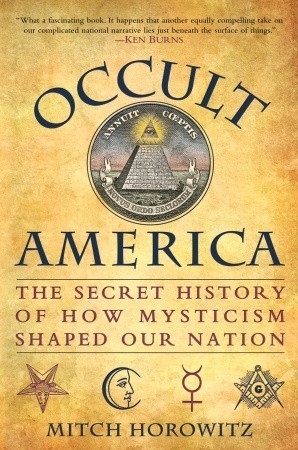
Book: “Occult America: The Secret History of How Mysticism Shaped Our Nation”

Occult America: The Secret History of How Mysticism Shaped Our Nation

Mitch Horowitz

 From its earliest days, America served as an arena for the revolutions in alternative spirituality that eventually swept the globe. Esoteric philosophies and personas—from Freemasonry to Spiritualism, from Madame H. P. Blavatsky to Edgar Cayce—dramatically altered the nation’s culture, politics, and religion. Yet the mystical roots of our identity are often ignored or overlooked. Opening a new window on the past, Occult America presents a dramatic, pioneering study of the esoteric undercurrents of our history and their profound impact across modern life.

(Goodreads.com)

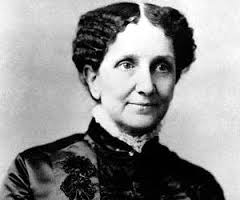
How do Christian Scientists deal with the pandemic?

Mary Baker Eddy (founder of Christian Science)

April 10, 2020  (kuow.org)

Audio link: https://www.kuow.org/stories/how-do-christ

Correction, 10 a.m., 4/10/2020: In our broadcast, we incorrectly said CDC director Robert Redfield was affiliated with the Church of Christ Scientist. He is not.

One thing that’s been helping some people get through the pandemic is their faith. The Church of Christ Scientist was founded in 1866 in Boston and looks to prayer for healing. Lance Madison is part of the church in Washington state, and he spoke to KUOW’s Angela King.

Lance Madison: Christian Science is based squarely on the Bible. The founder of the church was a New England woman named Mary Baker Eddy. And she was a devout Christian and lifelong student of the Bible and was driven to find deeper answers to the problem of human suffering, and what she called the problem of being. Jesus words, “He that believeth on me, the works that I do shall he do also,” are to us a promise of healing for us right here and now. And she took those words to heart, and Christian Science believes that healing in the spirit of Jesus, words and works is instrumental to Christian practice.

Angela King: What are the church’s teachings about medical interventions, for example, like the use of antibiotics?

Madison: What’s important to us is that each individual be healthy, well and safe. And that’s how we understand God to have made all of us. Our church does emphasize that members and their families must make their own choices, responsible choices about health. We generally look to prayer for healing because it involves not only a physical cure, but meaningful spiritual and moral growth and renewal. And we do respect medical professionals and share their desire to heal, to relieve suffering. And we respect the official guidance and public health directives, especially at a time like this.

King: You talk about healing when a church member becomes ill. What are the recommendations?

Madison: Again, our goal is the health and well-being safety of each individual. But Christian societies are accustomed to turn to God in prayer first, because we felt from our own experience that this kind of rigorous prayer is not only effective, but it can be transformative. Our church does have a care system to support individuals who need healing. A Christian Scientist can call on a Christian Science practitioner to pray with them and or a Christian Science nurse to provide non-medical nursing, such as feeding and bandaging. So in a contagion context, such as we’re facing now, clearly we think that it’s important to respect the official requirements and also just be aware of the practical concerns of our neighbors. It’s a simple matter of adherence to the golden rule, treating others as we would want to be treated right.

King: But if you are not seeking straight medical treatment that you might receive from a traditional hospital, how can you reassure members of the community that this may not be a problem for your neighbor?

Madison: Folks need to be assured on this. My observation is that Christian Scientists and Christian Science churches are very, very law abiding and considerate of their neighbors. We respect the recommended closure as a social distancing, the hygienic guidelines.

King: But some may argue that you’re not helping the community by not seeking out traditional medical treatment.

Madison: Well, I think, again, we’re not talking about just doing nothing. We find that our prayerful spiritual treatment is effective. And I think the record supports that. I think alleviating fear is doing something. And that, in fact, is what other religious representatives are trying hard to do.

Story from KUOW Newsroom

  • Angela KingMORNING NEWS HOSTAngela King is the local host of Morning Edition. She’s been a part of the northwest news scene since the early 1990s. A proud University of Washington alumna, with degrees in broadcast journalism and American ethnic studies, she started her career as a news writer in Seattle, before becoming a reporter and anchor in Seattle, Portland and Albuquerque.More stories from Angela King »
  • Kim ShepardANNOUNCERKim Shepard is an announcer at KUOW. In addition to being the local presence during national programs, she also voices many of the sponsorships you hear on KUOW and on our podcasts.

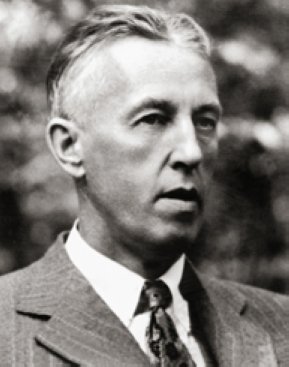
Co-Founder Bill Wilson’s Vision

bill-wilson

William Griffith Wilson (1895-1971)

My depression deepened unbearably and finally it seemed to me as though I were at the bottom of the pit. I still gagged badly on the notion of a Power greater than myself, but finally, just for the moment, the last vestige of my proud obstinacy was crushed. All at once I found myself crying out, “If there is a God, let Him show Himself! I am ready to do anything, anything!”

Suddenly the room lit up with a great white light. I was caught up into an ecstasy which there are no words to describe. It seemed to me, in the mind’s eye, that I was on a mountain and that a wind not of air but of spirit was blowing. And then it burst upon me that I was a free man. Slowly the ecstasy subsided. I lay on the bed, but now for a time I was in another world, a new world of consciousness. All about me and through me there was a wonderful feeling of Presence, and I thought to myself, “So this is the God of the preachers!” A great peace stole over me and I thought, “No matter how wrong things seem to be, they are still all right. Things are all right with God and His world.”

(thymindoman.com)

Does Christmas Hold the Promise of “Light” After “Dark”?

During these short, dark days let’s remember this ancient Christmas knowledge that illumination always follows darkness & that with love and compassion we will re-light our nations & lives…

THOM HARTMANN DEC 24, 2023 (The Hartmann Report )

Today is Christmas Eve, a connection to some of the most ancient of all known northern European shamanic traditions. Like people living in the north for millennia, we continue to embrace them with regional, national, and religious tweaks.

It occurs during the week of the shortest day and longest night of the year in the northern hemisphere, when ancient holy men and women lit “yule logs” to push back the darkness and implore the gods or nature to bring back the light of summer.

As Henry Bourne wrote in 1725:

“For as both December and January were called Guili or Yule, upon Account of the Sun’s Returning, and the Increase of the Days; so, I am apt to believe, the Log has had the Name of the Yule-Log, from its being burnt as an Emblem of the returning Sun, and the Increase of its Light and Heat.”

When Louise and I lived in Stadtsteinach, Germany, Herr Mueller led us up a mountainside deep into the Franconian forest on Christmas eve in 1986 where our community had covered a pine tree with candles: we sang carols and he read aloud several bible verses.

He later told me that in ancient times the German shamans would set the tallest tree afire to re-ignite the sun and bring back longer days.

Image by cocoparisienne from Pixabay

This concern with the shortest day of the year and being able to identify when the sun would begin to lengthen the days, heralding the return of the growing season (and food!), probably accounts for the “calendar stone” arrangements found across every northern hemisphere continent. The most recent was found under 40 feet of water in Lake Michigan and dates back 9,000 years.

Many traditions that tie Christmas back to the earlier “pagan” European religions it co-opted still exist.

Christmas carols, for example, started out as a pagan winter ceremony called “wassailing” to help fruit trees survive the winter and insure a good harvest the following year. By the middle ages it had turned into a Christmas-associated version of trick-or-treat where poor people would sing a song and demand money or food from their wealthy neighbors. As British historian and jurist John Seldon (1584-1654) wrote:

“Wenches … by their Wassels at New-years-tide … present you with a Cup, and you must drink of the slabby stuff; but the meaning is, you must give them Moneys.”

Which gave further ammunition to Oliver Cromwell in justifying his 1647 ban on Christmas celebrations. (Some argue he’s been reincarnated as a Texas Republican politician. /s)

Another European tradition has to do with mistletoe, one of the few plants that actually stays alive and bears fruit through the winter. Because of its ability to defy the dark days, it was thought to increase fertility and put in the beds of couples hoping to conceive. From this came the tradition of “kissing under the mistletoe.”

Christmas itself is supposed to be the celebration of the birth of Jesus, but if you match up the times of events associated with his birth it’s a virtual certainty it wasn’t in the winter. But indigenous people from every northern hemisphere continent had shamanic ceremonies and celebrations associated with pushing back the winter darkness and returning the sun to full illumination.

Early Christian governments, seeing it was impossible to stamp out these holidays and celebrations, simply overlaid them with the Christ story, bringing us the celebrations and traditions we have today.

For example, Norwegians tell the story of their 10th century King Hákon the Good, who’d been raised as a Christian in England and wanted to bring that religion to his homeland. As Norwegian historian Snorri Sturluson wrote in his book Heimskringla: History of the Kings of Norway:

“He had it established in the laws that the Yule celebration was to take place at the same time as is the custom with the Christians.”

For millennia across the European arctic circle around the North Pole, from Scandinavia through Siberia, indigenous shamans sought out red-and-white mushrooms (amanita muscaria) and dried them in socks hanging from their fireplaces.

The mushrooms contain a powerful psychedelic, Muscimol, but are also laced with compounds poisonous to humans.  Reindeer, however, love to eat these mushrooms and, when they do, they behave oddly, as if their names were Dancer and Prancer

Their reindeer livers metabolize and thus neutralize the compounds that poison humans, but leave the psychedelic Muscimol largely untouched. Thus, reindeer urine on fresh snow is powerfully psychedelic. 

Arctic shamans, around this time of the year, would leave batches of dried amanita mushrooms out in the snow for the hungry reindeer, who consider them a delicacy. The shamans would then follow the reindeer as they danced and played (high on the ’shrooms), gathering the fresh yellow snow to make into a holiday grog.

This was also the time of the year that the father of the gods in Norse religion, the long-white-bearded Odin, would ride his eight-legged horse Sleipnir (pronounced “sleigh-near”), bringing good people small gifts made by “Odin’s men” in Asgard, his arctic retreat. The story seems to have morphed as it traveled out of Norway and Sweden from men to elves, and from eight legs to eight reindeer.

Odin controlled the powers of Thunder and Lightning, “Donner” and “Blitzen” in today’s Germanic and Scandinavian languages.

There are also multiple goddess connections to this holiday, reindeer, and the Santa story, as Judith Shaw documents here.

The indigenous people of northern Scandinavia, the Saami, believed that when the sun — characterized as a female deity named Biewe — went dim in the winter she was sick. They put fat over their doorways to nourish Biewe and bring the sun back to its full glory; they also sacrificed white reindeer in the hope the ceremony would revive Biewe. When white reindeer weren’t available, they sacrificed other animals decorated with white ribbons.

The reindeer’s favorite food, the amanita mushrooms, look like the clothing shamans (and Santa!) wore, red with white trim and white spots. They’re rotund: you could call them “chubby.” Thus, Santa represents the mushrooms in arctic cultural lore.

Amanitas grow under pine trees because their mycorrhizae or fungal filaments that extend underground transport minerals from the soil into the roots of the pine trees, who return the favor by transporting carbohydrates from year-round photosynthesis in their needles back down through their roots into the mycorrhizae to nourish the mushrooms. 

Amanitas are only found under pine and spruce trees because of this symbiotic relationship that keeps them both healthy. And to this day pine and spruce are pretty much the only trees we use to decorate our homes this time of year.

While Christmas Eve was the darkest of times in the northern hemisphere, it also held the greatest promise for an entire new year to come.

Indigenous European and Siberian Shamans and their communities would light their pine trees with candles, put a light symbolizing the north star (identifying the axis around which our world revolves) atop their trees, and consume their reindeer’s-yellow-snow drinks on these darkest nights.

Intoxicated — or allowed to enter the spiritual realms — by the amanita psychedelic from the reindeer urine, these ancient shamans used the powers of spirit and nature to fly into the sky to visit the spirit world and resurrect the longer and warmer days for their people, bringing back the “gifts” of spiritual illumination, healing, and the renewal of life. 

Several of our modern religions, including Judaism and Christianity, hold this survival and renewal of light and life at the core of their winter solstice holy days.

During these short, dark days and long nights let’s remember this ancient knowledge that illumination always follows darkness, and that with love and compassion we will re-light our nations and lives.

Merry Christmas and warmest regards for whatever holidays you and yours may celebrate (or not) during this holy and transformational season. 

May all your dreams and good works be realized as our sun’s eternal energy returns to full life in our part of Earth this coming New Year…  

The Orphic Mysteries with Ronnie Pontiac

New Thinking • Dec 24, 2023 Ronnie Pontiac was the personal research assistance for Manly P. Hall at the Philosophical Research Society in Los Angeles. He is author of American Metaphysical Religion: Esoteric and Mystical Traditions of the New World. He is coauthor with Tamra Lucid of The Magic of the Orphic Hymns: A New Translation for the Modern Mystic. Here he describes the history and the many meanings attributed to the ancient Orphic tradition. 00:00:00 Introduction 00:03:10 The first counter-culture 00:18:54 Ancient Greek culture 00:24:12 Renaissance interest 00:28:04 The Orphic hymns 00:30:40 Magic of the hymns 00:43:37 Recitation of hymns 00:54:33 Influence of Orphic tradition 01:00:13 Conclusion New Thinking Allowed host, Jeffrey Mishlove, PhD, is author of The Roots of Consciousness, Psi Development Systems, and The PK Man. Between 1986 and 2002 he hosted and co-produced the original Thinking Allowed public television series. He is the recipient of the only doctoral diploma in “parapsychology” ever awarded by an accredited university (University of California, Berkeley, 1980). He is also the Grand Prize winner of the 2021 Bigelow Institute essay competition regarding the best evidence for survival of human consciousness after permanent bodily death. (Recorded on November 3, 2023)

Overcoming Barriers to Consciousness

Photo Credit: Dreamstime
Girish Borkar

Girish Borkar

Oct 13, 2023 (girishborkar.medium.com)

In the pursuit of spiritual growth and self-realisation, one often encounters various barriers that hinder the expansion of consciousness. These barriers, though subtle, can have a profound impact on our journey towards higher awareness. Let’s explore some of the common obstacles and how to transcend them.

The ego, though essential for our sense of self, can become a significant barrier to higher consciousness. When we overly identify with our roles, possessions, and achievements, we limit our true nature. By recognising the transient nature of these attachments, we can begin to dissolve the ego’s dominance.

Fear often keeps us bound to our comfort zones, preventing us from exploring new realms of consciousness. This fear may stem from the unknown, fear of failure, or fear of losing control. To overcome this barrier, we must cultivate courage and embrace uncertainty as a gateway to growth.

Holding onto rigid beliefs and judgments about ourselves and the world around us creates a narrow lens through which we view reality. True consciousness requires an open mind, free from preconceived notions. By practicing non-judgmental awareness, we can expand our perspective.

The attachment to specific outcomes can blind us to the beauty and wisdom present in the present moment. When we let go of rigid expectations, we open ourselves to the flow of life and allow for unexpected, transformative experiences to unfold.

Past traumas and unprocessed emotions can create energy blockages, preventing the free flow of consciousness. Engaging in practices like mindfulness, meditation, and therapy can help release these energetic knots and facilitate a deeper connection to our true selves.

In our fast-paced, digitally-driven world, constant distractions can hinder our ability to cultivate mindfulness and presence. Creating moments of stillness and unplugging from external stimuli allows us to tune into our inner wisdom and access higher states of consciousness.

Identifying strongly with labels, whether they be related to profession, nationality, or social status, can create a false sense of self. Recognising that these are transient aspects of our existence can liberate us from the constraints they impose.

Often, we find ourselves dwelling on the past or projecting into the future, neglecting the richness of the present moment. Cultivating mindfulness through practices like meditation, deep breathing, and conscious awareness brings us back to the now, where true consciousness resides.

The comfort of familiarity can be a seductive force, deterring us from embracing change and evolution. Embracing impermanence and the natural cycles of life allows for a more graceful flow towards higher states of consciousness.

Relying solely on intellectual understanding can create a barrier to experiencing consciousness on a deeper, intuitive level. Balancing intellectual knowledge with embodied wisdom and intuitive insights allows for a more holistic and profound connection to higher awareness.

Breaking through these barriers to consciousness requires patience, dedication, and a willingness to explore the depths of our being. It’s a journey of self-discovery, a peeling away of layers that reveals the radiant core of our true nature. As we navigate these obstacles, we inch closer to a state of heightened awareness and a deeper connection with the boundless consciousness that underlies all of existence.

Girish Borkar

Written by Girish Borkar

Spirituality … meditation … insights … inner peace … the journey continues… love and gratitude

Consciousness, sexuality, androgyny, futurism, space, the arts, science, astrology, democracy, humor, books, movies and more