
New Thinking Allowed with Jeffrey Mishlove • Jan 26, 2024 This video is a special release from the original Thinking Allowed series that ran on public television from 1986 until 2002. It was recorded in about 1992. It will remain public for only one week. We can train our own intuitive faculty by learning to quiet the mind and listen to internal signals. Frances Vaughan, Ph.D., says intuition involves a direct knowing without mediation by human senses or logic. She points to several types of intuition–spiritual, emotional, intellectual and physical. Frances Vaughan, PhD, is a transpersonal psychotherapist and past-president of the Association for Humanistic Psychology. She is author of Awakening Intuition and The Inward Arc. Now you can watch all of the programs from the original Thinking Allowed Video Collection, hosted by Jeffrey Mishlove. Subscribe to the new Streaming Channel (https://thinkingallowed.vhx.tv/) and watch more than 350 programs now, with more, previously unreleased titles added weekly. Free month of the classic Thinking Allowed streaming channel for New Thinking Allowed subscribers only. Use code THINKFREELY.
Cowboys Are Frequently Secretly Fond Of Each Other
Willie Nelson • Jul 31, 2018 Provided to YouTube by Universal Music Group Cowboys Are Frequently Secretly Fond Of Each Other · Willie Nelson Lost Highway ℗ 2005 UMG Recordings, Inc. Released on: 2009-01-01 Producer: Willie Nelson Composer Lyricist: Ned Sublette Auto-generated by YouTube.
Lyrics:
Well, there’s many a strange impulse out on the plains of West Texas
There’s many a young boy who feels things he can’t comprehend
And a small town don’t like it when somebody falls between sexes
No, a small town don’t like it when a cowboy has feelings for men
And I believe to my soul that inside every man, there’s the feminine
And inside every lady, there’s a deep manly voice loud and clear
Well, a cowboy may brag about things that he’s done with his women
But the ones who brag loudest are the ones that are most likely queer
Cowboys are frequently secretly fond of each other
Say, what do you think all them saddles and boots was about?
And there’s many a cowboy who don’t understand the way that he feels for his brother
And inside every cowboy, there’s a lady that’d love to slip out
And there’s always somebody who says what the others just whisper
And mostly that someone’s the first one to get shot down dead
So when you talk to a cowboy, don’t treat him like he was a sister
You can’t fuck with a lady that’s sleepin’ in each cowboy’s head
Cowboys are frequently secretly fond of each other
What do you think all them saddles and boots was about?
And there’s many a cowboy who don’t understand the way that he feels for his brother
And inside every lady, there’s a cowboy that wants to come out
And inside every cowboy, there’s a lady that’d love to slip out
Source: Musixmatch
Songwriters: Ned Sublette
Constitutional Courage
Timothy Snyder/Substack
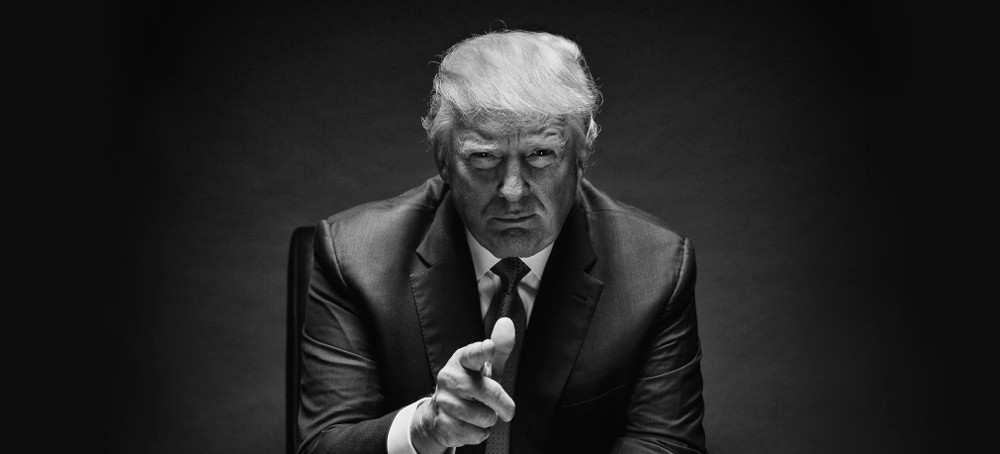 If we want constitutional rule, right now is the easiest moment to mount its defense, in the way marked out by the Constitution itself. (photo: The New York Times)
25 january 24 (RSN.org)
If we ignore the Constitution now, it will not protect our rights later. We are ignoring it now, because we are afraid.
The Constitution is meant to handle our emotions, to “address itself immediately to the hopes and fears of individuals,” in Alexander Hamilton’s words.
But there is one fear it cannot address: fear of the Constitution itself. Too many of us, right now, are running in fear of the Constitution.
How did it come to this? An insurrectionist, Donald Trump, purports to be running for president, although the Constitution forbids this. Section Three of the Fourteenth Amendment frankly disqualifies anyone who has taken part in an insurrection, or given aid and comfort to insurrectionists. Trump has done both, and boasts of having done both.
The authors of Section Three anticipated just such a frightful situation. An insurrectionist who swears an oath and violates it has done something terrible. He will have allies who have tasted tyranny and liked it. By mandating just how to deal with such a person, Section Three lends us strength we might not otherwise have. The Constitution defends itself by guiding us towards our better selves.
Yet Americans who should know better are choosing fear over the Constitution, finding excuses to ignore what it says. Indeed, they are choosing to fear the Constitution. Far too many politicians and other media commentators respond to our present situation — a real insurrectionist who has tried to overthrow the Constitution while in office, a real Constitutional ban on insurrectionists running for office a second time — by saying that it is the Constitution that must yield.
Their slogan is: “let the voters decide.” That is to say: in the case of Trump, and Trump alone, let us simply overlook what the Constitution says.
The exceptionalism reeks of fear. In no other case do we wish away the qualifications for office. There will be thousands and thousands of contested elections in the United States in November 2024. With respect to only one of them are people saying that legal qualifications for office do not matter.
The slogan “let the voters decide” makes no sense within our Constitutional order. We only have voters because we have elections, and we only have elections as organized under the Constitution. Claiming that voters (and electoral systems) can disregard the Constitution is senseless, because people become citizens and thus voters in ways defined by the Constitution. No Constitution, no citizens, no voters.
The real issue, though, is elsewhere. “Let the voters decide” appeals not to law or logic but to conformism and fear. It evades critique from within our Constitutional order because it rejects that order. Rather than following Constitutional procedures meant to handle fear, it redirects fear against those Constitutional procedures.
When we are ourselves afraid to defend the Constitution, we indulge in a kind of victim-blaming. Trump tried to overthrow the Constitution; when we say “let the voters decide,” we suggest that the Constitution deserved it. In ignoring Section Three of the Fourteenth Amendment, we refuse, as it were, to hear the Constitution’s side of the story.
We are attacking the Constitution because we lack the courage to defend it. And so we begin to unwind the constitutional order.
Take the familiar example of checks and balances. The slogan “let the voters decide” suggests that potential presidents are beyond the reach of the other branches of government, despite what the Constitution says. Section Three of the Fourteenth amendment raises questions that courts will have to answer. Saying “let the voters decide” denies them that role. Section Three of the Fourteenth Amendment very explicitly defines a role for Congress after an insurrection. Congress may vote to allow an insurrectionist to take part in elections.
The point goes deeper, into the very logic of constitutionalism. Checks and balances illustrate the Constitution’s capacity to transform human imperfections into decent politics. One of those imperfections is fear. When we direct our fear at the Constitution itself, however, we push those imperfections past the point where they can be borne. When we are too fearful of the Constitution to allow the Constitution to address our fears, fear builds to become the main mode of politics.
We then legitimate mob rule because we imagine some future mob. We obey a tyrant in advance. Directing our fear at the Constitution makes the tyrant’s ascent far too easy.
The Constitution can defend itself in general, and even against the specific threat of an insurrectionist candidate — but not on its own, not as a piece of paper, not without defenders who read it and affirm it. When we ignore what the Constitution says, and blame the Constitution for our own cowardice, we join in Trump’s attack upon it.
It takes a little courage to admit that we are afraid, rather than to project our fears. It takes a little more courage to act, rather than dissemble and delay. If we want constitutional rule, right now is the easiest moment to mount its defense, in the way marked out by the Constitution itself.
It only gets harder from here.
Hafez on the light of our own being

Tarot Card for January 26: The Princess of Disks
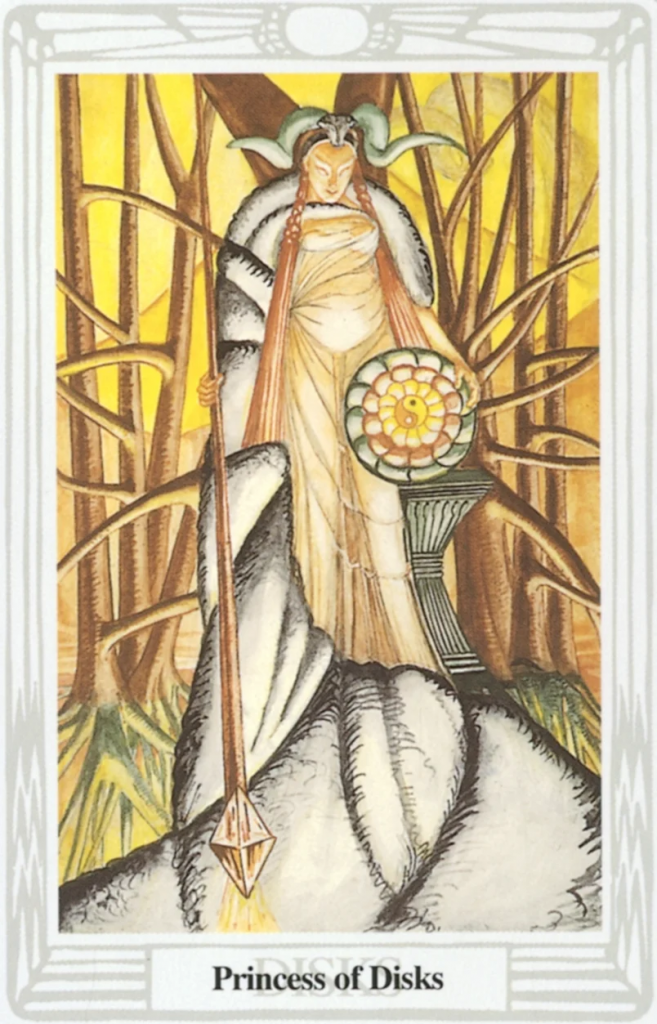
| The Princess of Disks A young woman indicated by the Princess of Disks would be a quiet, reserved person – sometimes shy. She will be practical and capable, though rarely seeking the limelight. I used to know a stage manager who always came up as a Princess of Disks – she loved the glitz of the theatre as long as she could stay behind the scenes – having, of course, created them first!She’s a gentle person who, like the Queen of Disks, is much concerned with domestic matters, and with Nature and growth. As a result, sometimes when this card comes up we may be looking at somebody who is expecting a child. The Princess of Cups often represents conception, the Princess of Disks shows the pregnancy and the Ace of Wands will then indicate the birth.The Princess of Disks woman is a reliable and diligent person, trustworthy and hard-working. She is faithful by nature, and deals badly with conflict. She likes life to unfolds in an ordered fashion. In fact, she contemplates life very thoroughly, being sensitive to the needs of others, and sympathetic to their feelings.Despite her quiet exterior, she has a huge resource of strength and support to offer to those who need it. She is also an excellent practical manager with marked proficiency in dealing with money and accounting. This will, however, generally be expressed in the home environment where she is at her most content.When the card comes up to indicate a period in somebody’s life, rather than the person herself, we will be looking at a young woman on the threshold – of life, marriage, motherhood, though rarely on the threshold of some major career ambition. That step would be more readily indicated by the Princess of Wands. |
Weekly Invitational Translation
Translation is a 5-step process of “straight thinking in the abstract.” The first step is an ontological statement of being beginning with the syllogism: “Truth is that which is so. That which is not truth is not so. Therefore Truth is all there is.” The second step is the sense testimony (what the senses tell us about anything). The third step is the argument between the absolute abstract nature of truth from the first step and the relative specific truth of experience from the second step. The fourth step is filtering out the conclusions you have arrived at in the third step. The fifth step is your overall conclusion.
The claims in a Translation may seem outrageous, but they are always (or should always) be based on self-evident syllogistic reasoning. Here is one Translation from this week.
1) Truth is that which is so. That which is not truth is not so. Therefore Truth is all that is. Truth being all is therefore total, therefore complete, therefore full, therefore one (since there is nothing other than all), Truth being right is therefore legal, therefore lawful, therefore correct, therefore error-proof, therefore perfect. I think therefore I am. Since I am and since Truth is all that is, therefore I am Truth. Since I am Truth therefore I, being, have all that attributes of Truth. Therefore I, being, am total, complete, full, one, legal, lawful, correct, error-proof, perfect. Since I am mind and since I am Truth, therefore Truth is mind (Consciousness).
2) Some people enjoy being cruel.
Word-tracking:
people: mortalen
joy: joy, gaude, proud, gaudy, rejoice, jubilance, to shout or cry out with joy
cruel: undigested matter, raw, crude, delight in blood
digest: to transform matter into energy (or shit)
matter: mother, to have importance
3) Truth being right, is therefore correct, is therefore error-proof, is therefore perfect. Digestion being the transformation of matter into energy (or shit) and Truth being all, therefore Truth is all that matters OR Truth is all matter. Since E=MC2, therefore all matter equals energy, therefore Truth is all energy. Since Truth is perfect, that which is imperfect is not so, Therefore Truth is not full of shit, Truth is full of Energy/Matter. Since Truth is full of Energy/Matter, no digestion is required, therefore Truth is pre-digested. Truth being one, is therefore harmonious, therefore pleasing, therefore full of joy. So the expression “Sometimes the Truth hurts” is a misunderstanding of the fact that Truth never hurts OR Truth always heals Truth beng all is therefore limitless, therefore immortal, so the idea of mortal beings (people) is a finite expression of the infinite personhood of Truth.
4) Truth is perfect.
Truth is all that matters OR Truth is all matter
Truth is all energy.
Truth is not full of shit,
Truth is full or Energy/Matter.
Truth is pre-digested.
Truth is full of joy.
Truth never hurts or Truth always heals
Mortal beings (people) is a finite expression (a misperception) of the infinite personhood of Truth.
5) Truth is pre-digested Energy/Matter that is full of joy (not full of shit) that never hurts, but always heals.
For information about Translation or other Prosperos classes go to: https://www.theprosperos.org/teaching
The Secret Teaching of the Golden Flower with Ronnie Pontiac
New Thinking Allowed with Jeffrey Mishlove • Jan 25, 2024 Ronnie Pontiac was the personal research assistance for Manly P. Hall at the Philosophical Research Society in Los Angeles. He is author of American Metaphysical Religion: Esoteric and Mystical Traditions of the New World. He is coauthor with Tamra Lucid of The Magic of the Orphic Hymns: A New Translation for the Modern Mystic. Here he describes the classic Chinese text, The Secret of the Golden Flower. He points out how it was instrumental in major changes in his life. 00:00:00 Introduction 00:01:45 Ronnie’s story 00:11:52 History of the text 00:34:29 Golden flower practice 00:42:33 Meaning of the illustrations 00:51:58 Taoist magic 01:09:10 Carl Jung and Richard Wilhelm 01:18:52 “not this” practice 01:22:35 Conclusion New Thinking Allowed host, Jeffrey Mishlove, PhD, is author of The Roots of Consciousness, Psi Development Systems, and The PK Man. Between 1986 and 2002 he hosted and co-produced the original Thinking Allowed public television series. He is the recipient of the only doctoral diploma in “parapsychology” ever awarded by an accredited university (University of California, Berkeley, 1980). He is also the Grand Prize winner of the 2021 Bigelow Institute essay competition regarding the best evidence for survival of human consciousness after permanent bodily death. (Recorded on December 26, 2023)
Book: “Opening Up: The Healing Power of Expressing Emotions”
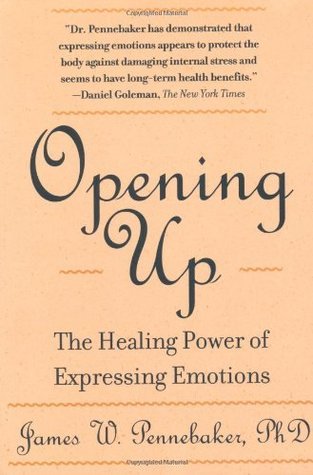
Opening Up: The Healing Power of Expressing Emotions
James W. Pennebaker
Anyone who has ever entrusted a troubling secret to a journal, or mourned a broken heart with a friend, knows the feeling of relief that expressing painful emotions can bring. This book presents astonishing evidence that personal self-disclosure is not only good for our emotional health, but boosts our physical health as well.
Psychologist James W. Pennebaker has conducted controlled clinical research that sheds new light on the powerful mind body connection. This book interweaves his findings with insightful case studies on secret-keeping, confession, and the hidden price of silence. Filled with information and encouragement, Opening Up
*Why suppressing inner problems takes a devastating toll on health
*How long-buried trauma affects the immune system
*How writing about your problems can improve your health
*Why it’s never too late to heal old emotional wounds
*When self-disclosure may be risky–and how to know whom to trust
About the author

James W. Pennebaker
25 books147 followersFollow
James Pennebaker is an American social psychologist and husband of Ruth Pennebaker. He is the Centennial Liberal Arts Professor of Psychology at the University of Texas at Austin and a member of the Academy of Distinguished Teachers. His research focuses on the relationship between natural language use, health, and social behavior, most recently “how everyday language reflects basic social and personality processes”
Books: “My New Order: A Collection of Speeches by Adolph Hitler, Volume 1”
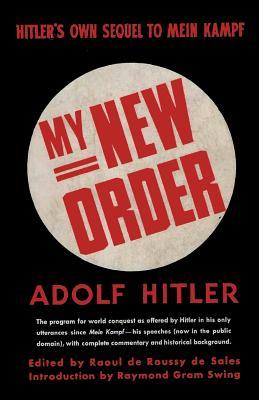
My New Order: A Collection of Speeches by Adolph Hitler, Volume One
Adolf Hitler, Raoul de Roussy de Sales (Editor), Raymond Gram Swing (Introduction)
My New Order has attracted the attention of the press with the rise of Donald Trump as candidate for President of the United States because his first wife Ivana Trump revealed that Donald Trump reads a book of Hitler’s collected speeches, My New Order, which he keeps in a cabinet by his bed.
It can be seen that there are clear similarities between the speeches of Trump and the speeches of Hitler. Here are examples:
They repeat themselves constantly, saying the same things over and over again.
They never admit they have made a mistake nor do they ever take anything back.
To any criticism, they respond by insults and name calling.
They use a low form of language, with simple sentences even a person with the lowest level of education or with no education at all can understand.
Another contrast is the sheer volume of words.
Hitler gave a thousand speeches and spoke millions of words. Hitler communicated almost entirely through his speeches. Hitler’s speeches were long, usually one and a half to two hours long.
Trump made one of the longest speeches ever to accept the Republican Party nomination for President of the United States. His speech lasted one hour fifteen minutes.
Trump communicates almost entirely through his speeches and through his tweets. Tweets are short 140-character messages. He almost never uses emails. Trump never gives an analysis or a logical justification for his views. Hitler is similar.
Trump has written nothing. His one book, “The Art of the Deal,” was written by a ghostwriter. Similarly, Hitler only wrote “Mein Kampf.”
One can see from the foreword here by Raoul de Roussy de Sales there are clear similarities between the speaking style of Hitler and that of Trump.
“To use constantly and untiringly the same arguments and to pound into the heads of his listeners the same formulas is part of Hitler’s oratorical technique.”
“Hitlers speeches are weapons as much as part of his strategy of conquest as more direct instruments of warfare. Hitler is past master of throwing up verbal smoke screens to conceal his intended moves. He knows equally well the effectiveness of massive oratorical assaults that shake the nerves of his victims and opponents and break down their resistance. He knows how to give pledges that will be broken later but will serve temporally to divide and confuse and to create the illusion of Security. He uses insults and lies in the same manner as his generals use Stuka planes and tanks to break the respectable but often weak front of his adversaries. He contradicts himself constantly but his contradictions often produce the effect of a psychological pincer-movement which crushes the best defenses of logic and ordinary morality.”
“The Greatest Anthology of Broken Promises Ever Compiled.” Hitler made and then broke treaties. Trump is speaking of breaking our treaties with NATO countries, and with Japan and South Korea.
This book is a collection of speeches made by Hitler during the 20, s and 30, s in which he affirmed his Anti Antisemitism, his desire for World Domination, and his contempt of efforts by the rest of the world to stop him.
The original book, published in 1941, is 1008 pages long. This is too long to be published in soft cover, so it has been divided into to volumes.
The first volume is Hitler’s speeches from the rise to power, 1918 to 1933 to the bloodless annexations Annexation of Austria and the Dismemberment of Czechosolvakia.
640 pages, Paperback
Published August 5, 2016
(Goodreads.com)
Free Will Astrology: Week of January 25, 2024
BY ROB BREZSNY | JANUARY 23, 2024 (Newcity.com)


ARIES (March 21-April 19): Aries author Dani Shapiro has published six novels, three bestselling memoirs, and a host of articles in major magazines. She co-founded a writer’s conference, teaches at top universities, and does a regular podcast. We can conclude she is successful. Here’s her secret: She feels that summoning courage is more important than being confident. Taking bold action to accomplish what you want is more crucial than cultivating self-assurance. I propose that in the coming weeks, you apply her principles to your own ambitions.
TAURUS (April 20-May 20): Throughout history, there has never been a culture without religious, mythical and supernatural beliefs. The vast majority of the world’s people have believed in magic and divinity. Does that mean it’s all true and real? Of course not. But nor does it mean that none of it is true and real. Ultra-rationalists who dismiss the spiritual life are possessed by hubris. Everything I’ve said here is prelude to my oracle for you: Some of the events in the next three weeks will be the result of magic and divinity. Your homework is to discern which are and which aren’t.
GEMINI (May 21-June 20): Several wise people have assured me that the pursuit of wealth, power, popularity and happiness isn’t as important as the quest for meaningfulness. If you feel your life story is interesting, rich and full of purpose, you are successful. This will be a featured theme for you in the coming months, Gemini. If you have ever fantasized about your destiny resembling an ancient myth, a revered fairy tale, a thousand-page novel or an epic film, you will get your wish.
CANCER (June 21-July 22): “Life as we live it is unaccompanied by signposts,” wrote author Holly Hickler. I disagree with her assessment, especially in regard to your upcoming future. Although you may not encounter literal markers bearing information to guide you, you will encounter metaphorical signals that are clear and strong. Be alert for them, Cancerian. They might not match your expectations about what signposts should be, though. So expand your concepts of how they might appear.
LEO (July 23-Aug. 22): I wrote a book called “Pronoia Is the Antidote for Paranoia: How the Whole World Is Conspiring to Shower You with Blessings.” Among its main messages: There’s high value in cultivating an attitude that actively looks for the best in life and regards problems as potential opportunities. When I was working on the book, no one needed to hear this advice more than me! Even now, I still have a long way to go before mastering the outlook I call “crafty optimism.” I am still subject to dark thoughts and worried feelings—even though I know the majority of them are irrational or not based on the truth of what’s happening. In other words, I am earnestly trying to learn the very themes I have been called to teach. What’s the equivalent in your life, Leo? Now is an excellent time to upgrade your skill at expressing abilities and understandings you wish everyone had.
VIRGO (Aug. 23-Sept. 22): In 1951, filmmaker Akira Kurosawa made a movie adapted from “The Idiot,” a novel by his favorite author Fyodor Dostoevsky. Kurosawa was not yet as famous and influential as he would later become. That’s why he agreed to his studio’s demand to cut ninety-nine minutes from his original 265-minute version. But this turned out to be a bad idea. Viewers of the film had a hard time understanding the chopped-up story. Most of the critics’ reviews were negative. I bring this to your attention, Virgo, with two intentions: 1. I encourage you to do minor editing on your labor of love. 2. But don’t agree to anything like the extensive revisions that Kurosawa did.
LIBRA (Sept. 23-Oct. 22): I have selected a poem for you to tape on your refrigerator door for the next eight weeks. It’s by thirteenth-century Zen poet Wu–Men. He wrote: “Ten thousand flowers in spring, the moon in autumn, / a cool breeze in summer, snow in winter. / If your mind isn’t clouded by unnecessary things, this is the best season of your life.” My wish for you, Libra—which is also my prediction for you—is that you will have extra power to empty your mind of unnecessary things. More than ever, you will be acutely content to focus on the few essentials that appeal to your wild heart and tender soul.
SCORPIO (Oct. 23-Nov. 21): Psychologist Carl Jung wrote, “Motherlove is one of the most moving and unforgettable memories of our lives, the mysterious root of all growth and change; the love that means homecoming, shelter and the long silence from which everything begins and in which everything ends.” To place yourself in rapt alignment with current cosmic rhythms, Scorpio, you will do whatever’s necessary to get a strong dose of the blessing Jung described. If your own mother isn’t available or is insufficient for this profound immersion, find other maternal sources. Borrow a wise woman elder or immerse yourself in Goddess worship. Be intensely intent on basking in a nurturing glow that welcomes you and loves you exactly as you are—and makes you feel deeply at home in the world.
SAGITTARIUS (Nov. 22-Dec. 21): In a set of famous experiments, physiologist Ivan Pavlov taught dogs to have an automatic response to a particular stimulus. He rang a bell while providing the dogs with food they loved. After a while, the dogs began salivating with hunger simply when they heard the bell, even though no food was offered. Ever since, “Pavlov’s dogs” has been a phrase that refers to the ease with which animals’ instinctual natures can be conditioned. I can’t help but wonder what would have happened if Pavlov had used cats instead of dogs for his research. Would felines have submitted to such scientific shenanigans? I doubt it. These ruminations are my way of urging you to be more like a cat than a dog in the coming weeks. Resist efforts to train you, tame you or manipulate you into compliance.
CAPRICORN (Dec. 22-Jan. 19): Before poet Louise Glück published her first book, “Firstborn,” it was rejected by twenty-eight publishers. When it finally emerged, she suffered from writer’s block. Her next book didn’t appear until eight years after the first one. Her third book arrived five years later, and her fourth required another five years. Slow going! But here’s the happy ending: By the time she died at age eighty, she had published twenty-one books and won the Pulitzer Prize and the Nobel Prize for Literature. By my astrological reckoning, you are now at a phase, in your own development, comparable to the time after Glück’s fourth book: well-primed, fully geared up, and ready to make robust progress.
AQUARIUS (Jan. 20-Feb. 18): “All good writing is swimming under water and holding your breath,” wrote author F. Scott Fitzgerald. I’d like to expand that metaphor and apply it to you, Aquarius. I propose that your best thinking and decision-making in the coming weeks will be like swimming under water while holding your breath. What I mean is that you’ll get the best results by doing what feels unnatural. You will get yourself in the right mood if you bravely go down below the surface and into the depths and feel your way around.
PISCES (Feb. 19-March 20): In honor of this pivotal time in your life story, I offer four pronouncements. 1. You can now be released from a history that has repeated itself too often. To expedite this happy shift, indulge in a big cry and laugh about how boring that repeated history has become. 2. You can finish paying off your karmic debt to someone you hurt. How? Change yourself to ensure you won’t ever act that way again. 3. You can better forgive those who wounded you if you forgive yourself for being vulnerable to them. 4. Every time you divest yourself of an illusion, you will clearly see how others’ illusions have been affecting you.
Homework: Release yourself from the pressure to live up to expectations you don’t like. Newsletter.FreeWillAstrology.com