

Mary Ellen Chase on Christmas
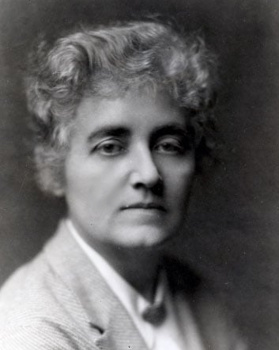
IChase in 1933)
“Christmas, children, is not a date. It is a state of mind.”
~ Mary Ellen Chase
Mary Ellen Chase (February 24, 1887 – July 28, 1973) was an American educator, teacher, scholar, and author. She is regarded as one of the most important regional New England literary figures of the early twentieth century. Wikipedia
What crows teach us about death
Featured Books from New Thinking Allowed
Monitoring is a handy guidebook full of strategies and techniques that you can use to assist remote viewers and intuitives. Inside, you will learn how monitoring can enhance the accuracy, clarity and volume of information that comes through during a session with a remote viewer or intuitive.

Discover a new way to think about your grief and loss. The esteemed psychotherapist and bereavement counselor, John Tsilimparis, MFT, shows you the ways grief and loss intertwine with beauty, tenderness, and human connection to empower you to build emotional resilience in a difficult world.

Giving Myself Away: From Beat Generation Protégé to Metaphysical Social Critic is Charles Upton’s sweeping autobiographical journey through fifty years of American spiritual and cultural transformation. From the San Francisco poetry scene and peace movements to decades of Sufi practice, Upton reflects on art, religion, and the search for truth across a century of upheaval. Both memoir and metaphysical meditation, it captures a lifetime of encounters with the people and forces that shaped modern consciousness.

The Andromeda Galaxy

The Andromeda Galaxy (Messier 31), our nearest galactic neighbor, spirals through the night sky—its light a message sent more than two million years ago. Gazing upon it, we touch a cosmic mirror of mind itself: vast, luminous, and stretching beyond the limits of what we can yet know. Photo Credit: Jeffrey Mishlove, 4″ refractor telescope, 60 minute exposure
(Courtesy of New Thinking Allowed)
Scream Mask Left On While Using Toilet

The Edge: November issue
 In This Issue
- Oneness of Humanity Awards Honor Diane Williams, Deborah Moldow, Kurt Johnson and Deepak Chopra – Olivia Hansen
- AI as Love in Action: Radical CollaborACTION for the Greater Good – Charles Betterton
- Raising Hope – Kristin Engvig
- The Wise AI Summit – Stephen Dinan, Deepak Chopra, Suzanne Giesemann, Phil Lane, Jr., Nipun Mehta
- Mexico for Climate Action Week – Mindahi Bastida
- Peace Pole Presented to New York Deputy Mayor – Fumi Johns Stewart
- Closer Than Breath, Nov. 1, Online – Diane Berke
- The Loving Edge of AI, Nov. 4, 11, 18, Online – Joan Borysenko
- Science and Consciousness: The Pioneers, Nov. 6, 13, 20 and Dec. 4, Online – Peter Merry
- Prosperity Prayer Zone, Nov. 11, Online – Paulette Pipe
- 6-Week Mindfulness for Wellbeing, Nov. 11-Dec. 16, Online – Cassandra Vieten
- Spiritual Partnership: Beyond the Five Senses, Nov. 12, Online – Gary Zukav
- World Peace Forum South Africa, Nov. 13-16, Cape Town – Anne-Marie Voorhoeve, Jude Currivan
- Ascended Living Method Masterclass, Nov. 20, Online – Anaez Nate Zeleznick
- Power of Women Conference, Nov. 21-22, Online – Shenali Rajaratnam, Sandra de Castro Buffington, Riane Eisler, Sr. Jenna, Rutendo Ngara, and Diane Williams
- Altar, Ayllu and Altruism, Nov. 22, Online – Oscar Miro-Quesada
- Enhancing Your Intuition and Psychic Abilities, Dec. 5-7 – Karen Noé
- Sages & Scientists, Dec. 5-7, Singer Island, FL – Deepak Chopra
- Conscious Evolution, 8-Module Online Course – Bruce Lipton
- Nina Meyerhof Receives Spirit of the United Nations Lifetime Achievement Tribute
- Dr. Ivy “Shadiah” Hylton to Receive 2025 Impact Award
- Beyond Biology: Biofields, Consciousness, and the Healing Code – Julie Krull, Shamini Jain
- Reclaiming the Global Ethics in a Fragmented World – Alfredo Sfeir-Younis
- Predictions for 2025-2026 – Suzanne Giesemann
- Messages from Our Elders – Fernando Ausin
- Shambhu Sessions – Kristin Hoffmann
- Spread Infinite Hope – Yasmeen Turayhi, Hope Fitzgerald
- Community Engagement Through Music – Kwadjo SPiRi
- Life Changes Show – Sandra de Castro Buffington
- An Important Message to Humanity – Steve Farrell, Neale Donald Walsch
- Journey to the Wisdom of the Center: Part 1 – Emanuel Kuntzelman
- The Best Thing You Can Do for Your Karma – Deepak Chopra
- Sustainability, Entropy, and Order Creation – Michael Ben-Eli
- Honoring the Cycles of Life and Death – Anodea Judith
- Astro Notes for Scorpio Season – David Nicol
“Our Moment of Choice”
We Answered THE CALL
Visit the Evolutionary Leaders YouTube Channel
Invest in Synergy to Power a Transformed World
The Path of the Everyday Hero with Lorna Catford
New Thinking Allowed with Jeffrey Mishlove Oct 31, 2025 Psychology and Psychotherapy This video is a special release from the original Thinking Allowed series that ran on public television from 1986 until 2002. It was recorded in about 1990. It will remain public for only one week. Mythology reminds us that just when things seem the darkest, we may be on the verge of a breakthrough. Lorna Catford, PhD, a professor of psychology at Sonoma State University in California, is co-author of The Path of the Everyday Hero. She points out that the demands placed upon ordinary people in everyday life, require a heroic commitment if we wish to actualize the best within ourselves. Now you can watch all of the programs from the original Thinking Allowed Video Collection, hosted by Jeffrey Mishlove. Subscribe to the new Streaming Channel (https://thinkingallowed.vhx.tv/) and watch more than 350 programs now, with more, previously unreleased titles added weekly. Free month of the classic Thinking Allowed streaming channel for New Thinking Allowed subscribers only. Use code THINKFREELY.
November Astrology Forecast 2025
The Astrology Podcast Nov 1, 2025 Monthly Astrology Forecasts A look ahead at the astrological forecast for November 2025, with astrologers Chris Brennan and Austin Coppock. We spend the first hour talking about the astrology behind news stories that happened since our last forecast, such as the Louvre jewelry heist that took place on the Mercury-Mars conjunction in Scorpio, and then in the second hour we do a deep dive into November’s astrology. The astrology of November features an explosive Mars-Uranus opposition at the top of the month, followed by Mercury stationing retrograde in Sagittarius conjunction Mars, and then finally late in the month Saturn stations direct for the final time in Pisces. We also discuss Uranus returning back to Taurus for the final time, and Jupiter stationing retrograde in Cancer trine Saturn. This is episode 510 of The Astrology Podcast Northwest Astrological Conferencehttps://Norwac.netAustin’s websitehttps://Austincoppock.comChris’s Hellenistic Astrology Coursehttps://courses.theastrologyschool.comPatreon for early access and bonus content / astrologypodcast Timestamps00:00:00 Introduction 00:00:37 Quick overview of November 00:03:40 News segment begins 00:04:02 Podcast website back online 00:10:14 Mercury-Mars conjunction recap 00:22:25 Pluto first direct station in Aquarius 00:45:19 Venezuela and Saturn-Neptune conjunction 00:46:25 Uranus in Gemini and nuclear weapons 01:00:43 Sponsor: Northwest Astrological Conference 01:04:59 November 2025 forecast begins 01:08:55 Auspicious Electional Chart for Nov 1 01:14:32 Mars-Uranus opposition on Nov 4 01:20:22 Mars leaves Scorpio, Venus enters 01:25:03 Mercury stations retrograde conjunct Mars 01:30:11 Mercury Retrograde explained 01:40:31 Full Moon in Taurus on Nov 5 01:44:35 Uranus retrogrades back to Taurus Nov 7 01:56:04 New Moon in Scorpio on Nov 19 02:00:31 Jupiter stations retrograde in Cancer 02:01:30 Saturn stations direct in Pisces 02:11:37 The upcoming “stress test” in December 02:16:26 Rotten pumpkin analogy 02:22:02 How astrological predictions are made 02:27:08 Austin’s projects 02:32:03 Chris’s book and course 02:34:39 Preparing for the 2026 forecast 02:35:38 Outro and credits
Kevin Phillips
“The whole secret of politics is knowing who hates who.”
–Kevin Phillips
(Image from WGBH.org)
From Wikipedia, the free encyclopedia
| Kevin Phillips | |
|---|---|
| Born | November 30, 1940 New York City, U.S. |
| Died | October 9, 2023 (aged 82) Naples, Florida, U.S. |
| Alma mater | Colgate University (B.A., 1961)University of Edinburgh (1959–60)[citation needed]Harvard University (J.D., 1964) |
| Occupations | Authorcolumnistpundit |
| Spouse | Martha Henderson (m. 1968) |
| Children | 3 |
Kevin Price Phillips (November 30, 1940 – October 9, 2023) was an American writer and commentator on politics, economics, and history. He emerged as a Republican Party strategist who helped devise its Southern Strategy in the 1960s. Phillips became disaffected with the party by the 1990s, subsequently leaving it to become an independent and staunch critic of the Republicans. He was a regular contributor to the Los Angeles Times, Harper’s Magazine, and National Public Radio, and was a political analyst on PBS‘s NOW with Bill Moyers.
Early life
Phillips was born in Manhattan in 1940, and grew up in the Bronx, raised by a family of Irish, Scottish, and English descent. He was drawn to the Republican Party from an early age, supporting Dwight D. Eisenhower for president in 1952 and 1956.[1] He attended the Bronx High School of Science before earning a bachelor’s degree in political science from Colgate University and a juris doctor from Harvard Law School; he also studied at the University of Edinburgh.[1]
Early career
Phillips began his political career as an aide to Republican Representative Paul A. Fino.[1] He worked as a strategist on voting patterns for Richard Nixon‘s 1968 campaign, which was the basis for a book, The Emerging Republican Majority, which predicted a conservative political realignment in national politics and is widely regarded as influential in the field of American political science.[1]
Southern strategy
Phillips told a journalist during the 1968 presidential election that “the whole secret of politics is knowing who hates who”.[1] After Nixon was elected, Phillips wrote a book on what has come to be known as the “Southern strategy” of the Republican Party. Entitled The Emerging Republican Majority, it argued that the southern states of the US would keep the Republicans winning presidential elections and more than offset the decline in Republican support in Northeast states, based on the racial resentment of white voters.[1][2]
As he stated to the New York Times Magazine in 1970,
All the talk about Republicans making inroads into the Negro vote is persiflage. Even ‘Jake the Snake’ [liberal Republican Senator Jacob Javits of New York] only gets 20 percent. From now on, Republicans are never going to get more than 10 to 20 percent of the Negro vote, and they don’t need any more than that… but Republicans would be shortsighted if they weakened the Voting Rights Act. The more Negroes who register as Democrats in the South, the sooner the Negrophobe whites will quit the Democrats and become Republicans. That’s where the votes are. Without that prodding from the blacks, the whites will backslide into their old comfortable arrangement with the local Democrats.[2]
The book however was not used in the campaign itself, Phillips notes in the preface to the Princeton Edition,
Some observers concluded that The Emerging Republican Majority was the emerging Republican strategy. Newsweek labelled the book “The political bible of the Nixon Era.” Not quite. The book was not a blueprint of the GOP’s “Southern Strategy” as some claimed,. … Richard Nixon had read memos based on the book’s analyses during the week before the November 1968 election, but in mid-1969 he truthfully said he had not read the actual book. He read it a few months later.[3]
His predictions regarding shifting voting patterns in presidential elections proved accurate, though they did not extend “downballot” to Congressional elections until the Republican revolution of 1994.
Political commentary
Phillips briefly worked in the Department of Justice during the Nixon administration, but later left to embark on a career as an author and commentator.[1] In his books, he coined the term Sun Belt to refer to the southern states. During this time, he was associated with the New Right.[1]
Later career
As time went on, Phillips grew increasingly disillusioned with the Republican Party. Claiming that the Watergate scandal had dealt a fatal blow to his vision for a perpetual Republican majority, he was a critic of expanding wealth inequality under the presidency of Ronald Reagan, and was a staunch opponent of George W. Bush‘s administration, which he extensively criticized in his 2006 book American Theocracy.[1]
American Theocracy (2006)
Main article: American Theocracy
Rev. Dr. Allen Dwight Callahan [4] states the book’s theme is that the Republican Party (GOP), religious fundamentalism, petroleum, and borrowed money are an “Unholy Alliance.”[5]
The last chapter, in a nod to his first major work, is titled “The Erring Republican Majority”. American Theocracy, “presents a nightmarish vision of ideological extremism, catastrophic fiscal irresponsibility, rampant greed and dangerous shortsightedness.”[6]
The New York Times wrote:
He identifies three broad and related trends — none of them new to the Bush years but all of them, he believes, exacerbated by this administration’s policies — that together threaten the future of the United States and the world. One is the role of oil in defining and, as Phillips sees it, distorting American foreign and domestic policy. The second is the ominous intrusion of radical Christianity into politics and government. And the third is the astonishing levels of debt — current and prospective — that both the government and the American people have been heedlessly accumulating. If there is a single, if implicit, theme running through the three linked essays that form this book, it is the failure of leaders to look beyond their own and the country’s immediate ambitions and desires so as to plan prudently for a darkening future.[7]
Phillips uses the term financialization to describe how the U.S. economy has been radically restructured from a focus on production, manufacturing and wages, to a focus on speculation, debt, and profits. Since the 1980s, Phillips argues in American Theocracy,
the underlying Washington strategy… was less to give ordinary Americans direct sums than to create a low-interest-rate boom in real estate, thereby raising the percentage of American home ownership, ballooning the prices of homes, and allowing householders to take out some of that increase through low-cost refinancing. This triple play created new wealth to take the place of that destroyed in the 2000-2002 stock-market crash and simultaneously raised consumer confidence.
Nothing similar had ever been engineered before. Instead of a recovery orchestrated by Congress and the White House and aimed at the middle- and bottom-income segments, this one was directed by an appointed central banker, a man whose principal responsibility was to the banking system. His relief, targeted on financial assets and real estate, was principally achieved by monetary stimulus. This in itself confirmed the massive realignment of preferences and priorities within the American system….
Likewise, huge and indisputable but almost never discussed, were the powerful political economics lurking behind the stimulus: the massive rate-cut-driven post-2000 bailout of the FIRE (finance, insurance, and real estate) sector, with its ever-climbing share of GDP and proximity to power. No longer would Washington concentrate stimulus on wages or public-works employment. The Fed’s policies, however shrewd, were not rooted in an abstraction of the national interest but in pursuit of its statutory mandate to protect the U.S. banking and payments system, now inseparable from the broadly defined financial services sector.
Critical reception
American Theocracy was reviewed widely. The New York Times Book Review wrote “It is not without polemic, but unlike many of the more glib and strident political commentaries of recent years, it is extensively researched and frighteningly persuasive…”[8]
The Chicago Sun-Times wrote “Overall, Phillips’ book is a thoughtful and somber jeremiad, written throughout with a graceful wryness… a capstone to his life’s work.”[9]
Bad Money (2008)
Phillips examines America’s great shift from manufacturing to financial services. He also discusses America’s petroleum policies and the tying of the dollar to the price of oil. Phillips suggests that the Euro and the Chinese Yuan/Renminbi are favourites to take the dollar’s place in countries hostile towards America, such as Iran. He then tackles the lack of regulatory oversight employed in the housing market and how the housing boom was allowed to run free under Alan Greenspan. The book concludes with the proposal that America is employing bad capitalism and extends Gresham’s law of currency to suggest that their good capitalism will be driven out by the bad.[10]
More at: https://en.wikipedia.org/wiki/Kevin_Phillips_(political_commentator)