“It is good to love many things, for therein lies the true strength, and whosoever loves much performs much, and can accomplish much, and what is done in love is well done.”
~ Vincent van Gogh
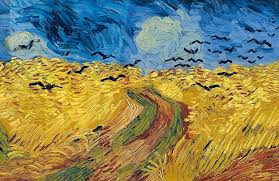
At the end of his life, Van Gogh moved to Auvers-sur-Oise, where he rented a small room at the Ravoux Inn. Through his brother Theo, he met Dr. Paul Gachet, a friend of the painters Cézanne and Pissarro, who took care of him. Shortly before, he had been committed to a mental institution in Saint-Rémy de Provence. But his old existential demons had not left him and were expressed more than ever in his works. Vincent Van Gogh painted Wheatfield with Crows in July 1890, a few days before his death. The work depicts a rural landscape in which the tawny, ochre colours of a field criss-crossed by dirt paths and grass contrast with the dark blue of a stormy sky at dusk. The scene perhaps foreshadows the torments to which the artist is prey, and the very schematic representation of the crows seems to conceal the message of a fatal premonition.
Date of the work : 1890 Original dimensions : 50,5 × 100,5 cm Place of conservation : Musée Van Gogh, Amsterdam, Netherlands
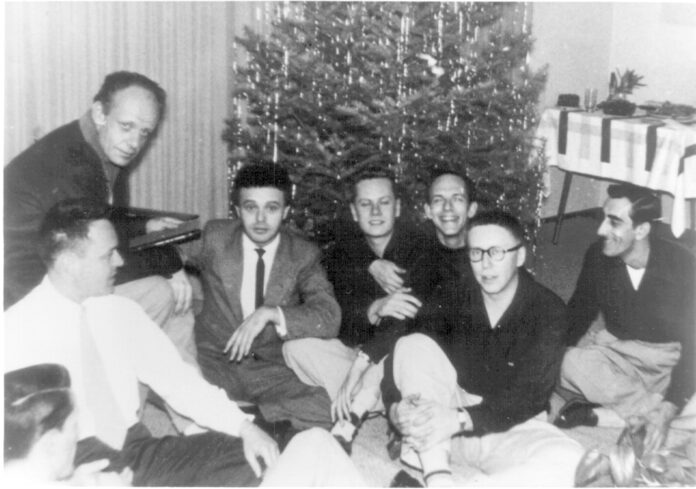
Mattachine Christmas photo, 1950s, by John Gruber. Pictured: Harry Hay, Dale Jennings, Rudi Gerinreich, Stan Witt, Bob Hull, Chuck Rowland, Paul Bernard
Library event celebrates groundbreaking 1950 Mattachine Society, which helped shape modern queer identity.
On Veterans Day 1950, a handful of gay men hiked up a hillside in Los Angeles, in a neighborhood then called Eden Dale. Meeting in secret was risky. Being discovered could mean arrest, entrapment, a lost job, or a beating.
Yet these men—led by the visionary activist Harry Hay—came together with a radical idea: what if queer people could see themselves as a community with rights, dignity, and solidarity?
From that quiet circle grew The Mattachine Society, a groundbreaking group that helped launch the modern gay rights movement in the US. The spark they lit would ripple into generations of activism, law, culture, and community.
It’s hard to imagine Harvey Milk, the White Night Riots, the Castro, or the rainbow flags flying on Market Street without that first ignition.
Now, 75 years later, San Francisco is marking the anniversary with They Lit the Fuse!, a one-night program at the Main Library’s Koret Auditorium on November 13. The evening dives into the Mattachine story with images, rare archival materials, and even a John Wayne film clip—because, as the organizers point out, sometimes history is stranger than fiction.
The lineup is made up of queer history all-stars: Devlyn Camp, creator of the podcast “Queer Serial”; Will Roscoe, editor of Radically Gay; Jim Van Buskirk, founding program manager of SFPL’s James C. Hormel LGBTQIA Center; and Joey Cain, longtime curator and researcher. [In the late ‘90s, Van Buskirk and Cain worked to preserve the Harry Hay papers at the Hormel Center.]
All together, they’ll unpack how a hillside meeting in LA helped set the stage for what would later unfold in San Francisco.
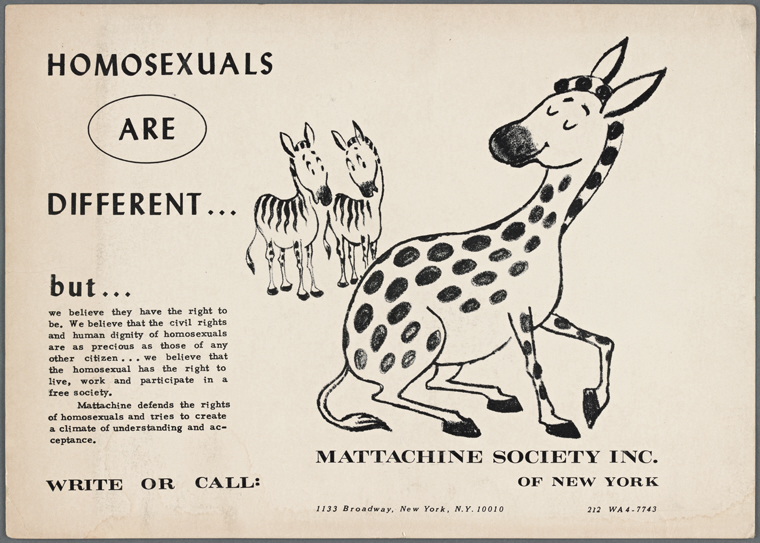
1960 promotional poster for the Mattachine Society
Cain doesn’t mince words about what Mattachine ignited. “The exhilaration of freedom,” he says. “Freedom to live authentically and not on the false terms of religion, government, or society.”
That defiance was explosive in the days of McCarthyism and the Lavender Scare, when homosexuals were branded as threats and purged from public life. “Mattachine grew out of the possibilities of the New Deal and Socialist thought in the ’40s,” says Cain. “And let’s face it, we’re experiencing a new McCarthyism now.”
One of the group’s significant innovations was seeing queerness not as a shameful secret but as the basis of community. “They envisioned us as a unique community with constitutional rights,” Cain adds. “Before that, gays and lesbians didn’t necessarily see themselves as a minority with shared experiences.”
Their pledge was simple: no one crosses the “maelstrom of deviation” alone. Van Buskirk hears that as a reminder for 2025. “With today’s renewed homophobia and transphobia, Mattachine’s message of community, knowing no one is alone, is unfortunately a timely and vital message,” he says.
The Mattachine story might have started in LA, but San Francisco quickly became its second home. Van Buskirk points out that five years later, in 1955, four lesbian couples here—including Del Martin and Phyllis Lyon—founded the Daughters of Bilitis, the first lesbian organization in North America.
Their magazine, The Ladder, went nationwide, and by 1960, they were hosting the first national lesbian convention here. Meanwhile, after leadership battles tore through Mattachine in LA, Hal Call moved the organization north to San Francisco.
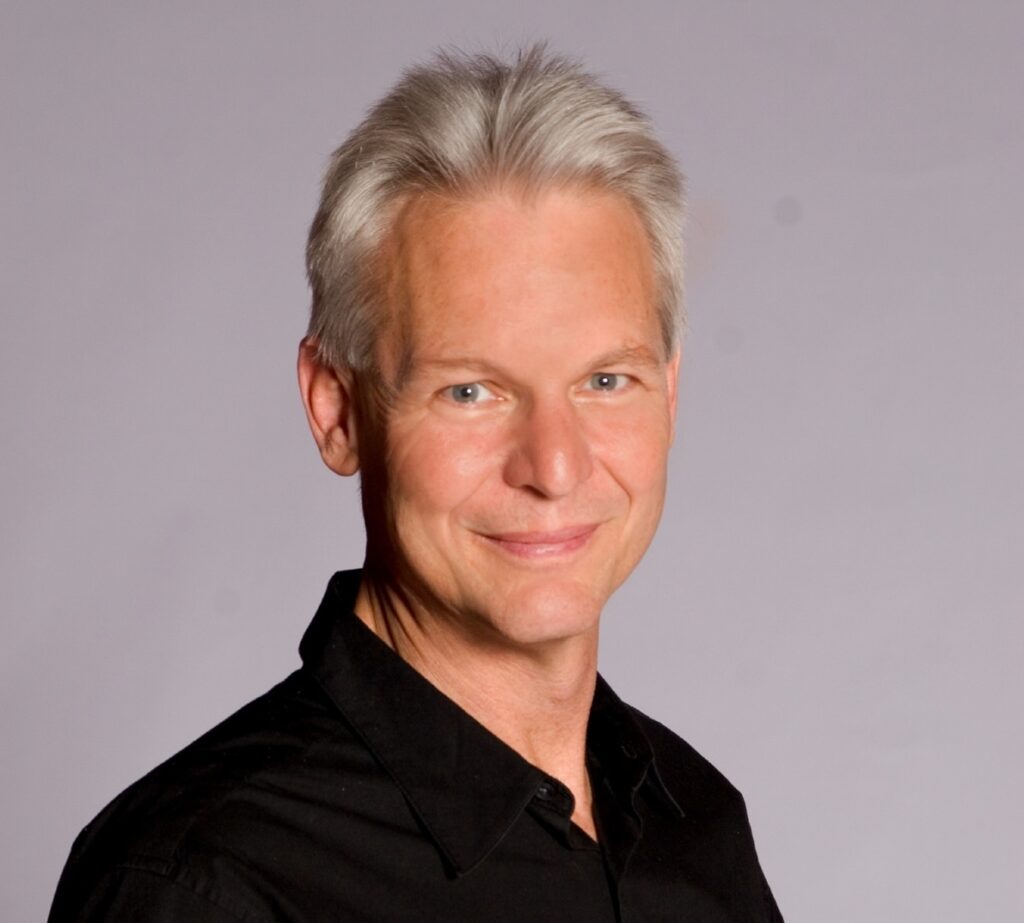
James Van Buskirk. Photo by Kent Taylor
Call may not have the name recognition of Hay or Martin and Lyon. Still, Van Buskirk calls him essential for appearing on Berkeley’s KPFA radio in 1958 and in The Rejected, the first documentary about gay men on American television. He would also open Adonis, the first gay bookshop in the US, and later the first gay adult theater.
“Call is one of many important, if controversial, figures in our early history,” Van Buskirk says.
In a city that would later give the world Folsom Street Fair and the Castro Theatre marquee, it makes sense that even the movement’s messy chapters are still rooted in San Francisco.
Keeping those stories alive has been a lifelong project for Van Buskirk. He points to one photo in particular—the only known image of a Mattachine meeting, snapped secretly by John Gruber.
“It remains iconic,” he says. “I’ll also quote from his unpublished manuscript so that people can hear his motivations in his own words. The Harry Hay Papers are another essential source.”
For Van Buskirk, archives aren’t just dusty files; they’re lifelines. “[Spanish philosopher, essayist, poet, and novelist] George Santayana said, ‘Those who cannot remember the past are condemned to repeat it,’” he reads. “Preserving papers not just of famous people like Hay but also of a ‘regular Joe’ like Gruber lets us understand context from original documents.”
But even the best archives have gaps. The early record still underrepresents women, people of color, and other marginalized voices. Van Buskirk credits the women who succeeded him at the Hormel Center for pushing to fill those lacunae. In a city that has always prided itself on intersectionality, that work is far from done.
So what does progress look like, three-quarters of a century later? Cain sees a world transformed but unfinished.
“The cultural, social, and legal acceptance of LGBTQ people, the existence of identifiable communities, is a world we live in, at least in the US,” he says. “But the oppression, imprisonment, and murder of our people in many parts of the world is unfinished business.”
Joey Cain. Photo by Gloria Mundi
His words point to the paradox of progress: for every rainbow flag on Market Street, there are countless stories of queer lives still threatened.
Younger activists tend to encounter this history through podcasts, films, and social media, rather than leafing through old newsletters or court transcripts. That’s why Camp’s “Queer Serial” podcast has been so influential, layering archival audio with storytelling to make the past feel urgent. Van Buskirk says that’s the point.
“Engaging each generation via their preferred formats is essential,” he says. “I remember asking in 2008 why there needed to be a Harvey Milk biopic when there was already a powerful documentary. My partner said, ‘People don’t watch documentaries.’”
The recent film Fairyland, based on Alysia Abbott’s memoir about growing up with her gay father, poet Steve Abbott, shows how San Francisco’s queer history continues to ripple.
“Hopefully, some viewers will want to read her memoir, Steve’s poetry, and explore his archives,” says Van Buskirk.
For him, it’s all part of the same lineage: Mattachine in the ’50s, Daughters of Bilitis in the ’60s, Milk in the ’70s, ACT UP in the ’80s, marriage equality in the 2000s, and Fairyland in the 2020s. The through-line is memory, courage, and the refusal to disappear.
As They Lit the Fuse! unfolds in the Koret Auditorium, just blocks from the Tenderloin where Compton’s Cafeteria riot took place, and not far from the Castro rainbow crosswalks, the resonance will be impossible to miss.
“I hope attendees leave impressed by the courage of these pioneers, who paved the way for my generation—I came out in the early ’70s—and for everyone since,” says Van Buskirk.
The pledge the Mattachine founders wrote in 1950—that no one should cross the darkness alone—remains urgent in a time of anti-trans laws, book bans, and rising hate crimes.
Seventy-five years after a secret hillside meeting, San Francisco will honor that spark not as nostalgia but as fuel for the battles ahead. In this city, history comes out from behind glass—it marches down Market Street every June, it dances in leather at Folsom, it’s whispered in the stacks of the Hormel Center, and shouted from drag stages in the Tenderloin.
They Lit the Fuse! isn’t just about what happened on a hillside in Los Angeles. It’s about what continues to happen here—in the city that took that spark, fanned it into a flame, and still refuses to let it go out.
THEY LIT THE FUSE! November 13. Koret Auditorium, SF. More info here.
Joshua Rotter is a contributing writer for 48 Hills. He’s also written for the San Francisco Bay Guardian, SF Weekly, SF Examiner, SF Chronicle, and CNET.
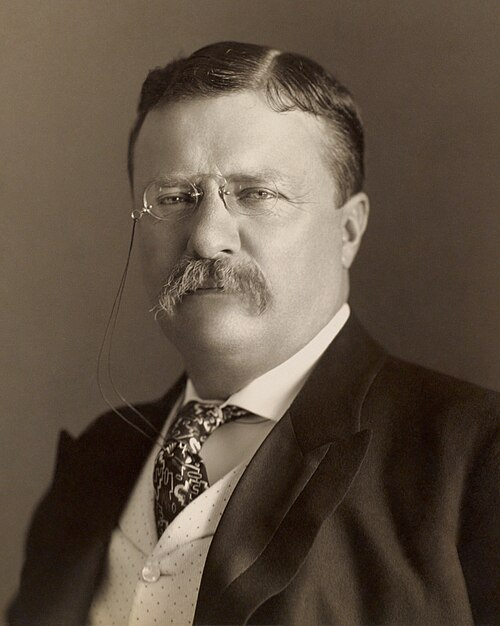
There is something to be said for government by a great aristocracy which has furnished leaders to the nation in peace and war for generations; even a democrat like myself must admit this. But there is absolutely nothing to be said for government by a plutocracy, for government by men very powerful in certain lines and gifted with the money touch, but with ideals which in their essence are merely those of so many glorified pawnbrokers.
–Theodore Roosevelt
Theodore Roosevelt Jr., also known as Teddy or T. R. (October 27, 1858 – January 6, 1919), was the 26th president of the United States, serving from 1901 to 1909. Roosevelt previously was involved in New York politics, including serving as the state’s 33rd governor for two years. Wikipedia
New Thinking Allowed with Jeffrey Mishlove Nov 3, 2025 Mary Baxter, PhD, is an intuitive consultant. She is author of Life Journeys of 21st Century Spiritual Healers and also Getting Started With Your Pendulum. Here she describes how she first learned about the akashic records when she sought a spiritual clearing at a time in her life when she was faced with multiple frightening problems. As a result of the positive outcome from that experience she began to study the technique of accessing the akashic field. This involved the use of the pendulum as well as working with spiritual guides. She describes many nuances and details associated with this work. New Thinking Allowed host, Jeffrey Mishlove, PhD, is author of The Roots of Consciousness, Psi Development Systems, and The PK Man. Between 1986 and 2002 he hosted and co-produced the original Thinking Allowed public television series. He is the recipient of the only doctoral diploma in “parapsychology” ever awarded by an accredited university (University of California, Berkeley, 1980). He is also the Grand Prize winner of the 2021 Bigelow Institute essay competition regarding the best evidence for survival of human consciousness after permanent bodily death. He currently serves as Co-Director of Parapsychology Education at the California Institute for Human Science. (Recorded on December 4, 2019)
Why does becoming an expert in one field make some people think they know everything? Geologist and NASA mission leader Lindy Elkins-Tanton on the process and pitfalls of becoming an expert, and the limits of real knowledge. | Depiction of Psyche spacecraft approaching Psyche asteroid. Credit: NASA/JPL-Caltech/ASU via AP
Textbooks are a false front for human knowledge. Science textbooks, at least.
In high school, I eagerly read the biology textbook and the chemistry textbook and the physics textbook. Every question posed had an answer in the back. All the reactions had been tested, all the accelerations calculated. Soon I would be fluent!
In college, classes were harder, and professors began to point out the unanswered questions. The textbook could take us to a certain frontier of the known, but beyond that, no one had figured out the answers. They needed better instrumentation, more years, super-specialized knowledge.
In the 18th century, Joseph Priestley isolated the element oxygen while doing experiments in the house where he worked as a librarian. Now we all learn about oxygen from textbooks. But today, the oxygen isotope 28O still presents a deep mystery: Theory predicts it should be a highly stable atom, but in 2023, scientists finally created it, and it immediately disintegrated. Why? So far, no one knows. The textbooks told a satisfying story about what is known. Explaining what is unknown, of course, is a much harder task.
Textbooks that seemed to know it all sometimes made me feel there wasn’t room for me in science. Everything was named, every process could be calculated, the answers were all there. Nonetheless I started to do scientific research as an undergraduate, under the mentorship of a serious and dedicated geologist. I learned to read peer-reviewed studies and think carefully about how the questions I was asking built upon the work of others.
I began to understand that the knowledge summarized in textbooks was a small compact nugget in the middle of all possible knowledge. It felt like watching the Earth (the sum of all that is known) recede into a speck as I zoomed out into the vast nothingness of space (all that is unknown). What we know is very, very little indeed; almost everything is a question.
There are so many more questions than there are answers, in fact, that we might be tempted to approximate and say we know nothing at all, but that would be a disservice to the years and years of painstaking accumulation of evidence by scientists, and their great leaps to new understanding. DNA! Plate tectonics! In those times of discovery, a new part of our universe came suddenly into focus.
In my research, I was attempting to measure, through experimentation in hot furnaces, the compositions of two minerals when they reached chemical equilibrium. This sounds like a teensy detail and also possibly a snoozefest, but its utility was that knowing these compositions could help geologists determine the temperature and pressure at which a natural rock formed, and therefore the history of the building and erosion of mountains.
Every PhD student knows this experience: I had my very first original research question of my very own, and I guarded it in my hands like a downy chick, breathed on it like an ember. I had broken out of the textbook mindset.
As I worked, I realized that every question was actually a bundle of related questions. What are the compositions of the two co-existing minerals? was bundled with, But what about in the presence of water? At a different pressure? If carbon is added? How long does it take to reach equilibrium in the experiment? In nature? How could you tell if they were not at equilibrium?
Suddenly, instead of one question, I had a dozen—so many that I needed to start giving them away: I needed to build a lab and start mentoring graduate students.
This is a process that many students go through, from being taught that everything is known (the textbook), to finding, with the help of an expert, a question they can work on, and then to thinking of questions on their own. This is the process of becoming a researcher, and a part of the path to becoming an expert.
I have found that the longer I exist as an expert in my own field of science, the less I like to assert a piece of knowledge with great certainty.
Eventually, the researcher learns enough about all the answered and unanswered questions in their area of specialization that they have a mental image of the landscape of knowledge and where its boundaries are—the cliffs after which lie only questions. The landscape of knowledge itself has holes, too, though. There are questions people have skirted around, and they lie like voids in the terrain. Those are the “known unknowns.”
There are also caverns under the terrain, areas of knowledge (or lack of knowledge) that have been covered over with the thin and treacherous boggy soil of “common knowledge.” So many false ideas are taken as true by habit and convention, appearing every day in the news. Sometimes they are propagated by interest groups, but more commonly just by the lazy comfort of common knowledge—no need to question it because no one else will. Everyone knows that the blood in your veins is blue because it has used up its oxygen and is going back for more. (Wrong! Veins appear blue because of how light interacts with skin and blood. Blood oxygenation is only a small part of the answer.)
A dedicated expert (and in fact every person) should constantly ask herself, “How do I know this is true?” The answer can’t be, “I believe it because it feels good.” The dedicated expert discriminates between an assertion, a statement that the speaker wants to be true, and a supported conclusion, a statement with data and reasoning behind it. (A student in my class last year remarked, “I think everything any politician has ever said to me is just an assertion.”)
At this stage of learning and mental sophistication you can enter the expert danger zone. Here, the confidence of knowing one landscape well can bleed into other domains. You see this in some Nobel Prize winners. People begin treating them as experts and oracles of all subjects, and some prize winners seem to come to believe it themselves. They speak with (mistaken) confidence on most any subject.
The truth is that even in our most familiar home landscapes of knowledge, we know very little. Every piece of knowledge I might cite is coated in layers of caveats, and subject to multiple modes of analysis. I might say with confidence that blood in veins appears blue when seen through the skin, but others might say, only for particular skin colors, or ages of people, or angles of wavelengths of light.
I have found that the longer I exist as an expert in my own field of science, the less I like to assert a piece of knowledge with great certainty. What, in the end, shed of all the caveats, do we absolutely know with certainty will be true forever? What is a piece of knowledge that is immutably added to the canon of human thought?
The gravitational constant, which determines the strength of gravity between two objects, might be one. But wait, it’s only true in a classical Newtonian environment, and it isn’t true when velocities are a significant fraction of the speed of light. A piece of knowledge is a delicate thing, to be treated with great caution, hemmed in as it is by the specific circumstances under which it applies.
Developing experts reach a fork in their roads. Some start to think they can answer any question, expound upon any topic. Others come to think they know almost nothing. This is the more humble path, and the better, and possibly the one less traveled. This is the path that leads us more surely toward deep knowledge. Where are you on your path?
Lindy Elkins-Tanton is the lead of the NASA Psyche mission and director of the University of California, Berkeley, Space Sciences Laboratory. She strives to be on the second path.
What does it mean to be an expert? In a new series, Zócalo publishes essays by and about experts—exploring the things they know, the reasons people seek their input, the ways they matter (and don’t), and their shifting place in the world today.
Primary editor: Sarah Rothbard | Secondary editor: Eryn Brown
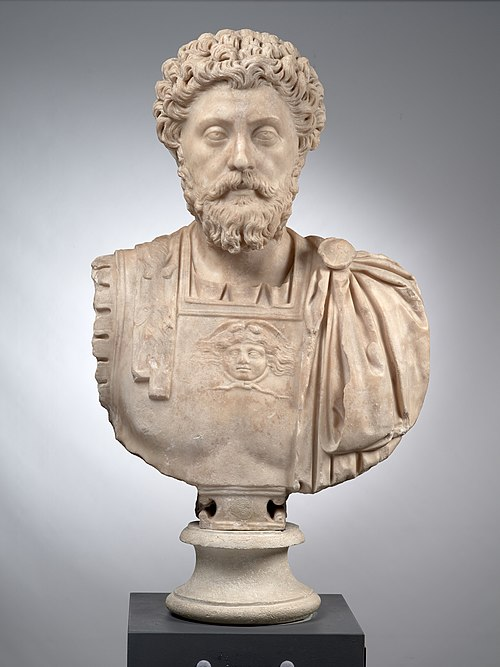
“You have power over your mind – not outside events. Realize this, and you will find strength.”
~ Marcus Aurelius
Marcus Aurelius Antoninus (April 26, 121 – March 17, 180) was Roman emperor from 161 to 180 and a Stoic philosopher. He was a member of the Nerva–Antonine dynasty, the last of the rulers later known as the Five Good Emperors and the … Wikipedia
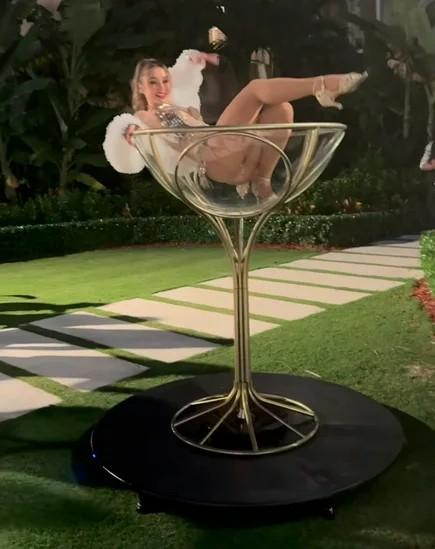
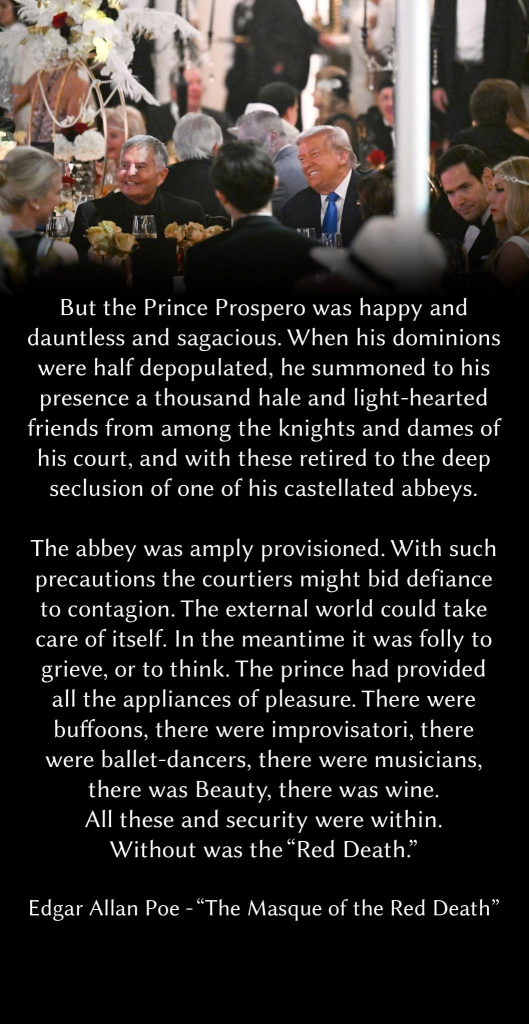
Democracy Now! Nov 3, 2025 Latest Shows Support our work: https://democracynow.org/donate/sm-de… President Trump held a lavish Great Gatsby-themed Halloween party at Mar-a-Lago Friday, just hours before an estimated 42 million people lost SNAP benefits across the country. Kirk Curnutt, the executive director of the international F. Scott Fitzgerald Society, says that while “Gatsby is famous for its lavish party scenes, [what] people often miss is that the entire thrust of the book is to critique that conspicuous consumption and the wastage that goes on in these sorts of events.”