
“We reject the world we live in because we cannot accept ourselves.”
–Thane of Hawaii


These are the memoirs of the great mystic and teacher who inspired a generation of disciples and followers before, during and briefing after the Second World War. In Meetings With Remarkable Men Gurdjieff introduces us to some of the companions he encountered in his travels to the most remote regions of Central Asia. With colorful episodes from his adventures, he brings to life the story of his own relentless search for a real and universal knowledge. The book can be read as a colorful narrative or psychological autobiography, but the meaning of its contents can be better appreciated in relation to the expositions of his previously published ideas. (Amazon.com)
Meetings With Remarkable Men (Part 1 of 11)

“At the bottom of the heart of every human being, from earliest infancy until the tomb, there is something that goes on indomitably expecting, in the teeth of all experience of crimes committed, suffered, and witnessed, that good and not evil will be done to him. It is this above all that is sacred in every human being.”
–Simone Weil (February 3, 1909 – August 24, 1943) was a French philosopher, Christian mystic, and political activist. After her graduation from formal education, Weil became a teacher. Wikipedia
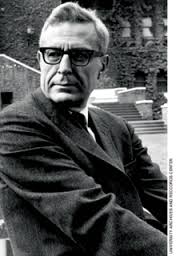
Loren Eiseley
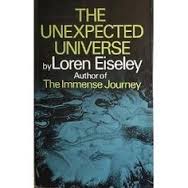
Drawing from his long experience as a naturalist, the author responds to the unexpected and symbolic aspects of a wide spectrum of phenomena throughout the universe. Scrupulous scholarship and magical prose are brought to bear on such diverse topics as seeds, the hieroglyphs on shells, lost tombs, the goddess Circe, city dumps, and Neanderthal man. (Googlebooks)
“Man, since the beginning of his symbol-making mind, has sought to read the map of that same universe. Do not believe those serious-minded men who tell us that writing began with economics and the ordering of jars of oil. Man is, in reality, an oracular animal. Bereft of instinct, he must search constantly for meanings. We forget that, like a child, man was a reader before he became a writer, a reader of what Coleridge once called the might alphabet of the universe. Long ago, our forerunners knew, as the Eskimo still know, that there is an instruction hidden in the storm or dancing in auroral fires. The future can be invoked by the pictures impressed on a cave wall or in the cracks interpreted by a shaman on the incinerated shoulder blade of a hare. The very flight of birds is a writing to be read. Thoreau strove for its interpretation on his pond, as Darwin, in his way, sought equally to read the message written int eh beaks of Galapagos finches. ”
“The first land-walking fish was, by modern standards, an ungainly and inefficient vertebrate. Figuratively, he was a water failure who had managed to climb ashore on a continent where no vertebrates existed.”

In just 20 years, most people in developed countries won’t have sex to procreate. That’s what Stanford law professor and bioethicist Hank Greely predicts: a future where skin cells can be used to make an embryo and parents would prefer a baby made in a laboratory rather than the bedroom. In his book, “The End of Sex and the Future of Human Reproduction,” Greely considers the ethical and legal questions that arise in this new reproductive future.

“The universe is a complete unique entity. Everything and everyone is bound together with some invisible strings. Do not break anyone’s heart; do not look down on weaker than you. One’s sorrow at the other side of the world can make the entire world suffer; one’s happiness can make the entire world smile.”
― Shams Tabrizi (1185 – 1248) was an Iranian Muslim, who is credited as the spiritual instructor of Mewlānā Jalāl ad-Dīn Muhammad Balkhi, also known as Rumi and is referenced with great … Wikipedia