PASADENA, CA—Confirming that several components had broken off the craft and that most of its scientific instruments were no longer operational, officials from NASA’s Jet Propulsion Laboratory announced that Voyager 1, the pioneering space probe launched in 1977, had been severely damaged Thursday after crashing into the end of the universe. “It appears that, at approximately 8:20 this morning, Voyager struck the edge of the universe head-on at a speed of 38,000 miles per hour, resulting in significant structural damage to the spacecraft,” said Voyager project scientist Ed Stone, noting that the force of the impact with the outer border of the cosmos had bent the probe’s main antenna dish and completely snapped off its low-field magnetometer. “While we’re receiving only intermittent signals from Voyager now, incoming data indicate that, in addition to nearly totaling the craft’s thermoelectric generator, the collision left a significant dent in the end of the universe as well.” JPL scientists added that Voyager 1 now appears to be moving laterally, scraping its left side along the universe’s outer edge, and that it is expected to continue doing so for the next 50 or 60 years until the remaining fragments of the probe eventually come to rest in the bottom-right corner of outer space.
From Latin natare (to swim). Ultimately from the Indo-European root sna- (to swim or flow), which also gave us Sanskrit snan (bath). Earliest documented use: 1460.
USAGE:
“Perhaps no other athlete has been under more pressure to perform at these Games than Freeman. Not Marion Jones in her pursuit of five gold medals. Not Ian Thorpe, the 17-year-old swimming prodigy or any of his natant mates.”
Fran Blinebury; 2000 Sydney Olympic Games; Houston Chronicle; Sep 25, 2000.
“Oh, you secure and safe ones, you who hide yourselves behind the ramparts of the law, or theology or ethics, so you will not have to look at God’s abyss. Yes, you have secure ground under your feet, while we hang suspended looking out over the endless deeps, but we would not exchange our dizzy insecurity and poverty for your security and abundance. Of God’s will, we know only the eternal; the temporal we must command for our-selves, our selves imprint his wordless bidding even anew on the stuff of reality.”
“Woe to the man so possessed that he thinks he possesses God!”
–Martin Buber (February 8, 1878 – June 13, 1965) was an Austrian-born Israeli Jewish philosopher best known for his philosophy of dialogue, a form of existentialism centered on the distinction between the I–Thou relationship and the I–It relationship. Wikipedia
“A lot of people are afraid to say what they want. That’s why they don’t get what they want.”
–Madonna Louise Ciccone (born August 16, 1958) is an American singer, songwriter, actress, and businesswoman. She achieved popularity by pushing the boundaries of lyrical content in mainstream popular music and imagery in her music videos, which became a fixture on MTV. Wikipedia
“After your death, you will be what you were before your birth.”
–Arthur Schopenhauer (February 22, 1788 – September 21, 1860) was a German philosopher. He is best known for his 1818 work The World as Will and Representation, in which he characterizes the phenomenal world as the product of a blind, insatiable, and malignant metaphysical will. Wikipedia
“Every cell in your body is eavesdropping on your thoughts.”
–Deepak Chopra, M.D. (born October 22, 1947) is an Indian American author, public speaker, alternative medicine advocate, and a prominent figure in the New Age movement. Wikipedia
“When I look back on all these worries, I remember the story of the old man who said on his death bed that he had had a lot of trouble in his life, most of which never happened.”
–Sir Winston Leonard Spencer-Churchill, KG, OM, CH, TD, PC, DL, FRS, RA (November 30, 1874 – January 24, 1965) was a British statesman who was the Prime Minister of the United Kingdom from 1940 to 1945 and again from 1951 to 1955. Wikipedia
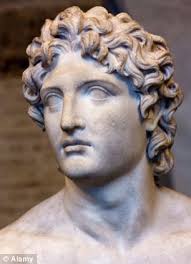
“If you can conquer your fear, you can conquer death.”
–Alexander III of Macedon, commonly known as Alexander the Great (July 356 BCE – June 323 BCE), was a King of the Ancient Greek kingdom of Macedon and a member of the Argead dynasty.Wikipedia
Consciousness, sexuality, androgyny, futurism, space, the arts, science, astrology, democracy, humor, books, movies and more