‘I Was Lucky I Didn’t Give It All Up’: K-Pop Band BTS Addresses the United Nations

Korean musical sensation BTS became the first K-pop group to deliver a speechat the United Nations General Assembly this week.

Leader of the seven-member boy band Kim Nam Joon spoke Monday on the importance of believing in yourself and not yielding to social pressure. His bandmates, dressed in somber suits rather than their typical flashy costumes, backed up his impassioned plea.

“Even after making the decision to join BTS, there were a lot of hurdles. Some people might not believe but, most people thought we were hopeless, and sometimes I just wanted to quit,” Kim said Monday at the launch of “Generation Unlimited,” a program to increase youth education and empowerment.

“I was very lucky that I didn’t give it all up,” he added.

Read moreK-Pop Group BTS Wins TIME 100 Reader Poll

The boy band’s previous forays into humanitarian work have also proved popular.

Last year, BTS’s partnered with the Korean Committee for UNICEF for the anti-violence, “Love Myself” campaign. The initiative has so far raised over $1 million.

During his UN address, Kim discussed his life and the band’s ascent to mega-stardom, but also kept the spotlight on self-confidence.

“We have learned to love ourselves, so now I urge you to ‘speak yourself,’” he said. “No matter who you are, where you’re from, your skin color, gender identity: speak yourself.”

After the speech, which was attended by U.N. Secretary-General António Guterres, BTS performed at a “Generation Unlimited” event, CBS reports.

Physicist Alan Lightman on the Illusion of Absolute Rest

By Maria Popova (brainpickings.org)

alanlightman_stars.jpeg?fit=320%2C473

In his timeless elegy for time, T.S. Eliot wrote of “the still point of the turning world” — one of the most beautiful and arresting phrases ever composed in the English language. “Neither from nor towards; at the still point, there the dance is, / But neither arrest nor movement. And do not call it fixity, / Where past and future are gathered. Neither movement from nor towards, / Neither ascent nor decline. Except for the point, the still point, / There would be no dance, and there is only the dance.”

We are woven of contradictions, few more sundering than the polar pull of this dance — our longing for stillness in a universe of unceasing motion, which the painter Joan Miró captured in the notion he placed at the center of his creative ethos: “motionless movement.”

The paradoxical nature of this dance is what the physicist Alan Lightman, one of the most poetic science writers our civilization has produced, explores in a few passages from Searching for Stars on an Island in Maine (public library) — his lyrical inquiry into why we long for absolutes in a relative world and what gives meaning to our existence.

RobertEdwinPeary_1909.jpg?resize=680%2C904

Robert Edwin Peary (self-portrait, 1909)

Reading through the journals of the pioneering Arctic explorer Robert Edwin Peary, who retired on a neighboring island off the coast of Maine in the early twentieth century after discovering the North Pole, or at least what was then believed to be the North Pole — “so simple + common place,” Peary wrote in elated astonishment upon arriving at “the prize of 3 countries, my dream + ambition for 23 years” — Lightman reflects:

2e292385-dc1c-4cfe-b95e-845f6f98c2ec.pngI try to imagine the “common place” experience of standing exactly at the pole of the earth (even if Peary was not quite there). I see myself perched on a glistening ball in space spinning about an imaginary axis through its center, and I am standing at the precise point where that axis emerges from the interior and punctures the ice. All other points on this ball, except at the opposite pole, are in motion. But I am still. You could say I am locally at rest. I am at rest relative to the center of the earth. But that center is itself in motion. As I stand here, that center hurtles around its central star at a speed of 65,000 miles per hour, and that central star, in turn, revolves around the center of the galaxy, the Milky Way, at a speed of 500,000 miles per hour. Do I know too much, or too little? I look up into space, as the cave dwellers did, and am transfixed by the infinite. Although I cannot touch it, I feel that I’m there. This resting yet unresting pole is quite a spot for viewing the universe.

songoftwoworlds7.jpg

Art by Derek Dominic D’souza from Song of Two Worlds by Alan Lightman

This illusion of absolute rest plays out as much on the largest scale as it does on the smallest. Millennia after the ancient Greeks first hypothesized the atom as a perfect and indivisible entity — atomos, Greek for uncuttable — a cascade of discoveries unveiled the true nature of matter, and of us: The atom is not a unit of stuff, but a tiny center of matter swarmed by nearly weightless electrons orbiting at a great distance and a great speed. We are mostly restlessness and empty space.

Lightman frames the ancient conception of matter as a vessel for the illusion of the absolute:

2e292385-dc1c-4cfe-b95e-845f6f98c2ec.pngAtoms were the ultimate Oneness of the material world. Perfect in their indivisibility, perfect in their wholeness and indestructibility. Atoms were the embodiment of absolute truth. Atoms, along with stars, were the material icons of the Absolutes.

[…]

Atoms prevent us from falling forever into smaller and smaller rooms of reality. When we reach atoms — so the thinking went — the falling stops. We are caught. We are safe. And from there, we begin our journey back up, building the rest of the world.

ourfriendtheatom12.jpg

Illustration from Our Friend the Atom, a 1956 Disney primer on nuclear physics.

He contrasts this with the modern understanding of material reality, accelerated by the discovery of the electron in 1897 (the year of the disastrous expedition to the North Pole by air balloon):

2e292385-dc1c-4cfe-b95e-845f6f98c2ec.pngThe hard nut at the center of each atom, the “atomic nucleus,” is a hundred thousand times smaller than the atom as a whole. To use an analogy, if an atom were the size of Fenway Park, the home stadium of the Boston Red Sox, its dense central nucleus would be the size of a mustard seed, with the electrons gracefully orbiting in the outer bleachers. In fact, 99.9999999999999 percent of the volume of an atom is empty space, except for the haze of nearly weightless electrons. Since we and everything else are made of atoms, we are mostly empty space. That vast emptiness is perhaps the most unsettling consequence of dividing the indivisible.

With an eye to the menagerie of subatomic particles discovered in the century-some since — quarks, pions, kaons, rhos, sigmas, xis — Lightman adds:

2e292385-dc1c-4cfe-b95e-845f6f98c2ec.pngAre we falling and falling without end? Are there unlimited infinities on all sides of us, both bigger and smaller?

This question, and its myriad fractal implications reaching into every nook and cranny of existence, is what Lightman explores in the remainder of the wholly fascinating and enchanting Searching for Stars on an Island in Maine. Complement this particular portion with Pico Iyer on stillness and the art of presence, then revisit Lightman on our yearning for permanence in a universe of constant changethe psychology of creative breakthrough in art and science, and his poetic ode to the unknown, illustrated by a self-taught teenage artist in Bangalore.

The Only Story in the World: John Steinbeck on Kindness, Good and Evil, the Wellspring of Good Writing

By Maria Popova (brainpickings.org)

steinbeck_eastofeden.jpg?w=680“All the goodness and the heroisms will rise up again, then be cut down again and rise up,” John Steinbeck(February 27, 1902–December 20, 1968) wrote as he contemplated good, evil, and the necessary contradiction of human nature at the peak of WWII. “It isn’t that the evil thing wins — it never will — but that it doesn’t die.”

A decade later, and a decade before he won the Nobel Prize in Literature, Steinbeck turned this abiding tug of war between good and evil into a literary inquiry in East of Eden (public library) — the 1952 novel that gave us his beautiful wisdom on creativity and the meaning of life, eventually adapted into the 1955 film of the same title starring James Dean.

johnsteinbeck.jpg?w=680

John Steinbeck

Steinbeck opens the thirty-fourth chapter with a meditation on the most elemental question through which we experience and measure our lives:

2e292385-dc1c-4cfe-b95e-845f6f98c2ec.pngA child may ask, “What is the world’s story about?” And a grown man or woman may wonder, “What way will the world go? How does it end and, while we’re at it, what’s the story about?”

I believe that there is one story in the world, and only one, that has frightened and inspired us, so that we live in a Pearl White serial of continuing thought and wonder. Humans are caught — in their lives, in their thoughts, in their hungers and ambitions, in their avarice and cruelty, and in their kindness and generosity too — in a net of good and evil. I think this is the only story we have and that it occurs on all levels of feeling and intelligence. Virtue and vice were warp and woof of our first consciousness, and they will be the fabric of our last, and this despite any changes we may impose on field and river and mountain, on economy and manners. There is no other story. A man, after he has brushed off the dust and chips of his life, will have left only the hard, clean questions: Was it good or was it evil? Have I done well — or ill?

At the most fundamental level, the triumph of good over evil presupposes an openhearted curiosity about what is other than ourselves and a certain willingness for understanding — the moral choice of fathoming and honoring the reality, experience, and needs of persons and entities existing beyond our own consciousness. Steinbeck, too, saw the centrality of empathic understanding in the choice of goodness. Perhaps unsurprisingly — since he used his private journal as a creative sandbox for his novels — this sentiment originated in a diary entry.

Decades before Annie Dillard contemplated why a generosity of spirit is the animating force of good writing, Steinbeck echoes Hemingway — “As a writer you should not judge. You should understand.” — and reflects in a journal entry from 1938, quoted in Steinbeck Center director Susan Shillinglaw’s introduction to a 1993 Penguin Classics edition of Steinbeck’s Of Mice and Men:

2e292385-dc1c-4cfe-b95e-845f6f98c2ec.pngIn every bit of honest writing in the world… there is a base theme. Try to understand men, if you understand each other you will be kind to each other. Knowing a man well never leads to hate and nearly always leads to love. There are shorter means, many of them. There is writing promoting social change, writing punishing injustice, writing in celebration of heroism, but always that base theme. Try to understand each other.

Complement with Hannah Arendt on our mightiest antidote to evil, James Baldwin on the terror within and the evil without, Mary McCarthy on human nature and how we determine if evil is forgivable, and Fyodor Dostoyevsky on why there are no bad people, then revisit Steinbeck on being vs. becomingthe difficult art of the fried breakup, and his remarkable advice on falling in love in a letter to his teenage son.

We Grow Accustomed to the Dark: Emily Dickinson’s Stunning Ode to Resilience, Animated

By Maria Popova (brainpickings.org)

emilydickinson_completepoems.jpg?w=680How do we survive the unsurvivable? What is that inextinguishable flame that goes on flickering in the bleak, dark chamber of our being when something of vital importance has been lost? “All your sorrows have been wasted on you if you have not yet learned how to be wretched,” Seneca’s timeless insight into the key to resilience bellows from antiquity, echoed by the contemporary social science finding that psychological “grit” is the single most significant predictor of triumph over hardship and success in life. “Only to the extent that we expose ourselves over and over to annihilation can that which is indestructible be found in us,” the Tibetan Buddhist nun and teacher Pema Chödrön offered in exploring how to thrive when things fall apart.

Loss visits every human life. The degree of our acceptance and the grace with which we adapt to the sudden descent of darkness — that is, to borrow the splendid term William James borrowed from Margaret Fuller, “the manner of our acceptance of the universe” — may be the greatest measure of skillful living.

That is what Emily Dickinson (December 10, 1830–May 15, 1886) addresses in a stunning poem titled — like all of her poems, which the poet herself always left untitled — after the first line: “We grow accustomed to the Dark,” composed during a time of personal loss and immense transformation for Dickinson, while the Civil War rages about her. Included in the indispensable Complete Poems of Emily Dickinson (public library), it comes to life in this lovely short film animated by Hannah Jacobs and produced by Massive Science founder Nadja Oertelt for Harvard’s eight-part series Poetry of Perception, exploring representations of sensation and perception through the literary and visual arts.

1629f253-2ae3-4e7b-8727-d183ff264228.png

2e292385-dc1c-4cfe-b95e-845f6f98c2ec.pngWe grow accustomed to the Dark —
When Light is put away —
As when the Neighbor holds the Lamp
To witness her Good bye —

A Moment — We Uncertain step
For newness of the night —
Then — fit our Vision to the Dark —
And meet the Road — erect —

And so of larger — Darknesses —
Those Evenings of the Brain —
When not a Moon disclose a sign —
Or Star — come out — within —

The Bravest — grope a little —
And sometimes hit a Tree
Directly in the Forehead —
But as they learn to see —

Either the Darkness alters —
Or something in the sight
Adjusts itself to Midnight —
And Life steps almost straight.

Complement with Dickinson, the poet laureate of finding light amid the darkness of being, on making sense of loss and her stunning forgotten herbarium — an elegy for light at the intersection of poetry and science — then revisit other enchanting animated adaptations of great poems: “Optimism” by Jane Hirshfield, “The Man with the Beautiful Eyes” by Charles Bukowski, and “A Noiseless Patient Spider” by Walt Whitman.

Aries Full Moon, September 24th, 7:52 pm PDT and 10:52 pm EDT

Wendy Cicchetti

After the autumnal equinox turning point, the Aries Full Moon harks back to spring-like energies of the prior vernal equinox. Memory of once-green leaves, now in fall, reminds us of opposite ends in the normal cycle of life and death in nature’s year, promising new life again in another six months. The Aries Moon conjoins planetoid Chiron, the mythic Wounded Healer, echoing that human births are seldom ideal, and yet we know ourselves better when we are aware of their circumstances. Our mother may have had her own challenges — some improving, others still bearing scars. The Moon and Chiron opposing the Sun and Mercuryspeaks of the need to voice our inherited pain and problems. Maybe our birth was induced, or we arrived without all our needs being met immediately. We may want to kick and scream at early life’s discomforts. Aries impatience reflects a baby’s natural impulses to cry if hungry or in pain, registering the danger of its helpless status. Such primal needs call forth a caring response — the Moon sextiles Mars–South Node in humanitarianAquarius.

While the Aries Moon demands a me first/witness my issuesapproach, the Libra Sun and Mercury emphasis “us and we”, keen on compromises and win–win scenarios. Typical tensions could be offset through well-thought-out words, since Mercury’s rationale can help to cool a fever. But Mercury conjunct the Sun is also “combust,” suggesting more volatility or less verbal and mental power. If a situation becomes explosive, perhaps that is part of the way forward!

Most situations have the potential to be contained, thanks to the Full Moon’s t-square configuration with Saturn and Vesta in Capricorn. The internal tensions of a t-square cannot be denied, with an opposition and two 90° angles, but Saturn, strong in its own sign of Capricorn at the apex, offers rules, protocols, and steadfast qualities. Asteroid Vesta poses the option to retreat, concentrating one’s own energy. If others are creating drama and distraction, then retreating is a route to personal peace. The eternal, living hearth flame is Vesta’s symbol; discipline and centeredness are her tools and aims. Meditation on a candle flame or a lamp can be especially beneficial to bring a strong sense of order and calm.

Saturn often represents an older person: a parent, guardian, elder relative, friend, colleague, mentor, or sponsor to be looked up to and relied on. But needed help can arrive in various ways. In a less personified or alive form, this help could be the wisdom of ancient texts or the continuing voice of a historical figure with worldly experience, sharing knowledge and understanding.

Saturn links with time; Vesta keeps the flame, making the concept of the candle wick or lamp tallow pertinent as a symbol of the life span. None of us can know how long this span is intended to be, but we can aim to make the most of living it out.

Written by Diana McMahon Collis for the Mountain Astrologer Magazine

Full Moon symbolizes the fulfillment of the seeds planted at a previous New Moon or some earlier cycle. Each Full Moon reminds us of the seeds that may be coming to maturity, to their fullness, to fruition, to the place where the fruits or gifts are received. It may seem that fulfillment of our goals takes a long time. Some intentions may manifest within the two week phase prior to the next New or Full Moon. Some however, depending on their complexity, may take a much longer time. Just remember that our thoughts and emotions set Universal Action in motion and much work takes place behind the scenes as everything is orchestrated for fulfillment. Keep visualizing your goals as though you have already attained them and they will eventually manifest. Do not concern yourself with current conditions or worry about controlling it. The universe takes care of those details. Just keep seeing what you want, and move in that direction with your actions, and give no energy to what you don’t want. Patience is required.

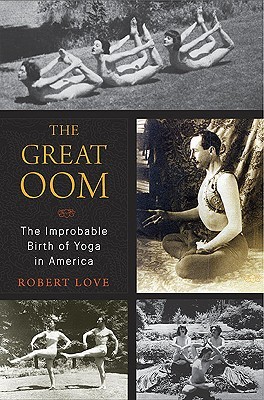
Book: “The Great Oom” by Robert Love

The Great Oom: The Improbable Birth of Yoga in America

The Great Oom: The Improbable Birth of Yoga in America

by Robert Love

The amazing story of how yoga came to America-and the charming rogue who made it possible 

In Jazz Age New York, there was no place hotter than the Clarkstown Country Club, where celebrities such as Leopold Stokowski mingled with Vanderbilts, Goodriches, and Great War spies. They came for the club’s circuses and burlesques but especially for the lectures on the subject at the heart of the club’s mission: yoga. Their guru was the notorious Pierre Bernard, who trained with an Indian master and instructed his wealthy followers in the asanas and the modern yogic lifestyle.

Robert Love traces this American obsession from moonlit Tantric rituals in San Francisco to its arrival in New York, where Bernard’s teachings were adopted by Wall Streeters and Gilded Age heiresses, who then bankrolled a luxurious ashram on the Hudson River-the first in the nation. Though today’s practitioners know little of Bernard, they can thank his salesman’s persistence for sustaining our interest in yoga despite generations of naysayers.

In this surprising, sometimes comic story, Love uncovers the forgotten life and times of the colorful, enigmatic character who brought us hatha yoga. The Great Oom delves into the murky intersection of mysticism, money, and celebrity that gave rise to the creation of one of America’s most popular practices and a fivebillion-dollar industry.

(Goodreads; submitted by Richard Branam)

SUNDAY NIGHT TRANSLATION GROUP – 9/23/18

Translators:  Mike Zonta, Melissa Goodnight, Richard Branam, Hanz Bolen

SENSE TESTIMONY:  False accusations and misuse of authority devalues all.

5th Step Conclusions:

1)  Truth can only truthfully “accuse” (be the cause of) Itself being Truth and of using everyone and everything to skillfully achieve the result of infinite value/usefulness.

2)  One Infinite Consciousness Beingness is the ultimate responsibility upholding Absolute Truth, and asserting supreme sovereignty that assures optimal appreciation of every worthy good.

3)  The only Authority, only Consciousness Only Presence is the Truth, Powerfully Touching, Each and Every Individuation of One Being with Self Evident Universal Integrity besides which there is none else.

4)  Truths’ Consciousness Aware Omnipresence, this ALL Omnipotency, Autismically certain, Exercising Truths’ Ultimate validational self Valuing Identity, Being Instantiatingly I am I, Individuated Androgynousness.

Full Moon 24 September 2018 ~ Lone Wolf

The full moon September 24, 2018, falls at 2º Aries decan 1. The full moon September 2018 astrology shows that the moon has no special dignity in this decan. However, the gutsy stars found here ensure that this full moon will be incredibly productive all the same. This period is great for the lone entrepreneur who works tactically. Here the Moon does not lean on others emotionally and is not afraid of working solo. Those touched by this Aries full Moon are also not molded by what is popular or what loved ones expect of them. It is a time of inventions, some that are controversial, but others fantastically unique due to not being influenced by the mainstream.

Austin Coppock says Moon in Aries decan 1 develops emotional self-reliance but has “a difficult time creating and maintaining emotional relationships with others, especially those relations which place the natives in a position of vulnerability.” [1] This may be the reason for success here since we can become married to our work. We are so emotionally connected with our mission that we make passionate fighters for our cause whatever it may be. This is a time for activists and those who are willing to be heroes for their family or greater tribe. In the wider world, there will be those who act quite ruthlessly in order to preserve the integrity and independence of their homeland.

Full Moon September 24 2018 Fixed Star ~ Deneb Kaitos

Deneb Kaitos with the moon ~ “Pioneer, reckless, headstrong, violent temper, many quarrels.”

Deneb Kaitos is a 2nd magnitude major star found in the tail of Cetus the sea-monster. Robson says “It causes self-destruction by brute force, sickness, disgrace, misfortune and compulsory change.” While Elsbeth Ebertin says “Inhibitions and restraints in every way, psychologically and physically.” [3] Aries rules the head, so mental disturbance and hot-headedness go with the territory. Deneb Kaitos is probably the very star that gives the Rams their selfish and quite frankly, spoilt-brat reputation… This star situated in the tail can make them lash out without thinking at times. They can deeply wound (lacerate.) without meaning to. Interestingly the constellation of Lacerta the lizard makes up quite a large section of this decan.


FULL MOON SEPTEMBER 2018~ TAROT CARD

Full Moon September 2019The tarot card associated with this decan is the two of wands. Karmically this card is about leaving the old for the new, deciding between staying with what you know and leaving for something brand new:

 “ On the outside, it may appear you have it all and are very successful but changes have been occurring on the inside for some time. You may have a new plan of action or a burning desire to do something else. You may feel that your fires have been burning low and that you are in dire need of a new lease of life, change of scenery or change of faces.” ~ Teachmetarot.

The meaning is appropriate in the sense that Aries decan 1 is indeed the start of a brand new cycle and the return of the sun.


Full Moon September 2018 Astrology
Full Moon September 2018

The full moon September 2018 is part of yet another complex aspect pattern. This one is quite something else. You will notice if you look at it sideways it looks like a diamond inside a box Some of you may recognize it is part of a mystic rectangle joined to the nodes by two sextiles. This all means that the moon is aspected quite heavily. So we get:

Moon sextile Mars (Conjunct South Node) is as you would expect an extremely passionate aspect, but it really does need to express this energy physically or sexually otherwise anger-management can become a big problem. Mood can change very quickly, but the frantic tide can be very creative. Moon sextile Mars will be passionate about artistic products and be very driven to project them into the world. Because this aspect is also connected to the south node it could also purge out old grievances with karmic ties. It might be a good idea to channel the resentment into a piece of art even if it does look rather gory!

Moon sextile Black Moon Lilith brings an abundance of charm, persuasion and sorcery. This is witchcraft of the highest calibre, but with it, comes the ability to mesmerize and manipulate in the most underhand and unscrupulous fashion if need be.  Moon sextile Lilith has a Peter pan, youthful feel. This cheeky aspect will enable the subjects to charm their way out of a very deep rabbit hole if need be. This is the ‘lovable-rogue’ with less of the spikiness you sometimes find with Lilith.

Moon opposite Mercury can manifest as a magic wand once it has come to peace with themselves and tamed the mind to work with its intuition. At this time the collective is highly strung so they need to put their energies into something physical or creative through which they can channel their restlessness.

Moon square Saturn is an aspect that grows up quickly, therefore deep inside Saturn’s armour is a very soft-centered, needy child. This archetype is loathed to show this very fragile side of their character, so most of the time they appear very strong, capable and most of all independent. At this time those touched by this full moon might feel their suppressed needs will come out as incapacitating illness or depression, that way they get the care they feel they don’t deserve to ask for.

 THE “ANIMATED” ASPECT PATTERN

Full moon September 2018

The aspect patterns according to the Huber school are comprised of a Trapeze with a Sheildstuck on top of it. But the Moon itself is part of a T-square with Saturn so I think the most important Huber pattern to look at will be the two ‘Animated’ patterns that are held together by a sextile at the base making it look like that diamond I mentioned earlier.

Animated Figure ~ “Hidden in this term is the profession of the animator. In the cartoons he produces, he shows all the movements of a character precisely in frames; which requires imagination, patience and a lot of hard work…. such a figure can rapidly switch from approval to disapproval. The motivations are a thirst for action and utilitarian thinking with energy and skill, or even “no gain without pain”. There is a constructive orientation towards adapting and modifying the status quo…New things are constantly learned from the oscillation between achievement and pleasure.” [2]

FULL MOON MEANING

Full moons tend to make us purge and release things from our lives, so we need to make sure that we are in control of this and no one is forcing our hand! Sometimes we can let go of things that we regret later, due to heightened emotions and the full moon’s perchance for saying ‘F*** You!’

The bright light of the sun throws a spotlight on our subconscious and our shadow. This can feel uncomfortable as the Sun literally blasts out the demons who have nowhere to hide. Often the full moon is a time when we reap what we sowed at the new moon,.. for good or for ill.

The veils between the worlds are thinnest around a full Moon, so be very careful what you invite in. Instead, the Full Moon is best used to purge things out, and banish entities/bad habits back to the underworld from whence they came. Make sure you close the door firmly afterward! This is a good time for exorcism, but make sure you are completely grounded and fully in control of the process. If in doubt, lie low and protect yourself. A Lunar Eclipse is a turbocharged Full Moon where the blood-red moon makes a graphic statement of any symbolic ‘deaths’ or aborted projects that might occur at this time in our lives.


FULL MOON SEPTEMBER 2018 ~ HEALING MEDITATION

Full Moon September 2018To make the most of all this independent and risk-taking energy at this full moon September 2018 make the gods work for you by immersing yourself in Aries decan 1 energy. If your ascendant, Sun or Moon are in the cardinal signs decan 1 you might be flipping between being a daredevil or feeling great fear. To avoid going from one extreme to the other, try focused meditation or yoga with the following:

Useful healing materials and props: The 2 of wands to gaze at, mustard to eat, Tigerlily to adorn your table, Ruby crystal to hold, music in the key of D to listen to, cedarwood, clove and black pepper essential oils in a bath.

Ruby Meaning: “It encourages leadership and increased concentration, with sharpness of intellect. This beautiful red stone allows you to see your own strength and your creative potential from a heart-based perspective. One of this stone’s alchemical properties is to impart a sense of bliss, as well as encouraging a desire for life.”~ healingcrystalsforyou. 


Full Moon September 2018 ~ Summary

In the full moon September 2018 the rapid switching from approval to disapproval could be seen in the two t-squares. One to Saturn and the other to Uranus. There is extreme risk-taking on the one hand and extreme fear and caution on the other. An example of how this might manifest at this full moon is that one may be asked to something very daring, something new that takes a lot of courage which is so very Aries also. They could make a huge promise but then get out of it by becoming ill. On the positive side if all of this aspect pattern is utilized the challenging aspects can be offset by the harmonious ones. The is a huge amount of karmic adjustment going on here. Maybe we can think of this as being like tuning a piano, it is only when all the keys are put through their paces can we see just how much out of tune the piano really is.

One of the important aspects of the last couple of years has been Saturn trine Uranus and this really forms the bridge between the two animated figures. This is a bridge between the old and the new. These planets are also the ancient and modern rulers of Aquarius a sign of paradoxes as it is both innovative and futuristic while being a fixed sign and quite fearful of change. They are also both loner planets which takes us back to the lone wolf theme of the decan as a whole. Sometimes, when things just get too complicated to fathom it is just best to go into hermit mode or throw yourself into work. An Aries moon goes it alone.

“I Believe Her” by Caitlin Flanagan

FANTOM_RD / SHUTTERSTOCK / KATIE MARTIN / THE ATLANTIC

“Dear Caitlin,” an inscription in my 12th-grade yearbook begins. “I’m really very sorry that our friendship plummeted straight downhill after the first few months of school. Really, the blame rests totally on my shoulders. To tell you the truth, I’ve wanted to say this all year. I know you’ll succeed because you’re very smart and I regard you with the utmost respect … Take care—love always.”He was headed to a prestigious college. I was headed to a small, obscure liberal-arts college, which was a tremendous achievement, not just because I was a terrible student, but also because I had nearly killed myself as a response to what he apologized for in my yearbook. He had tried to rape me during a date that I was very excited to have been asked on, and his attempt was so serious—and he was so powerful—that for a few minutes, I was truly fighting him off.I had grown up in Berkeley, but just before my senior year of high school, my father took a job on Long Island. Berkeley, California, in 1978 was about as much like Suffolk County, New York, in 1978 as the moon is like the black sky around it. I didn’t know a single person. I desperately missed my friends—although I only found out years later, my father was confiscating all of their letters to me. He thought they were a bad influence, and that I should make a clean break. I felt completely alone.

He drove me home, looked around my empty house for a bit, and then suggested we drive to the beach. It was in his car, in the deserted parking lot of that beach, that he tried to rape me, although neither of us would have used that word for it. It was only in college that I heard the term date rape. The way dates between high-school students in the 1970s were understood was the way that dates had been understood since the 1920s. The idea was that anything bad that happened was the girl’s fault. She had agreed to go off in a car with a boy alone; she was taking her chances. Boys would be boys, and it was up to girls to manage their coercive, importuning sexuality. But this was not coercive: This was a very strong kid, an athlete, trying to pin down a girl who weighed 116 pounds and was part of the pre–Title IX generation. We struggled against each other, and then—suddenly—he stopped. He started the car and drove me home in silence.

I told no one. In my mind, it was not an example of male aggression used against a girl to extract sex from her. In my mind, it was an example of how undesirable I was. It was proof that I was not the kind of girl you took to parties, or the kind of girl you wanted to get to know. I was the kind of girl you took to a deserted parking lot and tried to make give you sex. Telling someone would not be revealing what he had done; it would be revealing how deserving I was of that kind of treatment.

My depression quickly escalated to a point where, if I’d been evaluated by a psychiatrist, I would probably have been institutionalized as a danger to myself. I had plans for how I was going to kill myself. I managed to make a few friends, who introduced me to acid, which was no help with the depression. I sat in classes in a blank state, except for English. (“To the girl about whom I will someday say, ‘I knew her when,’” my English teacher wrote in that yearbook, words that stunned me when I first read them, and that I’ve never forgotten.)

But then, at the beginning of the second semester, my fortunes turned, and another boy asked me out. Another drive home, another trip to a beach parking lot—you’d think I would have learned, but from the minute we got in the car, I knew this was different. We bought a bottle of wine and sat in his car drinking it and talking, and by the time he drove me back home, I felt rescued.

But on Sunday morning, sitting in the Santa Monica Elks Lodge, watching a friend get inducted into the Santa Monica High School Hall of Fame, I took advantage of a lull in the program to scroll through my news feed, and quickly found the Washington Post report that broke the news about Christine Blasey Ford, the woman who wrote the letter. I read about two different psychologists noting that Ford had told them about her distress over the incident long before Kavanaugh was nominated. I read about the polygraph test. She’s telling the truth, I said to myself, in a way that was neither outraged nor political, just matter-of-fact. The event she described is completely believable, but the psychologists’ notes sealed the deal. Maybe some new piece of evidence will come to light to change my mind, but with the facts on the ground as we now have them, I believe her.

When I came home from Santa Monica, a friend dropped by the house. I asked him whether he’d heard the news about Kavanaugh, and he said, “Yeah—but are we really going to hold something he did when he was 17 against him?”

Teenagers make mistakes, some of them serious. One measure of a kid’s character is what he or she does afterward. Take another look at the note at the top of this essay. I can’t remember why I would have asked him to sign my yearbook. He was in my new boyfriend’s circle of friends, so maybe he was at the same parties and events I went to. Reading the note now, as a 56-year-old woman, I think it’s an astonishing thing for an 18-year-old kid to have written; it took courage and self-reflection. But that was not his only apology.

Two years after the yearbook was signed, when I was a far more confident person, and when I was in the midst of transferring from the obscure college to a great university, I had a summer job at a department store. One morning, while ringing up a sale, I saw in my peripheral vision that someone was approaching the register. When I finished the sale, he was gone. A few minutes later, I saw him coming back; it was the boy who’d tried to rape me. He had tears in his eyes, and he seemed almost overwrought. And right there—in the A&S department store in the Smith Haven Mall—he apologized profusely.

“It’s okay, it’s okay,” I kept saying to him. “I forgive you, don’t worry.” It was a weird ambush of intense guilt and apology, and it was the wrong place and time—but the thing was, I really did forgive him. My life had moved on, and things were better. It felt good to get the apology and—as it always does—even better to forgive him. He’d done a terrible thing, but he’d done what he could to make it right. I held nothing against him, and I still don’t.

We want to hear what you think about this article. Submit a letter to the editor or write to letters@theatlantic.com.

CAITLIN FLANAGAN is a contributing writer at The Atlantic. She is the author of Girl Land and To Hell With All That.

(Submitted by Michael Kelly)

Consciousness, sexuality, androgyny, futurism, space, the arts, science, astrology, democracy, humor, books, movies and more