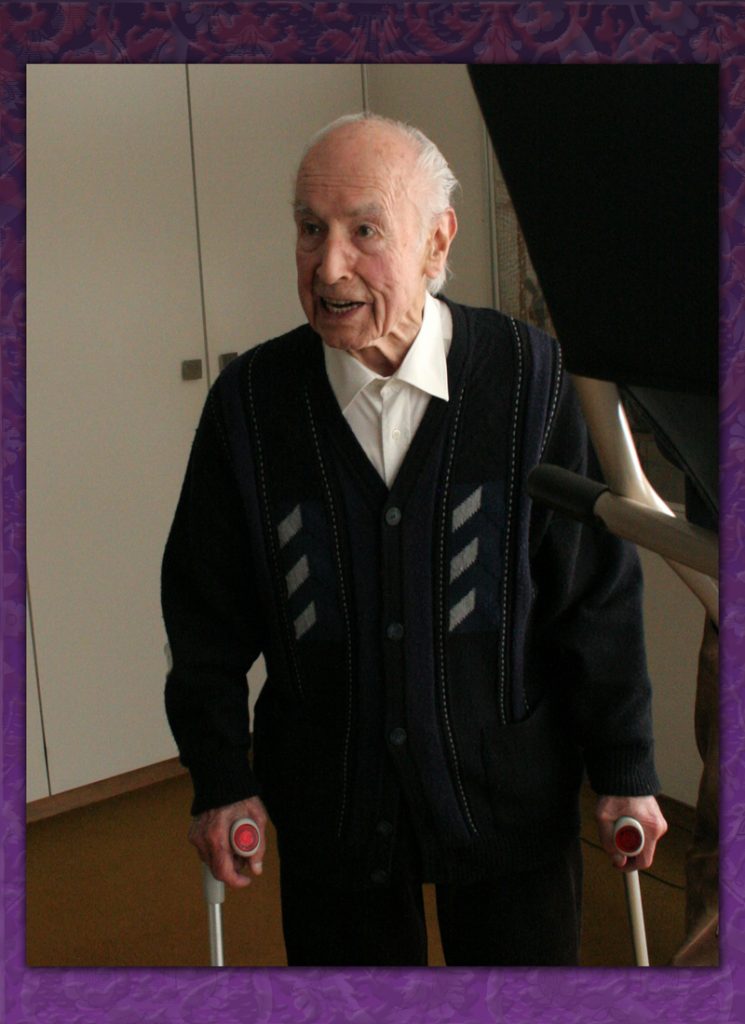
Bicycle Day!

In Memory Of Albert Hofmann

Invisible College #5 Photos: Jon Hanna
Perhaps the last photographs of Albert Hofmann. Taken the month he died in Switzerland.
You can see the rest of the edition here: https://www.invisiblecollege-publishing.com/pdfs/

Albert Hofmann was the inventor of LSD, Today marks his second experience with the substance (the first by accident, the second on purpose.)

Everything changes on that pivotal moment in 1943 is Basel Switzerland…

Lies, Damned Lies and Coronavirus Statistics

corbettreport SHOW NOTES AND MP3: https://www.corbettreport.com/?p=35884

The numbers are in on the great Covid-19 pandemic . . . but unfortunately those numbers are unreliable. From mendacious models and puffed-up projections to dodgy death data and tainted tests, today on The Corbett Report James highlights what the accredited scientists and award-winning researchers are saying about the pandemic pandemonium of 2020.

Arundhati Roy ”The Pandemic is a Portal”

BY YES! EDITORS APR 17, 2020 (yesmagazine.org)

“What is this thing that has happened to us? It’s a virus, yes. In and of itself it holds no moral brief. But it is definitely more than a virus.”

This is an excerpt of an essay called “Pandemic Is a Portal,” a selection from author Arundhati Roy’s forthcoming book Azadi: Freedom. Fascism. Fiction. (Haymarket, September 2020). The Man Booker Prize-winning Indian novelist (The God of Small Things, 1997) is a longtime activist for antiglobalization movements and an outspoken critic of U.S. foreign policy.

“Some believe it’s God’s way of bringing us to our senses. Others that it’s a Chinese conspiracy to take over the world.”

“Whatever it is, coronavirus has made the mighty kneel and brought the world to a halt like nothing else could. Our minds are still racing back and forth, longing for a return to ‘normality,’ trying to stitch our future to our past and refusing to acknowledge the rupture. But the rupture exists. And in the midst of this terrible despair, it offers us a chance to rethink the doomsday machine we have built for ourselves. Nothing could be worse than a return to normality.

“Historically, pandemics have forced humans to break with the past and imagine their world anew. This one is no different. It is a portal, a gateway between one world and the next. We can choose to walk through it, dragging the carcasses of our prejudice and hatred, our avarice, our data banks and dead ideas, our dead rivers and smoky skies behind us. Or we can walk through lightly, with little luggage, ready to imagine another world. And ready to fight for it.”

Roy has released text of the full essay here.

Get Apocalyptic: Why Radical is the New Normal

Feeling anxious about life in a broken economy on a strained planet? Turn despair into action.
Summer 2013

LOVE AND THE APOCALYPSE

BY ROBERT JENSEN MAY 25, 2013 (yesmagazine.org)

Feeling anxious about life in a broken-down society on a stressed-out planet? That’s hardly surprising: Life as we know it is almost over. While the dominant culture encourages dysfunctional denial—pop a pill, go shopping, find your bliss—there’s a more sensible approach: Accept the anxiety, embrace the deeper anguish—and then get apocalyptic.

We are staring down multiple cascading ecological crises, struggling with political and economic institutions that are unable even to acknowledge, let alone cope with, the threats to the human family and the larger living world. We are intensifying an assault on the ecosystems in which we live, undermining the ability of that living world to sustain a large-scale human presence into the future. When all the world darkens, looking on the bright side is not a virtue but a sign of irrationality.

In these circumstances, anxiety is rational and anguish is healthy, signs not of weakness but of courage. A deep grief over what we are losing—and have already lost, perhaps never to be recovered—is appropriate. Instead of repressing these emotions we can confront them, not as isolated individuals but collectively, not only for our own mental health but to increase the effectiveness of our organizing for the social justice and ecological sustainability still within our grasp. Once we’ve sorted through those reactions, we can get apocalyptic and get down to our real work.

Perhaps that sounds odd, since we are routinely advised to overcome our fears and not give in to despair. Endorsing apocalypticism seems even stranger, given associations with “end-timer” religious reactionaries and “doomer” secular survivalists. People with critical sensibilities, those concerned about justice and sustainability, think of ourselves as realistic and less likely to fall for either theological or science-fiction fantasies.

Many associate “apocalypse” with the rapture-ranting that grows out of some interpretations of the Christian Book of Revelation (aka, the Apocalypse of John), but it’s helpful to remember that the word’s original meaning is not “end of the world.” “Revelation” from Latin and “apocalypse” from Greek both mean a lifting of the veil, a disclosure of something hidden, a coming to clarity. Speaking apocalyptically, in this sense, can deepen our understanding of the crises and help us see through the many illusions that powerful people and institutions create.

But there is an ending we have to confront. Once we’ve honestly faced the crises, then we can deal with what is ending—not all the world, but the systems that currently structure our lives. Life as we know it is, indeed, coming to an end.
Let’s start with the illusions: Some stories we have told ourselves—claims by white people, men, or U.S. citizens that domination is natural and appropriate—are relatively easy to debunk (though many cling to them). Other delusional assertions—such as the claim that capitalism is compatible with basic moral principles, meaningful democracy, and ecological sustainability—require more effort to take apart (perhaps because there seems to be no alternative).

“Apocalypse” need not involve heavenly rescue fantasies or tough-guy survival talk; to get apocalyptic means seeing clearly and recommitting to core values.

But toughest to dislodge may be the central illusion of the industrial world’s extractive economy: that we can maintain indefinitely a large-scale human presence on the earth at something like current First-World levels of consumption. The task for those with critical sensibilities is not just to resist oppressive social norms and illegitimate authority, but to speak a simple truth that almost no one wants to acknowledge: The high-energy/high-technology life of affluent societies is a dead end. We can’t predict with precision how resource competition and ecological degradation will play out in the coming decades, but it is ecocidal to treat the planet as nothing more than a mine from which we extract and a landfill into which we dump.

We cannot know for sure what time the party will end, but the party’s over.

Does that seem histrionic? Excessively alarmist? Look at any crucial measure of the health of the ecosphere in which we live—groundwater depletion, topsoil loss, chemical contamination, increased toxicity in our own bodies, the number and size of “dead zones” in the oceans, accelerating extinction of species, and reduction of biodiversity—and ask a simple question: Where are we heading?

Remember also that we live in an oil-based world that is rapidly depleting the cheap and easily accessible oil, which means we face a major reconfiguration of the infrastructure that undergirds daily life. Meanwhile, the desperation to avoid that reconfiguration has brought us to the era of “extreme energy,” using ever more dangerous and destructive technologies (hydrofracturing, deep-water drilling, mountaintop coal removal, tar sands extraction).

Oh, did I forget to mention the undeniable trajectory of global warming/climate change/climate disruption?

Scientists these days are talking about tipping points and planetary boundaries, about how human activity is pushing Earth beyond its limits. Recently 22 top scientists warned that humans likely are forcing a planetary-scale critical transition “with the potential to transform Earth rapidly and irreversibly into a state unknown in human experience,” which means that “the biological resources we take for granted at present may be subject to rapid and unpredictable transformations within a few human generations.”

That conclusion is the product of science and common sense, not supernatural beliefs or conspiracy theories. The political/social implications are clear: There are no solutions to our problems if we insist on maintaining the high-energy/high-technology existence lived in much of the industrialized world (and desired by many currently excluded from it). Many tough-minded folk who are willing to challenge other oppressive systems hold on tightly to this lifestyle. The critic Fredric Jameson has written, “It is easier to imagine the end of the world than to imagine the end of capitalism,” but that’s only part of the problem—for some, it may be easier to imagine the end of the world than to imagine the end of air conditioning.

We do live in end-times, of a sort. Not the end of the world—the planet will carry on with or without us—but the end of the human systems that structure our politics, economics, and social life. “Apocalypse” need not involve heavenly rescue fantasies or tough-guy survival talk; to get apocalyptic means seeing clearly and recommitting to core values.

Never in human history have potential catastrophes been so global; never have social and ecological crises of this scale threatened at the same time …

First, we must affirm the value of our work for justice and sustainability, even though there is no guarantee we can change the disastrous course of contemporary society. We take on projects that we know may fail because it’s the right thing to do, and by doing so we create new possibilities for ourselves and the world. Just as we all know that someday we will die and yet still get out of bed every day, an honest account of planetary reality need not paralyze us.

Then let’s abandon worn-out clichés such as, “The American people will do the right thing if they know the truth,” or “Past social movements prove the impossible can happen.”

There is no evidence that awareness of injustice will automatically lead U.S. citizens, or anyone else, to correct it. When people believe injustice is necessary to maintain their material comfort, some accept those conditions without complaint.

Social movements around race, gender, and sexuality have been successful in changing oppressive laws and practices, and to a lesser degree in shifting deeply held beliefs. But the movements we most often celebrate, such as the post-World War II civil rights struggle, operated in a culture that assumed continuing economic expansion. We now live in a time of permanent contraction—there will be less, not more, of everything. Pressuring a dominant group to surrender some privileges when there is an expectation of endless bounty is a very different project than when there is intensified competition for resources. That doesn’t mean nothing can be done to advance justice and sustainability, only that we should not be glib about the inevitability of it.

Here’s another cliché to jettison: Necessity is the mother of invention. During the industrial era, humans exploiting new supplies of concentrated energy have generated unprecedented technological innovation in a brief time. But there is no guarantee that there are technological fixes to all our problems; we live in a system that has physical limits, and the evidence suggests we are close to those limits. Technological fundamentalism—the quasi-religious belief that the use of advanced technology is always appropriate, and that any problems caused by the unintended consequences can be remedied by more technology—is as empty a promise as other fundamentalisms.

If all this seems like more than one can bear, it’s because it is. We are facing new, more expansive challenges. Never in human history have potential catastrophes been so global; never have social and ecological crises of this scale threatened at the same time; never have we had so much information about the threats we must come to terms with.

It’s easy to cover up our inability to face this by projecting it onto others. When someone tells me “I agree with your assessment, but people can’t handle it,” I assume what that person really means is, “I can’t handle it.” But handling it is, in the end, the only sensible choice.

Mainstream politicians will continue to protect existing systems of power, corporate executives will continue to maximize profit without concern, and the majority of people will continue to avoid these questions. It’s the job of people with critical sensibilities—those who consistently speak out for justice and sustainability, even when it’s difficult—not to back away just because the world has grown more ominous.

Adopting this apocalyptic framework doesn’t mean separating from mainstream society or giving up ongoing projects that seek a more just world within existing systems. I am a professor at a university that does not share my values or analysis, yet I continue to teach. In my community, I am part of a group that helps people create worker-cooperatives that will operate within a capitalist system that I believe to be a dead end. I belong to a congregation that struggles to radicalize Christianity while remaining part of a cautious, often cowardly, denomination.

I am apocalyptic, but I’m not interested in empty rhetoric drawn from past revolutionary moments. Yes, we need a revolution—many revolutions—but a strategy is not yet clear. So, as we work patiently on reformist projects, we can continue to offer a radical analysis and experiment with new ways of working together. While engaged in education and community organizing with modest immediate goals, we can contribute to the strengthening of networks and institutions that can be the base for the more radical change we need. In these spaces today we can articulate, and live, the values of solidarity and equity that are always essential.

To adopt an apocalyptic worldview is not to abandon hope but to affirm life. As James Baldwin put it decades ago, we must remember “that life is the only touchstone and that life is dangerous, and that without the joyful acceptance of this danger, there can never be any safety for anyone, ever, anywhere.” By avoiding the stark reality of our moment in history we don’t make ourselves safe, we undermine the potential of struggles for justice and sustainability.

As Baldwin put it so poignantly in that same 1962 essay, “Not everything that is faced can be changed; but nothing can be changed until it is faced.”

It’s time to get apocalyptic, or get out of the way.

ROBERT JENSEN is an emeritus professor in the School of Journalism at the University of Texas at Austin and a founding board member of the Third Coast Activist Resource Center. He is the author of 11 books, most recently The End of Patriarchy: Radical Feminism for Men.

Spring in a Pandemic: Mary Shelley on What Makes Life Worth Living and Nature’s Beauty as a Lifeline to Regaining Sanity

By Maria Popova (brainpickings.org)

thelastman_maryshelley.jpg?fit=320%2C480

Half a century before Walt Whitman considered what makes life worth living when a paralytic stroke boughed him to the ground of being, Mary Shelley (August 30, 1797–February 1, 1851) placed that question at the beating heart of The Last Man (free ebook | public library) — the 1826 novel she wrote in the bleakest period of her life: after the deaths of three of her children, two by widespread infectious diseases that science has since contained; after the love of her life, Percy Bysshe Shelley, drowned in a boating accident.

From that fathomless pit of sorrow, on the pages of a novel about a pandemic that begins erasing the human species one by one until a sole survivor — Shelley’s autobiographical protagonist — remains, she raised the vital question: Why live? By her answer, she raised herself from the pit to go on living, becoming the endling of her own artistic species — Mary Shelley outlived all the Romantics, composing prose of staggering poetic beauty and singlehandedly turning her then-obscure husband into the icon he now is by her tireless lifelong devotion to the posthumous editing, publishing, and glorifying of his poetry.

Shelley had set her far-seeing Frankenstein, written a decade earlier, a century into her past; she sets The Last Man a quarter millennium into her future, in the final decade of the twenty-first century, culminating in the year 2092 — the tricentennial of her beloved’s birth.

literarywitches_maryshelley.jpg?resize=680%2C958

Mary Shelley. Art from Literary Witches — an illustrated celebration of trailblazing women writers who have enchanted and transformed the world.

The novel’s narrator, Lionel Verney — an idealistic young man, more porous than most to both the deepest suffering of living and the most transcendent beauty of life — is the closest Mary Shelley, stoical and guarded, came to painting a psychological self-portrait. As the pandemic sweeps the world and vanquishes his loved ones one by one, Shelley’s protagonist returns home to seek safety “as the storm-driven bird does [to] the nest in which it may fold its wings in tranquillity.” There, in the strange stillness, stripped of the habitual busynesses and distractions of social existence, he finds himself contemplating the essence of life:

2e292385-dc1c-4cfe-b95e-845f6f98c2ec.png

How unwise had the wanderers been, who had deserted [the nest’s] shelter, entangled themselves in the web of society, and entered on what men of the world call “life,” — that labyrinth of evil, that scheme of mutual torture. To live, according to this sense of the word, we must not only observe and learn, we must also feel; we must not be mere spectators of action, we must act; we must not describe, but be subjects of description. Deep sorrow must have been the inmate of our bosoms… sickening doubt and false hope must have chequered our days… Who that knows what “life” is, would pine for this feverish species of existence? I have lived. I have spent days and nights of festivity; I have joined in ambitious hopes…: now — shut the door on the world, and build high the wall that is to separate me from the troubled scene enacted within its precincts.

In consonance with Whitman — “After you have exhausted what there is in business, politics, conviviality, love, and so on — have found that none of these finally satisfy, or permanently wear — what remains?” the American poet would ask across space and time, then answer: “Nature remains.” — Shelley’s protagonist finds the meaning of life not in the whirlwind of the human-made world with its simulacra of living but in the simple creaturely presence with nature’s ongoing symphony of life:

2e292385-dc1c-4cfe-b95e-845f6f98c2ec.png

Let us… seek peace… near the inland murmur of streams, and the gracious waving of trees, the beauteous vesture of earth, and sublime pageantry of the skies. Let us leave “life,” that we may live.

FirstSignal_byMariaPopova.jpg?resize=680%2C680

First Signal by Maria Popova

At the height of the deadly pandemic, nature seems all the more quietly determined to affirm the resilience of life — spring arrives with its irrepressible bursts of beauty, untrammeled by human suffering and a supreme salve for it. It is by observing nature’s unbidden delirium in its littlest expression, by surrendering to its sweep, that Lionel regains his faith not only in survival but in the beauty, the worthiness of life.

A generation before the young Emily Dickinson delighted in the poetry of spring, Shelley writes:

2e292385-dc1c-4cfe-b95e-845f6f98c2ec.png

Winter passed away; and spring, led by the months, awakened life in all nature. The forest was dressed in green; the young calves frisked on the new-sprung grass; the wind-winged shadows of light clouds sped over the green cornfields; the hermit cuckoo repeated his monotonous all-hail to the season; the nightingale, bird of love and minion of the evening star, filled the woods with song; while Venus lingered in the warm sunset, and the young green of the trees lay in gentle relief along the clear horizon.

From this open presence with the non-human world, Shelley’s protagonist extracts the essence of what it means to be human:

2e292385-dc1c-4cfe-b95e-845f6f98c2ec.png

There is but one solution to the intricate riddle of life; to improve ourselves, and contribute to the happiness of others.

maryshelley_galaxy.jpg?resize=680%2C845

Mary Shelley

Complement with Rebecca Elson’s stunning poem “Antidotes to Fear of Death,” Shelley’s contemporary Elizabeth Barrett Browning — a trailblazing poet who was dealt an inordinate share of suffering and who made of it inordinate beauty — on what makes life worth living, and the story of how young Isaac Newton’s plague quarantine fomented humanity’s greatest leap in science, then revisit the gorgeous advice on life Shelley’s mother, the trailblazing political philosopher and founding feminist Mary Wollstonecraft, never lived to give her daughter, having died in giving her birth.

World thinking at 11 a.m. and 11 p.m. today and tomorrow

Quantum Physics: Consciousness Creates Reality

Dr Rashid A Buttar Please listen to this urgent message and call-to-action. Make sure to take this action every time the clock hit’s 11:00 am and 11:00 pm in your own time zone, for the next 48 hours, for a total of 4 times in the next 48 hours. And please, share this with ALL your friends, family and loved ones. Ask them to do the same thing, and ask them to pass this on and pay it forward. With gratitude and blessings!

Joan Baez sings for France (2020)

diamondsandrustpro Joan sings “Chanson Pour L’Auvergnat” for France

Chanson pour l’auvergnat

Elle est à toi cette chanson
Toi l’Auvergnat qui, sans façon,
M’a donné quatre bouts de bois
Quand dans ma vie il faisait froid.

Toi qui m’a donné du feu quand
Les croquantes et les croquants
Tous les gens bien intentionnés
M’avaient fermés la porte au nez.

Ce n’était rien qu’un feu de bois
Mais il m’avait chauffé le corps
Et dans mon âme, il brûle encore
À la manière d’un feu de joie…


Toi, l’Auvergnat quand tu mourras
Quand le croc-mort t’emportera
Qu’il te conduise à travers ciel
Au père éternel.

Elle est à toi cette chanson
Toi l’hôtesse qui, sans façon,
M’a donné quatre bouts de pain
Quand dans ma vie il faisait faim.

Toi qui m’ouvrit ta huche quand
Les croquantes et les croquants
Tous les gens bien intentionnés
S’amusaient à me voir jeuner.

Ce n’était rien qu’un peu de pain
Mais il m’avait chauffé le corps
Et dans mon âme, il brûle encore
À la manière d’un grand festin…

Toi, l’hôtesse quand tu mourrasQuand le croc-mort t’emportera
Qu’il te conduise à travers ciel
Au père éternel.

Elle est à toi cette chanson
Toi l’étranger qui, sans façon,
D’un air malheureux m’a sourit
Lorsque les gendarmes m’ont pris.

Toi qui n’a pas applaudi quand
Les croquantes et les croquants
Tous les gens bien intentionnés
Riaient de me voir rammené.

Ce n’était rien qu’un peu de miel
Mais il m’avait chauffé le corps
Et dans mon âme, il brûle encore
À la manière d’un grand soleil…

Toi, l’étranger quand tu mourras
Quand le croc-mort t’emportera
Qu’il te conduise à travers ciel
To God eternal.
Song for the man from the Auvergne
It is for you this little songMan of Auvergne who without fuss,Once gave to me four bits of woodWhen in my life there was real cold.
You who gave fire to warm me whenStaid members of the upper crustAll the people with good intentHad slammed their doors shut in my face.
It was merely a fire of sticksBut it had warmed my body throughAnd in my soul it burns on stillIn the way a bonfire would do.

You man from Auvergne, when you dieWhen the mortician bears you offMay he take you across heaven,To the God everlasting.
It is for you this little songYou the hostess who, without fuss,Once gave to me four bits of breadWhen in my life there was hunger .
You who opened your larder whenStaid members of the upper crustAll the people with good intentEnjoyed seeing me go without.
It was merely a bit of breadBut it had warmed my body throughAnd in my soul, it burns on stillIn the way a great feast would do.
You, the hostess, when you will dieWhen the mortician bears you off,May he take you across heaven,To God everlasting.
It is for you this little songYou, the stranger, who, without fuss,Looking dejected, smiled at me,When the policemen took me off.
You who didn’t join the applause whenStaid members of the upper crustAll the people with good intentLaughed to see me be led away.
T’was merely a touch of honeyBut it had warmed my body throughAnd in my soul it burns on stillIn the way bright sunshine would do …
You, the stranger, when you will dieWhen the mortician bears you offMay he take you across heaven,To God everlasting.

Consciousness, sexuality, androgyny, futurism, space, the arts, science, astrology, democracy, humor, books, movies and more