
“Never believe that anti-Semites are completely unaware of the absurdity of their replies. They know that their remarks are frivolous, open to challenge. But they are amusing themselves, for it is their adversary who is obliged to use words responsibly, since he believes in words. The anti-Semites have the right to play. They even like to play with discourse for, by giving ridiculous reasons, they discredit the seriousness of their interlocutors. They delight in acting in bad faith, since they seek not to persuade by sound argument but to intimidate and disconcert. If you press them too closely, they will abruptly fall silent, loftily indicating by some phrase that the time for argument is past.”
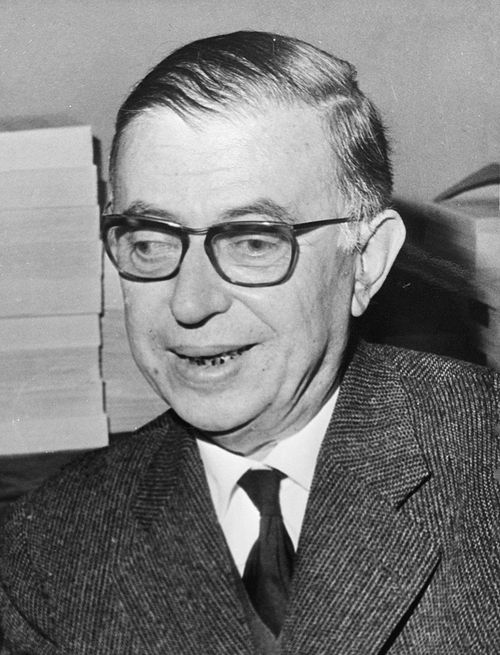
― Jean-Paul Sartre
Jean-Paul Charles Aymard Sartre (June 21, 1905 – April 15, 1980) was a prominent French philosopher, playwright, and novelist who played a key role in establishing existentialism as a major philosophical movement. His work centered on the human condition, exploring themes like freedom, loneliness, and the absurdity of existence. Sartre’s notable works include Being and Nothingness (1943), Existentialism Is a Humanism (1946), and the plays The Flies (1943) and No Exit (1947).