
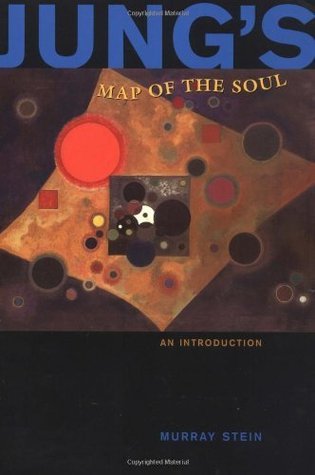
Jung’s Map of the Soul: An Introduction
Murray B. Stein
More than a mere overview, the book offers readers a strong grounding in the basic principles of Jung’s analytical psychology in addition to illuminating insights.
Probably the best one-volume English language summary of Jung’s thought. . . Stein develops the cartographical metaphor of the title by beginning with the “surface” (ego) of the psyche and exploring successively more complex areas, including complexes, libido thoery, shadow, “anima/us,” the self, individuation, and synchronicity. The map soon resembles the multidisciplinary chart of a solar system more than it does a flat map. In each subject area, Stein draws heavily on papers that Jung wrote late in his life, but he sets these in the context of Jung’s earlier developing thought. This method allows the author to demonstrate the interconnectedness and coherence of Jung’s mature work. — Choice, 10/15/98
Stein could just as aptly have named his introductory guide “Jung’s Art of the Soul,” for the course the founder of analytical psychology charted also has the intuitive sweep of an artist on an inner journey integrated within a systematic framework of techniques. Though acknowledging Jung’s creative, intuitive approach to fathoming the mysteries of the individual and collective human psyche, the author presents a solid case for the basic coherency and empirical underpinnings of the great psychoanalyst’s theory-counter to those who viewed him as more of a mystic or philosopher who espoused: “As within, so without.” Territory consciously omitted from this psychic map concern his analytic practice and interpretation of culture, history, and religion. Organized like a graduate thesis, all the major concepts that evolved over Jung’s lengthy career are lucidly summarized with some contextual details: ego-consciousness, complexes, libido theory, archetypes, persona/shadow, anima/animus, the self, individuation, and synchronicity. While this presentation is eminently more accessible than most Jungian texts-and Stein does preface it with personal remarks about his long-time attraction to Jung-those who seek a sense of Jung’s own voice and personal development in his quest for answers to many of life’s enigmas will have their appetites whet to explore further. — From Independent Publisher
About the author
Murray B. Stein
Not to be confused with other Analytical/Jungian Psychologist Murray Stein
Jungian psychoanalyst, author, lecturer
Murray Stein, Ph.D.is a training analyst at the International School for Analytical Psychology in Zurich, Switzerland. His most recent publications include The Principle of Individuation, Jung’s Map of the Soul, and The Edinburgh International Encyclopaedia of Psychoanalysis (Editor of the Jungian sections, with Ross Skelton as General Editor). He lectures internationally on topics related to Analytical Psychology and its applications in the contemporary world.
Dr. Stein is a graduate of Yale University (B.A. and M.Div.), the University of Chicago (Ph.D., in Religion and Psychological Studies), and the C.G. Jung Institut-Zurich. He is a founding member of the Inter-Regional Society of Jungian Analysts and Chicago Society of Jungian Analysts. He has been the president of the International Association for Analytical Psychology (2001-4), and is presently a member of the Swiss Society for Analytical Psychology and President of the International School of Analytical Psychology, Zurich.